
Key Takeaways
An emergency loan program for employees gives fast access to a small loan or wage advance, usually repaid through payroll, so people can handle emergencies without payday loans.
Nearly six in ten US employees are stressed about money and almost a third have less than $1,000 saved, which makes emergency help a workforce issue.
Earned wage access and partner-run loans let employers offer emergency help without putting loans on their own balance sheet.
Good programs set clear limits and terms, keep applications confidential, check local lending and tax rules and pair loans with emergency savings.
Track participation, repeat usage, repayment, time to funds and financial stress to prove the program is working.
An emergency loan program for employees gives staff fast access to a small, short-term loan or wage advance when an unexpected expense hits, with repayment usually taken from future paychecks. It helps people avoid high-cost payday loans, reduces money stress and shows that the employer cares when it matters most.
Personal financial stress has a direct effect on employee satisfaction, productivity and retention. That is why more organizations now include emergency financial help in their benefits. This guide explains what an employee emergency loan is, the main program types, the benefits and risks, how to set one up and what employees turn to when no program exists.
Why financial wellness for employees matters now
Money worries follow people to work. When employees live from one paycheck to the next, a car repair or a medical bill becomes a crisis that pulls their attention away from the job. Recent data shows how common that is.
59%
of US employees are stressed about their finances
PwC, 2026
30%
have less than $1,000 saved for emergencies
PwC, 2026
63%
of US adults would cover a $400 emergency with cash or its equivalent
Federal Reserve, 2025 data
16%
of US adults did not pay all their bills in the prior month
Federal Reserve, 2025 data
The financial stress behind emergency loan programs
PwC's 2026 Employee Financial Wellness Survey of nearly 3,500 employees also found that 49% say their pay is not keeping up with costs and 53% have less than $5,000 set aside for emergencies. The Federal Reserve's report on household well-being in 2025 found that the share who could cover a $400 emergency with cash has been stuck at 63% for four years, and among adults earning under $50,000, four in ten could not cover even a $100 emergency from savings alone.
For employers, that gap is a workforce issue, not just a personal one. An emergency loan program is one of the most direct ways to close it, and it fits naturally into a broader employee benefits strategy.
What an emergency loan program for employees is
An employee emergency loan is a small, short-term loan that an employer offers, or arranges through a lending partner, to help employees meet urgent financial needs quickly and easily. The loan amount is typically capped at a share of the employee's salary, and repayment terms depend on the program. In most cases the amount is repaid through payroll deductions in installments, though some programs allow a lump-sum repayment.
Employee emergency loans are a useful way for people to access cash quickly for an emergency or unexpected expense, without resorting to high-interest credit cards or payday loans. They are part of a wider employee financial assistance program, which can also include earned wage access, hardship grants, emergency savings accounts and financial coaching.
Types of employee financial assistance programs
There are five common ways employers provide emergency financial help, and they differ mainly in who funds the money and whether it has to be repaid. Earned wage access and partner-run loans carry the most weight today because they scale without tying up company cash, so the table starts with them and ends with savings-based options that prevent the next emergency.
| Program type | How it works | Repaid? | Employer risk |
|---|---|---|---|
| Earned wage access (EWA) | Employees withdraw part of the wages they have already earned before payday | Settled from the next paycheck | Low |
| Partner-run employee loans | A regulated lender provides the loan, the employer deducts repayments from payroll | Yes, in installments | Low, the loan sits with the lender |
| Employer-funded loans or salary advances | The company lends its own money, often interest-free, and recovers it through payroll | Yes | Higher, the company carries default risk |
| Hardship funds and grants | A fund, often supported by employee donations, gives grants to colleagues in crisis | No | Limited to the fund's budget |
| Emergency savings programs | Payroll-linked savings accounts that build a cushion before emergencies happen | Not applicable | Low |
Hardship funds are more common than many HR teams realize. CECP's 2026 Giving in Numbers research found that 60% of large companies offer an employee assistance or hardship fund, with a median award cap of $3,000 per employee. Many are funded through workplace giving, where colleagues donate to help each other.
Financial assistance for new employees
Starting a new job is exciting and demanding. While new hires adjust to the workplace, get to know colleagues and learn their responsibilities, life's emergencies can still arise, and new employees are often the least prepared. They may not have built up savings yet, may still be waiting for a first full paycheck and may have moving or setup costs.
An emergency loan program for new employees helps them bridge short-term gaps without turning to high-interest credit cards or payday loans. Policies differ a lot from company to company. Some programs require a minimum tenure, such as 90 days, while others are open from day one, especially earned wage access, since it only advances money already earned. The amount available also depends on the employer's policy.
Employer emergency loan benefits
Employer emergency loan benefits reach both sides of the relationship: employees get relief, and the business gets a steadier, more focused team. These seven benefits are ordered from the most immediate effect, lower financial stress, to the longer-term gains in reputation and access.
- Reduced financial stress: Many employees struggle to make ends meet between salary dates, and that distraction affects their work. A quick loan helps them catch up on obligations that are common stressors. People who work without that external pressure perform better.
- Improved employee satisfaction and retention: Employees who are struggling financially can be anxious and distracted, which leads to poor performance and low morale. Emergency help improves their overall financial well-being, and employees are more likely to stay with a company that shows it cares about their financial needs.
- Increased productivity: Financial stress shows up as distraction, absenteeism and mistakes. Employees who are less worried about money are more engaged and motivated, which lifts performance.
- Cost-effective: Emergency loans can cost employers far less than other benefits such as health insurance or retirement plans, because the amounts are small and short-term. When a regulated partner provides the loans, the employer often carries no lending cost at all.
- Reduced financial risk: A reliable, fair source of credit keeps employees away from high-interest loans and risky financial products that can damage their financial health. With proper loan management, or by using a partner that holds the loan, employers can also limit their own exposure to defaults.
- A stronger reputation: A company that supports its people during a crisis earns goodwill inside and outside the business. That reputation attracts hard-working, good-willed talent.
- Flexibility and convenience: Emergency loans are designed to be quick and easy to access, which matters when someone needs money today. This is especially valuable for employees who have limited access to traditional banking or lending.
Give employees a safety net, not a payday loan
Offer earned wage access and partner-run loans with zero balance-sheet risk through Empuls.
Talk to our ExpertTrusted by 5,000+ companies
How an emergency loan program affects employee retention
Emergency financial help has a direct impact on retention because it changes how employees feel about their employer at a vulnerable moment. The effect shows up in two ways.
- It boosts morale: Employees who feel financially secure and supported are more likely to feel valued and invested in their jobs. Offering emergency loans shows that you care about their financial well-being inside and outside work.
- It helps you retain top talent: Many employees want more than a competitive salary. A practical financial safety net differentiates you from other employers and adds a unique value to your total rewards strategy.
For more ways to keep good people, see these employee retention strategies.
How to set up an emergency loan program for employees
A well-designed program is quick for employees and low-risk for the company. These six steps start with choosing the model, because it decides your cost, risk and legal obligations, and finish with measurement:
- Choose your model: Decide between earned wage access, a partner-run loan program, an employer-funded advance, a hardship fund or a mix. Partner-run models keep loans off your balance sheet, while employer-funded loans give you more control but carry default risk.
- Set eligibility and limits: Define who qualifies (for example, all employees or those past probation), the maximum amount as a share of salary, how often people can borrow and the repayment period.
- Write clear terms: Put interest rates, fees, repayment schedules and what happens if someone leaves the company in a written agreement. Keep fees low and transparent.
- Check legal and tax rules: Lending, wage deduction and tax rules vary by country and state. Confirm that payroll deductions are allowed with written consent and whether a below-market or interest-free loan counts as a taxable benefit where you operate.
- Protect privacy: Make the application digital and confidential, so managers and colleagues never see who applied or why.
- Launch, educate and measure: Explain the program during onboarding and benefits enrollment, pair it with financial education and track usage and outcomes.
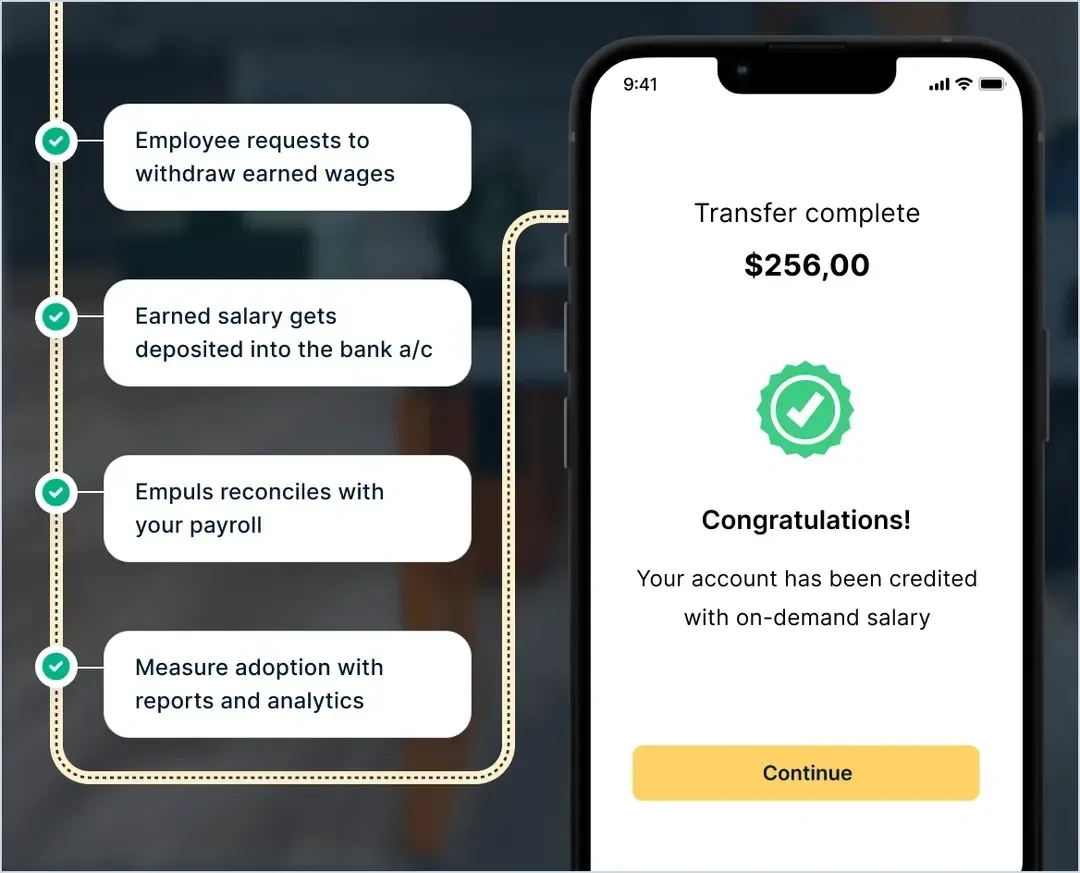
The flow above shows how a payroll-linked program typically runs: the employee requests money, it lands in their bank account, the deduction is reconciled with payroll and HR monitors adoption.
Important considerations before you loan money to employees
Lending money to employees is valuable, but it needs guardrails. Keep these five considerations in mind before you launch:
- Legal and regulatory requirements: Comply with all laws that apply to lending, such as usury laws that cap interest rates and consumer protection rules on terms and disclosures. Rules for earned wage access and employer lending are still evolving in many markets, so review them regularly.
- Loan terms and conditions: Set clear interest rates, repayment periods and fees, and document every loan in writing, including the repayment schedule and the consequences of default.
- Fair eligibility: Traditional credit checks can shut out the employees who need help most. Many programs instead base eligibility on tenure and salary, or let a lending partner handle underwriting.
- Risk management: Set credit limits, monitor loan activity and agree on a fair process for recovery if an employee leaves or defaults.
- Confidentiality and privacy: Keep loan information confidential and never share it with other employees or third parties. Put privacy policies in place to protect employee data.
Metrics to measure your employee financial assistance program
Track a few simple metrics to see whether the program is helping and whether it is being used responsibly.
| Metric | What it tells you |
|---|---|
| Participation rate | How many employees use the program, and which groups |
| Repeat usage | Whether some employees rely on it every cycle and may need deeper support or coaching |
| Repayment and default rate | Whether limits and terms are set at the right level |
| Time to funds | How quickly money reaches employees after they apply |
| Financial stress score | Survey results on money worries before and after launch |
| Retention of users vs non-users | The program's effect on attrition |
Alternatives employees use without an emergency loan program
Not every company offers emergency financial help. When it is missing, employees, especially new ones, turn to options that are slower, costlier or riskier. The three below are ordered from the least to the most risky, which is exactly why an employer program matters.
1. Personal loans
Personal loans from a bank or online lender can be used for almost any purpose without explaining why. They usually require a credit check, so people with poor or limited credit may be turned down or offered a higher rate and stricter terms. New employees can look risky to lenders because of their short job history. When approved, personal loans tend to offer lower interest rates and longer repayment terms than other emergency options, but approval and funding can take several days. Borrowers need proof of income and should compare rates and fees across lenders.
2. Payday loans
Payday loans are small loans meant to last until the next payday. They often skip credit checks and pay out the same day, but they carry very high interest and fees and must usually be repaid in two to four weeks. Many borrowers struggle to repay on time and roll the loan over, which can trap them in a cycle of debt. This is the option a good employer program is designed to replace.
3. Car title loans
A car title loan is a secured loan that uses the borrower's vehicle as collateral. The lender holds the car's title and can repossess the vehicle if the loan isn't repaid, though the borrower can keep driving while making payments. These loans typically unlock a share of the car's value and require a lien-free title. Rates are usually lower than payday loans but much higher than personal loans, and losing a car can also mean losing the way to get to work.
How Empuls supports financial wellness for employees
Empuls, Xoxoday's employee engagement platform, offers financial wellness benefits that help employees handle both money coming in and money going out, on the same platform they use for recognition and rewards.
- Earned wage access: Employees can withdraw a share of the wages they have already earned before payday, with no fees or interest, repaid automatically from salary. Availability depends on local lending partners and regulations, so it rolls out market by market.
- Lending through regulated partners: For bigger needs, employees can apply for personal loans underwritten by a regulated lending partner, which is the lender of record. The employer only deducts and remits repayments, so there is no balance-sheet exposure.
- Buy now, pay later on the marketplace: Employees can split marketplace purchases into salary-deducted installments with zero employee-side interest.
- Investments and tax filing: Pre-negotiated deals with regulated investment partners and assisted tax filing help employees plan beyond the next emergency.
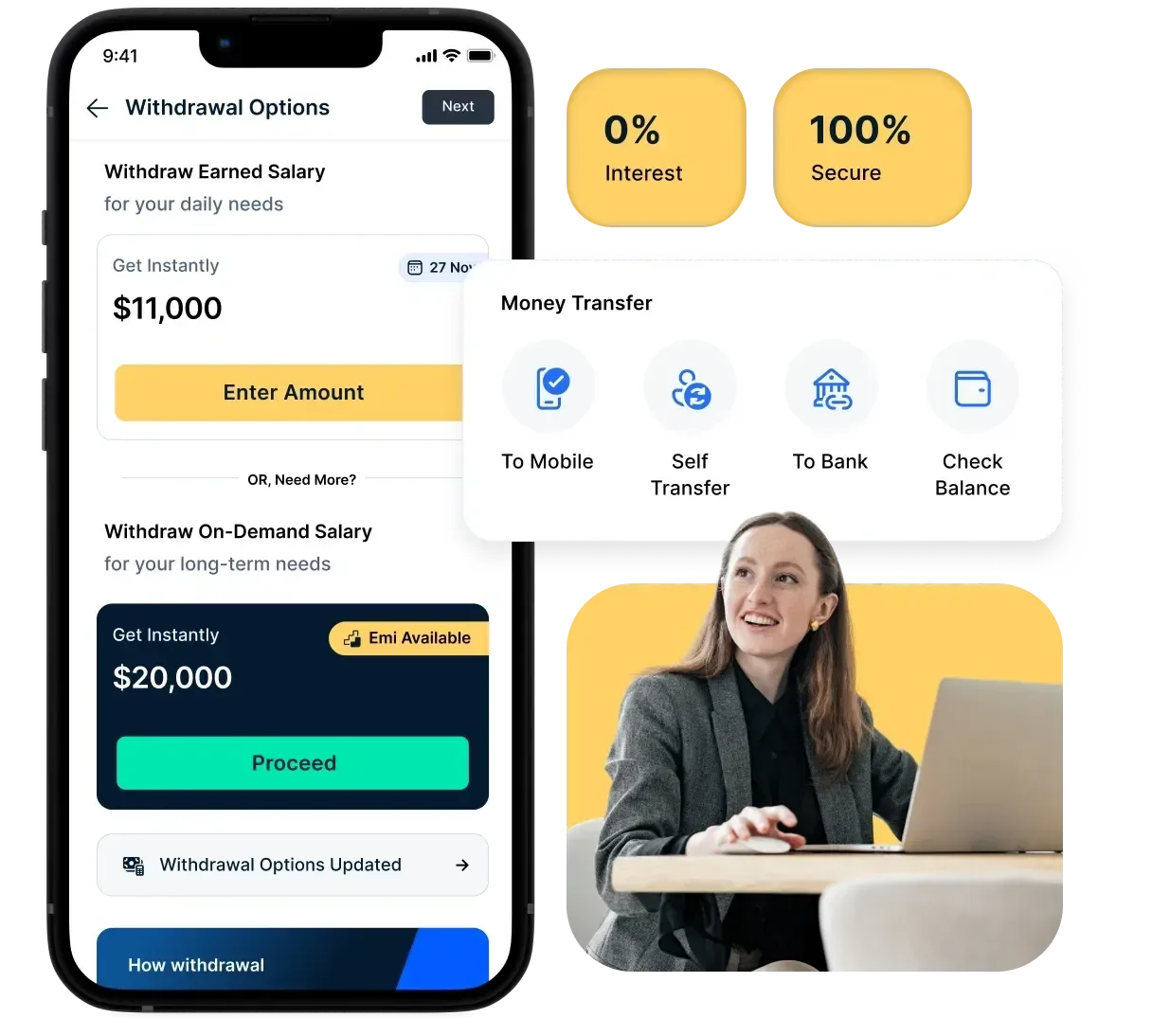
Combined with benefits such as tax-saving plans and discounts, these tools give HR a complete financial wellness offering without adding liability or tying up working capital.
Building a financial safety net employees trust
An emergency loan program for employees is one of the most practical ways to show care. It reduces financial stress, keeps people away from predatory lending and builds the loyalty that keeps good employees with you. If employees are supported when they need it most, they are more likely to stay and do their best work.
Start with a model that fits your risk appetite, set clear and fair terms, protect privacy and pair loans with savings and education. Then measure usage and stress levels so the program keeps improving.
Book your Empuls demo
Frequently asked questions
An employee applies, usually through a confidential app or HR portal, for a small amount capped at a share of their salary. Once approved, the money is sent to their bank account, often within a day. Repayment is taken from future paychecks in installments over a few weeks or months, sometimes with little or no interest.
Not quite. A salary advance or earned wage access gives employees money they have already earned or will earn in the current pay cycle, settled from the next paycheck. An emergency loan can be larger than earned wages and is repaid over several pay periods. Both help with urgent needs, but loans usually involve more formal terms.
In most places employers can deduct loan repayments from wages, but usually only with the employee's written consent and within limits set by wage laws, such as rules that protect minimum wage. Requirements vary by country and state, so put the deduction authorization in the loan agreement and check local payroll rules before launching.
Often they do not. Many employer emergency loan programs base eligibility on tenure, salary and employment status instead of credit history, because repayment comes straight from payroll. Earned wage access usually needs no credit check at all. This makes these programs far more accessible than bank loans for employees with limited or poor credit.
Limits are set by each program. Earned wage access is typically capped at a share of wages already earned in the pay cycle. Emergency loans are often capped at a fraction of monthly or annual salary, or at a fixed amount. Hardship grants usually have their own caps, often a few thousand dollars.
The loan agreement should say. Commonly, the remaining balance is deducted from the final paycheck where the law allows, or the employee continues repaying the lender directly. With partner-run loans, the regulated lender holds the loan and manages repayment, so the employer is not left carrying the debt.
They can be. In several countries, an interest-free or below-market loan from an employer may be treated as a taxable benefit, depending on the amount and local rules. Earned wage access and partner-run loans at market rates usually avoid this issue. Check the treatment with your payroll or tax adviser before launching an employer-funded program.





































































































































































































































































































































































































































































































































































