
Key Takeaways
Motivating last-mile delivery executives starts with fair, transparent and fast pay, because late or confusing payouts push riders to competitors.
Attrition among gig and delivery workers was the top workforce challenge for quick commerce employers in TeamLease's 2025 to 26 outlook, cited by 31%.
The first week is the riskiest period, so structured onboarding, a buddy and a fast first incentive are among the cheapest ways to reduce attrition.
Incentives should reward first-attempt success, ratings and safe riding, not just volume, so speed never comes at the cost of safety.
Track first-week attrition, absence, payout accuracy and recognition coverage by hub to see which changes actually keep delivery executives.
Motivating last-mile delivery executives comes down to four things: pay them fairly, quickly and transparently, recognize good work the moment it happens, protect their health and safety on the road, and show them a future beyond the next shift. Get those right and you reduce last-mile delivery attrition, absenteeism and failed deliveries at the same time.
The e-commerce and quick commerce boom has transformed customer expectations, and the pressure on last-mile delivery operations has never been higher. Today's consumers want fast, affordable, reliable deliveries with real-time tracking at their doorstep. Behind every successful delivery is a delivery executive navigating traffic, weather, complex addresses and tight timelines.
Logistics technology keeps improving, but the real challenge is engaging and retaining the last-mile workforce. This guide covers the challenges delivery executives face, what attrition costs your business and eight proven ways to keep them motivated, productive and loyal. For the broader psychology of what drives people at work, see our pillar guide on what employee motivation is.
What last-mile delivery is and why it shapes customer experience
Last-mile delivery is the final leg of the delivery process, when goods move from a warehouse, dark store or hub to the customer's door. It is often the most time-consuming and expensive part of shipping, and it is the only part the customer actually sees.
Deliveries that once took weeks now take a day, an hour or even ten minutes. That shift, driven by e-commerce, food delivery and quick commerce platforms, has created a huge new workforce that ranges from full-time employees to part-time gig workers and people delivering for a few hours a week. Every one of them carries your brand to the customer's door.
That is why customer experience in logistics depends so heavily on the people doing the delivering. A FedEx Canada employee once took a call from a distressed customer whose package of specialized baby formula was delayed in transit. She called health supply stores across the city, bought the formula with her own credit card and had it delivered before evening. The company's leadership at the time credited an inclusive, empowering environment for frontline staff with making moments like that possible. Motivated delivery teams create loyal customers.
Challenges last-mile delivery executives face
Last-mile delivery is challenging and stressful for the people running from one drop to the next all day. Five challenges come up most often, and the first two, addresses and delivery density, do the most damage because they compound every other problem on the route:
- Address and allocation issues: Some operations still allocate jobs and group destinations manually, which causes errors and misallocated deliveries. Gated communities, commercial complexes and dense neighborhoods add poorly written addresses, missing signage and restrictive security desks, so the executive feels like they are chasing a never-ending maze.
- Delivery density: If a delivery executive is exhausted and short on energy by the end of the day, the load was probably beyond their capacity. Peak and festive seasons make it worse, and parcel size, vehicle type, weather and traffic multiply the strain. Route optimization helps, but only if targets are set with real conditions in mind.
- Customer availability: Arriving at a locked door, or at a guard who will not accept the parcel, after miles of traffic and heat or rain is demoralizing. Failed attempts mean missed timelines, missed targets and repeat trips.
- Tight fulfillment timelines: Customers expect deliveries on time, every time, rain or shine. Ultra-fast delivery promises push executives to rush, and many are penalized for delays they could not control, which raises both stress and safety risk.
- Returns and damaged goods: Free returns and order rejections encourage customers to buy more, but they add work for delivery executives, who must check the condition of returned goods, record the reason and bring them back, often without extra pay.
The business cost of a disengaged last-mile workforce
Operational efficiency and technology matter, but the delivery workforce ultimately decides customer satisfaction. A disengaged delivery executive is not just an HR issue, it is a direct threat to service levels and margins. In the TeamLease Employment Outlook Report for the first half of FY 2025 to 26, attrition among gig and delivery workers ranked as the top workforce challenge for quick commerce employers, cited by 31%, ahead of scaling and cost pressures.
Disengagement shows up in three ways that feed each other:
- High attrition: Many delivery executives work on temporary or contract terms with modest pay, so they switch to a competitor for a small hike. The first week is the riskiest, and every early exit adds rehiring, onboarding and training costs while hurting the morale of the people who stay.
- Absenteeism: Stress, burnout, injuries, illness or simple lack of motivation keep people off the road. Unplanned absences, especially when executives stop showing up without notice, leave routes uncovered at short notice.
- Lost productivity: When executives are under-motivated, absent or gone, deliveries slip. Time spent finding replacements is wasted, and new hires take time to match the speed and local knowledge of the people they replace.
The result is missed delivery SLAs, more failed and repeat deliveries, lower customer ratings and higher costs per drop. Investing in motivation, recognition and wellbeing is how you break that cycle.
Keep your delivery executives on the road
Recognize, reward and support last-mile teams on any smartphone with Empuls.
Talk to our ExpertTrusted by 5,000+ companies
How to motivate last-mile delivery executives: 8 proven ways
Last-mile delivery driver motivation rests on many of the same things that matter to office employees, but delivery executives weigh some very differently: fair, predictable pay, job security, safe working conditions and good relationships with supervisors and peers come first. The eight ways below follow that order of priority, starting with rewards and recognition because they shape how executives feel about every shift.
1. Reward and recognize good work instantly
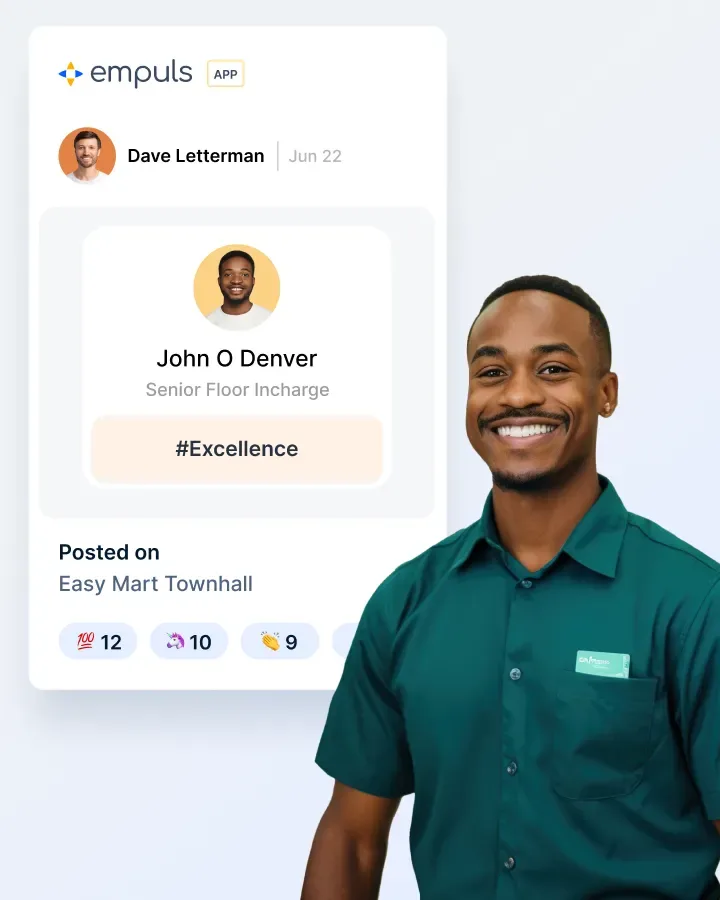
People feel motivated when they are appreciated for good work, and for delivery executives the link is direct: recognition of on-time, careful, courteous deliveries drives more of the same. Recognition works best when it is instant and visible. A Gallup and Workhuman study found that well-recognized employees were 45% less likely to have left after two years. Rewards can take several forms:
- Monetary rewards: Cash for hitting daily, weekly or monthly targets, quarterly bonuses, timely pay revisions and peak-season or holiday premiums. For a workforce on modest pay, money usually motivates most.
- Tangible rewards: Branded gear, rain jackets, helmets, phones or a simple fruit basket, anything the executive is proud to carry or use.
- Experience rewards: Company events, a meal with senior leaders, a movie outing with other top performers or a paid trip.
Make recognition specific, such as a five-star customer compliment shared on a team feed, and let supervisors award points on the spot so the reward arrives while the effort is still fresh.
2. Design transparent, timely delivery executive incentives
Delivery executive incentives only motivate if people understand them and trust the payout. Opaque formulas, shifting targets and late or wrong payouts are some of the fastest ways to lose riders to a competitor. Keep incentive rules simple enough to explain in one sentence, show progress toward each target in the app in real time and pay out quickly, ideally daily or weekly.
Reward the behaviors that matter to customers and the business, not just volume. Incentives for first-attempt delivery success, customer ratings, safe riding and attendance during peak days balance speed with quality. Our guide on how incentives influence behavior explains why timing, fairness and simplicity decide whether an incentive works.
3. Use gamification to make targets engaging
Humans are naturally competitive, and friendly competition can lift performance. Leaderboards, "Daily Champion" titles, badges and personal achievement levels tap into the wish to win and be recognized in front of peers. Ratings for on-time delivery and awards for completing more deliveries in a set window have become standard across last-mile logistics.
Use gamification carefully. Leaderboards should be scoped to comparable routes and zones, celebrate improvement as well as top ranks and never reward unsafe speed. Streak bonuses for safe, on-time shifts work better than pure volume races.
4. Make the first week count
Attrition is highest in the first days, so onboarding is one of the most powerful ways to reduce last-mile delivery attrition. Complete paperwork before day one, assign a buddy for the first few routes, start with lighter, familiar zones and check in personally at the end of the first week.
Pay the first incentive fast, so new executives see that the system works and trust it. A small joining reward for completing the first week or month gives people a reason to stay through the hardest period.
5. Invest in learning and development
Nobody wants to be stuck in a job with no chance to learn or grow. Invest in learning programs that help delivery executives build new skills, such as customer service, safe riding, vehicle maintenance, digital tools or a local language, and sponsor courses that support personal development.
Define a clear career path from delivery executive to team lead, hub supervisor or trainer, and share the criteria openly. When executives can see growth inside the organization, they are far more likely to stay.
6. Protect health, safety and wellbeing
Delivery executives are constantly on the move and face road accidents, heat, pollution, stress and long hours, all of which raise the risk of illness and injury. Employers need them healthy to keep capacity up and absenteeism down. Start with regular health checks and accident and health insurance for the executive and their family.
Practical support on the road matters too. Some platforms in India now run networks of rest points open to delivery partners from any company, with shade, drinking water, washrooms and phone charging, and hand out cooling gear during heatwaves. Counseling, both professional and personal, addresses the psychological strain of the job.
7. Support financial wellbeing
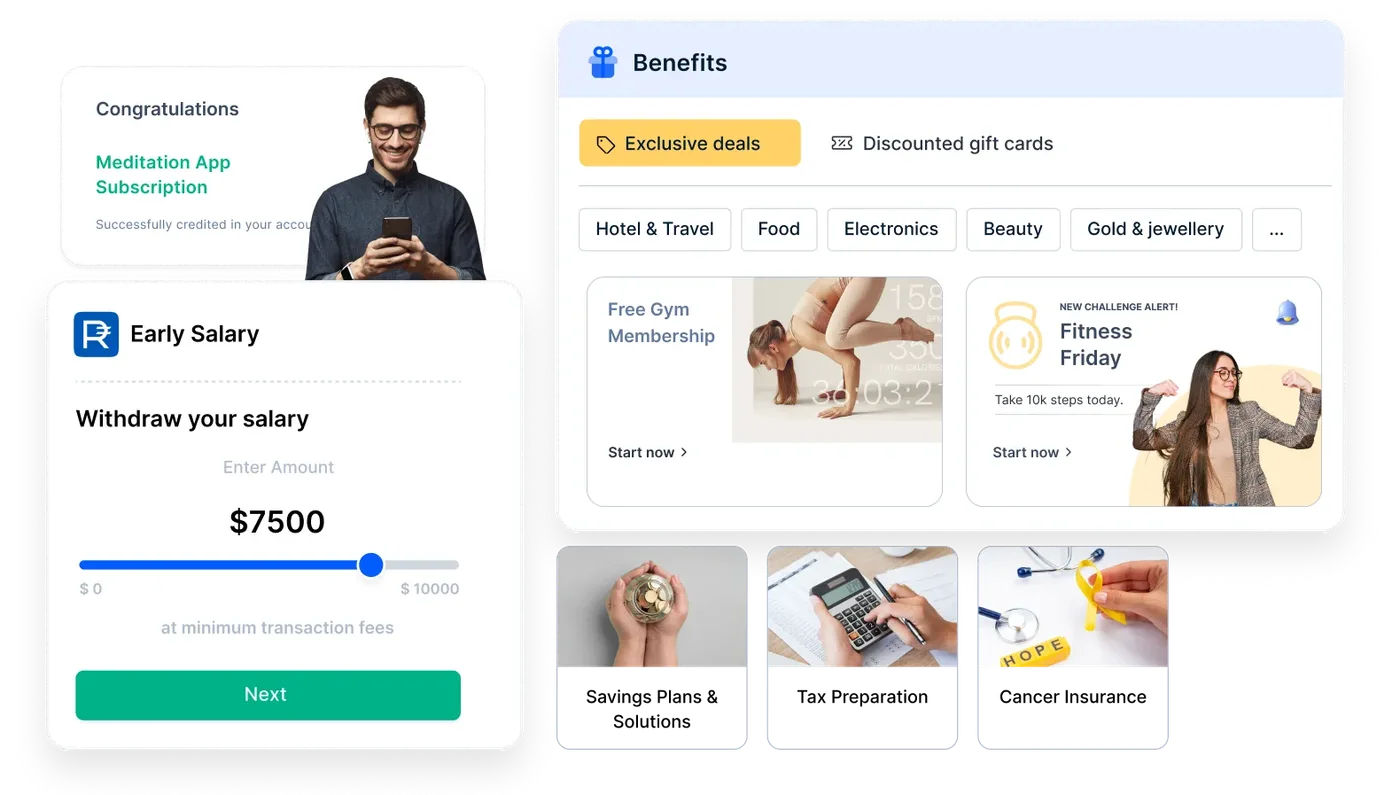
Financial stress is one of the biggest drivers of switching jobs for a small pay rise. Support beyond salary, such as earned wage access or salary advances in an emergency, insurance, discounts on fuel, groceries and mobile recharges, and help with savings, stretches every paycheck without a large increase in pay costs.
Make benefits easy to use from a basic smartphone, without bank forms or office visits. For delivery partners working as gig workers, check which social security obligations apply in your market; our guide to engaging gig workers covers what India's labour codes now require.
8. Communicate and connect through mobile technology
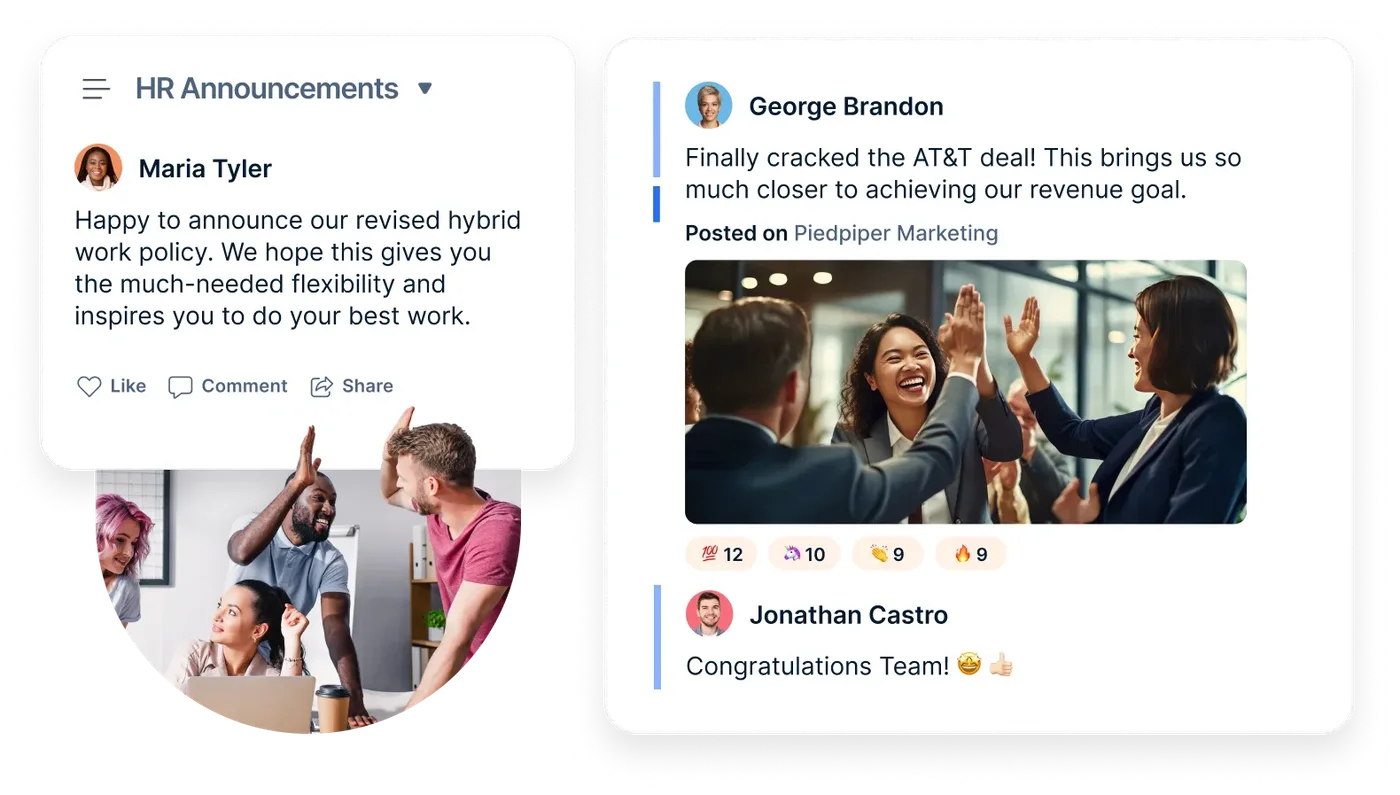
A mobile communication channel between you and the last-mile workforce keeps executives informed about what is coming, like a big sale that will raise volumes, and gives them a place to share ideas and concerns. Delivery executives work alone most of the day and can quickly feel isolated, so a shared feed where they can connect with peers builds a sense of belonging to a larger team.
Use short pulse surveys to ask what gets in the way, and act on the answers, such as fixing a confusing pickup process or a dangerous route. Our guide to employee engagement in logistics covers communication tools for deskless teams in more detail.
Delivery partner retention: incentive ideas that work
The right incentive depends on the behavior you want to change. Use this table to match incentives to goals and avoid the most common pitfalls:
| Incentive | Behavior it drives | Pitfall to avoid |
|---|---|---|
| Daily or weekly target bonus | Consistent volume and attendance | Targets that ignore weather, traffic or route difficulty |
| First-attempt delivery bonus | Fewer failed and repeat deliveries | Penalizing executives for customer no-shows |
| Customer rating rewards | Courtesy and careful handling | Unfair ratings with no way to appeal |
| Safe riding streaks | Fewer accidents and violations | Rewarding speed elsewhere in the plan |
| Peak-day and festive premiums | Coverage on the busiest days | Announcing them too late to plan around |
| Tenure and milestone rewards | Staying past the first week, month and year | Rewards too small or too delayed to notice |
| Referral bonus | Faster hiring of people who fit | Paying before the referral completes onboarding |
Metrics to track last-mile workforce engagement
Measure a few metrics by hub and by week, so you can see which changes actually reduce attrition. Early attrition comes first because it is where most of the cost hides:
| Metric | Why it matters |
|---|---|
| First-week and first-month attrition | Shows whether onboarding and early incentives work |
| Monthly attrition by hub | Pinpoints locations with management or route problems |
| Unplanned absence rate | Early sign of burnout or disengagement |
| First-attempt delivery success | Links motivation to customer outcomes and cost |
| Incentive payout accuracy and time to pay | Trust in the system drives retention |
| Recognition received per executive | Shows whether appreciation reaches everyone |
| Pulse survey scores | Explains why the other numbers are moving |
How Empuls helps you motivate and retain delivery teams
Empuls, Xoxoday's employee engagement platform, is built for deskless and frontline teams. Supervisors and peers can recognize on-time deliveries and five-star feedback from the mobile app or physical QR reward cards, and executives redeem points for groceries, fuel, mobile recharges and more without needing a bank account. Gamification brings leaderboards, badges and challenges to daily targets, while Empuls benefits and wellness support financial and physical health. The social intranet keeps scattered teams connected in their own language.
See how Empuls supports the frontline workforce, or read how a large manufacturing and logistics enterprise took recognition adoption from 24% to 83% among its frontline employees. For related reading, see our guides on how to motivate frontline employees and fleet driver retention strategies.
Book your Empuls demo
Frequently asked questions
Motivate delivery executives with fair, transparent pay and incentives that pay out quickly, instant recognition for good deliveries, realistic targets, and support for health, safety and finances. Gamification, a clear career path and a mobile channel to share concerns also help. The most important step is making sure the incentive system is simple and trusted.
Attrition is high because many delivery executives work on temporary or gig terms with modest pay, so a small raise elsewhere is enough to switch. Physical strain, heat, tight timelines, unfair penalties, confusing incentives and limited growth add to it. The first week sees the most exits, often because onboarding is rushed and early earnings fall short of expectations.
The incentives that work best are simple, frequent and tied to behaviors the executive controls: daily or weekly target bonuses, first-attempt delivery bonuses, rewards for customer ratings, safe riding streaks, peak-day premiums and milestone rewards for staying. Paying out daily or weekly and showing progress in real time makes incentives far more motivating than monthly or quarterly bonuses.
Companies can reduce last-mile delivery attrition by improving onboarding, paying incentives accurately and on time, setting realistic delivery density, protecting rider safety, offering insurance and financial support, and recognizing good work every week. Tracking first-week and hub-level attrition shows where problems are concentrated, so fixes can target the routes and managers that need them most.
Gamification helps delivery partner retention by turning daily targets into visible progress, with leaderboards, badges, streaks and challenges that make work feel rewarding and social. It works best when competitions are fair across comparable zones, reward improvement and safe, on-time delivery, and pay out quickly. Poorly designed contests that reward pure speed can increase risk and burnout.
Last-mile delivery executives face unclear addresses and access problems, heavy delivery density, customers who are unavailable, strict fulfillment timelines, returns and damaged goods, plus traffic, heat, rain and road safety risks. Many also deal with penalties for delays outside their control and income that changes week to week, which adds stress and pushes people to leave.
Delivery executives can be recognized with digital reward points redeemable for groceries, fuel, mobile recharges, gift cards or wallet credit from a basic smartphone, with no bank details needed. Physical reward cards with QR codes let supervisors appreciate good work on the spot, and the executive scans the code to claim the reward instantly.
Engage gig delivery workers with the same basics that work for employees: transparent earnings, fast payouts, recognition, safety support and a voice through the app. Offer insurance, rest points and financial tools, and include them in rewards and celebrations where your contracts allow. Check local labour and social security rules, since many markets now set obligations for platform workers.





































































































































































































































































































































































































































































































































































