
Key Takeaways
An employee rewards and recognition platform lets managers and peers recognize employees, award rewards, celebrate milestones and track the program in one place.
Ease of giving recognition in everyday tools such as Slack, Teams and mobile matters more than any single feature, because programs live or die by use.
Evaluate vendors on 16 criteria, from recognition types and automation to budgets, integrations, data residency and compliance certifications.
A weighted scorecard and identical scenario demos make vendor comparisons objective and expose gaps that feature lists hide.
Check total cost, including reward markups and tax reporting, and run a short pilot to prove adoption before you sign.
To choose the right employee rewards and recognition platform, start from your program goals, then score each vendor on how easily employees can recognize each other in their daily tools, how flexible and global the rewards are, and whether budgets, analytics, integrations and security meet your needs. Run scenario-based demos and a short pilot before you sign. This guide gives you 16 criteria, a weighted evaluation scorecard and the questions to ask every vendor.
An employee rewards and recognition platform is software that lets managers and peers recognize employees, award points or rewards, celebrate milestones and track the program, usually with a rewards catalog, a social feed, integrations with HR and chat tools, and analytics. Most executives agree that a rewards and recognition (R&R) program is the backbone of employee engagement and culture, but few address the elephant in the room: choosing the right technology to deliver and drive it.
The traditional idea of giving incentives and rewards has evolved to serve a multi-generational, often hybrid workforce. Enterprises now need AI-assisted, analytics-based, user-friendly technology to deliver holistic R&R experiences in real time. That is easier said than done, given how many employee rewards and recognition systems are on the market. So how do you identify the right one? By making sure it ticks the right boxes.
Why the choice of recognition platform matters
Recognition programs live or die by use. A platform that is hard to reach, slow to reward or blind to some employees quietly kills participation, and the program becomes a budget line nobody feels.
The gap is real. In 2024 research from Gallup and Workhuman, 55% of US employees received either no recognition or recognition that met none of Gallup's five pillars of strategic recognition, and only 22% said they get the right amount. Yet well-recognized employees were 45% less likely to have left two years later. The right employee recognition software closes that gap by making good recognition easy, frequent and fair.
See how Empuls scores on your checklist
Walk through recognition, rewards, integrations and security with an expert, using your own scenarios.
Talk to our ExpertTrusted by 5,000+ companies
16 criteria for choosing an employee rewards and recognition platform
Use the following 16 rewards and recognition platform features and criteria as a checklist when you evaluate any vendor. The first four (real-time recognition, recognition types, automation and analytics) decide whether employees actually use the platform, so weigh them most heavily, then check fit, cost, reach and security.
1. Real-time recognition
Recognition delayed is recognition denied. Prompt recognition has a big impact on engagement and translates directly to productivity, so any platform you choose must reinforce the moments that matter to employees, as they happen. Look for four capabilities:
- Employee recognition: A thank-you note, verbal praise or an appreciation email is a good start, but a platform can do much more. It should link recognition to company values, support monetary, non-monetary, spot and nomination-based recognition, increase participation through social actions such as high-fives, emojis, GIFs, images and comments, enable peer-to-peer recognition, celebrate career milestones such as onboarding, service anniversaries and retirement, and gamify recognition with leaderboards.
- Employee rewards: Timely rewards for exceptional performance, automated rewards for birthdays and anniversaries, and rewards for hitting or exceeding targets. Look for points, badges and leaderboards for healthy competition, a global catalog of gifts, experiences and donations, and measurable program data.
- Employee communication: Announcements about customer wins, employee milestones and awards that prompt congratulations from across the organization, so recognition builds stronger connections between teams.
- Employee surveys: Surveys are a hallmark of a good R&R tool. Gather feedback on your R&R initiatives to see what is working and what is not, and improve the program with employee input.
2. Types of recognition
Recognition is not about a generic token for a service anniversary. It is about acknowledging each employee's unique contribution and personality, and a gold watch or an engraved plaque is no longer enough. The platform should support all four types:
- Monetary: Show employees you are invested in their success with gift cards, merchandise, experiences, cash bonuses and sales incentives from a global catalog.
- Non-monetary: Just as effective in many cases. Choose a platform that supports recognition through chat, email, social shout-outs, meetings and newsletters.
- Spot: Spot awards for in-the-moment appreciation keep recognition frequent and meaningful, and they shorten the nomination and approval process.
- Nomination-based: Nominations create a consistent process for bigger awards, where leadership oversight or a jury ensures fairness and maximum impact.
For ideas on what to reward through each type, see this list of employee behaviors to recognize.
3. Automation and personalization
In a workplace that expects instant gratification, cloud-based R&R platforms that use AI and analytics to deliver personalized experiences are a cut above the rest. Check for three things:
- Notifications: A timely email or chat notification delivers happiness after a milestone, a customer appreciation or a personal thank-you, and nudges colleagues to join the celebration.
- AI assistance: AI should help, not just decorate. Useful examples include suggesting who to recognize next, helping write specific recognition messages and answering admin questions about trends or budgets in plain language.
- Automated milestones: Birthdays, work anniversaries, goals hit and courses completed should trigger recognition and rewards automatically from your HR and business systems, so no moment is missed.
4. Analytics
Data is at the heart of any rewards and recognition program. Analytics, historical data and reports show the program's adoption, engagement and success, and help you design a program that evolves over time.
- Intelligent reports: Admin and budget reports help you calculate the ROI of the program, adoption levels and its impact on performance.
- Actionable insights: Usage insights show which teams, locations and values get recognized, and who is being missed, so you can adjust.
- Personalization data: Survey results, redemption patterns and feedback help you tailor rewards and recognition to individual preferences.
To build the business case before you buy, read about employee rewarding ROI and estimate yours with the recognition ROI calculator.
5. Fit for SMB or enterprise
Company size plays a big role in the choice of R&R solution. What works for a business with fewer than 1,000 employees might not suit a global enterprise with more than 10,000 people across countries.
- SMB: A small or medium business often needs a self-sustaining solution that is quick to set up, with fewer but customizable features and low admin effort.
- Enterprise: A large enterprise with global, hybrid teams needs extensive rewards catalogs, approval workflows, budget controls, automation, granular access and deep integrations.
For shortlists by size, compare employee recognition software for small teams with employee rewards software for enterprises, or read the startup versus enterprise comparison.
6. Pricing
When investing in employees, compare carefully and pick the solution that suits your needs and long-term vision. A complete rewards and recognition package typically covers recognition, rewards, surveys, communication features, integrations, analytics, security and compliance, billing and support, so check which of these are included and which cost extra.
- Monthly plan: If you are still testing which platform fits, a monthly plan or a pilot keeps you flexible. Once you find the right solution, switch to a longer-term plan.
- Annual plan: An annual plan usually offers better savings, which you can redirect into your rewards budget. Compare the tiers to see which one fits your company and employees.
- Platform fee versus rewards spend: Ask whether rewards are passed through at face value or with a markup, and whether unused points or budget carry over. These terms often matter more than the license price.
7. Budget controls
The right tool makes it much easier to categorize, allocate and manage your awards and rewards budget. A strategic approach to budgeting simplifies monetary rewards and lets you reward employees without going broke doing it.
- General-purpose budget: A default budget for the overall program that funds rewards across initiatives and can transfer points to other budgets. It is linked to all awards and usually has no time limit.
- Custom or special-purpose budget: A budget carved out of the general budget for a specific purpose or owner, such as a department, a manager or a campaign.
- Approvals and alerts: Approval rules for high-value awards and alerts on unusual activity keep spending fair and auditable.
Tax treatment matters too. In the US, the IRS states that cash or cash-equivalent items provided by the employer are never excludable from income, so gift cards are taxable wages. Ask how the platform reports rewards to payroll.
8. Support for hybrid teams
Hybrid teams are now the norm. In Gallup's hybrid work indicator, most remote-capable US employees work hybrid or fully remote. Any R&R initiative has to include field-based employees, people in global offices and teams split between remote and in-office work, and connect them through shared moments rather than physical presence.
- A digital platform everywhere: A responsive web and mobile app bridges the gap between onsite and remote employees and gives company-wide visibility to the people being recognized.
- Peer-to-peer recognition: Thanking colleagues from anywhere builds camaraderie, which matters when teammates rarely meet in person.
- Team and personal milestones: Bring everyone together online for wins, birthdays, work anniversaries and milestones, wherever they work.
For more on distributed teams, see this guide to recognition for remote and frontline teams.
9. Reach for deskless and desk-based employees
Your program should engage frontline, deskless employees and office-based employees equally, with rewards that match the achievement or occasion. Both groups' contributions get the organization where it wants to go.
- Desk-based employees: Managers, executives and office teams often value status, growth, peer relationships and visibility with leadership as much as a gift card. The platform should support awards and recognition formats that reflect that.
- Deskless and frontline employees: They are often underestimated, yet their work directly affects productivity, quality, customer experience and retention. A good platform gives them full access through a mobile app, simple sign-in without a corporate email where needed, and rewards they actually want, so they never miss updates, events or recognition.
10. Multilingual and multi-currency support
A global, multi-generational workforce needs a platform that speaks its languages and pays in its currencies.
- Multilingual: Teams in different countries using one recognition tool need the interface in their own language. Without it, a tool designed for one market can feel foreign to everyone else.
- Multi-currency: Rewards must be local. Someone in Spain has no use for a gift card issued in Australia and loaded with Australian dollars.
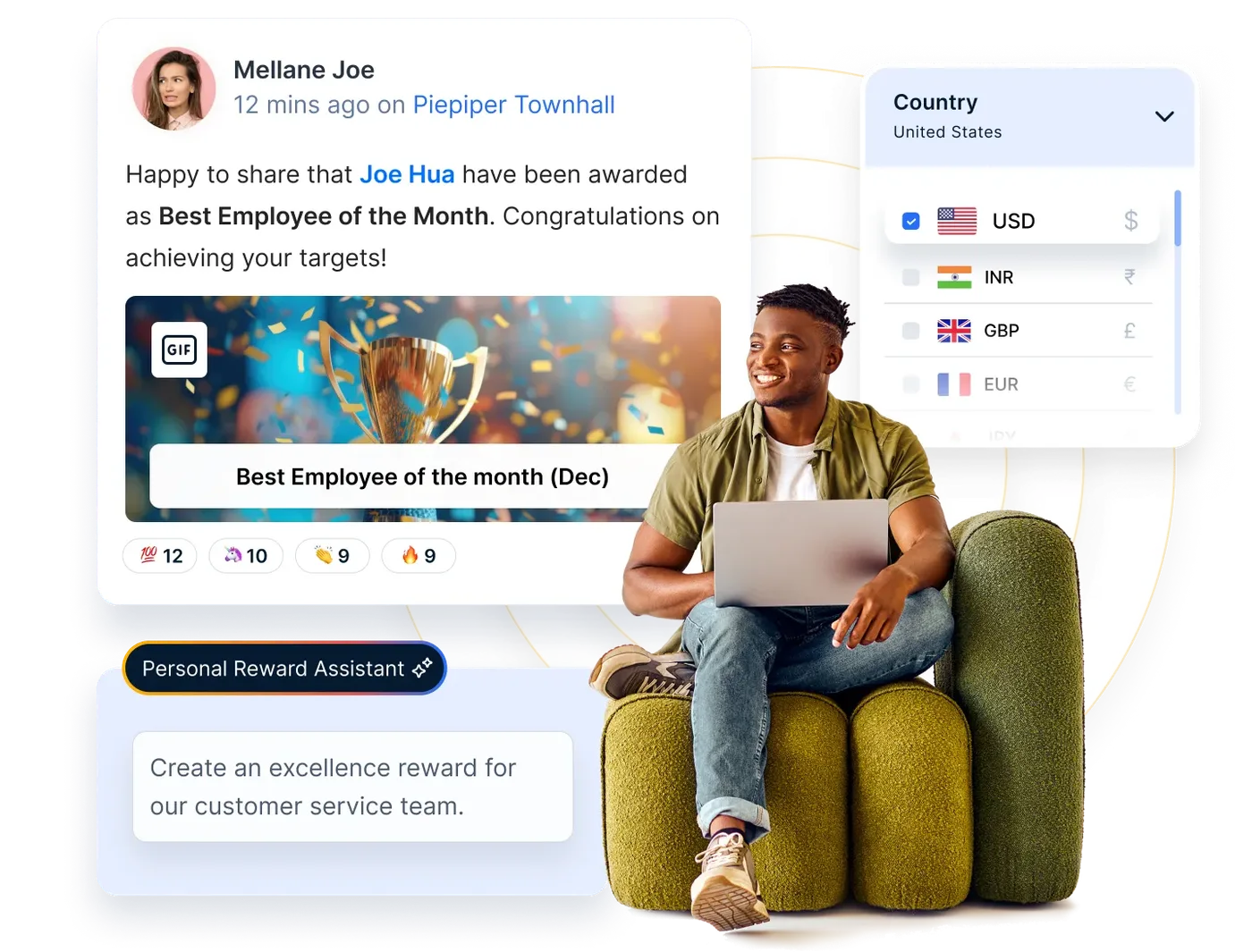
11. Integrations
R&R solutions that integrate with everyday work tools make it easier to connect, recognize, reward and share feedback in the flow of work. A spot award announced in Slack or Microsoft Teams brightens anyone's day.
- Communication and collaboration: Slack, Microsoft Teams, Outlook, Gmail and Google Chat integrations let employees give and receive recognition without switching apps.
- Single sign-on and provisioning: SSO through providers such as Google Workspace, Microsoft Entra ID (formerly Azure AD) or Okta, plus automatic user provisioning, gives one-click access and removes manual user management.
- HRIS, HRMS and payroll: Integrations with systems such as Workday, SAP SuccessFactors, ADP, UKG, BambooHR, Darwinbox and Zoho People centralize employee data and trigger milestone recognition automatically.
- Open APIs: A REST API lets other business systems, such as CRM or learning platforms, fire rewards when goals are met.
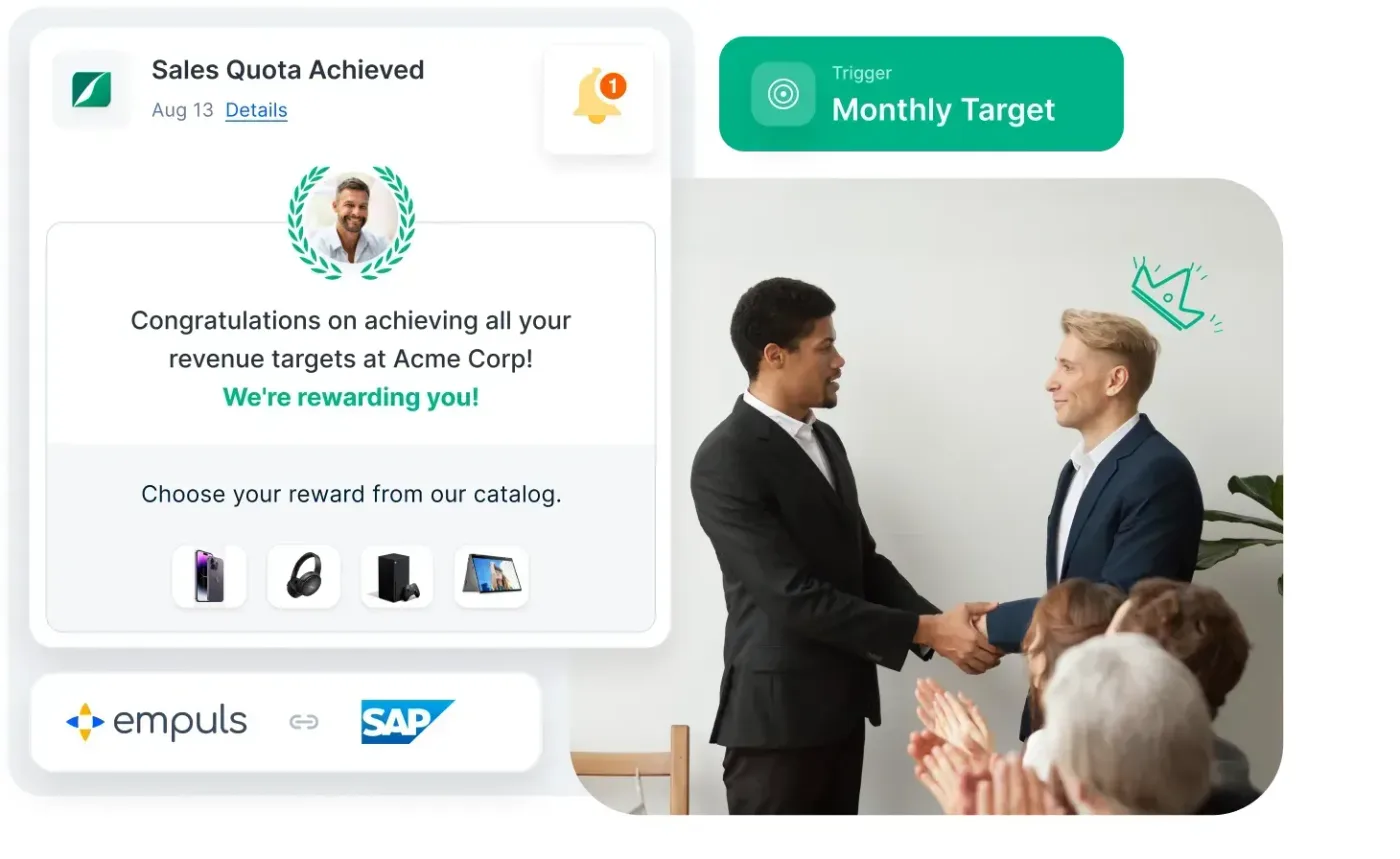
This guide to recognition software integrations with Slack, Teams and HRMS goes deeper on what to check.
12. Mobile and desktop access
Strong mobile and desktop experiences let employees and managers use the platform anywhere, not just from an office computer, which raises participation and adoption. Look for a clean, intuitive interface that puts the essential actions first.
- Mobile app: iOS and Android apps let employees see recognition alerts, appreciate peers in real time, stay connected and redeem rewards on the go. For deskless teams, mobile is the main way in.
- Desktop and web: A fast web app, plus access inside the desktop tools people already use, such as Teams or Outlook, keeps recognition one click away during the workday.
13. Hosting and data residency
Where and how the platform is hosted affects speed, scalability and compliance, and decides whether employees can use it on the go or only on a corporate network. For most companies today, the choice is a cloud platform, and the real question is where the data lives.
- Cloud-based: An on-demand, multi-tenant cloud platform saves infrastructure cost, gives anytime access, scales up or down with the business and receives updates automatically. The savings can go into the program itself.
- Data residency: If you operate in regulated markets, ask which regions host your data, whether you can choose, and whether data ever moves across regions.
14. Maintenance and configuration
The most popular R&R solutions are agile, easy to set up, configure and maintain, and come with clear documentation and guides.
- Maintenance: A feature-rich platform loses its charm if it is hard to run. HR, managers and employees should be able to use it without calling IT for every change.
- Configuration: A simple setup with an admin guide, a quick-start for users and step-by-step help for managing awards, budgets and approvals is essential. Ask how long a typical implementation takes and who does the work.
15. Security and data privacy
Security and privacy deserve real weight in any R&R decision. A recognition platform holds employee data and handles financial transactions, and even a small breach can be costly for the vendor and for you.
- Security: Look for encryption in transit (TLS 1.2 or higher) and at rest (such as AES-256), role-based access and regular penetration testing.
- Data privacy: The platform labels, stores, transmits, retains and disposes of employee information, so it must follow published privacy procedures aligned with laws such as the EU GDPR, the California Consumer Privacy Act, the UK Data Protection Act 2018, Australia's Privacy Act 1988 and India's Digital Personal Data Protection Act 2023.
16. Compliance certifications
Depending on where you operate, the platform should hold recognized certifications and align with leading practices and regulations. Ask for evidence, not just logos:
- ISO/IEC 27001: The international standard for information security management systems. The current version is ISO/IEC 27001:2022.
- SOC 2 Type II: An independent audit of how a vendor manages customer data across security, availability, processing integrity, confidentiality and privacy over a period of time.
- VAPT: Vulnerability assessment and penetration testing that finds weaknesses before attackers do. Ask for a recent summary report.
- GDPR: Data processing agreements and support for rights such as erasure for employees in the EU.
- Cross-border transfers: For EU to US data transfers, ask whether the vendor relies on the EU-US Data Privacy Framework or standard contractual clauses, since the older Privacy Shield is no longer valid.
Employee recognition software evaluation scorecard
A weighted scorecard keeps the decision objective when several vendors look similar in a demo. Score each vendor from 1 (weak) to 5 (excellent) on every criterion, multiply by the weight and add up the totals; adjust the weights to your priorities, but keep adoption-related criteria near the top.
| Criterion | Weight | Question to ask the vendor | What a strong answer looks like |
|---|---|---|---|
| Ease of giving recognition | 15% | Show me how an employee recognizes a peer from Slack or Teams in under 30 seconds. | Recognition from chat, email and mobile without logging into a separate app |
| Recognition types and values | 10% | Can we run spot, peer, manager, nomination and jury awards, each tied to our values? | All types configurable, with value tags and approval rules |
| Rewards catalog and local fit | 10% | What can employees redeem in each of our countries, and in which currencies? | Local gift cards, experiences, merchandise and donations, in local currency |
| Automation and AI | 10% | Which milestones trigger automatically, and what does AI actually do? | HRIS-triggered milestones and practical AI help for messages and insights |
| Analytics and ROI | 10% | Show the dashboard a CHRO would see each month. | Adoption, reach, budget and value trends, with exports |
| Integrations | 10% | Which HRIS, chat and SSO tools connect natively, and how often does data sync? | Native HRIS sync, SSO, user provisioning and an open API |
| Deskless and mobile access | 8% | How does a frontline worker without a corporate email sign in? | Mobile app with simple sign-in and full functionality |
| Budget controls and tax | 7% | How do budgets, approvals and payroll reporting for rewards work? | Department budgets, thresholds, alerts and payroll-ready reports |
| Security and compliance | 10% | Share your SOC 2 Type II report, ISO 27001 certificate and data residency options. | Current certificates, encryption details and a choice of region |
| Total cost and support | 10% | What is the full cost, including reward markups, setup and support? | Transparent pricing, rewards at face value, named support |
Ask every vendor to demo the same three scenarios from your own program, for example a peer recognition from Teams, a work anniversary that fires automatically and a manager checking the monthly budget. Scenario demos expose gaps that feature lists hide.
How to choose a rewards and recognition platform in 6 steps
Knowing the criteria is only half the job, and how you run the selection decides whether the platform gets used. These six steps take most teams six to ten weeks, and the first one, agreeing on goals, prevents most bad purchases.
- Define goals and success metrics: Decide what the program must change, such as engagement, retention or values adoption, and how you will measure it. A clear employee recognition program design comes before the software.
- Bring in stakeholders early: Involve HR, finance, IT and security, internal communications and a few managers and frontline employees, so requirements reflect real users.
- Build a shortlist: Use your must-haves to narrow the market to three or four vendors. This roundup of the best employee recognition software is a useful starting point.
- Run scenario demos and score them: Use the scorecard above and the same scenarios for every vendor.
- Pilot with a real team: Run a four to six week pilot with one department or location and measure participation, reach and employee feedback.
- Plan the launch and adoption: Choose a platform that comes with launch support, then follow a clear plan for creating a culture of recognition so usage lasts beyond the first month.
How Empuls meets every criterion for an employee rewards and recognition platform
Choosing the right platform is not just about ticking boxes. It is about creating moments that matter, at scale, with consistency and care. Empuls is an all-in-one employee engagement platform that combines recognition, rewards, celebrations, surveys and benefits for SMBs and global enterprises alike. Here is how it maps to the criteria above:
- Recognition for every moment: Empuls recognition supports spot awards, peer-to-peer and manager recognition, value-based awards, award campaigns, external praise, reward codes and jury-based nomination programs with evidence and AI-assisted scoring.
- AI that does real work: An AI recognition coach suggests who to appreciate next, AI-assisted messages turn a few words into a polished note in your chosen tone, and AI insights chat answers questions about recognition trends, budgets and redemptions in plain language.
- Automated milestone rewards: Milestone rewards fire automatically when goals are hit, courses completed, referrals made or targets met, through HRMS, OKR and LMS connections or the Empuls API, with a shout-out on the social feed.
- Social recognition and community: The social intranet includes a Wall of Fame, leaderboards, celebrations, groups and polls, so recognition is seen and celebrated across the company.
- Rewards employees want: Points redeem for gift cards, branded merchandise, experiences, travel and charitable donations, with local currency options, and points do not expire by default.
- Budget control: Admins set budgets by department, manager or company, configure approval thresholds for high-value awards and get alerts on unusual activity, with a full audit log.
- Integrations in the flow of work: Empuls connects with Slack, Microsoft Teams, Outlook, Gmail and Google Chat, HRIS systems including Workday, SAP SuccessFactors, ADP, UKG, BambooHR, Rippling, Zoho People and Darwinbox, and SSO with SCIM provisioning. See all Empuls integrations.
- Built for deskless and global teams: iOS and Android apps reach deskless employees, and the platform supports 20+ languages.
- Listening and benefits on the same platform: Employee surveys with eNPS, pulse and lifecycle surveys measure how recognition lands, and Empuls benefits adds flexible benefit wallets when you want one employee experience.
- Enterprise-grade security: Empuls is SOC 2 Type II certified and ISO 27001:2022 compliant, encrypts data in transit with TLS 1.2+ and at rest with AES-256, supports GDPR and offers US or EU data residency for enterprise customers.
If you are comparing specific tools, the Empuls comparison pages set out side-by-side differences with other recognition vendors.
Technology lets you rethink modern R&R initiatives
A holistic R&R program needs a platform with the right selection of features: one that personalizes rewards and recognition and uses technology to deliver real-time experiences to every employee, wherever they work.
Use the 16 criteria to define what you need, the scorecard to compare vendors fairly and a pilot to prove adoption before you commit. The right employee rewards and recognition platform will not just run your program. It will make recognition a daily habit that people notice and value.
Book your Empuls demo
Frequently asked questions
An employee rewards and recognition platform is software that lets managers and peers recognize employees, give points or rewards, celebrate milestones and track the program. Most platforms include a rewards catalog, a social recognition feed, integrations with HR and chat tools such as Slack or Teams, budget controls and analytics that show adoption and impact.
Core features include peer-to-peer and manager recognition, spot and nomination-based awards, value tags, a global rewards catalog in local currencies, automated milestone rewards, a social feed, a mobile app, budget and approval controls, analytics, and integrations with HRIS, SSO and chat tools. Enterprises should also require SOC 2 Type II, ISO 27001 and data residency options.
Employee recognition software is usually priced per employee per month or per year, plus the rewards budget you fund separately. Total cost depends on features, company size, contract length and whether rewards are passed through at face value or with a markup. Always compare the full cost, including setup, support and reward fees, not just the license price.
The best employee rewards platform is the one your employees will use and that fits your size, locations and tools. Score vendors on ease of recognition, reward choice in each country, automation, analytics, integrations, mobile access for deskless staff, security and total cost. Use a weighted scorecard and scenario demos rather than relying on rankings alone.
Agree on weighted criteria first, then ask every vendor to demo the same scenarios from your own program, such as recognizing a peer from Teams or an automated work anniversary. Score each criterion from 1 to 5, multiply by the weight and compare totals. Finish with a short pilot to test adoption with real employees.
In many countries, yes. In the US, the IRS treats cash and cash-equivalent rewards such as gift cards as taxable wages, never as tax-free de minimis benefits. Rules differ by country, so check local guidance and choose a platform that reports reward values to payroll so tax can be handled correctly.
Most cloud recognition platforms can go live in a few weeks. Timelines depend on the number of integrations, such as HRIS, SSO and chat tools, the complexity of awards and budgets, and how many countries and languages you launch in. A phased rollout with a pilot team usually leads to higher adoption than a big-bang launch.
Yes, if your employees work in Slack or Teams. Integrations let people give and receive recognition without switching apps, which turns recognition from an occasional task into a daily habit. Also check HRIS integration for automatic milestones and SSO for easy sign-in, since these drive adoption as much as chat integrations.





































































































































































































































































































































































































































































































































































