
Key Takeaways
Employee absenteeism is a pattern of frequent, unplanned absence beyond what policy treats as normal, and it is usually a symptom of a deeper cause.
The US absence rate for full-time workers was 3.2% in 2025, according to the BLS, with the highest rates in personal care, healthcare support and food service jobs.
Absenteeism rate equals unplanned absence days divided by scheduled workdays, times 100; measure it by team to find where to act.
Burnout, inflexible schedules, caregiving, poor health and disengagement drive most absence, and each needs a different fix.
A clear, supportive absenteeism policy plus flexibility, wellness support and recognition reduces absence without pushing sick people to work.
Employee absenteeism is a pattern of frequent, unplanned absence from work beyond what is normal or agreed, including repeated sick calls, late arrivals and early departures. To reduce it, find the root causes first (burnout, inflexible schedules, caregiving, disengagement, poor health or a toxic team), then fix those causes with flexibility, health support, recognition and a clear, fair absenteeism policy.
Every employee keeps the business running, so frequent absences hit productivity, morale and service levels. Some absence is unavoidable, such as planned vacations, emergencies and genuine illness, but excessive unplanned absence means missed deadlines, overloaded colleagues and extra cost. This guide covers the causes of absenteeism, how to measure and cost it, 7 proven strategies and a policy checklist you can adapt.
What employee absenteeism is
Employee absenteeism refers to habitual, unplanned absence from work beyond what company policy treats as normal or acceptable. Unlike occasional sick days, vacations or emergencies, which policies already account for, absenteeism in the workplace is a recurring pattern of unscheduled leave, lateness, early departures or skipped days.
Over time, the pattern drags on team performance, shifts work onto colleagues and strains operations. It is also usually a symptom: people rarely miss work repeatedly without a reason, so the goal is to find and fix that reason, not just to count absences.
3.2%
absence rate for US full-time workers in 2025
BLS
4.3%
absence rate in personal care and service jobs, the highest occupation group
BLS, 2025
4.4
working days lost to sickness per UK worker in 2024
ONS
10%
fewer sick days taken by holistically healthy employees
MetLife, 2026
Absenteeism in the workplace by the numbers
The US Bureau of Labor Statistics' 2025 annual averages put the absence rate for full-time wage and salary workers at 3.2%, with 2.2 points of that due to the worker's own illness or injury. Rates are highest in personal care and service (4.3%), healthcare support (4.1%) and food preparation and serving (4.0%). In the UK, the Office for National Statistics estimates 148.9 million working days were lost to sickness or injury in 2024, an average of 4.4 days per worker.
Causes of absenteeism in the workplace
Most absence has more than one cause, and the cause shapes the fix. The table lists the ten most common causes of absenteeism, the warning signs and the strategy that addresses each one.
| Cause | Warning signs | What helps |
|---|---|---|
| Illness and injury | Short spells around seasonal illness, recovery time after injuries | Paid sick leave, preventive care, safe working conditions |
| Burnout and stress | Rising absence in high-workload teams, more Monday and Friday absences | Workload reviews, realistic goals, mental health support |
| Mental health conditions | Longer or repeated absences, withdrawal at work | EAP and therapy access, reasonable accommodations |
| Caregiving | Absences tied to school closures or a family member's care | Flexible hours, remote options, caregiver leave |
| Inflexible schedules | Late arrivals, early departures, partial days | Flexible start times, shift swaps, hybrid work where possible |
| Low engagement | Gradual rise in unplanned leave, low survey scores | Recognition, growth paths, manager one-on-ones |
| Harassment or bullying | Absence concentrated in one team or around one person | Clear conduct policy, safe reporting, prompt investigation |
| Job hunting | Scattered half days and short-notice leave | Stay interviews, pay and career reviews |
| Time theft | Long breaks, repeated lateness, leaving early | Clear expectations and consistent, fair follow-up |
| Commute and transport problems | Lateness clustered by location or weather | Flexible start times, commuter benefits |
Four causes deserve the most attention because they are within an employer's control. Low employee engagement means people complete tasks with minimal effort and feel little pull to show up. Workplace burnout builds when teams are understaffed or overloaded for long periods, and overwhelmed people start skipping work. Lack of flexibility forces employees to choose between family priorities and work commitments. Workplace harassment makes people stay away to avoid the person or team making them feel unsafe.
How to measure employee absenteeism
Tracking absenteeism shows patterns, measures the impact on productivity and tells you whether your strategies are working. The most common measure is the absenteeism rate, the share of scheduled workdays lost to unplanned absence.
Track three more metrics alongside the rate:
- Tardiness rate: How often people arrive late or leave early.
- Absence frequency: How many separate unplanned absences each person or team has in a period.
- Absence duration: The average length of absences, which separates short-term patterns from long-term illness.
Some UK employers also use the Bradford Factor, which scores spells squared times total days (S² × D), so six one-day absences score 216 while one six-day absence scores 6. It highlights frequent short absences, but use it only as a prompt for a supportive conversation, never as an automatic trigger, because it can penalize people with disabilities or chronic conditions.
The cost of absenteeism: a worked example
Absenteeism costs more than the wages paid for missed days. You also pay for cover, overtime, lost output and the extra strain on colleagues, which can trigger more absence.
| Cost line | How to calculate | Example (50-person team, 1 month) |
|---|---|---|
| Paid absence | Unplanned days × average daily pay | 38 days × $240 = $9,120 |
| Overtime cover | Days covered by overtime × daily pay × 1.5 | 19 days × $240 × 1.5 = $6,840 |
| Total direct cost | Paid absence + cover costs | $15,960 a month, about $191,520 a year |
| Indirect costs (estimate separately) | Missed deadlines, lower quality, colleague burnout, customer impact | Track through service levels and survey data |
Run the calculation by team, not just company-wide. A team at 6% while the rest of the company sits at 3% is where your strategies should start.
Find out why your people are missing work
Run pulse surveys, act on the results and recognize effort every day from one platform.
Talk to our ExpertTrusted by 5,000+ companies
How to reduce employee absenteeism: 7 proven strategies
Managing absenteeism takes more than enforcing attendance rules. The seven strategies below start with diagnosis, because the right fix depends on the cause, and then move to the levers that keep people healthy, motivated and able to show up.
1. Identify the root causes of absenteeism
Start by understanding why people are absent. Look at absence data by team, manager, shift and day of the week, then run short pulse surveys and one-on-ones to understand what the numbers mean. Workplace issues, personal challenges or both may be behind the pattern.
For employees returning from extended leave, such as parental leave or illness, hold a supportive return-to-work conversation to agree any adjustments and ease the transition. Open, proactive communication catches problems before they become patterns.
2. Customize solutions for different teams
Absenteeism rarely affects all departments equally, and a one-size-fits-all fix seldom works. If customer support agents are burning out, longer breaks, better schedules or automation for repetitive tickets may help. If a marketing team struggles because of unrealistic deadlines, better planning and timelines will do more than any policy.
3. Implement workplace wellness programs
A good wellness program reduces absenteeism by supporting physical, mental and emotional health, and healthy employees miss less work: MetLife's 2026 Employee Benefit Trends Study found holistically healthy employees take 10% fewer sick days. Useful elements include:
- Mental health resources: Therapy sessions, an EAP and stress-management workshops. See these strategies for mental health in the workplace.
- Fitness incentives: Gym memberships or team step challenges.
- Physical wellbeing at work: Healthy snacks, ergonomic workstations and preventive health checks.
4. Offer paid leave and flexible time off
Employees with adequate paid time off are less likely to take unplanned absences. Paid sick leave, parental leave and personal days let people rest and recover before exhaustion turns into long-term disengagement. During peak flu season, paid sick leave also stops illness from spreading through the team.
5. Prioritize work-life balance with flexible schedules
Rigid schedules push people with family obligations, long commutes or health appointments into unplanned absence. Flexible hours, hybrid or remote options, compressed weeks and easy shift swaps let people meet those needs without missing work, and they show employees that their wellbeing matters.
6. Recognize and reward employee contributions
Low morale and a lack of motivation feed absenteeism, and people who feel undervalued are less inclined to show up. Publicly acknowledge effort, send specific thank-you notes and celebrate team wins. Rewarding reliability helps too, as long as it does not push sick people to come in; this guide to rewarding employees for good attendance shows how to do it fairly.
7. Foster a culture of communication and collaboration
When employees trust their managers and feel connected to colleagues, they are more likely to show up. Encourage open discussion between teams and leadership, build an inclusive workplace, create psychological safety so people can raise concerns without fear and deal with conflicts early, before they push people to stay away.
Absenteeism policy checklist
A clear absenteeism policy, understood by every current employee and new hire, is one of the simplest ways to reduce unplanned absence. Use this checklist to write or review yours.
- Purpose: Explain that the policy supports health and fairness, not surveillance.
- Definitions: Define planned leave, unplanned absence, lateness and early departure.
- How to report an absence: Who to tell, by when and through which channel.
- Sick leave and documentation: Paid days available and when, if ever, a medical note is needed, in line with local law.
- Flexibility options: Shift swaps, flexible hours or remote work people can use instead of taking a day off.
- Support routes: EAP, wellness resources and how to request accommodations.
- Return-to-work conversations: When they happen and that they are supportive.
- Patterns and next steps: What triggers a conversation, and the fair, stepped process that follows.
- Recognition: How reliability is recognized without pressuring people to work while sick.
- Review: Who owns the policy and how often it is reviewed against absence data.
How Empuls helps reduce employee absenteeism
Frequent absence is often a symptom of disengagement: people who feel unheard, unrecognized or disconnected take more unplanned leave. Empuls helps you find the causes and build a workplace people want to show up to.
- Turn feedback into action: Pulse surveys and action plans reveal the real reasons behind absence by team and help managers act on them.
- Make recognition a daily practice: Empuls recognition makes appreciation easy and frequent, so effort does not go unnoticed.
- Support health and wellbeing: Empuls Wellness brings mental health support, preventive care and fitness challenges into one place, and the Mood-o-Meter flags rising stress early.
- Build connection: The social intranet keeps distributed and frontline teams connected and informed.
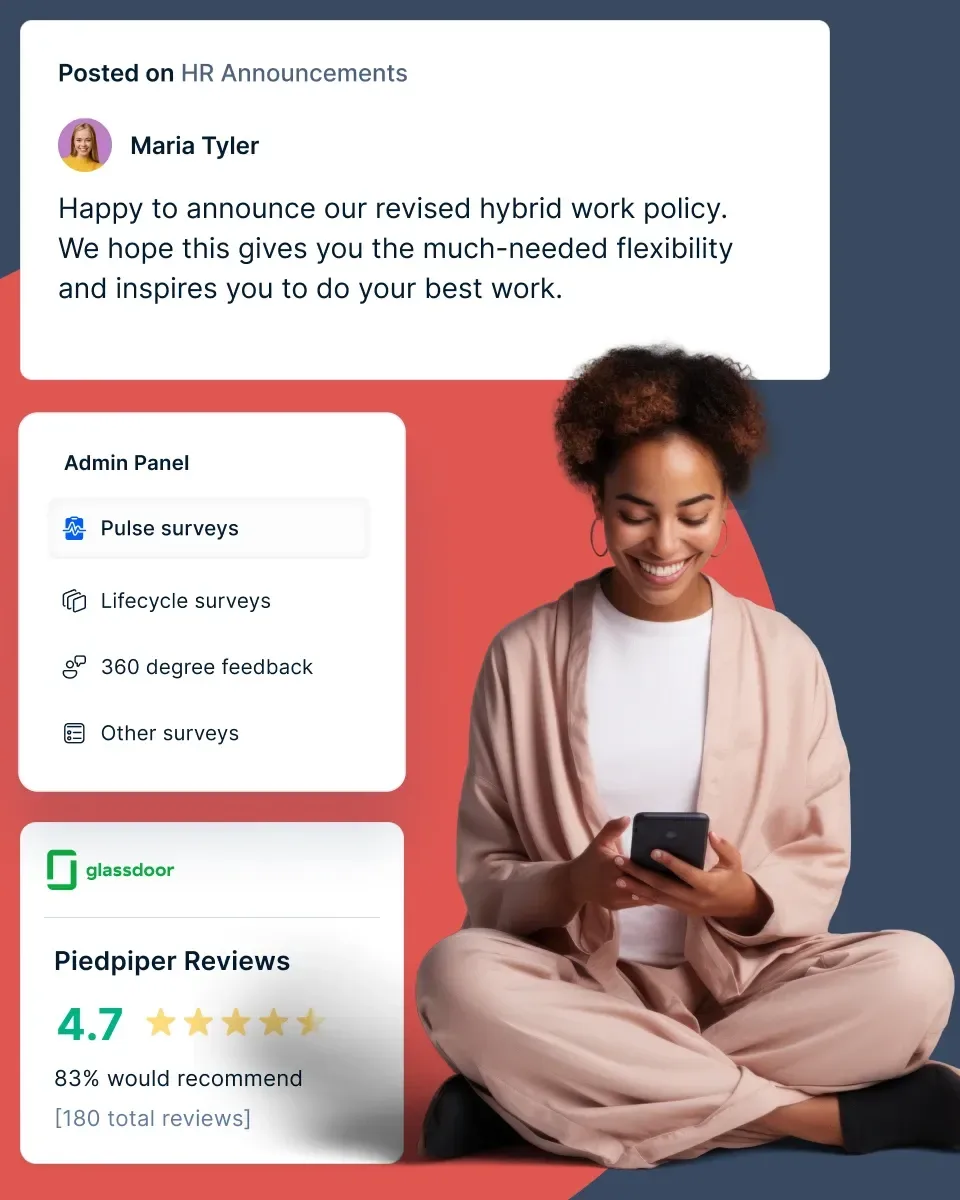
Building a workplace people want to show up to
When employees are absent, colleagues carry the extra workload and the business pays for cover and overtime. Policies alone will not fix that. Measure absence by team, find the causes, then address them with flexibility, health support, recognition and good management.
When people feel healthy, valued and able to balance work with life, attendance improves on its own. Start with the cost calculator and the policy checklist, and review your absence data every month.
Book your Empuls demo
Frequently asked questions
Employee absenteeism is a habitual pattern of unplanned absence from work beyond what is normal or agreed, including frequent sick calls, lateness, leaving early or skipping days. Planned vacations and occasional genuine illness are not absenteeism. Because it is usually a symptom of burnout, disengagement, health problems or caregiving pressure, employers should look for causes.
The main causes of absenteeism are illness and injury, burnout and stress, mental health conditions, caregiving responsibilities, inflexible schedules, low engagement, harassment or bullying, job hunting and commute problems. Burnout, inflexibility and disengagement are the causes employers can influence most directly through workload, scheduling and management.
Divide the number of unplanned absence days by the total scheduled workdays in the period, then multiply by 100. For example, a 50-person team with 21 workdays has 1,050 scheduled days; 38 unplanned absence days gives an absenteeism rate of 3.6%. Calculate it by team and month to spot patterns.
There is no universal target, but national data gives a benchmark. The US Bureau of Labor Statistics put the absence rate for full-time workers at 3.2% in 2025, higher in care and service jobs and the public sector. Compare teams with your own company average and industry, and investigate rates well above both.
An absenteeism policy should define planned and unplanned absence, explain how and when to report an absence, set sick leave and documentation rules in line with local law, list flexibility options and support routes, describe return-to-work conversations and set out a fair, stepped process for persistent patterns. Review it regularly against absence data.
Engaged employees feel connected to their work and team, so they are more likely to show up and less likely to take unplanned leave. Disengaged employees do the minimum and feel little pull to come in. Recognition, growth opportunities, good managers and acting on feedback raise engagement and usually lower absence.
You can reward good attendance, but avoid rewards for perfect attendance alone, because they can push sick employees to come to work and spread illness. Reward reliability over a period, allow for approved sick leave and pair rewards with flexibility and wellness support so people never feel penalized for being ill.
Absenteeism is being away from work, especially through frequent unplanned absence. Presenteeism is being at work while unwell or unable to function well, often because people feel pressured to show up. Both reduce productivity. Paid sick leave, mental health support and a culture where taking needed time off is accepted reduce both.





































































































































































































































































































































































































































































































































































