
Key Takeaways
Rewards and recognition in retail means thanking and rewarding frontline employees for the behaviors that drive sales and service, quickly and fairly on every shift.
Retail lost roughly 46% of its workforce to separations in 2025, so recognition is one of the cheapest retention levers a retailer has.
The strongest retail programs mix informal praise, formal awards and peer-to-peer recognition with rewards associates choose themselves.
Schedule control, such as first pick of shifts, is a zero-cost reward that hourly associates value highly.
Measure recognition reach, participation, redemption and 90-day retention by store to prove the program works and spot locations that are left out.
Rewards and recognition in retail means thanking and rewarding store, warehouse and customer-facing employees for the behaviors that drive sales and service, quickly, fairly and on every shift. Done well, it is one of the cheapest levers a retailer has against turnover, because frontline workers who feel seen are far more likely to stay.
Rewards and recognitions for various achievements at work help employees feel special and actively engage them. The more employees are recognized for their positive contribution, the more appreciated they feel, which in turn lifts their productivity and performance. This guide covers why retail employee recognition matters, the challenges that are specific to stores, recognition and reward ideas with their cost and effort, how to celebrate milestones and how to measure whether your program works.
Why rewards and recognition in retail matter
Employees are the most important resource for a retailer. They help the company grow, hit its targets and build a brand that customers want to come back to. In a store, the associate at the counter is the brand for most shoppers.
Retail is also one of the most competitive and saturated industries, and it loses people faster than almost any other. The Bureau of Labor Statistics JOLTS annual tables for 2025 show retail trade averaged a 3.8% monthly separations rate, which adds up to roughly 46% of the retail workforce over the year. Mercer's 2025 US Turnover Survey found retail and wholesale had the highest turnover of any industry, at 26.7%.
A lack of recognition is a big part of that churn. In Workvivo's 2025 Frontline Gap retail report, based on more than 600 frontline retail workers, 44% said their company cares more about office workers than about them. Recognition that reaches the shop floor is a direct answer to that feeling.
46%
of the retail workforce separated
in 2025 (BLS JOLTS, 3.8% a month)
26.7%
turnover in retail and wholesale
highest of any industry (Mercer, 2025)
44%
of frontline retail workers
say office staff matter more (Workvivo, 2025)
45%
less likely to have left
after two years when well recognized (Gallup and Workhuman)
The retention case for retail employee recognition
The upside is well documented. A Gallup and Workhuman study found that employees who receive high-quality recognition were 45% less likely to have left their organization two years later. Research consistently links rewards and recognition with employee satisfaction, productivity and performance. In a store, the benefits show up as:
- Better work culture: Associates who see good work noticed are more likely to repeat it and to help each other.
- Positive growth and teamwork: Team-based recognition builds cooperation across departments, shifts and stores.
- Better attendance and work quality: Recognition tied to reliability and standards makes both visible and valued.
- Better productivity and sales: Recognizing the achievement of targets and sales quotas keeps momentum going between payouts.
- Healthy performance and lower turnover: Gallup estimates that replacing a frontline employee costs about 40% of their annual salary, so every associate you keep saves real money.
For the wider engagement picture, see these employee engagement strategies for the retail industry, and for the turnover math, this guide to the retail turnover rate.
Common rewards and recognition challenges in retail
Despite its importance, implementing effective rewards and recognition in the retail industry comes with its own set of challenges. From managing large teams across many locations to keeping appreciation fair and timely, retailers often struggle with consistency and scale. These are the four challenges that come up most often:
- Large, distributed, shift-based workforce: Retail employees work in shifts across multiple stores, which makes timely recognition hard. A disconnected workforce limits the sense of belonging and hides individual contributions.
- Lack of standardized recognition systems: Many retailers still rely on ad hoc or manual recognition. Without a unified approach, recognition becomes inconsistent, subjective and sometimes overlooked altogether.
- Limited real-time visibility for managers: Store and district managers may not have an up-to-date view of performance or peer feedback, so deserving employees go unnoticed.
- Inconsistent reward budgets and delivery: Budget constraints and a lack of central control lead to unfair or delayed rewards across stores. That inconsistency demotivates people and undermines the purpose of the program.
To overcome these hurdles, retailers need recognition that works on a phone, runs on shared rules across every store and gives managers a simple view of who has and has not been recognized.
Recognize every associate, on every shift
Give store teams mobile recognition and rewards they can redeem without a work email or bank account.
Talk to our ExpertTrusted by 5,000+ companies
Retail employee recognition ideas
Recognition for achievements and milestones helps retain experienced, trained employees that the business has already invested in. Here are three types of recognition that work for retail companies, starting with the simplest, because frequent informal praise does more for daily morale than an annual award.
1. Informal recognition through praise and appreciation
This is the most common type and the simplest one every retailer should adopt. Appreciation for achievements of every kind, from a calm handling of a difficult customer to a perfectly reset aisle, motivates employees to keep going.
Examples include a thank-you card, applause in the pre-shift huddle, a written note from the store manager or the CEO, a shout-out on the team channel, or reading out a customer compliment that names the associate. Keep it specific: say what the person did and why it mattered. For more in-the-moment gestures, see these on-the-spot recognition ideas.
2. Formal recognition programs and awards
Formal recognition programs are more structured and attach a reward to the recognition, in kind or in cash. They include incentives, digital rewards, cash bonuses, gift cards, certificates and vouchers employees can redeem. Common retail formats are store of the month, top seller of the quarter and a customer service award decided by mystery shopper or survey scores.
Formal programs work best when the criteria are published, the same in every store and reviewed by more than one person, so they feel fair to part-time and weekend staff as well as full-timers. For a ready format, see this guide to customer service incentive programs.
3. Peer-to-peer recognition and team-based acknowledgment
Another strong way to recognize employees is to hand some of the power to them. With peer-to-peer recognition, associates can thank colleagues who covered a shift, trained a new hire or helped close a big sale, which builds team spirit and overall productivity.
Team-based acknowledgment is widely used in retail because store results are a team effort. Recognizing a whole department or store for a strong inventory count, a clean audit or a sales record builds pride without pitting colleagues against each other.
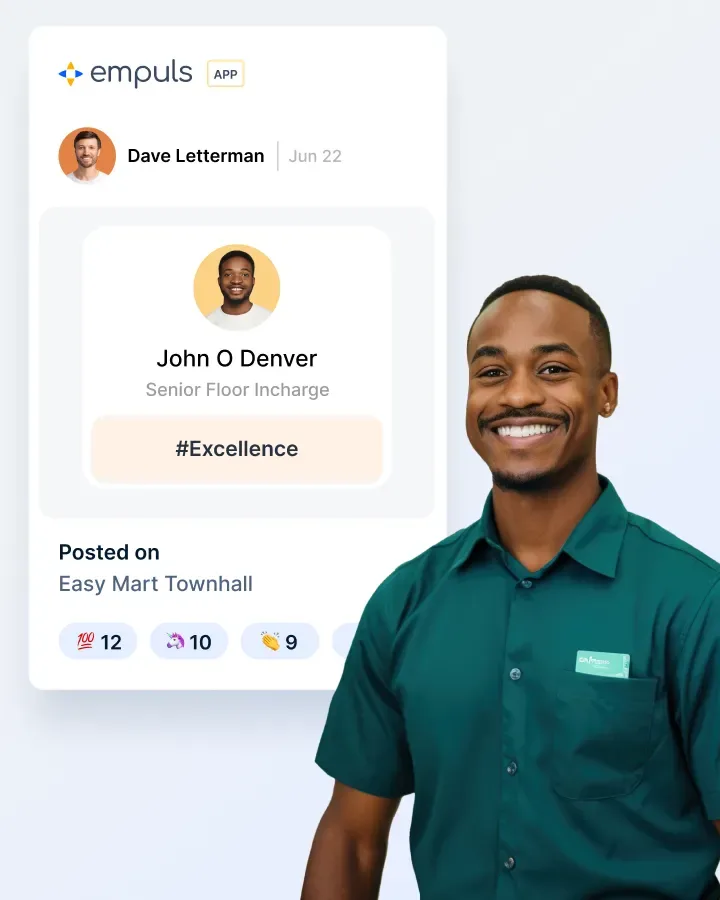
Retail employee rewards ideas
Rewards and incentives are the more tangible form of recognition, and the mix should change from time to time so they stay meaningful. Giving employees some freedom to choose the reward that suits them best matters as much as the reward itself, so the table below compares the most popular options by cost, effort and fit.
| Reward idea | Cost | Effort to run | Best fit |
|---|---|---|---|
| Points redeemable for gift cards, groceries or fuel | Low to medium, set per award | Low once a platform is in place | Everyday wins across every store and shift |
| Spot cash or bonus for a standout moment | Medium | Low | Exceptional service, saving a sale, covering a crisis |
| Sales contest with team prizes | Medium | Medium, needs clear rules | Seasonal pushes, new product launches, attachment rates |
| First pick of shifts or a guaranteed weekend off | None | Low, needs scheduler buy-in | Hourly associates who value schedule control |
| Paid time off or an early finish | Low to medium | Low | Peak season effort, perfect attendance streaks |
| Training, certification or a mentor | Low to medium | Medium | High performers who want to move up |
| Store-level celebration (meal, treats) | Low | Low | Team targets, audits, holiday season close |
The two broad families work together rather than against each other:
- Monetary rewards: Cash bonuses, sales commissions, incentives and gift cards are the rewards most associates notice first. Companies can start with small gift cards and scale up to quarterly performance incentives or one-time bonuses. For commission and incentive design, see these employee incentive ideas.
- Non-monetary rewards: Not every employee is motivated by money alone. Appreciation notes, personalized gifts, certificates, badges, schedule choice and time off can feel just as rewarding. This guide to non-monetary employee recognition has more options.
Flexibility deserves special attention in retail. A 10-country UKG survey of more than 8,000 frontline workers found that, after pay, schedule flexibility is the second most important factor in whether they stay or leave, which makes shift choice one of the most valuable rewards a store manager can give. For a longer list of gifts and rewards, browse these employee reward ideas.
Milestones and achievements to celebrate for retail employees
Celebrating employees' special moments connects them with the company. Special moments can be professional, such as sales wins, five or ten years of tenure, beating targets several periods in a row or glowing customer reviews, or personal, such as birthdays, weddings, promotions and becoming a parent.
When these moments are recognized in front of peers, they carry special value and build a positive work culture. The two most popular types of milestone celebration are:
- Celebrating individual milestones: Birthdays, an employee's wedding, parenthood, promotions and personal achievements, along with professional ones such as consecutive top performance, overachieving targets and long tenure. Automate the dates so no store forgets them, and see this guide to long service awards for tenure ideas.
- Recognizing team achievements: Associates who sell as a team are not always rewarded individually. Because their output is shared, recognize the whole team for sustained top performance, strong customer feedback or completing a store refit or long project.
Gallup estimates that 42% of employees who quit say their manager or organization could have prevented it. A culture where managers notice achievements and celebrate them as the company's own keeps hardworking, trained people longer, and in a tight retail labor market it is easier for associates to find another job than for you to find another trained associate.
Best practices for recognition programs for retail workers
The ideas above only work if they reach every associate, on every shift, in every store. These six practices, ordered from the most basic to the most advanced, make the difference between a program people talk about and one nobody uses:
- Recognize within the same shift: Praise loses most of its value after a few days. Give managers a quick way to recognize from the floor.
- Make it mobile and email-free: Many associates have no work email or desk. Recognition, rewards and redemption should work on a personal phone.
- Publish the rules: Use the same criteria and budget logic in every store, so recognition depends on what people did, not which manager they work for.
- Tie recognition to customer moments: Read out compliments from reviews and surveys and name the associate. It links recognition to what the business cares about most.
- Include part-timers, seasonal staff and back-of-house teams: Stockroom, delivery and night crews are easy to overlook and often feel it most.
- Check recognition equity monthly: Look for stores, shifts or groups that get far less recognition and fix the gap. This explainer on recognition equity shows how.
Retail sits alongside other frontline sectors here, so these guides to engaging frontline workers and recognition for remote and frontline teams are useful next reads.
Measuring the impact of rewards and recognition in retail
Recognition and rewards are an excellent way to build engagement and a great working experience, and the program itself should be measured like any other investment. The scorecard below pairs the performance KPIs retailers already track with recognition metrics, so you can see whether recognition is reaching people and moving results.
| Metric | How to calculate it | What a healthy signal looks like |
|---|---|---|
| Recognition reach | Employees recognized in the month ÷ total employees × 100 | Rising every month, with no store or shift far below the average |
| Program participation | Employees who gave or received recognition ÷ total employees × 100 | Most associates active each quarter, including part-timers |
| Redemption rate | Points redeemed ÷ points issued × 100 | High, which shows rewards are relevant and easy to use |
| 90-day new hire retention | New hires still employed at 90 days ÷ new hires × 100 | Improving in stores with higher recognition reach |
| Sales and quota attainment | Actual sales ÷ target, by store and associate | Recognized behaviors linked to better attainment |
| Customer satisfaction score | Survey or review score by store | Stores with active recognition score at or above average |
| Absenteeism | Unplanned absences ÷ scheduled shifts × 100 | Falling where attendance is recognized |
Also track other sales KPIs that matter to your format, such as conversion rates, average transaction value, referrals generated and overachievement of targets. Keep asking employees what they think of the current program and what new measures would make it better, and refresh rewards based on competition, market trends and what associates value.
For a full framework, including ROI, read how to measure employee recognition programs.
How Empuls supports rewards and recognition for the retail workforce
Empuls is built for retail environments, where employees are on the move, spread across locations and need instant, meaningful recognition. Here is how it supports a retail program:
- Mobile-first and multilingual for deskless employees: Associates log in with a mobile number and OTP, get recognition by WhatsApp, SMS or app notification, and use the platform in their preferred language.
- Automated milestones and service awards: Milestone rewards fire automatically for birthdays, work anniversaries, long service and goals met, so no celebration is missed in a busy season.
- AI help for managers: Spot awards take seconds to give, with smart insights that show who might be overdue for appreciation and an AI recognition coach that helps managers write a personal message.
- Rewards associates can actually use: Points redeem for gift cards, groceries, fuel, mobile recharges, experiences and merchandise, with no bank account needed.
- Store-level and company-wide programs together: Run a store leaderboard, a regional contest and a company-wide award at the same time, each with its own budget and admin controls.
- Social feed and Wishboards: Recognition posts appear on a company-wide feed, and Wishboards collect messages from colleagues for milestones.
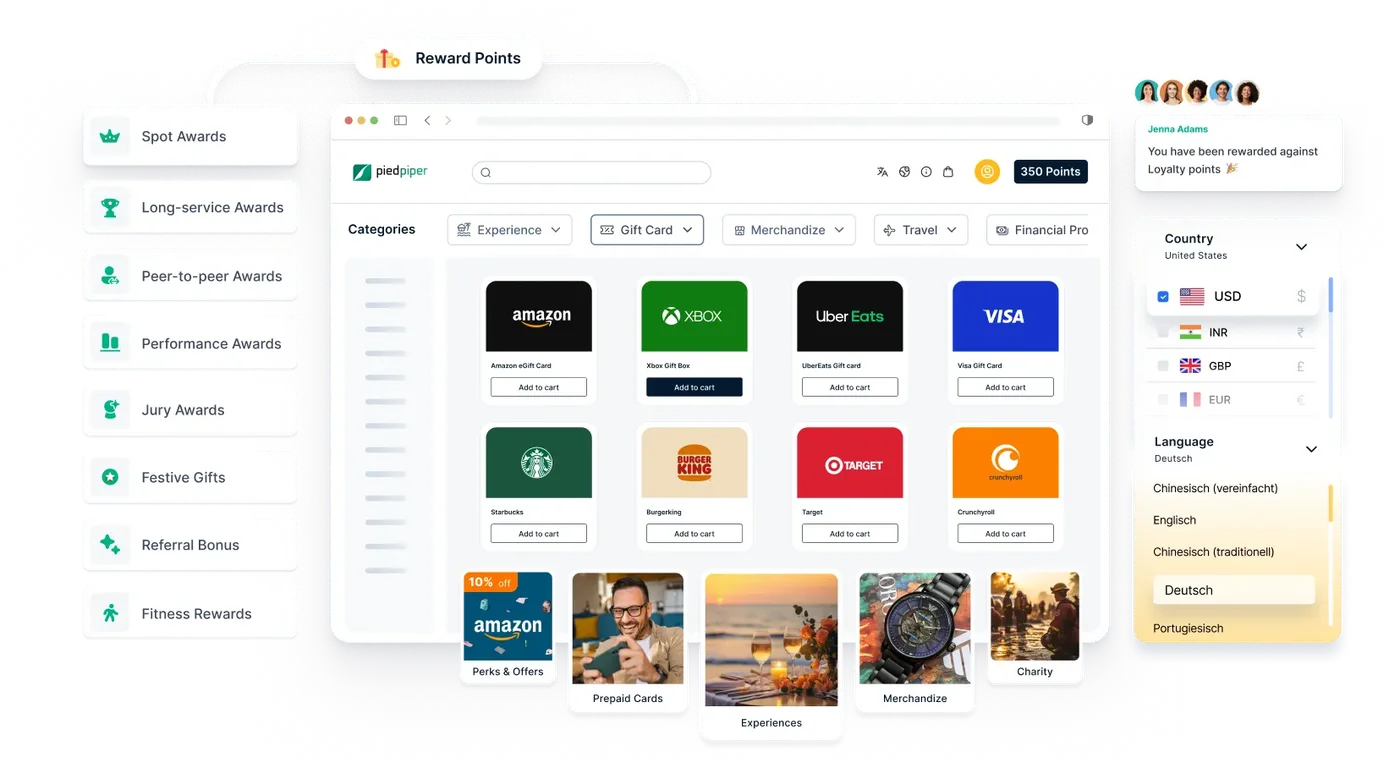
SPI Cinemas used Empuls to run recognition for a 1,200-strong frontline workforce across 10 states and cut its R&R implementation time by 90%. Read the SPI Cinemas case study or explore the full recognition platform.
Rewards and recognition in retail keep your best associates
In a fast-paced industry where turnover is high and pressure is constant, recognizing and rewarding employees is not optional, it is essential. Rewards and recognition in retail go beyond perks: they build loyalty, lift morale and drive performance.
The purpose is a culture where every associate, on every shift and in every store, feels valued and inspired to do their best. Recognized employees stay longer, perform better and deliver better customer experiences. Invest in them, and they will invest in your brand. For the broader program design, start with the employee recognition guide.
Book your Empuls demo
Frequently asked questions
Rewards and recognition in retail are the ways a retailer thanks and rewards store, warehouse and customer-facing staff for good work. Recognition is the appreciation itself, such as praise, a shout-out or an award, while rewards add something tangible, such as points, gift cards, bonuses or time off. Together they reinforce the behaviors that drive sales and service.
Start with zero-cost recognition: specific praise in the pre-shift huddle, reading out customer compliments that name the associate, peer shout-outs and handwritten notes. Then add low-cost rewards that hourly staff value, such as first pick of shifts, an early finish or a team meal. Small, frequent recognition often does more for morale than a large annual award.
Retail turnover is high because of low pay, irregular schedules, physically demanding work, limited benefits and few visible paths to promotion. Many associates also feel overlooked compared with office staff. BLS data shows retail lost roughly 46% of its workforce to separations in 2025. Recognition, schedule flexibility and clear growth paths address the parts employers control most easily.
Recognize retail employees for outstanding customer service, hitting or beating sales targets, reliability and attendance, helping teammates, training new hires, following safety and loss prevention standards, and handling difficult situations calmly. Customer compliments, store audits and peer nominations are good sources, because they surface work a manager may not see on every shift.
Recognize retail employees as close to the moment as possible, ideally within the same shift, and aim for every associate to be recognized at least once a month. Pair frequent informal praise with monthly or quarterly formal awards and automatic milestone celebrations, so recognition stays consistent even during peak trading periods.
Most retail employees value cash and cash-like rewards, such as gift cards for groceries or fuel, because many work hourly and feel cost-of-living pressure. Non-cash rewards still matter: schedule control, time off, public praise and training opportunities are often remembered longer than a small cash payment. Letting associates choose their reward solves most of the debate.
Use a single set of published criteria and budget rules for every store, a mobile platform associates can reach without a work email, and dashboards that show recognition by store and shift. Allow store-level contests within the shared framework, and review the data monthly to spot locations where recognition is falling behind.





































































































































































































































































































































































































































































































































































