
Key Takeaways
A positive company culture is one where shared values are lived daily and people feel valued, heard and connected while doing their best work.
Gallup found US employees who strongly feel connected to their culture are 4.3 times as likely to be engaged, but only 20% feel that connection.
Any culture type, whether adhocracy, clan, hierarchy or market, can be positive if it balances results with care for people.
Build a positive culture in seven steps: live your values, communicate openly, recognize people, include everyone, support growth, protect wellbeing and measure continuously.
Positive culture shows up in small repeated habits, such as values shoutouts, survey follow-through and milestone celebrations, more than in big statements.
A positive company culture is one where shared values are lived every day, people feel valued, heard and connected, and the way work gets done supports both performance and wellbeing. You build one that lasts by defining your core values and bringing them to life through leadership, communication, recognition and daily practices, then measuring and adjusting as you grow.
What makes employees excited to come to work each day? It isn't just the salary or the job title; it is the culture they experience. A workplace where people feel valued, heard and connected makes the difference between just showing up and showing up with purpose. A strong culture doesn't happen by accident. It is intentionally created, nurtured and evolved.
In this guide, we cover what a positive company culture is, its characteristics, the main culture types, why it matters more than ever and actionable steps to create an environment where people love to work, and stay.
What is a positive company culture
Company culture refers to the shared values, beliefs, attitudes and behaviors that characterize an organization and guide how employees interact with each other and with customers. For a deeper definition, see our guide to what organizational culture is.
A positive company culture is a value-driven culture in which those shared values support employee satisfaction, job satisfaction and work-life balance as well as business goals. In a positive work culture, people trust their leaders, understand what is expected of them and feel appreciated for their contribution.
The payoff is measurable. According to Gallup's organizational culture indicator, US employees who strongly agree they feel connected to their organization's culture are 4.3 times as likely to be engaged at work and 47% less likely to be looking for another job (February 2025 data). Yet only 20% of US employees feel that strong connection, which shows how much room most organizations have to improve.
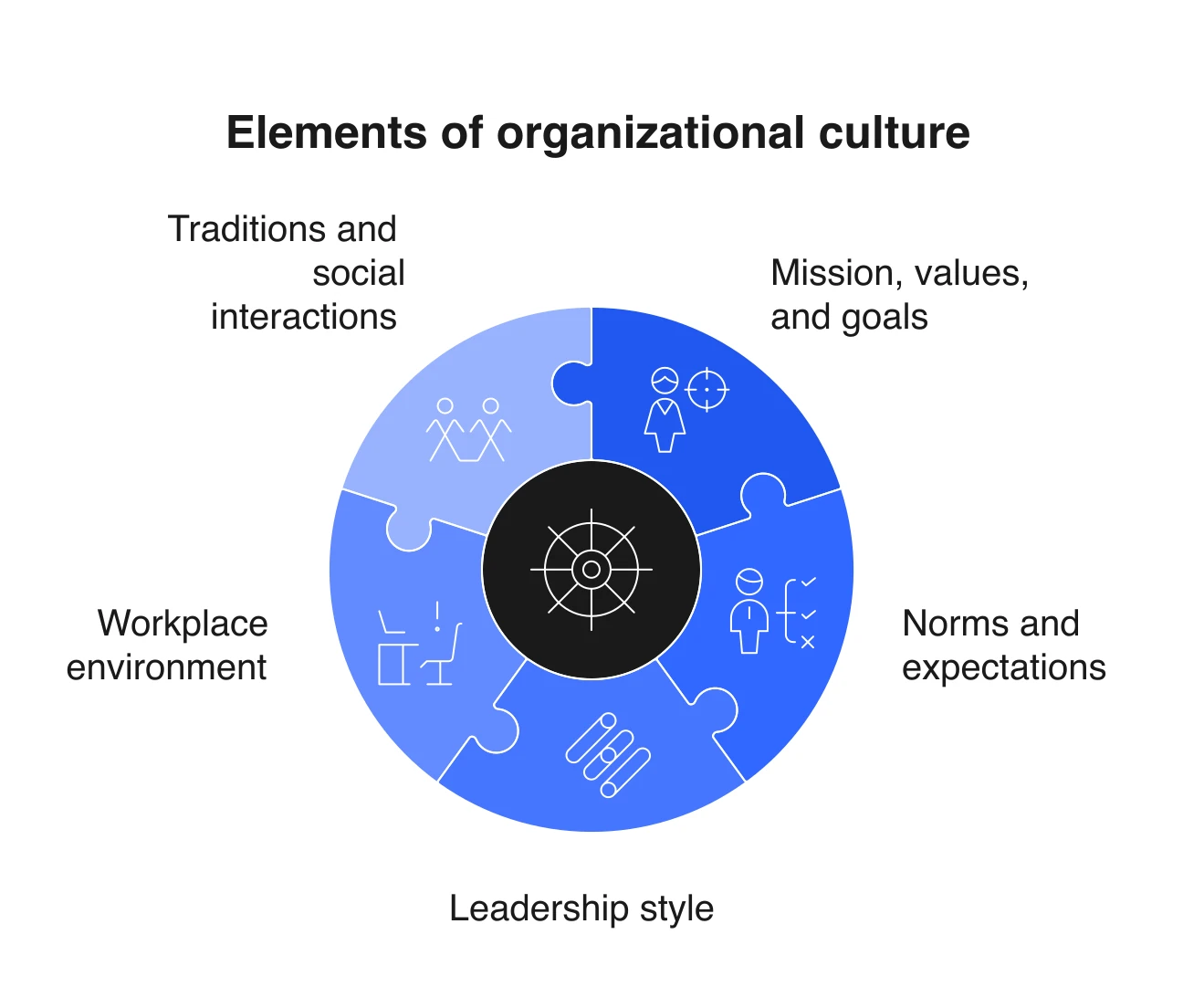
Key aspects of company culture include:
- The company's mission, values and goals that guide decision-making and employee conduct.
- Norms, expectations and unwritten rules that influence how things get done.
- Leadership style and how managers interact with and support employees.
- Workplace environment, policies and benefits that affect employee satisfaction and retention.
- Traditions, celebrations and social interactions that build a sense of community.
Characteristics of a positive company culture
Positive cultures look different from company to company, but they share a recognizable set of traits. The characteristics of a positive company culture below are the ones employees notice most:
- Lived values: Values guide real decisions, including hiring, promotions and recognition, not just the careers page.
- Trust and transparency: Leaders share context openly, and employees can raise concerns without fear of blame.
- Regular recognition: Appreciation is frequent, specific and tied to values, from peers as well as managers.
- Growth opportunities: People can learn, take on stretch work and see a path forward.
- Care for wellbeing: Workloads are sustainable and leaders model taking time off.
- Inclusion and belonging: Everyone, regardless of background, role or location, has a fair chance to contribute and be heard.
- Clear purpose: Employees understand how their work connects to the company's mission.
If several of these are missing, culture problems often show up below the surface first. Our explainer on the iceberg model of culture shows how to find them.
Types of company culture
Understanding the main types of company culture helps you see where your organization stands and where it should head, because each type shapes behavior, decision-making and the overall workplace vibe differently. The four types below come from the widely used Competing Values Framework, and any of them can be positive or negative depending on how well it balances results with people.
| Type | Focus | Best fit | Watch out for |
|---|---|---|---|
| Adhocracy | Innovation, risk-taking, speed | Startups and fast-moving tech teams | Lack of focus, instability |
| Clan | Collaboration, belonging, mentorship | Small and family-owned businesses, people-first teams | Informality, losing agility at scale |
| Hierarchy | Structure, rules, predictability | Regulated industries such as finance, insurance and energy | Rigidity, slow change, communication barriers |
| Market | Results, competition, targets | Sales-driven and highly competitive businesses | Burnout, cutthroat behavior |
1. Adhocracy culture
Imagine an organization that is flexible yet organized, constantly innovating while keeping order. That is the essence of an adhocracy culture. It combines the adaptability of "ad hoc" (meaning "for this purpose") with enough structure to function. Rules don't stifle creativity; the focus is on continuous improvement and challenging the status quo.
This fast-paced environment suits startups and tech companies, and large technology firms such as Apple and Google are often cited as examples. As companies grow, though, a single adhocracy across the whole organization may not be sustainable, and functions like compliance or finance may need a more structured, methodical approach while the rest keeps its innovative spirit.
- Characteristics: Emphasis on innovation and creativity, encouragement of risk-taking and experimentation, a fast-paced environment and adaptability to change.
- Pros: Drives continuous innovation and differentiation, encourages creative thinking and promotes agility.
- Cons: Potential lack of focus due to rapid change, and it can overwhelm employees who prefer stability.
2. Clan culture
A clan culture is like a close-knit family, with tight teams and a shared sense of purpose. It is often found in small, family-owned businesses or startups where hierarchy takes a back seat to collaboration. Employees, regardless of position, feel valued and supported. Teamwork is the backbone, mentorship passes on skills and values organically, and high engagement often translates into exceptional customer service. People-first consumer brands such as Chobani are often cited as examples.
- Characteristics: Open and informal communication, a supportive environment, a flat structure and strong relationships among employees.
- Pros: Encourages open feedback, builds strong relationships and promotes belonging and unity.
- Cons: Can lack formality, people may become too relaxed, and the close-knit feel is hard to keep as the company expands.
3. Hierarchy culture
A hierarchy culture emphasizes structure, order and rules. Job titles, roles and levels are clearly defined, information flows from the top down and employees follow procedures set by senior management. Everyone knows who they report to, who they manage and the rules that govern their work.
Hierarchy cultures excel at streamlining operations and defining duties, which makes them a natural fit for finance, insurance, healthcare and oil and gas, where stability and risk management are crucial. They can struggle to adapt quickly or innovate, so companies with this culture benefit from making room for calculated risks and some adaptability.
- Pros: Efficient operations, clear duties and the ability to handle complex processes reliably.
- Cons: Inflexibility and resistance to change, communication barriers and less room for creativity.
4. Market culture
In a market culture, the game is about winning. Companies focus on results, watch the competition and strive to deliver products and services that keep customers coming back. Large, results-driven companies such as Amazon and Tesla are often cited as examples. The constant push to outperform can fuel innovation, but expectations are high and demands relentless, which can lead to burnout and neglect of wellbeing. The challenge is to keep the competitive edge while supporting and motivating the workforce.
- Characteristics: Emphasis on results and targets, a competitive environment, high performance expectations and a focus on efficiency.
- Pros: Drives performance and goal achievement, builds a results-driven mindset and creates urgency and accountability.
- Cons: Risk of a cutthroat environment and burnout from high pressure.
Build recognition into your culture
Make appreciation, feedback and celebrations part of every week with one engagement platform.
Talk to our ExpertTrusted by 5,000+ companies
Why a positive company culture is important
Company culture plays a vital role in the success and wellbeing of both the organization and its employees. The four benefits below build on each other, and talent comes first because every other benefit depends on attracting and keeping the right people.
4.3x
more likely to be engaged
employees strongly connected to culture, Gallup
45%
less likely to leave
after high-quality recognition, Workhuman and Gallup
23%
higher profitability
top vs bottom engagement quartile, Gallup
What a positive culture is linked to, from 2024 and 2025 research
1. Attracting and retaining top talent
Attracting and keeping top talent is one of the clearest benefits of a positive company culture. Great Place To Work reports that its Certified companies have double the employee retention of US Bureau of Labor Statistics averages.
- Employer branding: A strong culture attracts qualified candidates who identify with your values and mission, and it builds a positive reputation in the job market.
- Employee satisfaction: People are more likely to stay where they feel valued, respected and that they belong. That reduces turnover and saves time and money on recruitment. For more, see our employee retention strategies.
2. Boosting productivity and performance
Performance and productivity tend to rise when an organization prioritizes a positive culture. In Gallup's 11th Q12 meta-analysis, published in 2024, business units in the top quartile of engagement showed a median 23% higher profitability and 18% higher sales productivity than those in the bottom quartile.
- Motivation and engagement: Employees who feel connected to the company's goals and share its values are more motivated, which shows up in productivity, problem-solving and a drive for excellence.
- Collaboration and teamwork: A strong culture leads to better communication, knowledge sharing and innovation, and people are more willing to help each other toward shared goals.
3. Enhancing customer experience
How employees feel at work shows up in how they treat customers. A positive culture turns into a more helpful attitude and better service.
- Employee happiness: Happy, engaged employees provide better service, which leads to higher customer satisfaction and loyalty.
- Brand advocacy: Employees who believe in the mission become advocates, go the extra mile for customers and speak positively about the company.
4. Overall business success
Culture shows up on the bottom line. Great Place To Work's business case research reports that companies on its Fortune 100 Best Companies to Work For list outperform the stock market by nearly four times.
- Reduced costs: Lower turnover, higher productivity and a positive reputation all help the bottom line.
- Adaptability and innovation: A culture that encourages open communication, welcomes new ideas and values learning helps a company adapt to change and stay ahead of competitors.
For the full business case, see our guide on why organizational culture is important.
How to build a positive company culture
Building a positive company culture means intentionally creating an environment where employees feel valued, connected and inspired to do their best work. It is about purpose, people and practices more than perks, so the seven steps below start with values, because every later step uses them as its reference point.
1. Define and live your core values
Your values should be more than words on a wall. They should shape decisions, influence behavior and guide growth. Clearly articulated values help employees align their efforts with a common purpose.
- Co-create values with input from employees for authenticity.
- Build them into hiring, onboarding and goal-setting.
- Use them to guide recognition and performance feedback.
2. Foster open and transparent communication
Transparency builds trust, reduces misunderstandings and encourages collaboration. Employees who feel informed and heard are more likely to engage and contribute.

- Hold regular team meetings and town halls to share updates.
- Encourage two-way feedback through surveys and one-to-one check-ins.
- Use a social intranet to create a space for continuous dialogue.
3. Recognize and reward your employees
Appreciation fuels engagement. When recognition is regular and sincere, it reinforces positive behavior and motivates people to do their best work. A 2024 Workhuman and Gallup study found employees who received high-quality recognition were 45% less likely to have left their job two years later.
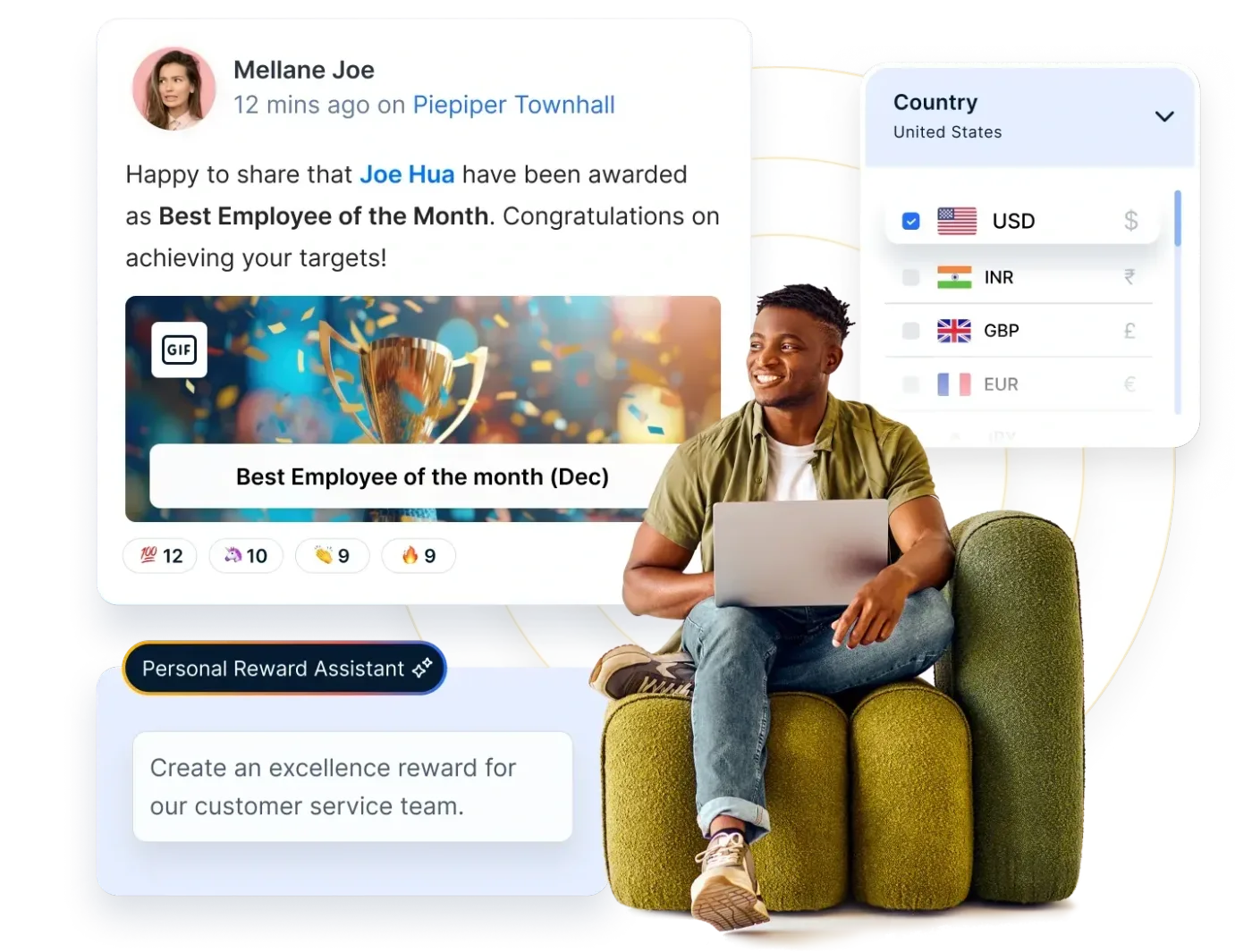
- Set up peer-to-peer recognition programs.
- Celebrate small wins, not just major milestones.
- Align rewards with values to highlight what matters most. Our guide to values-based recognition programs shows how.
4. Promote inclusion and belonging
A strong culture includes everyone, regardless of background, identity or role. Employees who feel accepted and valued are more likely to stay, grow and advocate for the organization.
- Provide inclusion training and inclusive policies.
- Recognize diverse cultural events and identities.
- Facilitate safe, open discussions on inclusion and fairness.
5. Support growth and development
Employees thrive where they can grow. Career development opportunities show you are invested in their long-term success and help you retain top talent.
- Offer upskilling and mentorship programs, supported by learning and development benefits.
- Create individual development plans and internal mobility paths.
- Encourage knowledge sharing and cross-functional projects.
6. Encourage work-life balance and wellbeing
A culture that values wellbeing leads to healthier, more productive employees. Empower your people to take care of themselves without guilt.
- Offer flexible work arrangements and mental health resources.
- Encourage time off and discourage working beyond hours.
- Introduce wellness perks such as fitness challenges, travel vouchers, fitness stipends or mindfulness sessions.
7. Measure and improve continuously
A healthy culture is always evolving. Regular check-ins with employees keep your initiatives relevant and practical.
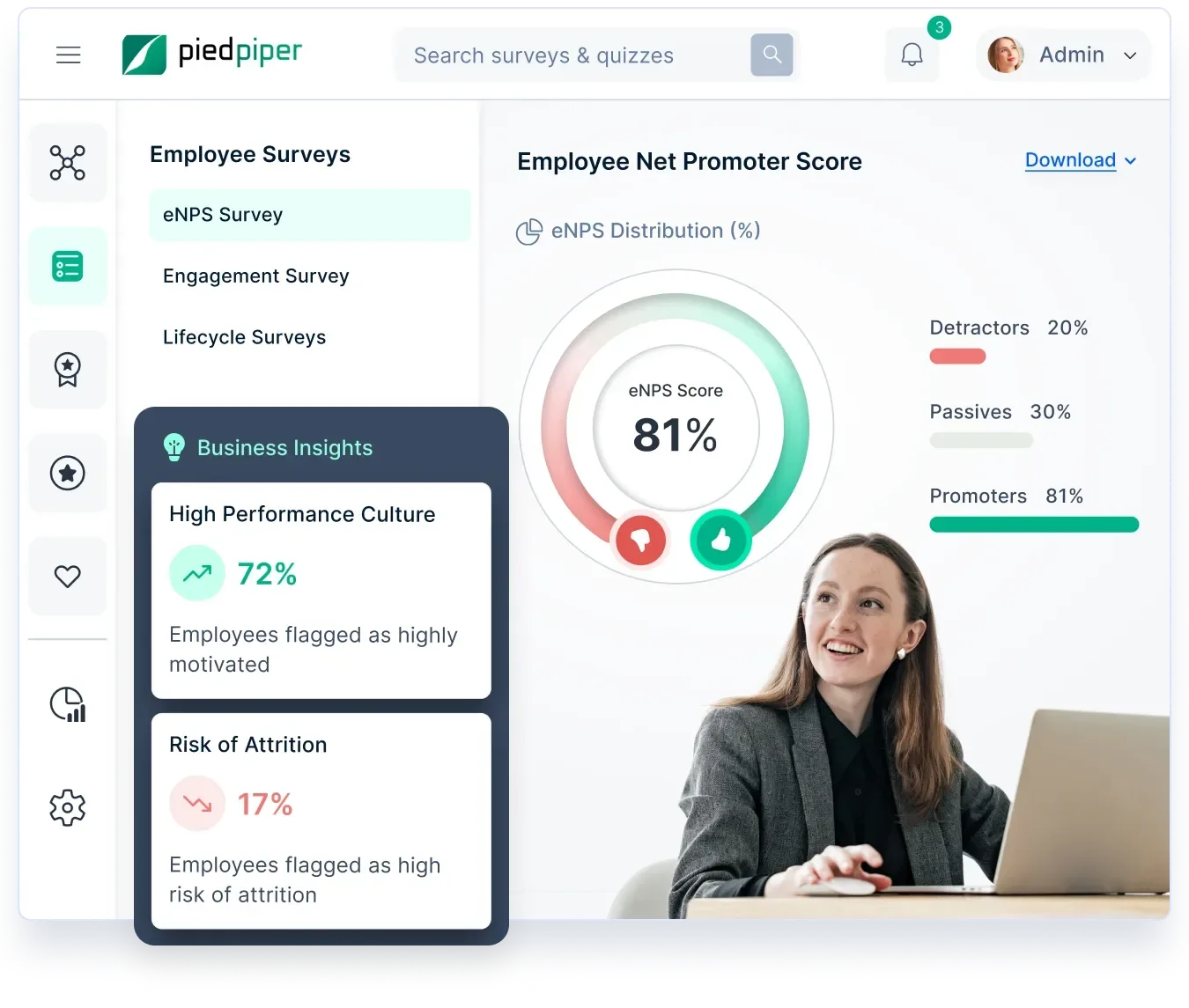
- Run engagement and pulse surveys and act on the feedback.
- Track participation in programs and events.
- Use analytics to identify cultural strengths and gaps.
If you are fixing an existing culture rather than building from scratch, our guide on how to improve organizational culture covers the common mistakes to avoid first.
Positive workplace culture examples in everyday practice
A positive work culture is easiest to recognize in small, repeated habits rather than big statements. The table below shows positive workplace culture examples you can adopt, and what each one signals to employees.
| Practice | What it looks like | What it signals |
|---|---|---|
| Values shoutouts | A few minutes in weekly team meetings to recognize someone for living a company value | Values matter in daily work, not just on the wall |
| Open leadership Q&A | Monthly sessions where leaders answer anonymous questions live | Transparency and trust |
| Visible follow-through on surveys | Sharing survey results and two or three committed actions within weeks | Employee voice leads to change |
| Milestone celebrations | Marking work anniversaries, birthdays and project completions publicly | People are seen as people, not just roles |
| Protected focus and rest | No-meeting blocks and a norm of not expecting replies after hours | Wellbeing is real, not a slogan |
| Growth conversations | Quarterly career check-ins separate from performance reviews | Long-term investment in each person |
For company-level stories, see these companies with great organizational culture.
How Empuls helps build a positive company culture that lasts
A positive company culture isn't built overnight, and it doesn't happen by accident. It takes consistency, recognition, transparency and a real commitment to wellbeing. Empuls, Xoxoday's employee engagement platform, brings remote, hybrid and global teams together on a single platform for everyday engagement.
- Make recognition a daily habit: Move beyond once-a-year awards with peer-to-peer recognition, spot awards and automated milestone celebrations.

- Strengthen employee connection: The social intranet lets employees communicate openly, celebrate team wins and stay in the loop wherever they work.
- Embed values into daily actions: Link recognition and rewards to your core values so every employee sees how their contribution ties to the mission. See culture and values in Empuls.
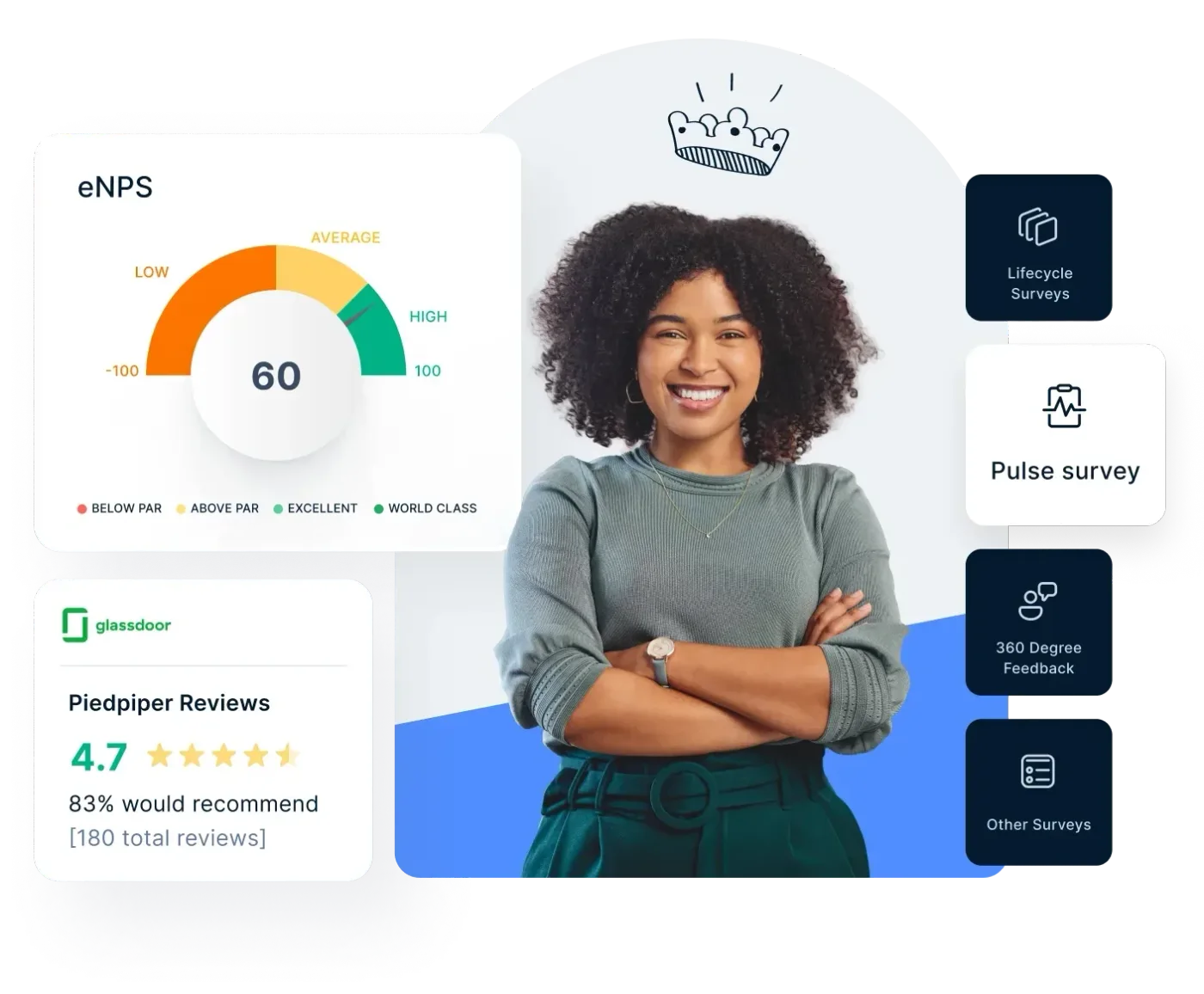
- Give employees a voice that drives change: Run pulse surveys, eNPS and lifecycle feedback, then close the loop with Action Plans.
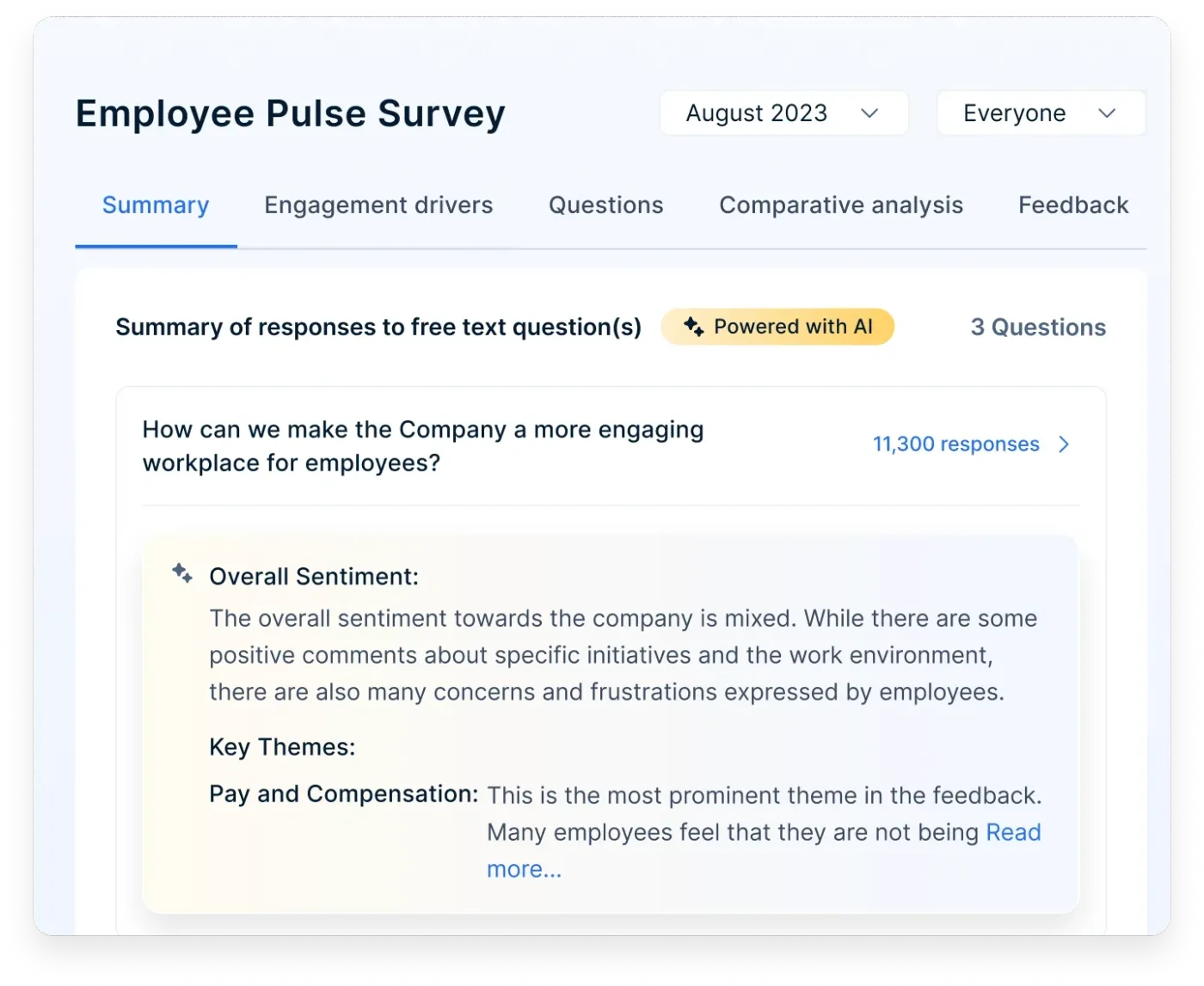
- Turn data into decisions: Built-in reports and analytics track recognition frequency, feedback participation and engagement trends.
Conclusion
A positive company culture gives employees a place where they are valued and cared for. It depends on clear communication of values, consistent leadership and an inclusive environment.
Evaluating your culture means gathering regular feedback, measuring alignment with core values and analyzing the effect on employee satisfaction and performance. By prioritizing culture, you create a workplace where people feel valued and motivated, which becomes a competitive advantage: it attracts top talent, reduces turnover and drives long-term success.
Whether you are just starting to build your culture or refining it, remember that culture is an ongoing journey that evolves with your organization. Embrace it, nurture it and watch your company flourish.
Book your Empuls demo
Frequently asked questions
The main characteristics of a positive company culture are values that guide real decisions, trust and transparency from leaders, regular and specific recognition, opportunities to learn and grow, sustainable workloads that protect wellbeing, inclusion for everyone regardless of role or background, and a clear sense of purpose that connects each person's work to the mission.
Start by defining a small set of core values with input from employees. Build them into hiring, onboarding and recognition, then set up open communication rhythms such as town halls and one-to-ones. Add peer recognition, growth opportunities and wellbeing support, and measure progress with regular pulse surveys so you can adjust as the company grows.
Everyday examples of a positive work culture include weekly shoutouts for people who live a company value, open leadership question sessions, sharing survey results with clear follow-up actions, celebrating work anniversaries and project wins, protecting focus time and evenings, and holding regular career conversations that are separate from performance reviews.
Combine sentiment and behavior. Track eNPS, engagement and pulse survey scores, and ask how connected employees feel to the culture. Then look at behavior data such as voluntary turnover, regretted exits, recognition frequency and spread across teams, and participation in programs. Improving trends across both views show the culture is getting healthier.
Yes. High performance and a positive culture work well together when ambitious goals come with clarity, fair recognition, support and sustainable workloads. Problems start when results matter more than how people are treated, which leads to burnout and turnover. Balancing clear expectations with care is what lets a results-driven culture stay positive over time.





































































































































































































































































































































































































































































































































































