
Key Takeaways
An employee incentive program promises a defined reward for a defined goal in advance, which is what separates incentives from after-the-fact rewards.
WorldatWork's 2024 report found 98% of organizations run at least one bonus program, and about 60% use spot bonuses.
Well-recognized employees were 45% less likely to have changed organizations two years later, according to Gallup and Workhuman, so incentives work best alongside regular recognition.
Strong incentive programs tie each reward to one business goal, use clear and fair criteria, show progress live and pay out within days.
Shortlist two or three program types by cost, effort and fit, then fill in a one-page design template before launch.
An employee incentive program rewards people for reaching specific goals, such as a sales target, a safety record, a finished certification or a successful referral. The best programs tie each incentive to a business goal, mix money with recognition, growth and flexibility, and pay out quickly and fairly so employees see the link between effort and reward.
This guide explains what an employee incentive program is, how incentives differ from rewards, 30 employee incentive program examples (20 for any team and 10 for remote employees), a cost and effort comparison, the steps to design your own and a one-page design template with a worked example.
What an employee incentive program is
An employee incentive program is a structured plan that promises a defined reward, such as a bonus, points, time off, a learning budget or public recognition, when an employee or team reaches a defined goal or shows a defined behavior. Because the reward is announced in advance, the incentive shapes what people focus on, not just how they feel afterward.
Popular employee incentive programs include performance bonuses, profit sharing, stock ownership, referral bonuses, spot awards, wellness rewards, learning and development budgets, team incentives and recognition awards. Effective programs recognize and reward employees for their achievements and foster a positive work environment. When an organization runs one well, it usually sees three things:
- Higher engagement and morale: People understand what good looks like and see it noticed, which lifts employee engagement.
- Stronger motivation to excel: Financial incentives, such as cash bonuses or stock ownership plans, give employees a direct stake in results.
- Better retention: Employees who take part in achieving company goals, and are rewarded for it, report higher job satisfaction and are more likely to stay.
Employee incentives vs employee rewards
Employee incentives are announced before the work and are designed to motivate employees to reach a specific goal, often linked to performance metrics. Examples include bonuses, profit sharing and tuition reimbursement tied to finishing a course. Employee rewards are given after the fact to appreciate contributions, such as a thank-you gift, a service award or an extra day off.
| Aspect | Employee incentives | Employee rewards |
|---|---|---|
| Purpose | Drive specific behaviors and improve performance | Appreciate and acknowledge past contributions |
| Timing | Promised before the work starts | Given after the achievement, often as a surprise |
| Link to performance | Directly tied to measurable outcomes | Usually not tied to a preset metric |
| Examples | Sales bonuses, profit sharing, referral bonuses, tuition reimbursement | Thank-you gifts, service awards, spot rewards, wellness perks |
| Frequency | Ongoing, monthly, quarterly or project-based | Periodic or at milestones |
| Main effect | Focus and effort on a goal | Job satisfaction, belonging and morale |
Most strong programs use both. If you are building the rewards side, such as reward types, tiers and budgets, see our guide to designing an employee reward program and the CHRO overview of types of rewards.
How incentive programs affect performance and engagement
Incentives work as external motivators that point effort at the outcomes your organization cares about. Current research shows where they help most, and where recognition has to do the rest.
98%
of organizations
run at least one bonus program (WorldatWork, 2024)
66%
offer retention bonuses
up 8% since 2021 (WorldatWork, 2024)
45%
less likely to leave
for well-recognized employees two years later (Gallup and Workhuman)
22%
of employees
get the right amount of recognition (Gallup and Workhuman)
Employee incentive and recognition benchmarks
- Incentives are near universal: WorldatWork's Bonus Programs and Practices report found 98% of organizations run at least one bonus program, more than three-fourths use referral bonuses, about 60% use spot bonuses and 66% offer retention bonuses.
- Non-cash incentives are growing: The Incentive Research Foundation's 2026 Industry Outlook found 65% of North American programs expect more participants to receive non-cash incentives in 2026, and 70% expect to use more gift cards.
- Recognition protects retention: Gallup and Workhuman research found well-recognized employees were 45% less likely to have changed organizations two years later, yet only 22% of employees get the right amount of recognition.
- Long-term engagement needs a holistic approach: Incentives work best inside a broader strategy that includes a positive culture, good managers and room to grow.
- Design decides the outcome: Tailoring incentives to what employees value leads to better results, while poorly designed programs can cause disengagement, burnout and gaming of targets.
Pay incentives the moment goals are hit
Connect your HRMS, CRM or LMS to Empuls and reward milestones automatically, with points employees redeem for rewards they choose.
Talk to our ExpertTrusted by 5,000+ companies
20 employee incentive program examples for a motivated workforce
These 20 employee incentive program examples cover money, recognition, growth, health and flexibility. Start with the first three, because achievement recognition, wellness rewards and professional development work for almost every team and budget, then add financial programs where they fit your goals.
1. Achievement recognition program
This program recognizes employees who meet or exceed their performance goals with monthly awards, certificates or points, along with public acknowledgment in team meetings and on the company feed. Celebrating achievements boosts employee morale and encourages a culture of excellence.
2. Wellness rewards program
A wellness rewards program offers incentives for healthy activities, such as fitness challenges, step goals or health screenings. Employees earn points for wellness tasks and redeem them for gift cards or extra time off, which improves health and job satisfaction at the same time. Empuls fitness challenges let teams compete and earn rewards in one place.
3. Professional development program
This initiative supports employees who pursue education and skill development through tuition reimbursement, certifications and online courses. Employees set professional goals and the company funds relevant training, then rewards completion. Investing in growth builds loyalty and engagement, as our guide to engagement through learning and development explains.
4. Profit-sharing plan
In a profit-sharing plan, employees receive a share of company profits based on financial performance. This financial incentive aligns employees' interests with the company's success and makes people feel like integral parts of the organization, which supports retention.
5. Employee stock ownership plan (ESOP)
An ESOP gives employees shares in the company, which builds a sense of ownership and commitment. The National Center for Employee Ownership counts 6,609 ESOPs in the US covering 15.1 million participants as of 2023. When employees see how their work moves company value, they have a reason to improve productivity and collaboration, which strengthens loyalty over the long term.
6. Referral bonus program
A referral bonus rewards employees when someone they refer is hired and stays for a set period, often 90 days. It attracts strong candidates, lowers hiring costs and reinforces a sense of community, and our guide to employee referral programs covers the design. Automate the payout so referrers are rewarded the moment the milestone is reached, for example with referral rewards.
7. Team performance incentives
Teams that reach or beat shared goals earn a collective bonus, a team outing or points for everyone. Team incentives encourage collaboration and camaraderie, and they balance individual programs that might otherwise push people to compete instead of help each other.
8. Flexible work arrangements program
This program lets high performers choose their hours, a compressed week or remote days. Flexibility improves work-life balance and job satisfaction, costs little and recognizes that different employees need different things to do their best work.
9. Spot bonus program
A spot bonus gives immediate rewards for exceptional effort that goes beyond expectations. Managers can issue one at any time, which keeps recognition timely and reinforces positive behaviors in real time. For ideas on what to reward in the moment, see our list of on-the-spot recognition ideas.
10. Public recognition program
This program publicly acknowledges achievements through newsletters, social feeds, town halls or recognition walls. Visibility boosts morale and shows others what great work looks like, which builds a culture of recognition.
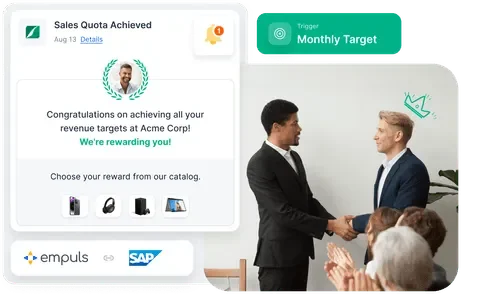
11. Cash rewards for sales targets
Employees who meet or exceed sales targets receive cash bonuses or commission accelerators. This direct financial incentive motivates sales teams to push their limits and keeps their effort aligned with company goals. Show reps their live progress against target so the incentive works during the period, not only at payout.
12. Employee of the month program
An employee of the month award highlights one person's contribution each month with a certificate, a reserved parking spot, points or another perk. It creates healthy competition when criteria are clear and nominations are open to peers. Our guide to running an employee of the month program covers criteria and fair selection.
13. Volunteer time off (VTO) program
VTO gives employees paid time to volunteer for causes they care about. It supports the community, gives work more meaning and raises employee satisfaction through experiences outside the office.
14. Family-friendly benefits incentive program
Parental leave, childcare support and family health coverage show that the organization cares about employees' lives outside work. These incentives help retain talent and create an inclusive workplace where people feel valued both personally and professionally.
15. Annual retreat or conference sponsorships
Sponsoring industry conferences or an annual retreat for top performers gives them room to network and learn outside the office. Employees value these experiences because they add to professional growth and strengthen team bonds.
16. In-house mentorship program
Pairing experienced employees with newer colleagues spreads knowledge and builds careers. Make mentoring a recognized achievement, with points or awards for mentors whose mentees progress, so it is an incentive and not just an extra duty. It also improves the wider employee experience.
17. Health insurance premium discounts
Discounts on health premiums for employees who join wellness programs encourage healthy behavior and reduce costs on both sides. In the US, federal rules cap health-contingent wellness rewards at 30% of the cost of coverage (50% for tobacco programs), so check the limits with your benefits advisor before you set the discount.
18. Creative project funding program
Invite employees to pitch projects that support company goals and fund the best ideas. People feel empowered when they can pursue their ideas and showcase their talents, and the business gains a steady pipeline of innovation.
19. Skill-sharing workshops
Employees who teach a workshop earn recognition or points, and colleagues learn something new. These sessions promote continuous learning and create an inclusive atmosphere where everyone has something valuable to contribute.
20. Feedback-driven improvement incentives
Reward employees whose suggestions are adopted, whether they save money, improve a process or fix a customer pain point. Acting on input shows that you value employees' views, which builds trust and engagement. Our guide to building a culture of feedback explains how to collect it well.
10 employee incentive programs for remote employees
These 10 employee incentive programs for remote employees keep distributed teams motivated, connected and visible. Digital recognition and learning stipends matter most because remote work hides effort that would be obvious in an office, so the order runs from visibility to connection to wellbeing.
1. Remote work appreciation days
Set aside days to celebrate remote workers with virtual events, delivered gifts or e-gift cards. These days reinforce connections across teams and show gratitude for contributions people rarely see in person.
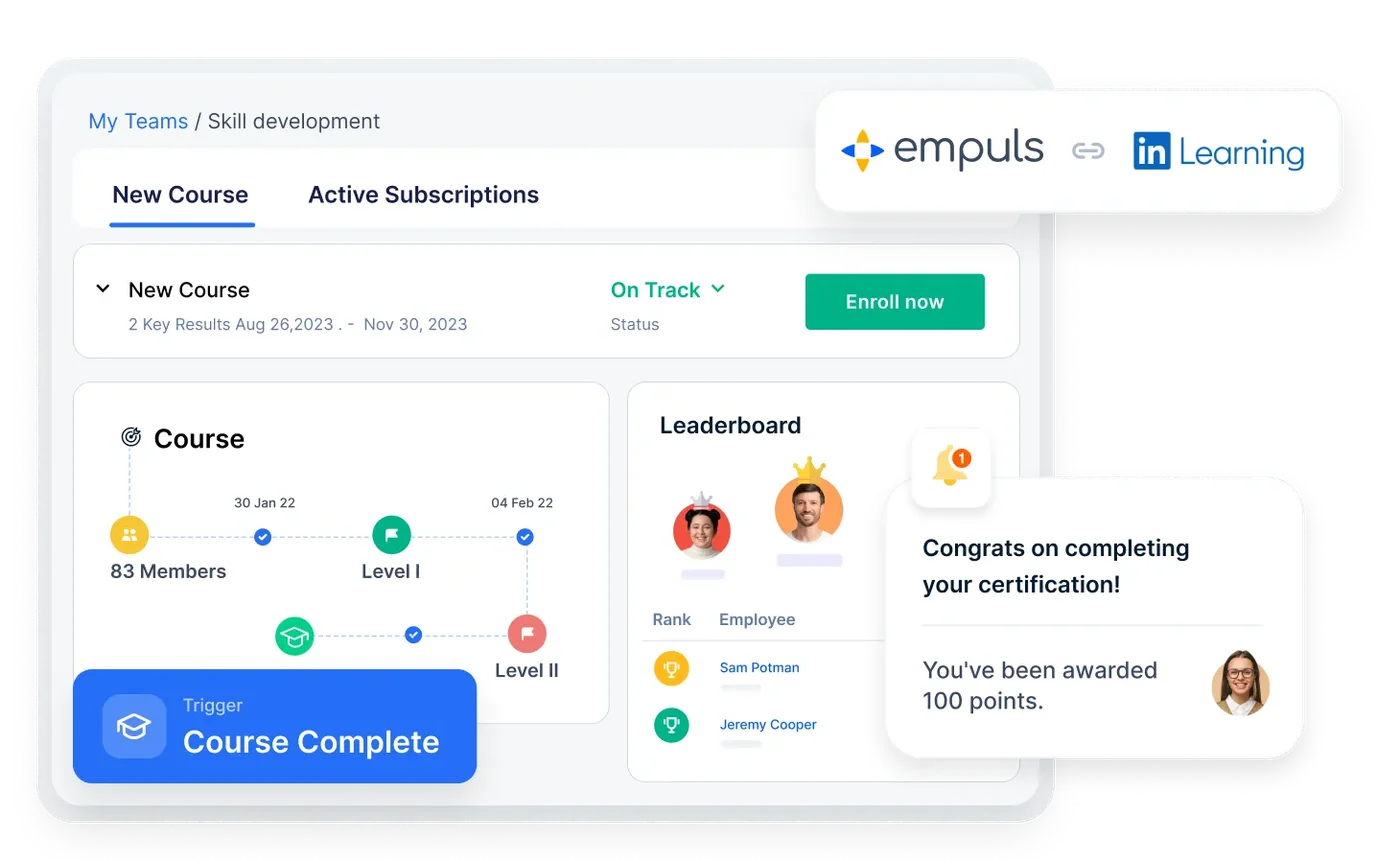
2. Learning stipends
A yearly stipend for online courses or certifications helps remote employees build skills from home. Reward completion with points or recognition so learning becomes a visible achievement. One global enterprise that linked recognition to learning milestones in Empuls raised course completion from 38% to 81%.
3. Home office enhancement grants
Grants for ergonomic chairs, monitors or better internet let remote workers build comfortable, productive setups. The support shows that you care about employee wellbeing and removes everyday friction.
4. Monthly virtual coffee chats with leadership
Invite top contributors to informal video chats with senior leaders. Employees share ideas directly with decision-makers and feel part of the company culture, and leaders hear what is happening on the ground.
5. Recognition through digital platforms
A recognition platform that works in Slack, Microsoft Teams and mobile makes appreciation visible across time zones. Regularly highlighting accomplishments boosts morale and encourages others across dispersed teams. See our guide to recognizing remote and frontline teams.
6. Flexible scheduling for remote roles
Let high performers set their own core hours or take a no-meeting day. Flexibility accommodates personal commitments without sacrificing output and raises job satisfaction.
7. Virtual team-building activities
Regular online games, quizzes and challenges help remote colleagues who might otherwise feel isolated. Add small prizes for winners and for participation so everyone has a reason to join.
8. Health and wellness challenges for remote workers
Step, sleep or mindfulness challenges designed for people working from home build healthy habits and camaraderie. Award points or gift cards for participation, not just for winning, so less active employees join in.
9. Personalized thank-you notes from management
A specific, handwritten or video thank-you from a senior leader creates a meaningful connection even at a distance. Name what the person did and why it mattered, so the note reinforces the behavior.
10. Remote mentorship pairing
Pair remote employees with experienced mentors in other locations. Knowledge sharing and career guidance build strong working relationships despite physical distance, and recognizing mentors keeps them involved.
How the 30 incentive programs compare on cost, effort and fit
The table groups the 30 programs into nine types and rates each on cost, setup effort and the goal it fits best. Use it to shortlist two or three programs that match your top business goal and budget before you design anything.
| Program type | Examples from this list | Cost | Setup effort | Best fit |
|---|---|---|---|---|
| Recognition awards | Achievement recognition, public recognition, employee of the month, digital recognition | Low | Low | Morale, culture, visibility of good work |
| Spot bonuses | Spot bonus program | Low to medium | Low | Reinforcing behaviors in real time |
| Target-based cash | Sales target bonuses, team performance incentives | Medium to high | Medium | Revenue and measurable output |
| Ownership and profit | Profit sharing, ESOP | High | High | Long-term retention and alignment |
| Hiring incentives | Referral bonuses | Medium | Low | Faster, cheaper hiring |
| Growth | Professional development, learning stipends, mentorship, conferences, skill-sharing | Low to medium | Medium | Skills, internal mobility, retention |
| Health | Wellness rewards, premium discounts, remote wellness challenges | Low to medium | Medium | Wellbeing, absenteeism, benefits costs |
| Time and flexibility | Flexible work, flexible scheduling, VTO, family-friendly benefits | Low | Low to medium | Work-life balance and retention |
| Connection and ideas | Coffee chats, team-building, appreciation days, project funding, suggestion rewards | Low | Low | Engagement, innovation, remote inclusion |
How to design an employee incentive program
Six steps take an employee incentive program from idea to launch, and defining the goal comes first because every later choice, from reward type to payout timing, depends on it. Simply offering rewards is not enough: success depends on careful planning and execution. If you are planning a wider recognition program, our guide to planning an employee rewards and recognition program covers timing, budget and stakeholders.
- Define your goals and metrics: Decide what you want to achieve, such as higher productivity, better retention, stronger teamwork or more referrals. Pick one or two measurable metrics per program, such as participation rate, target attainment or retention of eligible employees, so you can track success and adjust.
- Choose incentives that matter: Ask employees what they value through a short survey. Monetary rewards such as bonuses are effective, but people also value career growth, wellness support, time off and public recognition. A mix of personalized, flexible rewards works best, such as points redeemable for gift cards, experiences or merchandise.
- Set clear and fair criteria: Employees need to know exactly how to earn a reward. Ambiguity or favoritism demotivates people instead of inspiring them, so define objective, transparent and inclusive criteria. Balance individual and team rewards to prevent unhealthy competition, and check for bias using our guide to preventing bias in recognition programs.
- Automate tracking and payout: Manual tracking is slow and error prone. A digital platform tracks progress, pays rewards automatically when a goal is met and gives HR a live view of participation and cost.
- Make recognition continuous: An incentive program works best when it is part of daily work rather than an annual event. Social feeds, badges and leaderboards keep small wins visible between payouts. For the launch itself, follow our guide to implementing a rewards and recognition program.
- Collect feedback and improve: Survey participants each quarter. Are the incentives meaningful? Is the process fair? Are people motivated? Adjust thresholds and rotate rewards based on what you learn.
Employee incentive program design template
Use this one-page template to design any program on the list before launch. The right-hand column shows a worked example for a quarterly incentive in a 40-person field sales team, so you can see the level of detail each field needs.
| Field | What to decide | Worked example: field sales team |
|---|---|---|
| Business goal | The one outcome the program must move | Grow new-customer revenue in the quarter |
| Primary metric | How you will measure it, with the data source | New-customer revenue per rep from the CRM |
| Eligibility | Who can take part and from when | All 40 field reps with at least one full month in the quarter |
| Target and threshold | Level that pays, and minimum that pays anything | Target: 100% of quota. Threshold: 80% of quota |
| Reward | What people earn at each level | Points worth 5% of quarterly base at target, 2.5% at threshold, capped at 8% |
| Team element | How collaboration is rewarded | Team outing if the region reaches 100% of quota |
| Behavior guardrail | What disqualifies a payout | No payout on deals cancelled within 60 days |
| Visibility | How people see progress | Live leaderboard and weekly progress nudge in the app |
| Payout timing | When rewards land | Within 10 working days of quarter close |
| Budget | Maximum cost and who approves it | Capped at the plan maximum, approved by the sales and finance leads |
| Success measure | How you will judge the program | Share of reps at or above threshold, revenue vs last quarter, rep survey score |
| Review date | When you will adjust it | Two weeks after quarter close |
Our guide on how to measure employee recognition programs explains how to turn the success measure into a quarterly ROI review.
Best practices for a strong employee incentive program
Six best practices separate incentive programs that last from ones that fade after a quarter. Aligning with business goals matters most, because a program that does not move a metric leadership cares about will lose its budget.
- Begin with business goals: Align every incentive with a specific company goal, such as higher engagement or exceeding sales targets, and keep tracking it so the program stays focused.
- Keep it simple but challenging: Rules should fit on one page, and targets should stretch people without feeling out of reach. Show progress in a format employees can check themselves.
- Link rewards to performance people control: Reward individual and team results that employees can influence directly, and keep company-wide results such as profit for profit sharing.
- Keep it fair: Publish clear guidelines, apply them consistently and make winners and criteria visible. Transparency reduces perceptions of favoritism and helps every employee feel valued.
- Reward employees with what they truly want: Let people choose from cash, gift cards, experiences or development, because preferences differ by age, role and country.
- Build in flexibility: Design the program so it can continue in tough economic times, for example by shifting toward low-cost recognition and time off while still rewarding high performers.
How Empuls helps you run employee incentive programs
Empuls brings recognition, milestone rewards, award campaigns and incentive contests into one platform, so HR and managers can launch an employee incentive program without spreadsheets or manual payouts. Employees see their progress and choose rewards they value from a global catalog.
- Reward goals hit, courses completed, referrals made and targets met automatically by connecting your HRMS, OKR or learning system with Empuls milestone rewards.
- Run quarterly awards, innovation honors and other programs end to end, with nominations, approvals, reminders and fairness rules, through award campaigns.
- Launch team contests and challenges with leaderboards and instant rewards using Empuls challenges and contests.
- Manage commission and sales incentive plans with real-time payout visibility through Xoxoday sales incentives. Chaipoint used it to drive a 115% increase in incentive qualifiers in under six months.
Building an employee incentive program that lasts
A strong employee incentive program ties every reward to a clear goal, mixes financial incentives with recognition, growth, health and flexibility, and pays out quickly and fairly. Start with two or three programs from the comparison table, fill in the design template for each, tell employees exactly how to earn rewards and review the results every quarter. For more inspiration, browse our employee incentive ideas and employee reward ideas, and see the employee recognition guide for the wider picture.
Book your Empuls demo
Frequently asked questions
A common example is a quarterly sales incentive that pays reps a bonus or reward points when they reach 100% of quota, with a smaller payout at 80%. Other examples include referral bonuses paid when a hire passes 90 days, wellness challenges that award points for activity, and tuition reimbursement tied to finishing a certification.
The four broad types are monetary incentives, such as bonuses and profit sharing; non-monetary incentives, such as flexible hours, time off and development; team incentives, such as shared bonuses or outings for reaching a group goal; and benefit-based incentives, such as wellness rewards, stock ownership and health premium discounts.
There is no universal figure. Set the budget from the value of the goal: estimate the extra revenue, savings or retention the program should deliver, then fund rewards at a share of that value with a cap. Low-cost recognition can run year round, while larger cash incentives should be capped and tied to measurable targets.
They work when the goal is clear, the criteria are fair and the reward arrives quickly. Incentives tied to metrics people cannot influence, or paid months later, tend to fail. Pairing incentives with regular recognition matters too: Gallup and Workhuman found well-recognized employees were 45% less likely to leave within two years.
An incentive program promises a defined reward in advance for reaching a defined goal, such as a bonus for hitting quota. A recognition program appreciates people after the fact for behaviors and contributions, often without a preset target. Most organizations need both: incentives focus effort on goals, while recognition reinforces values and everyday effort.
An employee recruitment incentive program uses rewards to attract and hire talent. It includes sign-on bonuses and relocation support for candidates, and referral bonuses for current employees who recommend people who are hired and stay for a set period. Referral programs are among the most common, used by more than three-fourths of organizations in WorldatWork's 2024 research.
Match the payout cycle to the goal. Spot awards and recognition should be immediate, sales and productivity incentives usually pay monthly or quarterly, and profit sharing or stock plans pay annually or over several years. Whatever the cycle, pay as soon as possible after the period closes so employees connect the reward with the effort.
In most countries, cash bonuses and cash-equivalent rewards such as gift cards are treated as taxable income and must go through payroll. Some small non-cash gifts and certain benefits may be exempt, but the rules differ by country and by type of reward, so confirm the treatment with your payroll or tax advisor before you launch.





































































































































































































































































































































































































































































































































































