
Key Takeaways
An employee discount program gives employees exclusive savings on products and services, from the employer's own brand or from partner brands.
59% of employees are stressed about their finances, per PwC's 2026 survey, which makes everyday discounts a practical financial wellbeing benefit.
Clear goals and persona-based perks matter most, because they make the program easier to promote and measure.
In the US, qualified discounts on an employer's own services are tax-free up to 20% of the customer price; in the UK, a staff discount is not taxable if the employee pays at least the employer's cost.
Track activation, monthly active users, savings per employee and the link to engagement, not just redemptions.
To run an employee discount program effectively, set a clear goal, pick discounts your employees actually want, choose a delivery model and partner, check the tax rules, launch with a plan, promote it all year and track usage and savings. An employee discount program is a benefit that gives employees exclusive savings on products and services, from your own brand or from partner brands, simply for being part of the company.
Discounts matter more when money is tight. PwC's 2026 Employee Financial Wellness Survey found that 59% of employees are stressed about their finances and 49% say their pay is not keeping up with the cost of living. Employee discounts help with both, because they stretch every paycheck without a change in salary.
Running an effective program still takes careful planning, execution and management. This guide covers what an employee discount program is, the main types, the benefits for employers and employees, how to start an employee discount program step by step, the mistakes to avoid and examples from companies that do it well. If you are comparing providers, read this guide to employee discount platforms alongside it.
What an employee discount program is
An employee discount program gives your team access to special deals on a range of products and services, sometimes from your own brand and sometimes through outside partners. These perks let employees save money on everyday expenses or big purchases, just for being part of the company.
Think of it like this: your team gets offers they would not get elsewhere, such as lower prices on travel, fitness memberships, tech gadgets or food delivery. It is a simple way to add value to the job without changing the paycheck. Companies roll these programs out to keep employees happy, show appreciation and make working there feel more rewarding.
There are two delivery models. An in-house program discounts your own products or services, like a retailer giving staff a discount in its stores. A third-party program uses a provider or platform that aggregates corporate employee discounts from many brands, so every employee benefits whatever your industry. Many companies run both.
Types of employee discount programs
Employee discount programs come in various forms, depending on your business and your employees' interests. The most common types are:
- Product discounts: Discounts on products sold by the employer or its partners. A retail employee might get a discount on store items, and a restaurant employee a discount on meals.
- Service discounts: Discounts on services rather than physical items, such as car maintenance for an auto dealership's staff or membership fees for a gym's staff.
- Travel discounts: Savings on flights, hotels, rental cars and vacation packages, offered directly or through travel partners. These are especially attractive to employees who travel often.
- Entertainment discounts: Savings on movie tickets, amusement parks and concerts. They help employees enjoy leisure time for less and can double as a way to reward high performers.
- Everyday and other discounts: Groceries, food delivery, electronics, pet care, home cleaning, legal services and more. Offering a wide range ensures everyone finds savings that matter to them.
Employee discount program benefits for employers and employees
A good program is a win-win: employers strengthen their benefits package at low cost, and employees save on things they buy anyway. The employer side comes first below because it is what secures budget, but employee value is what drives usage.
Benefits for employers
- Higher morale and satisfaction: Discounts give employees a sense of appreciation. When people feel their employer invests in their wellbeing, they are more satisfied and more loyal.
- Talent attraction and retention: Employers need to offer more than salary to attract and keep the best people. Robert Half's research on benefits and perks found that 47% of professionals say better benefits and perks are among the top reasons they would look for a new job.
- Stronger engagement: Employees who understand and are satisfied with their benefits are 1.4 times more likely to feel engaged, according to MetLife's 2025 Employee Benefit Trends research.
- Better employer branding: A visible discount program signals that your company cares about employees' everyday lives, which supports hiring and reputation.
- Productivity and performance: Reducing financial pressure, even a little, helps employees focus at work.
Benefits for employees
- Saving money: The most obvious benefit. Savings on everyday expenses raise quality of life, especially for employees with large families or tight budgets.
- Job satisfaction: Employee discount perks are a frequent, tangible reminder that the employer values them.
- Health and wellness: Discounts on gym memberships, wellness apps or healthy meals make a healthier lifestyle more affordable.
- Work-life balance: Cheaper entertainment, travel and leisure make it easier to rest and spend time with family.
A successful program offers relevant discounts on products and services employees use, is easy to use, delivers real value, is well promoted and is regularly improved based on feedback and usage data. The steps below show how to build one.
Launch an employee discount program in days
Give your team savings on 6,000+ brands, with adoption and savings reports built in.
Talk to our ExpertTrusted by 5,000+ companies
How to start an employee discount program in 8 steps
These eight steps take you from idea to a program people use, in the order you should tackle them. Steps 1 and 2 carry the most weight, because a program built on clear goals and real employee needs is far easier to promote and measure later.
1. Set clear objectives tied to business outcomes
Before you curate perks, define what success looks like. Are you trying to increase retention, support financial wellbeing, differentiate your employee value proposition or improve satisfaction scores?
For example, if your goal is to reduce voluntary attrition, pair discounts with longer-term value such as wellness allowances or earned wage access. If you are targeting younger employees, discounts on electronics, subscriptions and learning platforms may be more impactful. Write down two or three metrics you will judge the program on before launch.
2. Curate meaningful perks based on employee personas
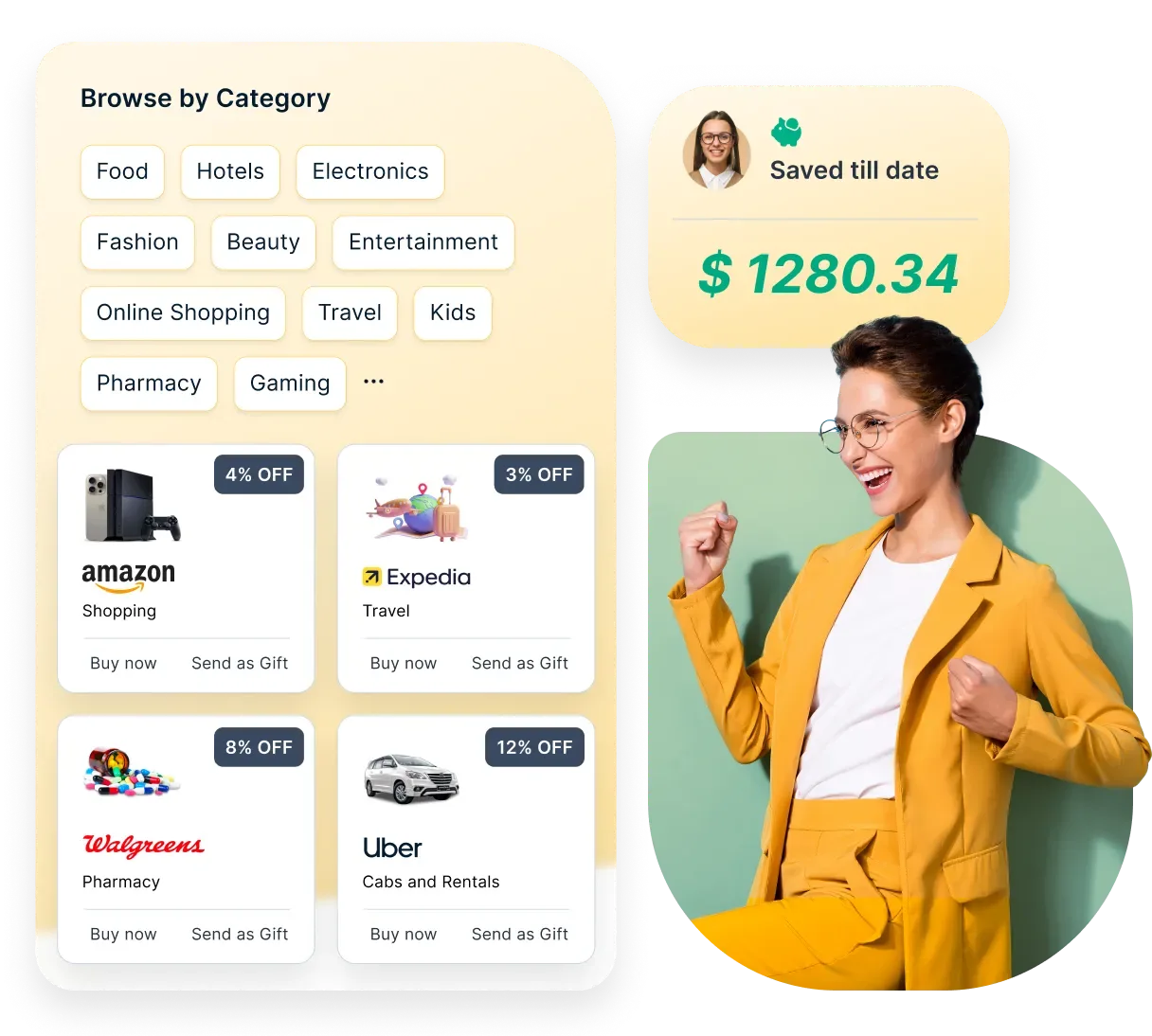
Generic discounts often fall flat because they do not meet real needs. Survey employees, then segment your workforce by generation, location, role or life stage and build offers for each group:
- Young professionals: Gym discounts, gaming, streaming and online learning.
- Working parents: Grocery offers, family vacation deals and back-to-school savings.
- Remote workers: Broadband, home office equipment and food delivery.
- Frontline and shift workers: Fuel, commuting, groceries and pharmacy savings they can use near home.
3. Set a budget and choose your delivery model
Decide whether you will run an in-house program, use a third-party provider or combine both. In-house discounts cost you margin on your own products; third-party platforms usually charge a per-employee fee or bundle discounts into a wider benefits platform, and some are free to employers because brands fund the deals. Compare pricing models in our guide to employee discount platforms.
| Model | How it works | Best for |
|---|---|---|
| In-house | Employees buy your own products or services at a staff price | Retail, hospitality, consumer brands and service businesses |
| Third-party platform | A provider aggregates corporate employee discounts from many brands in one app | Any company, including those with nothing to sell to staff |
| Hybrid | Your own staff discount plus a partner catalog in one experience | Large or multi-location employers that want broad reach |
4. Choose a partner and negotiate
If you use a provider, shortlist two or three and test them with a pilot group. Check catalog depth in every country where you have employees, how often offers refresh, how employees redeem (codes, cashback or gift cards), mobile access, single sign-on and reporting. If you negotiate local deals yourself, start with the merchants near your offices and sites, such as cafes, gyms and transport.
5. Check tax and compliance rules
Discounts can be a taxable benefit, depending on who pays and how deep the discount is. The rules below apply to the country named in each row; confirm the details for your situation with a tax advisor.
| Country | Rule for employee discounts | Official source |
|---|---|---|
| United States | Qualified discounts on your own goods are tax-free up to your gross profit percentage, and on services up to 20% of the price charged to customers. Employer-funded cash and gift cards are always taxable wages. | IRS Publication 15-B (2026) |
| United Kingdom | A staff discount creates no taxable benefit when the employee pays at least what the goods or services cost the employer, including directly related overheads. | HMRC Employment Income Manual EIM21704 |
| India | Gifts, vouchers or tokens from the employer are a nil-value perquisite when below ₹15,000 in aggregate in the tax year; other benefits are valued at cost to the employer less what the employee pays. | Income-tax Rules, 2026, Rule 15 |
Discounts that a third-party provider negotiates and employees pay for themselves are generally not treated as pay, but credits, stipends or vouchers you fund are. For a wider view, see our guide to non-taxable employee benefits.
6. Launch with a plan and automate delivery
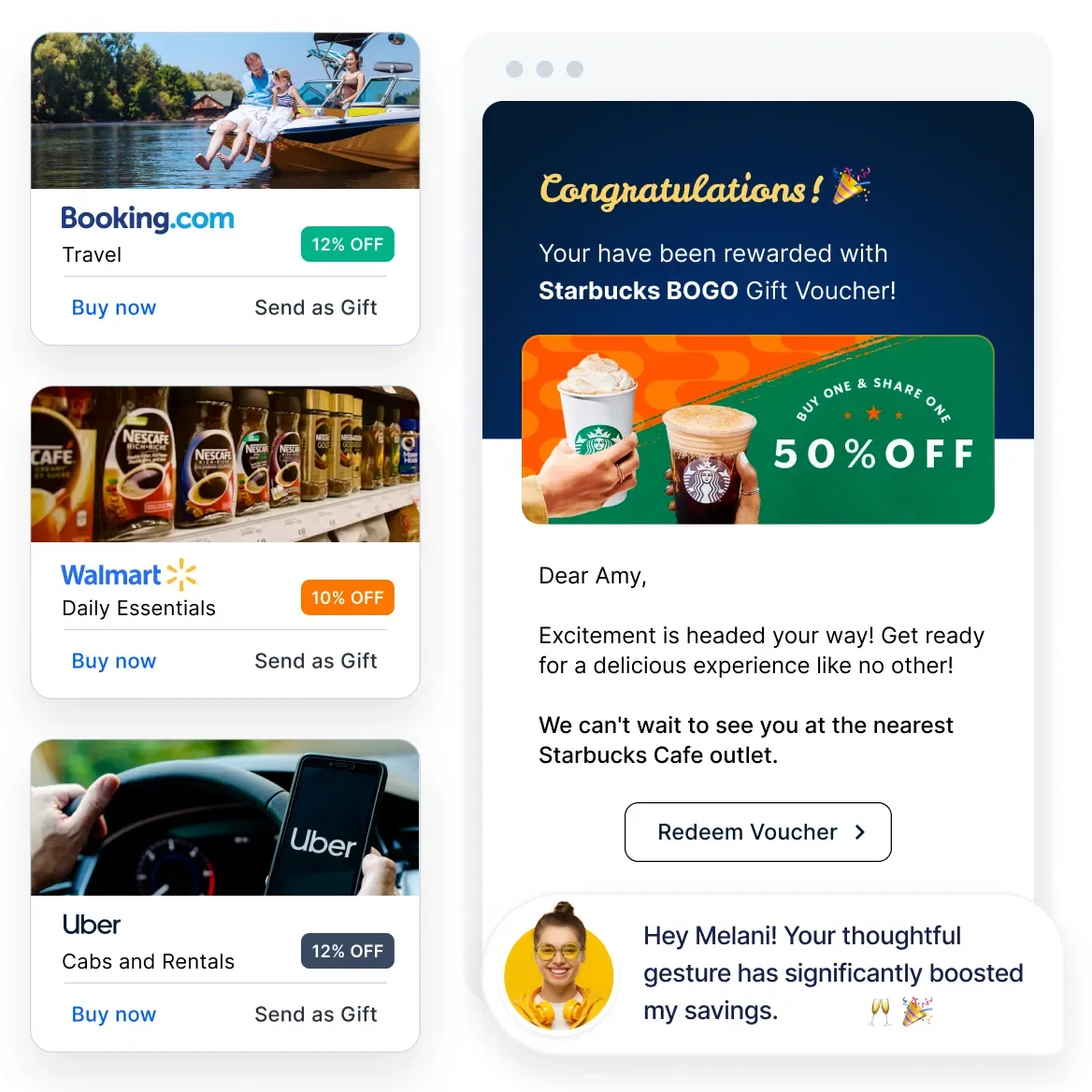
Manually managing a perks program across locations and time zones does not scale. Automate notifications, discount codes and reminders so the program runs consistently. Send pre-scheduled offers for birthdays, work anniversaries and festivals, trigger nudges when employees have not logged in for a while, run limited-time flash deals and let employees combine discounts with cashback and the rewards they earn through recognition.
| Phase | What to do | Goal |
|---|---|---|
| Weeks 1 to 2 | Pilot with one team or site; fix sign-up and redemption friction | Smooth first experience |
| Day of launch | Announce from leadership, include a how-to video and a welcome offer | Activation of most employees |
| First 30 days | Weekly highlight of top deals; share early savings stories | Repeat use |
| Days 30 to 90 | Review usage by team and location; add categories people ask for | A catalog that fits |
7. Promote it actively and reward advocacy
The best perks program will not perform if employees do not know it exists. Promotion should be frequent, fun and multi-channel:
- Use your intranet and team channels: Announce new deals, limited-time offers and flash sales on your social intranet, and pin important promotions to the top of the feed.
- Time it with company moments: Schedule promotions around onboarding, events, festivals and pay days.
- Ask before you add: Run polls or quizzes to gauge interest in upcoming perks and crowdsource ideas for the next discount drop.
- Let employees share: Social sharing and savings stories create peer influence, one of the strongest drivers of adoption.
- Reward advocates: Give extra points for referring candidates, writing reviews or taking part in surveys about the program.
8. Track adoption, savings and ROI, then refresh
To prove the value of your program, track more than redemptions. Focus on metrics that tie back to engagement, satisfaction and financial impact, and use them to keep the catalog fresh with seasonal collections, such as back-to-school, holiday and festival offers like Diwali in India or Thanksgiving in the US.
| Metric | What it tells you |
|---|---|
| Activation rate | Share of eligible employees who signed up; low activation means an awareness or access problem |
| Monthly active users | Whether the program is a habit or a once-a-year visit |
| Average savings per employee | The value you can report to leadership, often expressed as an equivalent pay raise |
| Top categories and brands | What to expand and what to drop |
| Usage by team and location | Gaps among frontline, remote or international employees |
| Link to engagement and retention | Whether active users report higher engagement or stay longer |
Common mistakes to avoid
Most discount programs fail quietly, through low awareness rather than a bad catalog. Watch for these mistakes:
- Launching and forgetting: One announcement email is not a launch. Without regular reminders, usage drops after the first month.
- A catalog that does not fit: Offers built for head office often miss frontline, remote or international employees.
- Too much friction: Separate logins, codes sent by HR and desktop-only access all kill adoption.
- Ignoring tax: Employer-funded vouchers and credits can be taxable, so check the rules in each country before you add them.
- Measuring only redemptions: Without savings and engagement data, you cannot defend the budget at renewal.
Examples of companies with standout employee discount programs
Some of the best-known programs discount a company's own products, which builds pride in the brand as well as saving money. Two examples show the model:
- Apple: Apple's employee purchase program gives staff discounts on Apple products such as Macs, iPads and iPhones. It works because employees get meaningful savings on products they use and value, and it builds pride in owning the latest devices.
- Hilton: The Go Hilton team member travel program offers employees discounted room rates at Hilton hotels worldwide, with separate friends and family rates. Employees experience the brand as guests, which strengthens loyalty and product knowledge.
Direct-to-consumer brands often follow the same pattern with staff discounts on their own products and services. For a detailed comparison of in-house programs, including Starbucks, REI and Best Buy, see these best employee discount programs.
How Empuls runs your corporate employee discounts
If you want to lift morale without inflating payroll, Empuls employee discounts give your team everyday savings in the same app they use for recognition and benefits. Here is what you get:
01 · Catalog
6,000+ brands
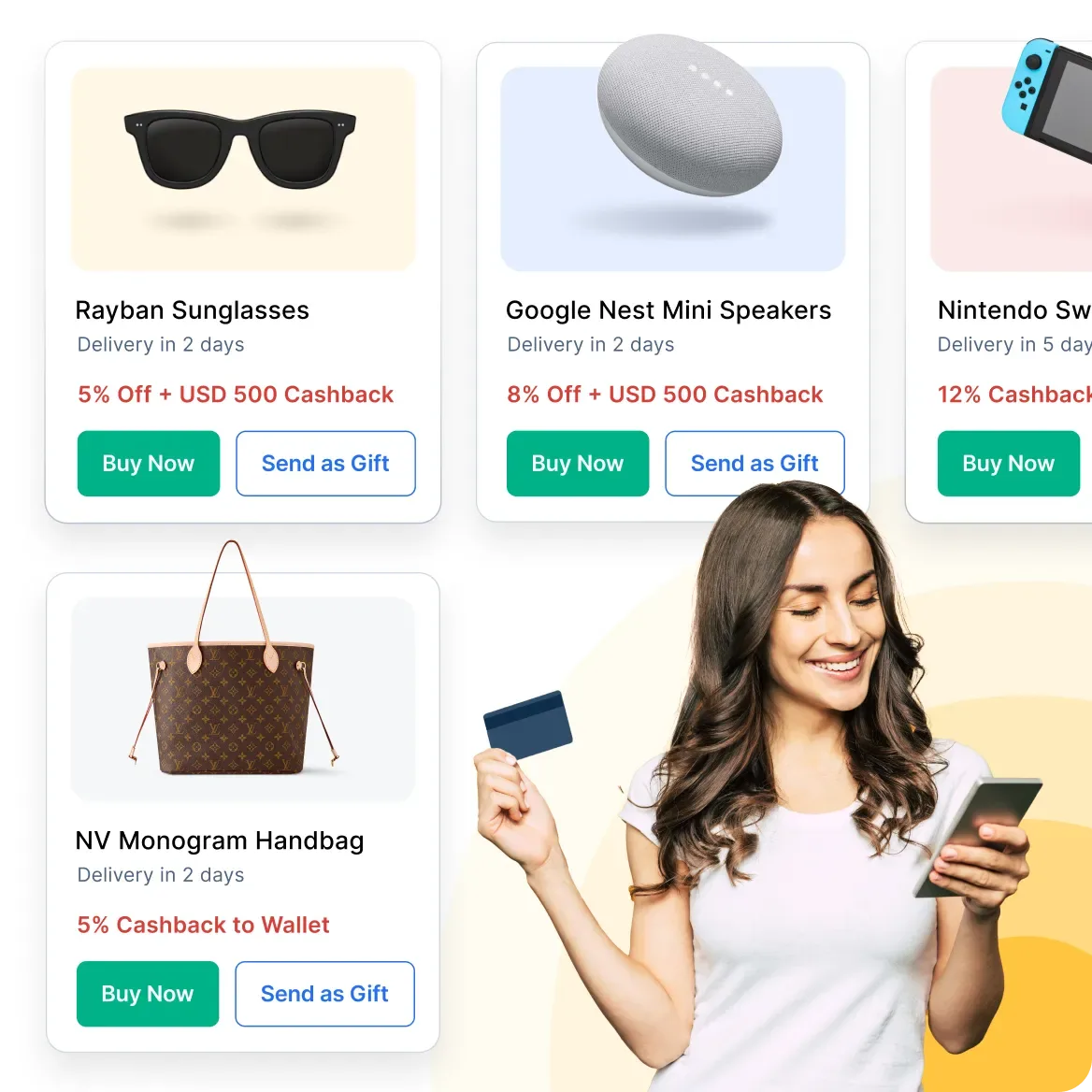
Discounts, cashback and brand deals across 30+ categories, from food and travel to electronics, wellness and learning.
02 · Stacking
Layered savings
Employees combine brand discounts with cashback and the reward points they earn, so a single purchase can save in more than one way.
03 · Private store
Your own deals
Run a private storefront for your own products or partner offers next to the public catalog, in the same checkout.
04 · Insight
Savings analytics
See adoption, savings and top categories by department and location, and report the value to leadership.
Discounts sit alongside tax-saving benefits, lifestyle spending accounts and financial wellness, so employees find all their benefits in one place. For more benefit ideas to pair with discounts, see these employee benefits ideas.
Make your discount program part of everyday work
An employee discount program is no longer a nice-to-have. Done well, it shows appreciation, supports financial wellbeing and keeps your benefits package competitive at a low cost.
Understand your employees' needs, pick the right model and partners, check the tax rules, communicate the program often and review it with data. Companies that invest in this see the return in satisfaction, engagement and retention. To see how discounts fit a wider package, read about employee perks.
Book your Empuls demo
Frequently asked questions
An employee discount program gives staff exclusive prices on products and services. Employees sign in to a portal or app, browse offers by category and redeem them through a code, a discounted gift card, cashback or a staff price at checkout. The employer either discounts its own products or partners with a provider that negotiates deals with many brands and tracks usage.
To start an employee discount program, set two or three goals, survey employees about what they buy, choose an in-house, third-party or hybrid model, pick and pilot a provider, check the tax rules in each country, then launch with leadership support and a welcome offer. Promote it regularly and review activation, usage and savings every quarter.
Yes, for most employers. Discount programs cost little compared with pay rises, yet they help employees stretch their income when financial stress is high. They support retention and engagement when employees actually use them, so the return depends on choosing relevant offers, making redemption easy and promoting the program throughout the year rather than only at launch.
Costs depend on the model. An in-house program costs you margin on your own products. Third-party platforms usually charge a per-employee fee or include discounts in a wider benefits platform, and some are free to employers because brands fund the deals. Add internal time for setup and promotion, and any budget for employer-funded credits or vouchers.
It depends on the country and who pays. In the US, qualified discounts on an employer's own goods are tax-free up to the gross profit percentage and on services up to 20%. In the UK, there is no taxable benefit if employees pay at least the employer's cost. In India, employer vouchers below ₹15,000 a year are a nil-value perquisite.
The most popular employee discount perks cover everyday spending: groceries, food delivery, fuel and commuting, electronics, travel and hotels, entertainment and streaming, and gym or wellness memberships. Popularity varies by workforce, so survey employees and review usage data. Parents often value family and school offers, while younger employees often prefer tech, subscriptions and learning.
Corporate employee discounts are reduced prices on products and services that employees still pay for. Perks are a broader category of extras that improve working life, such as free meals, wellness stipends, flexible hours or team events, which the employer usually pays for. A discount program is one type of perk that delivers value at a low cost to the employer.
Increase usage by making redemption easy on mobile with single sign-on, tailoring offers to employee personas, promoting deals weekly in the channels people already use, timing campaigns with festivals and pay days, sharing savings stories and rewarding advocates. Track activation and monthly active users by team so you can fix gaps among frontline or remote employees.





































































































































































































































































































































































































































































































































































