
Key Takeaways
Employee retention in the manufacturing industry is a plant's ability to keep skilled workers long enough to recover what it cost to hire and train them.
Hourly turnover in US manufacturing held at 31% in both 2023 and 2024, and most manufacturers do not formally measure what that turnover costs.
Compensation, schedule flexibility and career opportunities are the top three reasons hourly manufacturing workers leave.
Most early manufacturing exits happen in the first 90 days, so realistic job previews, pre-hire assessments and structured onboarding cut turnover fastest.
Recognition that reaches every shift is a low-cost retention lever: well-recognized employees are 45% less likely to leave within two years.
Employee retention in the manufacturing industry is a plant's ability to keep skilled hourly and salaried workers long enough to recover what it cost to hire and train them. It matters because demand for factory talent keeps outpacing supply, and every early exit restarts an expensive cycle of recruiting, onboarding and lost output. The fix is not one program but a set of manufacturing employee retention strategies aimed at the reasons people actually leave: pay, schedules, growth, safety, managers and recognition.
The numbers explain the urgency. A 2024 study by Deloitte and The Manufacturing Institute estimates that US manufacturers could need as many as 3.8 million new employees between 2024 and 2033, and that 1.9 million of those jobs could go unfilled if skills and applicant gaps are not closed. Keeping the people you already have is the fastest way to shrink that gap.
In this guide, we look at why employees leave manufacturing jobs, the hiring practices that set up retention, nine strategies to reduce turnover in manufacturing, companies doing it well and the metrics worth tracking. For the day-to-day engagement side of the story, read our companion guide to employee engagement in manufacturing.
The manufacturing workforce landscape
On the global front, demand for manufacturing employees has been growing steadily. Plants need talented and skilled people with solid experience, and as automation spreads, more roles call for technical skills such as programming, maintenance and quality control rather than purely physical work.
Supply has not kept up. Experienced workers are retiring, fewer young people consider factory careers and competition from warehouses, logistics and retail for the same hourly talent is intense. In the same Manufacturing Institute release, 65% of respondents to the National Association of Manufacturers' first-quarter 2024 outlook survey named attracting and retaining talent as their primary business challenge.
Employees are also moving jobs or passively looking for better ones with better pay, overall compensation and benefits and a positive work atmosphere. That is why manufacturing workforce retention has become as important as recruiting: every opening you prevent is one you do not have to fill.
3.8M
New US manufacturing workers needed
2024 to 2033, Deloitte and The Manufacturing Institute
1.9M
Jobs that could go unfilled
If skills and applicant gaps persist
31%
Hourly turnover
Industry-wide in 2023 and 2024, Manufacturers Alliance
65%
Name talent their top challenge
NAM outlook survey, Q1 2024
The manufacturing talent squeeze in four numbers
Understanding the high turnover rate in the manufacturing industry
The manufacturing turnover rate is one of the highest across all sectors, especially for hourly roles. Research from Manufacturers Alliance and Aon, published in July 2026, found that industry-wide hourly turnover held at 31% in both 2023 and 2024, average time to fill stayed flat at 34 days and 40% of manufacturers said their retention challenges were completely unchanged from 2024. Flat numbers, in other words, are hiding a problem that is not getting better.
This constant cycle of hiring and training new employees leads to productivity losses, higher operational costs and lower morale on the floor. The same research found that 96% of manufacturers do not formally quantify what turnover costs them, which makes it easy to underfund retention. The real cost includes recruiting and agency fees, training hours, overtime to cover gaps, scrap and rework from inexperienced operators and a higher risk of safety incidents.
Several factors contribute to high turnover in manufacturing, including limited career growth, safety concerns, repetitive roles, inadequate pay, rigid schedules and weak engagement. Many employees leave manufacturing jobs in search of better pay, better working conditions or career advancement. To combat this, companies need retention strategies that cover competitive compensation, skill development, safety and structured rewards and recognition. Lowering turnover improves workforce stability and, with it, quality, output and customer delivery.
Retention challenges in the manufacturing industry
Six challenges drive most exits from manufacturing jobs, and pay sits at the top of the list for hourly workers. They are ordered from the most common reasons people give when they leave to the quieter issues that make them start looking in the first place.
1. Pay and benefits that lag local competitors
Employee compensation and benefits are central to employee retention in the manufacturing industry. In the Manufacturers Alliance research, 55% of enterprise leaders pointed to competition from other nearby employers as a primary driver of hourly attrition. A worker who can earn a dollar more an hour at the distribution center down the road often will, unless something else gives them a reason to stay.
2. Rigid schedules
Long shifts, mandatory overtime and little control over hours wear people down. Schedule flexibility was the second most cited reason for hourly exits in the same data, which is why shift swapping, split shifts and predictable rosters are now retention tools, not just perks.
3. Limited career development opportunities
Career development has topped the list of reasons people quit for years. The Work Institute 2024 Retention Report, based on more than 20,000 exit interviews, again ranks career development first, ahead of health and family and work-life balance. In manufacturing, the problem is often that no one shows operators how to move up, even when the roles exist.
4. Weak employee engagement
When employees are engaged, they are less likely to leave. Yet on many shop floors, recognition is rare, communication flows one way and frontline workers have no easy channel to share ideas. Rewards and recognition programs are one of the most effective ways to build healthy engagement in manufacturing because they reach people on every shift.
5. Company culture
A workplace with fair pay, a positive culture and regular appreciation keeps people for the long term. A good company culture builds goodwill among employees, while a culture of blame, favoritism or silence pushes even well-paid workers out. Culture is also what new hires notice first, so it shapes early turnover more than most leaders expect.
6. Manager issues and issues with teams or peers
Employees who face conflict at work, micromanagement or poor coordination lose their drive quickly. In manufacturing, the first-line supervisor is often the single biggest influence on whether someone stays, yet many supervisors are promoted for technical skill and never trained to lead people.
Hiring practices that set up retention in manufacturing
Retention starts before day one, and four hiring practices make the biggest difference to how long new manufacturing employees stay. Pre-hire fit carries the most weight, because the Manufacturers Alliance research shows early mismatches tend to surface within the first 90 days, so it closes the list as the practice that builds on the other three.
1. Hiring diverse workers
The manufacturing industry has long been known for a lack of diversity in its workforce, and that narrow talent pool has worsened skilled worker shortages. Companies that build inclusive environments widen the pool they can hire from and tend to keep the people they hire, because employees stay where they feel they belong. Women, younger workers, veterans and career changers are all under-tapped groups. Our guide to inclusion and diversity in the workplace covers how to build that environment.
2. Building positive perceptions
Many people do not consider manufacturing a career because of its image as inflexible, unsafe or low-paid. To overcome this, manufacturers are targeting local markets and communicating the real benefits of the work through career sites, social media and plant tours: advanced technology, competitive pay, strong culture and a commitment to safety and the local community. Companies are also highlighting the skills needed to run modern machinery rather than the physically demanding image of the past. An honest picture attracts people who are more likely to stay.
3. Investing in employee referrals
Manufacturing relies heavily on employee referrals, and referred hires usually arrive with a realistic view of the job from someone who does it. Make the referral process easy to understand, share open roles with current employees and reward referrals that stay past 90 days rather than paying on the start date. Some manufacturers also offer higher referral bonuses for hires from underrepresented backgrounds, which attracts diverse candidates and prepares existing teams to work with them. Structured referral rewards help keep the program visible.
4. Using automation and pre-hire assessments
Manufacturing companies hire in high volumes with small recruiting teams. Applicant tracking systems and chatbots help them handle volume, source niche talent and qualify candidates on skills and experience, which saves time and attracts younger candidates who expect a digital process. Fit matters as much as speed: the Manufacturers Alliance research found that 52% of manufacturers still have no formal pre-hire assessment, and one enterprise that introduced validated assessments cut 90-day turnover by 23%.
Recognize every shift, not just the office
See how manufacturers use Empuls to reward safety, milestones and great work on the floor, right from a phone.
Talk to our ExpertTrusted by 5,000+ companies
9 manufacturing employee retention strategies
High turnover drives up hiring costs, cuts productivity and disrupts operations, so the nine strategies below are designed to build a more committed and motivated workforce. Growth and expectations come first because they address why people leave in their first year, while recognition, pay and data keep experienced workers from drifting later.
1. Offer opportunities for growth
Manufacturing still has an image of limited growth, and it is understandable: it is hard to stay engaged doing the same repetitive tasks every day. To fix it, find out what each employee wants from their career and show them how to get there through training and experience. This builds commitment from day one and loyalty over time, especially among younger workers. According to Deloitte research cited by The Manufacturing Institute, employees are 2.7 times less likely to leave within 12 months if they feel they can build skills that matter for the future.
The best way to do this is to define a clear career path for every role from the moment someone starts. Use skills matrices, offer professional development and encourage supervisors to check in on long-term goals. Investing in tenured workers matters too, because they carry knowledge that is hard to replace. Our guide to keeping tenured employees engaged covers that group in depth.
2. Define expectations from the beginning
Broken commitments are one of the primary reasons people quit, so set realistic expectations from the start. Be transparent about shifts, overtime, physical demands, pay progression and culture during hiring, and use a realistic job preview or a paid trial shift where you can.
Then build a strong onboarding process that shows how the plant works, who the team is, what the policies are, how safety works and what a typical week looks like. Pair every new hire with a buddy for the first 30 days and schedule check-ins at 30, 60 and 90 days. The clearer your onboarding, the more realistic the expectations you set, and the fewer people you lose in the first three months.
3. Re-evaluate the work environment and schedules
A hazard-free, comfortable environment is not too much to ask. Loud noise, extreme temperatures and dusty or oily conditions get frustrating quickly, so invest in clean and roomy breakrooms, proper ventilation, fans or heaters and good lighting. If you do not provide the basics people need to get through a shift, they will leave and not look back.
Re-evaluate the culture and the schedule too. Do you encourage breaks? Do you offer the occasional free meal or treat? Can people swap shifts or request a predictable roster? In The Manufacturing Institute's research, 47% of respondents said flexible work arrangements such as flexible shifts, shift swapping and split shifts were the most impactful way to retain employees. When employers show they care, employees think twice before leaving.
4. Find out why people quit and why they stay
To retain people, you first need to know why they leave. Build retention strategies from your own data rather than copying a generic plan from another industry, and the best way to get that data is to ask employees directly.
- Exit surveys and interviews: The most common way to learn why people leave. Ask the same questions every time so you can compare by shift, line and supervisor.
- Stay interviews: Short one-to-one conversations with current employees about what keeps them and what might make them leave. They catch problems while you can still fix them.
- Pulse surveys: Quick, frequent check-ins on a phone or kiosk, so frontline workers without email can respond. Tools like Empuls surveys make this easy across shifts.
- Annual engagement surveys: A broader view of culture, management and pay, best used alongside the faster methods above.
Whatever methods you use, close the loop. Tell employees what you heard and what you will change, or the next survey will get fewer and less honest answers.
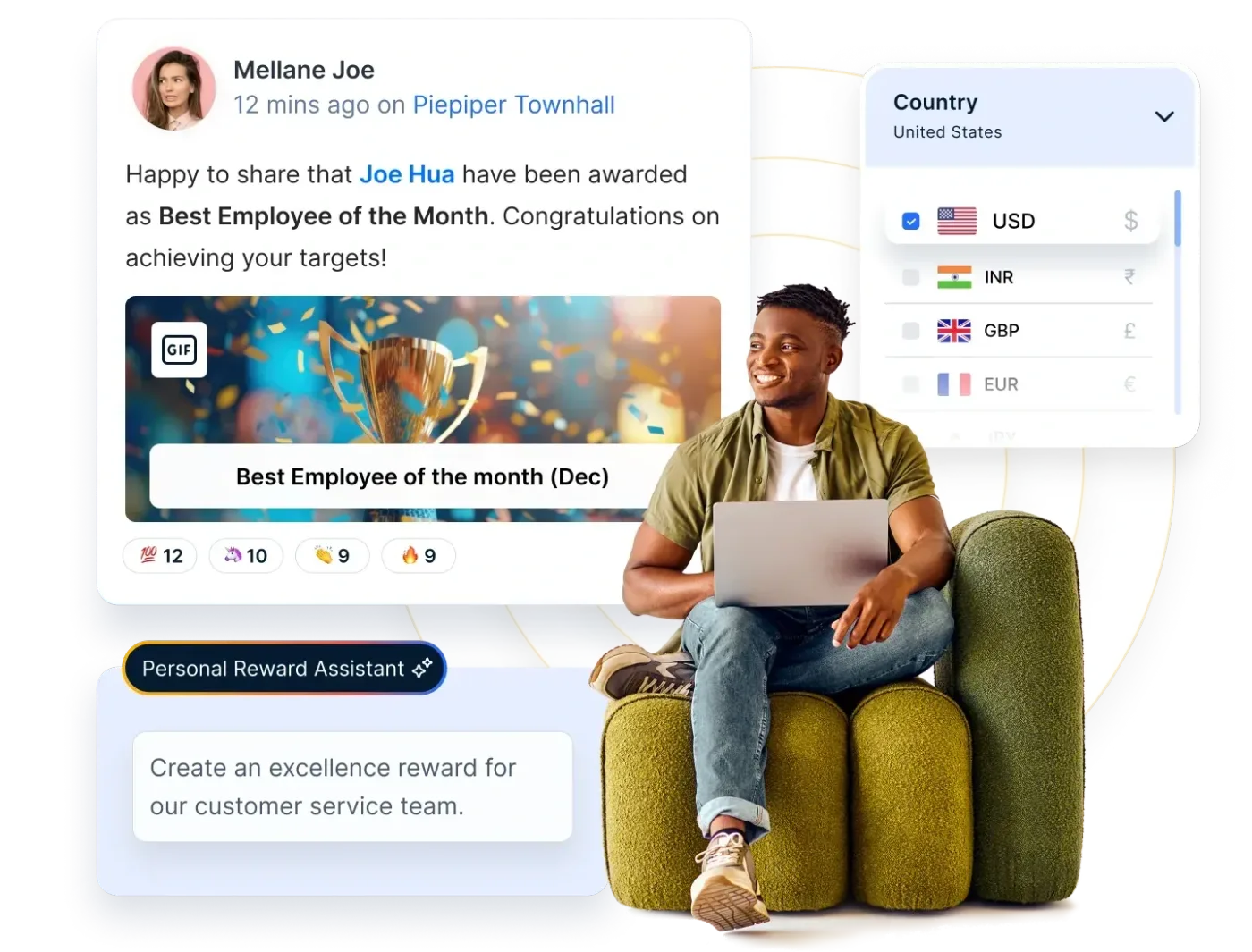
5. Employee engagement and recognition
Engaged employees perform better and report a higher quality of life at work than disengaged ones. Companies that actively reward and recognize employees build engaged teams, while those that do not risk quiet quitting first and resignations next. Recognition is also one of the strongest retention levers available: Gallup and Workhuman research, which tracked nearly 3,500 employees from 2022 to 2024, found that well-recognized employees were 45% less likely to have left after two years.
Strategies that work in manufacturing include:
- Celebrate success: Mark achievements and milestones such as work anniversaries, safety records and production targets so employees feel special and valued.
- Recognize formally and informally: Do not let contributions go unnoticed. A shout-out at the shift huddle matters as much as an annual award.
- Use a mix of rewards: Commissions and incentives, bonuses, cash awards, gift cards, certificates and badges all have a place.
- Reach every shift: Night and weekend crews are easy to forget. Recognition has to work on mobile and on shared screens, not only by email.
Ketchie, a precision machining manufacturer in North Carolina, shows what this looks like in practice. Employees recognize teammates at a weekly shift meeting, the feedback is posted in the break room and shared across the company, and a peer-nominated annual award comes with an extra vacation day and a reserved parking spot. For more ideas, see our guide to employee recognition for remote and frontline teams.
6. Competitive compensation and benefits
Pay is the most common reason hourly workers leave, so benchmark wages against nearby employers, not just other manufacturers, and review them at least once a year. The right compensation structure has to fit the budget while meeting employee expectations, and that is a hard balance to strike. Clearly communicating both the monetary and non-monetary value of working at your plant helps close the gap.
- A well-rounded compensation structure: Industry-standard wages plus a little extra show how much you value people. Add retirement plans, shift differentials and attendance or skills-based pay steps.
- Flexible benefits: Choose plans that cover health, dental, vision, accident cover, family care and an employee assistance program, and let employees pick what fits their life stage.
- Monetary and non-monetary benefits: Paid time off, paid vacations, certifications, flexible shifts, transport, subsidized meals, childcare support and reward programs all count as compensation in employees' eyes.
Retention-focused benefit packages often look like this: predictable shift options, free or subsidized transport and meals, childcare support and education assistance that pays for certifications. For a full view of what to offer, read our guide to employee benefits.
7. Training and skill development
Training and development are closely linked to turnover. With career development the top reason people leave, giving employees chances to build skills, continue their education and grow inside the company has become essential. Manufacturing employees expect continuous training that helps them in their current job and moves them toward their long-term goals.
Leading manufacturers invest in their people through:
- Education opportunities: Tuition assistance and support to complete diplomas or degrees.
- Certified programs: Paid certifications in welding, maintenance, quality or safety.
- Apprenticeships: Partnerships with technical colleges that combine paid work and classroom learning.
- Workshops and online courses: Short modules employees can complete between shifts.
Pair training with a visible career path. Many HR teams hold a goal-setting conversation at 90 days and then once a year, so every employee knows where they stand and what comes next. Recognizing completed training reinforces the habit.
8. Safety and workplace environment
A safety-first approach shows employees you value them and care about their wellbeing. Safety is also tied to compliance and audit requirements, so plants must meet those standards both to protect people and to keep them. The Bureau of Labor Statistics recorded 2.5 million nonfatal workplace injuries and illnesses across US private industry in 2024. Every one of them is a reason for a worker, and their coworkers, to question whether to stay.
Workplaces have hazards that cause serious harm when they are not managed. Examples of employer responsibilities include:
- Clear hazard marking: Mark all water, fire, fall and injury-prone areas clearly.
- Protective equipment: Provide protective gear, masks and PPE wherever the work requires it.
- Medical support: Give employees access to first aid, medical care and health insurance, and staff an in-house medical team at large facilities.
- Regular audits: Audit safety and labor law compliance on a fixed schedule and fix findings fast.
- A voice on safety: Let workers report near misses without fear and recognize people who do.
Employees who join and stay with a company need to know it is safe. Medical cover is only the start; visible leadership attention to hazards, fast fixes and recognition for safe behavior are what build trust.
9. Data-driven retention strategies
Use reliable, predictive data on turnover and retention to find the risk factors behind churn before they cost you people. Losing trained, skilled employees means losing their knowledge, their relationships and often their teammates' confidence too.
With data and simple predictive models, HR teams can see what causes people to leave and build targeted programs. A data-driven approach includes:
- Track the right signals: Attendance patterns, overtime load, engagement scores, recognition received and time since last pay review all predict exits.
- Use exit data: Feed exit interview themes into retention plans by line and supervisor.
- Hire for fit: Data-driven selection reduces mismatches, since many people quit when a job does not match their long-term goals.
- Act on risk early: Stay interviews, targeted retention bonuses and regular engagement surveys help keep people flagged as at risk.
One automotive parts manufacturer facing very high turnover at a plant in Mexico used this approach: predictive models to hire better-fit candidates and forecast exits, followed by action plans, surveys and follow-ups for teams at risk. Reports and analytics that combine recognition and survey data make these patterns easier to spot.
Matching each turnover cause to a retention lever
The table below links each common cause of manufacturing turnover to the earliest warning sign, the strategy that addresses it and the metric that shows whether it is working. Use it to decide where to start: pick the cause that shows up most often in your exit data.
| Turnover cause | Early warning sign | Retention lever | Metric to watch |
|---|---|---|---|
| Pay below local market | Rising exits to nearby warehouses and plants | Annual wage benchmarking, skills-based pay steps | Exits citing pay, offer acceptance rate |
| Rigid schedules | Absenteeism, shift swap requests | Shift swapping, predictable rosters, split shifts | Unplanned absence rate |
| No visible career path | Strong performers stop volunteering for training | Skills ladders, apprenticeships, 90-day goal talks | Internal fill rate |
| Poor onboarding or wrong fit | Exits in the first 90 days | Realistic job previews, buddies, pre-hire assessments | 90-day turnover |
| Weak recognition | Low participation in huddles and surveys | Peer and manager recognition on every shift | Share of employees recognized monthly |
| Supervisor problems | Turnover clustered under one supervisor | Leadership training for first-line supervisors | Turnover by supervisor |
| Safety concerns | Rising near misses or injury reports | Audits, PPE, recognition for safe behavior | Total recordable case rate |
Examples of manufacturers doing retention well
Three companies show different routes to retaining factory workers and technical talent. NVIDIA comes first because it publishes its turnover rate, which makes its results the easiest to verify.
NVIDIA
NVIDIA, known for graphics processing units and computer chips, is often cited as a benchmark for engagement in technology manufacturing. It runs community outreach and team-building activities, gives people room to work with autonomy and shares equity broadly. The result shows in its numbers: the company's fiscal 2025 annual report puts overall turnover at 2.5%.
Stryker
The medical technology company is known for filling new roles with existing employees, with internal moves into research and development, product management and quality assurance. It backs this up with comprehensive health coverage, tuition assistance and a retirement savings plan, giving people both a reason and a route to stay.
L'Oréal
L'Oréal built its employee value proposition from what its current employees said about working there: the values, culture and growth the company offers. Using employees' own words makes the promise credible to candidates and sets accurate expectations, which supports retention after they join.
How to measure manufacturing workforce retention
You cannot improve what you do not measure, and most plants track only a single annual turnover figure. Split your numbers so they point to a cause:
- 90-day turnover: The share of new hires who leave within three months. It exposes hiring and onboarding problems.
- Hourly and salaried turnover separately: The two groups leave for different reasons and need different fixes.
- Regretted turnover: Exits of people you wanted to keep, such as skilled operators and maintenance technicians.
- Turnover by line, shift and supervisor: Clusters usually point to a local management or scheduling problem.
- Cost per exit: Recruiting, training, overtime and scrap. Putting a number on it makes the case for retention budgets.
- Engagement and recognition coverage: Pulse scores and the share of employees recognized each month are leading indicators.
For formulas and benchmarks, see our guide to employee attrition, and use an employee retention program to turn the numbers into a plan.
Retain your manufacturing workforce and reduce turnover with Empuls
High turnover is a constant challenge in manufacturing. Long shifts, physically demanding work and a lack of recognition often leave employees feeling undervalued and disconnected. Replacing skilled workers is costly, but the real challenge is keeping them engaged, motivated and committed.
Empuls is Xoxoday's employee engagement platform, and it is built to reach frontline and factory workers on mobile, not just desk-based staff. Here is how it helps retain manufacturing employees:
- Recognize and reward loyalty: Celebrate work anniversaries, safety achievements and outstanding contributions with recognition and milestone rewards.
- Give employees a voice: Run pulse and lifecycle surveys to understand concerns and act on them quickly.
- Strengthen workplace connection: Keep every shift informed and connected through a social intranet.
- Provide meaningful perks and benefits: Offer flexible benefits and tax-friendly options that add real value to employees' lives.
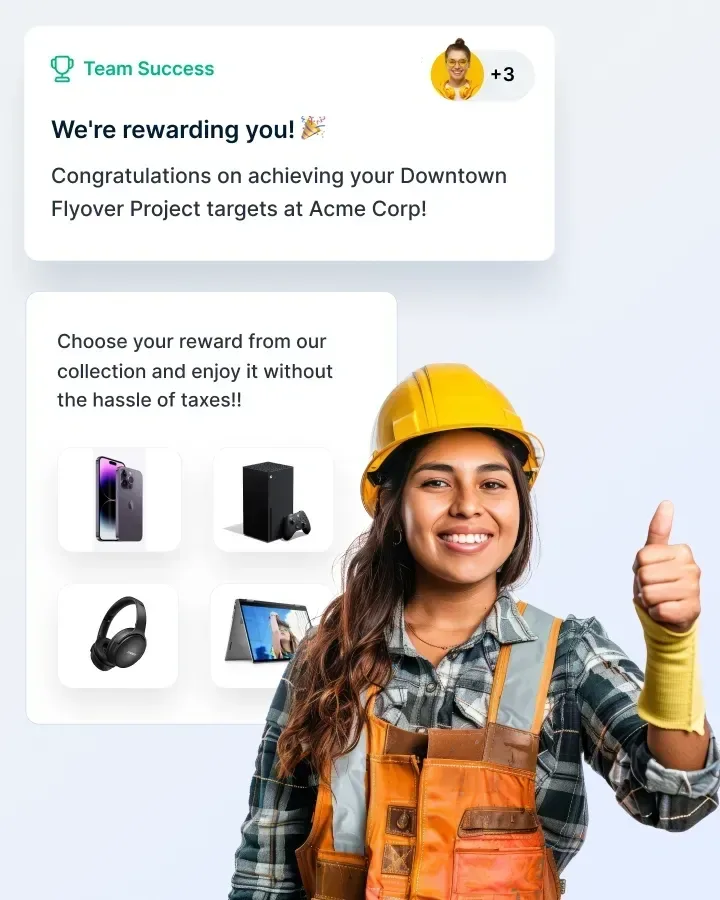
Retention is not just about filling positions. It is about creating an environment where employees want to stay, and Empuls helps manufacturers build a culture of recognition, engagement and long-term commitment.
Finishing thoughts
Like every industry, manufacturing's biggest asset is its people. Today's workers have plenty of options and the connections to land a job in another field quickly. Improving employee retention in the manufacturing industry comes down to fair and competitive pay, flexible schedules, visible career paths, a safe workplace, trained supervisors and recognition that reaches every shift. Start with the cause that shows up most in your exit data, measure the result and build from there.
Book your Empuls demo
Frequently asked questions
Hourly employee turnover in US manufacturing held at 31% in both 2023 and 2024, according to Manufacturers Alliance and Aon research published in 2026. Salaried turnover is much lower, with most large manufacturers keeping it between 10% and 15%. Rates vary widely by region, plant size and role, so compare your own numbers by shift and line rather than relying on a single industry average.
Employee retention is difficult in manufacturing because hourly workers can often earn similar or higher pay at nearby warehouses and logistics firms, while factory jobs bring long shifts, physical demands and safety risks. Limited career paths, rigid schedules and untrained supervisors add to the pressure. With millions of manufacturing jobs projected to open over the next decade, competition for skilled workers keeps rising.
Retaining factory workers starts with competitive pay benchmarked against local employers and predictable, flexible shifts. Add a clear skills ladder with pay steps, structured onboarding for the first 90 days and supervisors trained to lead people. Recognize good work and safe behavior on every shift, ask for feedback through quick mobile surveys and act visibly on what employees tell you.
Manufacturers reduce early turnover by setting honest expectations during hiring, using realistic job previews or paid trial shifts and adopting validated pre-hire assessments. Once people start, a buddy system, scheduled check-ins at 30, 60 and 90 days and early recognition help them settle in. Tracking 90-day turnover by supervisor and shift shows where onboarding is breaking down.
The main causes of high turnover in manufacturing are pay that lags nearby employers, a lack of schedule flexibility and limited career opportunities, which together top the reasons hourly workers give for leaving. Other common causes include poor onboarding, weak recognition, conflict with supervisors, repetitive work and safety concerns. Exit interviews and stay interviews reveal which of these matter most at your plant.
Employee turnover costs manufacturers far more than recruiting fees. The total includes advertising and agency costs, training hours, overtime to cover open shifts, scrap and rework from inexperienced operators and a higher risk of safety incidents. Yet research from Manufacturers Alliance found that 96% of manufacturers do not formally quantify what turnover costs them, which often leaves retention underfunded.
Yes, recognition improves retention in manufacturing when it is frequent, specific and reaches every shift. Gallup and Workhuman research tracking nearly 3,500 employees found that well-recognized employees were 45% less likely to have left after two years. In plants, that means celebrating safety records, production targets and work anniversaries publicly, including for night and weekend crews.
Manufacturers should track 90-day turnover, hourly and salaried turnover separately, regretted turnover of skilled roles and turnover by line, shift and supervisor. Adding cost per exit, time to fill, internal fill rate and engagement or recognition coverage gives leading indicators. Reviewing these monthly shows which retention strategies work and where problems are building before resignations rise.





































































































































































































































































































































































































































































































































































