
Key Takeaways
US manufacturers could need up to 3.8 million new workers between 2024 and 2033, so employee engagement in manufacturing is now a retention necessity.
Safety is the foundation of manufacturing engagement, because no recognition program will engage someone who doesn't feel safe on the line.
Flexible shifts, fair and transparent pay and visible career paths are the strongest levers for keeping shop floor workers.
Engaging shop floor workers requires mobile, multilingual tools, since most frontline employees have no corporate email or desk.
Measure engagement by line, shift and site, alongside safety, absenteeism and attrition, to see where improvement efforts work.
Employee engagement in manufacturing is how committed, focused and willing to contribute your plant, warehouse and maintenance teams feel at work. The fastest ways to improve it are a safe workplace, fair and predictable pay and shifts, visible career paths, frequent recognition on the shop floor and communication tools that reach workers who never sit at a desk. Below are 15 practical strategies, with the data that shows why each one matters.
The manufacturing industry drives economic growth, yet it faces serious workforce challenges, including labor shortages, skill gaps and high turnover. Research from Deloitte and the Manufacturing Institute (2024) estimates US manufacturers could need as many as 3.8 million new employees between 2024 and 2033, and that about 1.9 million of those jobs could go unfilled if skills and applicant gaps aren't addressed. The same report notes that over 65% of manufacturers in the NAM Q1 2024 Outlook Survey named attracting and retaining talent as their primary business challenge.
Despite its importance, engagement remains low. Gallup's State of the Global Workplace 2026 found that only 20% of employees worldwide were engaged in 2025, down from 23% in 2022. Improving manufacturing employee engagement leads to higher productivity, fewer safety incidents, less absenteeism and better retention. This guide focuses on shop-floor engagement. If you run vehicle plants or dealerships, our guide to employee engagement in the automotive industry covers the EV transition and dealer teams.
Why employee engagement in manufacturing matters
Engagement in manufacturing shows up directly in safety, quality and attendance, which is why it belongs in operations reviews and not only in HR reports. These figures show the size of the gap and the size of the prize.
3.8M
manufacturing workers needed
in the US, 2024 to 2033 (Deloitte and MI, 2024)
1.9M
jobs could go unfilled
without closing skills gaps (Deloitte and MI, 2024)
63%
fewer safety incidents
in top-quartile engagement units (Gallup, 2024)
Workforce and engagement signals for manufacturers
Gallup's Q12 meta-analysis (11th edition, 2024) found that business units in the top quartile of engagement see 63% fewer safety incidents, 32% fewer quality defects and 78% lower absenteeism than bottom-quartile units. Those are plant metrics, not soft ones.
Frontline engagement is also where most manufacturers have the least visibility. A study of 108 HR and operations leaders by PwC and the Manufacturing Institute, reported by Manufacturing Dive in January 2024, found that only 58% of manufacturers periodically survey frontline workers on engagement and culture, and 71% say they struggle with or could improve frontline mentoring programs. Engaging shop floor workers starts with knowing how they feel.
Recognize every shift, not just the office
Give supervisors mobile and QR recognition, and reach workers on WhatsApp or SMS in their own language.
Talk to our ExpertTrusted by 5,000+ companies
15 manufacturing employee engagement strategies
The 15 strategies below run from foundations to daily habits: purpose, safety, schedules and pay first, then recognition, communication and team culture. Safety (strategy 2) carries the most weight, because no recognition program or perk will engage someone who doesn't feel safe on the line.
1. Align company goals with employee goals
Maintenance or warehouse employees often never see the end product. That lack of connection can quickly turn into disengagement.
Fix this by explaining the bigger picture. Employees need to understand how their daily tasks fit into company goals: how they are helping the organization and what their contribution is. Share the company's mission and values, and remind people of the impact their work has on the final product, the customers and the wider community. A short weekly huddle that connects line output to a real customer order does more than a poster on the wall.
2. Create a safe work environment
Make sure employees have the right tools, safety equipment, protocols and protection to do their jobs safely. Manufacturing jobs can be physically demanding, so consider amenities such as clean break rooms, on-site healthcare and ergonomic equipment.
Manufacturing remains one of the sectors with the most workplace injuries. The US Bureau of Labor Statistics reports 355,800 injury and illness cases in private manufacturing in 2023, a rate of 2.8 cases per 100 full-time workers. Common dangers include:
- Slips, trips and falls
- Electrical hazards
- Production machinery and moving parts
- Heavy loads and powered industrial vehicles such as forklifts
- Other environmental hazards, such as noise, heat and chemicals
For example, an employee assembling small parts on a production line risks eye injuries without protective eyewear, and an employee handling sharp tools or materials without gloves risks cuts and abrasions. Safety equipment protects people and lets them work with confidence. Engage workers in safety too: ask for near-miss reports, act on them visibly and recognize teams that hit safety milestones. Without this basic right, employee engagement will always be lacking.
3. Offer flexible work schedules
Remote work is rarely possible on a production line, but flexibility still is. In the PwC and Manufacturing Institute study, 68% of leaders named scheduling flexibility as one of the most impactful factors for a positive frontline workplace, second only to safety. Deloitte's research found that 47% of surveyed companies saw flexible arrangements such as flexible shifts, shift swapping and split shifts as one of their most impactful retention strategies. Options include:
- Flextime: Some choice over start and end times within a shift window.
- Compressed workweek: The same weekly hours over fewer days, for example four 10-hour days followed by three days off.
- Part-time and split shifts: Shorter or divided shifts for students, parents and caregivers.
- Shift swapping and bidding: Let employees trade or bid for shifts within agreed rules.
Regular breaks, paid time off and predictable schedules are a large part of employee satisfaction, yet frequent overtime is common in manufacturing. Good scheduling software can automate shift swaps and last-minute replacements, which avoids unnecessary overtime and burnout.
4. Provide career development opportunities
Every employee wants to grow and to move up within the organization. Deloitte's workforce research found that employees who believe they can build skills important for the future are 2.7 times less likely to leave within 12 months. Manufacturing companies also need to regularly update employees' knowledge of new safety rules, equipment and automation.
Regular training increases engagement and helps with retention, because disengagement often comes from workers who see no growth path or lack the skills to step into bigger roles. Examples of career paths within a plant include:
- Production worker to machine operator
- Machine operator to shift supervisor
- Production technician to production manager
- Quality inspector to quality manager
- Maintenance technician to automation or robotics technician
If you want a loyal, skilled workforce, put career development and continuous learning at the top of your priorities, and make the next step visible to everyone on the floor.
5. Make employees feel valued and appreciated
Everyone likes to be recognized for good work, and sometimes it matters as much as pay. Companies can't take manufacturing employees for granted. Many now use employee recognition software for peer-to-peer recognition and shout-outs, and celebrate an employee of the month in front of the whole team to highlight good work and keep spirits high.
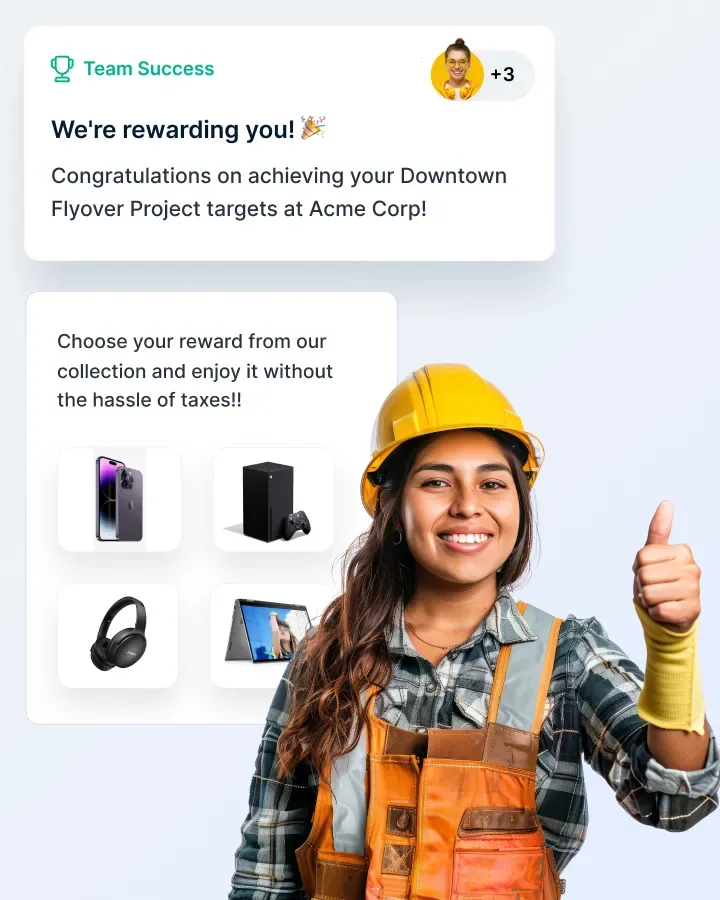
Recognition can take many forms, ideally personalized to the role and to the person:
- Monetary rewards such as bonuses, raises and gift cards
- Public or private verbal praise, depending on the individual
- Written recognition, such as a handwritten thank-you note
- Friendly contest awards such as employee of the month
- Special perks or privileges for top performers
- Learning rewards such as course vouchers or paid certifications
Recognition is fairest when it is tied to clear behaviors. Our guide to a values-based recognition program shows how to link shout-outs to the behaviors you want more of, such as safety and quality.
6. Establish two-way communication channels
Many manufacturing employees work on the factory floor and rarely get to talk with management or share ideas. Encourage open communication by holding regular department meetings, running shift-start huddles and setting up suggestion boxes, physical or digital, where employees can raise ideas and concerns.
Effective communication starts with listening and empathy, so lead by example and show real interest in employees' suggestions. Mobile tools for frontline workers help a lot here: deskless employees stay informed of company updates, can answer a quick pulse survey on their phone and see when leaders act on what they said.
7. Compensate fairly and make pay terms clear
Fair compensation is a pillar of long-term success. It helps you attract and retain talent, promotes fairness, improves morale and productivity, builds trust and supports employees' financial well-being. Fair compensation depends on:
- A clear and transparent pay structure with salary ranges for every role
- Compliance with labor laws, including equal pay and minimum wage requirements
- Salary benchmarking against your industry and region
- Regular compensation reviews that account for experience, contribution, market changes and living costs
Just as important is defining pay terms in advance. Explain how salary is set and what to expect in raises, share the criteria or KPIs needed for an increase, tie the annual performance review to a salary review, and explain bonuses, overtime and shift premiums in plain language. Uncertainty about pay is one of the fastest ways to lose a good operator.
8. Improve your onboarding process
Employee engagement should start at onboarding. You can't expect people to be engaged and productive if they don't understand their tasks. A well-designed onboarding process helps new employees feel supported and valued:
- Provide the tools, equipment and system access needed for the job
- Provide access badges and a clear first-week schedule
- Give a welcome pack with training documents, role responsibilities and a small gift
- Outline job expectations, KPIs and goals, and explain how performance is evaluated
- Assign a mentor or buddy for job shadowing
- Provide compliance and safety training before the first shift on the line
- Offer ongoing training and regular constructive feedback
Self-service onboarding content that new hires can open on a phone, at any time, is especially useful in manufacturing, where shifts and supervisors change often. Check in at day 30, 60 and 90 to catch problems before they turn into early exits.
9. Use employee engagement tools
Running an engagement program manually across shifts and sites is hard. Today you can streamline it with software that brings the core elements together:
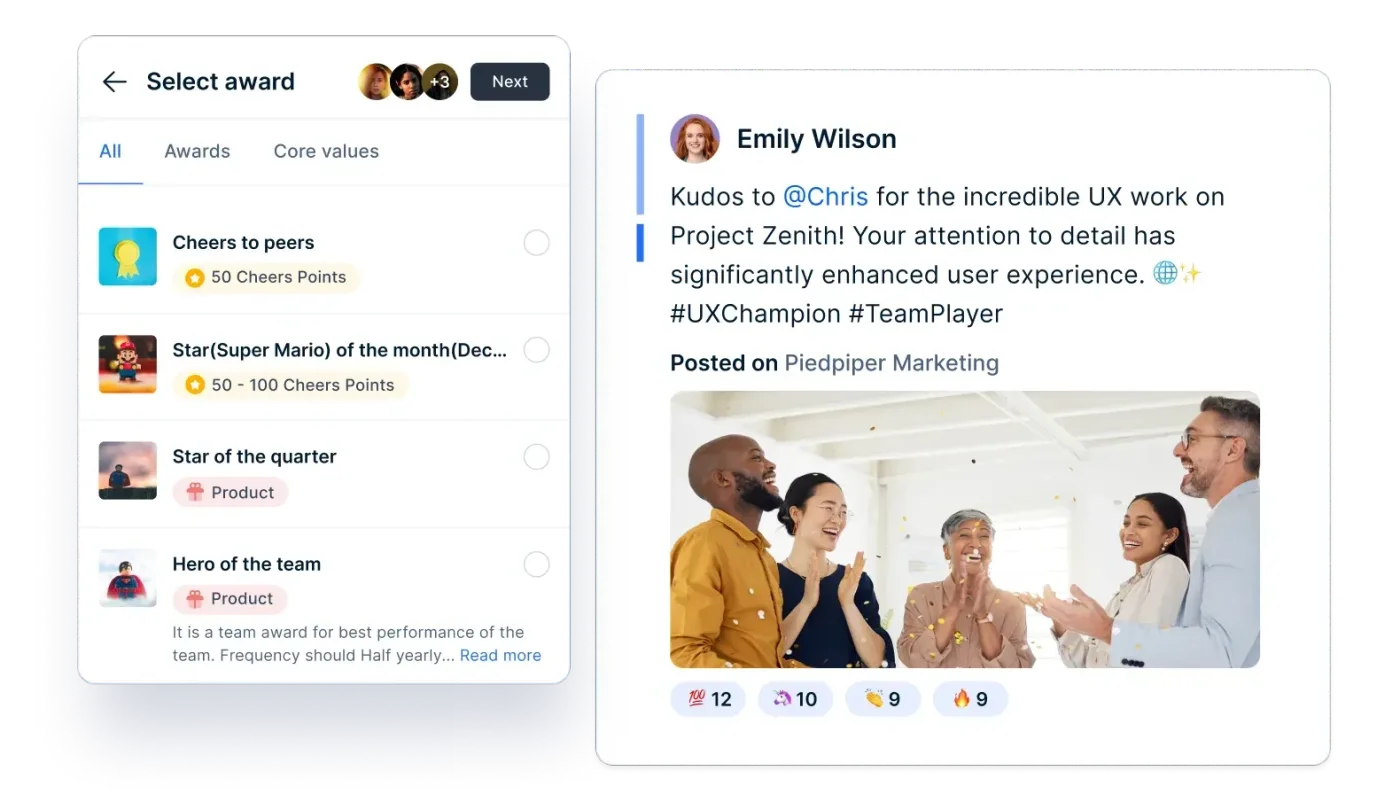
- Employee communication
- Rewards and recognition
- Employee surveys
- Data and employee analytics
- Performance and goal tracking
The test for any tool in a factory is simple: can a line worker with no corporate email use it on a basic smartphone, in their own language, during a short break? For a comparison of platforms built for that reality, see our roundup of recognition software for frontline and field workers.
10. Promote colleague engagement
The manufacturing floor can be a stoic, tough environment. More companies now encourage employees to connect with one another, which makes them more willing to ask colleagues for help. That support prevents accidents and makes the workplace more satisfying.
Workshops are one way to do this. You can also take small steps: ice-breaker activities, starting meetings with a few minutes of informal conversation and setting aside time for team activities. Once people build relationships at work, they look forward to coming in and are more likely to stay.
11. Ensure management and HR are approachable
HR plays a big role in manufacturing engagement, from structured onboarding to resolving conflicts fairly and designing career paths. Instead of staying in the office all day, HR teams should visit the factory floor regularly, listen to concerns and ideas and act on critical feedback.
Managers matter just as much. Their role goes beyond getting the job done to providing support and resources. Here is how management can boost engagement:
- Train supervisors and shift leads in communication and coaching skills
- Hold regular check-ins and one-on-ones with team leaders and shift managers
- Use coaching, mentoring or job shadowing where it helps
- Walk the floor regularly and talk with employees
Supervisors deserve special attention. Gallup's 2026 report found that manager engagement fell from 27% to 22% in 2025, and a disengaged shift lead quickly becomes a disengaged shift.
12. Create a culture of collaboration
Collaboration and teamwork are critical in manufacturing, where employees handle complex processes and heavy machinery. Practical ways to promote it include:
- Lead by example and stay open to feedback and input
- Involve employees in decisions that affect their line or cell
- Provide tools that let teams and shifts communicate easily
- Recognize and reward teamwork, not only individual output
- Run cross-functional improvement projects, such as kaizen events
- Organize team-building and volunteering activities
- Celebrate employees who speak up and share ideas, even when not every idea is implemented
13. Celebrate milestones and accomplishments
Celebrating accomplishments recognizes hard work and improves morale and motivation. It also improves retention, because employees are less likely to leave an organization that values their achievements. Milestones such as work anniversaries, safety records and production targets are natural moments to celebrate. Some ideas:
- A company-wide shout-out for a job well done or a finished project
- Work anniversary celebrations that thank employees for their loyalty
- A card or handwritten thank-you note
- A small gift or team get-together for an accomplishment or milestone
14. Encourage health and wellness programs
Employees' work-life balance and physical and mental health should be a top priority, especially in manufacturing, where workers need sharp focus. Healthy workers mean higher productivity, better retention, less absenteeism and a stronger reputation. Practical programs include:
- On-site fitness classes or gym memberships
- Regular health screenings
- Nutrition and healthy eating programs, including better canteen options for night shifts
- Stress management and fatigue awareness programs
- Access to counseling and mental health support
For what is changing in this area, read our guide to employee wellness trends.
15. Equip employees with the right tools
Without the right tools, productivity and engagement suffer. This is especially true in manufacturing, where workflows and procedures are complex and documentation is essential to doing the job right. Factory floor employees often have limited access to devices, so they are left out of company news, which is a major cause of disengagement. Make sure employees have:
- Central, searchable documentation for training, safety policies, processes and manuals
- Tools for communication and collaboration across shifts
- The right equipment and machinery for each role
- Mobile access to real-time updates and on-the-go support
Ask workers what would make their working day better and act on the answers. Often the most valued fix is practical, such as better ventilation, cooling or seating in a break area.
How to improve engagement in factories: what to measure
You can't improve engagement in factories without measuring it by line, shift and site rather than only company-wide. Track these metrics every quarter and compare top and bottom sites:
| Metric | What it tells you | Good practice |
|---|---|---|
| Pulse engagement score and eNPS | How employees feel and whether they would recommend you | Short mobile surveys, monthly or quarterly, by shift |
| 90-day and annual attrition | Whether onboarding and supervisors are working | Break down by line, shift and supervisor |
| Absenteeism | Fatigue, disengagement or scheduling issues | Compare against overtime levels |
| Safety incidents and near-miss reports | Safety culture and willingness to speak up | Rising near-miss reports can be a good sign |
| Recognition reach | Whether appreciation reaches everyone | Share of employees recognized each month |
| Internal promotions and certifications | Whether career paths are real | Track by role and by site |
For a single score that combines several of these, see our guide to the employee engagement index.
Keep your manufacturing workforce motivated with Empuls
On the factory floor, in warehouses and across production lines, employees keep operations running. But long shifts, demanding schedules and limited recognition often lead to disengagement, low morale and high turnover. Empuls, Xoxoday's employee engagement platform, builds recognition, communication and feedback into everyday work so manufacturing workforce motivation doesn't depend on a once-a-year event.
- Recognize effort beyond the numbers: Celebrate safety milestones, shift performance and teamwork with recognition and rewards that resonate, including QR-coded reward cards supervisors can hand out on the floor.
- Reach workers without email: OTP login by mobile number or employee ID, with access on iOS, Android, WhatsApp and SMS and regional language support. See frontline workforce engagement.
- Turn feedback into action: Run pulse and eNPS surveys by shift and site, with AI sentiment analysis that suggests action plans.
- Bridge the communication gap: Use the social intranet to keep factory and frontline workers informed and connected across shifts.
- Offer perks that matter: Automate milestone rewards and offer benefits such as fuel, grocery and mobile recharge options that suit manufacturing teams.
Manufacturers already use this approach. According to Empuls case studies, Luminous Power Technologies standardized recognition for a 6,000-person workforce across seven manufacturing units and 28+ sales offices, with strong adoption among plant workers who had never used a digital recognition tool. A 20,000+ employee manufacturing and logistics organization took recognition adoption among frontline workers from 24% to 83% in ten weeks with a mobile-first, multilingual rollout.
Building a more engaged manufacturing workforce
Employee engagement in manufacturing is essential to tackling labor shortages, skill gaps and high turnover. Aligning company goals with employee goals helps people see their impact, and a safe workplace with the right tools and amenities protects both morale and retention.
Career development builds commitment, while fair pay, flexible scheduling, frequent recognition and approachable leaders keep it going. Start with the foundations, measure engagement by shift and site, and add one or two strategies at a time. Done consistently, these steps create a more stable, safer and more productive workforce.
Book your Empuls demo
Frequently asked questions
Employee engagement in manufacturing is the level of commitment, focus and willingness to contribute that plant, warehouse and maintenance employees bring to their work. Engaged manufacturing workers follow safety procedures, care about quality, suggest improvements and stay longer, which directly affects output, defect rates, absenteeism and the cost of hiring replacements.
Shop floor workers often have no corporate email or desk, so company news and recognition don't reach them. Long or unpredictable shifts, frequent overtime, unclear pay progression, few visible career paths and supervisors with little time for coaching all add to disengagement. Physically demanding and repetitive work makes recognition and support even more important.
The most effective manufacturing employee engagement strategies are a safe workplace, fair and transparent pay, flexible and predictable scheduling, clear career paths and training, frequent recognition on the shop floor and two-way communication through mobile tools. Approachable supervisors and HR, structured onboarding and wellness programs help sustain those gains over time.
Measure factory engagement with short, frequent pulse surveys and eNPS broken down by line, shift and site, then compare the results with operational data. Useful companion metrics include 90-day and annual attrition, absenteeism, safety incidents, near-miss reporting, recognition reach and internal promotions, which together show where engagement is strong or slipping.
Recognition shows manufacturing employees that their effort is noticed, which strengthens motivation and loyalty. It works best when it is frequent, specific and delivered close to the moment, such as a supervisor recognizing a safety catch on the line. Linking recognition to values like safety and quality also reinforces the behaviors plants need most.





































































































































































































































































































































































































































































































































































