
Key Takeaways
The most damaging employee feedback mistakes are giving no feedback, giving it only once a year and collecting survey feedback without acting on it.
Gallup found 80% of employees who received meaningful feedback in the past week are fully engaged, so frequency matters as much as quality.
Effective feedback names a specific situation, the behavior observed and its impact, then agrees on next steps together.
Anonymous surveys, clear questions and visible action plans keep the feedback process trusted and participation high.
A 12-point audit of feedback frequency, balance, anonymity, follow-through and recognition shows which mistakes to fix first.
The most common employee feedback mistakes are giving no feedback at all, giving it once a year, focusing only on what is wrong and collecting survey feedback without acting on it. Each one erodes trust, so people stop listening to feedback and stop giving it. This guide covers 12 mistakes, how to fix each one and a checklist to audit your own feedback process.
Giving employee feedback is one of the most difficult parts of management. Striking the right balance between constructive criticism and maintaining an employee's confidence is essential, yet many managers struggle with it. When the employee feedback process is flawed, it leads to disengagement, miscommunication and lower performance.
Why employee feedback mistakes are costly
An employee feedback mistake is any habit in how feedback is given, collected or followed up that leaves people unclear, unheard or demotivated. The cost shows up in engagement first. Gallup's research on feedback shows that 80% of employees who say they received meaningful feedback in the past week are fully engaged.
Managers carry most of that load, and they are stretched. Gallup's State of the Global Workplace report found that global manager engagement fell from 27% to 22% in 2025. Disengaged managers give less feedback and worse feedback, which is why fixing the process matters as much as training individuals.
80%
of employees
who got meaningful feedback in the past week are fully engaged (Gallup)
22%
of managers worldwide
were engaged in 2025, down from 27% (Gallup, 2026)
45%
less likely to leave
well-recognized employees two years later (Gallup and Workhuman)
Why feedback and recognition habits matter
Common feedback mistakes managers make when giving feedback
The first six mistakes happen in one-on-one conversations between managers and their teams. The first two, giving no feedback and giving it only once a year, do the most damage because every other fix depends on feedback actually happening.
1. Not giving any employee feedback
Perhaps sitting down to go through an employee's performance feels like a task you cannot face. Perhaps you do not have the time, or you want to avoid conflict. The problem with not giving feedback is that you lose your team's confidence, and you lose the chance to set improvement goals with them.
Fix: If you do not have time for a full sit-down, send a short, specific note that names what the person is doing well and the one thing to improve next, then book a proper conversation within two weeks.
2. Giving feedback only once a year
Annual or infrequent feedback fails to capture how work and concerns evolve. Long gaps between conversations make it hard to address issues in real time, so feedback arrives too late to change the outcome. Our article on why annual employee surveys fail shows the same problem at the organization level.
Fix: Hold short, regular check-ins, weekly or every two weeks, and give quick feedback within a day or two of the moment it relates to.
3. Talking only about what is not working
Many employees dread reviews because their manager talks only about what is not working, when they should also cover what is working and the support needed to improve. Focusing only on the negatives is not constructive. It creates a blame culture and stops people advancing, when the goal is an environment that supports growth.
Fix: Start with specific strengths, then discuss one or two priorities to improve, and agree on the support you will provide.
4. Making the feedback about yourself
If you keep talking about how you would have done something, you risk making the employee resentful, and they may not learn how to fix the issue. Long stories about your own success rarely help someone else improve.
Fix: Keep the focus on the employee's situation and next steps. Share a brief personal example only if it gives them a practical technique.
5. Assuming you know what motivates each person
Competitions and leaderboards can be great motivators, but not everyone enjoys or engages with the same things. For some people, a simple word of praise has the same effect as winning a contest. A blanket approach risks making some employees feel isolated or resentful.
Fix: Ask each team member how they prefer to receive feedback and recognition, in private or public, written or spoken, and adjust. Our guide to intrinsic vs extrinsic motivation explains why preferences differ.
6. Keeping reviews and rewards on an unclear schedule
If employees do not know when reviews happen or when bonuses are decided, they become nervous and confused. Not understanding when or how you are evaluated and rewarded is unsettling for everyone. A regular schedule is fair and consistent, shows that people's voices count and surfaces issues before they become serious problems.
Fix: Publish the calendar for check-ins, reviews and reward decisions at the start of the year, and stick to it.
Close the loop on every piece of employee feedback
Run anonymous pulse surveys, analyze comments with AI and track action plans in one place.
Talk to our ExpertTrusted by 5,000+ companies
Employee feedback process mistakes organizations make
The next six mistakes sit in the wider feedback process: surveys, follow-up and recognition systems. Not acting on feedback is the most damaging of them, because it teaches people that speaking up is pointless.
7. Ignoring employee anonymity
When employees fear repercussions, they hesitate to share honest feedback. A lack of anonymity results in filtered responses and limits insight into real workplace challenges. Ensuring anonymity, using secure tools and explaining how responses will be used builds the trust people need to share meaningful insights.
Fix: Run engagement surveys anonymously, report results only for groups above a minimum size, such as five people, and say so clearly in the invitation.
8. Asking poorly worded feedback questions
Survey questions must be clear and unbiased. Vague or leading questions produce unreliable answers. "Are you happy with your job?" does not identify specific concerns, and questions that assume a positive answer discourage honesty.
Fix: Ask about one thing per question, use a consistent rating scale and add an open-ended follow-up. For example, replace "Do you feel supported?" with "How often does your manager give you useful feedback on your work?"
9. Not acting on feedback
Collecting feedback is pointless if nothing follows. When employees share concerns but see no change, trust in the process weakens and participation in future surveys drops. Even if every suggestion cannot be implemented, acknowledging feedback and explaining decisions builds transparency and trust.
Fix: Share results within two to three weeks, pick two or three priorities, assign an owner and a date to each and report progress before the next survey.
10. Treating feedback as one-way communication
Feedback should be a dialogue, not a broadcast. When employees see no response to their input, they disengage, and feedback feels like a formality rather than a tool for change. Managers also need feedback on their own leadership to improve.
Fix: End every feedback conversation by asking, "What can I do to support you better?" and use 360-degree feedback to give managers structured input from their teams.
11. Keeping recognition top-down only
Praise from the boss is satisfying, but if it is the only recognition people receive, you end up with an unhappy workforce. Giving colleagues the chance to recognize each other's work shows that their judgment is respected and builds unity and morale. Peer recognition works best when it names specific achievements rather than generic thanks.
Fix: Add peer-to-peer recognition tied to company values, and watch for patterns where some teams or groups are rarely recognized. Our guide on how to prevent bias in recognition programs covers this in depth.
12. Making money the only reward
A fair monetary reward system is essential in most industries, but it should not be the only way you show people they are valued. Extra vacation days, wellness support, learning budgets, badges and public recognition can all show staff you have thought about what motivates them personally. The key is setting rewards at the right level: too easy and they feel meaningless, too hard and people give up.
Fix: Pair pay with timely, specific recognition. Research summarized by Gallup on workplace recognition found that well-recognized employees are 45% less likely to have left two years later.
Ineffective feedback examples and better alternatives
The table shows eight ineffective feedback examples, why each one fails and a stronger version you can adapt. The best rewrites share three traits: they name a specific situation, describe the behavior and explain its impact.
| Ineffective feedback | Why it fails | Better version |
|---|---|---|
| "Good job this week." | Too vague to repeat | "Your summary of the client call on Tuesday was clear and on time, so the team could act the same day." |
| "You need to be more proactive." | No example or next step | "In Monday's planning meeting, you spotted the delivery risk but did not raise it. Next time, flag it in the meeting so we can adjust early." |
| "Your attitude is a problem." | Judges personality, not behavior | "In the last two stand-ups you interrupted teammates. That made it harder for them to share updates. Can you let each person finish first?" |
| "When I was in your role, I would have closed that deal." | Makes it about the manager | "The deal stalled after pricing. What do you think happened, and how can I help you handle that objection next time?" |
| "Everyone is complaining about you." | Unclear source, feels like an attack | "Two project partners told me deadlines slipped twice this month. Let us look at what is getting in the way." |
| "Fine overall, but here are ten things to fix." | Overwhelming, no priority | "You are strong on client relationships. The one thing to focus on this quarter is forecast accuracy." |
| "We will discuss it at your annual review." | Too late to change the outcome | "Can we take ten minutes today to talk about how the launch went?" |
| "Thanks for the survey feedback." (then nothing) | No follow-through | "You told us workload is uneven. We are rebalancing two accounts by next month and will check in again in six weeks." |
For 30 more ready-to-use examples, see our guide to employee feedback examples.
Employee feedback process best practices
An effective employee feedback process is structured, data-driven and action-oriented. These five best practices are listed in the order you should put them in place, because clear objectives shape everything that follows.
- Set clear objectives aligned with business goals: Decide what you want to learn, such as leadership effectiveness, team morale or communication. If turnover is high, for example, ask targeted questions about job satisfaction, career growth and support.
- Design specific and balanced questions: Mix rating scales, multiple choice and open-ended questions so you get both measurable data and context.
- Use a feedback platform with real-time analysis: Spreadsheets and email surveys lead to low participation and slow analysis. A dedicated platform keeps responses anonymous, analyzes comments and tracks trends over time.
- Close the gap between feedback and action: Share key takeaways in team meetings and act on them. If feedback highlights uneven workloads, start the conversation about resource allocation now rather than waiting for the next survey cycle.
- Make feedback two-way and continuous: Combine regular check-ins, monthly pulse surveys and feedback in performance reviews, and ask managers to seek feedback on their own leadership.
How to give better employee feedback in conversation: Use the situation, behavior and impact structure. Describe when and where something happened, the specific behavior you observed and the effect it had, then agree on next steps together. For the cultural side of this, read our guide on how to build a culture of feedback.
Employee feedback process audit checklist
Use this 12-point checklist to audit how feedback works on your team or across the organization. Each item maps to one of the mistakes above; answer yes or no honestly, then use the score at the bottom to decide what to fix first.
| # | Check | Mistake it prevents | Yes or no |
|---|---|---|---|
| 1 | Every employee had a feedback conversation with their manager in the last 30 days | Not giving any feedback | |
| 2 | Managers give quick feedback within a few days of key moments | Feedback only once a year | |
| 3 | Reviews cover strengths as well as improvement areas | Talking only about what is not working | |
| 4 | Feedback focuses on the employee's work and next steps | Making it about yourself | |
| 5 | Managers know each person's feedback and recognition preferences | Assuming what motivates people | |
| 6 | The review and reward calendar is published and followed | Unclear schedule | |
| 7 | Surveys are anonymous, with a minimum group size for reporting | Ignoring anonymity | |
| 8 | Survey questions ask about one thing each and include open-ended follow-ups | Poorly worded questions | |
| 9 | Results were shared and actions assigned within three weeks of the last survey | Not acting on feedback | |
| 10 | Managers receive structured feedback on their own leadership | One-way communication | |
| 11 | Employees can recognize peers, and recognition is spread across teams | Top-down recognition only | |
| 12 | Non-monetary recognition is used alongside pay and bonuses | Money as the only reward |
How Empuls helps you avoid common feedback mistakes
Empuls helps organizations collect honest feedback regularly, understand it quickly and turn it into visible action, while making recognition part of everyday work. Managers and HR see results by team and driver, assign action plans and track progress, so feedback never disappears into a report.
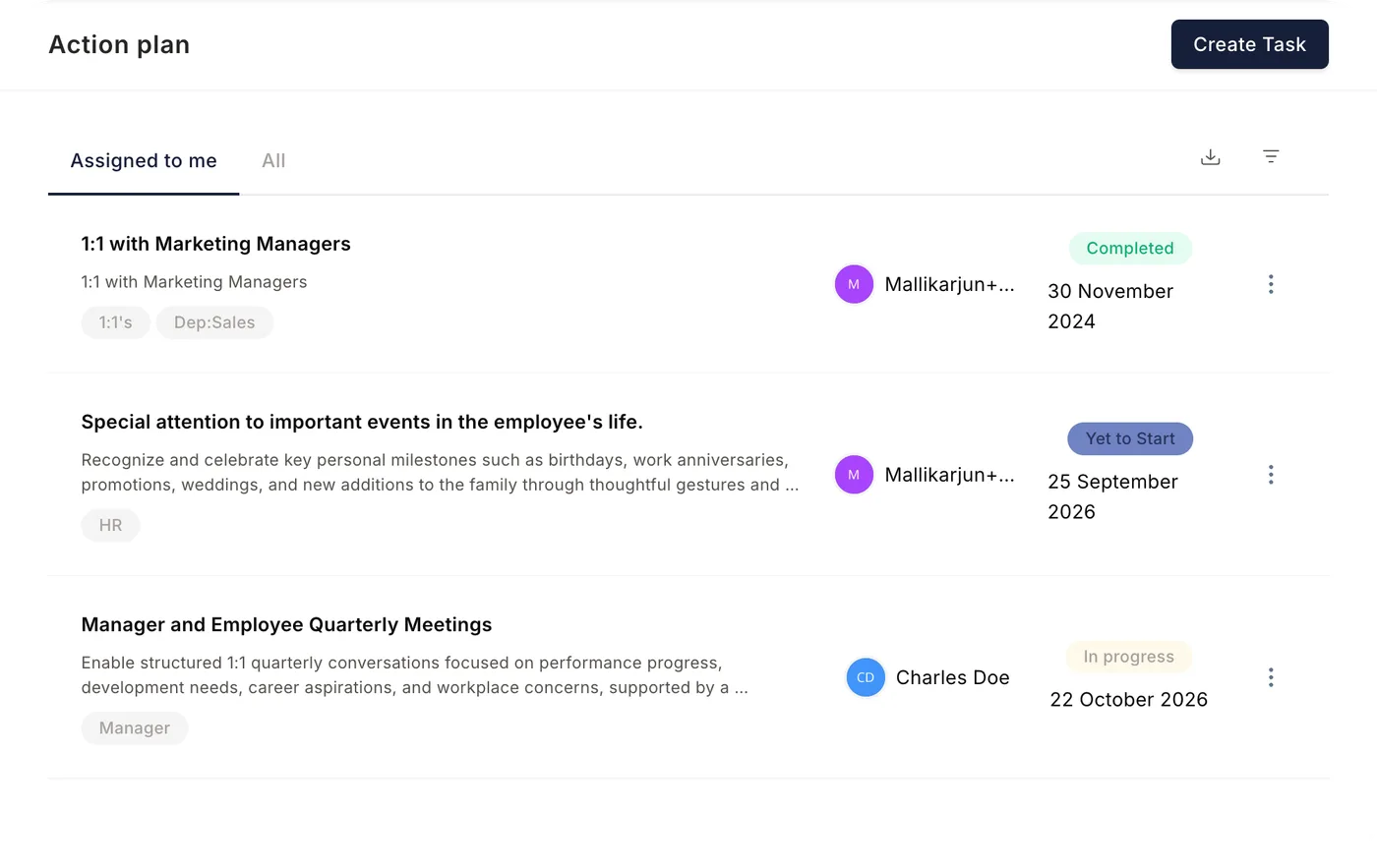
- Run short, anonymous check-ins with Empuls pulse surveys.
- Read open-ended comments at scale with AI sentiment analysis.
- Assign owners and track follow-through with survey action plans.
- Make peer and manager appreciation routine with Empuls recognition.
Building a feedback process people trust
A well-structured employee feedback process is essential for an engaged, high-performing team. Avoiding common employee feedback mistakes, such as inconsistent feedback, vague communication and lack of follow-through, makes sure feedback drives real improvement. Run the audit checklist, fix the lowest-scoring items first and keep the conversation going, so people feel heard and know what to do next.
Book your Empuls demo
Frequently asked questions
The biggest mistake is not giving feedback often enough. When feedback only happens at an annual review, it arrives too late to change outcomes and feels like judgment rather than support. Short, regular check-ins and quick comments soon after key moments make feedback normal, which makes harder conversations easier when they are needed.
Managers should give informal feedback weekly or every two weeks, ideally within a few days of the moment it relates to, and hold a more structured development conversation at least quarterly. Gallup links meaningful feedback in the past week to much higher engagement, so frequency matters as much as the formal review cycle.
"You need to be more proactive" is a classic example of ineffective feedback because it gives no situation, no specific behavior and no next step. A better version is: "In Monday's planning meeting you spotted the delivery risk but did not raise it. Next time, flag it in the meeting so we can adjust early."
Yes, engagement and culture surveys should usually be anonymous, because people share more honest answers when they do not fear repercussions. Report results only for groups above a minimum size, such as five people, so individuals cannot be identified. Lifecycle surveys such as exit interviews can be confidential rather than anonymous when follow-up is needed.
The SBI model structures feedback around situation, behavior and impact. You describe when and where something happened, the specific behavior you observed and the effect it had on the team, the customer or the work. It keeps feedback factual and focused on actions rather than personality, which makes it easier to hear and act on.
Give it privately and soon, focus on one or two specific behaviors rather than personality, and explain the impact. Acknowledge what the person does well, ask for their view of what happened and agree on next steps and the support you will provide. Follow up later to recognize progress, which shows the feedback was meant to help.
When companies collect feedback but do not act on it, employees conclude that speaking up is pointless. Survey participation falls, comments become less candid and trust in leadership declines. Even when a suggestion cannot be implemented, explaining the decision and sharing what will change keeps people engaged in the process.
A good employee feedback process has clear objectives, regular two-way conversations, well-designed anonymous surveys and visible follow-through. Results are shared quickly, actions have owners and dates, managers get feedback on their own leadership and recognition is part of everyday work. It is reviewed at least once a year to fix gaps.





































































































































































































































































































































































































































































































































































