
Key Takeaways
Sales team incentives are cash and non-cash rewards offered on top of base pay to motivate specific sales results and behaviors.
Cash incentives such as commissions, accelerators and SPIFs drive the core target, while non-cash incentives such as recognition, learning and flexibility sustain motivation between payouts.
Reward value has a ceiling: IRF research in 2025 found extra effort rises with reward value only up to a threshold, after which personalization and clarity matter more.
Match incentives to role and career stage, from fast rewards for SDRs to accelerators and President's Club for top account executives.
A short annual reward preference survey stops incentive budgets being wasted on rewards reps do not value.
The best sales team incentives combine cash rewards that pay for results, such as commissions, bonuses and SPIFs, with non-cash incentives that meet deeper needs: recognition, growth, flexibility and long-term security. Cash drives this quarter's number, while the right non-cash incentives keep good reps motivated and on your team next year.
Sales team incentives are the rewards, cash and non-cash, that a company offers salespeople on top of base pay to motivate specific results and behaviors. This guide covers the main types of sales team incentives, five non-cash incentives that build a high-performance culture, 24 sales incentive ideas sorted by budget and a short survey to find out which incentives to motivate a sales team will actually work for yours.
Why money alone does not motivate a sales team
It is tempting to assume that higher commissions or bonuses automatically lift performance. Reps may work harder in the short term, but once the novelty fades, motivation drops and the cycle repeats. Companies that rely only on financial rewards overlook what drives sales professionals over time: growth, recognition, autonomy and long-term security.
Psychologist Abraham Maslow's hierarchy of needs explains why. At the base of the pyramid are physiological and safety needs, which salaries and commissions cover. Higher up are belonging, esteem and self-actualization: feeling valued, achieving something and growing as a person. Reps do not stay engaged just because their paycheck clears.
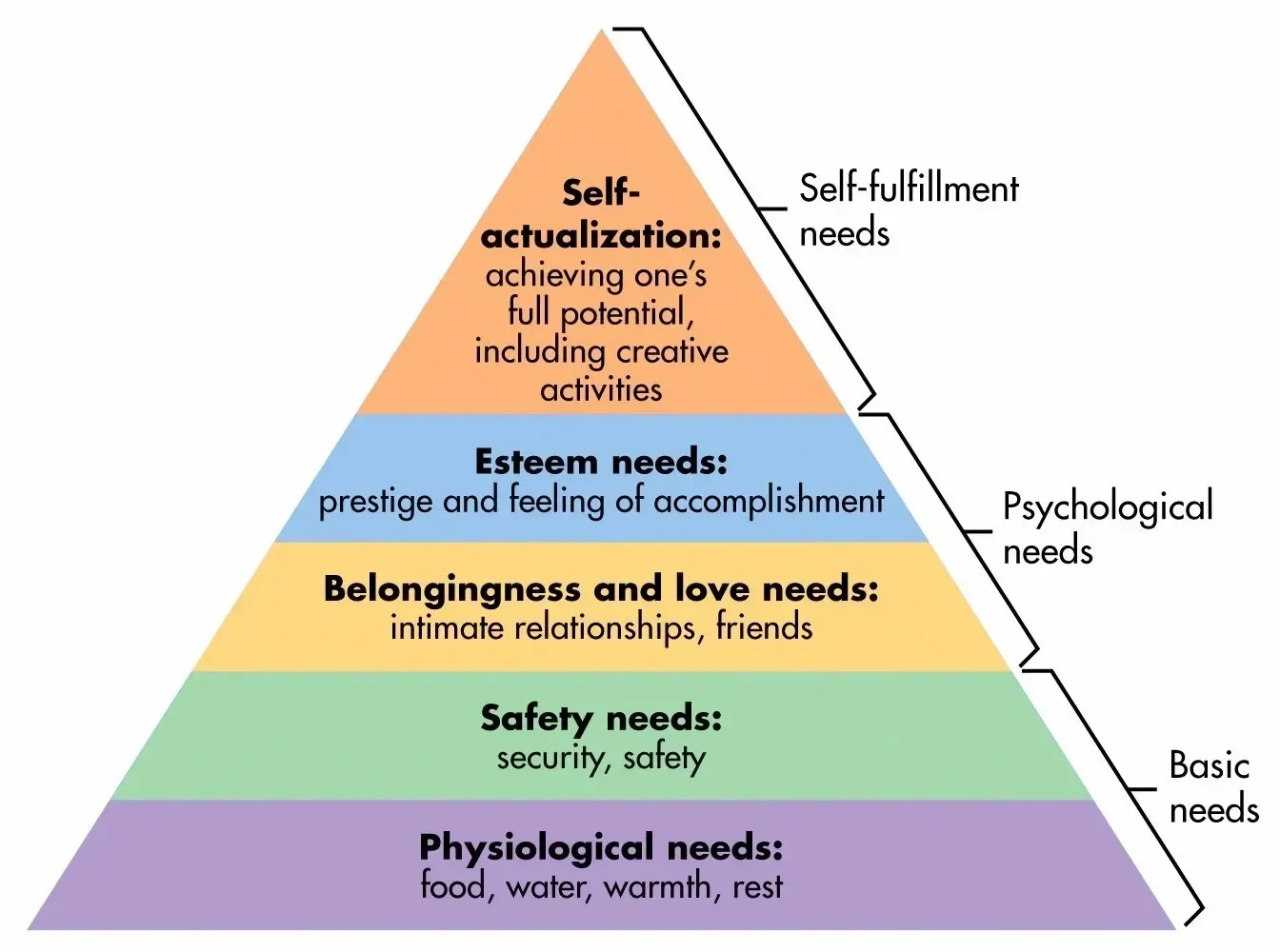
Traditional incentives fall short for three reasons:
- Money loses its impact over time: A pay bump is exciting at first, but the motivation fades once it becomes the norm.
- Reps want meaning as well as money: Feeling like a valued contributor to the company's success creates longer-lasting motivation.
- Burnout is real: Pressure to hit quota with nothing but a number to chase leads to disengagement and turnover.
Reward value also has a ceiling. The Incentive Research Foundation's 2025 study of 500 reward-eligible employees and channel partners found that willingness to put in extra effort rises with reward value only up to a threshold, and that personalization, clear and achievable objectives and variety in rewards also make a program more appealing. High-performing sales teams therefore build incentives that encourage career growth, give more autonomy, provide long-term financial security and make work exciting.
Types of sales team incentives
Sales team incentives fall into two groups: cash incentives that pay for results, and non-cash incentives that recognize, develop and protect people. Most strong programs use cash for the core target and non-cash incentives to keep motivation up between payouts, so the table covers both.
| Incentive type | What it is | Best for | Watch out for |
|---|---|---|---|
| Commission | A percentage of revenue or margin on each sale | Core motivation on every deal | Rewarding volume over margin or fit |
| Quota bonus | A fixed amount for reaching a target | Simple goals and new teams | Cliff effects just below the target |
| Accelerators | Higher rates for attainment above quota | Keeping top performers stretching | Budget overruns without a model or cap |
| SPIFs | Short-term rewards for one product, deal type or behavior | Launches, slow stock, quarter-end pushes | Distracting from the core plan if overused |
| Profit sharing or equity | A share of company results or stock | Long-term retention and ownership | Weak link to individual effort |
| Reward points and gift cards | Points or cards redeemable for items the rep chooses | Contests, milestones and spot rewards | Feeling generic without a personal message |
| Travel and experiences | Trips, events and experiences, such as a President's Club trip | Annual top performers | Excluding everyone below the top tier |
| Recognition | Public praise, awards and badges | Daily motivation at low cost | Praise that is vague or always goes to the same people |
| Development | Training, certifications, mentoring and leadership programs | Early-career reps and future managers | Mandatory training presented as a reward |
| Time and flexibility | Extra days off, flexible hours, remote days | Reps with families or long commutes | Coverage gaps in the territory |
| Security benefits | Insurance, investment or savings contributions | Mid-career reps and retention | Low visibility unless you explain the value |
For how commission and bonus differ in philosophy and design, read commission vs bonus. For the plan structures behind the cash incentives, such as tiered, draw and residual commission, see these sales commission and incentive plans.
Run sales contests reps actually care about
Launch leaderboards, SPIFs and badges on real plan data, with rewards reps choose.
Talk to our ExpertTrusted by 5,000+ companies
Five non-cash sales incentives that build a high-performance culture
A high-performing sales culture is not built on commissions alone. These five non-cash sales incentives balance growth, autonomy and security, and the last one, personalization, matters most because it decides whether the other four land.
1. Education as a sales incentive
Who would choose education over money? On the surface, "You beat target this quarter, so here is more training" sounds like the worst incentive pitch ever. That is true if the education is strictly work-related: mandatory sessions or extra product courses do not feel like a reward. When learning focuses on personal growth beyond the job, the value changes entirely.
Take learning a second language. For a rep who works with international clients, it is a personal asset and a competitive advantage at the same time. To motivate a sales team with education, tie these to performance milestones:
- Private language lessons: Unlocked after hitting a sales target.
- Leadership development courses: For top performers who want to move into management.
- Personal enrichment programs: Negotiation, public speaking or writing workshops the rep chooses.
2. Flexibility and remote work as a sales incentive
Remote and hybrid work have shown that many sales roles do not need a fixed desk in the office to be productive. Flexibility is now a normal expectation: Gallup's hybrid work indicator shows that in August 2026, 54% of remote-capable US employees worked hybrid and 25% worked fully remotely.
For employees, the benefits are obvious: more time with family, less time and money spent commuting and a greater sense of independence. Employers gain too, through lower office costs and access to talent beyond one city. Offer flexibility as an earned incentive, such as remote Fridays for reps above target or a work-from-anywhere week for the quarter's top performers, paired with clear expectations on availability and coverage.
3. Investment-based incentives for long-term security
A competitive salary and fair commission structure provide financial comfort, but they do not guarantee long-term security, and many employees feel the strain. PwC's 2026 Employee Financial Wellness Survey found that 59% of employees are stressed about their finances.
Investment-based incentives go beyond standard retirement plans and let reps build wealth without complex planning. Tailor them to the team: if many reps are in their thirties with young children, an employer contribution to an education or custodial savings account for their kids is a powerful reward. Low-cost, long-term investment products work well because reps can build security passively, which reinforces their commitment to the company. For more ideas, see this guide on employee financial wellbeing.
4. Life insurance as a sales incentive
Life insurance is often overlooked, yet it is one of the most valuable incentives for sales teams. Individual policies can mean higher premiums, complex enrollment and coverage limits, while employer-provided cover is convenient and cost-effective. For employees, the benefits are clear:
- Low-cost or free coverage: Group rates are usually cheaper than individual policies.
- Customizable plans: Options can account for health conditions and life changes.
- Peace of mind: Reps know their families are protected.
For employers, it is a strategic move. Maslow's hierarchy puts safety at the foundation of motivation: when reps feel secure, they can focus on performance and growth. Use a broker or benefits platform to compare policies and keep enrollment simple, and offer enhanced coverage as a reward tier for consistent performers.
5. Personalized incentives
Incentives do not work the same way for everyone. Some reps are driven by cash, others by time off, experiences or growth. Your team is made up of people with different backgrounds, priorities and lifestyles, so why should they all be motivated by the same reward? The best way to find out what drives your salespeople is to ask them. Their requests are often more practical and cost-effective than you expect:
- A top-performing parent: Might value three Fridays off in a row to spend time with their kids.
- An ambitious rep beating targets: Might want an expense-paid adventure day or an exclusive experience.
- A rep building a career: Might prefer leadership training or a ticket to an industry event.
Customized rewards make reps feel valued rather than like another number on a leaderboard, which builds loyalty and continuous improvement. Recognition is part of this: Gallup's 2024 research with Workhuman found well-recognized employees were 45% less likely to have left after two years.
24 sales incentive ideas by budget
Here are 24 sales incentive ideas sorted into three budget tiers, so you can match rewards to the size of the achievement. Use low-cost ideas often, medium ideas for contests and milestones, and save the high-cost ideas for annual or quarterly top results.
| Low cost (under $100 per rep) | Medium ($100 to $1,000) | High (over $1,000) |
|---|---|---|
| Public shout-out from leadership on the company feed | Reward points or a gift card of the rep's choice | Incentive trip or President's Club |
| Handwritten note from the CEO or sales head | Experience day, such as a spa or adventure activity | Accelerated commission rate for the next quarter |
| Badge for a milestone or streak | An extra paid day off | Profit sharing or an equity grant |
| Lunch with a senior leader | A course or certification the rep chooses | A place in a leadership development program |
| Early finish on a Friday | Ticket to an industry conference | An extra week of paid leave |
| Choice of the next team activity | Tech upgrade, such as headphones or a tablet | Contribution to a child's education savings |
| LinkedIn recommendation from the sales leader | Dinner voucher for the rep's family | Enhanced life or health insurance cover |
| Trophy that moves to each month's winner | Cash prize for winning a SPIF | Home office upgrade budget |
Mix tiers in one program. A monthly contest might give badges to everyone who reaches 50% of target, points to everyone at 100% and a high-value prize to the top three. For contest formats and gamified ideas, see this guide to sales gamification, and for gift-led ideas, these employee reward gift ideas.
Best incentives for sales reps by role and career stage
The best incentives for sales reps depend on where they are in their careers and what their role controls. Revenue is also concentrated: the Ebsta and Pavilion 2025 GTM benchmark report found that 14% of sellers generated 80% of new revenue, so keeping top performers and lifting the middle both matter.
- SDRs and new hires: Fast, frequent rewards for qualified meetings and ramp milestones, plus training and a visible path to account executive.
- Account executives: Commission with accelerators above quota, SPIFs on priority products and experiences for top performers.
- Account managers: Incentives on renewals, expansion and customer satisfaction rather than new logos alone.
- Top performers: Uncapped or high-ceiling accelerators, President's Club, leadership roles and recognition in front of senior leaders.
- Middle performers: Milestone rewards, leaderboards scoped to similar peers and coaching, so the next level feels reachable.
- Sales managers: Team-based bonuses and rewards for developing reps, such as promotions from their team.
How to choose incentives your sales team actually wants
Guessing is the most common reason incentive budgets are wasted. Run this six-question reward preference survey once a year and after major team changes, then build each rep's incentives from the answers.
- Rank these rewards from most to least motivating: cash, time off, experiences, learning, recognition, gifts of your choice.
- How do you prefer to be recognized: publicly in front of the team, in front of leadership or privately?
- Which skill would you most like the company to help you build in the next year?
- Which reward from the last year meant the most to you, and why?
- If you could design one contest for the team, what would it reward?
- What would make you stay with this team for the next two years?
Once you know what motivates the team, use these strategies to incentivize a sales team and this step-by-step guide on how to create a sales incentive program to put the incentives into a structured plan.
How Empuls helps you run sales team incentives
Traditional incentives can only do so much: sales teams also need instant recognition, competition and rewards they care about. Empuls brings sales incentives, gamification and recognition onto one platform, so every contest and reward runs on the same data that calculates incentives.
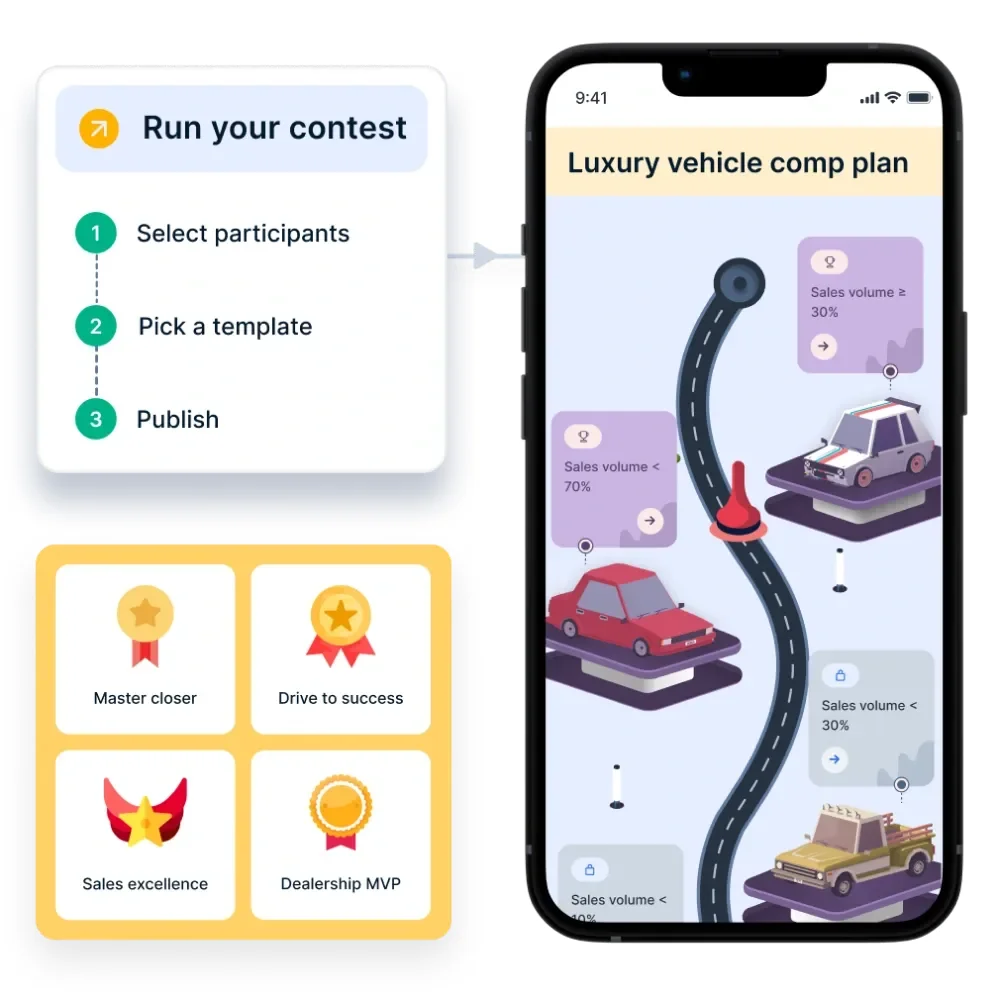
Live leaderboards can be scoped by team, region or plan, and SPIFs and contests run on top of the base plan with their own rules. Badges, streaks and points reward momentum, and each plan can become a gamified milestone journey with a reward at every goal. Contest prizes can be paid in cash or as rewards from a global marketplace, and Spot Awards and Award Campaigns let managers celebrate wins on the company feed.
Explore Empuls sales gamification, sales incentives, recognition and milestone rewards.
Build sales team incentives around people, not just numbers
Sales team incentives should do more than push numbers: they should motivate, engage and retain good people. The best-performing teams do not rely on commissions alone. They add growth opportunities, flexibility, financial security and personalized rewards that keep reps motivated over the long term.
Start by asking your reps what they value, use cash for the core target, and use non-cash incentives to make success visible and rewarding in the moment. That mix turns motivation from a quarter-end spike into part of how the team works every day.
Book your Empuls demo
Frequently asked questions
The best incentives combine commission or bonuses with accelerators for the core target, short SPIFs or contests for specific priorities, and non-cash rewards such as recognition, experiences, learning and time off. The right mix depends on your team, so ask reps what they value and match rewards to role, career stage and the size of the achievement.
Non-cash sales incentives are rewards other than money, such as public recognition, reward points, gift cards, merchandise, travel, experiences, extra time off, training and leadership opportunities. They work well alongside commission because they are memorable, can be personalized and keep motivation high between payouts, often at a lower cost than raising commission rates.
Neither works best alone. Cash is the right tool for the core target, because reps expect to be paid for results. Non-cash incentives are better for recognition, contests and retention, because a trip or award is remembered long after a cash bonus is spent. Most effective programs use cash for the plan and non-cash rewards on top.
Low-cost sales incentive ideas include a public shout-out from leadership, a handwritten note from the CEO, badges for milestones, lunch with a senior leader, an early finish on Friday, a rotating trophy and a LinkedIn recommendation from the sales head. They cost little but work well when they are specific, timely and tied to a real achievement.
A SPIF, or sales performance incentive fund, is a short-term reward for a specific outcome, such as selling a new product, closing deals before quarter end or booking demos in a new region. SPIFs usually run for a few weeks and pay a fixed amount or prize on top of the regular commission plan, which makes them useful for quick shifts in focus.
Budget from the result you want. Estimate the extra revenue or margin an incentive should generate and keep its cost a fraction of that gain. Match reward size to the achievement: small rewards for frequent milestones, medium rewards for contests and larger rewards such as incentive trips only for annual or quarterly top results.
Ask them. Run a short reward preference survey once a year that asks reps to rank cash, time off, experiences, learning, recognition and gifts, how they like to be recognized and what would keep them on the team. Store the answers in a profile for each rep so managers can choose rewards that fit the person.





































































































































































































































































































































































































































































































































































