
Key Takeaways
Employee motivation strategies work best when they meet four drives: to acquire, to bond, to comprehend and to defend.
Managers account for about 70% of the variance in team engagement, so manager habits matter more than one-off programs.
Frequent, specific recognition beats annual awards: well-recognized employees were 45% less likely to leave within two years.
Goals people can control, a visible purpose and real growth opportunities are the strongest non-cash motivators.
Start with the motivation problem you see, run two or three strategies for a quarter and measure the change with a pulse survey.
Employee motivation strategies are deliberate, repeatable practices that give people a reason to put their best effort into their work: clear goals they control, honest communication, regular recognition, growth, fairness, flexibility and care for wellbeing. The 15 strategies below show how to motivate employees in any team size or industry, with practical steps for each.
Regardless of an organization's size or industry, one of the biggest challenges for managers is getting their teams to perform at their best. Employee motivation influences productivity, engagement and overall business success: when motivation drops, productivity declines and growth slows. Thinkers from Aristotle to Maslow have long explored why people do what they do, and the answer for the workplace lies in structured yet simple initiatives that build morale, engagement and long-term success.
If you are new to the topic, our guide to what employee motivation is covers the definition and the key theories. This post is the practical playbook.
What drives employee motivation
A strong workplace culture supports motivation by meeting four basic emotional drives, a model from Harvard Business School researchers Nitin Nohria, Boris Groysberg and Linda-Eling Lee. Every strategy in this post feeds at least one of them:
01 · Acquire
The drive to acquire
Met through fair pay, recognition and rewards that distinguish good performance.
02 · Bond
The drive to bond
Strengthened by open communication, teamwork and a sense of belonging.
03 · Comprehend
The drive to comprehend
Fed by learning opportunities, meaningful and challenging work and a clear purpose.
04 · Defend
The drive to defend
Supported by fair, transparent processes and trust in leadership.
Why employee motivation strategies matter now
Keeping employees motivated takes more than a competitive salary, and the data shows most organizations still have work to do. According to Gallup's State of the Global Workplace 2026 report, only 20% of employees worldwide were engaged in 2025, and manager engagement fell from 27% to 22% in a single year. That matters because Gallup estimates managers account for 70% of the variance in team engagement, so most of the strategies below are things managers do every week.
Employees are also telling employers what motivates them. In Randstad's Workmonitor 2025, a survey of nearly 27,000 workers in 35 markets, work-life balance edged past pay as the most important job factor (83% vs 82%), 41% said they would quit a job without development opportunities and 55% said they would quit if they didn't feel they belonged.
Put these motivation strategies on autopilot
Run recognition, rewards, pulse surveys and your social intranet from one Empuls platform.
Talk to our ExpertTrusted by 5,000+ companies
15 employee motivation strategies that work
The 15 strategies follow the employee journey, starting before a new hire's first day and moving through daily management, growth, connection and wellbeing. Strategies 2 to 8 carry the most weight, because communication, controllable goals, purpose, fairness, manager skills, feedback and recognition shape how people feel at work every single day.
1. Start before they join
Organizations need an engaging, strategic onboarding process that keeps new hires involved even before they join. A good process aligns the employee's objectives with the organization's vision and helps them settle in and contribute quickly.
Send a welcome message from the manager, share the first-week plan, introduce a buddy and consider a thoughtful welcome gift; see our ideas for onboarding gifts for new hires. Make sure every new hire leaves week one knowing what success in their role looks like.
2. Build trust with strong communication
Communication plays a strong role in creating a positive work environment and boosting morale. Employees today expect to be told what's happening in the organization, good or bad. Whether you've just won a large deal, lost a key customer, expanded overseas or reduced headcount, people appreciate honesty.
Build a communication framework where employees can voice concerns and feelings and receive input on their professional and personal development:
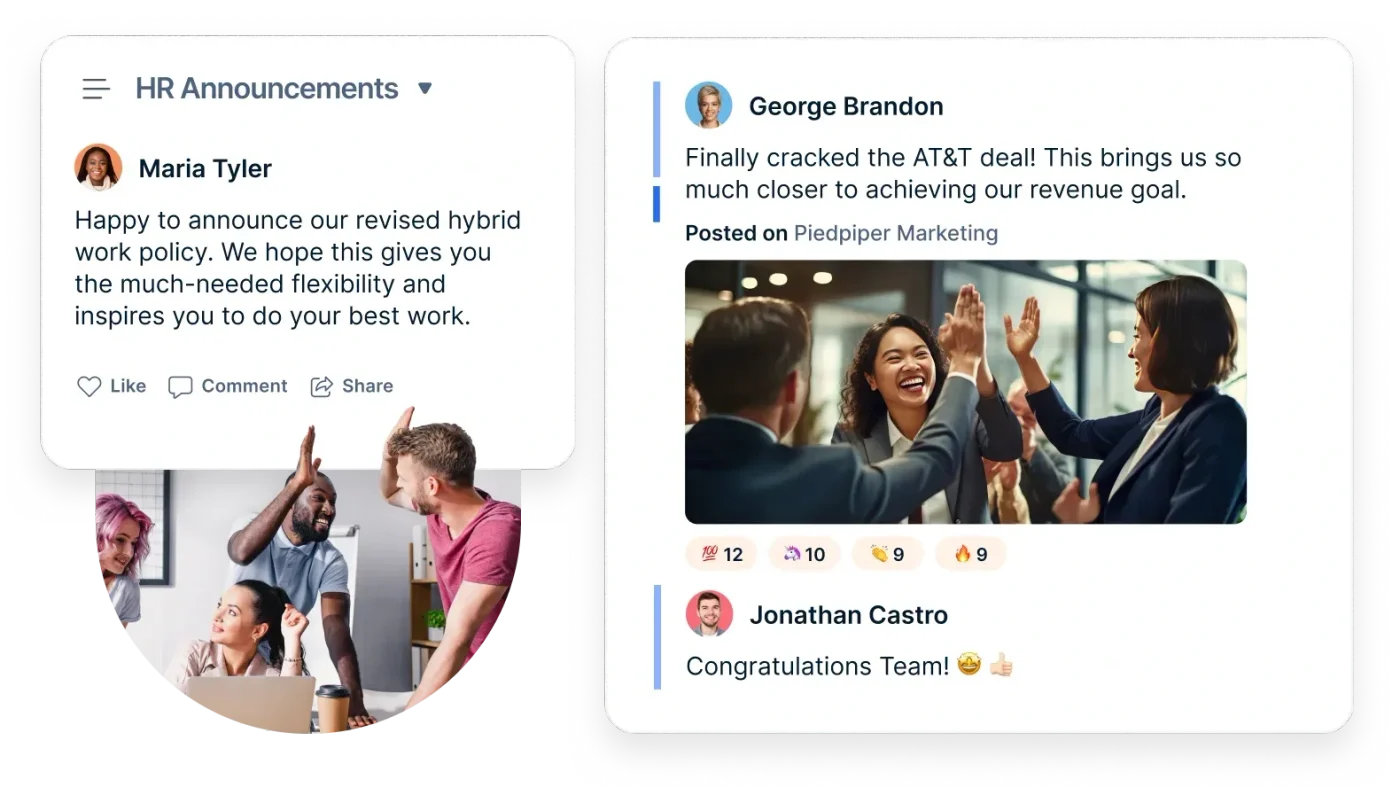
- Use an intranet: Keep everyone updated on company news, wins and changes in one place where people can react, comment and share their views.
- Hold regular one-on-ones: Understand each person's viewpoints, concerns and challenges, and follow up on what you hear.
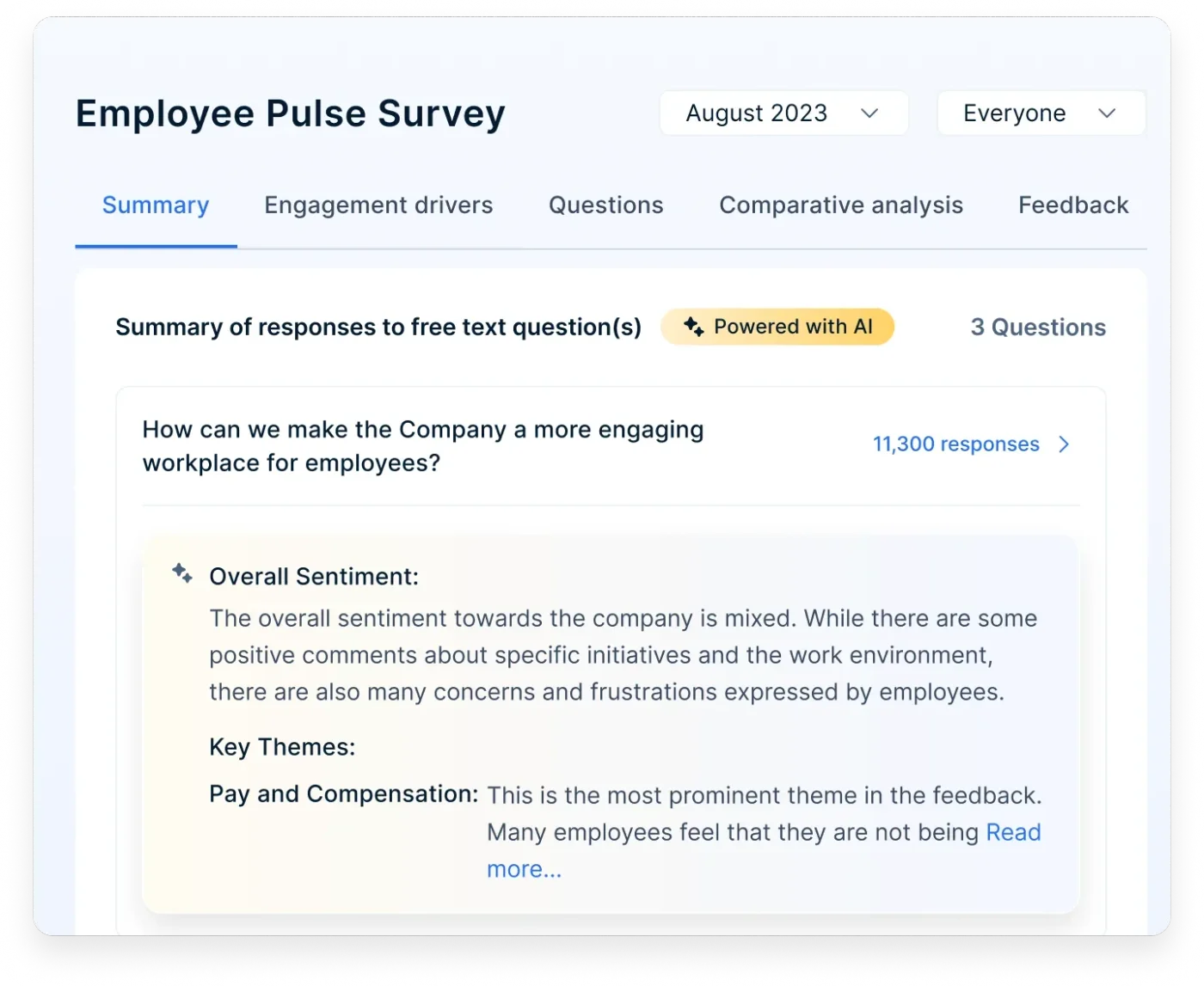
- Run surveys and polls: Listen at scale and show what you changed as a result.
A social intranet creates a communication hub where employees come together as a community, with two-way communication between leaders and teams.
3. Give employees goals they can control
A sense of autonomy and control contributes strongly to motivation. Employees won't see much point in performing at their best unless they feel ownership over what they do and contribute. Yet clarity is often missing: Gallup reports that only about half of US employees strongly agree they know what is expected of them at work.
Instead of tying performance to high-level goals that individuals can't affect, agree on quarterly or annual goals each person directly controls. That way, they know they can make a difference and see the results when they succeed. Goal-setting research shows specific, challenging goals with regular feedback outperform vague "do your best" targets.
4. Connect employees to a larger purpose
People do their best work when they understand why they are doing something, not just what. Most leaders communicate purpose through vision and mission statements, but few reinforce it in day-to-day work, and employees can start to feel aimless.
Purpose is a powerful but rare motivator. In Gallup's 2025 research on purposeful work, only 18% of US workers said their job has a purpose they personally believe in, yet 50% of those with strong purpose were engaged, compared with 9% of those with low purpose. Show each person how their role affects the business and its customers, share regular updates on where the company is gaining traction and what difference each department is making, and share customer stories that show the impact of their work.
5. Be transparent and fair
Organizations spend a lot of effort on creative motivation ideas, yet employees are often motivated or demotivated by simple things: fairness, dignity, transparency and trust. People judge fairness by how they feel about their work, how their pay compares with others in the industry, how processes work and how respected they feel by colleagues and managers.
Invest in transparency from the start. When hiring and onboarding, make sure people understand what your company stands for, its core values, goals and mission, what their role and obligations are and how they contribute to a cohesive workplace. Share how pay, promotions and awards are decided, and apply the same criteria to every team.
6. Strengthen managers' communication skills
The relationship with a direct manager shapes how motivated employees feel more than almost anything else, which is why the drop in manager engagement is a warning sign. Giving actionable, direct feedback is a critical part of any manager's job, but few managers excel at it.
Train managers in coaching conversations, recognition and difficult feedback, give them simple templates for one-on-ones and support their own wellbeing. Gallup's research shows teams led by managers who completed strengths-based development saw meaningfully higher engagement and lower turnover than teams whose managers did not.
7. Collect and share feedback
"We all need people who will give us feedback. That's how we improve," said Bill Gates. Employees feel empowered when they're encouraged to share honest views on policies, leadership, management style or anything about the business, and they are happier and more engaged when they believe they're truly heard.
- Make it safe: Create a conducive atmosphere for honest feedback, often anonymously, where people feel more comfortable.
- Watch external signals: Monitor your company profile on employer review sites, where employees often feel safe sharing opinions.
- Dig deeper: Ask follow-up questions such as "How could the situation be handled better?" or "Has this happened before?"
- Close the loop: Publicly share the outcome of feedback you've received.
Timely feedback tells employees whether they're meeting expectations, and asking for theirs shows their voice matters. Many people are afraid or embarrassed to give opinions openly, so make listening part of normal management: in one-on-ones, in stay interviews that ask what keeps people with you and through anonymous pulse surveys. This often surfaces problems you didn't know about. For structured approaches, see 360-degree feedback.
8. Reward, recognize and celebrate good work
"There's nothing worse than feeling unseen and unheard in the workplace," writes Annie McKee in How to Be Happy at Work. People don't mind putting in extra effort when the business needs it, but when that effort goes unnoticed, they wonder why they bothered.
Recognition is cheap and effective, yet underused. Gallup and Workhuman research found only 22% of employees get the right amount of recognition, and well-recognized employees were 45% less likely to have left two years later. Whenever someone does great work, appreciate them; even a simple thank-you influences behavior. A strong employee recognition program links recognition to the behaviors that matter and keeps people aligned with organizational goals:
- Use a dedicated platform: Design rewards and recognition that fit your organizational DNA and make it easy for anyone to recognize anyone.
- Make it personal: A handwritten note or a thoughtful, personalized gift says more than a generic message.
- Keep rewards meaningful: People should feel genuinely appreciated, so tie rewards to real contributions instead of handing them to everyone by default.
- Celebrate publicly: Recognize big and small achievements in open forums as well as one to one.
Annual bonuses and awards often fail to create lasting impact. What works best for today's workforce is smaller, more frequent and instant recognition. Employees are also each other's biggest motivators, so a peer-to-peer recognition system spreads appreciation across the whole organization.
9. Offer flexibility and treat everyone with respect
Flexibility is now a top motivator: in Randstad's data, work-life balance ranks alongside, and slightly above, pay. Where roles allow, offer flexible hours, hybrid or remote options, compressed weeks or shift swaps for frontline teams. Implementing flexible practices tells people you trust them to deliver.
Respect matters just as much. Prevent a hostile work environment with clear policies against bullying, and treat every employee with respect regardless of gender, race, age, nationality, ability or sexual orientation. Walk in your employees' shoes: learn what's important to them, help them celebrate personal milestones and the holidays that matter to them, and adapt workplaces for people with disabilities. Our guide to inclusion and diversity in the workplace goes deeper.
10. Welcome new ideas
No one knows a workplace better than the people who work there, so look within for fresh, creative ideas. When you ask employees for ideas, they feel invested, and that drives motivation. Create an environment where people feel safe sharing thoughts, run idea challenges, and use interest groups and discussion forums on your intranet to collect ideas from across the organization. Then credit the people whose ideas you implement.
11. Provide career advancement opportunities
Over time, employees want to improve personally and professionally, expand their skills and take on more responsibility. Talk to each person about their preferences, ambitions and goals. Ask what they'd like to learn, which area they'd like to specialize in and which training they'd like to attend, then give them the opportunity.
Assign more challenging tasks over time. Involve people in decisions, put them in charge of important projects, let them work with major clients and send them to industry events on your behalf; this signals trust. As their responsibilities grow, reward them properly with better pay, recognition and position. Learning should also lead somewhere: give people chances to apply new skills through stretch projects, and reward completed courses with training milestone rewards.
12. Nurture workplace relationships
People are social by nature, and employees who feel connected to and supported by peers and managers are generally happier, more productive and more engaged. Belonging now carries real weight: in Randstad's survey, 36% of workers said they wouldn't mind earning less if they had friends at work. Great leaders create conditions in which workplace friendships thrive. These motivation ideas for teams help:
- Recognize collaboration: Appreciate people when they work together to deliver better results.
- Mix teams: Create cross-functional projects so people work across teams.
- Make time to connect: Run team-building activities, outings, team lunches and forums where employees can bond.
13. Keep it simple and bring on the fun
Strict cultures that focus only on hard work hurt morale and, eventually, productivity. Create regular opportunities for people to relax and have fun at work, from pizza Fridays to family days and team outings:
- Company-wide celebrations: Annual parties that bring everyone under one roof.
- Team outings: Lunches and dinners where people can socialize with teammates.
- Festive moments: Celebrate holidays and festivals to lighten the mood.
- Small rituals: Office games, contests, fun polls, birthday and retirement celebrations on a weekly or monthly rhythm.
Celebrate small wins and personal and professional occasions. If a team did exceptionally well last month, throw a party, plan an event or take everyone out to dinner.
14. Look after remote and hybrid workers
Remote and hybrid employees can feel disconnected and face their own kind of burnout, with blurred boundaries between work and home. Revive their spirits with care packages that bring something special to their home setup, from snack boxes to bundles tailored to each person's hobbies, or with a digital gift card they can spend as they like. The message of any care package is the same: take a break, we see you. Add regular video check-ins, virtual events and equal access to recognition so remote staff don't fall behind office-based colleagues. See our guide to employee gifting for ideas.
15. Emphasize employee wellness and health
Physical, emotional and financial health have a big effect on behavior, and healthy employees tend to be more productive and engaged. Gallup's latest data shows only 34% of employees worldwide are thriving, and daily stress remains above pre-pandemic levels, so wellbeing is a motivation issue, not just a benefit.
A holistic wellbeing program encourages healthier choices and brings improved satisfaction, productivity and morale, and lower absenteeism and healthcare costs:
- Align with business goals: Design wellbeing programs around your workforce's real needs and your objectives.
- Promote wellness genuinely: Encourage breaks, reduce avoidable stress and offer help where it's needed.
- Use technology: Run wellness challenges and offer benefits that support fitness, mental health and financial wellbeing.
For what's changing in this space, read our employee wellness trends.
Employee motivation techniques matched to common problems
Not every team needs all 15 strategies at once. Start with the problem you see, then pick the ways to motivate employees at work that address it directly:
| What you see | Likely cause | Strategies to start with |
|---|---|---|
| Good people leaving for growth | No visible career path | 11 (career advancement), 3 (controllable goals) |
| Quiet meetings, few ideas | Low psychological safety | 7 (feedback), 10 (welcome ideas), 6 (manager skills) |
| Effort drops after big pushes | Effort goes unnoticed | 8 (recognition), 13 (celebrate wins) |
| Cynicism about leadership | Low trust, unclear decisions | 2 (communication), 5 (transparency and fairness) |
| Rising absence and burnout | Workload and wellbeing | 15 (wellness), 9 (flexibility) |
| Remote staff disengaging | Isolation, unequal visibility | 14 (remote care), 12 (relationships) |
| Slow ramp-up for new hires | Weak onboarding | 1 (start before they join), 4 (purpose) |
Digital tools that boost workplace motivation
Employee motivation tools help managers and HR teams lift morale and engagement by showing what drives each employee, so strategies can be tailored. Without them, motivation efforts often fall flat because nobody can see what's working. They range from simple feedback tools to full engagement software:
- Motivation assessment tools: Surveys that gauge current motivation, what drives employees and what barriers hold them back. They enable targeted interventions and let you track motivation over time.
- Engagement platforms: Comprehensive tools that keep employees connected and motivated. Look for real-time feedback, recognition, integration with HR systems and analytics that measure the impact of each initiative.
- Gamification tools: Points, badges, challenges and leaderboards that bring game mechanics to work. Used well, they make routine tasks more engaging, increase participation and build a more vibrant culture; used badly, they reward volume over quality, so tie them to meaningful behaviors.
If you use incentives or points, it helps to understand how incentives influence behavior and the balance between intrinsic and extrinsic motivation.
How recognition transformed employee motivation at Gulf Taleed
Gulf Taleed, a company with a 250-person distributed workforce in Saudi Arabia, needed to attract and retain local talent while its centralized "Rockstars" recognition program lacked consistency and reach. With Empuls, it decentralized recognition with peer-to-peer appreciation and multiple award categories, replaced email-only communication with a social intranet and listened through engagement and new-joiner surveys.
Recognition grew from 3 awards a quarter to more than 300 appreciations in six months, the platform reached 90% active adoption and new-joiner surveys hit a 70% completion rate within seven days. Read the full Gulf Taleed case study. When people see their effort appreciated, motivation follows.
Common mistakes to avoid
Even well-meant motivation programs can backfire. Watch for these mistakes:
- Relying only on money: Pay must be fair, but bonuses alone don't build lasting motivation.
- Recognizing only the visible: Programs that favor head office or loud voices damage fairness and morale.
- One size for everyone: Different people respond to different motivators, so ask and personalize.
- Asking for feedback and doing nothing: Surveys without visible action make cynicism worse.
- Launching and forgetting: Motivation strategies need consistent, ongoing effort and regular measurement.
For inspiring discretionary effort specifically, read how to motivate employees to go the extra mile, and for the wider engagement picture, see our employee engagement strategies.
Boost employee motivation with Empuls
Motivated employees don't just work harder; they bring energy, creativity and commitment. But motivation doesn't happen by itself. Empuls, Xoxoday's employee engagement platform, brings recognition, rewards, listening and culture together in one place:
- Recognize and reward in real time: Celebrate targets, work anniversaries and personal milestones with peer-to-peer recognition, milestone rewards and incentive programs, with rewards employees choose.
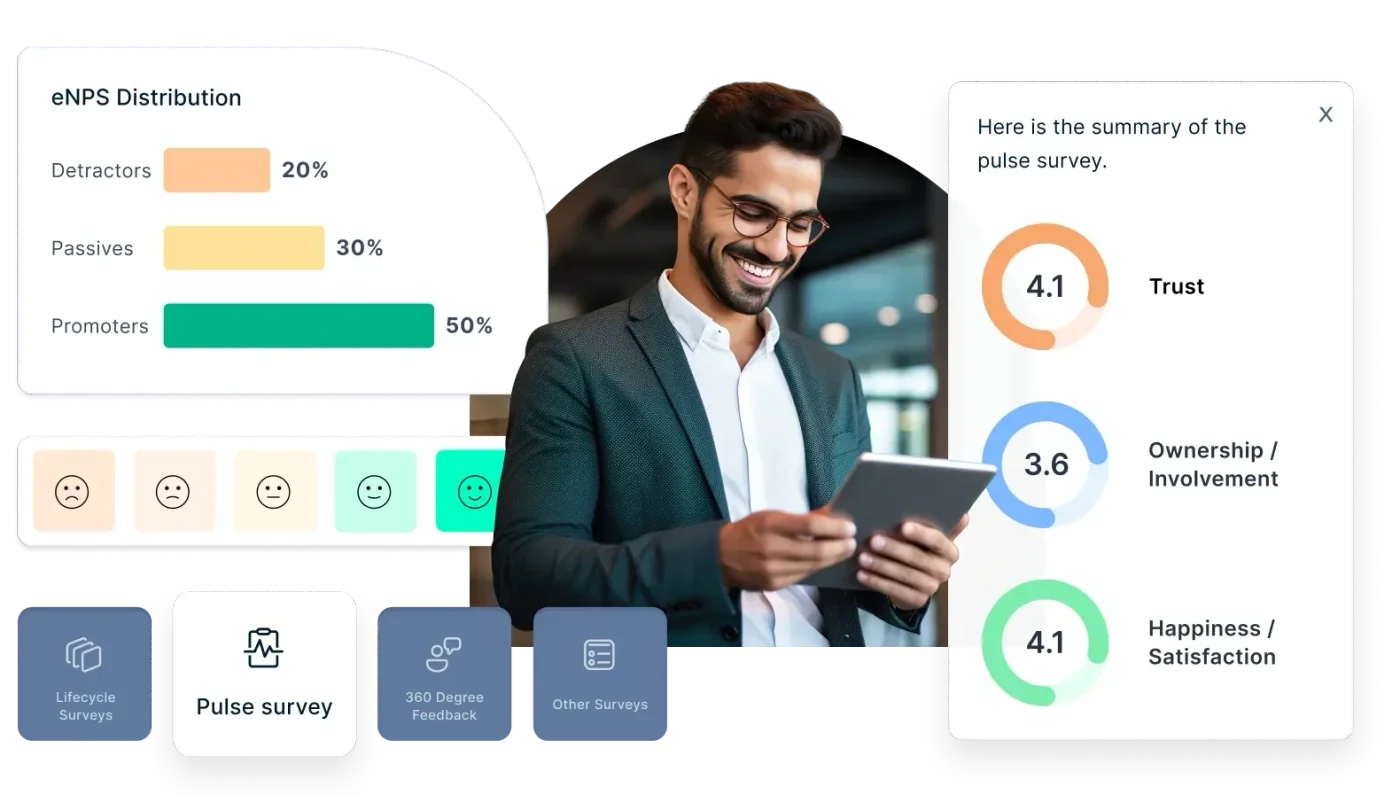
- Measure and improve engagement: Run eNPS, pulse, lifecycle and 360 feedback surveys, and use AI-powered insights and action plans to remove roadblocks.
- Offer meaningful perks and benefits: Build benefits programs with perks and discounts that support wellbeing and lifestyle.
- Build a thriving culture: Use the social intranet for announcements, communities and shared wins so everyone feels they belong.
Conclusion
Employees are the driving force behind any organization, and understanding their motivation is essential. Low morale hurts productivity, engagement and retention, so identify the challenges in your workplace and apply the employee motivation strategies that fit. There's no universal approach: different people respond to different initiatives, and every organization has to assess its own culture. Start with clear goals, honest communication, regular recognition and real growth, measure what changes and keep going. Organizations that prioritize motivation create a workplace where employees and the business thrive together.
Book your Empuls demo
Frequently asked questions
The most effective employee motivation strategies are setting goals people can control, communicating honestly, recognizing good work often and specifically, giving regular feedback, connecting work to a clear purpose, offering career growth and treating people fairly. Flexibility and wellbeing support matter more than ever. Most of these depend on managers, so training managers is one of the highest-return investments.
You can motivate employees without money by recognizing their contributions publicly and specifically, giving them autonomy over how they work, offering learning and stretch projects, explaining how their work matters, involving them in decisions, offering flexibility and celebrating wins together. Small gestures such as a handwritten thank-you or an extra afternoon off often motivate more than a modest bonus.
Low-cost ways to motivate employees at work include peer-to-peer recognition, regular one-on-ones, sharing customer feedback, flexible schedules, learning budgets, mentoring, team lunches, idea challenges and celebrating milestones. Many of these cost little more than time. A recognition platform with points lets you spread a modest budget across many small, timely rewards instead of a few large annual awards.
Start by listening: hold one-on-ones or run an anonymous pulse survey to find the real causes. Then act visibly on one or two issues, communicate honestly about what's happening, reset goals so they're achievable and within the team's control and recognize progress often. Look for workload and burnout problems too, because exhausted teams rarely respond to motivation programs alone.
Motivation ideas for remote teams include regular video one-on-ones, digital peer recognition visible to everyone, virtual team events, care packages or digital gift cards, home-office stipends, flexible hours and clear written goals. Make sure remote employees get the same access to recognition, development and promotions as office staff, because unequal visibility is a common demotivator.
Measure motivation strategies with a baseline and regular follow-ups. Track pulse survey scores on motivation and engagement, eNPS, recognition frequency and reach, voluntary turnover of top performers, absenteeism, learning uptake and goal attainment. Compare teams that adopted a strategy with those that did not, and review results quarterly so you can keep what works and drop what doesn't.
Employee motivation strategies focus on the drive behind individual effort: goals, recognition, rewards, growth and autonomy. Employee engagement strategies focus on emotional commitment to the organization: culture, belonging, communication and trust. The two overlap heavily, and most effective programs combine them, because motivated people are more likely to engage and engaged people sustain motivation.
Recognize employees often enough that good work never goes unnoticed: many organizations aim for meaningful recognition at least every week or two. Frequency matters, but quality matters more. Recognition works best when it is specific, timely, tied to real contributions and comes from both managers and peers, rather than generic praise or a single annual award.





































































































































































































































































































































































































































































































































































