
Key Takeaways
An employee incentive is a reward promised in advance for a defined result or behavior, which is what makes it change what people focus on.
Well-recognized employees were 45% less likely to have changed organizations two years later, according to Gallup and Workhuman.
Recognition and time off give the most motivation per dollar; reserve cash incentives for the targets that matter most.
Remote incentives should start with digital recognition, because remote work hides effort that would be visible in an office.
Match each incentive to one business goal and one measurable behavior, then check feedback, performance and retention every quarter.
The best employee incentive ideas reward a specific result or behavior, such as hitting a target, finishing a course or helping a teammate, with something the employee actually values. Mix cash and points with time off, flexibility, growth and recognition, and announce the rule before the work starts so the incentive changes what people do, not just how they feel.
Below are 50 employee incentive ideas to boost motivation: 25 for the workplace and 25 for remote employees, grouped by type, plus a goal-to-incentive picker, a budget comparison and a checklist to tell whether your incentives are working.
What an employee incentive is
An employee incentive is a reward or benefit that an employer promises in advance to motivate employees to reach a goal or repeat a behavior that supports the organization. Incentives can be monetary, such as bonuses and gift cards, or non-monetary, such as recognition, extra time off, learning budgets and flexible schedules.
Well-structured incentives lift morale, productivity and loyalty when they match both organizational objectives and employee needs. They differ from general perks because they are earned: the employee knows what to do to get them. If you are building a formal plan around these ideas, our guide to designing an employee incentive program covers goals, criteria and a design template.
Why employee incentives matter
Incentives matter because they tell people what the organization values and reward them for delivering it. Five benefits stand out, and retention leads the list because replacing people is the most expensive outcome of poor motivation.
- Employee retention: High turnover costs money, knowledge and experience. People are more likely to stay where their effort is recognized and rewarded.
- Increased productivity: When employees know their hard work will be rewarded, they put in extra effort, which improves output and quality.
- Enhanced morale: Feeling valued builds belonging and makes teams more collaborative and willing to go the extra mile.
- Desired behaviors: Incentives can target specific results, such as meeting sales targets, improving customer service or strengthening collaboration.
- Attracting talent: Candidates look for more than salary, and a visible incentive culture makes your offer stand out.
45%
less likely to leave
for well-recognized employees after two years (Gallup and Workhuman)
61%
engaged
with weekly manager feedback and recognition, vs 38% without frequent recognition (Gallup, 2024)
70%
of North American firms
expect to use more gift card incentives in 2026 (IRF)
What the research says about incentives and recognition
Gallup and Workhuman research found well-recognized employees were 45% less likely to have changed organizations two years later. Frequency matters too: Gallup reports that 61% of employees who get weekly feedback and recognition from their manager are engaged, compared with 38% of those who get weekly feedback but less frequent recognition. Employers are also leaning on choice: the Incentive Research Foundation's 2026 Industry Outlook found 70% of North American organizations expect to increase gift card use.
25 employee incentive ideas for the workplace
These 25 workplace incentive ideas are grouped into five types: money, recognition, time and flexibility, growth, and health and belonging. Recognition and time off give the most motivation per dollar, so pair a few of them with one or two financial incentives for your most important targets.
Financial incentives tied to targets
Financial incentives work best for results you can measure, such as revenue, output or quality scores. Publish the target and the payout before the period starts.
- Performance bonuses: Pay a bonus when an employee reaches a defined goal, with explicit criteria so everyone knows how to earn it. Clear rules raise satisfaction and build a culture of high performance.
- Cash rewards for specific achievements: Pay a fixed amount for a defined win, such as closing a key account, passing an audit or delivering a project early.
- Cash bonuses for team achievements: Reward the whole team when it reaches a shared goal, which builds collaboration and camaraderie rather than competition.
- Gift cards and reward points: Award points for each target met and let employees redeem them for gift cards from a broad catalog, so the reward fits personal preferences.
- Profit sharing and stock ownership: Share part of the profit, or grant equity, when the company hits its annual goals. These long-term incentives give employees a sense of ownership, and the program guide covers how to set them up.
Recognition incentives
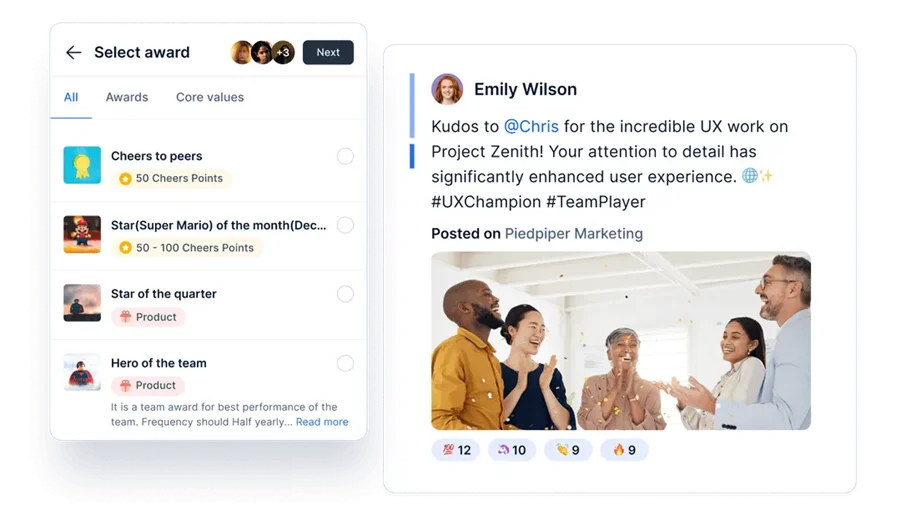
Recognition incentives cost little and work best when they are frequent, specific and public. Tie them to company values so every award reinforces what you stand for.
- Recognition programs: Celebrate achievements through awards and public acknowledgment, with points attached, so employees feel valued and positive behaviors spread.
- Incentive challenges: Launch friendly competitions with clear targets, leaderboards and prizes, such as a month-long quality challenge. See our employee gamification guide for formats.
- Team recognition events: Host a quarterly event to celebrate outstanding team contributions, which creates memorable moments and reinforces shared values.
- Company merchandise for milestones: Give branded merchandise when someone reaches a target or milestone. Quality items, such as a good jacket or bottle, act as daily reminders of the achievement.
- Customized rewards: Let employees set their own reward preferences, such as experiences, gadgets or charity donations, and fund the reward they choose when they hit the goal.
Time and flexibility incentives
Time is one of the most valued incentives because it cannot be bought elsewhere. These five ideas reward results with control over when and how people work.
- Flexible work arrangements: Let consistent high performers choose their hours or remote days, which improves work-life balance and job satisfaction.
- Surprise days off: Give an unexpected paid day off to someone who delivered an exceptional result, which reinforces the behavior immediately.
- Double breaks: Offer a longer break or an early finish after a demanding shift or deadline, a small gesture that shows appreciation for hard work.
- Casual dress days: Allow casual dress for a team that hits its weekly goal, an easy morale boost with no cost.
- Volunteer time off: Give paid volunteering days as a reward, which adds purpose and strengthens community ties.
Growth incentives
Growth incentives reward performance with skills and career progress, which keeps ambitious people from looking elsewhere. Fund them generously for high performers and make completion visible.
- Professional development opportunities: Offer training, workshops or tuition reimbursement to employees who reach their goals, which boosts performance, loyalty and retention.
- Learning and development allowances: Give a yearly budget for courses or certifications of the employee's choice, and award points or a badge when they complete one.
- Mentorship programs: Pair high performers with senior leaders as a reward, and recognize mentors when their mentees progress.
- Stretch assignments: Let top performers lead a project, pilot or client account, which signals trust and builds skills for promotion.
- Feedback and idea rewards: Reward employees whose suggestions are adopted, whether they improve a process, save money or fix a customer issue.
Health and belonging incentives
These incentives reward healthy habits and connection, which supports wellbeing and lowers absenteeism. Reward participation rather than only the top result so everyone has a reason to join.
- Wellness programs: Award points for gym visits, yoga classes or health screenings, which encourages employees to prioritize their health.
- Enhanced health benefits: Offer premium discounts or extra coverage to employees who complete wellness goals, within the limits your local rules allow.
- Family leave top-ups: Reward tenure milestones with extra family or caregiver leave, which supports loyalty and an inclusive culture.
- Team outings: Treat a team that hits its goal to an outing of its choice, which strengthens relationships and collaboration.
- Feedback gatherings: Ask employees regularly which incentives they value and act on what you hear, so the program stays relevant and people feel heard.
Turn incentive ideas into a running program
Reward targets, courses and referrals automatically with Empuls, and let employees choose rewards they actually want.
Talk to our ExpertTrusted by 5,000+ companies
25 incentive ideas for remote employees
Remote teams need incentives that make effort visible and build connection across distance. These 25 ideas are grouped into recognition, connection, wellbeing and growth, with recognition first because remote work hides effort that would be obvious in an office.
Recognition incentives for remote teams
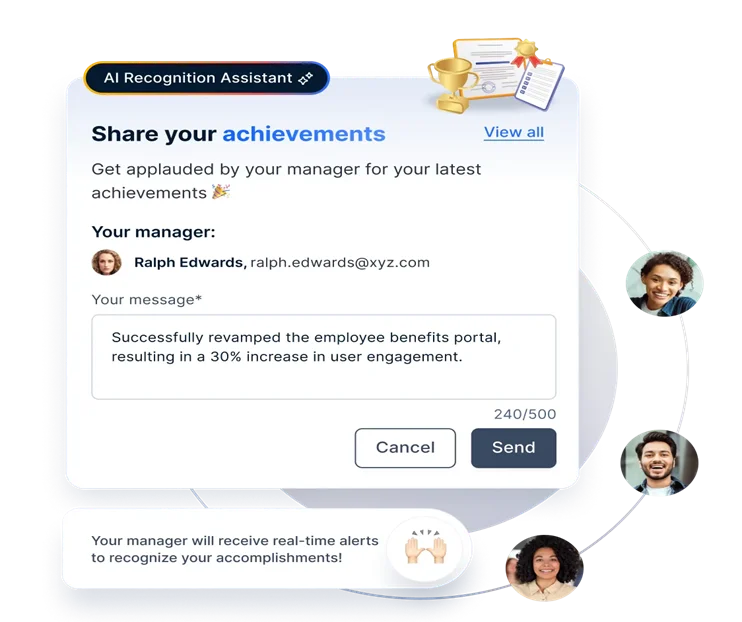
Digital recognition is the foundation for remote incentives, because it puts achievements where everyone can see them. Run it in the tools your team already uses.
- Recognition on virtual platforms: Use a recognition platform in Slack, Microsoft Teams or mobile so leaders and peers can acknowledge contributions publicly with points.
- Monthly virtual award ceremonies: Celebrate standout performers and teams in a short, energetic online event each month.
- Personalized thank-you notes from leadership: Send a specific note or video message that names the contribution and its impact.
- Celebrating personal milestones virtually: Mark birthdays, work anniversaries and life events with messages and e-gifts.
- Celebrating company anniversaries together: Bring everyone online to celebrate the company's milestones and reconnect with its mission.
- Remote work competitions: Run creativity or innovation contests with prizes for the best ideas.
- Monthly challenges focused on team goals: Set a shared monthly target and reward the whole team when it is reached.
Connection incentives for remote teams
Connection incentives reduce isolation and help remote colleagues build relationships. Use them as rewards for team achievements, not as mandatory events.
- Virtual team-building activities: Reward a team that hits its goal with an online game, escape room or quiz session.
- Virtual coffee breaks: Invite top contributors to informal coffee chats with colleagues across departments.
- Virtual lunches with management: Send meal vouchers and host a lunch where leaders hear directly from high performers.
- Virtual happy hours: Celebrate a milestone with a relaxed online get-together and delivered treats.
- Online book clubs: Fund books for a club that meets online, which builds community and personal growth.
- Customized virtual backgrounds: Give branded or achievement backgrounds, such as a "Quarter champion" design, for video calls.
Wellbeing incentives for remote teams
Remote employees often struggle to switch off, so wellbeing incentives protect the energy you need from them. Reward participation and make the support easy to use from home.
- Flexible work hours: Let people who deliver choose when they work, so they can balance personal and professional commitments.
- Wellness challenges online: Run step, sleep or mindfulness challenges with points for participation.
- Virtual fitness classes: Offer free classes or a fitness app subscription as a reward.
- Mental health days off: Give extra days off after intense projects, which shows you care about emotional wellbeing.
- Access to mental health resources: Fund counseling or wellbeing app subscriptions for employees and their families.
- Subscription boxes as rewards: Send self-care or snack boxes when a team reaches a goal.
Growth incentives for remote teams
Remote employees can feel invisible when promotions come up, so growth incentives show them a future. These six ideas invest in skills and make progress visible.
- Home office stipends: Fund ergonomic chairs, monitors or faster internet for employees who hit their goals.
- Online learning platform subscriptions: Give access to a course library and reward completed certifications.
- Skill-sharing sessions online: Recognize employees who teach colleagues a skill in a short online session.
- Personalized development plans: Build a plan with each high performer and fund the next step, such as a course or conference.
- Online feedback forums: Reward the best ideas shared in a feedback forum and report back on what was adopted.
- Gift cards for local businesses: Let remote employees redeem rewards at businesses near home, which supports their community.
Our guides on how to engage remote employees and recognizing remote and frontline teams go deeper on distributed teams.
Match employee incentive ideas to your goals
The table pairs eight common business goals with the behavior to measure and the incentive ideas that fit each one. Start with your single most important goal, because one well-run incentive beats five that nobody understands.
| Business goal | Behavior or result to measure | Incentive ideas that fit | Typical budget |
|---|---|---|---|
| Grow revenue | Quota attainment, new accounts | Performance bonuses, reward points, incentive challenges | Medium to high |
| Improve quality | Defect rate, audit or QA scores | Cash rewards for achievements, team bonuses, recognition | Low to medium |
| Reduce absenteeism | Attendance, punctuality | Points per month of full attendance, surprise days off | Low |
| Build skills | Courses or certifications completed | Learning allowances, points on completion, stretch assignments | Low to medium |
| Improve wellbeing | Participation in wellness activities | Wellness points, fitness challenges, mental health days | Low |
| Hire faster | Referrals hired and retained | Referral bonuses, recognition for referrers | Medium |
| Encourage innovation | Ideas submitted and adopted | Idea rewards, project funding, competitions | Low to medium |
| Strengthen teamwork | Team goals met, peer recognition given | Team bonuses, team outings, team recognition events | Low to medium |
Sales teams need a more structured approach to targets and payouts, which our guide to sales gamification covers.
Non-monetary employee incentives that work
Non-monetary employee incentives motivate without adding to payroll, and they often matter more than cash once pay is fair. The four most effective types are recognition, time, growth and choice, and recognition comes first because it is the cheapest to give often.
- Recognition: Specific, public praise with points or a badge, given within days of the achievement.
- Time: Surprise days off, early finishes, flexible hours and volunteer days.
- Growth: Training budgets, mentorship, stretch assignments and visibility with senior leaders.
- Choice: Letting people pick their reward, their schedule or their next project.
Personalization is what makes these creative incentives for employees work. O.C. Tanner's State of Employee Recognition 2026 report show that employees' odds of thriving drop 89% when they feel leaders do not know how they prefer to be recognized. For a full list of gestures, see our guide to non-monetary employee recognition.
Ways to know your employee incentive ideas are working
Five checks tell you whether your incentives are working, and employee feedback comes first because it explains the numbers. Run them every quarter and compare against the period before launch.
- Gather feedback: Ask participants through a short pulse survey whether the incentives are meaningful, fair and easy to earn.
- Monitor performance: Track the metric each incentive targets, such as attainment, quality or attendance, and compare it with the baseline.
- Assess satisfaction: Check job satisfaction and morale scores in your regular survey to see whether incentives are lifting how people feel.
- Evaluate retention: Compare turnover among participants and non-participants, especially among high performers.
- Observe engagement: Watch participation rates in challenges, wellness activities and learning, which show whether people care about the incentives on offer.
Our guide on how to measure employee recognition programs explains how to turn these checks into an ROI review.
How Empuls helps you run employee incentives
Empuls turns incentive ideas into a running program, with recognition, automated milestone rewards, challenges and a global rewards catalog in one platform. Employees see their progress and pick rewards they value, and HR sees participation and spend in real time.
- Give instant, values-based awards with points through Empuls spot awards.
- Reward targets met, courses completed and referrals made automatically with milestone rewards.
- Run team challenges and contests with leaderboards using Empuls challenges and contests.
- Encourage healthy habits with fitness challenges that reward participation.
Choosing the right employee incentive ideas
The right employee incentive ideas reward a clear result with something people value, from performance bonuses and points to surprise days off, learning budgets and public recognition. Pick one goal, choose two or three incentives from the picker, announce the rules and adapt them for remote teams. Then check the results every quarter and refresh what is not working. For rewards people receive after the fact, browse our employee reward ideas, and see the employee recognition guide for the bigger picture.
Book your Empuls demo
Frequently asked questions
The three main types are monetary incentives, such as bonuses, profit sharing and gift cards; non-monetary incentives, such as recognition, time off, flexible schedules and learning budgets; and social incentives, such as team outings, mentorship and team recognition events. Most effective programs combine all three so different employees find something that motivates them.
Low-cost incentives include public recognition with points, surprise days off, early finishes, flexible hours, casual dress days, stretch assignments, lunch with a senior leader and small gift cards. They work best when they are tied to a clear result, given soon after it, and personalized to what each employee values.
Use recognition, time, growth and choice. Publicly praise specific results, give extra time off or flexible hours for hitting goals, fund learning or mentorship for high performers and let people choose their next project. Announce the rule in advance so employees know what to do to earn it.
It depends on the person, which is why choice matters. Fair pay and bonuses matter to most people, but recognition, flexibility, time off and career growth are often equally motivating once pay is fair. Ask employees what they value through a short survey and offer a menu rather than one reward for everyone.
Good incentive gifts balance practicality and personal meaning. Popular options include gift cards from a broad catalog, experiences, wellness subscriptions, tech accessories, quality branded merchandise and learning resources. Letting employees redeem points for the gift they want avoids generic choices and makes the incentive feel personal.
Costs vary widely. Recognition, time off and flexibility cost little, while cash bonuses, profit sharing and stock plans require significant budgets. Set the budget from the value of the goal: estimate the extra revenue, savings or retention the incentive should deliver, fund rewards at a share of that value and cap the maximum payout.
An incentive is promised before the work, so it motivates people toward a goal, such as a bonus for reaching quota. A reward is given after the achievement, often as a surprise, to appreciate the effort. Incentives focus effort on results, while rewards reinforce behaviors and build belonging.





































































































































































































































































































































































































































































































































































