
Key Takeaways
Commission for travel agents is paid by suppliers on the commissionable part of a booking, then split between the agency and the individual agent.
ASTA's May 2026 brief found non-commissionable fares cut the effective commission rate on cruise sales by 20 to 25%, while advisors book 70% of all cruises.
Airlines largely ended standard commissions in the 1990s, so agents charge service fees for air and complex trip planning.
The BLS reports a May 2025 median wage of $50,160 for travel agents, with the top 10% earning more than $76,660.
Tiered splits, repeat-client commission, override sharing and product-mix bonuses motivate agents to sell more profitable trips without raising every rate.
Commission for travel agents is the share of a booking's value that a travel supplier, such as a cruise line, hotel or tour operator, pays the agency that made the sale; the agency then passes part of it to the individual agent. Rates depend on the supplier, the product and the agency's agreements, and parts of a booking, such as taxes, resort fees and cruise non-commissionable fares, often earn nothing. This guide explains how travel agents get paid, how travel agent commission rates work by product, how to calculate real earnings and 8 commission ideas that motivate travel agents to sell more.
Every travel agent thrives on creating great trips, but keeping up enthusiasm while managing bookings, client expectations and competitive pricing is hard. For agency owners and team leaders, the real challenge is not just selling destinations; it is keeping agents motivated to sell the right trips. A well-structured commission plan makes that difference.
How travel agents get paid
Travel agents earn through a blend of supplier commissions, client fees and incentives, and the mix has shifted toward fees as some suppliers cut commission. The US Bureau of Labor Statistics notes that earnings for many travel agents depend on commissions and service fees. These are the seven main revenue streams:
- Supplier commissions: The primary source for most agents. When an agent books a hotel, cruise, tour or other service, the supplier pays a percentage of the commissionable part of the booking.
- Service and planning fees: Many agents charge clients for their expertise, especially for complex, bespoke or luxury trips and for products, such as most airline tickets, that pay no commission.
- Overrides and supplier incentives: Suppliers pay extra commission or bonuses for reaching booking volumes, often to the agency, host agency or consortium, which may share it with agents. Rewards can also be free travel or familiarization (fam) trips.
- Markups: On tours or packages an agent builds from net rates, the difference between the net price and the selling price is the agent's earnings.
- Referral fees: Some agents earn a fee for referring clients to specialists or other service providers.
- Annual bonuses: Agencies and suppliers may pay bonuses based on the volume or value of bookings across the year.
- Events and classes: Agents with deep expertise sometimes host traveler events or classes and earn from entry fees or sponsorships.
Pay levels reflect this mix. Current figures from the BLS and from research by the American Society of Travel Advisors (ASTA) show both the earnings and the leverage agents have in key products:
70%
of all cruises are booked by travel advisors
Phocuswright with ASTA
$50,160
median annual wage for travel agents
May 2025, BLS
$76,660+
earned by the top 10%
May 2025, BLS
20 to 25%
lower effective cruise commission
caused by non-commissionable fares, ASTA
Sources: US Bureau of Labor Statistics; ASTA, NCF industry brief, May 2026
How travel agent commission works
Commission only reaches the right agent if the supplier can identify who made the booking. That is the job of the accreditation number, a unique identifier, such as an IATA, ARC or CLIA number, that agencies enter in every supplier booking. The process runs in four steps:
- The agent books with the supplier: The supplier asks for the agency's accreditation number as part of the booking.
- The supplier pays the agency: After travel or payment, the supplier pays commission on the commissionable amount to the agency linked to that number.
- The agency or host agency splits it: Independent agents in a host agency's network book under the host's central accreditation number, and the host pays each agent their agreed split. Some partnerships and franchises have their own number, so commission goes straight to that agency.
- Overrides flow up the chain: Where the agency belongs to a host or consortium with a preferred-supplier deal, extra override commission is paid on the same booking.
The split between agency and agent is the number that decides an agent's pay. Employee agents often earn a salary plus a share of commission, while independent agents keep a larger share of commission but pay their own costs, so compare splits together with the support, technology and preferred-supplier rates a host provides.
Pay every travel agent accurately and on time
Turn splits, tiers and overrides into rules, and show each agent their earnings in real time.
Talk to our ExpertTrusted by 5,000+ companies
Travel agent commission rates by type of booking
Travel agent commission rates differ more by product than by agency, and the headline rate is rarely what an agent earns. Cruise comes first in the table because it is where the gap between the stated rate and real earnings is largest; ASTA's industry brief on non-commissionable fares, published in May 2026, documents how each product's commissionable base works.
| Product | How commission works | What reduces real earnings |
|---|---|---|
| Cruises | A percentage of the cruise fare, excluding taxes and non-commissionable fares (NCFs) | NCFs cut the effective rate by 20 to 25%, so a nominal 10% often works out to about 6.5 to 8.5%; some lines now make the full fare commissionable |
| Hotels | A percentage of the room rate on commissionable rates | Resort, destination and facility fees are usually not commissionable, and net or corporate rates may pay nothing |
| Tours and land packages | A percentage of the package price | Pass-through items such as VAT, park fees and event tickets may be excluded, but more of the total is usually commissionable than on cruises |
| Airline tickets | Standard commissions largely ended in the 1990s; some agencies negotiate incentive deals | When paid, commission covers only the base fare, not taxes or carrier surcharges, so agents charge service fees instead |
| Car rentals | A percentage of the base rental rate | Facility charges, fees, fuel options, insurance and extras are excluded, and some products pay zero |
| Travel insurance | A percentage of the premium, set by the insurer | Varies by insurer and by local licensing rules |
The cruise market is shifting in agents' favor. ASTA's brief notes that Viking and Virgin Voyages use fully commissionable fares and that Norwegian Cruise Line announced the permanent elimination of NCFs in late 2025, followed by Oceania; in ASTA's survey after the NCL announcement, nearly 70% of advisors said they were more likely to recommend the line. Commission policy clearly shapes which suppliers agents sell.
How to calculate travel agent commission
The formula has three steps: commissionable amount × supplier rate = agency commission, then agency commission × agent split = agent earnings, plus any fees the agent keeps. This calculator uses example rates to show how much commission travel agents make on four typical bookings; ASTA's brief includes its own worked examples at nominal rates of 10% and 15%.
| Booking | Commissionable amount | Agency commission (example rate) | Effective rate on total price | Agent earnings at an 80% split |
|---|---|---|---|---|
| Cruise for two, $5,000 total with $900 of taxes and NCFs | $4,100 | $4,100 × 12% = $492 | 9.8% | $393.60 |
| Hotel, 4 nights, $1,400 with $200 of resort fees | $1,200 | $1,200 × 10% = $120 | 8.6% | $96 |
| Escorted tour, $6,000 with $300 of park fees and VAT | $5,700 | $5,700 × 12% = $684 | 11.4% | $547.20 |
| Flight, $800 ticket, no commission, $50 service fee | $0 | $0 | 0% (fee only) | $50 fee, if the agency lets agents keep fees |
The same split logic applies over a year. Say an agency pays its agents 70% of the commission they generate up to $50,000 and 80% above it. An agent who generates $70,000 earns ($50,000 × 70%) + ($20,000 × 80%) = $35,000 + $16,000 = $51,000, and the agency keeps $19,000 to cover technology, marketing and support. The ideas below build on structures like this one.
Factors that affect travel agent commission percentage
Four factors decide the commission percentage a travel agent earns, and the second one, supplier agreements, has the most influence because it sets the rate before any booking is made.
- Type of travel service: Flights, hotels, cruises, tours and insurance pay different rates and exclude different parts of the price, depending on each product's profitability and demand.
- Supplier agreements: The terms agreed between suppliers and the agency, host agency or consortium specify the commission and override rates for each product.
- Sales volume and performance: Agencies and agents with higher volumes negotiate better rates, qualify for overrides and earn bigger splits.
- Location and market: Local competition, client demand and the cost of living shape both supplier rates and the fees clients will accept.
8 commission ideas for travel agents to boost sales
These 8 travel agent incentive ideas are commission and reward structures an agency can add on top of its standard split. They are ordered from the most widely applicable, tiered volume splits, to targeted ideas that steer agents toward specific products and behaviors; use two or three at a time so the plan stays simple.
1. Tiered commission splits by volume
Raise the agent's share of commission as their annual or quarterly commission generated passes set thresholds, as in the 70% to 80% example above. It rewards growth without paying more on every booking, and agents can always see the next tier they are working toward.
2. Repeat-client loyalty commission
Pay a higher split on bookings from returning clients, for example 5 extra points of split on a client's second and later trips. It rewards agents for service quality and long-term relationships, which are what keep clients coming back to an agent instead of booking online. For how suppliers build loyalty on the traveler side, see these travel loyalty programs.
3. Preferred-supplier override sharing
Share part of the override commission the agency earns from preferred suppliers with the agents who book them. Agents get paid for steering business to partners with better terms, and the agency reaches the volume tiers that unlock higher overrides.
4. Product-mix bonus for experiences and land packages
Pay a bonus or higher split on culinary tours, adventure trips, wellness retreats, homestays and other experiential or land-based packages. These trips often carry more commissionable value than cruise or air, and they lead to more satisfied clients, so agents who build richer itineraries earn more for the extra work.
5. Group booking commission
Groups take more effort to coordinate but bring more revenue and repeat business. Pay agents a bonus for each group booking above a minimum size, plus a loyalty bonus when the same group or its members book again, so agents invest in families, clubs and corporate groups that return year after year.
6. Client-satisfaction multiplier
Tie part of the agent's commission to verified post-trip feedback, such as a 5% multiplier on a quarter's commission when the agent's clients rate their trips highly. Use your own survey rather than public reviews, and keep the multiplier small, so it rewards end-to-end service without making pay unpredictable.
7. Sustainable travel bonus
Offer a bonus or higher split on certified eco-friendly accommodations, low-impact transport and tours that support local communities. It meets growing demand for responsible travel, and agents become ambassadors for it with their clients.
8. Fam trips and experiential rewards for top agents
Reward top performers with familiarization trips, gift cards or travel experiences rather than cash alone. Fam trips let agents experience what they sell, which makes their recommendations more authentic, and non-cash rewards are remembered long after a bonus is spent. Ideas from these travel rewards trends work as agent rewards too.
Whatever mix you choose, write every rule down, pay on time and make each agent's earnings visible. For more incentive formats, see the sales incentives guide and these sales SPIFF ideas for short campaigns.
How Empuls helps travel agencies manage agent commission
Splits, tiers, overrides and fees across hundreds of suppliers are hard to track in spreadsheets, and agents lose trust when payouts are late or unclear. Empuls includes sales incentive and commission software that turns your commission rules into plans and pays employees and independent agents through one process.
- Every split and tier as a rule: Build commission, target and milestone plans in a no-code builder, with slabs and tiers, product-mix weighting, override commissions and plans by role or region.
- Payouts to agents and partners: Agents, dealers and channel partners can be paid on the same platform as employees, by payroll, bank transfer or rewards, in 50+ currencies.
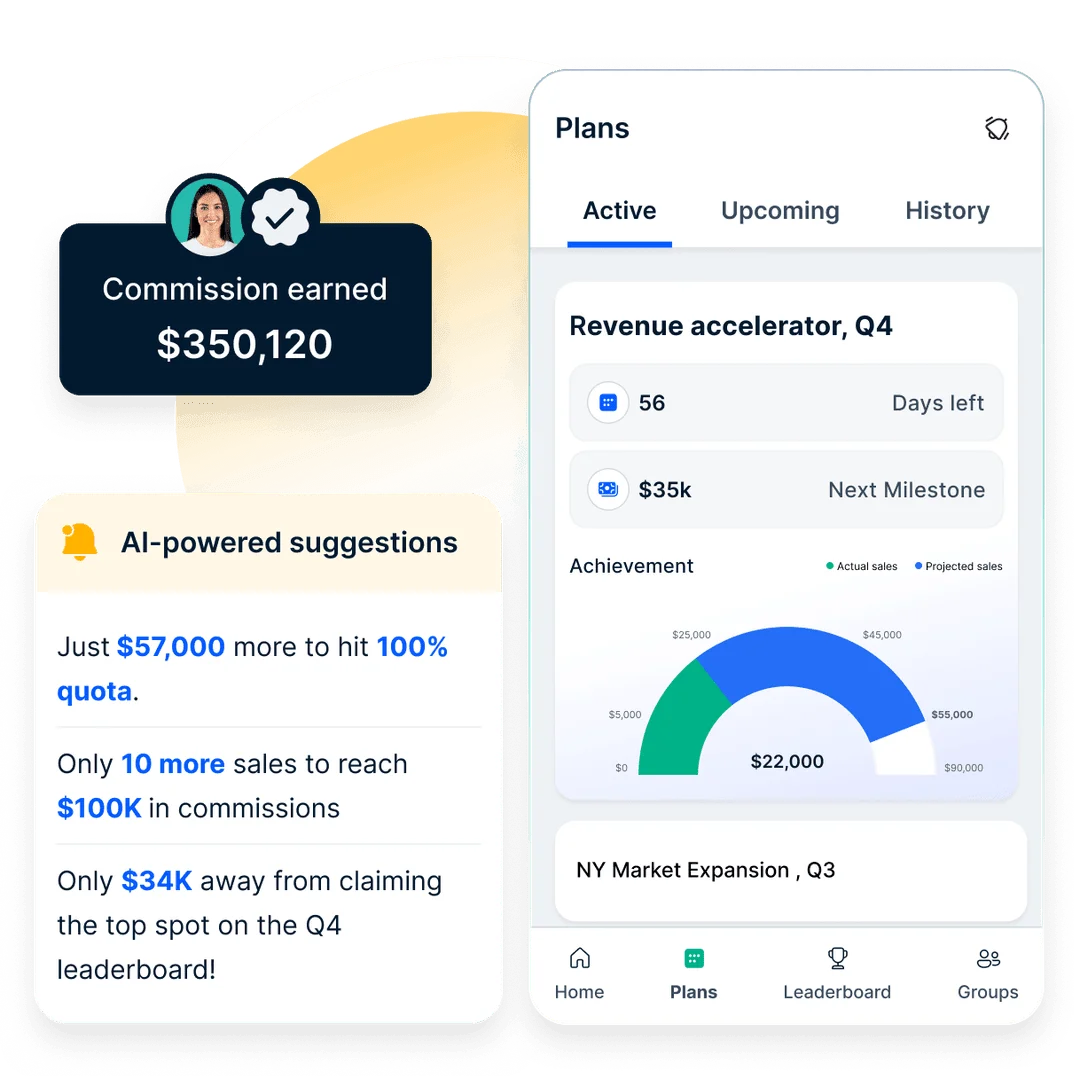
- Real-time earnings: Agents see commission earned and progress to their next tier on web and mobile, with AI nudges showing how close they are to the next milestone.
- Contests and rewards: Sales gamification adds leaderboards, SPIFs and contests, and rewards such as gift cards, travel and merchandise can be paid from the Xoxoday marketplace.
To estimate what manual commission work costs your agency, try the sales incentive ROI calculator.
Book your Empuls demo
Frequently asked questions
Yes, many travel agents earn a large part of their income from commissions paid by suppliers such as cruise lines, hotels, tour operators and insurers. Employee agents may also receive a salary, while independent agents usually keep a larger share of commission. Many agents add service or planning fees, especially for flights and complex trips.
It depends on the supplier, product and the agent's split. Suppliers pay the agency a percentage of the commissionable amount, which excludes taxes and fees, and the agency passes on the agent's share. ASTA found that on cruises, a nominal 10% commission often works out to about 6.5 to 8.5% of the total fare because of non-commissionable fares.
Usually not. Airlines largely eliminated standard travel agent commissions in the mid to late 1990s, according to ASTA, and many air tickets now pay no commission. Some agencies negotiate incentive deals with airlines based on volume, but most agents charge clients a service fee for booking flights instead.
A non-commissionable fare (NCF) is the part of a cruise price, on top of taxes, that cruise lines exclude from the amount commission is paid on. On a $2,000 booking with $440 of taxes and NCFs, ASTA shows a 15% commission paying $234 instead of $300, an effective rate of 11.7%. Some lines now make the full fare commissionable.
Many do. Service and planning fees compensate agents for their time and expertise, especially for complex or luxury trips and for products such as most air tickets that pay little or no commission. Agents should state their fees in writing up front, and agencies decide in their commission plan how much of each fee the agent keeps.
A host agency lets independent agents book under its accreditation number and supplier agreements. The supplier pays commission to the host, which pays each agent an agreed share, such as 70% or 80%, and keeps the rest for technology, training, marketing and support. Some hosts also charge fees, so compare total earnings, not just the split.
Timing depends on the supplier. Cruise lines and tour operators often pay after final payment or after the trip, while hotels usually pay after the guest checks out. Host agencies then pass the agent's share on according to their own payout schedule. That delay is why many agents charge planning fees up front.
Yes, travel agents can earn commission on travel insurance sales. The rate is set by the insurer and the agent's agreement, and selling insurance may require a license, depending on the state or country. Insurance can add meaningful income to each booking, so many agencies include it in agent product-mix bonuses.





































































































































































































































































































































































































































































































































































