
Key Takeaways
Fleet driver incentives are rewards, such as bonuses, points, perks and recognition, tied to measurable results like safe driving, fuel efficiency, on-time delivery and tenure.
ATRI found driver pay rose more slowly than inflation in 2025 for the second year running, and drivers rank compensation among their top three concerns.
Safety incentives should come first, and every productivity bonus needs a safety gate so no driver is rewarded for rushing.
A weighted driver scorecard with payout tiers turns several incentives into one fair, easy-to-explain monthly bonus.
Driver incentive programs work best when rewards are personal, paid promptly and delivered on the mobile phone drivers already use.
Fleet driver incentives are rewards, such as cash bonuses, points, perks and public recognition, that a fleet pays for measurable results like safe driving, fuel efficiency, on-time delivery and staying with the company. Designed well, a fleet driver incentive program lifts productivity and loyalty at the same time, because drivers can see exactly what good work earns them and get paid for it quickly.
There is no point cooking a dish that would impress a Michelin jury if it reaches the customer's table cold. For every business that moves goods, from trucking and courier companies to multi-category delivery fleets, the driver is the one who keeps the promise. This guide covers why driver incentive programs matter now, the main types of fleet driver rewards and trucking driver bonus programs, how to motivate fleet drivers beyond pay, and a ready-to-use driver incentive scorecard with a worked example.
Why fleet driver incentive programs matter
Driving is the core task in every fleet, so true competitive difference comes from how you treat your drivers. Offering incentives for drivers is more than a perk. It is a strategy that builds loyalty, improves performance and helps you keep your best people, and the economics of trucking make that strategy harder to ignore.
Pay is tight on both sides. The American Transportation Research Institute's 2026 operational costs report found that average costs hit a record $2.336 per mile in 2025, while driver pay was one of only two cost lines to rise more slowly than inflation for the second year in a row. Drivers notice: in ATRI's 2026 Top Industry Issues survey of nearly 3,100 industry stakeholders, drivers ranked driver compensation among their top three concerns, and the driver shortage and driver retention both returned to the overall top 10.
$2.336
average cost per mile
record high in 2025 (ATRI)
Top 3
driver compensation
among drivers' concerns (ATRI, 2026)
5,472
people killed in large truck crashes
2023 (NHTSA)
214,500
truck driver openings a year
projected 2025 to 2035 (BLS)
The pressure on fleets that fleet driver incentives can relieve
The labor market keeps turning over. The US Bureau of Labor Statistics counts about 2.2 million heavy and tractor-trailer truck drivers, with a May 2025 median wage of $58,640, and projects about 214,500 openings a year, mostly to replace drivers who leave or retire. BLS also notes that drivers are usually paid by the mile plus bonuses, which is why the design of those bonuses matters so much. Safety raises the stakes further: NHTSA reports that 5,472 people were killed in traffic crashes involving large trucks in 2023.
If drivers do not feel attached to the brand and the organization, performance and retention suffer. When you invest in them, they invest in your business. For the retention side of this story, see these fleet driver retention strategies.
Understanding driver needs before you design incentives
What drivers expect from you is often basic compared with office teams, but that does not give you license to take it lightly. Fair pay, predictable home time, safe equipment, respect from dispatch and quick answers about pay come first. The humble nature of these needs also makes them easy to meet.
Begin by building communication channels that work both ways, so drivers open up and speak frankly and often:
- In person: Short check-ins at the yard or depot, ride-alongs and the occasional coffee with a manager.
- On the phone they already use: One-on-one WhatsApp or SMS, in-app messages and short mobile surveys instead of email.
- Group forums: Driver councils or monthly video meetings where drivers raise issues and see what changed.
Hear out their frustrations, take note of their insights and recommendations, share a word of encouragement and, most important, act on their input promptly, so they know your concern is genuine. Ask directly which rewards they would value. The answer is often different from what managers assume.
Types of fleet driver incentives
There are nine common types of fleet driver incentives, and most strong programs combine three or four of them. Safety incentives come first because they protect lives and the business, followed by efficiency and service incentives, then the retention and recruiting bonuses that make up most trucking driver bonus programs.
| Incentive type | Behavior it rewards | How to measure it | Typical cadence |
|---|---|---|---|
| Safety bonus | Accident-free, violation-free driving | Preventable incidents, harsh braking and speeding events per 1,000 miles from telematics | Monthly or quarterly |
| Fuel-efficiency bonus | Smooth driving, less idling, right speed | Miles per gallon against a route or vehicle baseline, idle time share | Monthly |
| On-time delivery bonus | Reliable, punctual service | On-time rate, first-attempt delivery rate, stops per hour | Weekly or monthly |
| Inspection and compliance bonus | Clean roadside inspections and complete paperwork | Clean inspections, complete pre-trip and post-trip reports, hours-of-service compliance | Per event or quarterly |
| Customer feedback reward | Courteous, careful handling | Customer ratings, complaint-free deliveries, damage-free loads | Monthly |
| Longevity or retention bonus | Staying with the fleet | Months or years of service, often with a safety condition | At set milestones |
| Referral bonus | Bringing in good drivers | Referred hire completes a set period | Split, at hire and after a retention period |
| Sign-on bonus | Joining the fleet | New hire completes onboarding and a set period | Split across the first months |
| Recognition and points | Everyday effort and milestones | Manager and peer recognition, contest wins, badges | Instant |
Pay incentives get attention, but non-cash fleet driver rewards often stick longer: fuel cards, grocery vouchers, mobile recharges, gear, family experiences, extra home time and public recognition. Sign-on and referral bonuses fill seats; safety, efficiency and longevity bonuses keep good drivers in them.
Reward safe, on-time drivers within days
Run driver scorecards, leaderboards and instant rewards on the phones your drivers already carry.
Talk to our ExpertTrusted by 5,000+ companies
How to motivate fleet drivers: 5 proven ways
Pay brings drivers in, but daily motivation depends on how they are measured, coached and recognized. These five practices build on each other, starting with the data that makes every incentive fair.
1. Use data to improve driver performance and safety
You have heard your drivers. Now listen to the data. Real-time telematics and monitoring systems keep a close watch on fleet and driver KPIs, from vehicle condition and route choice to driving habits and fuel spend.
Dashboards, audits and reports matter on several fronts. They let you cross-check the feedback drivers bring back from the road and spot discrepancies. They reveal patterns even drivers cannot quite put a finger on. And they give you an early view of safety: the mechanical state of the fleet, driving skill and how well traffic rules are followed, all of which help you protect drivers, something they will be grateful for.
2. Customize KPIs to the route and the role
Keep expectations accurate and humane. It is natural to watch industry norms and tempting to aim above what competitors do, but do not bury your drivers under unrealistic targets. A city multi-drop route, a regional run and a long-haul lane need different baselines, and a driver on an older truck should not be judged on the same fuel numbers as one on a new one.
Translate the overall business goal and daily targets into a few measures each driver understands and controls. The trick to getting the best from work is to stop it from feeling like a grind.
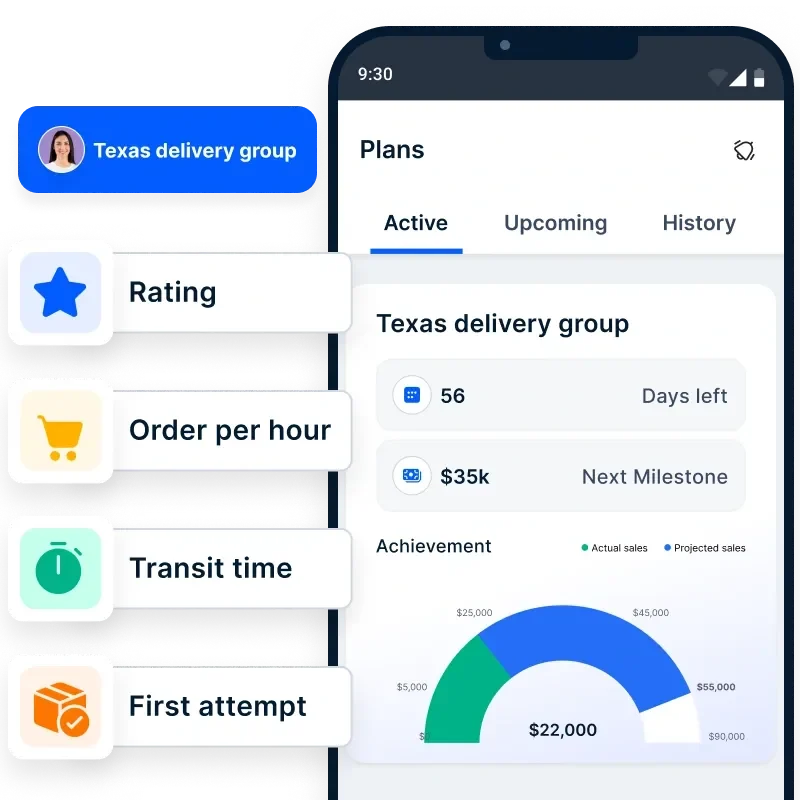
3. Help drivers get better at what they do
Combine road feedback with telematics findings to build practical training guides that help drivers work smart, not just hard. Use what you learn for targeted coaching, refresher sessions and ride-along demonstrations, especially on defensive driving, fuel-efficient habits and customer handling.
This lifts efficiency and the bottom line, and it helps drivers earn more under any incentive tied to those skills. Make progress visible, too. Gamification, which uses rules, scores and friendly competition to make routine work engaging, turns daily targets into a game drivers want to win. Live leaderboards scoped to comparable routes keep the comparison fair.
4. Balance extrinsic and intrinsic motivation
Motivating drivers is both a science and an art. Extrinsic motivation, such as money, titles, awards, promotions and gifts, is the familiar half, and you probably already have a plan for it. Intrinsic motivation, the inner drive that makes people feel fulfilled, is the half many fleets miss.
Intrinsic motivation is linked less to the task and more to the conditions around it: respect from dispatch, a say in routes and schedules, safe equipment and a sense of mastery. Create a fair, enabling environment, then step back and let drivers take the game forward in the way they are most comfortable. It starts with knowing the person behind each driver ID.
5. Recognize and reward long-term commitment
Recognition is the secret ingredient for getting the best out of drivers, because it lifts what can be a lonely, repetitive job. Research backs it: Gallup and Workhuman's 2024 analysis found that employees who receive strong recognition are 45% less likely to have left their organization two years later.
Recognition comes in many forms, and non-monetary appreciation can be just as powerful. Start by making sure managers treat drivers with the dignity and courtesy they deserve. Then include drivers in decisions where you can, invite them to team meetings and celebrations, and mark service milestones publicly. It also builds your employer brand in the driver community, where word of mouth travels fast. For delivery teams in particular, see these ideas for motivating last-mile delivery executives.
Driver incentive scorecard template
A scorecard is the simplest way to combine several fleet driver incentives into one fair monthly bonus. It weights the behaviors that matter most, sets clear thresholds and adds a safety gate so no driver is rewarded for speed at the cost of safety.
| Component | Weight | Full points when | Partial points | Data source |
|---|---|---|---|---|
| Safety | 40 | Zero preventable incidents and harsh events below target per 1,000 miles | 20 if harsh events are within 25% of target | Telematics, incident log |
| On-time delivery | 25 | 95% or more on time | 15 for 90% to 94.9% | Routing or delivery app |
| Fuel efficiency | 20 | MPG at or above route baseline and idle time under target | 10 to 15 for partial improvement | Telematics, fuel cards |
| Inspection and compliance | 15 | Clean inspections and complete pre-trip and post-trip reports | 0 if any out-of-service violation | Inspection records, ELD |
Convert the score into a payout with tiers, so drivers know exactly what each point is worth:
- 90 to 100 points: 100% of the monthly bonus.
- 75 to 89 points: 60% of the monthly bonus.
- 60 to 74 points: 30% of the monthly bonus.
- Below 60 points: no scorecard bonus this month.
- Safety gate: a preventable accident or serious violation forfeits that month's scorecard bonus, whatever the other scores.
| Driver | Safety | On-time | Fuel | Compliance | Score | Payout (max $300) |
|---|---|---|---|---|---|---|
| Driver A | 40 | 25 (96%) | 15 | 15 | 95 | $300 |
| Driver B | 40 | 15 (92%) | 10 | 15 | 80 | $180 |
| Driver C | 40 | 15 (91%) | 10 | 0 | 65 | $90 |
| Driver D | Gate triggered | 25 | 20 | 15 | n/a | $0 |
Running a scorecard by hand gets heavy once you have hundreds of drivers, several depots and data from telematics, routing and payroll. Incentive software can read those metrics and calculate the payout the same way every cycle; Empuls plans and calculations supports metrics on any custom KPI, slabs and tiers, and threshold buffers so a near miss still counts.
Building a driver incentive program that delivers results
Receiving gifts and words of affirmation is a favored way to be recognized, but a driver incentive program only changes behavior when the rules are clear and the rewards arrive fast. Follow these seven steps in order:
- Set the goal: Choose two or three outcomes to improve, such as fewer preventable incidents, lower fuel cost per mile or a higher on-time rate.
- Pick fair metrics: Use data drivers can see and influence, from telematics, routing and inspection records, with baselines by route and vehicle type.
- Make rewards worthwhile and personal: Rewards must match what drivers actually want. Do not gift a motorbike to someone who cannot or does not ride. Offer choice through points or a reward catalog.
- Publish the rules: Explain the scorecard, tiers and safety gate in plain language, in the driver's language, before the cycle starts.
- Make a moment of it: Honor winners in front of the team, at a depot meeting or an annual awards evening, unless someone prefers discretion. Give drivers an easy way to recognize each other, too.
- Pay promptly: An incentive delayed is an incentive denied. Pay monthly results within days, not at the end of the quarter.
- Review and adjust: Track incident rates, fuel cost, on-time rate, turnover and participation each quarter, and change thresholds that are too easy or out of reach.
For broader program design principles that also apply to driver teams, see this guide on how to create a sales incentive program.
How Empuls helps fleets run driver incentive programs
Empuls brings incentives, recognition and rewards for deskless teams into one mobile-first platform, so drivers can see what they earn and get rewarded without a laptop or a corporate email. Here is how its live features map to a fleet driver incentive program:
01 · Mobile
Built for drivers on the road
Empuls runs on iOS, Android, WhatsApp and SMS, with OTP login by mobile number or employee ID and 20+ regional languages, on entry-level smartphones.
02 · Incentives
Task-based goals and accurate payouts
Set transparent earning goals for safety adherence, attendance, quality and referrals, and calculate incentives on any custom KPI with approvals and an audit trail.
03 · Gamification
Leaderboards, badges and challenges
Turn safety and service milestones into live competitions with leaderboards, badges, streak bonuses and point multipliers, scoped to a depot or the whole network.
04 · Rewards
Instant rewards drivers value
Reward points redeem for fuel, grocery, mobile recharge, gift cards and UPI wallets from a global catalog, with no bank forms, and supervisors can recognize on the spot with QR reward cards.
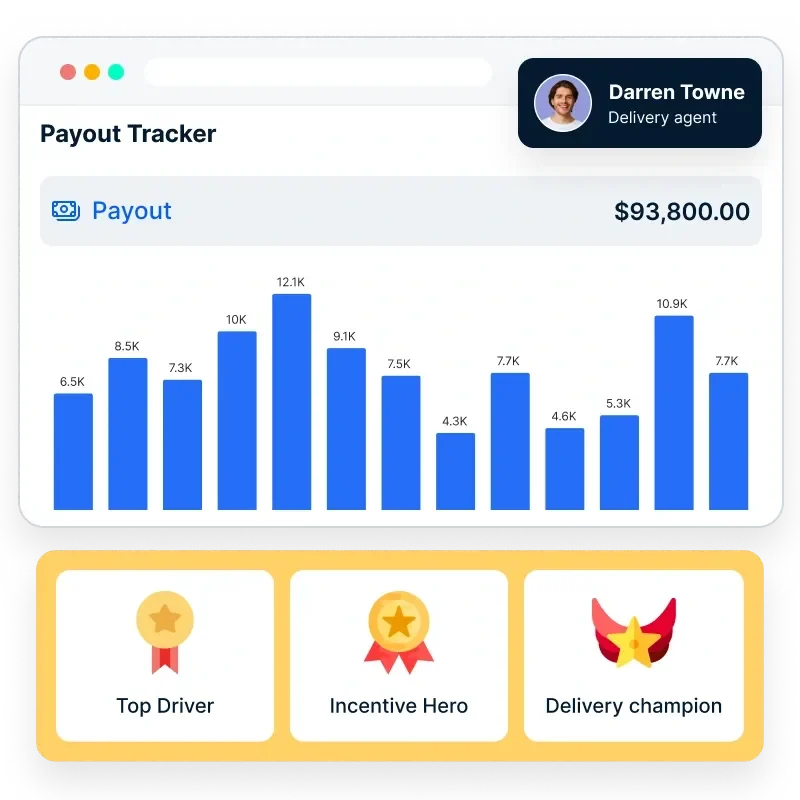
A 20,000+ employee manufacturing and logistics enterprise used this approach to bring recognition to its frontline workforce, lifting platform adoption from 24% to 83% in ten weeks. Explore Empuls for the frontline workforce and its gamification with leaderboards, SPIFs and contests.
Keep your drivers motivated and on the road
Fleet driver incentives work when they reward what matters, safety first, then efficiency and service, and when drivers trust the numbers behind them. A clear scorecard, rewards drivers actually want, fast payouts and genuine recognition turn an incentive budget into better driving and longer tenure.
Your customers stay at the center, but your drivers are the core of every delivery. Treat them that way, and they will keep delivering on your promise.
Book your Empuls demo
Frequently asked questions
Fleet driver incentives are rewards a company gives drivers for measurable results, such as accident-free miles, fuel savings, on-time deliveries, clean inspections or years of service. They can be cash bonuses, reward points, gift cards, fuel cards, extra home time or public recognition, and they are usually paid on top of per-mile or hourly pay.
The most common trucking driver bonus programs are safety bonuses, fuel-efficiency bonuses, sign-on bonuses, referral bonuses and longevity or retention bonuses. Many carriers also pay for clean roadside inspections and on-time performance. Sign-on and referral bonuses help recruiting, while safety, efficiency and longevity bonuses help keep good drivers.
Most fleets pay a safety bonus per period, such as monthly or quarterly, when a driver has zero preventable incidents and stays below a target for harsh braking, speeding or other telematics events. Some pay a cents-per-mile amount for safe miles instead. Whatever the method, publish the rules in advance and use data drivers can see.
There is no standard budget, so start from the savings the program targets. Estimate what fewer incidents, lower fuel use, better on-time rates and lower turnover are worth, then fund the incentive pool from a share of those savings. Track results each quarter and adjust thresholds so the program pays for itself.
Yes, when they are personal and useful. Fuel cards, grocery vouchers, mobile recharges, gear, family experiences and extra home time often feel more memorable than a small cash amount. Public recognition and service awards also matter, because they show drivers they are valued, which supports retention as well as performance.
Set baselines by route type, region and vehicle, so a city multi-drop driver is not compared with a long-haul driver. Compare drivers only within similar groups on leaderboards, explain every metric and threshold, and let drivers check their own scores. Review disputes quickly and adjust targets that prove too easy or out of reach.
Pay performance incentives monthly or more often, because rewards lose their effect when they arrive long after the behavior. Instant recognition and points can be given the same day. Sign-on, referral and longevity bonuses are usually split across milestones, such as after 90 days and after a year, to reward drivers who stay.





































































































































































































































































































































































































































































































































































