
Key Takeaways
Sales team morale is the shared confidence, energy and outlook of a sales team, and it drives motivation, retention and revenue.
Signs of low sales team morale include missed quotas, quiet meetings, rising turnover, less collaboration, more absences, negativity and low interest in incentives.
Fix the biggest morale drains first: unfair or opaque pay plans, burnout, too little focus time and feedback that only comes when numbers drop.
Celebrating small wins such as meetings booked and deals advanced builds the confidence reps need to hit the bigger target.
A short anonymous morale pulse every month or quarter, followed by visible action on the lowest score, turns morale into something you can manage.
To boost sales team morale, fix what drains it before adding perks: unfair pay plans, nonstop pressure, no time to focus, feedback that only comes when numbers drop and wins that go unnoticed. The 12 ways below cover all of these, starting with the ones managers control this week. You will also find the warning signs of low morale, a table that links each sign to its likely cause and a ready-to-use morale pulse check.
Sales team morale is the shared confidence, energy and outlook a sales team brings to its work. It is different from motivation, which is an individual's drive toward a goal. Morale is the climate around the whole team: whether reps believe the targets are fair, feel supported by their manager and trust that effort will be recognized. When morale drops, motivation follows, and so do pipeline, retention and revenue.
Why sales team morale matters more than ever
Sales comes with constant pressure, rejection and high expectations, and the wider workplace is not helping. Gallup's State of the Global Workplace report found global employee engagement fell to 20% in 2025, with manager engagement down to 22%, and estimates low engagement costs the world economy about $10 trillion in lost productivity.
20%
of employees worldwide are engaged at work
Gallup, 2026 report
22%
of managers are engaged, down from 27% a year earlier
Gallup, 2026 report
70%
of sellers say they are struggling with their mental health
Sales Health Alliance, 2024
The morale backdrop for sales teams
Sellers feel it more than most. The Sales Health Alliance's 2024 State of Mental Health in Sales report, based on more than 500 sellers and leaders, found 70% of sellers are struggling with their mental health. Low morale shows up as missed quotas and lost reps long before it shows up in a survey, so it pays to spot it early.
Signs of low sales team morale
Low morale rarely announces itself. These seven signs usually appear together, and a drop in performance is often the last one to show, not the first.
- Declining sales performance: Fewer closed deals, missed quotas or lower conversion rates in a stable market.
- Lack of enthusiasm: Reps who were proactive go quiet in meetings and avoid new challenges.
- Rising turnover: Good reps leave, or say they are unhappy, and hiring becomes constant.
- Reduced collaboration: Reps stop sharing insights, asking peers for help or joining team discussions.
- More absenteeism: Frequent sick days, late starts or unplanned time off can signal burnout or stress.
- Negative attitude: More complaints about leadership, pay or direction, and resistance to feedback.
- Low interest in incentives: Reps ignore contests and rewards because they no longer believe the system is worth it.
Each sign points to a different root cause, and fixing the wrong one wastes time and goodwill. Use this table to move from symptom to a first fix:
| Sign | Likely cause | First fix to try |
|---|---|---|
| Missed quotas across the team | Quotas set without input or out of line with territory potential | Explain how quotas were set and review outliers with reps |
| Lack of enthusiasm | Burnout, no visible progress, repetitive work | Short-cycle goals and protected focus time (ways 1, 6 and 11) |
| Rising turnover | Pay plan problems, weak coaching, no career path | Stay interviews and a compensation plan review (ways 3 and 4) |
| Reduced collaboration | Contests that pit reps against each other, no team goals | Add team goals and shared wins (ways 7 and 8) |
| More absenteeism | Stress and exhaustion | Encourage breaks and time off; check workloads (way 6) |
| Negative attitude | Feeling unheard or kept in the dark | Transparency and regular two-way feedback (ways 2 and 9) |
| Low interest in incentives | Late, opaque or irrelevant rewards | Faster, visible, personal rewards (ways 4, 5 and 10) |
Give reps pay they can see and wins that get noticed
See how Empuls combines transparent incentives, leaderboards and recognition for sales teams.
Talk to our ExpertTrusted by 5,000+ companies
How to boost sales team morale: 12 effective ways
These 12 sales team morale ideas mix quick wins with structural fixes. Ways 1 to 4 tackle the deepest morale drains, focus, feedback, burnout and pay, so start there if your team is already struggling.
1. Protect time for deep and creative work
Deep work, the ability to focus without distraction on a demanding task, is rare in sales, where calls, messages and meetings fill the day. Yet the thinking that improves results, such as planning an account, preparing for a key call or rethinking an outreach sequence, needs uninterrupted time.
Block two or three no-meeting slots a week for focus and creative thinking, and protect them. Reps who have room to experiment and see their own ideas work feel more ownership and more energy.
2. Give regular, data-backed feedback
Feedback keeps reps engaged when it is regular, two-way and both positive and corrective. Positive feedback gives reps the lift of recognition; corrective feedback shows them how to improve. Grounding both in data, such as sales figures and other KPIs, keeps feedback from feeling subjective or personal.
Pair feedback with action: recognition or a reward for beating a target, and coaching for the specific challenge a rep is facing.
3. Spot burnout early and act to prevent turnover
Burnout is common in high-pressure sales roles, and replacing a strong rep means lost deals, lost relationships and months of ramp time. Watch for the signs: exhaustion, cynicism, withdrawal and a sudden change in activity. Then act early with a one-on-one conversation, a lighter load or time off.
Stay interviews, asking reps what keeps them and what might make them leave, catch problems before they become resignations. For a full playbook, see these sales team retention strategies and ways to prevent burnout.
4. Review your sales compensation plan
The compensation plan is the strongest driver of sales behavior, so a broken one damages morale fast. Ask three questions. Are reps paid for the behaviors the business needs? Does a cap make them stop selling once they hit target? Do reps in different roles, with different KPIs, have plans built for those roles?
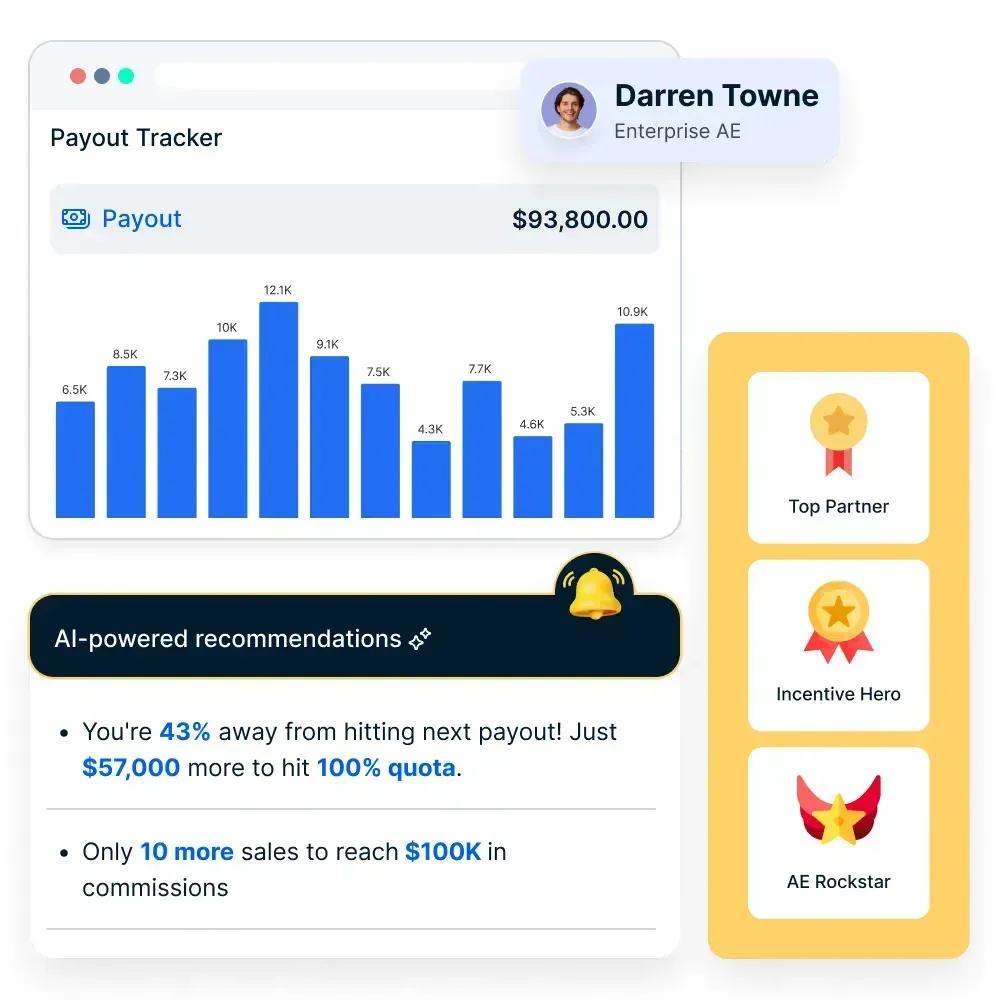
Visibility matters as much as design. Reps who can see their earnings and what the next deal adds stop keeping shadow spreadsheets and start selling. For the building blocks, see this guide to a sales compensation plan.
5. Use SPIFs and MBOs sparingly
A SPIF (sales performance incentive fund) is a short-term reward for selling a specific product or hitting a specific goal, usually a fixed amount per sale. It gives a quick lift, but used too often it stops feeling special and reps start waiting for the next one.
Management by objectives (MBOs) rewards goals other than deals closed, such as certifications, pipeline quality or customer satisfaction. MBOs lift morale because they recognize the work that leads to deals. For examples, see these sales SPIFF ideas.
6. Encourage breaks and real time off
Sales teams are expected to be on all the time, chasing leads and closing deals, which makes breaks feel risky. Encourage them anyway: short breaks during the day and full use of paid time off reward efficiency over hours logged.
Leaders set the tone here. When a manager takes a real vacation and does not answer email, reps believe they can too.
7. Make room for fun the team chooses
Doing things together beyond work brings a team closer. The key is to design activities people actually want: ask the team, keep activities inside work hours rather than eating into free time, and keep them short and regular, such as an hour every week or two.
This sends a clear message that the company cares about the team's wellbeing, and it is repaid in commitment.
8. Gamify progress, not just results
Gamification adds competition and play to routine work through leaderboards, badges and points. To protect morale, reward progress and activity as well as closed deals, and include team goals so the leaderboard does not split the team into winners and everyone else.
Rotate challenges so different reps get a chance to win. For mechanics and examples, see this guide to sales gamification.
9. Be transparent about goals and decisions
Reps who understand why decisions are made trust them more. Share the company's goals, how team targets connect to them, how quotas were set and why plans change. When news is bad, such as a territory change or a missed forecast, say so early and explain what comes next.
Transparency also means being open about how pay is calculated. Reps who can check their own statements spend less time disputing them.
10. Treat each rep as an individual
Each rep is motivated by different things: money, mastery, recognition, flexibility or a path to management. The fastest way to find out is to ask: what motivates you, and what can I do on a bad day to help?
Use the answers to tailor rewards, coaching and goals, and to spot patterns across the team. For management approaches by rep type, see how to motivate a sales team.
11. Celebrate small wins, not just the target
Relentless focus on the quarterly number tires even top performers. Put smaller goals that lead to the target front and center, such as quality conversations, meetings booked or deals moved to the next stage, and celebrate them publicly.
Small wins worth celebrating in a team channel or stand-up:
- Activity: A personal best for meetings booked or quality conversations in a week.
- Pipeline: A stuck deal moved to the next stage, or a new opportunity in a target account.
- Skill: A rep who tried a new approach from coaching and got a result.
- Teamwork: Someone who shared a winning email, covered a colleague's account or helped close a teammate's deal.
The confidence that comes from small wins feeds into the big one. It also gives reps who are behind something to be proud of while they catch up.
12. Remove grunt work so reps can sell
Most reps chose sales to sell, not to update records. Take admin off their plate with clean processes and tools that handle data entry, research, follow-up reminders and reporting. Use AI and automation to draft emails and log activity in the CRM.
Less busywork means less frustration and more time doing the part of the job that builds confidence. For more, see these ways to improve sales productivity.
Sales team morale pulse check
Run this eight-question pulse anonymously every month or quarter. Ask reps to rate each statement from 1 (strongly disagree) to 5 (strongly agree), then average the scores per question and for the whole survey.
| # | Statement | What a low score points to |
|---|---|---|
| 1 | My quota is fair and I understand how it was set. | Quota setting and communication |
| 2 | I understand how my commission is calculated and can check it. | Compensation plan transparency |
| 3 | I get useful feedback and coaching at least every two weeks. | Manager coaching time |
| 4 | My wins, big and small, are recognized. | Recognition habits |
| 5 | I have enough focused time to do my best work. | Meetings, admin load, tools |
| 6 | My workload is sustainable, and I can take time off. | Burnout risk |
| 7 | I can see a future for myself in this team. | Career paths, retention risk |
| 8 | I would recommend this team to a friend in sales. | Overall morale |
How to read the results: An average of 4 or above is healthy. Between 3 and 4, pick the lowest one or two statements and act on them this quarter. Below 3 on any statement is a warning sign that needs a conversation with the team within a few weeks. Share what you heard and what you will change, or reps will stop answering.
Morale is a team climate; to improve sales motivation at the individual level, see the sales motivation guide. For morale outside sales teams, read how to boost employee morale.
How Empuls helps lift sales team morale
Many morale drains, such as late or opaque pay, wins nobody sees and rewards that arrive weeks after the deal, come down to systems. Empuls brings incentives, visibility and recognition together so reps see where they stand and get credit when it matters.
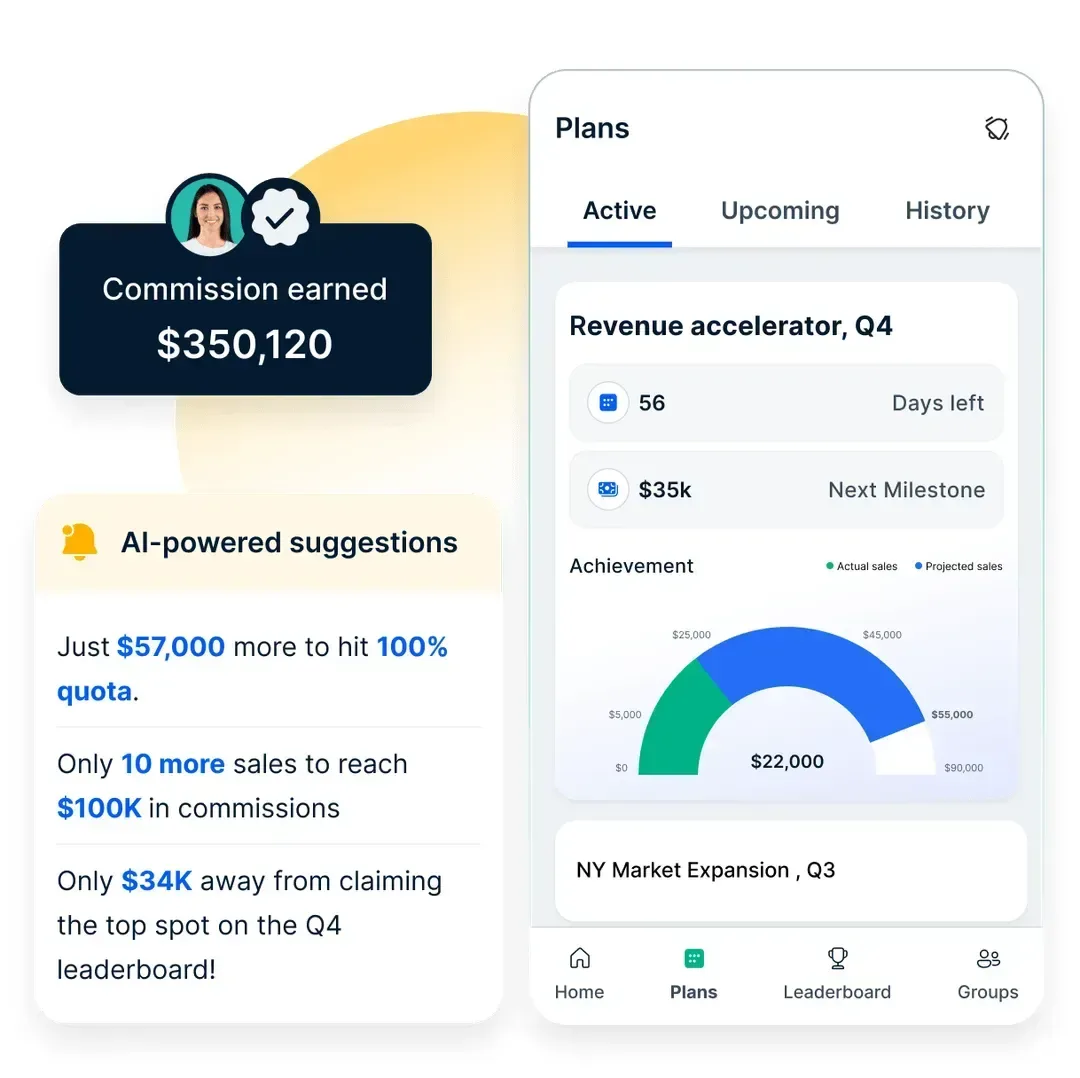
- Transparent pay: Automated commission calculations with an audit trail, and a seller view of earnings and how far the next payout is. See plans and calculations.
- Gamification: Live leaderboards, SPIFs, contests, badges, streaks and points, including points for activities that build pipeline. See sales gamification.
- Recognition: Public recognition, spot awards and rewards employees redeem from a global catalog. See employee recognition.
To measure morale alongside performance, Empuls also runs pulse surveys so you can track the pulse check above over time.
Make morale part of how you manage
Sales team morale is not fixed by a single offsite or a bigger prize. It improves when reps trust their pay, have time to focus, get regular feedback and see their wins recognized.
Start with the pulse check, act on the lowest score and tell the team what you changed. Repeat every quarter, and morale becomes something you manage, not something you discover in exit interviews.
Book your Empuls demo
Frequently asked questions
Low sales team morale usually comes from unfair or unclear quotas, compensation plans that are hard to understand or pay late, constant pressure without recognition, burnout, too much admin and weak coaching. Poor communication from leadership and contests that only reward the top few also drag morale down. Most of these causes are in the company's control.
Start with changes you can make this week: recognize recent wins publicly, celebrate small goals such as meetings booked, block focus time free of meetings and hold one-on-ones to ask each rep what would help. Then fix slower issues such as an unfair quota or a confusing commission plan, and tell the team what you are changing.
Sales motivation is an individual rep's drive to reach a goal, shaped by pay, recognition, mastery and purpose. Sales morale is the shared mood and confidence of the whole team, shaped by leadership, fairness, workload and culture. Low morale tends to drain individual motivation over time, so managers need to look after both.
Measure it with a short anonymous pulse survey every month or quarter, covering quota fairness, pay transparency, coaching, recognition, focus time, workload and career prospects. Combine the scores with signals you already track, such as turnover, absenteeism, participation in contests and changes in activity levels, to spot problems early.
Be honest about what happened and what changes next, without blaming the team. Reset goals into short, achievable milestones, celebrate early progress and review whether quotas, territories or the pay plan contributed to the miss. Extra one-on-one coaching for reps who are struggling helps more than a team-wide push for more activity.
They can, if they are designed well. Contests lift morale when the rules are clear, progress is visible, several reps have a real chance to win and team goals balance individual ones. Contests that always reward the same top performers, or that run constantly, can damage morale by leaving most of the team feeling like losers.
Burnout spreads. Exhausted reps disengage, collaborate less and leave, which adds workload and stress for the rest of the team. The Sales Health Alliance's 2024 report found 70% of sellers struggle with their mental health. Encouraging time off, managing workloads and noticing early signs of exhaustion protect both individuals and team morale.





































































































































































































































































































































































































































































































































































