
Key Takeaways
Employee engagement in the banking sector matters because accuracy, compliance and customer trust all depend on focused, committed staff.
Workload, regulatory compliance, technology change and sales pressure are the biggest drivers of disengagement among bank employees.
Zebra's 2024 survey found that about half of bank branch managers and staff intend to leave within 12 months because of low job satisfaction.
The most effective banking engagement strategies pair consistent recognition with continuous listening, fair scheduling, upskilling and financial wellbeing support.
Measure engagement by branch and role using eNPS, early-tenure attrition, recognition activity and compliance quality indicators.
Employee engagement in the banking sector is the degree to which bank staff, from tellers and branch managers to compliance analysts and operations teams, feel committed to their work, their customers and their institution. It matters more in banking than in most industries because every transaction, every compliance check and every customer conversation depends on people who are focused, accurate and willing to go beyond the script.
The banking sector stands as one of the most demanding and dynamic industries, where precision, trust and customer satisfaction are non-negotiable. Behind the seamless financial operations, however, sits a workforce often grappling with high stress, long hours and evolving regulatory pressures. In such an environment, engagement becomes a strategic necessity, not just a cultural initiative.
With rising attrition, burnout and operational silos, banks are actively looking for ways to build more human-centric workplaces. This has led to a growing focus on employee engagement activities in banks, ranging from recognition programs and wellness initiatives to digital communication tools and feedback mechanisms. This guide covers the challenges bank teams face, 12 banking employee engagement strategies that address them, and how to measure whether they work. If you lead a wider finance business, such as wealth, advisory or fintech teams, read our companion guide to employee engagement in the financial services industry.
Why employee engagement in the banking sector needs attention now
Employee engagement in the financial sector was already under pressure before AI and branch modernization arrived, and the latest data shows the strain is now visible in attrition and intent to leave. Three numbers from recent research frame the problem for bank leaders.
49%
of branch staff intend to leave
within 12 months (Zebra, 2024)
~25%
average attrition at Indian private banks
RBI, 2023-24 report
32%
of finance workers expect their job to be eliminated
by technology within five years (Gallup, 2026)
Branch, attrition and job-security signals in banking
Zebra Technologies' 2024 International Branch Banking Employee Survey of more than 1,300 branch employees in the US and UK found that 52% of branch managers and 49% of branch staff intend to leave their positions within 12 months because of low job satisfaction. The same survey found that 88% were dissatisfied with how their shifts are scheduled and almost 80% want more modern technology in their branches.
In India, the Reserve Bank of India's Report on Trend and Progress of Banking in India 2023-24 flagged average attrition of around 25% at select private sector and small finance banks and warned that it creates operational risk, including disruption to customer service and loss of institutional knowledge. And Gallup's State of the Global Workplace 2026 report found that 32% of finance employees think it is somewhat or very likely their job will be eliminated by technology within five years, against a global engagement rate that has slipped to 20%.
The upside is just as clear. Gallup's 2024 Q12 meta-analysis found that business units in the top quartile of engagement achieve 23% higher profitability, 78% lower absenteeism and 32% fewer quality defects than those in the bottom quartile. In a business where a single error can trigger a regulatory finding, those differences are material.
8 challenges faced by the banking sector
The banking sector faces eight recurring engagement challenges, and the first two, workload and regulatory compliance, carry the most weight because they shape every other part of a banker's day. The list moves from pressures inside the job to pressures that come from customers, so you can see where the bank controls the fix and where it can only build resilience.
Recognizing these challenges is the first step toward addressing them effectively. High-pressure environments, strict regulatory compliance and a fast-changing technology landscape can strain the morale and enthusiasm of banking professionals.
1. Heavy workload and stress
Bank employees often deal with a high volume of transactions and customer interactions. During peak hours, the pressure to meet service standards and sales targets can be intense, leading to stress and burnout. Managing this workload while maintaining quality customer service is a daily balancing act, and as Zebra's survey shows, poor scheduling makes it worse.
2. Regulatory compliance
The banking industry is highly regulated to protect financial stability and consumers. Bank employees must navigate a complex web of rules, including anti-money laundering (AML) and know your customer (KYC) requirements. Staying compliant and up to date with regulatory changes is a constant challenge, and the fear of a compliance error weighs heavily on frontline and operations staff alike.
3. Technology adaptation
With the rapid advancement of technology, banks continually adopt new systems, from digital onboarding and KYB verification to cloud core banking and AI assistants. Some employees find it hard to keep pace with these changes, and many worry about what automation means for their roles. Training, clear communication and support are crucial to help employees embrace and use these tools effectively.
4. Customer expectations
Customers have increasingly high expectations for seamless and personalized banking experiences. Meeting these expectations can be difficult, especially with complex inquiries, and branch staff now handle the harder cases that digital channels could not resolve. Handling complaints and protecting customer satisfaction are ongoing challenges.
5. Security concerns
Bank employees handle sensitive financial information and are responsible for preventing security breaches and fraud. The ever-evolving tactics of cybercriminals require constant vigilance and training. Security incidents not only put customers at risk but also create additional stress for the employees involved.
6. Sales targets and incentives
Many bank employees are required to meet sales targets, such as selling financial products or meeting cross-selling goals. The pressure to hit these targets can push people toward overly aggressive sales tactics, which compromise both the customer experience and employee morale. Incentive design has to reward the right behavior, not just volume.
7. Work-life balance
Long working hours, especially during busy periods such as quarter-end or tax season, can disrupt employees' work-life balance. A healthy equilibrium between work and personal life is essential for wellbeing and job satisfaction, and a lack of balance leads to burnout and lower productivity.
8. Difficult customer interactions
While most customers are reasonable and cooperative, bank employees regularly encounter difficult or upset customers. Handling these situations professionally and resolving issues to the customer's satisfaction requires patience and strong interpersonal skills, and it takes an emotional toll that managers should acknowledge. Banks with contact centers will find more on this in our guide to call center employee engagement.
Engage every branch, not just head office
Recognize, listen to and support bank teams across every location from one platform.
Talk to our ExpertTrusted by 5,000+ companies
How to engage bank employees: 12 banking employee engagement strategies
The 12 strategies below are ordered by impact on day-to-day morale, with consistent recognition first because it is the fastest, lowest-cost signal that work matters. Strategies 2 to 8 address the structural causes behind the challenges above, and 9 to 12 build the culture that keeps engaging bank employees from becoming a one-off campaign.
1. Recognize and reward performance consistently
Banking jobs are high-pressure and target-driven, and many employees work behind the scenes in regulatory, operational or financial roles with little appreciation. Without consistent recognition, motivation and retention suffer. Recognition is a low-cost, high-impact way to show employees that their work matters, and it works best when it rewards the right things: an accurate KYC review, a complaint resolved well or a compliance risk caught early, not only sales numbers.
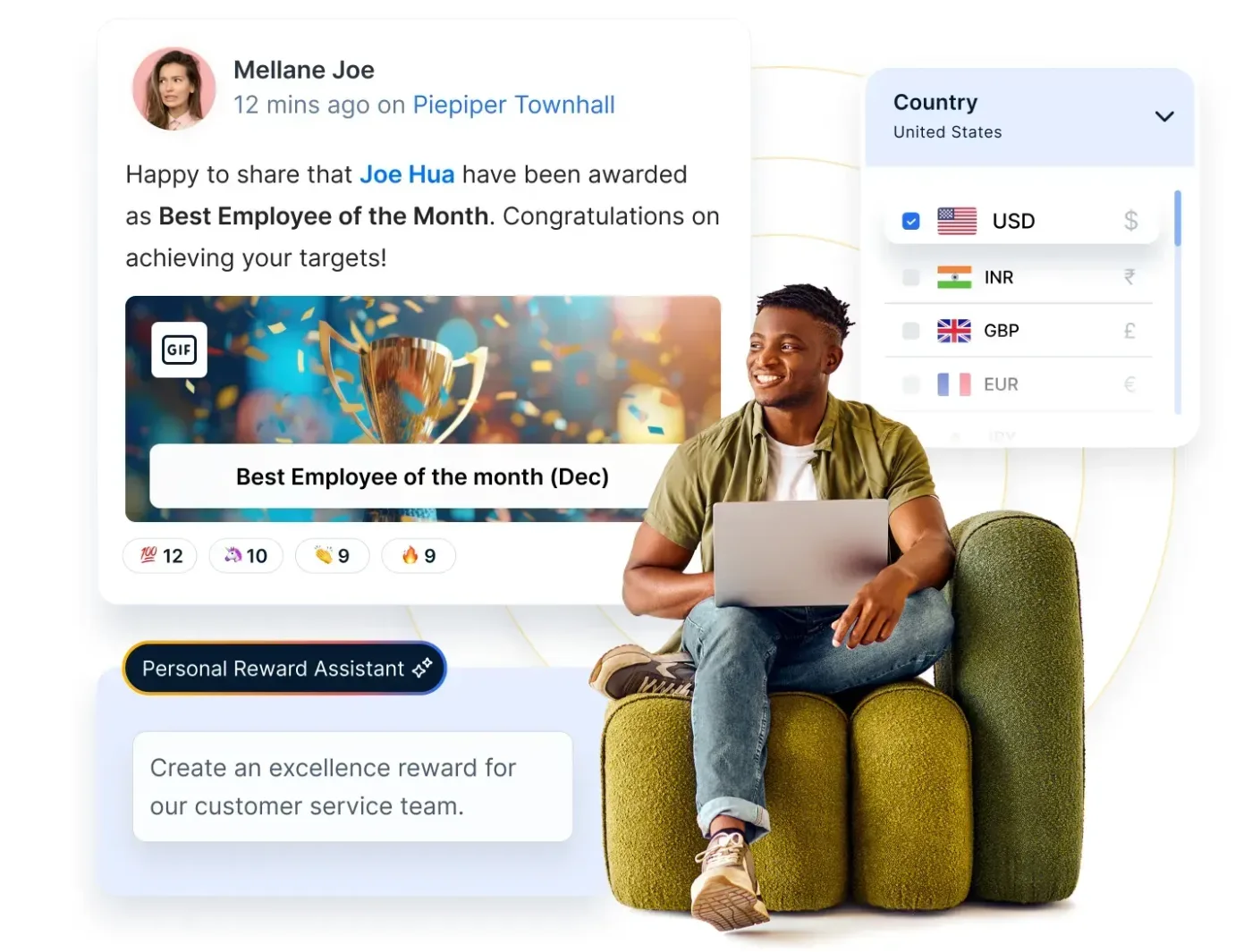
Empuls recognition enables real-time, peer-to-peer and manager-led recognition with built-in award types such as spot awards, value-based awards, jury awards and service awards. Em, the Empuls AI copilot, nudges managers to appreciate effort regularly, and recognition appears on a social feed that makes good work visible across branches.
2. Invest in training and development
By investing in continuous learning, banks help employees stay current with industry trends and build new skills. Relevant courses, workshops and career path guidance make employees feel valued and motivated to excel. Today that has to include AI and digital skills: when staff understand the new tools, they see automation as support rather than a threat.
3. Use surveys to understand and act on employee sentiment
The banking sector is inherently high-stress, driven by a mix of intense regulatory oversight, rapid technological change and high-stakes decisions. Banks must constantly adapt to evolving mandates such as AML, KYC and data privacy rules, which creates significant pressure on the employees responsible for accuracy, risk mitigation and tight deadlines.
Competition from digital-first banks adds a second demand: adopt new tools and processes fast while keeping the reliability customers expect. This dual demand for compliance and agility puts frontline staff, operations teams and leadership under constant strain. When employees in such environments feel unsupported, unheard or disengaged, the risks multiply:
- Burnout: It becomes widespread, lowering productivity and job satisfaction.
- Attrition: Rising exits increase hiring and training costs and disrupt team cohesion.
- Errors: Mistakes occur more often in critical areas like transaction handling, customer communication and compliance reporting.
- Reputational damage: One compliance breach or service failure can erode trust and trigger penalties or media scrutiny.
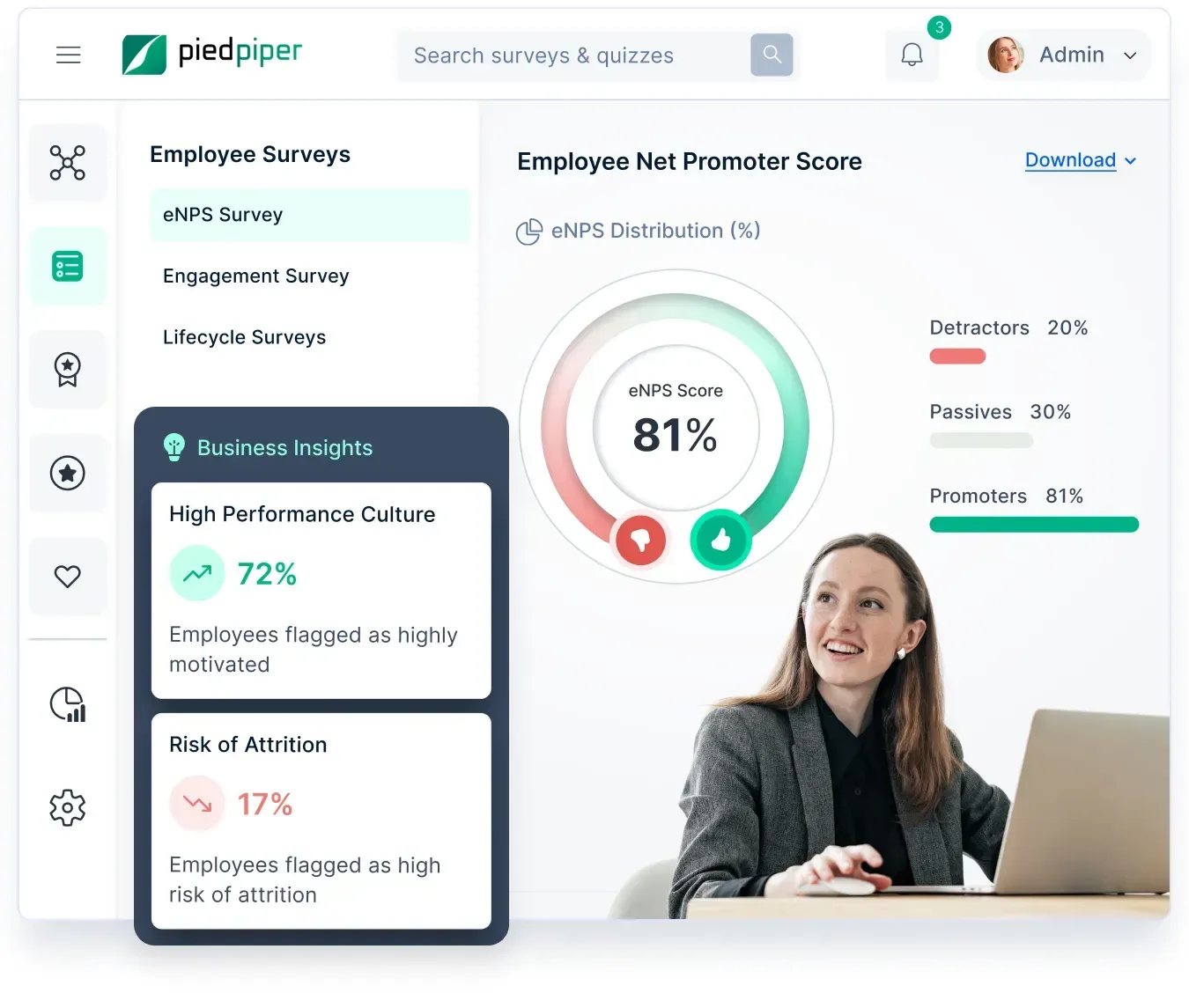
This is why active employee listening, through regular feedback loops, pulse surveys and visible action, is a strategic imperative in banking rather than a nice-to-have. Annual surveys alone are too slow for this pace of change, as we explain in why annual employee surveys fail. Empuls surveys make it easier for HR and leadership to listen continuously, gather insight by branch or function and respond before small issues become exits.
4. Run employee wellness programs
Employee wellbeing is paramount. Banks can promote physical and mental wellness through fitness challenges, access to counseling and wellness resources, and stress management workshops. Encouraging work-life balance and supporting employees through mental health challenges can significantly improve overall job satisfaction.
5. Create career growth opportunities
Demonstrating a commitment to employee growth is key to engagement. Banks can offer clear progression paths, promotions from within and individual development plans aligned with each person's aspirations. Cross-training, for example moving a teller into a relationship or digital-banking role, enriches skills and gives frontline staff a visible route forward as branch roles change.
6. Build diversity and inclusion initiatives
A diverse and inclusive workplace fosters a sense of belonging. Banks should promote an inclusive culture through training and awareness programs, fair hiring practices and support for employee resource groups. These initiatives improve engagement and also reflect positively on the bank's reputation with customers and the communities it serves.
7. Offer meaningful perks and financial wellbeing support
Bank employees are often highly financially literate, with a deeper understanding of budgeting, investments and credit than most. They are not immune to financial stress, though, and this awareness can amplify anxiety when they face rising living costs, housing expenses, education fees or debt. Even mid-level and senior professionals can feel the strain after a medical emergency, a family responsibility or an unexpected relocation.

Financial stress does not discriminate by knowledge level or income bracket, and it affects mental health, job performance and overall wellbeing. Tangible financial wellness benefits, such as early access to earned wages, tax-efficient allowances and everyday discounts, send a clear message: we care about your life outside the workplace too. This builds loyalty, boosts morale and reduces distraction caused by money worries. Empuls financial wellness brings early wage access, flexible allowances and global brand discounts into one place, and our guide to tax-saving benefits for employees explains how allowances can raise take-home pay.
8. Offer flexible work arrangements
Flexible work demonstrates trust and supports work-life balance. Branch roles cannot go fully remote, but banks can still offer flexibility through fair, predictable shift scheduling, shift swaps, compressed weeks and hybrid options for operations and head-office teams. Given how many branch employees are unhappy with scheduling, this is one of the quickest wins available.
9. Set up mentorship and coaching programs
Mentorship and coaching programs let employees receive guidance and feedback from more experienced colleagues. They accelerate career development, build confidence and foster a strong sense of belonging, and they help banks pass on the institutional knowledge that high attrition otherwise drains away.
10. Encourage volunteering and social responsibility
Volunteer and social responsibility initiatives reinforce a sense of purpose and community. Banks can organize financial literacy sessions in schools, local volunteering days or support for charitable causes employees care about. Purpose-driven work of this kind often leads to higher job satisfaction and engagement.
11. Make peer-to-peer recognition part of branch life
Peer-to-peer recognition lets employees appreciate and celebrate each other's achievements. It creates a culture of appreciation, camaraderie and teamwork, and in a branch network it connects people who rarely meet in person. A shared recognition feed lets a back-office team thank the branch that sent a flawless loan file, and vice versa.

12. Empower employees in decision-making
Involving employees in decisions and giving them autonomy in their roles is highly engaging. When frontline staff have a say in branch processes, product feedback or how new tools are rolled out, they become more invested in their work and in the bank's success. Close the loop by telling people what changed because of their input.
Mapping banking challenges to the right engagement strategy
Bank employee retention challenges rarely have a single cause, so the most effective programs match each pressure point with a specific response. Use this table to prioritize where to start.
| Challenge | What it looks like in a bank | Strategy that helps most |
|---|---|---|
| Heavy workload and stress | Peak-hour queues, back-to-back customers, overtime at quarter-end | Fair scheduling, wellness programs, recognition for effort |
| Regulatory compliance | Fear of AML or KYC errors, constant policy updates | Recognize accuracy and risk catches, training, pulse surveys on workload |
| Technology adaptation | New core systems, AI tools, worry about job security | Upskilling, transparent communication, involvement in rollouts |
| Sales targets | Cross-sell pressure that clashes with customer needs | Balanced incentives that reward quality and compliance |
| Work-life balance | Long hours, unpredictable shifts | Flexible and predictable schedules, financial and mental wellbeing support |
| Difficult customers | Complaints, irate visitors, emotional fatigue | Coaching, peer support and recognition for great service recovery |
How to measure employee engagement in the banking sector
Track a small set of measures by branch and function so you can see where engagement is slipping before it shows up in attrition. The most useful are:
- Employee Net Promoter Score (eNPS) and pulse scores: Trend them monthly or quarterly by branch, region and role.
- Voluntary attrition and early tenure exits: Watch first-year exits in teller and customer service roles closely.
- Recognition activity: Measure how often people give and receive recognition and whether it reaches every branch and back-office team.
- Absenteeism and overtime: Rising sick days and overtime are early burnout signals.
- Quality and compliance indicators: Error rates, audit findings and customer complaints show whether engagement is protecting the business.
For a broader view of what drives exits, see our employee retention strategies guide.
Driving employee engagement in banking with Empuls
In the highly regulated, high-pressure world of banking, engagement is a business imperative. Empuls is Xoxoday's AI-powered employee engagement platform, and it helps banks build connected, motivated and resilient teams across branch and corporate locations through four pillars.
- Connect and align distributed teams: Banks often face communication silos across branches, departments and regions. The Empuls social intranet breaks these down with leadership broadcasts, community groups and town halls, so whether you are announcing a product launch or hosting a virtual town hall, everyone stays in sync with the bank's goals.
- Listen intelligently, act decisively: Through eNPS, pulse and lifecycle surveys, HR leaders capture real-time sentiment. AI sentiment analysis helps detect early signs of disengagement and guides interventions in high-stakes roles.
- Recognize contributions, motivate performance: Automated and AI-assisted recognition, from peer shoutouts to jury-based service awards, with approval workflows, budget controls and a global rewards catalog that keep programs compliant and cost-efficient.
- Support financial and emotional wellbeing: Perks, discounts, flexible benefits and early wage access help employees save on essentials, manage unplanned expenses and access learning and wellness allowances.
Empuls also integrates with HRMS platforms and collaboration tools such as Microsoft Teams, supports multiple languages and currencies, and suits banks with branch networks in several countries. See how it fits your institution on the banking and fintech solutions page.
Conclusion
As the banking sector continues to evolve in response to digital disruption, regulatory shifts and rising customer expectations, investing in employee engagement in the banking sector is no longer optional. It is a competitive advantage. By addressing the real-world challenges bank teams face, from burnout to job-security worries, banks can build resilient, motivated teams that drive both performance and trust.
The right employee engagement activities in banks, supported by platforms like Empuls, create a culture of appreciation, open communication and continuous feedback. The result is a happier workforce, a stronger employer brand and better outcomes for customers and stakeholders alike. When employees thrive, the entire institution flourishes.
Book your Empuls demo
Frequently asked questions
Employee engagement in the banking sector is the level of commitment, energy and connection bank employees feel toward their work, customers and institution. Engaged bankers are more accurate, more customer-focused and more likely to stay. It is shaped by workload, recognition, career growth, manager support and how well the bank listens and acts on feedback from branch and operations teams.
Engagement in banks is often held back by heavy workloads, strict compliance demands, sales targets, unpredictable scheduling and worry about automation. Branch staff also absorb the hardest customer cases as routine tasks move to digital channels. When these pressures go unrecognized and employees feel unheard, satisfaction drops and intent to leave rises, which is what recent branch employee surveys show.
The most effective approaches are consistent recognition that rewards accuracy and service as well as sales, regular pulse surveys with visible follow-up, fair and predictable scheduling, upskilling for digital and AI tools, clear career paths and financial wellbeing support. Peer recognition across branches and involving staff in decisions about new processes also build a stronger sense of ownership.
Banks reduce turnover by fixing the causes employees cite most: workload, scheduling, limited growth and feeling undervalued. Start with exit and pulse survey data by branch, then act on the top issues. Combine recognition, mentorship, internal mobility and competitive benefits, and track first-year exits in teller and service roles, where attrition is usually highest.
Use a mix of sentiment and outcome measures. Track eNPS and pulse survey scores by branch and role, voluntary attrition and early-tenure exits, recognition activity, absenteeism and overtime. Then link them to business indicators such as error rates, audit findings and customer complaints to show how engagement protects quality and compliance.





































































































































































































































































































































































































































































































































































