
Key Takeaways
To increase employee NPS, diagnose the two or three drivers behind detractor scores, fix them visibly and tell employees what changed before the next survey.
Moving 10% of respondents from detractor to passive, or from passive to promoter, adds 10 points to eNPS.
Managers and recognition are the biggest levers: Gallup found 61% of employees who get weekly feedback and recognition are engaged, versus 38% without frequent recognition.
BambooHR's 2026 data shows eNPS dips to 33 for employees with two to three years of tenure, so mid-tenure growth and recognition deserve early attention.
Never tie bonuses to eNPS or ask for higher scores; protect anonymity and show action instead.
To increase employee NPS, find the two or three drivers behind your detractor scores, fix them visibly with named owners and deadlines, and tell employees what changed before the next survey. The biggest levers are almost always managers, recognition, workload, career growth and whether people believe feedback leads to action.
Employee Net Promoter Score, or eNPS, measures how likely people are to recommend their company as a place to work, which makes it a strong indicator of loyalty, culture and day-to-day experience. This guide covers how to increase employee NPS step by step: how to diagnose your score, nine strategies that move it, a 90-day improvement plan template and the employee NPS best practices that keep the gains.
Why employee NPS is worth improving
Employee NPS is more than a survey metric. It reflects how your people perceive their work environment, and the stakes are high: Gallup's State of the Global Workplace 2026 found global engagement fell to 20% in 2025, with manager engagement dropping from 27% to 22% in a single year.
A higher eNPS also shows up in retention. The BambooHR 2026 Employee Happiness Index found that companies with an excellent eNPS lose 46% fewer employees each year than companies with a negative score. When you improve employee net promoter score, you typically see:
- Better retention: Employees feel supported and valued, so fewer start looking elsewhere.
- Higher motivation: Teams bring more energy and ownership to their work.
- A stronger sense of belonging: People feel part of something, not just employed by it.
- Deeper trust: Employees believe leadership listens and acts.
- Better employer branding and referrals: Promoters recommend you to friends, which lowers hiring costs.
- A more resilient culture: Teams handle change with less friction.
When employees become promoters, they advocate for the organization, and engaged employees usually treat customers better too. Increasing employee NPS is not just an HR initiative; it is a company-wide priority that supports growth and stability.
What a good eNPS score is and how much you can move it
A good eNPS score is any positive score that keeps rising; most teams treat +10 to +30 as good and above +50 as excellent, and BambooHR's 2026 average across more than 1,400 companies was 40. Your own trend matters more than any benchmark, so set a realistic target based on where you start.
It helps to know how the math rewards different gains. Because eNPS is the percentage of promoters minus the percentage of detractors, every shift between groups has a predictable effect:
| Change across 10% of respondents | Effect on eNPS | What it usually takes |
|---|---|---|
| Detractor (0 to 6) to passive (7 to 8) | +10 points | Fixing a specific pain point, such as workload or a manager issue |
| Passive (7 to 8) to promoter (9 to 10) | +10 points | Giving people a reason to be proud: growth, recognition, purpose |
| Detractor (0 to 6) to promoter (9 to 10) | +20 points | Rare in one cycle; usually takes sustained change over several quarters |
Most organizations get their first gains by removing detractor pain points, because those issues are concrete and often cheap to fix. Converting passives into promoters is slower but more durable.
How to diagnose what is holding your eNPS back
Before you act on improving the score, you need to understand the reasons behind it. Read detractor and passive comments first, then segment by team, tenure and location to see where the problem is concentrated.
Common drivers that affect employee NPS are leadership behavior and communication, workload and burnout, growth and development, team culture and peer support, recognition, work-life balance and flexibility, fairness and inclusion, and pay, benefits and rewards. Use this table to turn what employees say into a starting action:
| What detractor comments say | Likely driver | First action to test |
|---|---|---|
| "Nobody notices the work I do" | Recognition | Set a weekly recognition habit for managers and launch peer-to-peer appreciation |
| "My manager never has time for me" | Manager effectiveness | Introduce regular 1-on-1s and coach the managers of low-scoring teams |
| "I am always firefighting" | Workload and burnout | Review staffing and priorities with the team; cut or delay low-value work |
| "I don't see a future here" | Career growth | Publish role pathways and add development goals to 1-on-1s |
| "We hear about changes last" | Communication | Start a regular leadership update and an open Q&A channel |
| "Nothing happens after surveys" | Trust in action | Share results and three committed actions within two weeks of each survey |
| "Some people get all the chances" | Fairness and inclusion | Audit promotion, project and recognition data by group |
Watch for tenure patterns too. BambooHR's 2026 data shows new hires average an eNPS of 51, while employees with two to three years of tenure average just 33, the lowest of any tenure group. If your dip looks the same, growth and recognition for mid-tenure employees deserve early attention.
See which drivers are pulling your eNPS down
Run eNPS pulses with driver scores by team and AI-grouped comments, then assign actions.
Talk to our ExpertTrusted by 5,000+ companies
9 strategies to increase employee NPS
These nine eNPS improvement strategies target the leadership, communication and everyday experiences that shape long-term sentiment. They are ordered from the foundation (knowing your drivers and communicating openly) to the programs that build lasting loyalty, so start at the top and pick the ones your diagnosis points to.
1. Understand the drivers behind your current eNPS
Employees share valuable insights when they explain their scores, especially when feedback is anonymous. Add an open question such as "What is the main reason for your score?" and a short set of driver questions, then study the comments for patterns. Each pattern is an opportunity to strengthen trust and improve culture, and it stops you spending budget on fixes nobody asked for.
2. Build a transparent communication culture
Clear and open communication has a strong influence on employee sentiment. Employees want context behind decisions and transparency about goals, strategy and priorities. When leaders communicate authentically, employees feel respected.
- Share regular updates from leadership.
- Encourage managers to hold frequent team check-ins.
- Reduce information gaps across departments.
- Offer open channels for asking questions.
- Communicate decisions with clarity and empathy.
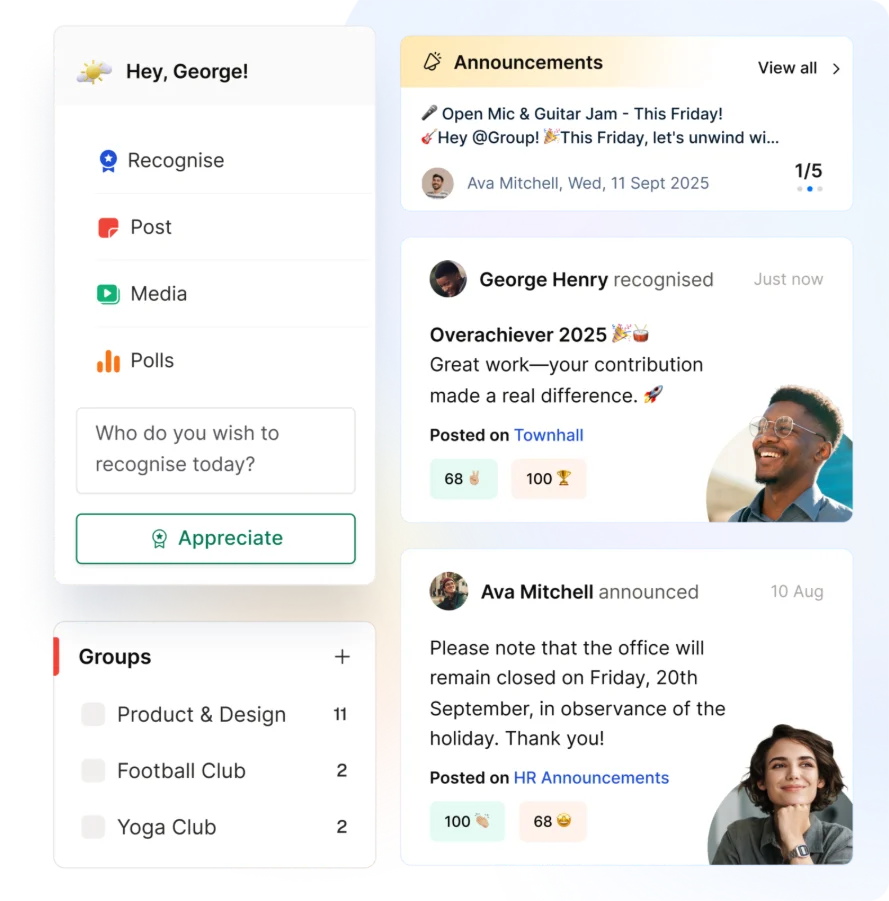
When communication improves, employees feel connected to the organization and confident about where it is heading, which shows up in higher eNPS responses.
3. Create a culture of continuous listening
Employee listening should happen year-round, not once a year. Companies that build strong cultures collect feedback consistently through structured mechanisms:
- Run monthly or quarterly pulse surveys.
- Create always-open feedback channels.
- Use quick check-ins after key moments such as onboarding or project completion.
- Study trends to see where gaps exist.
- Act on feedback and communicate the outcomes.
Employees respond positively when they see action behind their feedback, which makes them more willing to take part next time and nudges them toward becoming promoters. If your annual survey has stopped producing change, read why annual employee surveys fail.
4. Focus on manager effectiveness
Managers are one of the biggest contributors to employee NPS. They shape workload, career growth, communication, recognition and team culture, and even a positive company culture can break down at the manager level. Gallup's 2026 drop in manager engagement makes this the first place to look when one team scores far below the rest.
- Offer leadership and people management training.
- Build accountability for how managers treat employees.
- Encourage frequent 1-on-1 conversations.
- Coach managers to communicate with empathy.
- Give employees a safe way to share feedback about their manager.
5. Enhance employee recognition and appreciation
Detractor comments often say people do not feel seen or appreciated. Recognition shapes emotional connection, lifts motivation and creates positive energy, and it works best when it is frequent: a Gallup and Workhuman study found 61% of employees who get both feedback and recognition from their manager at least weekly are engaged, compared with 38% of those who get weekly feedback but less frequent recognition.
- Recognize daily achievements, not just major milestones.
- Encourage peer-to-peer appreciation.
- Personalize recognition messages.
- Celebrate work in team meetings.
- Build rewards into recognition programs to strengthen their impact.
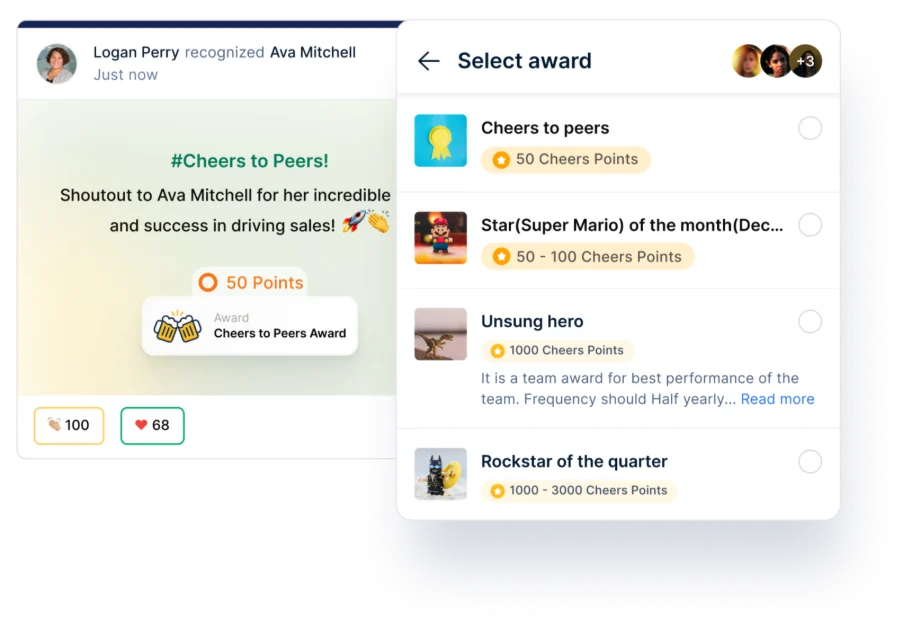
Employees who feel genuinely valued tend to become promoters. For program design, see this guide to building an employee recognition program.
6. Strengthen work-life balance and flexibility
Burnout is one of the top reasons employees become detractors. When people feel overwhelmed or unsupported in balancing personal and professional responsibilities, they quickly lose trust in the workplace.
- Set realistic workload expectations.
- Encourage regular time off.
- Train managers to spot and prevent overwork.
- Support flexible working arrangements.
- Normalize boundaries and personal time.
When employees feel the company respects their time and wellbeing, their experience improves significantly. These ways to prevent burnout go deeper.
7. Create meaningful career development pathways
Career growth directly influences employee loyalty. If people feel stagnant, they are less likely to recommend the organization, which is one reason mid-tenure scores dip. Employees want clarity about how they can grow, what they can learn and what opportunities exist.
- Build structured learning and training programs.
- Provide clear role pathways and promotion criteria.
- Offer mentoring and coaching.
- Encourage regular upskilling.
- Review development plans during 1-on-1s.
8. Improve onboarding and the early employee experience
The first 90 days shape how employees perceive the workplace. A positive onboarding experience builds confidence and trust, while a poor one creates early dissatisfaction that is hard to reverse.
- Give new hires clarity on responsibilities.
- Assign buddies or mentors.
- Provide tools and access on day one.
- Check in regularly during the first few months.
- Introduce them to the company's culture and values.
New hires start with the highest eNPS of any tenure group, so onboarding is about protecting that goodwill rather than creating it.
9. Promote inclusion, fairness and belonging
Employees want to feel respected and accepted. A culture of fairness, equity and belonging increases trust and loyalty, and people who feel safe to be themselves engage more deeply.
- Promote inclusive leadership behaviors.
- Provide equal access to opportunities.
- Address bias and unfair practices quickly.
- Celebrate diverse perspectives.
- Encourage open discussion about workplace culture.
Belonging is one of the strongest drivers of a high promoter score because employees feel appreciated for who they are, not just what they do. For practical steps, read about inclusion and diversity in the workplace.
Bring leadership into the eNPS journey
Leadership involvement is one of the strongest indicators of eNPS success. Leaders set the tone for culture, and their willingness to listen and act influences how employees respond in surveys. Ask leaders to:
- Attend listening sessions.
- Respond to feedback with honesty.
- Show appreciation publicly.
- Take part in recognition programs.
- Communicate business updates regularly.
When employees see genuine interest from leadership, trust increases, and trust is the foundation of a high employee NPS.
Close the loop between feedback and action
Feedback loses value when it is collected but never used, and employees become discouraged when they share insights and see nothing happen. A structured feedback-to-action loop has five steps:
- Collect data: Run the eNPS question with an open follow-up on a steady cadence.
- Analyze trends: Segment by team, tenure and location, and read the comments.
- Prioritize issues: Pick two or three drivers with the biggest impact, not ten.
- Implement solutions: Give each action an owner, a deadline and a measure of success.
- Communicate updates: Tell employees what you heard, what you are doing and what changed.
Transparency during this process builds credibility and lifts promoter responses. For a step-by-step format, use this employee engagement action plan.
A 90-day eNPS improvement plan template
Use this template to turn one survey cycle into visible change before the next one. Copy it into your own tracker, fill in one row per priority driver and review progress every two weeks.
| Phase | Weeks | What to do | Owner | Output |
|---|---|---|---|---|
| Diagnose | 1 to 2 | Calculate eNPS by team and tenure, read every detractor and passive comment, pick 2 to 3 priority drivers | HR business partner | Driver shortlist and baseline score |
| Share | 2 | Share results and the chosen priorities with all employees and explain what happens next | CEO or business head | Results note or town hall |
| Plan | 3 | Agree one or two actions per driver with a named owner, deadline and success measure | Managers with HR | Action plan per team |
| Act | 3 to 10 | Deliver actions, recognize early wins, update employees every two to three weeks | Action owners | Visible changes and progress updates |
| Check | 11 to 12 | Run a short pulse with the eNPS question and the priority driver questions | HR | New score and trend by team |
| Report | 13 | Compare with baseline, tell employees what worked and set the next cycle's priorities | HR and leadership | Before-and-after summary |
Employee NPS best practices
These employee NPS best practices protect the quality of your data and the trust behind it. Teams that skip them often see a short bump followed by a slide.
- Keep the question identical every time: Changing wording, scale or timing breaks the trend.
- Protect anonymity: Report only groups of five or more respondents and explain who sees what.
- Do not chase the number: Never tie manager bonuses to eNPS or ask people to score higher; it destroys honesty.
- Watch participation as closely as the score: A falling response rate is often the first sign of lost trust.
- Check the margin of error: Small teams swing widely, so look for sustained trends over two or three cycles.
- Show action before you ask again: Each survey should be followed by a visible "you said, we did" update.
How Empuls helps you increase employee NPS
Once the cultural foundations are in place, technology helps you run the loop at scale. Empuls pulse surveys pair the eNPS question with 15 follow-up questions across four engagement drivers and an anonymous comment box, delivered through Slack, Microsoft Teams or email on a set cadence. Scores are sliced by department, tenure and location and benchmarked against cross-industry norms.
AI sentiment analysis groups comments into themes, and survey action plans give every insight an owner and a deadline, tagged to the driver it addresses. On the same platform, rewards and recognition lets managers and peers appreciate work in the moment, so the recognition gaps your survey uncovers can be fixed in the same place.
Make eNPS improvement a habit
Increasing employee NPS is a continuous process rooted in trust, communication, recognition and experience. It does not happen through one survey; it grows when employees experience consistent care across their whole journey.
Diagnose before you act, focus on a few drivers, close the loop visibly and measure again. Do that every quarter and more of your people will be proud to recommend your workplace. To see how eNPS fits with other engagement metrics, read how to measure employee engagement.
Book your Empuls demo
Frequently asked questions
Most organizations see a measurable change in eNPS within one or two survey cycles, roughly three to six months, if they act visibly on a few priorities. Quick fixes to clear pain points can lift scores sooner, while turning passives into promoters through career growth and culture usually takes several quarters of consistent effort.
A low employee NPS is usually caused by poor manager relationships, lack of recognition, heavy workloads, unclear career paths and a belief that feedback is ignored. Pay and fairness concerns also play a role. Read detractor comments and segment results by team and tenure to see which of these causes apply to your organization.
Start with detractors when their comments point to concrete, fixable problems such as workload or a specific manager, because moving them to passive is often quick. Then work on passives, who are satisfied but not enthusiastic. Converting either group adds the same number of points per person, so choose based on which issues you can solve fastest.
No. Tying manager bonuses or performance ratings to eNPS encourages managers to pressure employees for higher scores, which destroys honesty and makes the metric useless. Hold managers accountable for running action plans and following up on feedback instead, and use eNPS as one input in a wider conversation about team health.
Measure eNPS quarterly while you are working to improve it. That gives enough time to deliver actions between surveys and enough data points to see a trend. Monthly pulses can work for large organizations, but only if employees see progress updates in between; otherwise survey fatigue lowers both participation and honesty.
Yes, frequent recognition is one of the most reliable ways to improve employee NPS. A 2024 Gallup and Workhuman study found 61% of employees who get feedback and recognition from their manager at least weekly are engaged, compared with 38% of those recognized less often. Recognition that is timely, specific and fair works best.
Yes. Small companies can run the eNPS question in a simple form, read every comment, hold open discussions and act quickly, because leaders are close to the team. Software becomes useful as you grow, when you need anonymity across many teams, automated reminders, segmented reporting and a way to track action plans.





































































































































































































































































































































































































































































































































































