
Key Takeaways
Employee disengagement is a gradual loss of connection to work, team and company goals that moves through five stages, from initial discontent to separation.
Gallup found only 20% of employees worldwide were engaged in 2025, and low engagement cost an estimated $10 trillion in lost productivity.
The six core causes of employee disengagement are lack of purpose, poor management, limited growth, uncompetitive pay, overload and an unhealthy work environment.
Managers account for at least 70% of the variance in team engagement, so re-engagement plans work best when managers own the conversation.
Well-recognized employees were 45% less likely to have left after two years, which makes recognition the fastest re-engagement lever to deploy.
Employee disengagement is the state in which people lose their connection to their work, their team and the company's goals, so they do the minimum, stop offering ideas and start looking elsewhere. It rarely appears overnight: it builds in stages, it has a small set of fixable causes, and it can be reversed if managers spot the signs early and act on them.
The scale is hard to ignore. Gallup's State of the Global Workplace 2026 report found that only 20% of employees worldwide were engaged in 2025, the lowest level since 2020, and estimated that low engagement cost the global economy about $10 trillion in lost productivity, or 9% of global GDP.
Workplaces thrive when employees feel engaged, motivated and valued. When that spark fades, disengagement becomes a silent drain on productivity, innovation and retention. Even top-performing companies treat it as a design problem: Google gave engineers "20% time" for self-directed projects, an approach credited with products like Gmail and AdSense, and Walmart's Live Better U program pays college tuition and books for its US associates. These initiatives show that engagement rises when businesses invest in their people.
This guide covers what employee disengagement means, the signs of disengaged employees, the five stages it moves through, its impact on the business, its core causes and how to re-engage disengaged employees before they leave.
What employee disengagement means
Employee disengagement happens when workers lose connection to their job, team or the company's goals. Instead of feeling motivated and invested, they go through the motions, doing only what's necessary. This lack of enthusiasm affects productivity, collaboration and overall workplace morale.
Disengagement isn't always evident at first. Some employees still show up on time and complete their tasks, but without energy or commitment. Others openly express frustration, avoid responsibilities or seek new opportunities. Over time, disengagement spreads, leading to lower performance, higher turnover and a strained work environment.
Gallup separates two groups. Not engaged employees are psychologically unattached: they put in time but not energy. Actively disengaged employees are unhappy and act it out in ways that can undermine their teammates. According to Gallup's employee engagement indicator, 16% of employees worldwide were actively disengaged in 2025, and in the US, 18% were actively disengaged as of August 2026.
Signs of disengaged employees
The signs of disengaged employees are usually behavioral before they show up in performance data. Watch for patterns that persist for several weeks rather than a single bad day:
- Silence in meetings: The person who used to challenge ideas now agrees with everything or says nothing at all.
- Minimum effort: Work meets the brief but never goes beyond it, and discretionary tasks such as mentoring or process fixes stop.
- Rising absence and lateness: More unplanned sick days, late starts and early finishes than the person's usual pattern.
- Missed deadlines and quality slips: Errors increase and follow-through weakens, especially on work that needs care.
- Withdrawal from the team: Skipping social events, eating alone and dropping out of informal channels.
- Cynicism about the company: Frequent negativity about leadership decisions, change programs or colleagues.
- No interest in growth: Declining training, stretch projects or conversations about the future.
- Silence in surveys: Lower survey participation, neutral scores across the board or an unexplained drop in a team's results.
One sign on its own proves little. Three or four together, sustained over time, is a signal for a manager to start a private, supportive conversation.
The five stages of employee disengagement
Employee disengagement is a gradual process where enthusiasm fades, motivation declines and productivity takes a hit. The five stages below run from mild discontent to exit, and stage 2 matters most because it is the last point where a simple conversation and a quick fix usually work.
Stage 1: Initial discontent
At this stage, employees experience mild dissatisfaction. They may feel unappreciated, bored or disconnected from their work but still put in effort. Signs include subtle changes in attitude, a lack of enthusiasm and reduced participation in team activities.
Stage 2: Declining commitment
Discontent turns into disengagement as employees lose their emotional connection to the company. They put in the minimum effort, avoid extra responsibilities and show less interest in company goals. This is when absenteeism and decreased productivity start becoming noticeable.
Stage 3: Active withdrawal
By this point, employees mentally check out. They contribute only when necessary, avoid collaboration and may express negativity about their work or colleagues. They might frequently call in sick, arrive late or leave early. Burnout, frustration and resentment often build up at this stage.
Stage 4: Full disengagement
Employees reach a point where they no longer care about their work or the company's success. They might openly criticize management, ignore deadlines and show no initiative. At this stage, they are either looking for another job or waiting to be let go.
Stage 5: Separation
The final stage is a voluntary or involuntary exit. The employee resigns or is terminated due to poor performance and a lack of commitment. If the underlying issues are not addressed, the business risks losing more employees the same way.
Recognizing these stages early lets you take proactive steps, such as offering support, improving communication and re-engaging employees before it's too late.
Catch disengagement before it becomes a resignation
Run pulse surveys, recognize good work instantly and see which teams need attention, all in Empuls.
Talk to our ExpertTrusted by 5,000+ companies
Impact of employee disengagement
The impact of employee disengagement reaches beyond individual performance: it disrupts teams, lowers morale and harms business results. Gallup's research on engagement and productivity, based on a 2024 meta-analysis of 183,806 business units, shows how wide the gap is between the most and least engaged teams.
23%
Higher profitability
Top vs bottom engagement quartile
78%
Lower absenteeism
In highly engaged teams
32%
Fewer quality defects
In highly engaged teams
$10T
Lost productivity in 2025
About 9% of global GDP
Source: Gallup, Employee Engagement and Productivity (2026) and State of the Global Workplace 2026
Here is how those costs show up day to day:
- Lower productivity: Disengaged employees put in minimal effort, leading to slower workflows, missed deadlines and reduced team efficiency. Tasks that should take hours stretch over days.
- Higher turnover rates: Employees who feel disconnected or unappreciated start looking for new opportunities. Increased turnover adds hiring and training costs and puts extra strain on the people who stay.
- Poor customer experience: Disengaged employees lack enthusiasm in their interactions with customers. This leads to poorer service, lower satisfaction and potential damage to brand reputation.
- Increased absenteeism: A lack of motivation often results in frequent sick days or unexplained absences. Teams struggle with an uneven workload, which further hurts morale and output.
- Negative workplace culture: When disengagement spreads, it drains the energy of the people around it, leading to resentment, frustration and declining team spirit.
- Financial losses: Lost productivity, recruitment expenses and weaker customer retention all raise operating costs. The $10 trillion global estimate above is the sum of those losses across millions of teams.
Ignoring disengagement comes at a steep price. Addressing it early keeps your workforce motivated, improves retention and builds a work environment where people feel valued. For the retention side of the equation, see these employee retention strategies.
Causes of employee disengagement
There are six core causes of employee disengagement, and most disengaged employees are dealing with two or three of them at once. Poor management sits at the center because, according to Gallup's engagement indicator, managers account for at least 70% of the variance in team engagement, so it often amplifies the other five.
1. Lack of purpose and meaning
Imagine a mechanic who replaces car parts every day but never sees how those parts come together into a working vehicle. That isolation from the bigger picture is a common cause of disengagement. Employees who don't understand how their daily tasks contribute to the company's mission often feel like cogs in a machine, replaceable and unimportant.
This is usually caused by:
- An unclear company vision: Leaders haven't explained where the business is going, or the story changes every quarter.
- A disconnect between individual tasks and overall goals: People can't trace a line from their work to a customer or business outcome.
2. Poor management
Ineffective leadership is a significant contributor to employee disengagement. Micromanagers who hover over employees, stifle creativity and offer little autonomy quickly drain motivation. A lack of communication, unclear expectations and favoritism create a frustrating, demotivating environment.
The importance of supportive management: Effective managers invest time in getting to know their team members, understand their strengths and weaknesses and offer guidance for professional development. Managers are under pressure too: Gallup's State of the Global Workplace 2026 found that manager engagement fell from 27% to 22% between 2024 and 2025, and disengaged managers rarely build engaged teams.
3. Limited growth and development
Employees who see no opportunities for learning, development or advancement quickly lose motivation. Companies that fail to offer training programs, mentorship or clear career paths risk losing valuable talent.
Investing in employee development: Learning budgets, stretch assignments and visible internal moves increase engagement and equip people with the skills to contribute more effectively to the company's goals.
4. Uncompetitive compensation and benefits
Feeling undervalued financially is a major demotivator. Employees who are consistently paid below market value or offered inadequate benefits may feel resentful and disengaged.
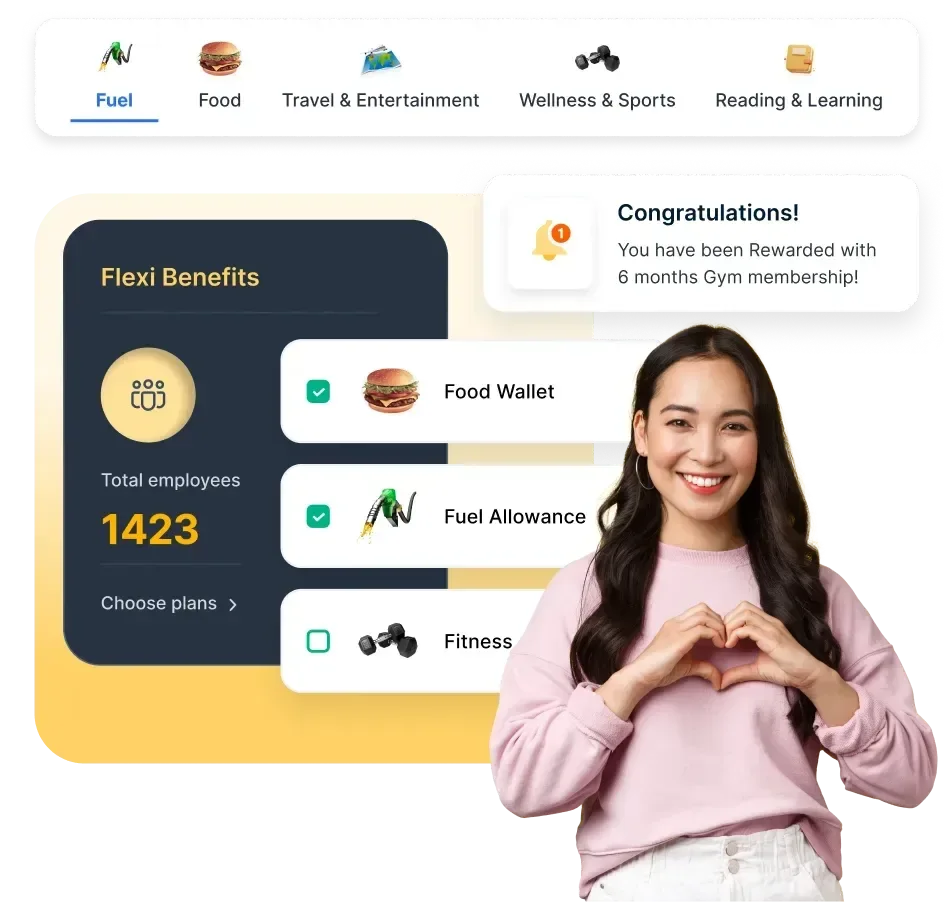
Competitive compensation matters: Benchmark pay regularly and explain how it is set. Non-monetary benefits such as flexible work, healthcare options and wellbeing support also improve employee satisfaction, and they often cost less than people assume.
5. Work overload and stress
Feeling constantly overwhelmed is a recipe for burnout and disengagement. Excessive workloads, unrealistic deadlines and a lack of work-life balance quickly drain energy and motivation.
Promoting healthy work practices: Set realistic workloads, protect time off and remove low-value work. Tools that automate routine HR tasks, such as reward approvals and celebration reminders, give managers back time to spend on their people.
6. Unhealthy work environment
A toxic work environment characterized by poor communication, lack of collaboration or a culture of fear pushes employees away. Constant negativity, gossip, bullying or a lack of respect makes work stressful and unpleasant.
The importance of a positive work environment: Psychological safety, respectful conflict and fair treatment are the baseline. Without them, no perk or program will hold engagement for long.
How to re-engage disengaged employees
Re-engagement requires more than surface-level fixes. It means creating an environment where employees feel valued, connected and motivated to contribute. The seven moves below start with recognition because it is the fastest to deploy, and end with managers because they make the other six stick.
1. Recognize and reward contributions
Feeling unappreciated is one of the main reasons employees disengage. People want their hard work to be noticed and valued. A structured rewards and recognition program creates a culture where employees receive timely appreciation for their contributions.
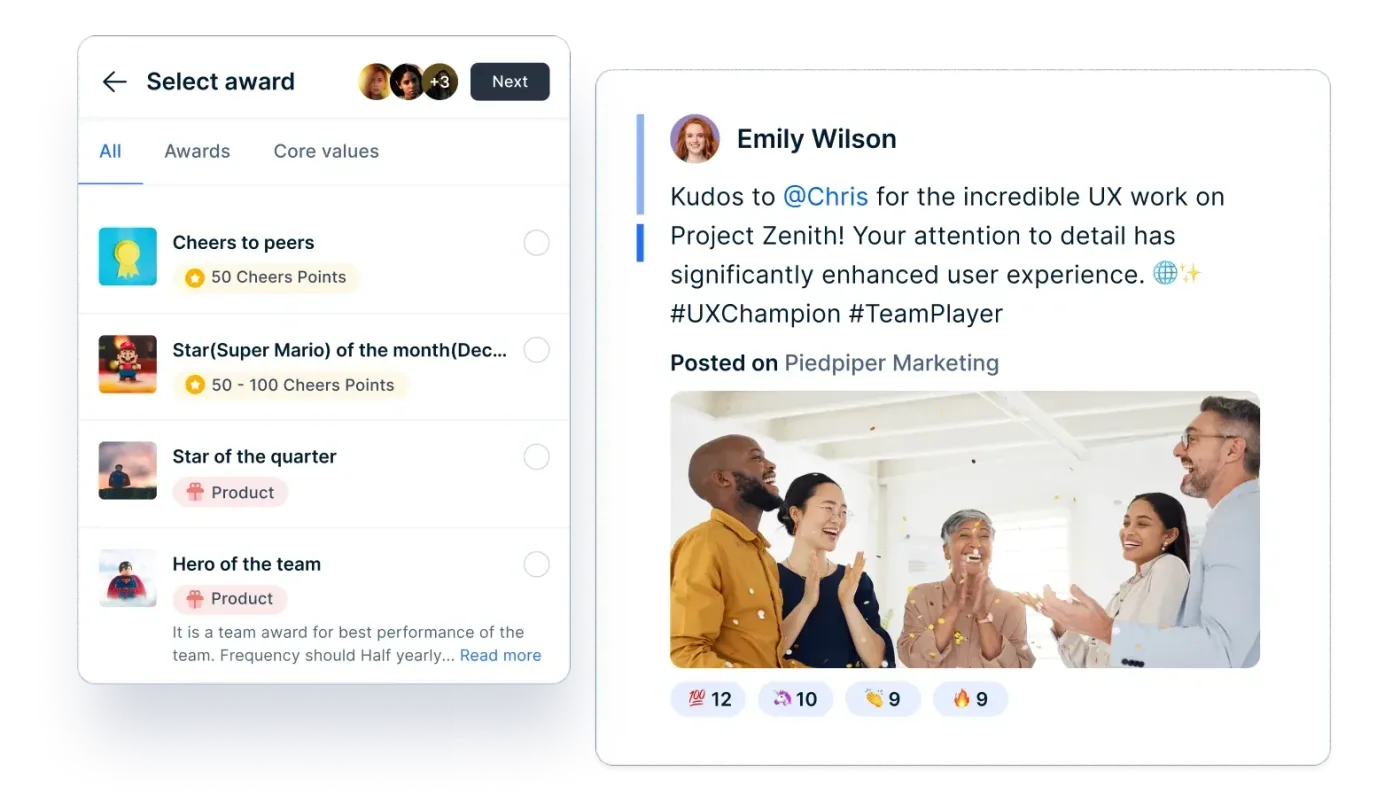
Recognition doesn't always have to be monetary. It can be a peer shoutout, a digital badge or a personal note from leadership. The payoff is measurable: a Gallup and Workhuman study that tracked nearly 3,500 employees from 2022 to 2024 found that well-recognized employees were 45% less likely to have turned over after two years.
2. Foster open communication and feedback
Employees disengage when they feel unheard or disconnected from company goals. Open, transparent communication rebuilds trust and involvement. Regular check-ins, town halls and feedback sessions let employees voice concerns and feel part of the bigger picture.
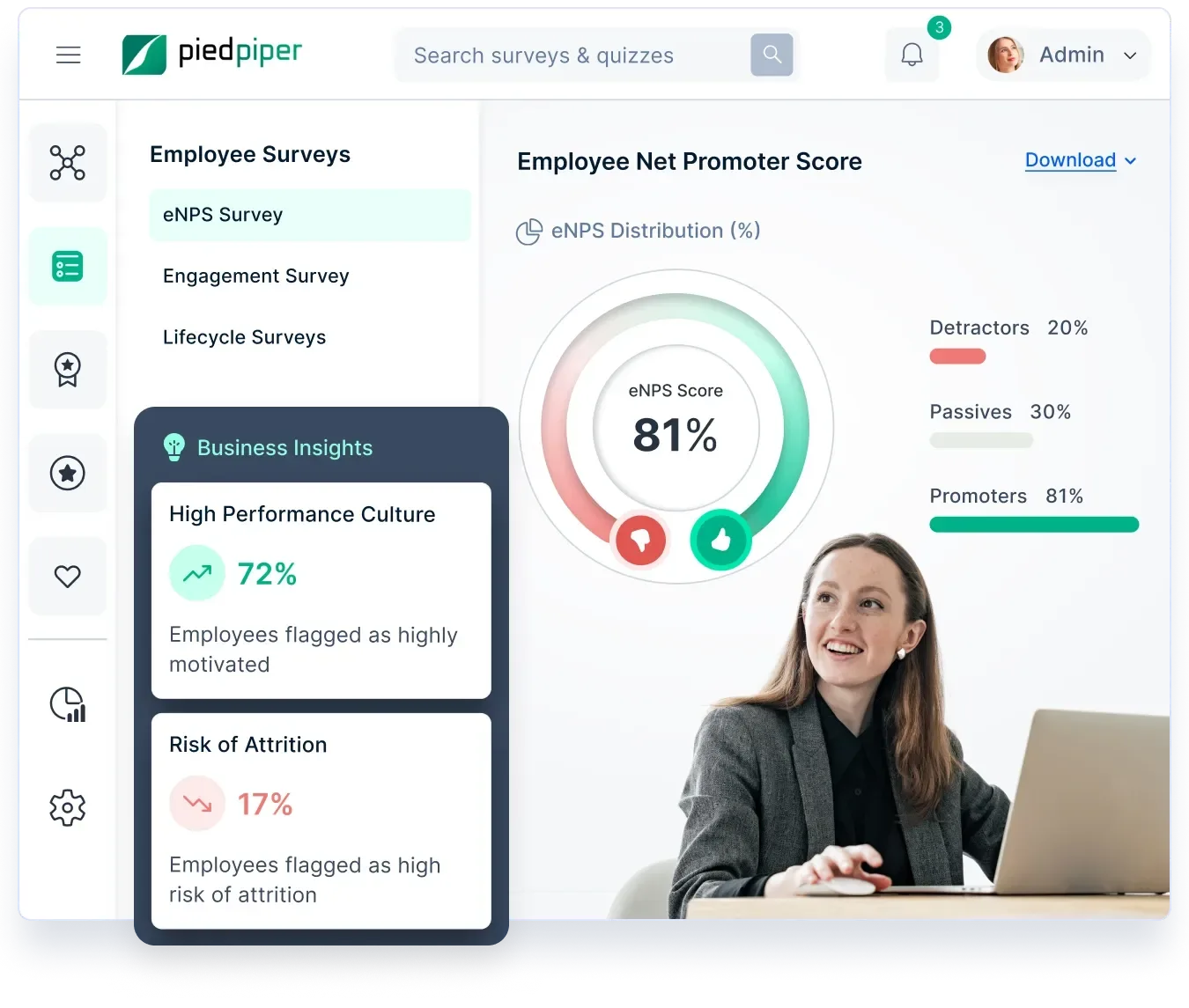
Employee surveys make it easier to gather real-time insight into engagement levels. Short pulse surveys give you a structured way to understand sentiment, identify disengagement triggers and act on what you hear. Closing the loop matters as much as asking, which is why annual surveys on their own often fail.
3. Offer meaningful perks and benefits
Employees want more than a paycheck: they want to feel supported in different parts of their lives. A well-designed benefits package shows that their wellbeing is a priority.
Flexible benefits and perks let companies offer personalized options such as wellness budgets, learning allowances or employee discounts, and in some markets tax-saving benefits that raise take-home pay. Small but meaningful perks often have an outsized impact on retention and motivation.
4. Strengthen workplace connections
Disengaged employees often feel isolated from their teams. Encouraging social interaction, collaboration and bonding activities helps employees feel they belong. A social intranet keeps people connected whether they are remote, hybrid or in the office.
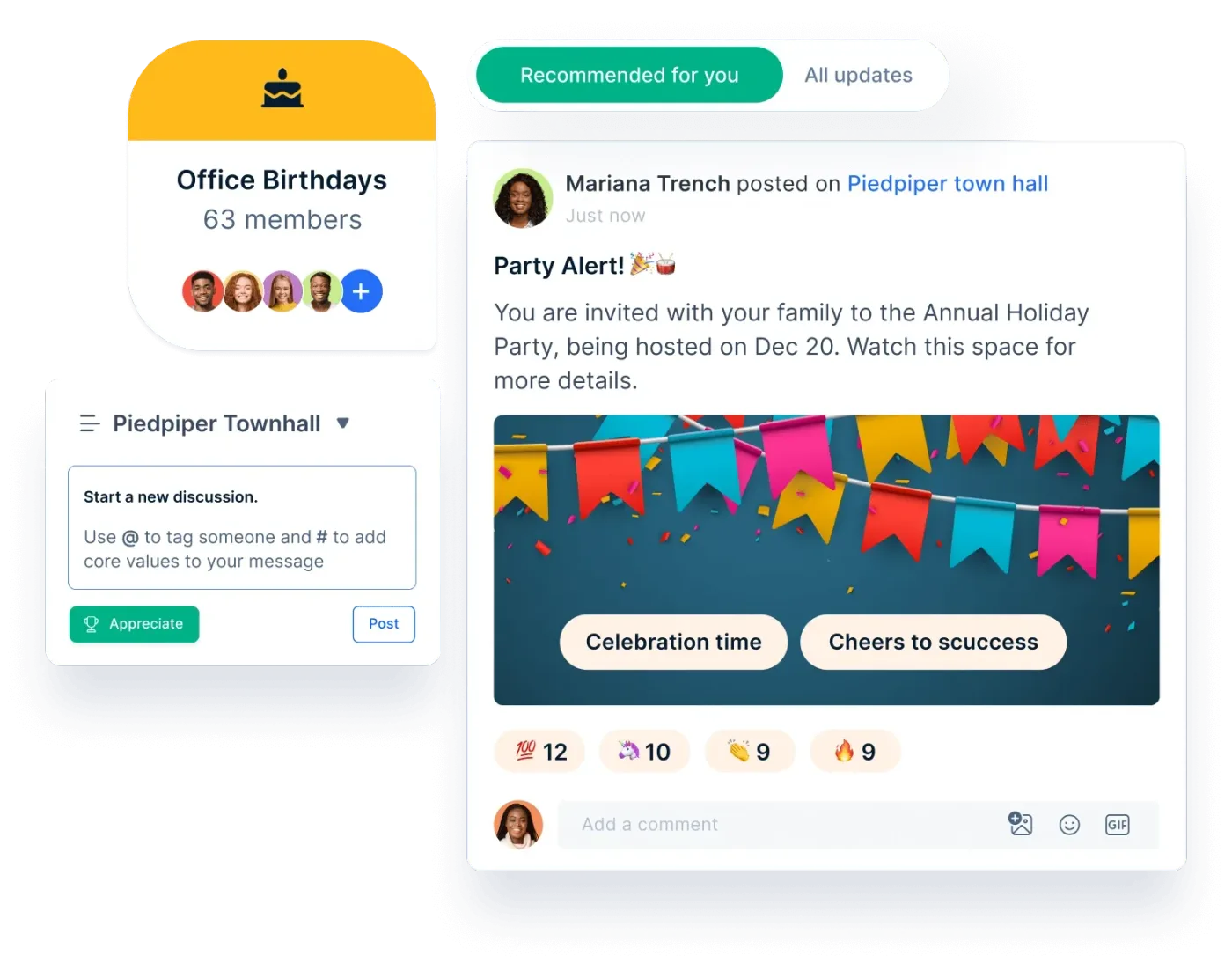
A digital community where employees can chat casually, celebrate milestones and collaborate beyond work tasks builds a sense of belonging. Employees who feel connected to their colleagues are more likely to stay engaged.
5. Provide career growth and development opportunities
A lack of career growth often leads employees to disengage. If they feel stuck in a role with no room for advancement, motivation declines. Career development, mentorship and upskilling give employees a reason to stay invested.
Encouraging internal mobility, setting clear career paths and running leadership training help employees see a future within the company. When people feel they have room to grow, they become more engaged and committed.
6. Prioritize work-life balance
Burnout is one of the biggest contributors to disengagement. Employees who feel overworked and stressed become less productive and more likely to check out. Flexible work arrangements, reasonable workloads and mental health support help prevent burnout.
Simple changes, such as remote work options, wellness programs or encouraging people to actually take breaks, create a healthier environment that sustains long-term engagement.
7. Equip managers to have the conversation
Most re-engagement happens in a one-to-one, not in a company-wide program. Train managers to notice the signs above, ask open questions about what has changed and agree on one or two concrete actions with the employee.
Give managers the data and time to do this well: team-level survey results, a recognition budget they control and a regular cadence of check-ins. To turn these moves into a structured plan with owners and deadlines, use this employee engagement action plan.
Metrics that reveal employee disengagement early
You can't fix what you can't see. Track a small set of leading and lagging indicators by team, and review them monthly so you catch disengagement in stage 1 or 2 rather than at the exit interview:
| Metric | What it tells you | Warning sign |
|---|---|---|
| Pulse survey engagement score | How people feel about their work right now | A drop of several points in one team between pulses |
| Survey participation rate | Whether people believe feedback leads to action | Participation falling quarter on quarter |
| eNPS | Willingness to recommend the company as a place to work | More detractors than promoters |
| Unplanned absence rate | Withdrawal and burnout | A rising trend in one team or role |
| Recognition activity | Whether appreciation is reaching everyone | Team members with no recognition in 60 to 90 days |
| Regretted voluntary turnover | The final cost of disengagement | Exits clustered under one manager |
To combine several of these into a single number you can benchmark, see this guide to the employee engagement index.
Turning employee disengagement into engagement with Empuls
Employee disengagement isn't only about low motivation. It is about feeling unseen, unheard and undervalued. Empuls, Xoxoday's employee engagement platform, addresses each of those in one place:
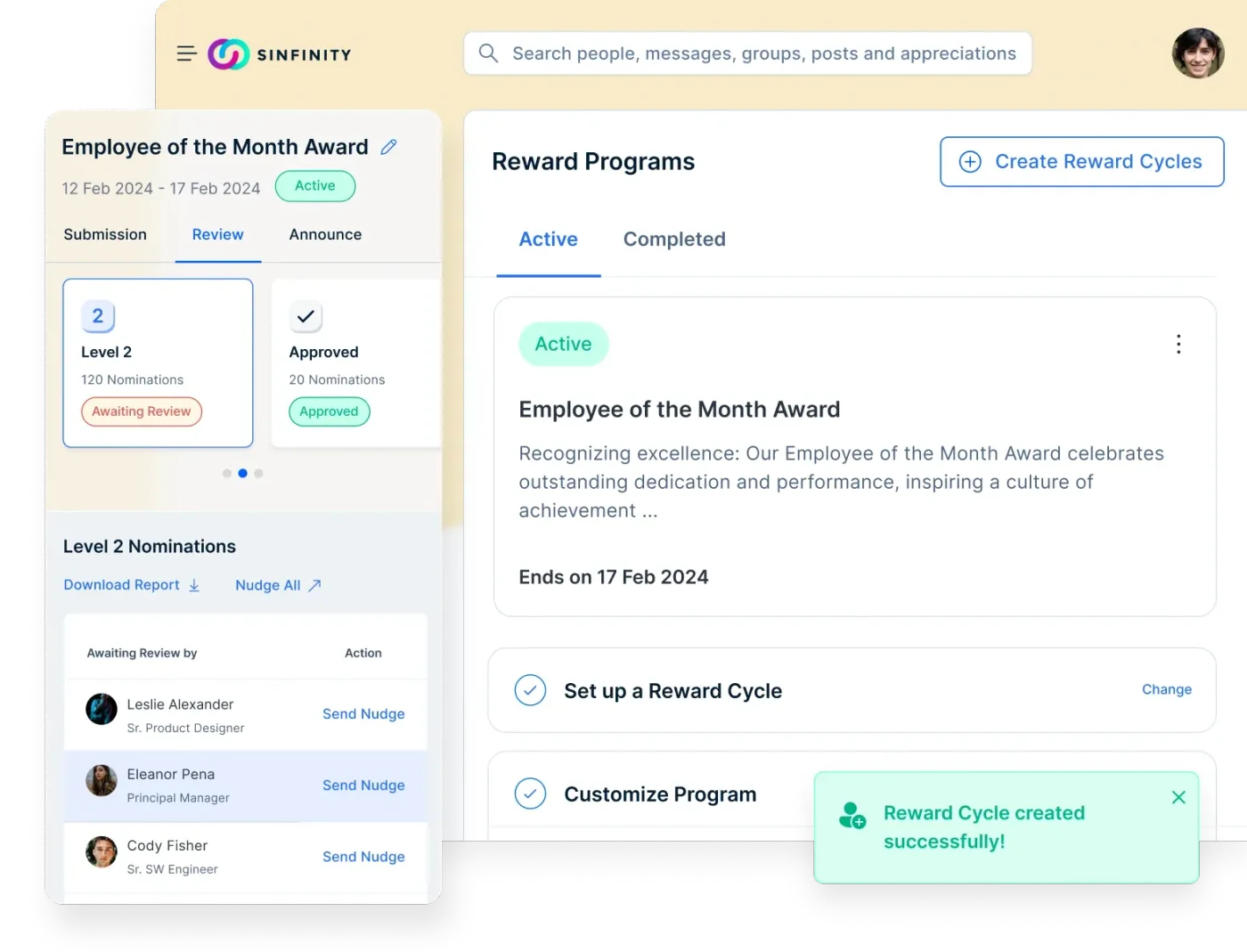
- Recognition that feels genuine: Spot awards, peer shoutouts and nominations weave appreciation into daily work, inside the tools your teams already use.
- Rewards that resonate: Milestone rewards and a global rewards catalog let employees choose what they value, so every incentive feels personal.
- Surveys that give employees a voice: Pulse, lifecycle and eNPS surveys with AI sentiment analysis and action plans help you understand what truly drives your teams and act on it.
- A social intranet that builds community: Open conversations, celebrations and company updates keep employees informed, connected and aligned with company goals.
- Benefits that matter: Discounts, lifestyle spending accounts and tax-saving benefits improve financial wellbeing and job satisfaction.
Instead of patchwork fixes, an all-in-one platform lets you tackle the causes of disengagement together and measure whether it is working. For the wider picture, read our guides to employee engagement and employee engagement strategies.
Book your Empuls demo
Frequently asked questions
Employee disengagement is a state in which employees lose their emotional connection to their work, team and company goals. Disengaged employees do the minimum required, contribute fewer ideas and are more likely to leave. Gallup separates not engaged employees, who put in time but not energy, from actively disengaged employees, who are unhappy and can undermine their teammates.
The main causes of employee disengagement are a lack of purpose, poor management, limited growth and development, uncompetitive pay and benefits, work overload and an unhealthy work environment. Poor management often amplifies the others, because managers shape workload, recognition, communication and development for their teams and account for most of the variation in team engagement.
Disengaged employees feel unmotivated and disconnected, which makes them far more likely to look for new jobs. Disengagement usually progresses through declining commitment and active withdrawal before an employee resigns, so rising turnover is often the last visible sign of a problem that started months earlier with low recognition, poor management or a lack of growth.
Disengaged employees put in minimal effort, miss deadlines and contribute less to team goals, which lowers overall output and quality. Gallup's research shows that teams in the top quartile of engagement have 23% higher profitability, 78% lower absenteeism and 32% fewer quality defects than teams in the bottom quartile, so the productivity gap is large and measurable.
Start with a private, supportive conversation about what has changed, then agree on one or two concrete actions, such as clearer goals, a growth opportunity or a lighter workload. Follow up with regular check-ins and timely recognition when things improve. Pair the conversation with team-level fixes, because the cause is often a pattern rather than one person's attitude.
Early warning signs include going quiet in meetings, doing only the minimum, rising absence or lateness, missed deadlines, withdrawing from team activities, growing cynicism about the company and losing interest in training or new projects. A single sign proves little, but several signs sustained over a few weeks are a reliable cue for a manager to step in.





































































































































































































































































































































































































































































































































































