
Key Takeaways
Retail commission pays store associates a percentage of what they sell, by sales value, units or gross margin, usually on top of an hourly wage.
Commission is most common in high-ticket, advice-led categories such as cars, furniture, appliances, electronics, jewelry and luxury fashion.
Retail commission equals net sales or gross margin multiplied by the rate, with returns deducted before commission is paid.
In the US, commission-paid retail associates must still earn minimum wage, and the Section 7(i) overtime exemption applies only when strict pay conditions are met.
Set retail commission rates by working backward from target earnings and margin, then review the plan at least once a year against market pay and turnover.
How does retail commission work? A retail store pays sales associates a percentage of what they sell, measured by sales value, units or gross margin, usually on top of an hourly wage. Each sale is credited to the associate at the till, returns are deducted, and commission is calculated for the pay period and paid through payroll. The rate and structure depend on the product, the margin and how much selling skill the sale needs.
Retail commission is a form of variable pay that rewards store employees for the sales they close. This guide explains how it works step by step, commission vs hourly retail pay, the main retail sales commission structures, how to calculate retail commission with worked examples, the legal and ethical points and how to keep the plan competitive.
How retail commission works, step by step
Most retail commission plans follow the same five steps from the moment a sale is rung up to the day it is paid. Getting the first step right, accurate crediting at the point of sale, prevents most disputes later.
- Credit the sale: The associate's employee ID is captured at the point of sale, so each transaction is credited to the right person or split between people who helped.
- Apply the plan rules: At the end of the period, the system applies the commission rate to sales value, units or margin, including any tiers, product rates or thresholds.
- Deduct returns and exchanges: Commission on items returned within the return window is reversed, so associates are paid on net sales.
- Approve: The store or area manager reviews exceptions, such as split credits and large returns, and approves the payout.
- Pay through payroll: Approved commission is added to the associate's regular pay, usually weekly, biweekly or monthly.
Commission is most common where a sale needs advice and the ticket is large: cars, furniture, mattresses, major appliances, electronics, jewelry, luxury fashion and cosmetics counters. In grocery, convenience and most fast fashion, associates are usually paid hourly with a store bonus instead, because individual selling effort has less effect on each sale.
Commission vs hourly retail pay
Most retail sales workers are paid by the hour, and commission is added where selling skill moves revenue. The US Bureau of Labor Statistics' Occupational Outlook Handbook puts the median wage for retail salespersons at $17.03 an hour in May 2025, with those figures including commissions and bonuses.
$17.03
median hourly wage, retail salespersons
BLS, May 2025, including commissions
4.0 million
retail salespersons in the US
BLS, 2025
7 million
retail job separations in 2025
a 3.8% average monthly rate, BLS JOLTS
Sources: US Bureau of Labor Statistics, Occupational Outlook Handbook and JOLTS
Turnover makes the pay model a retention decision too. Bureau of Labor Statistics JOLTS data for 2025 shows retail recorded nearly 7 million separations, an average monthly separations rate of 3.8%, which adds up to close to half the workforce over a year. Our guide to the retail turnover rate breaks down what that costs and how to reduce it. The choice between commission vs hourly retail pay usually comes down to four models:
| Pay model | How it works | Pros | Cons | Best for |
|---|---|---|---|---|
| Hourly only | Fixed hourly wage, no commission | Predictable pay, team-first culture | No reward for selling skill | Grocery, convenience, high-volume low-ticket stores |
| Hourly plus commission | Hourly wage plus a percentage of sales or margin | Security plus upside | Needs accurate crediting and rules | Electronics, appliances, furniture, specialty retail |
| Commission with a guarantee or draw | Commission, with a guaranteed minimum or advance | High earning potential with a safety net | Cost if associates fall short | Auto, luxury and high-ticket specialty sales |
| Hourly plus store or team bonus | Hourly wage plus a pooled bonus for store targets | Encourages teamwork and service | Top sellers may feel under-rewarded | Fashion, beauty and stores with shared floor coverage |
Retail sales commission structure types
Six retail sales commission structures cover most stores. Hourly plus commission is the most widely used; straight commission is limited to high-ticket and luxury sales where an associate can reliably earn well above minimum wage.
1. Straight commission
Associates are paid only on what they sell, by volume or value, with no hourly base. It suits products with high ticket values, such as cars and luxury goods, and is also common in insurance, retail banking products and real estate.
2. Base pay plus commission
Associates receive an hourly wage or salary plus commission on sales. It is used for high-value and luxury products and also for fashion, apparel and consumer goods, often designed around on-target earnings, the total pay an associate earns at 100% of target. Our guide to sales commission and incentive plans covers how to set them.
3. Tiered commission
The commission rate rises as associates reach higher sales levels. For example, an associate might earn 2% on monthly sales up to $20,000 and 4% on everything above it. Tiers are common in consumer goods, fashion and apparel.
4. Gross margin commission
Commission is paid on the profit from each sale rather than its price. It suits products where discounting is common, such as cars, furniture and electronics, because it stops associates giving away margin to close a deal.
5. Commission with a draw or guarantee
Associates get an advance or a guaranteed minimum that is offset against commission earned. It smooths income during slow seasons and for new hires who are still building product knowledge.
6. Team or store commission
Commission or bonus is calculated on total store or department sales and split among the team, often by hours worked. It rewards shared floor coverage, stockroom help and service, which individual commission can discourage.
Automate commission across every store
Empuls calculates retail commission from your sales data, deducts returns by rule and shows associates what they have earned.
Talk to our ExpertTrusted by 5,000+ companies
Factors that influence retail commission rates
There is no single standard for retail commission rates, because the right rate depends on margin and how much the associate influences each sale. A good plan balances what the business can afford to share with what associates need to earn. Seven factors shape the rate:
- Type of product: Is it measured by value or by volume?
- Gross margin: Higher-margin products can carry higher rates; low-margin items usually cannot.
- Demand: How easily does the product sell without help?
- Complexity: How much advice or demonstration does the customer need?
- Sales cycle: How long does it take to close, from a single visit to several weeks?
- Return rates: Categories with frequent returns need clear rules on reversing commission.
- Market standards: What do competing stores pay for similar roles in your area?
A practical way to set a rate is to work backward from target earnings. Decide how much variable pay an associate should earn at target, then divide it by the sales or margin you expect them to deliver. If you want associates to earn $600 a month in commission on expected sales of $30,000, the rate is 2% of sales.
How to calculate retail commission
The basic formula is simple: commission equals net sales (or gross margin) multiplied by the commission rate. The table below shows how to calculate retail commission for each common structure, with a worked example you can adapt.
| Structure | Formula | Worked example | Commission |
|---|---|---|---|
| Hourly plus commission | (Gross sales minus returns) x rate | $32,000 sales minus $2,000 returns at 3% | $900, plus hourly pay |
| Tiered commission | Tier 1 sales x rate 1 + sales above tier x rate 2 | $28,000 sales: $20,000 at 2% plus $8,000 at 4% | $400 + $320 = $720 |
| Gross margin commission | (Sale price minus cost) x rate | $1,800 sofa with $1,000 cost at 10% of margin | $80 |
| Straight commission (high-ticket) | Gross profit on deal x rate | Car deal with $3,000 gross profit at 25% | $750 |
| Team commission | Store sales x pool rate x (associate hours / team hours) | $200,000 store sales x 0.5% pool; associate worked 120 of 1,200 hours | $1,000 pool x 10% = $100 |
| Draw against commission | Commission earned minus draw (carry any shortfall) | $1,000 draw; $1,400 commission earned | $400 paid on top of the draw |
Two rules prevent most disputes. First, publish how returns, exchanges and split sales are handled before the period starts. Second, show associates their running commission during the period, not just on the payslip. For more formulas across other sales roles, see our guide on how to calculate sales commissions.
Retail compensation components
Commission is only one part of a retail associate's pay. Most retail compensation packages combine fixed and variable components, and the mix matters as much as the commission rate.
Fixed components of compensation
Fixed pay gives associates a stable floor regardless of sales:
- Hourly wage or base salary
- Retirement plans such as a 401(k)
- Health and life insurance
- Paid time off
Variable components of compensation
Variable pay rewards performance and behavior on the floor:
- Commission on sales
- Performance-linked incentives and SPIFs on priority products
- Cash bonuses, one-time or recurring
- Gift cards, vouchers and employee discounts
- Non-monetary rewards such as team outings, extra time off and dining vouchers
Bonus and incentive programs for retail staff
Bonuses and incentives sit on top of commission and let you reward specific behaviors, not just total sales. Combining monetary and non-monetary rewards keeps them fresh. Popular options include:
- Peak season pay: Higher commission or bonuses during holidays and seasonal sales.
- Target bonuses: Cash rewards for exceeding individual or store targets.
- SPIFs: Short-term incentives on a new launch, slow-moving stock or a high-margin line.
- Gift cards and vouchers: Instant rewards for wins on the floor.
- Employee discounts: Larger discounts for employees, friends and family.
- Flexible incentive plans: Let associates choose rewards that matter to them.
Recognition matters as much as cash in retail, where many associates are part-time or early in their careers. Our guide to retail rewards and recognition covers ideas that work on the shop floor.
Cross-selling and upselling incentives
Cross-selling and upselling grow the value of each basket without needing more footfall. Paying a little extra for them, such as a higher rate on accessories, warranties or a premium model, points associates toward the behaviors that raise average transaction value.
Cross-selling suggests related products, such as a case and screen protector with a phone. Upselling moves the customer to a better product than the one they came in for. Both need product training and good judgment, so pair the incentive with coaching and a clear rule: recommend only what genuinely fits the customer's needs.
Compliance and ethical considerations
Retail commission plans must follow wage and hour law wherever you operate, and they carry ethical risks that the plan design should address. Four legal points matter most for US retailers.
- Minimum wage still applies: Commission-paid associates must earn at least the applicable minimum wage for all hours worked in each workweek.
- Overtime exemption is narrow: The Department of Labor's Section 7(i) exemption removes overtime pay only for employees of a retail or service establishment whose regular rate exceeds 1.5 times the minimum wage and who earn more than half their pay from commission over a representative period.
- Put the plan in writing: Several states require written commission agreements that explain how commission is earned and paid, and a written plan prevents disputes everywhere.
- Follow state rules on deductions and final pay: States differ on when commission must be paid after an employee leaves and which deductions, such as for returns, are allowed.
On ethics, commission can push associates toward pressure selling or overpromising, which damages the brand. Some retailers have removed individual commission entirely in favor of team bonuses for that reason. Whatever model you choose, link incentives to positive behaviors, such as customer satisfaction and low return rates, and never reward selling something a customer does not need.
How to evaluate and adjust your retail commission plan
Retail markets change quickly, so review your commission structure at least once a year and after any major change in products, pricing or minimum wage. Associates who feel underpaid for their effort disengage and leave, which in a high-turnover sector is expensive. Check these indicators each review:
- Competitor hourly pay and commission structures
- The economy, inflation and local minimum wage changes
- Associate feedback, disputes and signs of conflict between colleagues
- Product complexity, margins and competition
- Store performance indicators such as conversion, average transaction value and return rates
Make realistic adjustments based on what you find, and explain each change to associates before it takes effect. The right commission structure nudges associates in the right direction, which leads to better product focus, higher conversion and lower turnover for the business and better earnings for the team.
How Empuls helps retailers manage commission
Running retail commission on spreadsheets breaks down quickly across many stores, products and part-time schedules. Empuls sales incentives calculates commission and incentive plans automatically from your sales and HR data, so store teams always know where they stand.
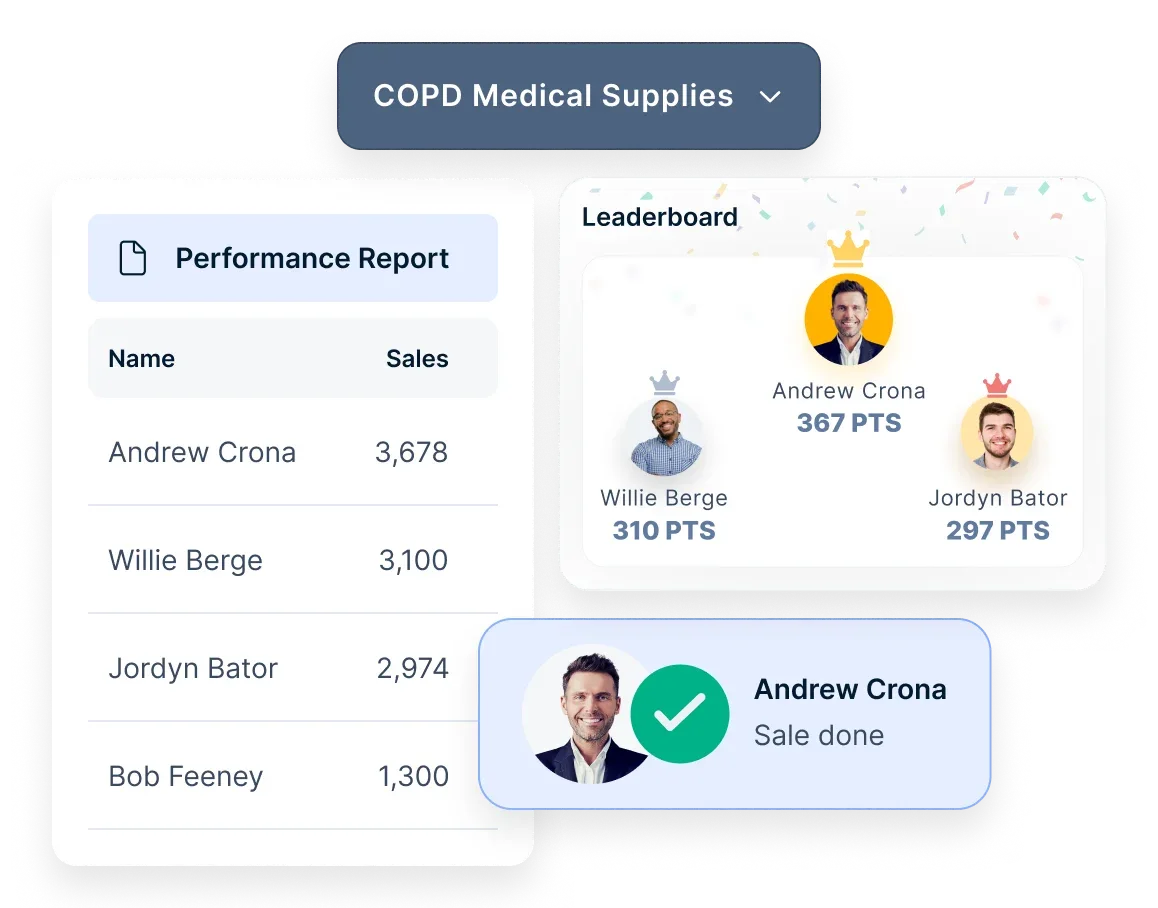
- Any retail plan: Plans and calculations builds flat, tiered, milestone-based and product-mix weighted plans, plans by role or region, and clawbacks for cancelled sales, without code.
- Payouts that fit store teams: Payouts route approved commission to payroll, or by bank transfer, UPI or rewards from the Xoxoday marketplace for SPIFs and contests.
- Motivation on the floor: Sales gamification adds live leaderboards by team, region or plan, plus contests, badges and streaks on web and mobile.
CarDekho, an auto retail platform with 200+ sales users, replaced 15 years of manual commission calculations and email reporting with Empuls and saw gains in program adoption, qualifiers and payouts in under 100 days. To compare tools built for store networks, see our list of the best sales incentive platforms for retail brands.
Build a retail commission plan that keeps your best associates
Retail commission works best when it is simple, fair and visible: associates should know how each sale is credited, how returns are handled and what they have earned so far. Choose the structure that fits your products and margins, calculate it consistently, stay within wage and hour rules and review it every year.
For more on keeping store teams engaged beyond pay, read our guide to employee engagement in the retail industry, and for commission roles outside retail, see our guide to commission based sales reps.
Book your Empuls demo
Frequently asked questions
There is no single typical retail commission rate, because it depends on margin and how much the associate influences the sale. Low-margin, high-volume items usually carry small rates or none, while furniture, appliances, jewelry and cars carry higher rates, often on gross margin. Set yours by dividing target commission earnings by expected sales or margin, then compare with local competitors.
Neither is better everywhere. Hourly pay suits stores where service and teamwork drive sales and individual selling has little effect, such as grocery. Hourly plus commission suits advice-led, high-ticket categories where skilled associates clearly move revenue. Many retailers combine an hourly base with commission or a store bonus to balance security and motivation.
Multiply net sales, or gross margin for margin-based plans, by the commission rate. For example, $32,000 in sales minus $2,000 in returns at 3% gives $900 in commission. For tiered plans, apply each rate only to the sales within its tier and add the results together, then add the total to the associate's hourly pay.
Yes, in the US commission-paid retail employees must earn at least the applicable minimum wage for all hours worked in each workweek. If commission falls short, the employer must make up the difference. Some states and cities set minimum wages above the federal rate, so check the rule that applies where each store is located.
Usually, yes. The federal Section 7(i) exemption removes overtime pay only when an employee works for a retail or service establishment, their regular rate is more than 1.5 times the minimum wage and more than half their pay over a representative period comes from commission. Associates who do not meet all three conditions are owed overtime.
Most retail plans reverse the commission on items returned within the return window, so associates are paid on net sales. The rule should be written into the commission plan before the period starts, including how exchanges and partial returns are handled. Some US states restrict deductions from wages, so confirm your approach complies with local law.
Commission is most common in car dealerships, furniture and mattress stores, major appliance and electronics retailers, jewelry stores, luxury fashion boutiques and department store cosmetics counters. These roles involve high-value products where advice and selling skill strongly influence the sale. Grocery, convenience and most fast fashion roles are usually hourly with team or store bonuses.
Link part of the incentive to customer outcomes such as satisfaction scores and low return rates, reverse commission on returns, set clear ethical selling rules and coach associates on needs-based selling. Team or store commission can also reduce aggressive competition between associates. Recognize good service publicly, not just the highest sales totals.





































































































































































































































































































































































































































































































































































