
Key Takeaways
Sales gamification applies points, badges, leaderboards, contests and milestones to sales work so reps get instant feedback and visible progress.
Salesforce's 2026 research found sellers spend only 40% of their time selling and 46% rarely get feedback, two gaps gamification helps close.
The strongest sales gamification programs reward behaviors that build pipeline as well as closed deals, and scope leaderboards so the middle of the team can win.
Start with one goal and one simple contest, publish the rules up front and refresh the format every few weeks to avoid fatigue.
Gamification complements a fair commission plan; it works on the weeks between payouts, not as a replacement for sound pay.
Sales gamification applies game mechanics such as points, badges, leaderboards, contests and milestones to sales activities so reps get instant feedback, see their progress every day and are rewarded for the behaviors that close revenue. Done well, it lifts performance across the whole team, not just the top ten. Done badly, it rewards a few winners and demotivates everyone else.
This guide explains what sales gamification is, the core elements and benefits, sales gamification examples from real teams, 12 sales gamification ideas you can launch this quarter, a contest planner template and the steps to gamify sales without the game being gamed.
What sales gamification is and why it matters now
Sales gamification is the use of game-design elements, such as points, rankings, challenges, badges and rewards, in the sales process to motivate reps and steer their effort toward specific goals. It turns targets and daily activities into visible scores and achievable milestones, and pays off progress with recognition and incentives while the period is still open.
The need is clear in current data. Salesforce's State of Sales report for 2026, based on a survey of 4,050 sales professionals, found that the average seller spends only 40% of their time selling and that 46% rarely get feedback on their sales conversations. The Ebsta and Pavilion 2025 GTM Benchmarks report found that 78% of sellers missed quota. Gamification addresses both gaps: it gives reps frequent feedback and makes the next achievable goal obvious.
40%
of a seller's time is spent selling
Salesforce State of Sales, 2026
46%
of sellers rarely get feedback
on their sales conversations (Salesforce, 2026)
78%
of sellers missed quota
Ebsta and Pavilion GTM Benchmarks, 2025
The feedback and attainment gaps sales gamification is meant to close
Gamification is not a replacement for a fair commission plan. A commission plan pays for results at the end of the cycle; gamification works on the weeks in between. If the plan itself is confusing, a leaderboard only makes that more visible, so check the signs of a bad sales incentive plan first.
How gamification came to be
The ideas behind gamification are older than the word. In 1978, Roy Trubshaw began building MUD1, the first Multi-User Dungeon, and was soon joined by Richard Bartle. It was a text-based world in which many players shared an online reality. Bartle later studied why people play, and his work on player types still shapes how designers think about motivation.
The term "gamification" gained popularity around 2010, when designers began applying game principles and mechanics to non-game contexts such as marketing, learning and work. Early enthusiasm was followed by many failed projects that added points without purpose. The lesson stuck: today, gamification is valued for its ability to influence behavior and lift productivity in marketing, employee engagement, loyalty programs and especially sales, but only when it is designed around a real goal.
Core elements of sales gamification
Ten elements make sales gamification effective, and achievement, feedback and progression matter most because they show reps what to do next. The others add energy, social connection and personal relevance.
- Achievement: Clear, attainable goals recognized when accomplished, through badges, levels or points that show progress.
- Challenge: Tasks balanced to be neither too easy nor too difficult, so reps stretch without giving up.
- Motivation: A mix of intrinsic drivers, such as mastery and the enjoyment of winning, and extrinsic ones, such as prizes, recognition and bonuses.
- Story: A narrative or theme, such as a quest or a race, that gives a contest context and makes the tasks more meaningful.
- Rewards: Tangible rewards such as gift cards and bonuses, and intangible ones such as recognition and praise, chosen because reps actually value them.
- Feedback: Immediate scores, progress bars or comments that tell reps how they are doing and what to improve.
- Competition: Leaderboards and rankings that create a healthy competitive spirit.
- Collaboration: Team challenges and shared goals that build community alongside competition.
- Customization: Options to set personal goals, choose challenges or personalize a profile.
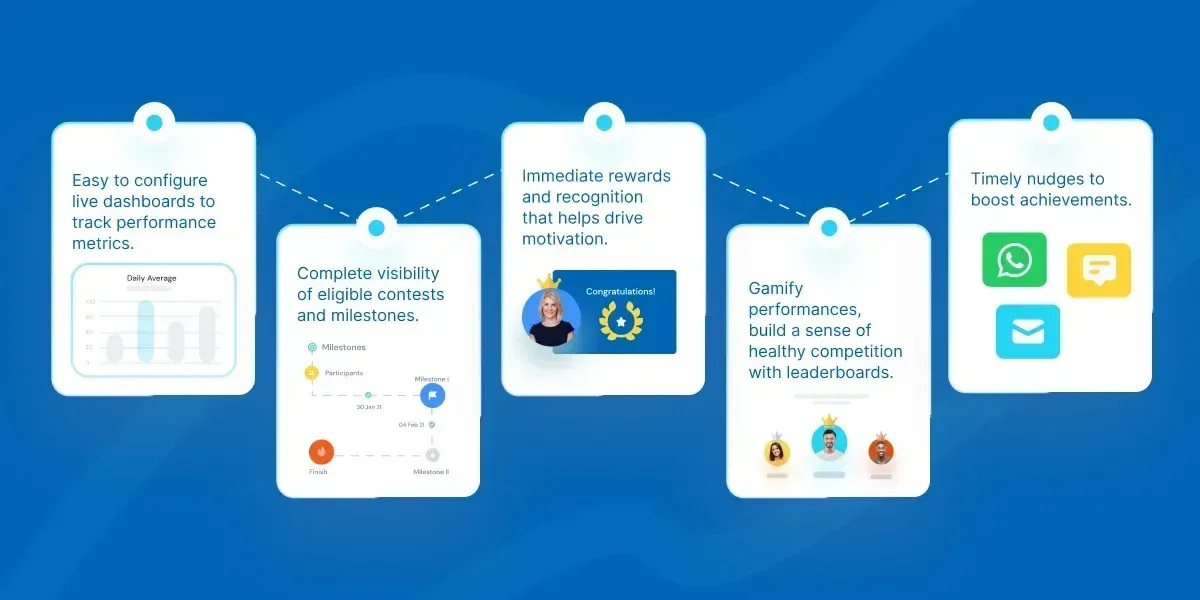
- Progression: Levels and milestones that give reps a road map of what to achieve next and keep them engaged for the long term.
Benefits of sales gamification
The benefits of sales gamification fall into seven groups, listed from the most immediate to the longest term. Real-time visibility comes first because it is what reps notice in the first week, and retention comes last because it builds over months.
- Real-time tracking: Reps see where they are falling behind, what they need to improve and how to reach the next level, while there is still time to act. Managers stop updating spreadsheets and leaderboards by hand.
- Transparency and trust: When everyone can see the same scores and rules, disputes about who earned what fade, and trust grows at every level.
- Fun and excitement in hitting targets: Salespeople are not motivated by commission alone; recognition and winning matter too. Gamification combines all three in one competitive, enjoyable experience.
- Rewards for behaviors, not just numbers: Points for activities such as updating CRM records, booking meetings or following up with customers build the habits that lead to results.
- Better collaboration and communication: Team contests create camaraderie and encourage reps to share what works.
- Faster training and skill development: Quizzes, simulations and role-play games make learning memorable, so reps retain product knowledge longer.
- Higher satisfaction and retention: Regular recognition and fair, visible rewards make reps feel valued, which lowers turnover and the high cost of hiring and ramping new sellers. Our guide to sales team retention strategies covers the wider picture.
Give every rep a leaderboard they can climb
Run scoped leaderboards, SPIFs and contests on your real incentive data, with rewards paid on time.
Talk to our ExpertTrusted by 5,000+ companies
Sales gamification examples from real teams
The four sales gamification examples below show how mechanics translate into behavior, starting with how a leaderboard keeps a top performer motivated. The last one, from an Empuls customer, shows the measurable effect of giving reps real-time visibility.
- Keeping a top performer engaged: Stella has led the team in sales for three months. A visible leaderboard with a clear prize for holding the top spot gives her a reason to keep pushing, and her streak shows peers what is possible, so they join the chase. This compulsion loop of challenge, achievement and reward keeps both sides engaged.
- Points that fit each role: Casey handles overseas accounts and earns 20 points for each appointment set and each opportunity created. John handles headquarters accounts and earns 25 points for each conversion and each completed task. Role-specific scoring keeps the contest fair and lets managers compare effort transparently.
- Gamified onboarding: New sellers are often anxious and eager to fit in. Adding them to a team scoreboard with starter milestones, such as first demo booked or first deal closed, introduces them to colleagues and gets them productive faster.
- Real-time visibility at CarDekho: CarDekho, a digital auto platform with more than 200 sales users, replaced 15 years of manual commission calculations and email reports with live target dashboards and gamified leaderboards in Empuls. According to the CarDekho case study, incentive program adoption rose 20% and qualifiers rose 18% in under 100 days.
For gamification examples beyond sales, from Duolingo to frontline attendance programs, see our roundup of gamification examples.
12 sales gamification ideas for teams
These 12 sales gamification ideas, from simple leaderboards to sales team games such as fantasy leagues and escape rooms, double as sales contest ideas for any quarter. Start with the first three if you are new to gamification, because they need the least setup and show results within a few weeks.
- Leaderboards and competitions: Show sales performance on a shared digital board or office screen, set clear goals and reward top performers. Scope boards by team or region so more reps have a realistic shot.
- Badges and rewards: Award badges for milestones such as closing a high-value deal, hitting a target or exceptional teamwork. Collecting badges can unlock bigger rewards.
- Collaborative challenges: Set a team target for a period and reward everyone when it is reached, so stronger reps help newer ones.
- Team challenges with real-time updates: Run time-bound team contests, such as most calls made or most revenue generated this week, with live progress so teams can see how they compare.
- Sales bingo: Give each rep a bingo card of tasks, such as upselling a product, closing within a set time or booking a meeting with a key prospect. The first to complete a line or the full card wins.
- Sales simulations and role-playing: Recreate real situations, such as objection handling or difficult negotiations, and score them, so reps practice safely and get feedback.
- Sales training games: Turn product knowledge and technique training into interactive games with immediate feedback, which improves retention and application.
- Gamified training quizzes: Run regular quizzes on products, techniques or industry trends with a leaderboard for top scorers. A 2025 field experiment with 147 telecom sales agents, published in the Journal of Personal Selling and Sales Management, found that adding a competitive quiz after virtual training raised enjoyment, training motivation and knowledge retention.
- Fantasy sales league: Participants draft virtual teams of real reps and earn points from their reps' revenue, deals closed or leads generated. It gets people analyzing sales data and cheering for colleagues.
- Sales escape room: Teams solve sales-themed puzzles against the clock, such as negotiating with a tough prospect or spotting upsell opportunities, building teamwork and problem-solving.
- Sales auction: Reps earn points for hitting targets, then bid them on rewards in a periodic auction, so each person chooses the reward that motivates them most.
- Collaborative quests: Break a large goal into milestones assigned across the team. Each completed task advances the quest and unlocks new challenges or rewards.
Sales contest planner template with worked examples
Use this planner to design your next sales contest: each row is a ready-to-run contest with its goal, mechanic, scoring and reward. Copy the row closest to your goal, adjust the thresholds to your data and pilot it for one cycle.
| Goal | Contest | Who plays | Duration | Scoring | Reward | Success metric |
|---|---|---|---|---|---|---|
| More pipeline | Meeting sprint race | SDRs, by team | 2 weeks | 10 points per qualified meeting, 5 per follow-up logged | Team lunch plus individual gift cards for top 3 | Qualified meetings vs baseline |
| Launch a new product | Product launch SPIF | All AEs | 30 days | Fixed bonus per unit sold, double after 5 units | Cash or catalog reward per unit | Units sold and attach rate |
| Lift the middle of the team | Personal best challenge | Reps between 40% and 80% of quota | 1 month | Points for beating own last-month number | Badge plus reward choice for everyone who beats it | Share of reps above prior month |
| Clean CRM data | Data hygiene bingo | All reps | 1 week | One square per completed update: next steps, close dates, contacts | Small prize for a line, bigger for a full card | Opportunities with complete fields |
| Faster ramp for new hires | Onboarding quest | New hires | First 90 days | Badges for first demo, first proposal, first close | Certificate plus welcome reward at each level | Time to first deal |
| Product knowledge | Weekly quiz league | All customer-facing sellers | 6 weeks | Points per correct answer, bonus for streaks | League winner trophy and points | Quiz scores and win rate on featured product |
For a deeper library of contest formats, our guide to sales gamification software includes a launch checklist and an evaluation scorecard.
How to lift mid and tail-end performers with gamification
Most sales teams have a few top performers, a large middle and a group of low performers, and how you manage the bottom two groups has the biggest effect on overall results. Five tactics help gamification reach them instead of rewarding only the leaders.
- Segment before you compete: Group reps by tenure, territory or past performance, so each leaderboard pits comparable people against each other.
- Cascade game templates: Use each rep's previous performance as the baseline for the next program, so goals rise gradually and stay achievable.
- Pair improvement plans with nudges: For reps on a performance improvement plan, publish milestones with timely nudges that celebrate progress rather than only flagging gaps.
- Experiment with payouts: Test reward combinations, such as richer rewards for improvement, to see what moves lower performers most.
- Run everything from one channel: Design, publish and roll out programs across the organization from a single platform, so every rep sees the same rules and progress.
Five sales gamification strategies that sustain performance
Five strategies keep sales gamification effective after the novelty fades, and aligning rewards with business goals matters most because it is what makes winning the game the same as doing the job well. The other four keep motivation fresh and visible.
- Raise the intensity of rewards as levels go up: The same reward repeated loses its pull over time. Bigger or less predictable rewards at higher levels keep reps chasing the next goal.
- Align rewards with organizational goals: Award points for the daily activities that matter, such as entering lead data, advancing meeting stages, upselling and prospecting, with increasing rewards for each step, so reps see that winning the game ticks off their real to-do list.
- Encourage self-worth: Visual leaderboards, shareable wins and celebrations of small achievements build confidence and positive team spirit.
- Use real-time dashboards: Show KPIs, remaining targets and bonuses as levels to unlock and badges to earn, instead of static spreadsheets and charts.
- Measure with automated tools: Track participation, games played and the effect on performance automatically, so you can refine contests with data rather than guesswork.
How to gamify sales in seven steps
The seven steps below combine what works for setting up any sales gamification program, and setting clear goals comes first because every mechanic and reward should trace back to them. Involve reps early, because a game they help shape is a game they will play.
- Set clear goals: Define the business outcome, such as pipeline, a product mix or faster ramp, and explain the purpose and rewards so reps understand why the game exists.
- Know your audience: Channel partners, field sellers and inside sales teams respond to different mechanics. Run a short survey to learn what your reps want from a gamified program.
- Establish rules and processes: Publish the criteria for winning, qualification rules and reward structures before the contest starts, so the competition is fair.
- Start simple: Launch a short contest, such as most meetings booked this week, to test engagement and earn quick wins.
- Customize dashboards and leaderboards: Configure scorecards, nudges, notifications, groups and incentive parameters for each team rather than using one board for everyone.
- Offer meaningful rewards: Mix recognition, monetary rewards and experiences, and reward behaviors as well as numbers so reps learn which inputs drive results.
- Track, learn and refresh: Monitor participation, leaderboard activity and performance against baseline, gather feedback and add new challenges or change difficulty to keep the program fresh.
Remote and distributed teams can play too: run leaderboards, contests and recognition in a shared digital platform and deliver updates where reps already work, such as Slack, Microsoft Teams or WhatsApp.
Choosing sales gamification software
Spreadsheets cannot keep leaderboards live or pay rewards on time, so most teams move to sales gamification software once they run more than one contest at a time. Look for live data from your CRM, scoped leaderboards, configurable contests and SPIFs, mobile access, nudges and integrated reward payouts. Our comparison of the best sales gamification software reviews 12 platforms against these criteria.
How Empuls helps sales teams play to win
Empuls ties sales gamification to your real incentive plans, so every leaderboard, contest and badge runs on the same data that calculates and pays incentives. Sales professionals see their rank, earnings and what the next deal adds on web and mobile, while managers launch contests without redesigning the base plan.
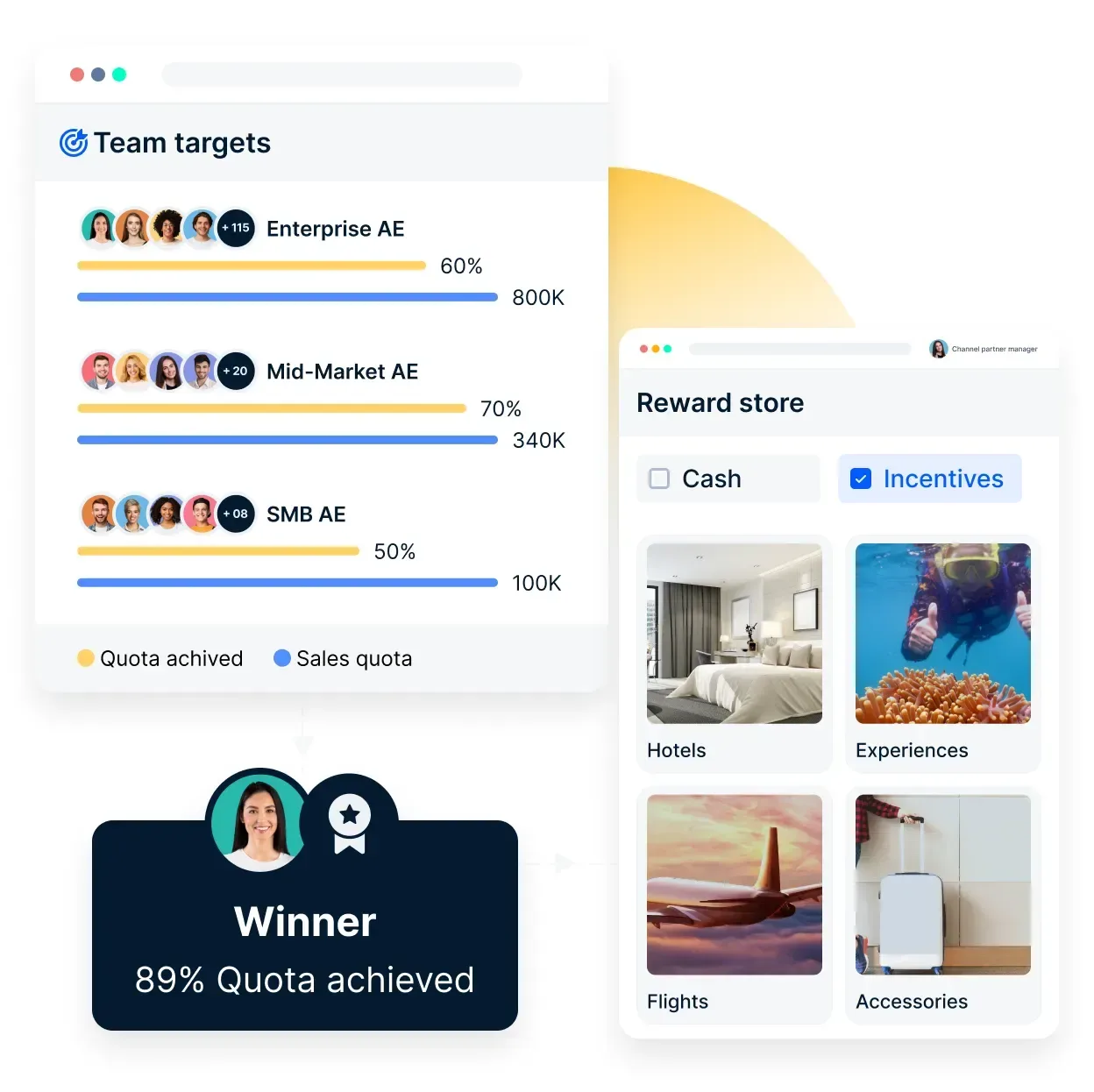
- Run live leaderboards scoped by team, region or plan, plus SPIFs, contests, badges and streaks, with Empuls sales gamification.
- Launch contests from pre-built templates for new logos, renewals, upsell and product launches through Empuls challenges and contests.
- Automate incentive calculations and payouts so contest rewards arrive on time with Empuls sales incentives.
- See how Empuls supports revenue teams end to end in Empuls for sales.
Making sales gamification work for your team
Sales gamification works when it gives every rep timely feedback, a realistic goal and a reward worth chasing. Start with one goal and one contest from the planner, scope leaderboards so the middle of the team can win, reward the behaviors that build pipeline as well as closed deals, and refresh the game before it goes stale. Measure the outcome against a baseline, not just participation, and you will know quickly which ideas to scale.
Book your Empuls demo
Frequently asked questions
Sales gamification means turning sales goals and activities into a game, with points, badges, leaderboards, contests and rewards. Reps earn points for actions such as booking meetings or closing deals, see where they rank in real time and win recognition or prizes for hitting milestones, which keeps them motivated between commission payouts.
It can, when it is tied to clear goals and fair rewards. Gamification gives reps faster feedback and visible progress, and Empuls customer CarDekho saw incentive program qualifiers rise 18% in under 100 days after adding live dashboards and leaderboards. Results depend on design: scoped leaderboards and behavior-based scoring work better than a single company-wide ranking.
Common examples include live sales leaderboards, short SPIFs on a new product, sales bingo cards of target activities, team revenue races, quiz leagues on product knowledge, fantasy sales leagues and onboarding quests with badges for a new hire's first demo, proposal and close. Many teams run several at once on different goals.
The four phases are onboarding, engagement, mastery and endgame. Onboarding introduces the rules and goals. Engagement keeps people playing through challenges, rewards and leaderboards. Mastery helps players refine skills and strategies. Endgame sustains long-term motivation for experienced players by evolving incentives, status and recognition so the program does not go stale.
Yu-kai Chou's Octalysis framework lists eight core drives: epic meaning and calling, development and accomplishment, empowerment of creativity and feedback, ownership and possession, social influence and relatedness, scarcity and impatience, unpredictability and curiosity, and loss and avoidance. Good sales games combine several, such as accomplishment through milestones and social influence through team leaderboards.
Yes. Remote and distributed teams can use digital leaderboards, online contests and virtual quizzes, with updates and recognition delivered in tools they already use, such as Slack, Microsoft Teams, email or WhatsApp. Clear rules, live scores that everyone can access and regular team challenges keep remote sellers connected and competitive.
A sales contest is a single, time-bound competition with a prize, such as a monthly SPIF. Sales gamification is the broader, ongoing system of game mechanics, including points, badges, levels, leaderboards, nudges and contests, built into daily sales work. Contests are one tool within a gamification program.
Scope leaderboards to comparable peers, add personal-best goals so reps compete with their own last result, and reward behaviors such as meetings booked and CRM updates, not only closed revenue. Team challenges and milestone rewards that everyone can reach also help, so the game is not just a ranking of the same top performers.





































































































































































































































































































































































































































































































































































