
Key Takeaways
Sales performance management is a strategic approach to planning, measuring, rewarding and improving sales performance through quotas, incentives, coaching and data.
SPM has five components: sales planning, incentive compensation, sales insights, coaching and development, and engagement and recognition.
Varicent's 2025 research found 69% of sellers say their quota does not feel equitable and 75% do not understand how it was set, so explaining quotas is a quick win.
Track quota attainment, share of reps at quota, win rate and pipeline coverage monthly for every rep, and use the rest of the scorecard to diagnose why numbers move.
Most SPM programs fail in the rollout, so check data quality, phase the launch and train managers before the first payout.
Sales performance management done right connects four things most companies run separately: the plan (territories and quotas), the pay (incentives), the people (coaching and feedback) and the proof (data on what is working). When those four share one set of goals and one source of data, sellers know what is expected, trust how they are paid and get help where they are stuck. This blueprint shows how to build that system, step by step.
Sales performance management (SPM) is a strategic approach to planning, measuring, rewarding and improving the performance of a sales team. It covers territory and quota planning, incentive compensation, goal tracking, coaching and analytics, and it usually runs on software that connects CRM, HR and payroll data. The aim is simple: a sales team that is motivated, aligned with business objectives and improving every quarter.
Why sales performance management matters now
Hitting the number has rarely been harder. Xactly's 2025 Sales Compensation Report found 87% of sales teams struggle to meet or exceed quota, and more than half of respondents named external economic conditions as a factor, according to the Xactly press release.
Much of the gap sits inside the company, not in the market. Varicent's 2025 Market Spotlight, The Status Quo Trap, surveyed more than 1,400 C-suite, revenue and operations leaders and found sellers doubt the fairness of their targets and get far less coaching than they want.
87%
of sales teams struggle to meet or exceed quota
Xactly, 2025
69%
of sellers say their quota does not feel equitable
Varicent, 2025
75%
of sellers do not understand how their quotas were set
Varicent, 2025
25%
of sellers get the real-time coaching 79% say helps them
Varicent, 2025
The performance gaps sales performance management is built to close
Each of those numbers maps to a part of SPM. Unfair or unexplained quotas are a planning problem. Low trust in pay is an incentive problem. Missing coaching is a people problem. And not knowing which of these is hurting most is a data problem. Varicent also found 82% of sellers say plans that reward behaviors beyond closing deals are more motivating, yet only 31% say their plan works that way today.
The components of sales performance management
A useful way to think about SPM is through the questions every sales leader has to answer: where to sell, how to sell, what to sell and how well the team is doing it. The five components below answer those questions, and each needs an owner.
| Component | Question it answers | What it includes | Typical owner |
|---|---|---|---|
| Sales planning | Where should we sell? | Account segmentation, territory design, capacity planning, quota setting | Sales ops, RevOps, finance |
| Incentive compensation | How do we want people to sell? | Commission structures, bonuses, SPIFs, accelerators, payouts | Sales ops, finance, HR |
| Sales insights | What should we sell, and to whom? | Pipeline, deal size, win rate and product mix analytics | RevOps, sales leadership |
| Coaching and development | How do we close the skill gaps? | Deal reviews, call coaching, training, mentoring, feedback | Frontline sales managers |
| Engagement and recognition | How do we keep effort high between paydays? | Leaderboards, contests, recognition, rewards | Managers, sales enablement |
Sales planning: Poor territory and quota planning quickly leads to low morale and sales attrition, which is costly to replace. Planning segments the market, sets quotas and capacity, and allocates territories, then aligns the team to that segmentation.
Incentive compensation: Incentive structures steer behavior. The best let sellers maximize their earnings while advancing the company's goals. Keep structures flexible enough to respond to market changes, but do not change them so often that sellers are confused. For the formula mechanics, see these sales commission structures.
Sales insights: Modern SPM software captures data from across the sales organization and delivers the right view to each stakeholder, so leaders can improve average deal size, win rate and deals closed.
How to implement a sales performance management strategy in 6 steps
A sales performance management strategy works when it is built in this order: measures first, buy-in second, then skills, feedback, rewards and review. Skipping buy-in is the most common reason a new SPM program feels like surveillance instead of support.
- Choose the metrics that reflect success: Pick a small set that matches your goals: productivity measures such as the share of time spent selling versus on admin, conversion rate (the percentage of leads each rep converts) and quota attainment (the share of target reached over a period). Quota attainment also shows whether goals are too aggressive, too easy or about right.
- Get your sales team's buy-in: Share the goals and the metrics before the period starts, explain how quotas were set and let reps push back. Then either adjust the metric or show how it ties to company objectives. Involving reps in goal setting from the start raises ownership.
- Build the skills the metrics demand: Ask each rep which skills they want to improve, then use that interest to build the skills the goals require, through coaching tools, mentors or a peer who excels in that area.
- Give regular, individual feedback: Review each rep against their documented goals, the actions they took after previous feedback, the strengths behind their wins and specific areas to improve, ending with a clear summary of whether they met, missed or exceeded expectations.
- Tie rewards to the right behaviors: Pay and recognize the outcomes and the leading behaviors you measured. For ideas by goal, see these sales incentive ideas.
- Review and adjust each quarter: Check which plans, territories and coaching efforts moved the metrics, and change what did not, with notice and a clear reason.
See incentives, analytics and gamification on one plan
Watch a real incentive plan calculated, tracked on a leaderboard and paid out in Empuls.
Talk to our ExpertTrusted by 5,000+ companies
Sales performance metrics scorecard with formulas
These eight metrics cover the four parts of SPM without drowning managers in dashboards. Track the first four for every rep every month, and use the rest to diagnose why a number moved.
| Metric | Formula | What it tells you |
|---|---|---|
| Quota attainment | Closed revenue ÷ quota × 100 | Whether reps and quotas are well matched |
| Share of reps at quota | Reps at or above 100% ÷ total reps × 100 | Whether the plan and quotas are realistic for the team |
| Win rate | Deals won ÷ (deals won + deals lost) × 100 | Selling skill and lead fit |
| Pipeline coverage | Open pipeline value ÷ remaining quota | Whether there is enough pipeline to hit the number |
| Conversion rate | Leads converted to customers ÷ leads worked × 100 | Lead quality and follow-up |
| Average deal size | Closed revenue ÷ deals won | Pricing, discounting and product mix |
| Sales cycle length | Average days from opportunity created to closed won | Process friction and deal complexity |
| Selling time share | Hours on selling activity ÷ total hours × 100 | How much admin and process load sellers carry |
Worked example: A rep with a $600,000 quarterly quota closes $540,000 from 12 deals won and 18 lost, with $450,000 of open pipeline for next quarter's $600,000 quota. Quota attainment is $540,000 ÷ $600,000 = 90%. Win rate is 12 ÷ 30 = 40%. Average deal size is $540,000 ÷ 12 = $45,000. Pipeline coverage is $450,000 ÷ $600,000 = 0.75, well short of the 3x coverage that sales leaders often use as a rule of thumb, so the coaching focus for next quarter is prospecting, not closing.
For 15 ways to move these numbers once you can see them, read how to improve sales performance.
How sales performance management builds accountability
A strong SPM framework makes every rep and manager own their part of the number. These seven practices create that accountability, and the first two matter most because nothing else works without clear, visible goals.
- Set clear expectations: Define what success looks like and set SMART targets (specific, measurable, achievable, relevant and time-bound) so progress is easy to track.
- Make performance tracking transparent: Let reps see where they stand in real time and how their work contributes to company goals.
- Give constructive feedback: Keep it specific, actionable and focused on behaviors that can change, and make it a two-way conversation.
- Encourage self-assessment: Regular reflection helps reps spot their own strengths and gaps before a manager has to.
- Use data and analytics: Patterns in individual and team data guide decisions on resources, training and strategy.
- Reward and recognize performance: Financial incentives and public recognition reinforce the behaviors you want. Celebrate small wins, not just quarter-end results.
- Keep learning continuous: Regular training and access to resources help reps adapt as buyers and markets change.
Sales management styles and what each needs from SPM
SPM works through managers, and managers have different styles. Steve W. Martin's widely cited Harvard Business Review research described seven sales manager styles; the table shows where each tends to struggle and how SPM helps.
| Style | Typical behavior | How SPM helps |
|---|---|---|
| Mentor | Sales expert who measures success by team targets and each rep's growth | Coaching data shows where each rep needs help most |
| Expressive | People-focused, encourages openness, can be firm when needed | Objective metrics keep feedback balanced and fair |
| Sergeant | Rallies the team to work harder, fiercely loyal to the team | Clear goals and visible progress channel the push into the right activity |
| Teflon | Agreeable and above office politics, but distant from the team | Regular one-on-ones and shared dashboards build connection |
| Micromanager | Methodical, wants things done their way, strong on targets | Real-time visibility reduces the urge to check every deal manually |
| Overconfident | Strong in front of customers, closed to feedback | Data on team results makes performance conversations two-way |
| Amateur | Uncomfortable in the role while building management experience | A defined process and metrics give structure while they learn |
Success factors for rolling out sales performance management
Most SPM failures come from the rollout, not the idea. These nine factors decide whether the program sticks, and data quality is the one teams most often underestimate.
- Scope the project accurately: Involve internal teams at every stage and write down the assumptions made at each step.
- Prioritize requirements: Rank your goals and roll out in phases, solving the biggest pain first to limit risk.
- Check data quality before launch: Incentive data must be complete, consistent and accurate, or trust breaks on the first statement.
- Calculate total cost of ownership: Include implementation, integrations, training, upgrades and admin time, not only licenses.
- Choose a solution that scales: It should handle growing data volumes and more complex workflows as you add teams and regions.
- Name a skilled project manager: On your side and the vendor's, to avoid delays and extra cost later.
- Train managers and reps: Tools for scheduling targeted coaching, giving feedback and analyzing results only help if people use them.
- Keep compensation plans flexible: The best systems let your team change plans without IT, through an intuitive builder.
- Use reporting to motivate: A clear breakdown of how each payout was calculated cuts disputes, and real-time attainment shows reps exactly how close they are.
Five sales problems that management by process solves
Good sales performance management replaces heroics with repeatable process. These five problems show up in most teams that rely on individual effort alone.
- Ignoring customer needs: Reps who deliver a script instead of listening waste time and irritate prospects. Coaching on discovery and qualifying fixes this faster than more activity targets.
- Adding to sellers' workload: Tools meant to help, like a CRM that adds reporting steps, can backfire. Design every process so it adds value for the rep as well as the manager.
- Assuming instead of using data: Gut instinct has its place, but not where data already points the other way. Base decisions on field data.
- Following process to a fault: The process exists to win customers, not for its own sake. Ask reps where they struggle most, finding, closing or keeping deals, and treat skipped steps as a signal.
- Managing for results instead of deal flow: If a manager has to touch every deal, results depend on one person. People-independent processes keep deals flowing now and later.
Sales performance management software makes these processes easier to run at scale. To compare platforms, use this buyer's guide to choosing sales performance management software, which includes a weighted vendor scorecard.
How Empuls supports sales performance management
Empuls covers the incentive, visibility and motivation side of SPM on one platform, so the plan reps are paid on is the same plan they see and compete on. Admins build commission, target and milestone plans in a no-code plan builder, and calculations run automatically from validated CRM, ERP and HRMS data.
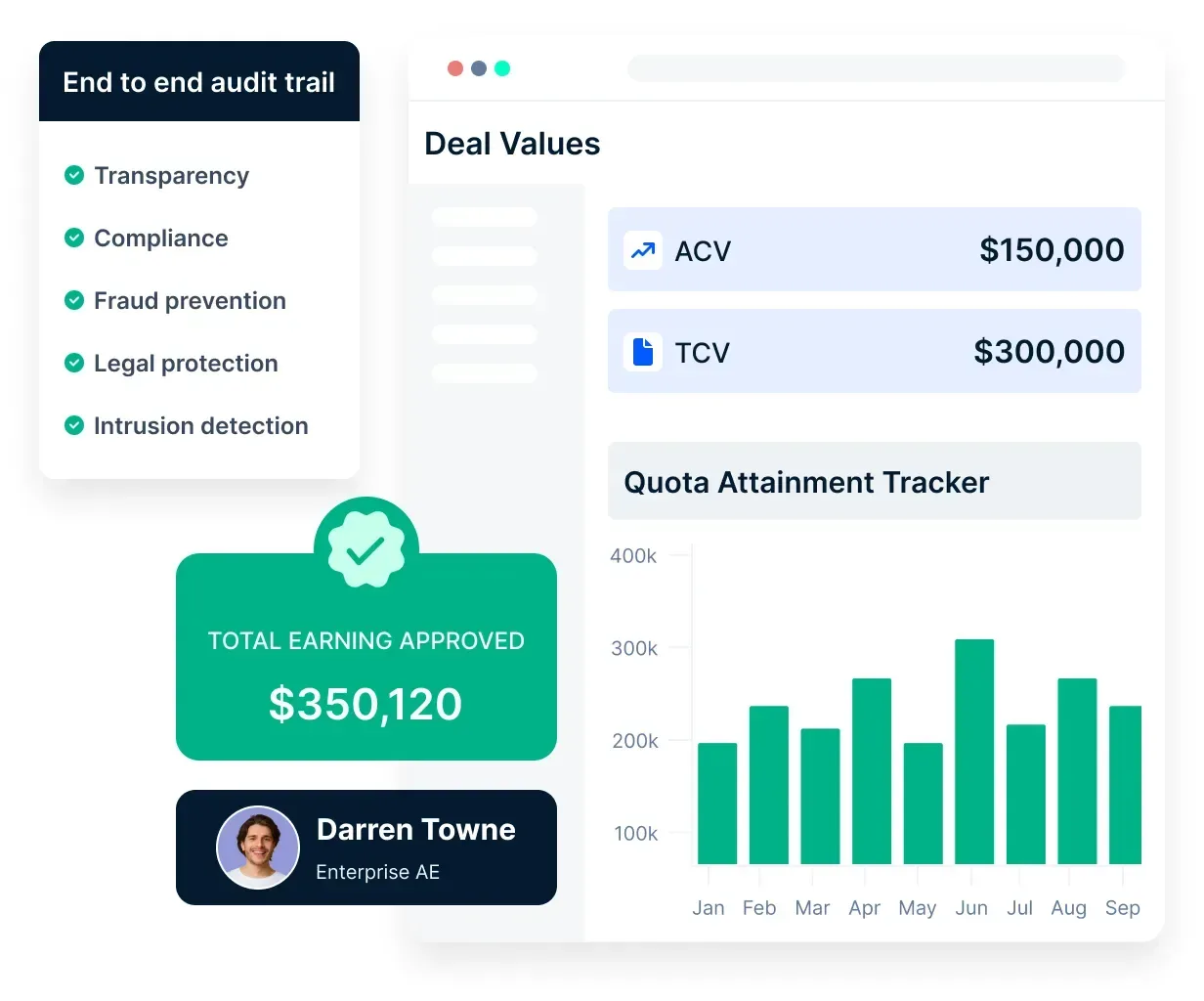
- Incentive compensation: Tiers, slabs, splits, overlays, clawbacks and mid-cycle target changes, with an audit trail on every calculation. See plans and calculations.
- Performance analytics: Payout accuracy, quota attainment and plan effectiveness on your incentive data. See sales intelligence.
- Engagement: Live leaderboards, SPIFs, contests, badges and streaks tied to real plans. See sales gamification.
- Payouts: Multi-level approvals, anomaly checks before payout and payroll integration. See payouts.
Mercedes-Benz India automated incentives across 33 franchises and reached 99.9% calculation accuracy, a 75% reduction in incentive processing time and 40% fewer payment disputes, according to the Mercedes-Benz India case study. To estimate what that could mean for your team, try the sales incentive ROI calculator.
Make sales performance management a habit
Sales performance management is not a tool or a yearly planning exercise. It is the habit of setting fair goals, paying for the right behaviors, coaching to the gaps and checking the data every quarter.
Start with the metrics scorecard above, explain every quota and give managers time to coach. For the wider picture, read the guide to sales incentives and the sales motivation guide, and if good reps are leaving, these sales team retention strategies.
Book your Empuls demo
Frequently asked questions
Sales performance management is a strategic approach to planning, measuring, rewarding and improving how a sales team performs. It brings together territory and quota planning, incentive compensation, goal tracking, coaching and analytics so sellers know what is expected, trust how they are paid and get help where they struggle. It usually runs on software connected to CRM, HR and payroll data.
Sales management is the day-to-day leading of a sales team: hiring, assigning accounts, running pipeline reviews and coaching. Sales performance management is the system around it that sets quotas and territories, designs and pays incentives, tracks performance data and links all of it to company goals. Good sales managers use SPM data to decide where to coach and what to reward.
The core metrics are quota attainment, the share of reps at quota, win rate and pipeline coverage, which together show whether goals are realistic and whether there is enough pipeline to hit them. Conversion rate, average deal size, sales cycle length and the share of time reps spend selling help diagnose why those numbers change.
Sales performance management software automates incentive compensation, quota and territory management, performance analytics and often gamification. It pulls data from CRM, ERP and HR systems, calculates commissions and bonuses, routes approvals, shows reps their attainment and earnings in real time, and gives leaders reports on which plans and teams are performing.
It improves results by aligning goals, pay and coaching. Fair, well explained quotas raise ownership, incentives tied to the right behaviors focus effort, real-time visibility shows reps how close they are, and data shows managers where to coach. Fixing those gaps addresses the internal causes of missed targets rather than adding pressure.
Ownership is shared. Sales operations or RevOps usually runs the system, planning and incentive administration. Finance owns budgets, accruals and payout controls, HR covers pay policy and compliance, and frontline sales managers own coaching and feedback. A single executive sponsor, often the head of sales or the CRO, keeps those groups working to the same goals.
Reps should see their attainment and earnings continuously, managers should hold one-on-ones weekly or every two weeks, and formal performance reviews usually happen quarterly. Plans, quotas and territories are typically reviewed each quarter and redesigned once a year, with any mid-year change communicated early and explained clearly.





































































































































































































































































































































































































































































































































































