
Key Takeaways
The defining employee benefits trend of 2026 is cost: US health benefit costs per employee are projected to rise 8.2% in 2027, the most since 2003.
Employers are rebalancing rather than cutting, with 60% increasing benefits investment and 62% expanding non-medical benefits in MetLife's 2026 study.
Hybrid work is the norm for 54% of remote-capable US employees, so benefits need to reach people wherever they work.
Personalization pays off: employees who use five or more non-medical benefits are 38% more likely to feel holistically healthy.
Financial wellbeing is now central, because 59% of employees report financial stress and 49% say pay is not keeping up with costs.
The biggest employee benefits trends in 2026 are rising health costs, flexible and hybrid work, mental and physical wellbeing, personalized benefits, investment in skills and financial wellness. Employers are spending more on benefits while trying to control costs, so the winners are the benefits employees actually use.
Employee benefits trends are the shifts in what employers offer, how they fund it and how employees use it. This guide covers seven trends set to dominate 2026, the data behind each one and what HR leaders can do about them as they plan for 2027 renewals. For the fundamentals, start with this guide to employee benefits.
Employee benefits in 2026 at a glance
Let's start with a reality check. Benefits budgets are under more pressure than at any point in two decades, while employees are more stressed about money than ever, and that tension shapes every trend below.
8.2%
projected rise in health cost per employee
for 2027, after cost cuts (Mercer)
60%
of employers
increased benefits investment (MetLife 2026)
59%
of employees
stressed about finances (PwC 2026)
$28,303
average family health premium
in 2026 (KFF)
Employee benefits trends 2026: the numbers behind the conversation
According to MetLife's 2026 Employee Benefit Trends Study, controlling health care costs is now employers' top benefits objective, ahead of productivity, loyalty and attracting talent, for the first time since 2022. At the same time, 60% of employers increased their benefits investment and 62% expanded non-medical offerings. Employers are not cutting benefits; they are rebalancing them.
Turn 2026 benefits trends into a plan
Offer lifestyle accounts, tax-saving benefits and financial wellness from one platform.
Talk to our ExpertTrusted by 5,000+ companies
7 employee benefits trends that will reshape work life
Seven employee benefits trends follow, ordered from how and where people work to how they protect their health, grow and manage money. Rising healthcare costs (trend 4) carry the most weight in 2026 because they squeeze every other budget line, but flexibility and personalization decide whether employees feel the value.
The concept of employee benefits is no longer confined to the tangible. It now extends into mental health support, work-life balance and financial wellbeing. Whether you are an HR professional, a business leader or an employee trying to understand how benefits are changing, these are the shifts to watch.
1. Hybrid working models stay the default
The remote work shift shows no sign of reversing. The traditional 9-to-5 office model has changed, driven by technology and a better understanding of work-life balance, and hybrid has settled in as the most common arrangement.
Gallup's hybrid work indicator shows that in August 2026, 54% of remote-capable US employees worked hybrid, 25% worked fully remotely and 21% worked on-site. Preferences lean even further toward flexibility: 61% want hybrid and 33% want fully remote work. Formal policies are tightening at the margins, though. SHRM's 2026 Employee Benefits Survey found hybrid work offerings fell 3 points and core-hours flextime fell 6 points, while 27% of employers offer limited-time work-from-anywhere arrangements.
Hybrid work arrangements benefit both sides:
- For employees: Flexibility over where they work brings better work-life balance, less commuting stress and higher job satisfaction. It also respects that different people thrive in different environments.
- For employers: Hybrid models support engagement, improve retention and widen the talent pool. They build a culture of trust and autonomy, and reduced office space can lower costs.
The benefits angle is that flexibility now needs its own support: home office stipends, internet allowances, coworking passes and benefits that reach people wherever they work.
2. Mental wellness becomes a core benefit
The workplace conversation has shifted to acknowledge the role of mental health in performance and retention. The World Health Organization estimates that 12 billion working days are lost every year to depression and anxiety, at a cost of US$1 trillion in lost productivity.
Mental health benefits worth offering include:
- Personal therapy sessions
- Stress management workshops
- Subscriptions to apps for meditation, breathing and better sleep
- Employee assistance programs (EAPs)
- Paid time off and mental health days
- Counseling services
Organizations are pairing these benefits with practical strategies:
- Employee assistance programs: EAPs provide confidential counseling on personal and work-related challenges, from stress to financial worries.
- Awareness and training: Campaigns, workshops and training sessions reduce stigma and increase awareness of mental health issues.
- Manager training: Managers learn to recognize signs of distress and create an open, supportive environment for their teams.
- Regular check-ins: Frequent conversations and feedback help surface concerns before they escalate.
For a deeper look at whole-person wellbeing programs, see these employee wellness trends for 2026.
3. Corporate wellness programs target physical wellbeing
Beyond traditional healthcare, employers are investing in wellness programs because a healthy workforce is a more engaged and efficient one. Physical wellbeing programs promote healthier lifestyles and help prevent health issues, which reduces absenteeism and healthcare costs over time.
There is room to improve. MetLife's 2026 study found only 44% of employees feel holistically healthy, yet those who do are 25% more productive and loyal and take 10% fewer sick days. Corporate wellness programs take many forms:
- Fitness classes and fitness challenges
- On-site gyms or gym memberships
- Nutrition workshops
- Health screenings and on-site or near-site clinics
- Ergonomic office equipment and regular movement breaks
Creative formats help too. Walking meetings encourage movement, and incentives for wellness challenges build friendly competition and camaraderie.
4. Healthcare costs force a rethink of affordability
Affordability is the defining benefits issue of 2026. The KFF 2026 Employer Health Benefits Survey found the average family premium reached $28,303, up 5%, while workers' own contribution rose 9% to $7,471. The average single-coverage deductible climbed to $1,955.
Next year looks harder. Mercer's 2026 National Survey of Employer-Sponsored Health Plans projects an 8.2% rise in health benefit cost per employee for 2027, the biggest jump since 2003, with GLP-1 weight-loss drugs alone adding about one percentage point. Without changes, employers expect 11%, and 59% plan cost-cutting changes such as higher deductibles.
Forward-thinking employers are protecting employees from the worst of it:
- Offer alternative plan designs: High-deductible health plans paired with health savings accounts (HSAs) give employees more control over healthcare spending and tax advantages. The 2026 HSA limits are $4,400 for self-only and $8,750 for family coverage, per the IRS.
- Negotiate with providers: Partnerships with healthcare providers and insurers can secure better rates and steer employees to high-quality care.
- Manage specialty drugs: SHRM's 2026 survey shows prescription coverage bundled with health insurance fell from 93% to 77% of employers, as more turn to third-party pharmacy management.
- Add non-medical protection: Dental, disability, critical illness and hospital indemnity cover fill gaps that high deductibles leave open.
To see how these costs add up per employee, use this guide on how to calculate employee benefits.
5. Personalized perks and lifestyle benefits are in demand
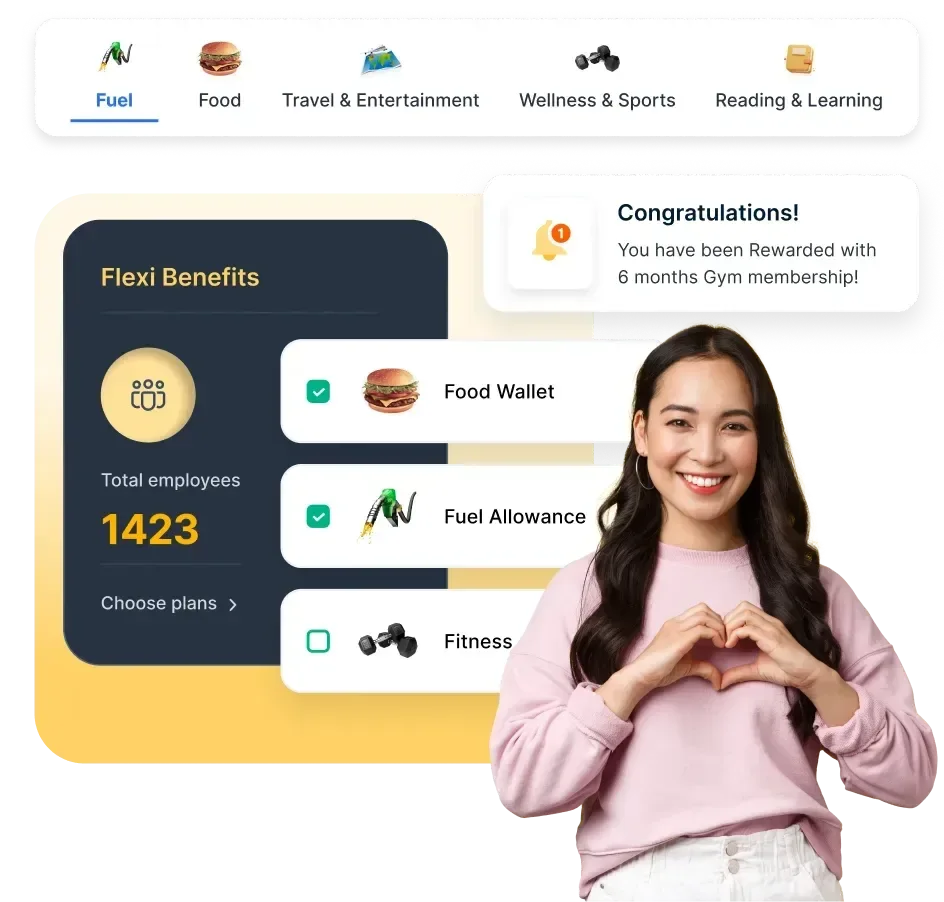
Modern employers recognize that one package cannot fit a diverse workforce, so they are leaning into lifestyle and voluntary benefits that let employees tailor perks to their own priorities. This personalized approach improves satisfaction and makes the workplace more inclusive.
The data supports breadth and choice. MetLife's 2026 study found employees who use five or more non-medical benefits are 38% more likely to feel holistically healthy, rising to 69% for those who use ten or more. Lifestyle spending accounts, which give each employee a budget to spend across approved categories, are one of the simplest ways to deliver that choice.
Designing a benefits package that fits diverse preferences takes a thoughtful, inclusive approach:
- Flexible benefit options: Offer a menu of benefits so employees can choose the packages that suit their needs.
- Wellness programs: Run initiatives for different interests, such as fitness classes, mindfulness sessions or nutrition programs.
- Financial wellbeing support: Include retirement plans, financial counseling and assistance programs for different financial situations.
- Learning and development: Offer training and education benefits that fit different career goals and learning styles.
- Diversity and inclusion: Build policies, such as inclusive family and caregiving benefits, that make every employee feel valued.
- Recognition and rewards: Recognize achievements in ways that respect cultural differences and personal preferences.
- Open communication: Keep listening to how needs change and adapt benefits accordingly.
Family benefits are a clear example of this shift. SHRM's 2026 survey found paid parental leave is now offered by 46% of employers, up 7 points, and paid family leave by 36%, up 5 points.
6. Investment in employee growth keeps rising
Employees want to build skills, stay relevant and progress in their careers, and employers that actively support those goals are better placed to attract, engage and retain talent. Professional development benefits, including training programs, workshops, certifications and educational assistance, raise satisfaction and the capability of the whole workforce.
AI has accelerated this. SHRM's 2026 survey found employer-sponsored AI tool subscriptions doubled from 16% to 33% of employers in a year, the fastest-growing benefit it tracks, while leadership and managerial coaching rose 8 points to 55%.
Key techniques to upskill and reskill employees include:
- Targeted training programs and workshops focused on new or deeper skills
- A mix of in-person and online training for different learning styles
- Subscriptions to online learning platforms or a learning management system (LMS)
- Cross-training that exposes employees to different roles
- Coaching to help employees work through challenges and build role-specific skills
- Paid access to AI tools, with training on how to use them well
7. Financial wellbeing moves to the center
As people manage debt, save for the future and face economic uncertainty, employers are building financial wellness into the benefits package. PwC's 2026 Employee Financial Wellness Survey found 59% of employees are stressed about their finances and 49% say their pay is not keeping up with the cost of living.
Financial stress affects focus, productivity and contribution at work, so financial wellness benefits have become a strategic priority. Employers are adding financial wellness apps, budgeting platforms and retirement planning tools, and some partner with financial institutions to offer lower loan rates or discounted financial planning.
Strategies for promoting financial wellness at work include:
- Financial counseling through an EAP for confidential support and guidance
- Retirement planning resources on employer plans and individual retirement accounts (IRAs)
- Flexible benefits that let employees direct part of their compensation to HSAs, retirement accounts or other priorities
- Earned wage access and short-term emergency loan programs that keep employees away from high-interest debt
- Partnerships with financial wellness platforms for budgeting, goal-setting and progress tracking
- Financial wellness discussions built into onboarding so good habits start early
Emerging employee benefits to watch
Beyond the seven big trends, several emerging employee benefits are moving from niche to mainstream. They show where the future of employee benefits is heading:
- GLP-1 coverage decisions: KFF found 18% of large firms cover GLP-1 drugs for weight loss, and employers are weighing access against cost with stricter eligibility and care programs.
- AI tools as a benefit: Paid access to AI assistants is now offered by a third of employers in SHRM's survey, treated as both a productivity tool and a learning benefit.
- Caregiving support: Paid family leave, backup care and eldercare navigation are growing as more employees care for both children and parents.
- Fertility and family-forming benefits: KFF reports 27% of large firms cover IVF, and demand for broader family-forming support keeps rising.
- Benefits navigation: Single apps and guided enrollment help employees find and use what they already have, which raises the return on every benefit.
What these trends mean for HR leaders
These benefits trends for HR leaders all point to the same task: spend smarter, not just more. Use this table to turn each trend into an action for your next renewal cycle.
| Trend | What is driving it | What to do next |
|---|---|---|
| Hybrid work | 54% of remote-capable employees work hybrid | Offer location-neutral benefits and home office or commuting allowances |
| Mental wellness | 12 billion working days lost to depression and anxiety each year | Fund therapy and EAP access, and train managers |
| Physical wellbeing | Only 44% of employees feel holistically healthy | Run fitness challenges and preventive screenings |
| Healthcare affordability | 8.2% projected cost rise for 2027 | Review plan design, HSAs, pharmacy management and non-medical cover |
| Personalization | 62% of employers expanded non-medical benefits | Add lifestyle spending accounts and choice-based menus |
| Employee growth | AI tool subscriptions doubled to 33% of employers | Fund learning budgets, coaching and AI training |
| Financial wellbeing | 59% of employees are financially stressed | Offer financial counseling, earned wage access and everyday savings |
For how these trends fit into pay, recognition and benefits as one system, see this guide to a total rewards strategy. For lighter, everyday extras, see this guide to employee perks.
How Empuls helps you act on these trends
Empuls, Xoxoday's employee engagement platform, gives HR one place to deliver the benefits these trends call for. Lifestyle spending accounts let employees personalize their budgets, the tax-saving benefits card lifts take-home pay, employee discounts stretch every paycheck, and financial wellness support eases money stress.
Wellness challenges run through Empuls wellness, learning and development benefits support growth, and reports and analytics show which benefits employees actually use, so you can shift budget to what works.
Benefits that follow the workforce
Commitment to employee wellbeing now goes well beyond traditional perks. It reflects a deeper understanding of the varied needs and goals of a modern workforce, and the integration of these employee benefits trends is both a strategic necessity and a signal of how much an organization values its people.
The workplace is no longer just where tasks get done. It is where people look for purpose, growth, security and a sense of belonging, and the benefits you offer are one of the clearest ways to show you understand that.
Book your Empuls demo
Frequently asked questions
The biggest employee benefits trends for 2026 are rising healthcare costs, hybrid and flexible work, mental and physical wellbeing programs, personalized lifestyle benefits, investment in skills and AI tools, and financial wellness support. Underneath all of them, employers are trying to get more value from each benefits dollar rather than simply adding more benefits.
Mercer's 2026 survey projects US health benefit cost per employee will rise 8.2% in 2027 after planned cost-cutting changes, the largest increase since 2003. Without those changes, employers expected an 11% rise. Specialty drugs, including GLP-1 medications, and higher use of care are the main drivers of the increase.
The future of employee benefits is more personal, more flexible and more measured. Expect a protected core of health, retirement and leave, plus flexible budgets employees spend on what they need, delivered through one app. Employers will track utilization closely and shift money away from benefits people do not use.
Emerging employee benefits include paid AI tool subscriptions, caregiving support such as backup care and eldercare navigation, fertility and family-forming benefits, lifestyle spending accounts, earned wage access and benefits navigation tools. Many employers are also making policy decisions on GLP-1 coverage, which is one of the fastest-growing cost drivers in health plans.
Lifestyle spending accounts are popular because they let employees choose how to use a set budget across categories such as fitness, learning, family care or home office setup. Employers get a predictable cost and a benefit that suits every life stage, which tends to raise both usage and satisfaction compared with fixed perks.
Small companies can keep up by focusing on low-cost, high-value benefits such as flexible schedules, mental health days, learning budgets, employee discounts and a modest lifestyle spending account. Pooled or group health plans help manage insurance costs, and a single benefits platform keeps administration simple without adding HR headcount.
HR leaders should start with employee data: survey needs, check utilization and review claims trends. Protect the core benefits first, especially health and income protection, then fund the trends your workforce cares about most. Review results every year and move budget from low-use benefits to the ones employees value.





































































































































































































































































































































































































































































































































































