
Key Takeaways
Sales incentive automation software calculates, approves, pays and reports incentives automatically from CRM, ERP and HR data, with real-time visibility for every role.
The three strongest reasons to invest are better forecasting, lower compensation cost through fewer overpayments, and higher retention with less HR firefighting.
In a 2025 survey, 66% of US B2B companies had overpaid and/or underpaid commissions, and reps rarely report errors in their favor.
A simple ROI model adds overpayments prevented, operations time saved, rep selling time regained and turnover avoided, then compares the total with the platform's annual cost.
Shortlist platforms your own team can configure without code, that pay through payroll and to channel partners, and that keep a full audit trail.
Sales incentive automation software pays for itself in three ways: it improves forecasting by putting every rep's performance history in one system, it cuts compensation cost by stopping overpayments and showing which plans earn their keep, and it reduces turnover and HR workload by making pay accurate and transparent. For a growing sales or channel organization, those three returns usually outweigh the cost of the platform within the first year.
Sales incentive automation software is a platform that calculates, approves, pays and reports sales commissions and incentives automatically from CRM, ERP and HR data, and gives reps, managers, finance and administrators real-time visibility. This post covers why manual incentive management limits growth, three reasons to invest, an ROI model you can fill in, how an incentive automation platform helps each role, and why Empuls is worth a place on your shortlist.
Why manual incentive management limits growth
Incentive programs have long been used to engage, inspire and scale sales and channel partner growth by rewarding the right sales actions at scale. Most companies use a mix of financial and non-financial incentives. Yet many still lack the technology to structure, manage and measure those programs properly, which leads to a skewed picture of sales performance, an inaccurate view of incentive ROI and almost no real-time analysis.
At its simplest, a sales incentive is a percentage of sales revenue or profit. As the organization grows, tiers, bonuses, splits, partner terms and product rules pile on, and the calculation stops scaling. In many companies one or two people in HR or sales operations still run it with spreadsheets and email, which creates four recurring problems:
01 · Process
Unstructured and manual
Spreadsheets and email threads make each cycle labor- and time-intensive, and dependent on one or two people.
02 · Trust
Opaque calculations
Reps cannot see how a number was reached, which creates a crisis of trust in every statement.
03 · Accuracy
Errors and disputes
Human errors and inconsistent judgment calls spark disputes between reps, managers and finance.
04 · Visibility
No real-time view
Reps and managers cannot see targets and earnings mid-cycle, when it would still change behavior.
3 reasons to invest in sales incentive automation software
The three reasons below are the ones that build the business case with leadership, because each lands on a different budget owner: forecasting for sales leaders, cost control for finance and retention for HR. Together they explain why sales automation software benefits reach well beyond the sales team.
1. Better forecasting from one source of performance data
One of the most compelling reasons to invest is forecasting accuracy. When performance and incentive data live in one system, sales leaders get a real historical view of each rep's performance, not just the current quarter. That makes it possible to analyze:
- How each rep's skills and results evolve over time.
- How reps perform when assigned to new territories or products.
- How accurate their past pipeline assessments were.
- Which incentive plans actually moved attainment, and which only moved cost.
Done by hand, these analyses take so long that they rarely happen. With an incentive automation platform, attainment by team, region and plan updates as deals close, and you can simulate a plan or target change on your own data before you launch it. Leaders can coach reps who are falling behind while there is still time, and the whole organization plans resources on better numbers.
2. Lower compensation cost through fewer overpayments
Finance teams are key allies in incentive automation, because it lands directly on cost. Overpayments are common: in CaptivateIQ's 2025 survey of 200+ US B2B leaders, 66% had overpaid and/or underpaid commissions. Reps rarely report an error in their favor, so overpayments tend to stay hidden until someone audits the spreadsheet.
Automated sales commission software stops most of that leakage. Rules are applied the same way every time, anomaly checks run before a payout batch is approved, and clawbacks are calculated when a deal falls through. Putting incentive spend next to the revenue and attainment it produced also shows which plans pay off, so finance can reinvest in the ones that work. In Empuls, for example, sales intelligence checks every payout before approval and flags when payouts concentrate in one tier or region.
3. Higher retention and less HR firefighting
Underpaid reps raise concerns quickly, and in some organizations commission disputes take hours of managers' time every week, creating friction between sales and leadership. The mistrust extends to HR, which has to recruit and onboard replacements when good sellers leave. Recent surveys show how closely pay accuracy and retention are linked:
77%
of sales professionals
have experienced a commission payout error (CaptivateIQ, 2026)
31%
of commissioned sellers
have left or considered leaving over recurring pay errors (CaptivateIQ, 2026)
47%
of sales professionals
say their pay does not always seem fair (Salesforce, 2026)
How incentive accuracy affects sales retention
The figures come from CaptivateIQ's 2026 State of Sales report, a survey of 500 US sales professionals, and Salesforce's 2026 Trends in Sales Compensation report. Accurate, transparent incentives remove one of the most avoidable reasons sellers leave, and give HR time back for broader work. For more on keeping top sellers, see these sales team retention strategies.
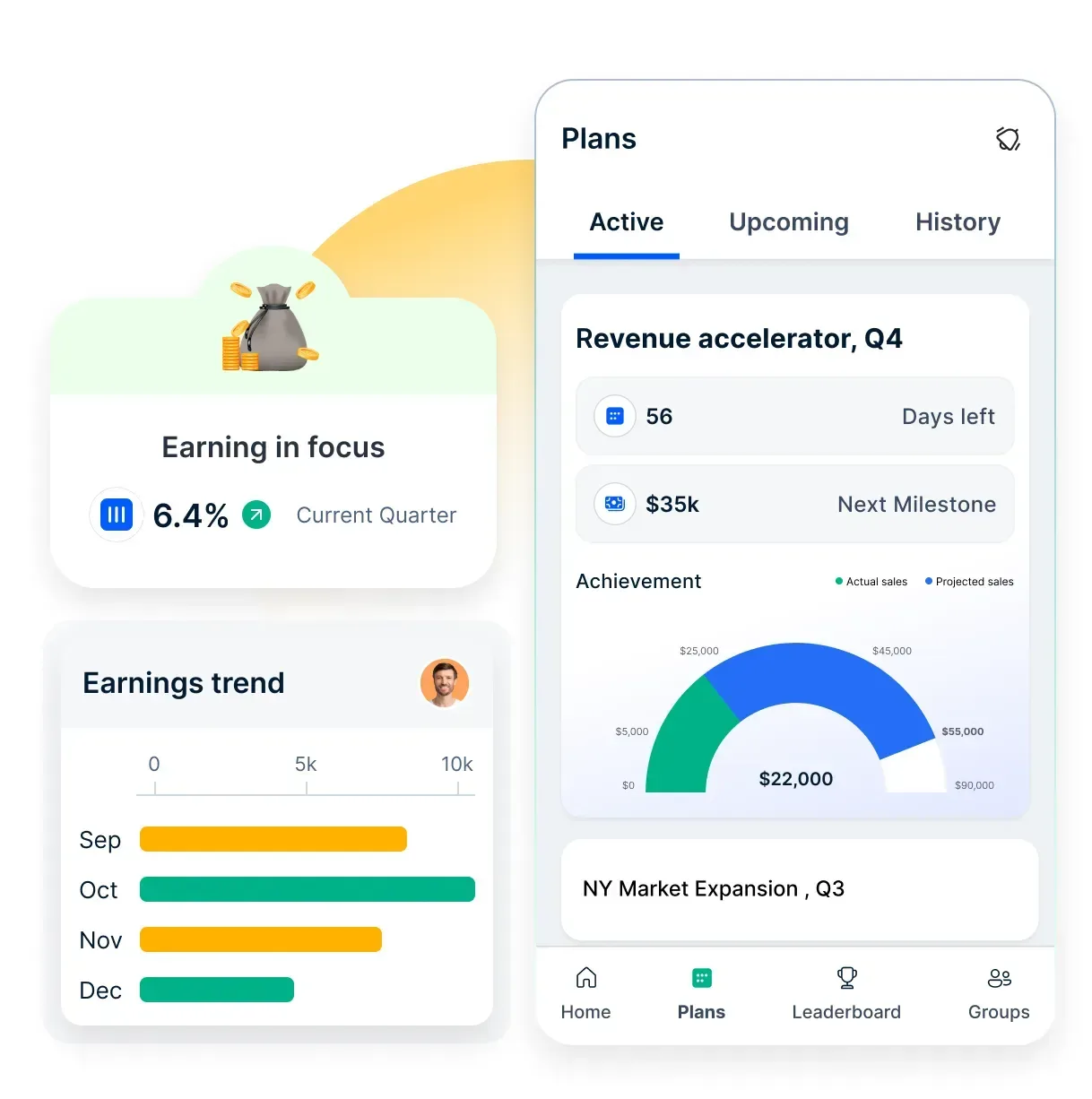
Building the business case for incentive automation?
See Empuls run one of your plans on your own data, and get the numbers you need for your ROI model.
Talk to our ExpertTrusted by 5,000+ companies
Sales incentive automation ROI model
SalesOps and RevOps leaders often weigh the cost of software against keeping one or two people calculating commissions by hand. This model puts the benefits on one page. The example is a team of 100 reps with $3,000,000 in annual incentive spend; replace each input with your own:
| Benefit | Formula | Example | Your number |
|---|---|---|---|
| Overpayments prevented | Annual incentive spend × overpayment rate | $3,000,000 × 2% (assumed) = $60,000 | ______ |
| Operations and finance time saved | Hours per month × 12 × loaded hourly cost | 80 × 12 × $60 = $57,600 | ______ |
| Rep selling time regained | Reps × 1.6 hours a week × 48 weeks × share recaptured × hourly cost | 100 × 1.6 × 48 × 50% × $50 = $192,000 | ______ |
| Turnover avoided | Departures avoided × replacement cost | 2 × $30,000 (assumed) = $60,000 | ______ |
| Total annual benefit | Sum of the lines above | $60,000 + $57,600 + $192,000 + $60,000 = $369,600 | ______ |
| Payback period | Total annual cost of the platform ÷ (total annual benefit ÷ 12) | Annual cost ÷ $30,800 a month | ______ |
In the example, any platform whose total annual cost, including implementation, is below $369,600 pays for itself within a year. Be conservative with the rep time line, since not every saved hour turns into selling. For a guided version with benchmarks, use the sales incentive ROI calculator, and for the operational detail behind each line, see these five ways sales incentive automation boosts productivity.
How an incentive automation platform helps every role
An incentive automation platform does not replace the people who manage incentives; it gives them real-time data so they can do more strategic work. The table shows what changes for each of the four groups involved, from the sales and channel partners being paid to the administrators running the program:
| Role | Before automation | With an incentive automation platform |
|---|---|---|
| Sales reps and channel partners | Wait for statements and rebuild the math in personal spreadsheets | See attainment, earnings and the next milestone in real time, and get paid on time |
| Sales managers | Discover who is behind after the period closes | Track team progress mid-cycle, coach early and run contests on live data |
| Administrators | Collect data, calculate, chase approvals and answer questions | Configure plans without code, automate payouts and measure each plan's impact |
| Finance | Reconcile payroll against spreadsheets and accrue by estimate | Trace every payout to its data, rule and approval, with incentive spend by plan |
Transparency also reduces disputes. When managers can show reps exactly how every closed deal pays, conflicts drop and trust holds, which is what keeps an incentive plan motivating rather than distracting.
Why Empuls is the sales incentive automation software to shortlist
Empuls includes sales incentive and commission software built for enterprise sales, channel and dealer networks. Six capabilities make the case, starting with the one that removes vendor dependence: your own team can build and change plans.
No-code plans your team controls
Admins build commission, target and milestone plans in a no-code plan builder, combining fields, functions and IF, THEN and ELSE logic. Plans run by role, region or department on weekly, monthly or custom cycles, and an estimator shows payout impact before a plan goes live. Only a few advanced setups, such as cascading plans, are switched on by the Empuls team on request.
Data connected at the source
Empuls connects to CRM, ERP and HRMS systems such as Salesforce, HubSpot, SAP SuccessFactors and Oracle, as well as data lakes and file uploads, and validates inputs on the way in so errors are caught before any calculation runs.
Payouts to payroll in any country
Approved incentives go through the approval levels you set, with pre-payout anomaly checks, then to payroll systems such as ADP and Workday. Where payroll is not the route, payouts go by bank transfer, UPI or rewards in 50+ currencies, and channel partners, dealers, distributors and agents are paid through the same platform as employees.
AI that protects the budget
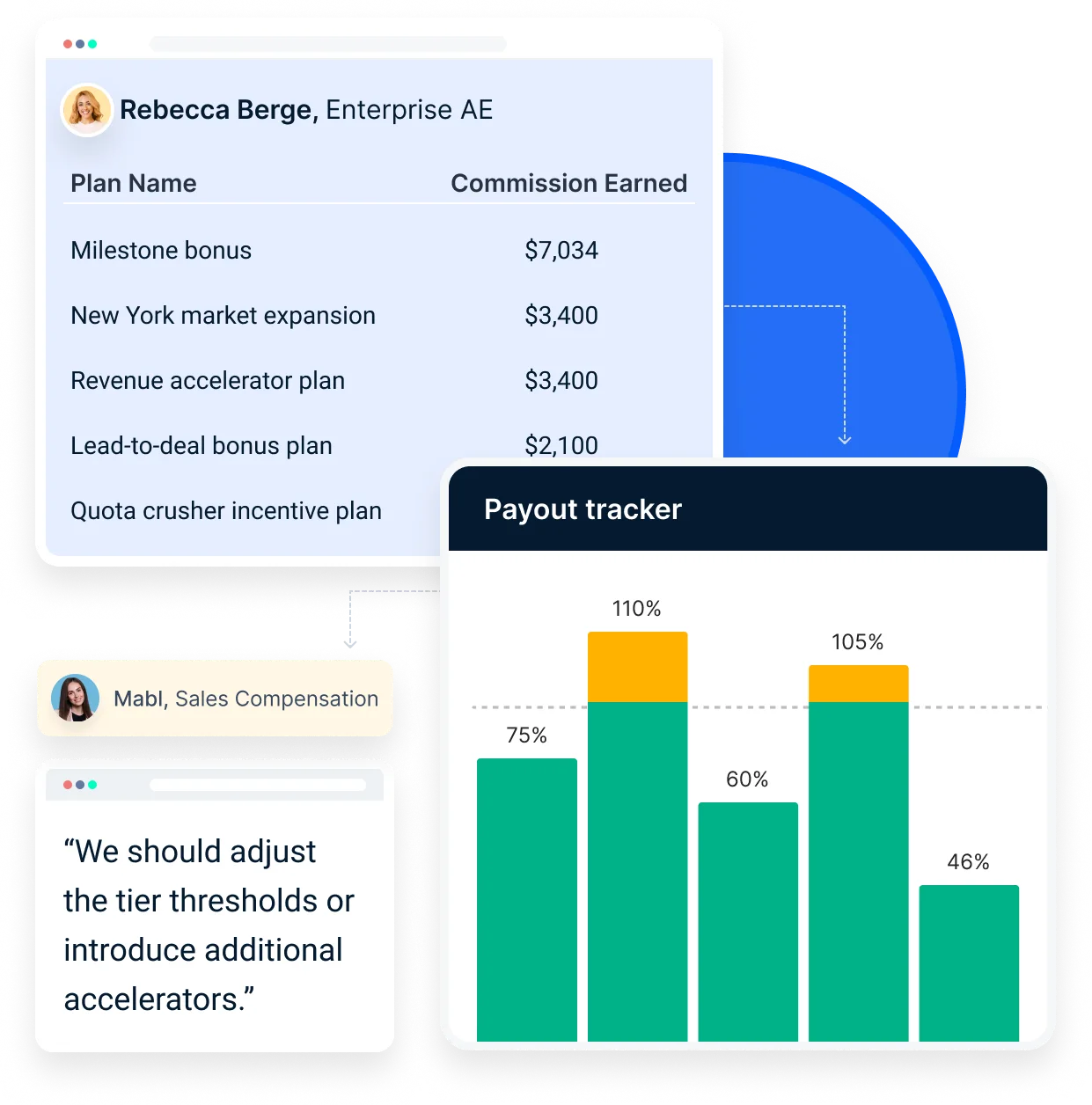
AI for sales incentives recommends plan structures by role, flags overpayment risk, loopholes and gaming behavior before the payout batch, and answers reps' earnings questions in plain language. AI recommends; your admins decide.
Gamification on the same data
Live leaderboards, SPIFs, contests, badges and streaks in sales gamification run on the same plan data, on web, mobile and in Slack or Teams, so the middle of the team has something to chase too.
Enterprise security and fast rollout
Xoxoday is SOC 2 Type II and ISO 27001:2022 certified, with role-based access and a full audit trail. Most enterprise teams go live in 4 to 8 weeks, running plans alongside the existing spreadsheet before the first live payout. Customers report results like these:
| Customer | Scale | Results with Empuls |
|---|---|---|
| Mahindra Finance | 20,000+ sales professionals, 12 lines of business | 99% faster incentive processing, 85% fewer incentive queries to finance and HR, 30% boost in sales performance |
| Mercedes-Benz India | 33 franchises | 99.9% calculation accuracy, 75% less processing time, 40% fewer payment disputes (case study) |
| Wonder Cement | 5,000+ dealers, ₹400Mn in incentives a month | 99% faster processing, 98% fewer calculation errors, 25% more incentive qualifiers |
If you are still comparing options, this guide to the best incentive management software and the list of best sales commission software set out what to look for. For channel programs specifically, see this guide to channel incentive programs.
Book your Empuls demo
Frequently asked questions
An incentive compensation management (ICM) tool automates the calculation, tracking, approval and payment of incentive pay such as commissions and bonuses. It connects to CRM and HR data, applies plan rules consistently and gives reps and managers real-time visibility, which improves accuracy, transparency and efficiency compared with spreadsheets.
Incentive compensation rewards employees or partners for performance, typically through commissions, bonuses, SPIFs or profit sharing, on top of base pay. A plan defines the measures, targets, rates and payout timing, so pay rises with results. It aligns individual goals with business objectives and motivates people to hit specific targets.
A common example is a sales commission plan where reps earn 5% of revenue on every closed deal, rising to 7% on revenue above quota, plus a quarterly bonus for hitting a product target. The plan document sets the rates, quota, payout timing and any clawback rules for cancelled deals.
Add the annual value of overpayments prevented, operations and finance hours saved, rep selling time regained and turnover avoided. Subtract the platform's total annual cost, including implementation, then divide by that cost. Payback in months is the annual cost divided by the monthly benefit. Use conservative inputs, especially for rep time.
Invest when incentive errors, disputes or admin hours grow faster than the team, or when plan changes take weeks. Common triggers are more than one plan type, channel partners to pay, frequent plan changes, payouts in several countries, or one person holding the whole spreadsheet. Moving early is cheaper than migrating years of workarounds.
Many platforms can. Empuls pays channel partners, dealers, distributors and agents through the same platform as employees, with the same approvals and audit trail. Where payroll is not the route, payouts go by bank transfer, UPI or rewards in 50+ currencies, which suits dealer and distributor programs across regions.
Look for a no-code plan builder your own team can use, direct CRM, ERP and HRMS connections, multi-level approvals with anomaly checks, payroll integration, real-time dashboards for every role, clawback handling and a full audit trail. Check security certifications, implementation time and whether the vendor must be involved in routine plan changes.





































































































































































































































































































































































































































































































































































