
Key Takeaways
Rewards and recognition in manufacturing means appreciating and rewarding plant employees for safe work, quality, productivity, attendance and improvement ideas.
Hourly turnover in manufacturing held at 31% in 2023 and 2024, so recognition is a practical lever for keeping skilled workers.
The strongest manufacturing recognition ideas are tied to KPIs the plant already tracks, such as near misses reported, first-pass yield and OEE.
Safety recognition should reward leading indicators like hazard reporting, because rewards that discourage injury reporting hide risk and can breach OSHA rules.
Recognition programs for factory workers must work without email or a desk, using mobile access, regional languages and rewards that need no bank account.
Rewards and recognition in manufacturing means appreciating and rewarding plant, line and warehouse employees for the behaviors that keep a factory running well: safe work, quality, productivity, attendance and ideas that improve the process. Because hourly turnover in manufacturing sits around 31%, a well-run program is one of the most practical ways to keep skilled people on the shop floor.
The manufacturing industry is the backbone of global economies, driving production and innovation across many sectors. With a strong focus on productivity, efficiency and quality, keeping the workforce motivated and engaged is essential. Yet manufacturing employee engagement comes with unique challenges, including repetitive tasks, strict safety rules and demanding environments. Without the right motivation, employees can feel disconnected or undervalued, which leads to lower productivity and higher turnover.
A well-structured manufacturing employee rewards program improves job satisfaction, workplace culture, productivity and business results. This guide explains why rewards and recognition matter in manufacturing, 12 recognition ideas with the KPIs to tie them to, how to recognize safety the right way and the best practices that make recognition programs for factory workers stick.
Why rewards and recognition in manufacturing matter
Manufacturers are competing hard for people. A 2024 study by Deloitte and The Manufacturing Institute estimates US manufacturers could need as many as 3.8 million new employees between 2024 and 2033, and that 1.9 million of those jobs could go unfilled. Research from Manufacturers Alliance and Aon, published in July 2026, found hourly turnover held at 31% in both 2023 and 2024, and that workers who leave most often cite compensation (59%), schedule flexibility (37%) and career opportunities (32%).
31%
hourly turnover in manufacturing
2023 and 2024 (Manufacturers Alliance and Aon)
1.9M
US manufacturing jobs
could go unfilled by 2033 (Deloitte and The Manufacturing Institute)
32%
of hourly leavers
cite career opportunities (Aon benchmarking)
45%
less likely to have left
after two years when well recognized (Gallup and Workhuman)
The retention case for manufacturing employee recognition
Implementing rewards and recognition in the manufacturing industry boosts motivation, productivity and overall company success. Here are the five reasons it matters most:
- Employee motivation: Manufacturing jobs are often physically demanding and repetitive. Recognizing and rewarding hard work lifts morale, motivation and job satisfaction, and employees who feel valued are more likely to stay committed, take pride in their work and perform at their best.
- Increased productivity: A structured rewards program encourages employees to work efficiently and keep improving. When people know their efforts are noticed, they stay more focused and committed to the output that matters to the business.
- Enhanced safety culture: Safety is a top priority in manufacturing. Recognizing employees who follow protocols, spot hazards and report near misses builds a stronger safety culture, which means fewer injuries, fewer disruptions and lower costs.
- Improved quality: Product quality drives customer satisfaction and brand reputation. Recognizing employees who maintain high quality standards encourages attention to detail and consistent performance.
- Employee retention: Turnover is a constant challenge in plants. A Gallup and Workhuman study found that employees who receive high-quality recognition were 45% less likely to have left their organization two years later, which saves on recruiting and training and keeps a stable, skilled workforce.
For the broader strategy, see these manufacturing employee engagement strategies and this guide to employee retention in the manufacturing industry. This post stays focused on recognition and rewards.
Recognize every worker on the shop floor
Give supervisors instant, mobile recognition for safety, quality and output, on every shift.
Talk to our ExpertTrusted by 5,000+ companies
12 rewards and recognition ideas in the manufacturing industry
Rewarding and recognizing employees in manufacturing can significantly boost morale and productivity. The 12 ideas below start with safety and quality, the two areas where recognition pays back fastest on a plant floor, and move on to growth, wellbeing and innovation.
1. Safety achievement awards
Safety is paramount in manufacturing. Recognizing employees for their dedication to a safe working environment reinforces good practices and encourages others to follow suit. Reward what people actively do, such as reporting hazards, leading toolbox talks or suggesting a guard, rather than only the absence of injuries. The safety section below explains why.
2. Employee of the month or quarter
Employee of the month or quarter is a classic employee recognition idea for manufacturing. It celebrates employees who consistently excel, show leadership and contribute to the company's success. Rotate nominations across lines and shifts so night crews have the same chance. This guide to the employee of the month program covers criteria and voting.
3. Performance bonuses
Performance-based bonuses are a direct form of manufacturing workforce incentives. They give employees a clear financial reason to meet or exceed production targets, which can significantly boost motivation. Keep targets realistic, tie team bonuses to shared output and never let speed targets override safety or quality. For structure and examples, see this guide to an employee incentive program.
4. Continuous improvement awards
Encourage a culture of continuous improvement by recognizing employees who contribute innovative ideas, process enhancements or cost-saving solutions. Kaizen events, lean projects and 5S audits are natural moments to celebrate the people involved.
5. Service milestone celebrations
Celebrate employees' long-term commitment to the company. Service milestone celebrations acknowledge loyalty and inspire others to stay. In plants with many long-tenured operators, a well-run long service awards program is often the most visible recognition of all.
6. Cross-training and skill development awards
Recognize employees who complete training, earn certifications or cross-train in different parts of the process. It builds a more versatile workforce and answers one of the top reasons hourly workers leave: a lack of career opportunities.
7. Quality excellence awards
Recognize employees who consistently produce high-quality work that meets or exceeds standards. Tie it to first-pass yield, scrap reduction or customer complaints avoided, so the award reinforces what the quality team measures.
8. Employee suggestion programs
Invite employees to suggest ideas for process improvement, cost reduction or operational efficiency, and reward those whose suggestions are implemented. Share the result, such as hours saved or scrap avoided, so everyone sees that ideas from the floor change how the plant runs.
9. Wellness and health incentives
Promote wellbeing by recognizing employees who take part in health initiatives, such as fitness challenges, smoking cessation programs or ergonomics training. For physically demanding roles, recognizing healthy habits supports both people and productivity.
10. Green initiative awards
Recognize employees who help reduce energy use, waste or emissions in the manufacturing process. It promotes responsible corporate citizenship and motivates teams to shrink the company's carbon footprint.
11. Peer-to-peer recognition
Encourage employees to recognize their peers for teamwork, support and dedication. Peer-to-peer recognition builds a positive atmosphere and mutual appreciation, and it surfaces good work across shifts that a supervisor may never see.
12. Innovation hackathon
To recognize innovation, organize an innovation hackathon that challenges teams to solve real manufacturing problems or improve a process. Recognize every participating team and reward the ideas that get implemented. It shows the company's commitment to engagement and continuous improvement.
A recognition matrix for manufacturing teams
Each idea works best when it reinforces a KPI the plant already tracks. Use this matrix to choose ideas for your site, link them to measurable goals and balance cost and effort.
| Recognition idea | Behavior it reinforces | KPI to tie it to | Cost | Effort |
|---|---|---|---|---|
| Safety achievement awards | Hazard and near-miss reporting, safe work | Near misses reported, safety observations, training completion | Low | Low |
| Quality excellence awards | Attention to detail | First-pass yield, scrap rate, customer complaints | Low to medium | Low |
| Performance bonuses | Meeting output targets | OEE, units per shift, on-time delivery | Medium to high | Medium |
| Continuous improvement and suggestion awards | Problem solving | Ideas implemented, hours or cost saved | Low to medium | Medium |
| Employee of the month or quarter | All-round excellence | Nominations across shifts | Low | Low |
| Cross-training and skill awards | Versatility and growth | Skills matrix coverage, certifications | Low to medium | Medium |
| Service milestone celebrations | Loyalty | Tenure and retention rate | Medium | Low once automated |
| Peer-to-peer recognition | Teamwork | Recognition reach by line and shift | Low | Low |
| Attendance recognition | Reliability | Unplanned absence rate | Low | Low |
Rewards should be closely tied to KPIs relevant to manufacturing, such as production quotas, safety goals or quality improvements, while recognition can focus on commitment, teamwork and ideas.
How to recognize safety without discouraging injury reporting
Safety awards are one of the most popular ideas in plants, and the easiest to get wrong. If a team loses a reward when someone reports an injury, people may stop reporting, which hides risk and can breach regulations.
In the US, OSHA's interpretation of its recordkeeping rule says that rewarding employees for reporting near misses or hazards and for taking part in safety programs is always permissible. Rate-based programs that reward injury-free periods are allowed only if they are not run in a way that discourages reporting, and a non-retaliation statement alone may not be enough when a reward is at stake.
Best practices for recognition programs for factory workers
Recognition on the shop floor has to work around shifts, noise, personal protective equipment and limited screen time. These six practices, from the most basic to the most advanced, make the difference:
- Link rewards to measurable goals: Use the KPIs in the matrix above so recognition reinforces what the plant needs.
- Recognize in the moment: Give supervisors a fast way to recognize on the floor, such as QR reward cards or a mobile app, so praise comes the same shift.
- Reach workers without email or a desk: Use mobile numbers, SMS, WhatsApp and regional languages, and offer rewards that do not need a bank account, such as grocery vouchers, fuel cards or mobile recharges.
- Keep it fair and transparent: Publish criteria, rotate nominations across shifts and lines and check that contract and night workers are included.
- Tie recognition to company values: Anchoring awards to a few clear values, as in a values-based recognition program, makes recognition consistent across departments.
- Review and adjust: Track participation and outcomes monthly, gather feedback and change what is not working. This guide on how to measure employee recognition programs explains the metrics.
Many of these practices also apply to other deskless teams, so read this guide to recognition for blue-collar workers and these tips for engaging frontline workers.
Reward and recognize your manufacturing workforce with Empuls
Manufacturing employees manage production lines, protect safety and keep the plant efficient, yet long hours and demanding environments often leave them feeling unseen. Empuls helps manufacturers turn everyday effort into recognition that reaches every worker on the floor:
- Celebrate safety and performance milestones: Set task-based goals for safety adherence, quality benchmarks, attendance and learning, and recognize them automatically with milestone rewards.
- Make recognition instant on the floor: Supervisors can use QR-based recognition cards and spot awards to reward performance and safety compliance in real time.
- Reach every worker: OTP login by mobile number or employee ID, SMS and WhatsApp notifications and a multilingual app that runs on entry-level phones.
- Offer rewards that matter locally: Points redeem for grocery vouchers, fuel cards, mobile recharges, gift cards and merchandise, with no bank account needed, alongside tax-saving benefits.
- Encourage peer recognition and fair awards: Peers recognize each other across shifts, and nominations keep formal awards transparent.
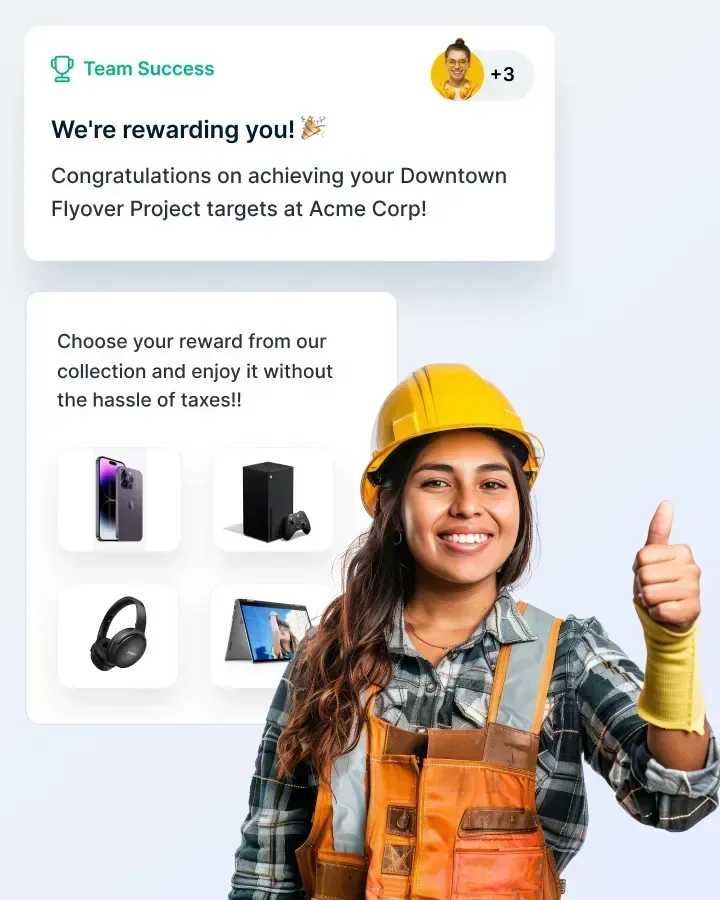
A manufacturing and logistics enterprise with more than 20,000 frontline employees used Empuls to take platform adoption from 24% to 83% in ten weeks. Read the frontline workforce case study.
Case study: how Luminous built a culture of recognition across its plants
Luminous Power Technologies, an Indian home electrical company with multiple manufacturing units and sales offices, had a culture of recognition, but it lacked uniformity and depended on each department's interest. The company wanted a more active, consistent and enjoyable recognition culture for its 6,000-person workforce.
Luminous digitized its rewards and recognition program with Empuls, which integrated with its existing ERP. Recognition was anchored to the company's five core values, and employees could choose from rewards such as experiences and gift cards suited to different generations. The shift was especially successful among blue-collar plant workers who had never used a recognition platform before. Read the full Luminous case study.
Rewards and recognition in manufacturing drive engagement and retention
In the ever-evolving world of manufacturing, rewards and recognition are among the most reliable levers for engagement. Implemented thoughtfully, they increase job satisfaction, lift productivity and quality, strengthen safety and reduce turnover.
In an industry of precision and innovation, never underestimate the power of a well-crafted thank you or a fair performance bonus. Start with safety and quality, reach every shift and measure what changes. For the wider program design, use the employee recognition guide.
Book your Empuls demo
Frequently asked questions
Rewards are tangible incentives, often linked to performance metrics, given to employees for achieving specific goals, such as bonuses, points or gift cards. Recognition is the acknowledgment and appreciation of employees' efforts, such as verbal praise, certificates or a public shout-out. In manufacturing, both usually focus on safety, quality, productivity, attendance and improvement ideas.
Common rewards in manufacturing include performance bonuses, profit sharing, pay raises, extra paid time off, gift cards, points redeemable for groceries or fuel, merchandise and access to exclusive benefits. Many plants also use non-cash rewards such as preferred shifts, training opportunities, team meals and public recognition for safety and quality achievements.
Link rewards to measurable goals such as safety, quality and output KPIs, recognize employees promptly and consistently, keep criteria fair and transparent across shifts and lines, make recognition accessible on mobile without a work email, and review the program regularly using participation data and employee feedback.
Tie rewards closely to manufacturing KPIs such as production quotas, safety goals, first-pass yield, scrap reduction and attendance. Focus recognition on commitment to safety, teamwork, productivity and improvement ideas. Deliver it in ways that suit the floor, such as QR cards, shift huddles, SMS and regional languages, with rewards that are useful locally.
Use a mobile recognition platform that lets workers log in with a phone number or employee ID, send notifications by SMS or WhatsApp and support regional languages. Supervisors can recognize on the floor with QR cards, and shift huddles and notice boards make recognition visible. Offer rewards like grocery vouchers or mobile recharges that need no bank account.
Yes, if they are designed carefully. In the US, OSHA says rewarding employees for reporting hazards and near misses or for taking part in safety programs is always permissible. Programs that reward injury-free periods are allowed only if they do not discourage injury reporting. Rewarding leading indicators is the safest and most effective approach.
There is no fixed rule, but many organizations set a recognition budget as a small percentage of payroll and allocate it per site or line so every shift gets a fair share. Start with low-cost everyday recognition, add points for spot awards and milestones, and track recognition reach and retention to decide whether to increase the budget.





































































































































































































































































































































































































































































































































































