
Key Takeaways
Employee health and wellness covers physical, mental, financial and social health plus the work environment, and employers support it through benefits, policies and culture.
Only 44% of US employees feel holistically healthy, yet those who do are 25% more productive and loyal and take 10% fewer sick days, according to MetLife's 2026 study.
Fund mental health support, preventive care and health cover for everyone first, then add flexible options such as a health and wellness stipend.
In the US, a cash wellness stipend is generally taxable wages under IRS Publication 15-B, so decide early whether to gross it up.
Stipends get used when employees have real choice, easy ways to spend and regular reminders, so track utilization by team every quarter.
Employee health and wellness is the physical, mental, financial and social health of your people, and the support an employer gives to protect it. The employers that get it right cover the basics first (insurance, preventive care and mental health support), then add flexible options such as a health and wellness stipend so each person can choose what helps them most.
A typical workday carries more than tasks and deadlines. It also carries stress, mental exhaustion and the risk of burnout, and an employment contract quietly asks for physical, emotional and mental energy as well as time. This guide explains what employee health and wellness covers, which employee wellness benefits matter most, how to run a health and wellness stipend, wellness stipend ideas by category and a scorecard you can use to audit your current offer.
What employee health and wellness means
Employee health and wellness is the state of an employee's body, mind, finances and relationships, plus the policies, benefits and culture an employer uses to support them. True wellbeing is not limited to an annual health check or an occasional fitness challenge. It means making it easier for employees to look after their health every day, in ways that matter to them.
Most employers now think about employee health and wellness across five connected dimensions. The table shows what each covers and the kind of employer support that helps.
| Dimension | What it covers | Employer support that helps |
|---|---|---|
| Physical health | Fitness, sleep, nutrition, preventive care, chronic conditions | Health insurance, check-ups, teleconsults, gym access, fitness challenges |
| Mental health | Stress, anxiety, depression, burnout, emotional resilience | Employee assistance program (EAP), therapy access, manager training, workload control |
| Financial health | Savings, debt, emergencies, medical bills | Earned wage access, emergency loans, financial coaching, tax-efficient benefits |
| Social health | Belonging, connection, support at work | Team challenges, peer recognition, communities, volunteering |
| Work environment | Workload, flexibility, safety, autonomy | Realistic goals, flexible hours, ergonomic setups, time off that people actually take |
Why employee health and wellness matters for business
Employees today want more than a paycheck. They look for employers who care about their overall wellbeing, and the data shows why that care pays off.
44%
of US employees feel holistically healthy
MetLife, 2026
25%
more productive and loyal when they are
MetLife, 2026
34%
of employees worldwide are thriving
Gallup, 2026
$26,993
average family health premium in 2025
KFF, 2025
Employee health and wellness by the numbers
MetLife's 2026 U.S. Employee Benefit Trends Study found that only 44% of employees feel holistically healthy, yet those who do are 25% more productive and loyal and take 10% fewer sick days. Employers in the same study expect about $2.30 back for every $1 they invest in employee health. Gallup's State of the Global Workplace puts the share of employees who are thriving at just 34%, and the World Health Organization estimates that depression and anxiety cost about 12 billion working days a year.
Health costs keep rising too. The KFF 2025 Employer Health Benefits Survey puts average annual premiums at $9,325 for single coverage and $26,993 for family coverage, up 5% and 6% from 2024. Companies that invest in health and wellness well tend to see five returns:
- Higher morale: Showing employees that the organization cares about their health changes the mood on the floor. People get into their groove when they feel mentally and physically well.
- Lower health risks: Whether the goal is lower cholesterol, better sleep or simply getting fit, support that people actually use reduces health risks over time.
- Better value for money: One-size-fits-all perks often go unused. When employees choose what they need, wellness spend is far more likely to pay off.
- Lower healthcare costs: A monthly talk on healthy eating will not move claims. A comprehensive approach that combines prevention, early care and mental health support can.
- Higher productivity: Fatigued employees cannot give their best, however much they want to. You cannot set a bedtime for your people, but you can give them the support that keeps them in good shape.
Give every employee wellness support they will use
Run wellness wallets, fitness challenges and flexible stipends from one platform, with utilization data built in.
Talk to our ExpertTrusted by 5,000+ companies
Employee wellness benefits that make the biggest difference
The seven benefit areas below cover the needs employees raise most often, starting with mental health and preventive care because they protect everything else. Use them as a menu: most employers fund the first three for everyone and offer the rest through a flexible budget.
1. Mental health support and an employee assistance program
Work and life pressures leave many people mentally depleted and overwhelmed, and mental health problems are one of the biggest drags on productivity. An employee assistance program (EAP) gives employees confidential help with work and life challenges, from a discreet hotline where they can talk through what is bothering them to short-term counseling and sessions on managing workplace stress.
Offer mental health support with no strings attached and make it easy to reach without going through a manager. For a fuller set of strategies, read this guide to mental health in the workplace and these ways to prevent burnout.
2. Preventive care, check-ups and diagnostics
A doctor's visit often comes with lab tests, and those costs add up. Subsidized or cashless medical tests, annual health check-ups and bundled savings on consultations, pharmacy and procedures remove a common reason people delay care. Preventive screening also catches problems early, when they are cheaper and easier to treat.
3. Online doctor consultations and medication savings
Many people hesitate to visit a clinic for something minor, and a quick teleconsultation is often enough for a first screening. Teleconsults, pharmacy delivery and discounts on prescribed and over-the-counter medicines make routine care faster and cheaper, especially for remote and shift workers.
4. Fitness and gym memberships
Gym and health club memberships remain one of the most requested wellness perks. The CDC recommends that adults get 150 minutes of moderate-intensity activity a week plus at least 2 days of muscle-strengthening activity, so access to a gym, classes or home equipment helps people hit that target. Team fitness challenges add a social reason to keep going.
5. Nutrition and healthy eating
From keeping the pantry stocked with fiber-rich, protein-packed snacks to offering nutrition consultations, healthy meal subscriptions and dietitian sessions, nutrition support works both in the office and at home. Whether employees are going plant-based, cutting sugar or simply trying to eat better, tailored options help them stay on track. Protein and health supplements are a popular choice for people who train regularly.
6. Rest, recovery and self-care
Self-care services such as massages, spa therapies and salon sessions are among the places employees most like to spend wellness money. Investing in rest and recovery helps reduce stress and burnout, and it brings renewed energy and gratitude back to work. Paid time off that people actually take matters just as much.
7. Women's and men's health
Women's health needs, such as menstrual health, fertility, maternity and menopause care, come with real costs, and many employers now add leave policies and dedicated support. Men's health is often overlooked, so preventive screening, specialist consultations and mental health outreach aimed at men close an important gap.
Workplace health and wellness programs that work
Benefits are only half of the picture. Workplace health and wellness programs work when they also fix the conditions that make people unwell, such as unrealistic workloads, poor management and a culture where nobody takes leave.
A 2024 Oxford study of over 46,000 UK workers found that individual-level offerings such as apps and resilience classes showed little benefit on their own, while volunteering did. The lesson is not to drop wellness benefits but to combine them with better work design, manager support and flexibility, then measure what people use. The employee wellbeing programs guide walks through building a program step by step, and the employee wellness trends post covers what employers are adding next.
Health and wellness stipend: what it is and how it works
A health and wellness stipend is a fixed amount of money an employer gives employees to spend on their own health and wellbeing, such as a gym membership, a yoga class, a meditation app or a nutrition plan. Because the money goes into employees' hands, it is one of the most flexible ways to show that the organization cares about employee health and wellness.
Employers usually pay the stipend on a regular cycle:
- Monthly: Best for recurring costs such as gym fees and app subscriptions.
- Quarterly: A good balance between flexibility and admin effort.
- Semi-annual or annual: Suits larger one-off purchases such as fitness equipment or a health retreat.
In the US, a cash wellness stipend is generally taxable wages. IRS Publication 15-B states that any fringe benefit is taxable unless the law excludes it, and cash, gift cards and athletic club memberships cannot be treated as tax-free de minimis benefits. Employers can gross up the stipend to cover the tax or let employees bear it. Rules differ by country, so check local guidance and see this explainer on non-taxable employee benefits.
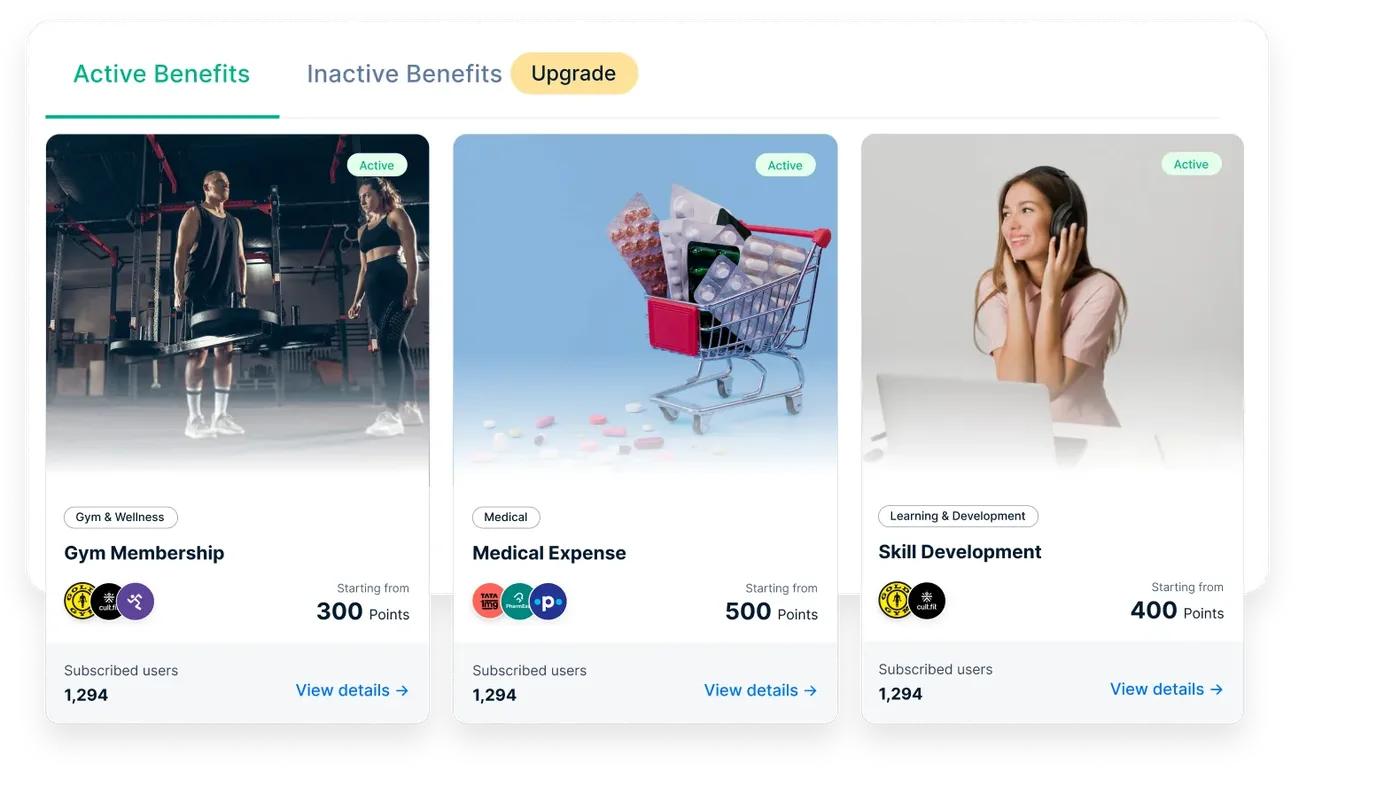
How to set up a health and wellness stipend employees actually use
Sneaker money and a gym pass sound like a good start, but not every employee wants the same thing. The key to participation is choice, so the six steps below start with what employees want and end with how you measure use.
- Ask employees what they need: Run a short pulse survey on wellness priorities by age, location and work pattern. A 26-year-old may want a gym pass while a 42-year-old wants childcare or a physiotherapist.
- Set the amount and cycle: Pick a per-employee amount you can sustain and a cycle that fits the spend (monthly for subscriptions, annual for equipment). Decide whether unused balances roll over or expire.
- Define eligible categories: List what counts, such as fitness, mental health, nutrition, preventive care and self-care, and what does not. Clear rules prevent awkward claim disputes later.
- Decide how money is spent: Choose between reimbursement against receipts, a preloaded card or a catalog where employees redeem directly. Catalogs and cards remove the paperwork that kills participation.
- Handle tax and compliance: Agree with payroll how the stipend is reported and whether you gross it up. Write the policy down and share it with employees.
- Launch, nudge and measure: Announce the stipend on the channels employees already use, remind people before balances expire and track utilization by team and location every quarter.
Wellness stipend ideas by category
A good stipend offers enough variety that everyone finds something useful. These wellness stipend ideas cover the categories employees use most.
| Category | Wellness stipend ideas | Best for |
|---|---|---|
| Fitness | Gym and health club memberships, Zumba, swimming or dance classes, home workout gear, wearables | Employees building an exercise routine |
| Mental health | Therapy sessions, meditation and sleep apps, mindfulness courses | High-stress roles and anyone not yet ready to call an EAP |
| Nutrition | Dietitian sessions, healthy meal subscriptions, supplements, wellness hampers | Employees changing how they eat |
| Preventive care | Lab tests, health check-ups, dental and vision visits, teleconsults | Employees with high out-of-pocket costs |
| Self-care | Massages, spa days, salon and grooming sessions, skincare | Recovery and stress relief |
| Family wellbeing | Child care, elder care, pet care, family fitness | Parents and caregivers |
Employee health and wellness scorecard
Use this scorecard to audit your current offer in under 15 minutes. Score each row 0 (missing), 1 (partly in place) or 2 (fully in place); 16 or more out of 20 is strong, 10 to 15 means clear gaps, and below 10 means start with the first four rows.
| Area | Question to ask | Score (0 to 2) |
|---|---|---|
| Health cover | Do all employees have health insurance that covers outpatient care, not just hospital stays? | |
| Preventive care | Can employees get a check-up and basic tests at low or no cost? | |
| Mental health | Is there a confidential EAP or therapy access that employees know how to use? | |
| Workload | Do managers review workloads and protect time off? | |
| Fitness | Is there a gym, class or challenge option that remote and shift workers can join? | |
| Flexible budget | Do employees get a wellness stipend or lifestyle account they can spend their way? | |
| Financial health | Can employees access emergency funds or earned wages without high-cost debt? | |
| Inclusion | Do benefits cover women's health, men's health and caregivers? | |
| Communication | Can an employee find every wellness benefit in one place in under a minute? | |
| Measurement | Do you track utilization and a wellbeing score by team every quarter? |
How Empuls supports employee health and wellness
Health benefits spread across insurers, gym partners, apps and reimbursement forms are hard for employees to find and hard for HR to measure. Empuls brings them into one platform, so employees see every wellness option in one place and HR can see what people use.
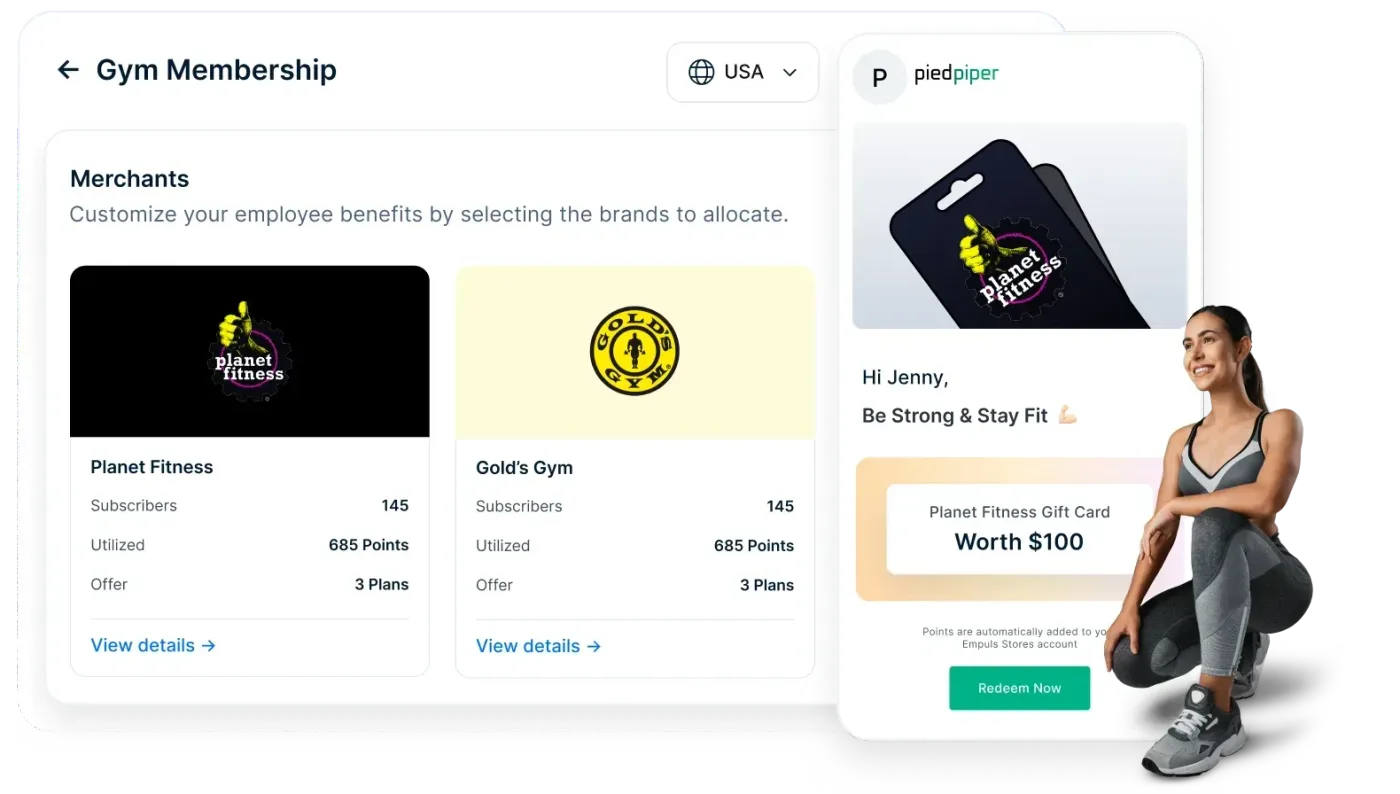
- Health and wellness in one place: Empuls Wellness connects employees to 500+ curated partners across fitness, outpatient care, mental health and diagnostics, with mood check-ins, pulse surveys and fitness data feeding one wellness score.
- Wellness wallets by cohort: The corporate wellness program offers five wallets (outpatient care, dental and vision, mental health, elder, child and pet care, and teleconsults) that you configure per cohort, cashless at partners and tax-treated per jurisdiction.
- Fitness challenges: Fitness challenges sync with Apple Health, Google Fit and major wearables, run stepathons and streaks and pay out rewards automatically when goals are hit.
- Flexible stipends: Lifestyle accounts turn a wellness stipend into a recurring budget across 12 out-of-the-box categories, spent by card, partner marketplace or credit, with caps and rollover rules you set.
- Protection and financial wellness: Insurance and protection layers top-ups, outpatient cover and small-ticket insurance onto group policies, while financial wellness adds earned wage access and other lending through partners.
The Mood-o-Meter daily check-in and wellbeing reports on the employee wellbeing solution show trends by team and location, so you can spot stress early and prove which parts of your health and wellness offer are working.
Building employee health and wellness that lasts
Employee health and wellness is not a luxury. It is the base for a resilient, productive workforce. Start with the essentials of insurance, preventive care and mental health support, fix the work conditions that wear people down and then add a health and wellness stipend so every employee can choose what helps them most.
Use the scorecard to find your gaps, close the lowest-scoring rows first and measure utilization every quarter. When people feel healthy and supported, they invest their energy, loyalty and creativity back into the work.
Book your Empuls demo
Frequently asked questions
Employee health and wellness is the physical, mental, financial and social health of employees, plus the benefits, policies and culture an employer uses to support it. It includes health insurance, preventive care, mental health support, fitness, nutrition and flexible budgets, as well as workloads and time off that let people stay well.
A health and wellness stipend is a fixed amount an employer gives employees, monthly, quarterly or yearly, to spend on their own wellbeing. Common uses are gym memberships, fitness classes, therapy or meditation apps, nutrition plans and self-care. It is separate from health insurance, HSAs and FSAs.
In the US, a cash wellness stipend is generally taxable wages. IRS Publication 15-B says any fringe benefit is taxable unless the law excludes it, and cash, gift cards and athletic club memberships do not qualify as de minimis. Employers often gross up the stipend. Tax treatment differs in other countries.
There is no legal or standard amount, so base it on your budget, headcount and what employees want to spend on. Many employers pick a modest monthly amount that covers a gym or app subscription, or an annual amount for larger purchases. Start with what you can sustain, track utilization and adjust each year.
Employees can typically spend a wellness stipend on gym and fitness memberships, classes, workout gear, therapy and meditation apps, nutrition consultations, healthy meal plans, preventive check-ups and self-care such as massages. Employers set the eligible categories in a written policy so claims are simple and fair.
A wellness stipend usually covers health and fitness only. A lifestyle spending account is broader and flexes across categories such as wellness, family care, learning, pets and home office, with caps and rollover rules set by the employer. Both are generally taxable in the US, unlike HSAs and FSAs.
The best employee wellness benefits are the ones employees use. Most employers start with health insurance that covers outpatient care, a confidential employee assistance program, preventive check-ups and teleconsults, then add fitness support, nutrition help and a flexible wellness budget so people choose what fits them.
Measure utilization of each benefit, participation in programs and challenges, wellbeing or mood scores by team, unplanned absence and regretted attrition. Compare trends quarter by quarter and between teams. Low utilization usually points to poor awareness or the wrong options, not a lack of need.





































































































































































































































































































































































































































































































































































