
Key Takeaways
Employee retention in insurance is an insurer's ability to keep the specialists and agents whose expertise and client relationships take years to build.
Insurance turnover eased in 2026, but technology, underwriting and claims roles remain the industry's greatest talent need.
Insurers retain experienced people best by combining career development, competitive pay, flexible work, recognition and wellbeing support.
Retaining insurance agents depends on early support, mentoring and transparent incentives, because most agent losses happen in the first years.
Mentoring programs protect insurers from retirement risk by passing specialist knowledge to the next generation before it is lost.
Employee retention in insurance is an insurer's ability to keep the underwriters, claims professionals, actuaries, agents and service teams whose expertise and client relationships take years to build. It matters because the industry depends on specialized skills that are scarce, and every experienced person who leaves takes knowledge and customer trust with them. The strategies that work best combine growth, fair pay, flexibility, recognition and a culture people want to belong to.
The insurance sector is a dynamic, competitive industry that relies on skilled professionals to serve clients, assess risk and make informed decisions. High voluntary turnover raises costs, lowers productivity and drains valuable talent, but it is not inevitable. In this guide, we cover the current state of turnover in insurance, why retention matters so much, what insurance employees want and twelve insurance employee retention strategies that reduce turnover.
For the day-to-day engagement side, read our guide to employee engagement in the insurance industry, and for culture change, see how to build an insurance company culture that attracts and retains talent.
The current state of turnover and retention in the insurance sector
Insurance sector attrition has eased from its post-pandemic peak, but retention remains a top concern. The Jacobson Group and Aon Q3 2026 Insurance Labor Market Study found that both voluntary and involuntary turnover fell compared with the previous year, while 89% of carriers plan to increase or maintain staff and technology, underwriting and claims roles remain the industry's greatest need. Lower turnover also means fewer experienced people on the market, which makes keeping your own even more important.
In the UK, Gallagher Bassett's 2026 Carrier Perspective research found talent attraction and retention was the top challenge for insurers, cited by 22% of UK respondents, and nearly three-quarters reported growing difficulty finding qualified candidates.
Key factors shaping turnover and retention in the insurance industry include:
- Highly competitive market: Companies compete hard for top talent, and employees are tempted by rivals offering better pay or faster career advancement.
- Skill shortages and the talent war: Underwriting, actuarial, claims and technology skills are in short supply, and the competition for these professionals drives turnover.
- An aging workforce: Many experienced professionals are nearing retirement, and their knowledge is hard to replace if it is not passed on in time.
- Changing workforce expectations: Younger employees prioritize work-life balance, career development and a positive culture. Companies that miss these expectations lose people faster.
- Technological disruption: AI and automation are transforming insurance work. Employees may leave if they feel their skills are becoming obsolete or that they lack support to adapt.
- Flexible work: Hybrid work is now the norm. In the Jacobson and Aon study, 74% of carriers expect most employees to work a hybrid schedule, so insurers that remove flexibility risk losing people.
Why employee retention matters in the insurance sector
Employee retention is a critical pillar of success in insurance. Insurers rely on professionals who understand complex regulations and build lasting client relationships. When employees leave, they take expertise, customer trust and institutional knowledge with them, all of which are difficult and costly to replace.
High turnover disrupts operations. Recruiting, onboarding and training new hires takes significant time and money, and in the meantime the remaining team carries a heavier workload, which leads to burnout, lower morale and still more attrition. Customer relationships suffer too: clients value continuity, and frequent changes of account manager or claims handler erode trust and loyalty.
Here is why retention matters so much in insurance:
- Preserves client trust and loyalty: Long-standing employees build strong client relationships, which lead to higher client retention and satisfaction.
- Protects specialized knowledge: Experienced professionals hold underwriting, actuarial, claims and regulatory expertise that is hard to replace.
- Reduces recruitment and training costs: Hiring and onboarding are expensive and slow, so high retention keeps operating costs lower.
- Boosts team morale and stability: A stable workforce collaborates better, stays more engaged and builds a more cohesive culture.
- Enhances company reputation: Insurers known for valuing their people attract high performers looking for career stability.
- Improves business performance: Experienced teams make better decisions, solve problems faster and serve clients more efficiently.
- Supports adaptation to change: Retained employees who know the company's processes and culture adapt more easily to new technology and business models.
In an industry where client trust, technical expertise and regulatory knowledge are paramount, retaining experienced employees is essential for long-term growth and competitive advantage.
What insurance employees want from their employer
McKinsey's research on employee experience found that people who leave their jobs often feel exhausted and overwhelmed, which leads them to question the meaning of their work and consider other paths. That makes employee experience a genuine focal point for insurers that want to keep seasoned staff.
According to that research, employees want trust, social cohesion and purpose. They want recognition for their contributions, real collaboration with their teams, clearly defined responsibilities and continuous learning. They want their sense of purpose to align with the organization's, and a physical and digital environment that gives them the flexibility to achieve work-life balance. Each of the strategies below speaks to one or more of these needs.
Keep your best underwriters, adjusters and agents
See how insurers use Empuls to recognize great work, run incentives and act on employee feedback in one place.
Talk to our ExpertTrusted by 5,000+ companies
12 insurance employee retention strategies
The twelve strategies below are the ones insurers can put in place now to reduce turnover in the insurance industry. They start with the foundations of growth, wellbeing and pay, which carry the most weight for experienced specialists, and move on to recognition, feedback and connection, which keep people engaged year after year.
1. Career development programs
Investing in comprehensive professional development is one of the most effective ways to retain insurance employees. Insurance professionals value continuous learning and skill building, so workshops, training sessions, professional designations and mentorship programs show a real commitment to their career growth.
This strengthens the workforce's skills and builds loyalty among employees who see that their development is a priority. With AI reshaping claims and underwriting, training people to work alongside new tools is also the best answer to the fear that their skills are becoming obsolete. Show clear paths too, such as from claims handler to adjuster to claims manager, so people can see their future inside the company.
2. Well-structured wellness and resilience programs
Beyond physical fitness, insurers need to support mental resilience, stress management and emotional wellbeing to retain people in a high-pressure environment. Claims teams in particular deal with customers on some of the worst days of their lives. Mindfulness workshops, mental health support, resilience training and team fitness challenges all help.
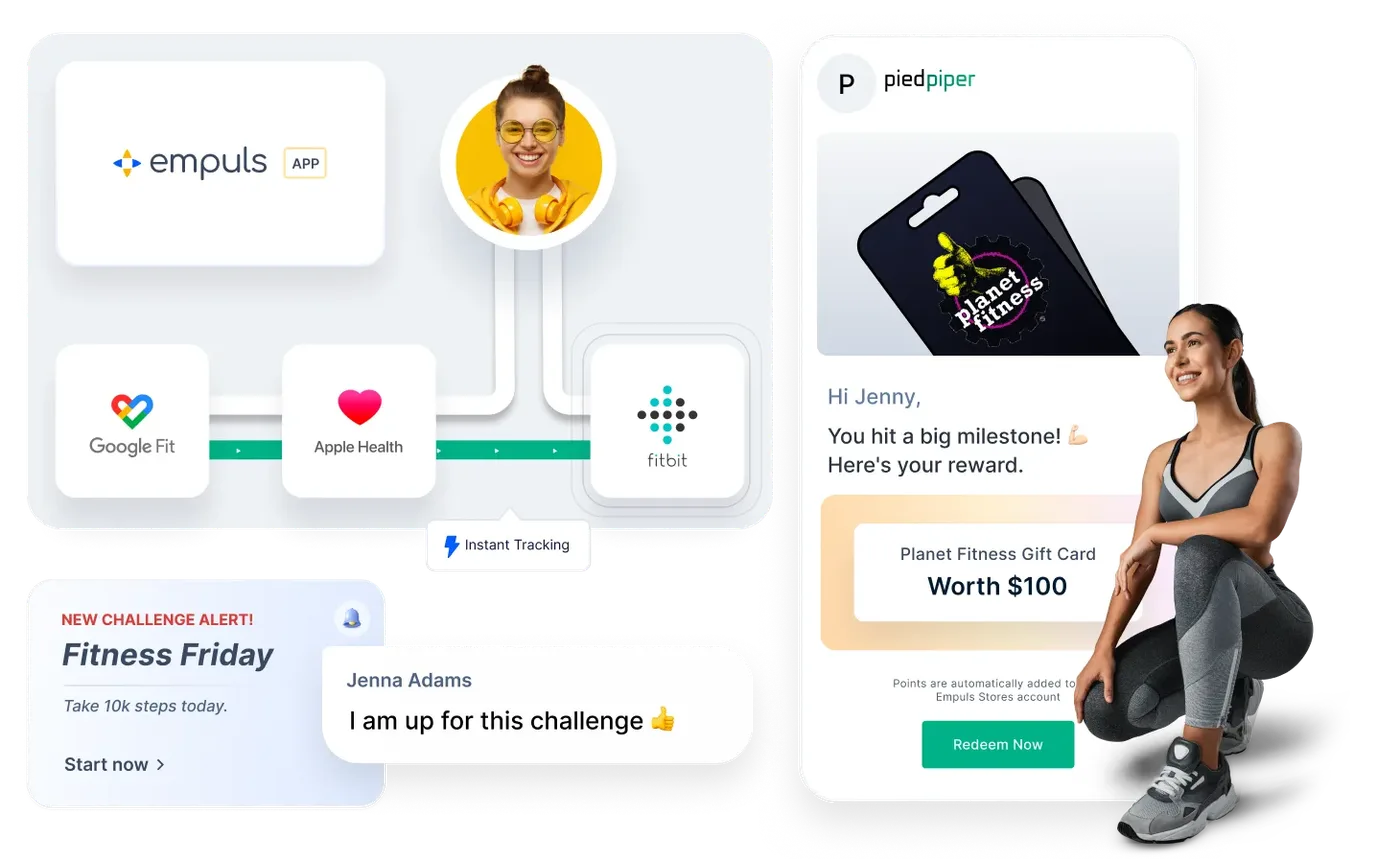
Platforms such as Empuls wellness bring fitness challenges, meditation and mental health resources into the everyday employee experience, which makes holistic wellbeing easier to promote.
3. Competitive compensation packages
Competitive pay is crucial for retaining top insurance talent. Experienced professionals are in high demand, so insurers should review and adjust compensation regularly to stay in line with the market. That includes base salary as well as health insurance, retirement plans and performance-based incentives.
A well-structured package attracts skilled people and reinforces how much the company values them. Pay attention to roles where the market moves fastest, such as actuarial, data and technology, and to internal equity, since employees notice quickly when new hires are paid more than long-serving colleagues.
4. Flexible work arrangements
Flexible work is an increasingly effective retention strategy in insurance. Options such as remote work, flexible hours and compressed workweeks improve work-life balance and accommodate different employee needs. Much insurance work, from underwriting to claims review, can be done well from anywhere, so a rigid return-to-office policy risks pushing people toward competitors that offer hybrid schedules.
5. Enhanced employee perks and benefits programs
Meaningful perks and benefits have become a cornerstone of employee retention in the insurance sector. Today's workforce expects more than traditional compensation: financial wellness support, exclusive discounts, health benefits and flexibility that improve everyday life.
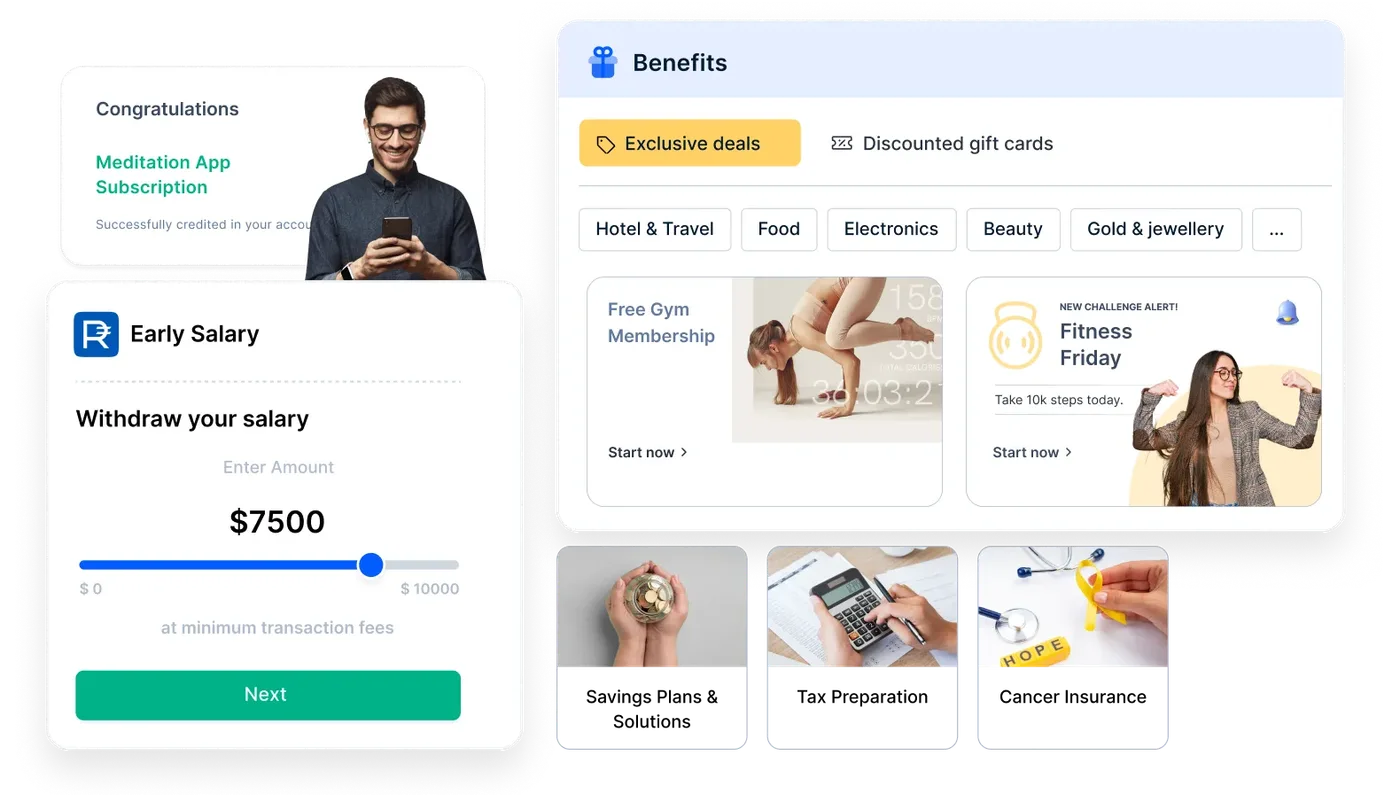
Strong benefits programs for insurers include:
- Tax-saving benefits: Tax-friendly benefits that help employees keep more of what they earn.
- Early wage access: Letting employees draw earned salary before payday, as part of broader financial wellness support.
- Employee discounts: Discounts on popular brands, travel, wellness and entertainment.
- Customizable perks: Flexible allowances employees can spend on what matters to them, from learning to fitness.
By meeting these real financial and lifestyle needs, insurers reduce financial stress and create a supportive environment that employees are less likely to leave. Our guide to employee benefits covers how to design a full package.
6. Employee recognition and rewards programs
Recognition and rewards programs acknowledge and celebrate the contributions of insurance professionals through performance bonuses, employee-of-the-month awards, spot awards and other initiatives that lift morale and job satisfaction. The retention effect is well documented: Gallup and Workhuman research that tracked nearly 3,500 employees from 2022 to 2024 found that well-recognized employees were 45% less likely to have left after two years.
In insurance, recognize accuracy, compliance and customer care as well as sales results, so underwriting, claims and operations teams feel as valued as producers.
7. Real-time employee feedback and pulse surveys
Continuous feedback helps you spot workplace issues before they become reasons to leave. Instead of relying only on annual reviews, gather frequent input through quick pulse surveys, engagement polls and one-to-one check-ins. Acting on timely feedback builds trust, lifts satisfaction and improves retention.
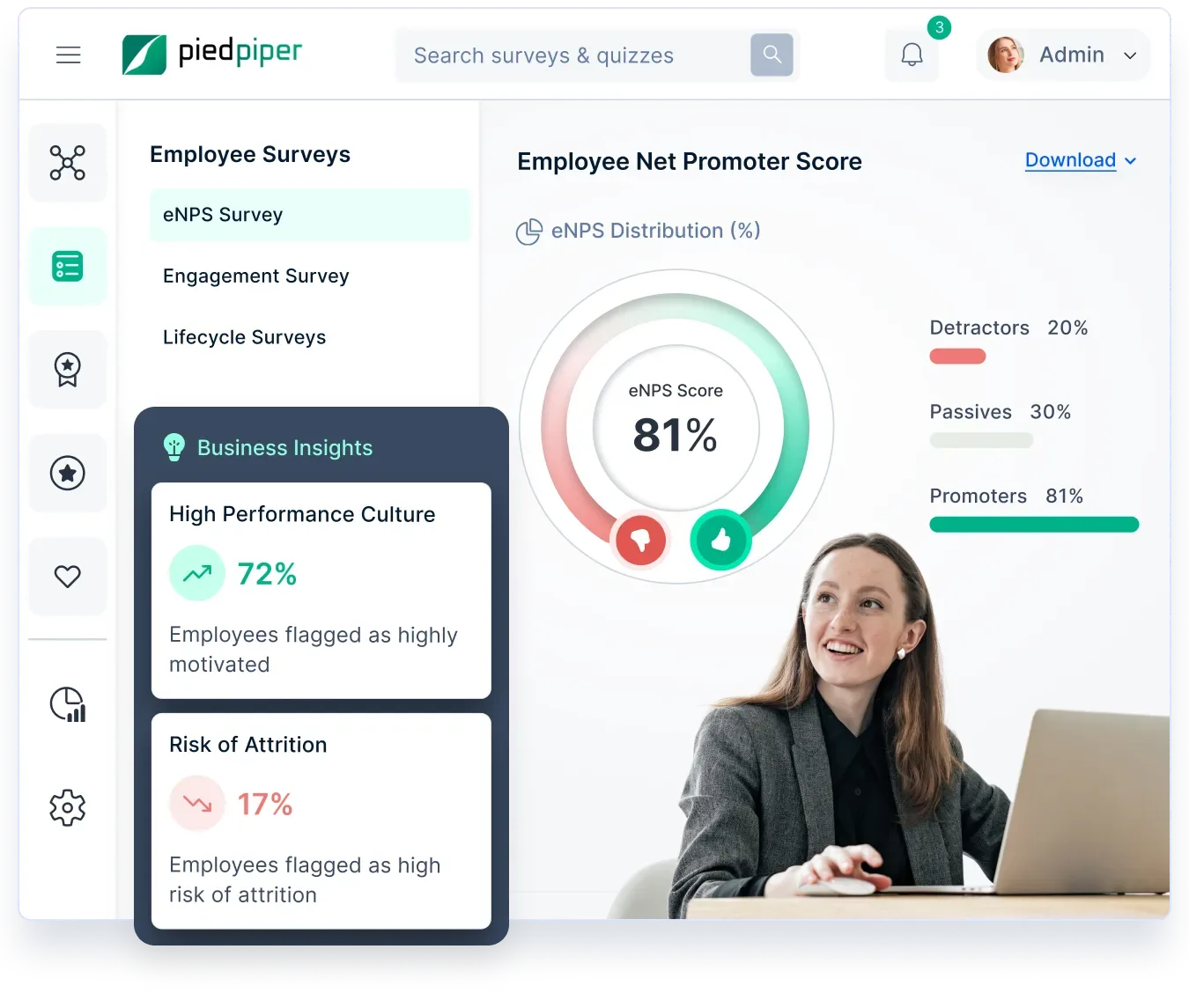
Survey tools such as Empuls pulse surveys measure sentiment in real time and can flag teams where attrition risk is rising, so managers can step in before resignations land.
8. Structured onboarding and mentoring programs
Structured onboarding and mentoring help new hires integrate into the company culture and give them ongoing support throughout their careers. In insurance, where products, regulations and systems take time to learn, pairing new employees with experienced mentors speeds up their productivity and helps them feel they belong.
Mentoring also solves a second problem: it transfers knowledge from experienced professionals nearing retirement to the next generation before it walks out the door.
9. Personalized recognition experiences
Generic recognition loses its charm quickly. Insurance professionals, especially in specialized roles, expect acknowledgment that reflects their unique contributions. Personalized rewards, milestone celebrations and customized thank-you notes make employees feel truly valued.
Give employees a choice of rewards, from gift cards to experiences, and tie recognition to the specific achievement, such as closing a complex claim or completing a professional designation. Milestone rewards make it easy to personalize recognition at scale.
10. Employee incentive programs
Incentive programs offer additional rewards for reaching specific goals or milestones. Linking performance to tangible rewards motivates employees and gives them a sense of accomplishment and job satisfaction.
For agents and sales teams, incentives are central to retention, but they need to be transparent and reachable. Clear rules, real-time progress tracking and a mix of short contests and longer-term goals keep producers motivated without encouraging burnout. Sales incentive tools make this easier to run.
11. Building social connections at work
Strong workplace relationships are key to employee happiness and retention. Insurers can build community through virtual coffee chats, interest-based groups, gamified team challenges and informal meetups, which matter even more when teams work hybrid or are spread across branches.
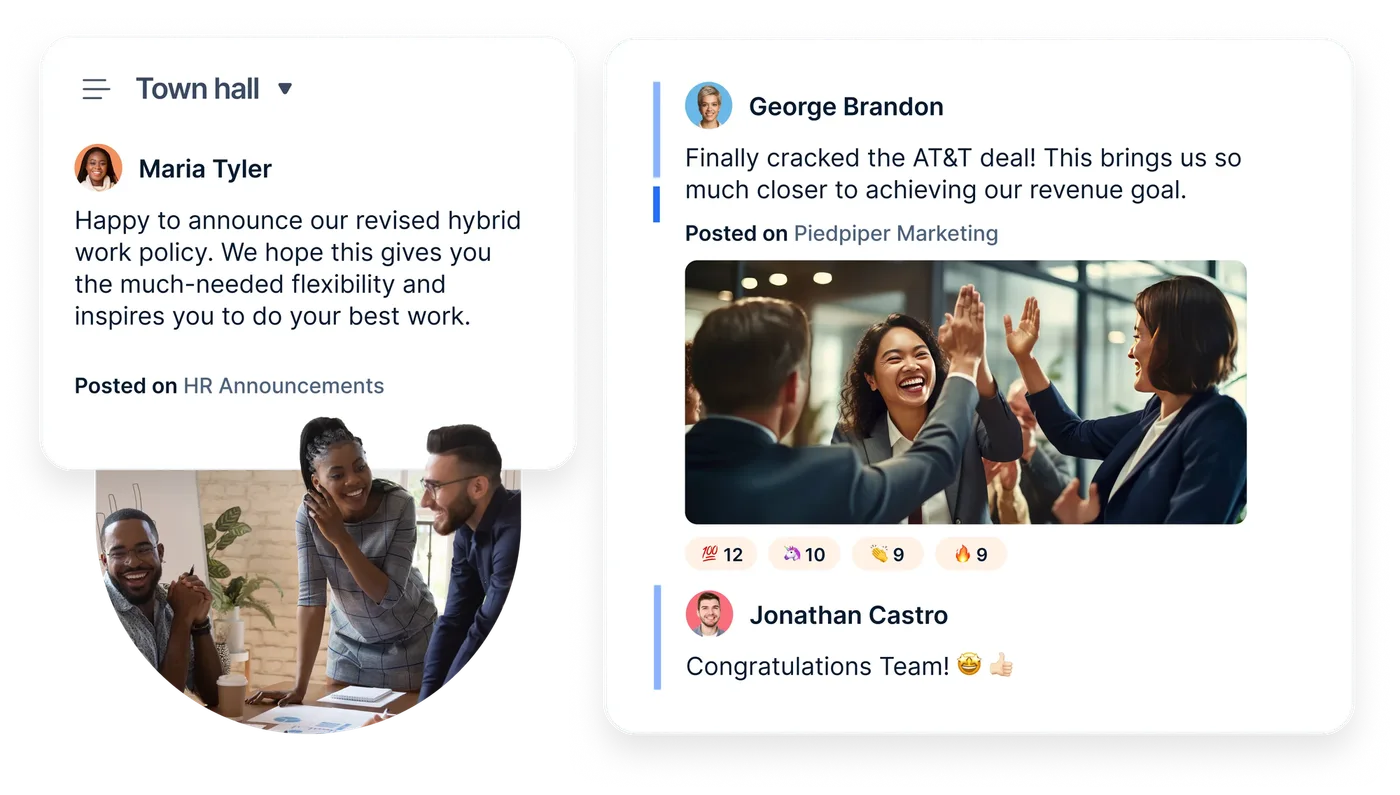
A social intranet with employee communities and peer-to-peer recognition spaces helps people feel connected and part of something bigger than their own desk.
12. Diversity, equity and inclusion initiatives
Prioritizing diversity, equity and inclusion creates a workplace where employees from different backgrounds feel valued and supported. That sense of belonging is crucial for long-term retention. Inclusive hiring also widens the talent pool at a time when insurers struggle to find qualified candidates. Read our guide to inclusion and diversity in the workplace for practical steps.
Retaining insurance agents and other key roles
Different insurance roles leave for different reasons, so tailor your retention plan by group. Retaining insurance agents, for example, depends heavily on early support and income stability, because many new agents leave in their first years before their book of business is large enough to sustain them.
| Role | Common reasons for leaving | What helps retain them |
|---|---|---|
| New and career agents | Unstable early income, slow book growth, little support | Training and mentoring, transparent incentives, recognition for early milestones |
| Claims professionals | High caseloads, difficult conversations, burnout | Manageable workloads, resilience support, recognition for quality and empathy |
| Underwriters | Competition for experienced talent, limited growth paths | Market-linked pay, designations, clear progression |
| Actuarial, data and technology | Strong demand from other industries | Modern tools and projects, learning budgets, flexibility |
| Customer service and operations | Repetitive work, low visibility | Frequent recognition, rotations, paths into specialist roles |
For independent agents, retention is as much about loyalty to a carrier as employment. Our guide to insurance agent loyalty programs covers how carriers keep their share of an agent's business.
How to measure employee retention in insurance
Measure retention by role and team, not just company-wide, so you know where to act. Useful metrics include:
- Voluntary turnover rate: Tracked monthly and annualized, split by role and location.
- First-year retention: Especially for agents and new claims staff.
- Regretted attrition: Losses of high performers and hard-to-replace specialists such as actuaries and senior underwriters.
- Retirement risk: The share of critical roles held by people within five years of retirement, and whether successors are ready.
- Engagement and eNPS: Pulse survey scores as a leading indicator of future exits.
- Recognition coverage: The share of employees recognized at least once a month.
For formulas and a full program framework, see our guides to employee attrition and building an employee retention program.
Increase employee retention in the insurance industry with Empuls
Retention challenges in insurance call for a modern, connected approach. Empuls, Xoxoday's employee engagement platform, helps insurers build workplaces where people feel connected, engaged and appreciated:
- Continuous recognition and rewards: Celebrate achievements instantly with recognition for high performance, customer service and milestones, with rewards employees choose themselves.
- A connected workforce: A social intranet builds communities, interest groups and peer-to-peer connections across offices, branches and remote teams.
- Actionable surveys and feedback loops: Pulse surveys and engagement polls make sure concerns are heard and addressed before they become attrition risks.
- Built-in wellbeing programs: Challenges, activities and resources support the mental and physical wellbeing insurance professionals expect.
- Flexible benefits: Tax-saving benefits, financial wellness and discounts address real financial needs.
- Budget control: Set reward budgets, track spending and measure the impact of recognition programs through reports and analytics.
In a sector where skilled professionals expect more than compensation from their employers, Empuls helps insurers build cultures people want to stay part of.
Conclusion
Effective employee retention strategies are essential for sustained success in insurance. Through professional development, competitive pay, flexible work, recognition, wellbeing, structured onboarding, incentives and inclusion, insurers can build a positive, supportive culture that keeps experienced people.
These strategies attract top talent and lift satisfaction, engagement and long-term retention, which ultimately strengthens client relationships and the insurer's competitive edge. Start with the roles where turnover hurts most, measure the results and refine from there.
Book your Empuls demo
Frequently asked questions
Employee retention in the insurance industry is an insurer's ability to keep skilled employees, such as underwriters, claims professionals, actuaries, agents and service staff, over the long term. It is measured through turnover and retention rates by role. Strong retention protects client relationships, specialized knowledge and regulatory expertise that are expensive and slow to rebuild when people leave.
Employees leave insurance companies mainly for better pay or career advancement at competitors, heavy workloads and burnout, especially in claims, and limited flexibility. Some leave because they feel their skills are falling behind as AI and automation change their work. Slow recognition and a weak connection to the wider company also push people toward employers that make them feel more valued.
Insurers reduce turnover by offering clear career paths and training, reviewing pay against the market, supporting hybrid and flexible work and recognizing employees frequently. Pulse surveys help them catch issues early, while structured onboarding and mentoring keep new hires. Measuring turnover by role shows which groups, such as agents or claims staff, need targeted attention first.
Retaining insurance agents starts with strong early support, because many leave in their first years before their book of business can sustain them. Provide structured training, experienced mentors, transparent and reachable incentives and recognition for early milestones. Modern tools that reduce admin time, plus a clear path into senior or specialist roles, give agents reasons to build their career with you.
Insurance sector attrition has eased recently. The Jacobson Group and Aon Q3 2026 study found voluntary and involuntary turnover both fell year on year, and most carriers plan to increase or maintain staff. However, lower turnover shrinks the pool of available experienced talent, so technology, underwriting and claims roles remain hard to fill and retention stays a priority.
Benefits that help retain insurance employees include health and retirement plans, flexible and hybrid work, mental health and wellness support and financial wellness options such as early wage access. Tax-saving benefits, employee discounts and learning allowances add everyday value. Letting employees choose benefits that fit their life stage makes the package feel personal rather than generic.
Employee retention is important for insurance companies because their products depend on trust and expertise. Experienced employees maintain client relationships, apply complex regulations correctly and make sound underwriting and claims decisions. When they leave, service quality drops, costs rise and remaining staff face heavier workloads, which can trigger more attrition and damage customer loyalty.
An aging workforce means many experienced underwriters, claims managers and actuaries will retire in the coming years, taking specialized knowledge with them. Insurers can manage this by tracking retirement risk in critical roles, building mentoring programs, offering phased retirement and investing in early-career talent. Keeping mid-career employees engaged is essential, since they are the next generation of experts.





































































































































































































































































































































































































































































































































































