
Key Takeaways
A year-round employee recognition strategy makes appreciation a daily, periodic and moment-driven habit rather than an annual event.
Gallup and Workhuman found 55% of US employees get no recognition or recognition that meets none of the five pillars, while only 22% get the right amount.
Build the strategy in seven steps: plan, launch, set a cadence, vary the forms of recognition, measure, involve everyone and grow a culture of appreciation.
Layer daily peer recognition, weekly manager notes, monthly and quarterly awards, annual celebrations and automated milestones.
Review participation and reach every quarter, because a recognition program that is not measured usually fades by mid-year.
A year-round employee recognition strategy is a plan that makes appreciation a daily, weekly, monthly, quarterly and annual habit instead of something saved for reviews and milestones. It combines everyday peer and manager recognition with scheduled awards and events, sets clear goals and metrics, and gives everyone a role. This guide shows you how to build one in seven steps, with a cadence table and a 12-month calendar you can copy.
Despite the best intentions, many organizations still fall short when it comes to appreciating employees consistently. Recognition is often reserved for annual reviews or milestone moments, which leaves everyday effort unnoticed. A culture of consistent appreciation can transform the way your people feel, work and grow.
When recognition becomes part of your company's DNA, it boosts morale, strengthens engagement and drives performance. The key is a strategy that is intentional, inclusive and woven into the daily rhythm of work, not just saved for special occasions.
What an employee recognition strategy is
An employee recognition strategy is an organization's plan for recognizing and appreciating employees' actions and achievements: what it recognizes, how often, by whom and with what rewards. It usually includes awards and rewards as tokens of appreciation, but the strongest strategies rely just as much on frequent, specific praise.
Continuous employee recognition matters because recognition fades fast. Gallup and Workhuman research published in September 2024 found that 55% of US employees receive either no recognition or recognition that meets none of Gallup's five pillars of strategic recognition. Only 22% say they get the right amount. Yet employees whose recognition met at least four pillars were nine times as likely to be engaged, and well-recognized employees were 45% less likely to have changed organizations two years later.
55%
of US employees
get no recognition or recognition that meets none of the five pillars (Gallup and Workhuman, 2024)
22%
of employees
get the right amount of recognition (Gallup and Workhuman, 2024)
9x
as likely to be engaged
with recognition meeting four or more pillars (Gallup and Workhuman, 2024)
45%
less likely to leave
for well-recognized employees after two years (Gallup and Workhuman, 2024)
Why recognition has to happen all year, not once a year
There is also a leadership reason to act now. Gallup's State of the Global Workplace 2026 found that manager engagement fell from 27% to 22% in a single year. Managers deliver much of the recognition employees receive, so a strategy that relies only on managers remembering to say thank you is fragile. A year-round plan builds recognition into systems and rituals instead.
Keep recognition running all year
Everyday shout-outs, scheduled awards and automated milestones in one platform.
Talk to our ExpertTrusted by 5,000+ companies
How to build a year-round employee recognition strategy in 7 steps
Seven steps take you from a plan on paper to a culture where appreciation runs all year. The first three, planning, launching and setting a regular cadence, matter most because they decide whether recognition becomes a habit or fades after the launch.
1. Plan your employee recognition program for the whole year
For an employee recognition program to succeed, it cannot be a one-time event. Run it throughout the year with regular appreciation activities and award moments, so recognition becomes a way of life at work. Start by forming a small team, usually led by HR with people from different functions, to plan and run the program. Then follow these steps:
- Define goals: Make them SMART: specific, measurable, achievable, realistic and time-bound. Decide what you want the program to achieve. Is it higher job satisfaction and retention, better productivity and profitability, or a more inclusive, connected and engaged team?
- Set metrics: Choose key performance indicators that reflect your goals, such as productivity, quality and compliance, and customer satisfaction (CSAT) for performance awards, plus recognition participation and reach for the program itself.
- Monitor performance: Agree who tracks performance data, so award decisions are fair and transparent. Use the data to appreciate people who are improving and putting in effort, not only the top performers.
- Give recognition: Put scheduled award moments on the calendar, but remember that simple, everyday appreciation should happen every day, not only at events.
Budget for the whole year at this stage. Decide how much goes to everyday points or spot awards versus quarterly and annual awards, so the program does not run out of money by the third quarter. For a full planning checklist and timeline, see our guide to planning an employee rewards and recognition program.
2. Introduce the recognition program to your team
Once the blueprint is ready, introduce the program to everyone. Be clear about what it involves, why it exists and how people can take part, so expectations are set from day one and every stakeholder knows their role. Here is how to launch it:
- Send a launch email: Share the goals, award categories, scheduled activities and how to recognize a colleague, with a clear call to action to give the first recognition that week.
- Hold a short orientation: Have an HR representative explain the program in an all-hands, or let team leads walk their own teams through it.
- Open lines of communication: Share updates, ask for suggestions and let teams see each other's recognition, so participation builds momentum.
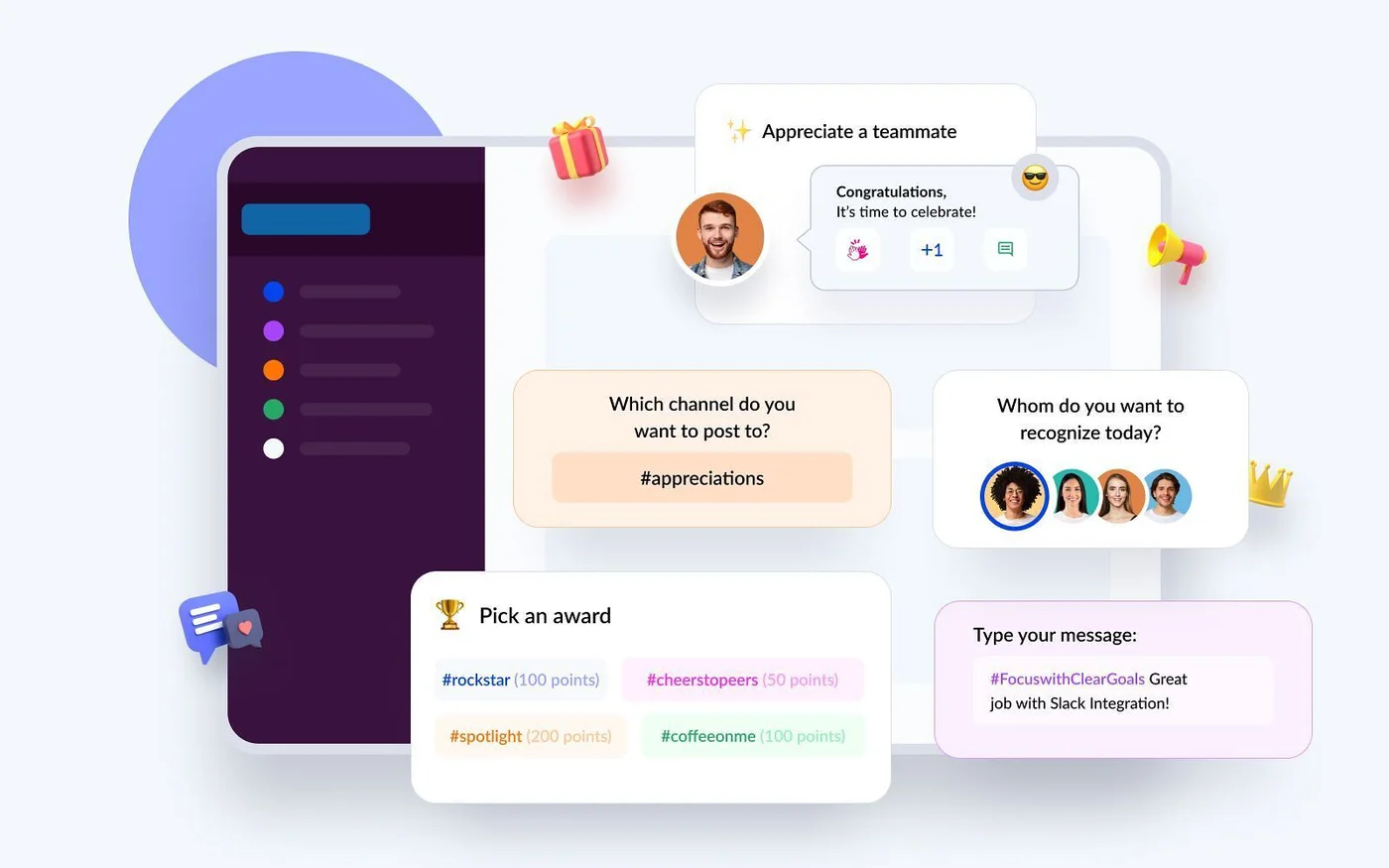
Launch where people already work. Recognition that lives in Slack, Microsoft Teams or email gets used far more than a separate portal. Empuls, for example, lets employees pick a colleague, choose an award and post appreciation to a team channel without leaving their chat tool. Our guide to communicating the launch of an employee recognition program includes templates.
3. Hold recognition moments on a regular cadence
Regular recognition events keep the program visible, set expectations and give employees something to look forward to. The right frequency depends on the type of recognition, so most year-round strategies layer several cadences:
| Cadence | What happens | Who leads | Example |
|---|---|---|---|
| Daily | Informal thanks and peer shout-outs tied to values | Everyone | A specific note: you did a great job resolving that escalation today |
| Weekly | Recognition round in team meetings, manager notes | Managers | Three shout-outs at the start of the Monday stand-up |
| Monthly | Top performers or values champions celebrated in a town hall | Department heads | A one-hour monthly town hall with awards for the month's achievers |
| Quarterly | Nomination-based awards and a team celebration | HR with a jury | Quarterly values awards plus team building, if the budget allows |
| Annual | Year-end awards event and program review | Leadership and HR | An annual celebration with awards for the year's top contributors |
| Moment-driven | Work anniversaries, birthdays, promotions and life events | Managers and peers | Automated anniversary wishes with a reward the employee chooses |
Daily recognition carries the program. A simple message such as you did a great job today, sent the same day, does more for engagement than a big event months later. For quick ideas, see these on-the-spot recognition ideas.
4. Provide recognition in various forms
We often think of a recognition program as an awards event, but it goes far beyond that. Mixing forms of recognition keeps the program fresh across the year and reaches people who respond to different things:
- Formal recognition: Officially recognizing and rewarding employees, usually in public. A monthly awards moment for top achievers is a good example.
- Informal recognition: Unofficial appreciation, such as a supervisor giving a thumbs up or a quick word of thanks for a job well done.
- Monetary recognition: Rewards with financial value for meeting or exceeding targets, such as bonuses, points, gift cards and incentives.
- Social recognition: Peers appreciating each other's work in public or private. It is especially meaningful because it comes from people who see the work every day.
- Day-to-day recognition: Informal recognition that happens daily, such as a supervisor telling the floor that a colleague just closed a big sale.
- Celebratory events: Organized celebrations for everyone, such as an annual party or a milestone celebration.
Rotate forms through the year so no single type dominates. For low-cost options, read our guide to non-monetary employee recognition.
5. Monitor and measure employee performance
Performance monitoring is a crucial part of the program. Consistent tracking and fair evaluation prevent disputes and make sure the right people are recognized. Above all, the goal is to improve performance by spotting what works and what needs support. Performance KPIs usually focus on three areas:
- Efficiency and productivity: How quickly and how much people deliver, such as average handling time in a call center or completed outputs per day in back-office work.
- Quality and compliance: Whether people follow quality standards, standard operating procedures and business policies without deviations.
- Customer satisfaction (CSAT): How satisfied customers are with the service they receive, usually measured through surveys and included in team scorecards.
Measure the program itself too: participation rate, the share of employees recognized each month, recognition given by managers versus peers, and reach across teams and locations. Review these every quarter and adjust. Our guide on how to measure employee recognition programs covers the metrics and an ROI model.
6. Get everyone involved for inclusive recognition
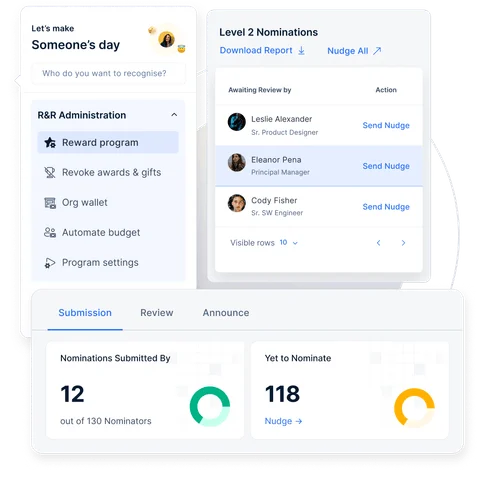
An employee recognition program is not only for HR, and it is not only for front-line workers. It involves every stakeholder, from top management to individual contributors:
- HR team: Initiates, runs and reinforces the program. HR usually forms the engagement team that sets and schedules events and activities.
- Leaders and managers: Coordinate with HR, champion the program in their departments and recognize their teams consistently.
- Employees: Are not just recipients. They deliver their best, recognize peers and can appreciate their managers and leaders too.
Inclusive recognition also means checking who is left out: remote employees, night shifts, frontline teams and quieter contributors. Our guide on how to prevent bias in recognition programs shows how to spot and fix gaps.
7. Promote a culture of appreciation
A recognition program should not be a band-aid for engagement. It should be part of a culture where employees are constantly recognized, appreciated and valued. Here is how to build that culture:
- Open lines of communication: Encourage interaction within and across departments, break down silos and support cross-functional collaboration.
- Appreciate small wins: Recognition does not have to be grand. A genuine thank you or good job creates real momentum.
- Connect employees to a bigger purpose: Show how recognized work supports customers, colleagues and the company's mission, which builds job satisfaction and career growth.
- Spread positivity: Gratitude, appreciation and congratulations create ripple effects that make the workplace a better place to work.
For more on the long game, read our guide to creating a culture of recognition.
A 12-month year-round recognition calendar
This calendar turns the cadence above into a plan for the year. Everyday and monthly recognition run in every month, so each row adds only the theme and the extra moments worth planning ahead; adjust the observances to the countries you operate in.
| Month | Theme | Moments to plan |
|---|---|---|
| January | Fresh start | Year-end award winners announced, new goals and values refresher, recognize people who finished last year strong |
| February | Teamwork | Cross-functional shout-outs, recognize collaboration on early-year projects |
| March | Appreciation | Employee Appreciation Day on the first Friday of March, International Women's Day on March 8, Q1 awards |
| April | Safety and care | World Day for Safety and Health at Work on April 28, recognize safe practices and helpfulness |
| May | Growth | Recognize new skills, certifications and mentors, mid-year check on program metrics |
| June | Wellbeing | Wellness challenges with recognition, Q2 awards, half-year program review |
| July | Interns and new joiners | Celebrate first wins of recent hires and interns, peer welcome posts |
| August | Innovation | Recognize ideas, process improvements and experiments, including ones that did not work |
| September | Customer impact | Q3 awards, share customer praise and the people behind it |
| October | Service and wellbeing | Customer Service Week in the first full week of October, World Mental Health Day on October 10 |
| November | Gratitude | World Kindness Day on November 13, thank-you campaigns, leadership notes to every team |
| December | Celebration | Q4 and annual awards, year-end celebration, program review and next year's budget |
For March in detail, see our Employee Appreciation Day ideas, and for anniversaries, these years of service award ideas. If your team is distributed, pair the calendar with these virtual employee recognition ideas.
How Empuls supports a year-round recognition strategy
A year-round strategy needs recognition that runs without constant manual effort. Empuls brings the everyday, scheduled and moment-driven layers together:
- Everyday recognition: Peers, managers and leaders recognize each other in the moment, with wins celebrated on the Wall of Fame and recognition that reaches Slack, Microsoft Teams and email, through Empuls recognition.
- Scheduled award programs: Run award campaigns and nominations with eligibility, approval workflows and winner announcements, plus spot awards tied to your values.
- Automated moments: Celebrations for birthdays, anniversaries and new joiners flow in from your HRMS, with peer wishboards and AI-drafted messages.
- Control and reporting: Manage budgets, set approval rules and track adoption, participation and ROI with real-time dashboards.
Not sure where your current program stands? Take the free recognition program scorecard to score five dimensions in about three minutes and get three prioritized next steps.
Make appreciation part of every month
Companies can no longer afford to overlook the power of appreciation. A year-round employee recognition strategy drives higher morale, stronger engagement, better performance and retention, and steadier business growth. Plan the year, launch it clearly, layer daily, periodic and moment-driven recognition, measure what happens and involve everyone. When recognition is intentional, consistent and genuine, it lasts well beyond any single event.
Book your Empuls demo
Frequently asked questions
Year-round recognition is the practice of appreciating employees consistently throughout the year, not only at annual reviews or award ceremonies. It combines everyday peer and manager praise with regular award moments, milestone celebrations and an annual event, so every employee feels noticed often and the culture of appreciation never pauses.
Employees should receive some form of specific recognition every week or two, from a manager or peer, with larger awards monthly or quarterly and celebrations for milestones. Gallup's Q12 engagement survey asks whether employees received recognition or praise in the last seven days, which shows how frequent effective recognition needs to be.
A strong employee recognition strategy has clear goals, defined behaviors and values to recognize, a mix of formal and informal recognition, a regular cadence, a budget for the full year, roles for HR, managers and peers, and metrics such as participation and reach. It should also include milestones such as work anniversaries and a quarterly review.
Keep a recognition program alive by making daily recognition easy in tools people already use, scheduling recurring award moments in advance, automating milestones, sharing recognition publicly and reporting participation to leaders every month. Refresh award categories and themes each quarter so the program does not feel repetitive.
Track participation rate, the share of employees recognized each month, recognition given by peers versus managers, reach across teams and locations, and redemption of rewards. Then connect these to outcomes such as engagement scores, retention and performance. Review the data every quarter and adjust cadence, budgets and award categories.
A recognition calendar should include recurring cadences, such as weekly shout-outs and monthly or quarterly awards, plus key dates such as Employee Appreciation Day, company milestones, year-end awards and observances relevant to your workforce. Add work anniversaries, birthdays and promotions as they occur, and schedule program reviews twice a year.
Recognition is everyone's responsibility. HR designs and runs the program, leaders champion it and set the tone, managers recognize their teams regularly and employees recognize peers. Spreading ownership keeps recognition frequent and fair, and it prevents the program from depending on one busy manager or one annual event.





































































































































































































































































































































































































































































































































































