
Key Takeaways
Employee financial wellbeing means employees can meet living costs, handle unexpected bills and plan for the future without constant money worry.
PwC's 2026 survey found 59% of employees are stressed about their finances and 49% say pay is not keeping up with the cost of living.
Effective financial wellness programs combine short-term support, such as earned wage access and emergency help, with long-term retirement and education support.
An anonymous needs survey shows which money problems matter most, so you fund the benefits that fix the biggest gaps.
Track participation, utilization, financial stress and retention to prove that financial wellbeing benefits are working.
Employee financial wellbeing is the state in which employees can meet their living costs, handle an unexpected bill and plan for the future without constant money worry. Employers support it with fair pay, benefits that smooth cash flow and lower everyday costs, financial education and a clear policy that people actually use.
Financial stress is one of the main symptoms of poor financial wellbeing, and it shows up at work as distraction, lower productivity, absence and turnover. In an uncertain economy, standard wages are no longer enough for many workers. This guide explains what financial wellbeing at work means, the problems employees face right now, the financial wellness programs for employees that help and a step-by-step policy, with a ready-to-use needs survey to start with.
What employee financial wellbeing means
Financial wellbeing at work means feeling secure and in control of your finances, both today and in the future. It is the peace of mind that comes from knowing you can pay your living costs and deal with emergencies, and the freedom of choice that comes when you are no longer counting every penny.
It goes beyond the employee's own financial position. It also reflects the employer's mindset: how fairly people are paid, which benefits they receive and how much attention the organization pays to the things that matter most to them. As the income provider, the employer plays a critical role.
Too many companies still offer only short-term fixes, such as a one-off bonus, instead of helping employees build lasting security. Employees notice. When they cannot find long-term support at work, many move to employers that offer it or turn to gig work for extra income. For the broader benefits picture, see this guide to employee benefits.
Why financial wellbeing at work matters
Money worries do not stay at home. They follow people to work, where they affect concentration, sleep, mood and relationships with colleagues and customers. The latest data shows how widespread the problem is.
59%
of employees
are stressed about their finances (PwC, 2026)
49%
of employees
say pay is not keeping up with the cost of living (PwC, 2026)
30%
of employees
have less than $1,000 in emergency savings (PwC, 2026)
63%
of US adults
would cover a $400 emergency with cash (Federal Reserve, 2026)
The state of employee financial wellbeing
PwC's 2026 Employee Financial Wellness Survey found that 59% of employees are stressed about their finances, 49% say their pay is not keeping up with the cost of living, 53% have less than $5,000 saved for emergencies and 52% do not feel capable of planning for long-term goals. The Federal Reserve's report on the Economic Well-Being of US Households in 2025 shows that 73% of adults are doing at least okay financially, but only 63% would cover a $400 emergency expense with cash or its equivalent.
This is why financial wellbeing is one of the strongest levers for engagement and retention. When employees feel financially secure and appreciated, they focus better, stay longer and are more likely to recommend you as an employer. Financial stress also feeds burnout, so it belongs in any plan for how to prevent burnout in the workplace.
Financial problems your employees face right now
Before you design a program, understand the money problems an average employee is dealing with. These five come up most often, with cash flow and debt at the top because they cause the most day-to-day stress.
1. Cash flow and debt
The inability to save is one of the biggest problems employees face, and it is tied to tight cash flow and debt. Pay often fails to keep up with rising living costs, so even everyday expenses are a struggle, and a small unexpected bill can push people toward high-interest credit. Credit card balances, personal loans and late fees then add to the pressure month after month.
2. Weak retirement savings
When money is tight, retirement saving is the first thing to go. Employees save less, and some withdraw from retirement accounts early to cover today's bills, which costs them later. Traditional retirement programs rarely address these short-term pressures, so they miss a key cause of stress.
3. Lack of financial planning
Without good financial education and support, people struggle to look ahead. Many have never estimated what they will need in retirement or built a simple budget. PwC's 2026 survey found that 41% of employees say their education or personal background did not prepare them to manage their finances, and that gap feeds the anxiety that affects work.
4. The sandwich generation
Many employees support both children and aging parents at the same time. Childcare, school fees, elder care and medical costs stretch household budgets in two directions. Employers can help by designing benefits around family spending, such as dependent care support and flexible allowances.
5. Student loans
Student debt keeps many younger employees from saving or investing. A useful US option is student loan matching: under SECURE 2.0, employers can make retirement plan matching contributions based on employees' qualified student loan payments, and IRS interim guidance issued in 2024 explains how 401(k), 403(b), governmental 457(b) and SIMPLE IRA plans can do it. Some employers also contribute directly to loan repayment.
Ease money stress with benefits people use
Offer salary advance, tax-saving allowances, flexible budgets and discounts from one app employees already open.
Talk to our ExpertTrusted by 5,000+ companies
Financial wellness programs for employees: types of benefits
Employer financial wellness benefits fall into four groups, from core protection to everyday savings. Core protection comes first because it guards against the large shocks, such as illness or job loss, that can undo years of saving; the other groups add income, lower costs and flexibility on top.
1. Core financial protection benefits
These are the foundations that help employees earn, save and protect their money. Some are required by law in certain countries, while others are offered at the employer's discretion:
- Retirement plans: Employer-matched retirement plans build a long-term asset, and pre-tax contributions lower taxable income.
- Healthcare coverage: Health, dental and vision cover for employees and often their families protects against large medical bills.
- Life and disability insurance: Group life cover and short or long-term disability insurance replace income if someone cannot work.
- Legal assistance: Access to lawyers for family law, fraud, identity theft, tax questions and property transactions avoids costly surprises.
- Paid time off: Enough paid leave lets people rest and handle family needs without losing income.
2. Financial incentives
Financial incentives reward performance and milestones, and they add to income in ways that motivate:
- Sales and partner incentives: Target-based commissions and spot incentives reward people who drive revenue.
- Referral bonuses: Cash or vouchers when a referred candidate joins.
- Gamified rewards: Points from challenges and leaderboards that employees redeem for gift cards, vouchers or cashback.
- Profit-sharing: A share of company profits, often paid into retirement accounts, that ties rewards to business results.
- Celebration rewards: Cash or gift cards for birthdays, work anniversaries, weddings or the birth of a child.
3. Financial perks and allowances
Perks and allowances lower the cost of daily life and life events:
- Lifestyle and relocation allowances: Budgets for travel, rent, food or moving costs when people relocate.
- Childcare and tuition assistance: On-site or partner childcare, and support with school or college fees.
- Education stipends: Funding for courses, certifications and higher education that raise earning power.
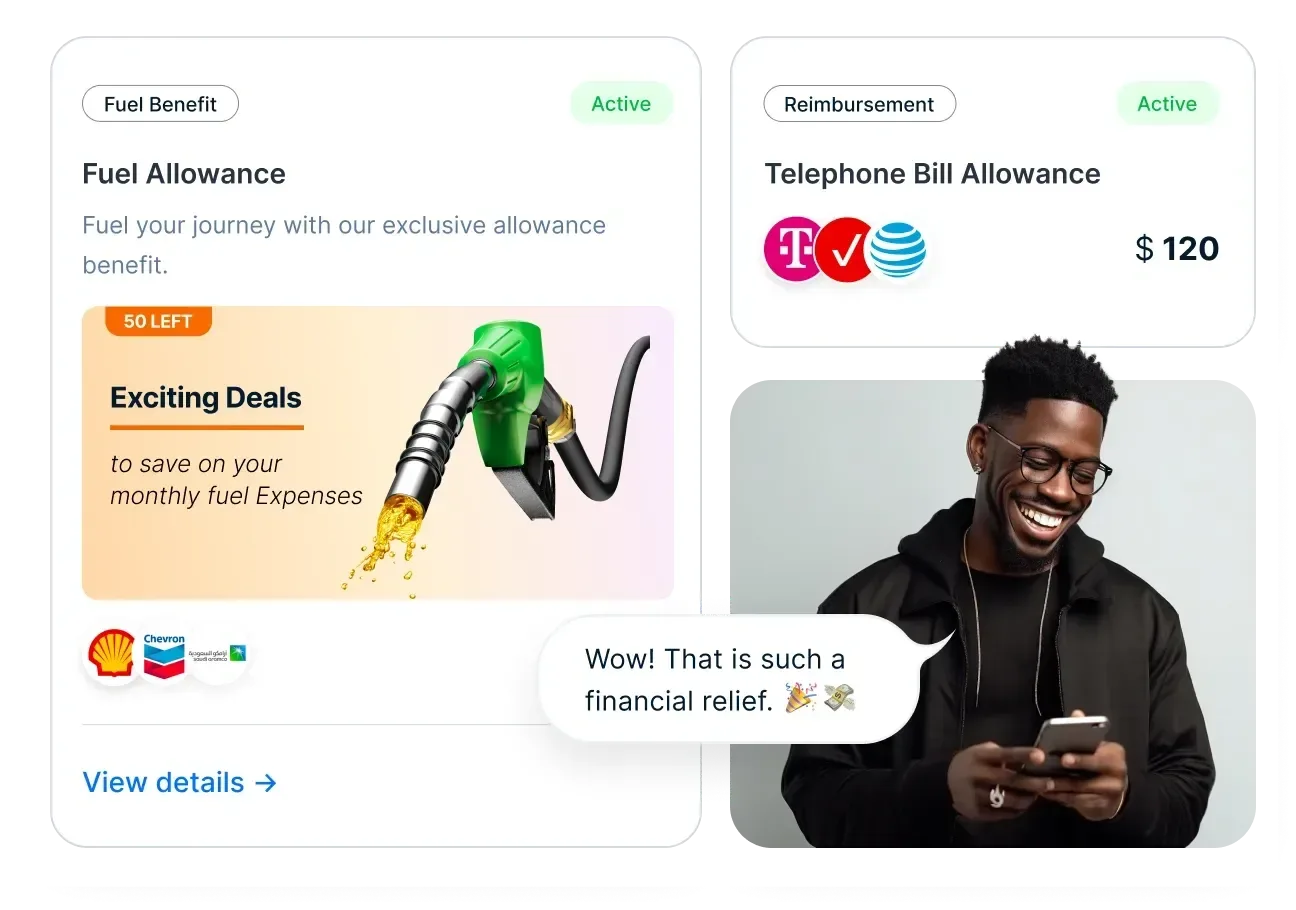
- Tax-saving allowances: In markets such as India, meal, fuel, telecom and books allowances can be structured to reduce taxable income. This guide to non-taxable employee benefits explains the options.
4. Supplementary financial support
These benefits help when bills do not line up with payday:
- Earned wage access: Employees withdraw part of the salary they have already earned before payday, which avoids high-interest loans for emergencies such as car or home repairs and medical bills.
- Emergency loans and savings support: Short-term, low-cost loans or employer-supported emergency savings give a cushion for bigger shocks. Read how to set up an emergency loan program for employees.
- Housing support: Help with deposits or rent for employees in expensive housing markets, which can also cut long commutes.
- Employee discounts and cashback: Savings on groceries, fuel, travel, dining and electronics stretch every paycheck. Compare options in this guide to employee discount platforms.
Financial wellbeing needs survey
Knowing how to support employees with financial stress starts with listening, because the right mix of benefits depends on what your people are struggling with. Run these eight statements as an anonymous survey on a 5-point scale from strongly disagree to strongly agree, then use the right-hand column to match each weak spot to a benefit.
| Area | Statement to rate (1 to 5) | If many disagree, consider |
|---|---|---|
| Cash flow | I can cover my essential monthly expenses without borrowing. | Earned wage access, pay review, everyday discounts |
| Emergencies | I could handle an unexpected $500 expense without stress. | Emergency savings support, low-cost emergency loans |
| Debt | My debt payments feel manageable. | Debt counseling, student loan matching or repayment help |
| Retirement | I am saving enough for retirement. | Retirement match, auto-enrollment, planning sessions |
| Knowledge | I feel confident making financial decisions. | Workshops, one-to-one financial coaching |
| Family | I can afford the care my family needs. | Dependent care support, flexible allowances |
| Benefits | I understand and use the financial benefits I have. | Better communication, simpler benefits app |
| Focus | Money worries rarely distract me at work. | A broader financial wellbeing program and manager awareness |
Treat any statement where more than 30% of people disagree as a priority. Break results down by location, pay band and life stage, because a frontline worker on hourly pay and a mid-career manager with a mortgage need different support. Add these statements to your regular employee benefits survey so you can track change over time.
How to build an employee financial wellbeing policy
A strong financial wellbeing policy takes seven steps, from assessing needs to measuring results. Assessing needs and setting objectives come first because they decide which benefits are worth funding and how you will know if they work.
1. Assess employee needs first
Use the needs survey, one-to-ones and feedback forms to uncover financial stressors. Look for common debt burdens, emergency savings levels, retirement readiness and financial confidence, and tailor the policy to what you find.
2. Define clear objectives
Be explicit about what the policy should achieve, such as reducing financial stress, improving financial confidence, lifting retention and supporting life-stage needs like child education and elder care. Set KPIs such as participation rate, benefit utilization and change in your employee net promoter score.
3. Offer short-term and long-term support
A balanced policy covers both immediate needs and long-term resilience:
- Short-term: Earned wage access, emergency funds or loans, discount programs and on-demand pay.
- Long-term: Retirement planning, insurance cover and investment guidance sessions.
4. Promote financial education
Education sits at the core of any financial wellbeing strategy. Offer workshops and webinars on budgeting, saving, debt and investing, one-to-one financial coaching and resources from trusted financial partners. Keep them ongoing and easy to find in an app, intranet or HR portal, and make it clear that asking for help is confidential and normal.
5. Personalize with flexible benefits
Every employee has different priorities. Lifestyle spending accounts and flexible allowances let people put a set budget toward what matters to them, such as wellness, upskilling, commuting or family care, while HR keeps control of the overall budget.
6. Communicate clearly and often
A good policy fails without awareness and adoption. Send regular updates through email, the intranet and team meetings, equip managers to talk about the benefits and share real stories of employees who used them. Remind people at life moments such as onboarding, a new child or a move.
7. Measure, refine and repeat
Track participation, feedback and satisfaction regularly. Use the data to find underused benefits, improve communication and adjust the offering as needs change.
How to measure financial wellbeing at work
Measure both use and outcomes, so you can show leadership what the investment achieves:
| Metric | How to calculate it | What it tells you |
|---|---|---|
| Participation rate | Employees using at least one financial benefit ÷ eligible employees × 100 | Whether people know about and value the program |
| Benefit utilization | Users of a specific benefit ÷ eligible employees × 100 | Which benefits work and which are invisible |
| Financial stress score | Share agreeing that money worries rarely distract them at work | Whether stress is falling over time |
| Emergency readiness | Share able to cover an unexpected $500 expense without stress | Whether short-term resilience is improving |
| Retention | Regretted leavers ÷ average headcount × 100, split by users and non-users | Whether financial support helps you keep people |
How Empuls supports employee financial wellbeing
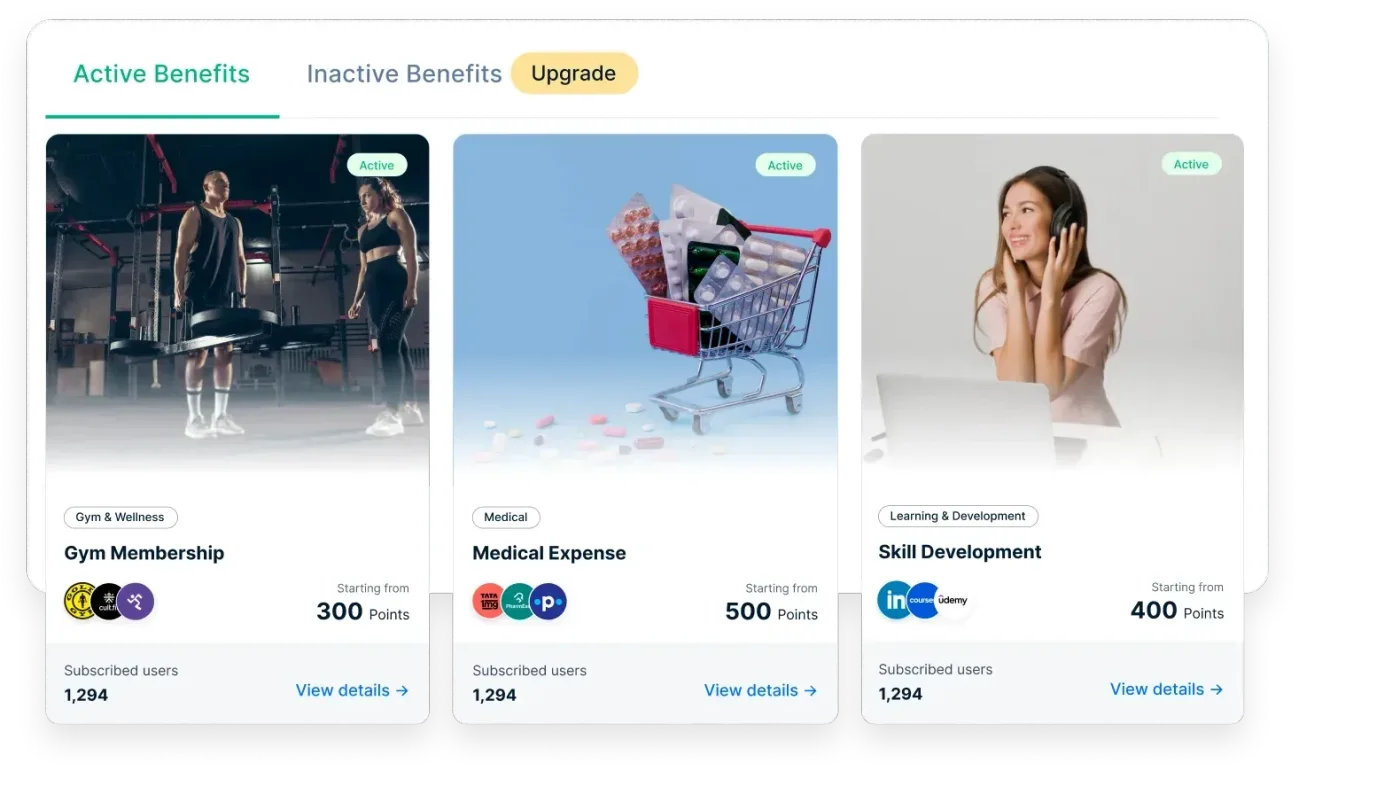
Empuls brings the short-term and long-term pieces of financial wellbeing into one platform, so HR can launch and manage them without juggling vendors, and employees can see everything in one app:
- Financial wellness benefits: Empuls financial wellness includes salary advance and earned wage access, along with other lending and investment options through regulated partners, available market by market.
- Tax-saving benefits: Tax-saving benefits deliver allowances such as meals, fuel, telecom and books on a multi-wallet card.
- Lifestyle spending accounts: Lifestyle accounts give employees flexible budgets for fitness, learning, commuting, family care and more.
- Employee discounts: Discounts on brands employees already use help stretch every paycheck.
Financial wellbeing is a shared investment
Employee financial wellbeing is no longer optional. When people can cover their costs, handle emergencies and plan ahead, they bring more focus and energy to work, and they are more likely to stay.
Start with the needs survey, fund the support that fixes the biggest gaps and measure progress every quarter. Financial wellbeing works best as part of a broader employee wellbeing program and a total rewards approach.
Book your Empuls demo
Frequently asked questions
Employers can help with financial stress by paying fairly, offering earned wage access or low-cost emergency loans, providing financial education and one-to-one coaching, and adding benefits that lower everyday costs, such as discounts and tax-saving allowances. Asking employees what they struggle with first, through an anonymous survey, makes sure the support matches real needs.
Common financial wellness programs include financial coaching and workshops, budgeting tools, earned wage access, emergency savings or loan programs, retirement matching, student loan matching or repayment help, tax-saving allowances, employee discount programs and flexible lifestyle spending accounts. Most employers combine short-term support with long-term saving and education.
Measure employee financial wellbeing with an anonymous survey on cash flow, emergency readiness, debt, retirement saving, confidence and how often money worries distract people at work. Track participation and utilization of financial benefits, and compare retention between users and non-users. Repeat the survey every six to twelve months to see trends.
Financial stress makes it harder to concentrate, disrupts sleep and raises irritability, which lowers productivity and the quality of work. It is linked with more absence, presenteeism and burnout, and it pushes people to look for better-paid jobs or extra gig work. Over time, it reduces engagement and increases turnover.
Earned wage access can help employees cover an emergency without turning to high-interest payday loans or overdrafts, because they draw on pay they have already earned. It works best with low or no fees, sensible limits and financial education, so it remains a safety net rather than a regular way to stretch each month.
The terms are often used interchangeably. Financial wellness usually describes the programs and benefits an employer offers, such as coaching or earned wage access. Financial wellbeing describes the outcome for the employee: feeling secure and in control of money today and in the future. Good wellness programs aim to improve wellbeing.
Yes. Small businesses can start with low-cost options such as free financial education sessions, an employee discount program, flexible pay timing through an earned wage access provider and a simple retirement plan. A benefits platform keeps administration manageable, and even a modest flexible allowance can make a noticeable difference to employees.





































































































































































































































































































































































































































































































































































