
Key Takeaways
Only 20% of employees worldwide were engaged in 2025, and Gallup estimates low engagement cost about $10 trillion in lost productivity.
The most effective employee engagement strategies are daily manager habits: clear direction, psychological safety, space, support, feedback and recognition.
Managers account for about 70% of the variance in team engagement, so engaging and training managers comes before any program.
Well-recognized employees are 45% less likely to have left their employer two years later, according to Gallup and Workhuman.
Roll out two or three strategies at a time, give each an owner and a metric, and tell employees what changed after every survey.
Employee engagement strategies are deliberate practices that make people want to invest their energy in their work: clear direction, a safe environment, real support, regular feedback and recognition, growth and connection across the business. The 11 strategies below are practical, research-backed and work for office, hybrid and frontline teams alike.
The stakes are high. According to Gallup's State of the Global Workplace 2026 report, only 20% of employees worldwide were engaged in 2025, and low engagement cost the global economy an estimated $10 trillion in lost productivity, about 9% of global GDP. Imagine the impact of unlocking even part of that potential with the right employee engagement strategies.
Engagement is more than a buzzword; it is a driving force behind organizational success. Picture a workplace where people are not just clocking in but are genuinely invested and motivated. That doesn't happen by accident. It takes intentional strategies and a real understanding of what motivates your workforce, especially in today's fast-paced, distributed world.
Understanding employee engagement
Employee engagement is much bigger than job satisfaction. It is about creating a productive, driven workplace where people bring emotional commitment, a sense of purpose and discretionary effort. Employees who are emotionally committed are more likely to go the extra mile and stay loyal, and when their sense of purpose aligns with the company's mission and values, you have the foundation of a highly engaged workforce. For the theory and evidence behind this, read employee engagement: a research perspective.
Gallup sorts employees into three groups based on attitudes and performance:
- Engaged: Employees who are passionate about their work and dedicated to the company's goals. They spread positivity and act as brand advocates. Gallup counts 20% of employees worldwide in this group.
- Not engaged: Employees who complete required tasks but show little interest in the company and little initiative. This is the largest group, at roughly 64% worldwide.
- Actively disengaged: Unhappy employees who underperform, spread negativity and discourage others. Gallup puts this group at 16% worldwide.
The global split comes from Gallup's engagement and productivity research. Most employees sit in the middle, which is good news: the not-engaged group can be moved with better management.
Benefits of a highly engaged workforce
A highly engaged workforce is a powerful asset. Engaged employees are more productive and innovative, and companies with high engagement see lower turnover, more satisfied customers and better profitability. Investing in engagement is an investment in the future of your organization.
The strongest evidence comes from Gallup's 2024 Q12 meta-analysis of 183,806 business and work units. Compared with bottom-quartile teams, top-quartile engagement teams showed:
23%
higher profitability
18%
higher sales productivity
78%
lower absenteeism
51%
lower turnover in low-turnover organizations
Top vs bottom engagement quartile, Gallup Q12 meta-analysis (2024)
Managers are the biggest lever. Gallup estimates that managers account for 70% of the variance in team engagement, which is why most of the employee engagement strategies that work are things managers do every day. Yet the same research notes that manager engagement itself has fallen sharply, so engaging your managers comes first.
Core employee engagement techniques
To foster engagement, organizations combine a few foundational techniques tailored to their culture and employee needs. They are also the simplest ways to improve employee engagement, and the base the 11 strategies build on:
01
Regular feedback and recognition
People need to know how they are doing and that their effort is noticed. Positive and constructive feedback keeps them aligned with goals, and recognition, formal or informal, boosts morale and motivation.
02
Professional development
Learning and a visible career path keep people motivated and committed. Training, mentorship and development resources help employees build skills and advance internally.
03
Work-life balance
Flexible work, encouraging paid time off and wellness programs help people keep personal and professional life in harmony, so they stay engaged and productive.
04
A voice in decisions
Involving employees in discussions about policies, projects and goals creates ownership and responsibility, leads to better outcomes and strengthens commitment.
Put these engagement strategies into practice
Run pulse surveys, recognize great work and connect every team from one engagement platform.
Talk to our ExpertTrusted by 5,000+ companies
11 employee engagement strategies that work
These strategies are not just ideas on paper; they are practical ways to create a workplace where people feel connected, valued and inspired to do their best work. The first six are everyday management habits and carry the most weight, because they shape how people feel at work daily, while strategies 7 to 11 are structural programs HR can build around them.
1. Give clear direction
Clarity is the catalyst for any successful employee engagement strategy. If people don't know the goal and objectives of their work, they can't connect with it, and without clarity and direction engagement is hard, if not impossible. Clarify not only what the team is doing but why it matters, and if you can explain why it matters to them personally, even better.
There is a lot of room to improve: Gallup reports that only about half of US employees strongly agree they know what is expected of them at work. Consider an IT services team moving a client to a new platform. Its leaders highlighted that the team would be the first in the company to build skills in the new technology, giving them a competitive advantage and putting them in demand for future projects. Suddenly the migration was about their careers, not just the client's deadline.
2. Create a safe environment
Nothing kills an employee engagement strategy faster than a blame culture, where people are criticized for mistakes and demeaned in front of others for small mishaps. It stops people from taking risks, they keep out of the firing line and do the minimum, and if it gets toxic enough they disengage completely.
Good leaders create an environment where people aren't afraid of mistakes, because that fear itself causes hesitation and more mistakes. When something goes wrong, focus on solutions, not on who is to blame. Give feedback supportively and in private; public post-mortems of individual failure only make people warier. The payoff is measurable: in the APA's 2024 Work in America survey, workers with high psychological safety were 10 times less likely to call their workplace toxic (3% vs 30%).
3. Set people up for success
“Success has a thousand fathers, but failure is an orphan.” Everyone wants to be part of a winning team. We are hard-wired to want achievement, recognition and the self-esteem that comes with a little success.
If you show your teams how to succeed and give them the tools they need, they won't just engage; they'll be excited to be involved. People are not afraid of hard work. They are afraid of failure, and when leaders give them confidence that they can succeed, they work hard to get there. Playing to strengths helps: Gallup finds employees who use their strengths every day are six times as likely to be engaged.
4. Give people space to succeed
If blame is the worst engagement killer, micromanagement is a close second. Even with distributed teams, people disengage when managers constantly chase them through chats, emails and calls. Some micromanagers treat remote employees as a challenge and look for new ways to keep watch, so that working from home still feels like being watched.
Don't do that. Give your team room to make progress before you check in, and ideally agree together on when you'll come back to see how things are going. Giving people space shows that you trust them, and feeling trusted and respected drives engagement. It doesn't mean never checking in; it means checking in at the right, mutually agreed times, which also builds accountability.
5. Offer support when needed
One of the most powerful ways to make people feel they will succeed is to let them know they have your support and can reach out anytime. It's like a safety net for a trapeze artist: they probably won't use it, but knowing it's there boosts their confidence.
Say it at the start: if there are difficulties, unknowns or anything they need help with, they should come to you. This also reinforces a safe environment, where people know that if problems arise they won't be blamed, they'll be helped.
6. Give good feedback and recognition
With distributed teams, communication channels need to be clear, open and used regularly. Set up regular check-ins to share progress; when people can see they are succeeding, it's a strong motivator, and it gives you the chance to offer support and course-correct if things aren't going well.
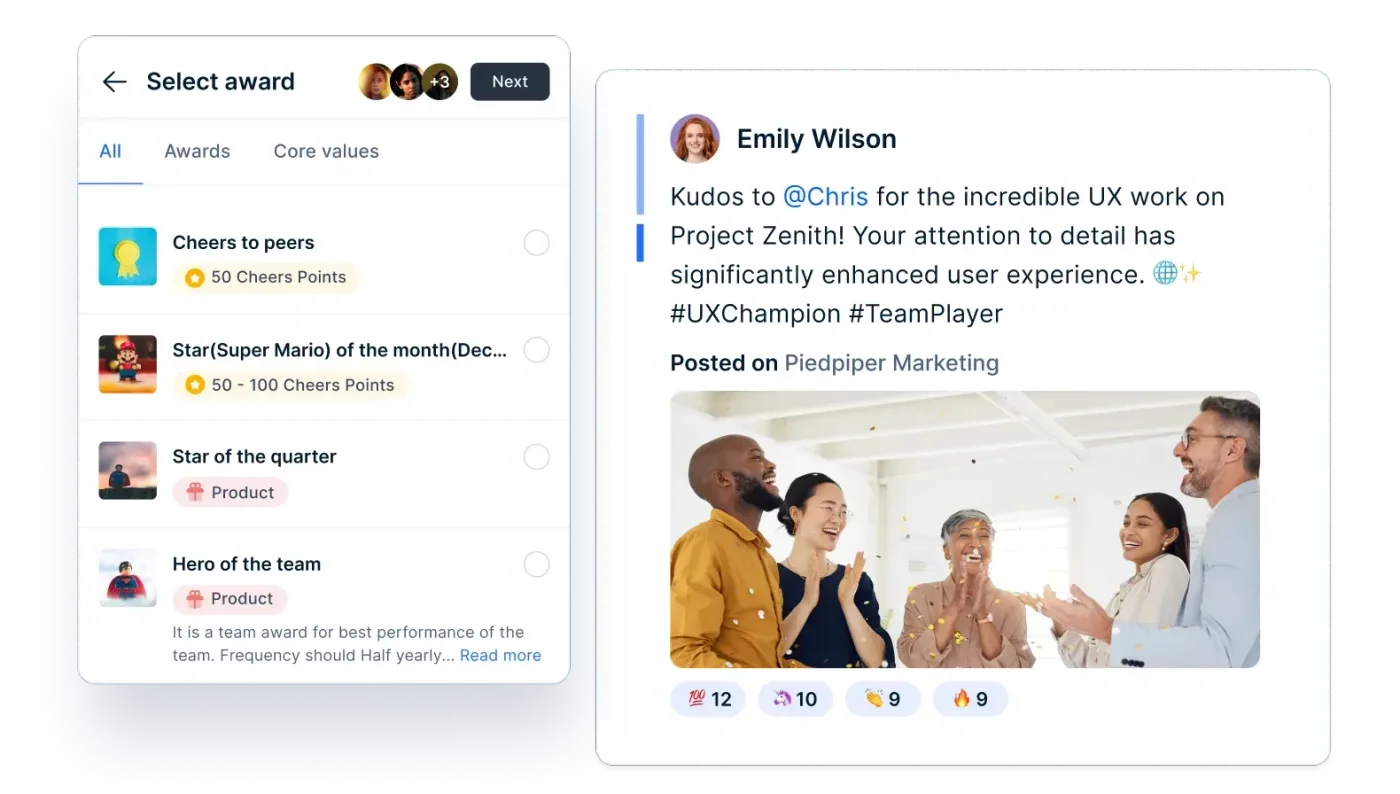
Praise effort and progress too. When people put in the work and get little or no feedback, they quickly slide into an “I don't know why I bother” mindset, the first step toward disengagement. Positive feedback costs nothing, and the return is significant. Research backs this up: a Gallup and Workhuman study found well-recognized employees were 45% less likely to have left their employer two years later. A structured employee recognition program makes this consistent across managers.
These first six habits work with direct reports, suppliers and external staff alike, because they meet basic human needs. The better you get at them, the more engaged your teams become.
7. Offer a tour of duty
Many companies take a reactive approach to retention and engagement: they hire for new skills and cut people to save costs. It serves short-term needs but backfires over time, because employees take the hint, behave like free agents and jump at the next opportunity.
In “The Alliance: Managing Talent in the Networked Age,” LinkedIn co-founder Reid Hoffman and his co-authors propose a different model: the tour of duty. Borrowed from the military, where officers take a defined assignment and then move to the next, it helps people grow skills and experience, avoid career plateaus and get to know the whole organization. The company, in turn, develops talent from within and solves succession problems.
In a tour of duty, the company and employee agree on deliverables, expectations and a timeline, often around two years. At the end, the employee can choose another tour inside the company rather than with a competitor. The promise is not just a salary but greater employability. Encouraging people to seek new assignments may seem counterintuitive, but startups have shown that entrepreneurial employees stay more deeply involved. Time-limited, mutual commitment with clear goals beats vague notions of loyalty.
8. Build alumni and peer networks
Many technology companies run active alumni networks, and the benefit is clear: they tap network intelligence. Alumni can return as boomerang hires or refer new talent, and they bring knowledge from outside the company.
Traditional wisdom says shun past employees and treat exits as permanent. Forward-looking organizations have found it far more rewarding to engage employees, alumni and their networks. Teach people to build and use their networks, and be clear about what is proprietary (confidential, never shared) versus non-public but shareable, such as industry trends or technology changes they are seeing.
Create an alumni group on LinkedIn, host events, invite speakers and offer tickets to alumni and their guests. If you lack the resources for elaborate programs, simply go round the table and ask what new information the team has picked up lately, and appreciate those who share. Over time, people start actively managing their networks for the company's benefit.
9. Support employee wellbeing
Whether you acknowledge it or not, employees come to work carrying personal challenges: broken relationships, health issues, sick family members. Expecting people to arrive unaffected and deliver 100% ignores reality, and engagement programs often underdeliver because they don't connect with employees deeply enough.
Former tech executive and leadership coach Patty Azzarello raised her team's engagement and performance with a simple question: “What do you want me to worry about for you?” It created a trusted space where people could share personal pressures affecting their work, and she then helped them through those challenges.
To institutionalize this, bring in experts such as counselors, coaches, physicians and financial or legal advisors who offer support on a regular basis. Continuous, structured programs let employees go deeper than a one-off health check. They cost money, but so do attrition and disengagement, and wellbeing programs improve experience, productivity and engagement. Explore options in this overview of employee wellness trends.
10. Share business know-how
Most employees are busy with their core jobs and know little about what other teams, divisions or regions do. A developer may not care how marketing promotes the product, and a salesperson may not know how logistics handles inventory. When all they know comes from the CEO's newsletter, their world inside the company is small, minor frustrations loom large and disengagement can set in at any time.
Show people the bigger picture: where their job fits into how the company makes money, how the company fits into its industry and how the industry is faring in the economy. Encourage teams to teach each other, formalize regular know-how sessions and document what is learned.
A simple model helps. Business author Josh Kaufman describes five parts of every business: value creation (making something people want), marketing (attracting attention and interest), sales (turning prospects into paying customers), value delivery (giving customers what they paid for) and finance (bringing in enough money to keep going). Apply the same model to similar businesses, and you give employees, and HR itself, a shared language that adds meaning to every role.
11. Encourage inter-team collaboration
Not only in large enterprises but in companies of 150 people or more, teams often compete when they should collaborate. They bid for the same projects, try to build skills in-house instead of borrowing them from other teams, and over time the organization's skill mix becomes skewed. Guess who is asked to fix that? The HR leader.
Rivalry usually happens because teams don't truly understand each other's role in creating and delivering value. They may know it as information but haven't internalized each other's challenges. Use job shadowing, rotations, cross-functional projects and shared goals to put people in each other's shoes. HR can play a key role in helping business leaders achieve this collaboration and lift productivity across the organization.
5 common employee engagement mistakes to avoid
Many managers unknowingly adopt habits that harm engagement. These five do the most damage to morale and productivity:
- Setting unrealistic expectations and threatening job security: Unattainable targets enforced with threats of termination or pay cuts may look like a productivity push, but they raise stress, invite unethical shortcuts such as pushy upselling, lower engagement and drive turnover.
- Playing favorites: Granting privileges, plum assignments or promotions based on personal relationships lowers morale and job satisfaction, and increases conflict and turnover. Fair, transparent criteria keep everyone motivated.
- Micromanaging employees: Excessive control undermines trust and creativity and leaves people feeling undervalued and restricted.
- Failing to recognize employees: Managers often skip recognition, citing lack of time or doubting it matters. It does: Gallup finds employees who feel inadequately recognized are twice as likely to leave within a year.
- Offering meaningless incentives: Vague or unclear bonus structures leave people feeling undervalued. Incentives should be clear, measurable and realistic, and should mix financial and non-financial rewards that employees actually want.
If these mistakes have already taken hold, start with the warning signs in this guide to employee disengagement.
Employee engagement best practices for rollout
Strategies only work when someone owns them and you track whether they are moving the needle. Use this table to assign each strategy an owner and a leading indicator:
| Strategy | Primary owner | Metric to track |
|---|---|---|
| Clear direction | Managers | Share of employees who know what is expected of them |
| Safe environment and support | Managers, HR | Psychological safety survey items |
| Space to succeed | Managers | Autonomy items in pulse surveys |
| Feedback and recognition | Managers, peers | Recognition frequency and reach per team |
| Tour of duty | HR, business leaders | Internal mobility rate |
| Alumni and peer networks | HR, talent acquisition | Boomerang hires and alumni referrals |
| Wellbeing | HR | Burnout indicators and program participation |
| Business know-how and collaboration | Leadership, HR | Cross-team project count, eNPS |
A few employee engagement best practices apply across the board. Survey first, so you fix the problems people actually have. Pick two or three strategies per quarter rather than all 11 at once. Train managers before asking them to change habits. And close the loop by telling employees what you heard and what you changed. For a step-by-step planning process, use this employee engagement action plan.
Tools that support your engagement strategies
The right tools make these strategies easier to run consistently at scale. Empuls, Xoxoday's employee engagement platform, covers the core needs in one place:
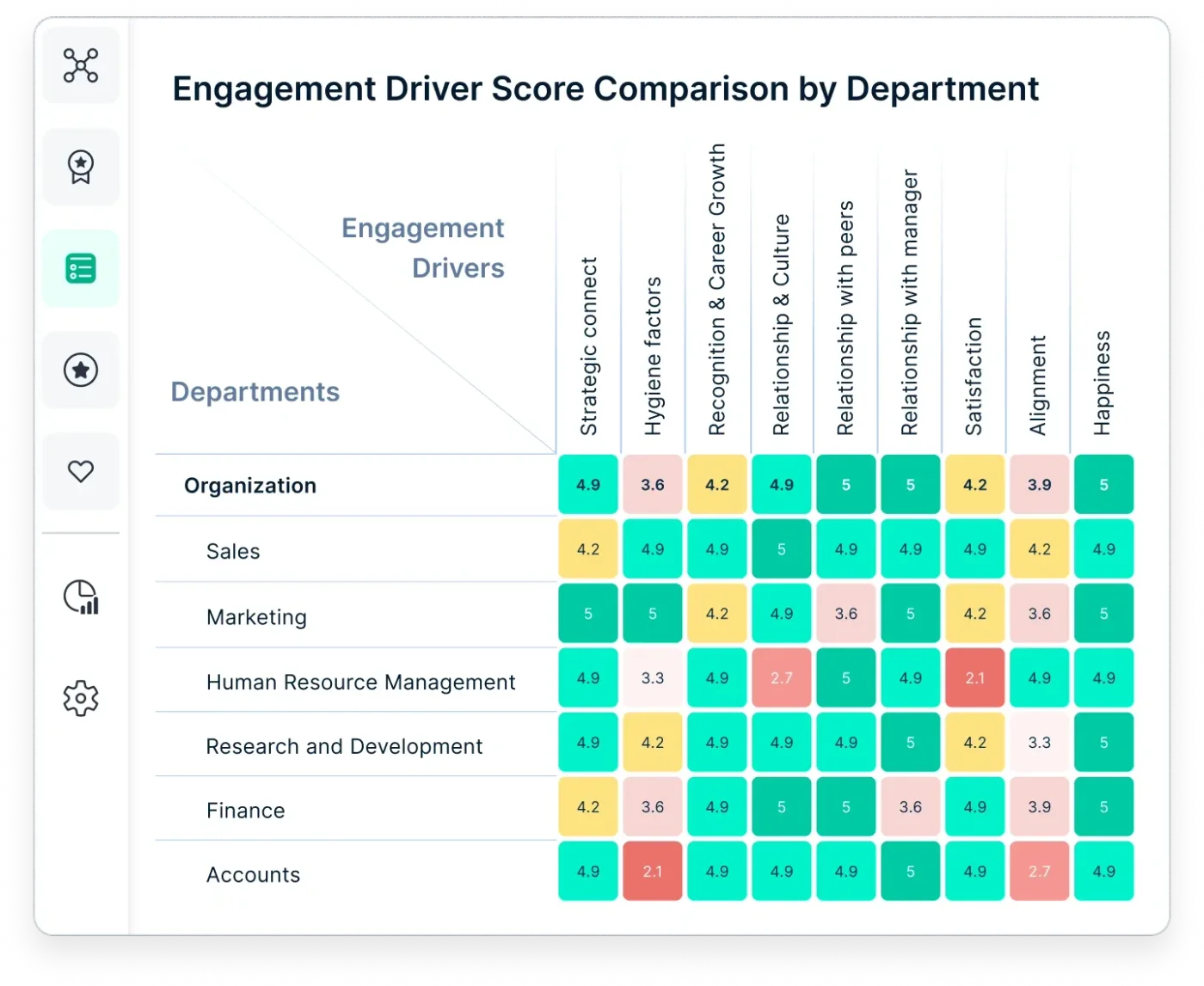
- Pulse surveys and feedback: Run pulse, lifecycle and mood surveys with AI sentiment analysis and action plans, so you understand engagement and the reasons behind the scores.
- Recognition and rewards: Give value badges, spot awards, peer awards and nomination-based awards with jury panels through Empuls recognition, with rewards across 175+ countries.
- Internal communication: Share company news, run polls and celebrate wins on a social intranet that keeps distributed and frontline teams connected.
- Wellbeing and milestones: Launch wellness programs and fitness challenges, and automate rewards for project completions, training and other milestones.
Pair these with a learning management system for training, and you have the infrastructure for every strategy on this list.
Make engagement a habit, not a project
Employee engagement is essential for organizational success. Clear direction, a safe environment, regular feedback and recognition, development and wellbeing support create a highly engaged workforce when you practice them consistently.
There is no one-size-fits-all approach. Adapt these employee engagement strategies to your culture, goals and people, measure what changes and keep refining. If you are wondering how to increase employee engagement without a big budget, start with the habits your managers can apply this week, then build the programs around them.
Book your Empuls demo
Frequently asked questions
The most effective employee engagement strategies are everyday management habits: giving clear direction, creating psychological safety, giving people autonomy, offering support, and providing regular feedback and recognition. Structural programs such as career development, wellbeing support and cross-team collaboration amplify them. Because managers drive most of the variance in team engagement, start by engaging and training managers.
To increase employee engagement quickly, run a short pulse survey to find the biggest pain points, then act visibly on one or two of them within weeks. Clarify goals and expectations, start recognizing good work regularly and cut unnecessary check-ins. Tell employees what you heard and what you changed, since closing the loop builds trust fast.
The 5 C's are a popular practitioner framework: clarity, so people understand their roles and goals; confidence, through the right tools and training; communication, with open two-way feedback; connection, through strong relationships and teamwork; and congratulation, by recognizing and rewarding achievements. It is a useful checklist rather than a research model, and it maps well to the strategies above.
Gallup groups employees into three types. Engaged employees are enthusiastic and committed to their work and workplace. Not engaged employees do what is required but put in little extra energy. Actively disengaged employees are unhappy and can undermine others. In 2025, Gallup found 20% of employees worldwide were engaged and 16% were actively disengaged.
Measure engagement strategies with a mix of survey and business data. Track engagement scores and eNPS from regular pulse surveys, plus specific items such as role clarity and psychological safety. Then watch business metrics like regretted attrition, absenteeism, productivity and internal mobility. Compare teams before and after each strategy to see which ones move the needle.





































































































































































































































































































































































































































































































































































