
Key Takeaways
Remote employee engagement is the emotional commitment and connection that employees working away from the office feel toward their work, team and organization.
Fully remote US employees are slightly more engaged than average, at 32% in Gallup's August 2026 data, but they report more daily loneliness than on-site peers.
The most effective ways to engage remote employees are frequent public recognition, timely feedback, open communication, interest-based communities and localized rewards.
A fixed rhythm of daily check-ins, weekly one-on-ones, monthly pulse surveys and yearly meetups turns engagement ideas into lasting habits.
Track remote engagement monthly with a short pulse on connection, recognition, clarity, feedback, tools, balance and growth, and act on falling scores early.
To engage remote employees, replace the moments an office creates by accident with moments you create on purpose: frequent recognition, regular feedback, open communication, real connection and benefits that fit each person's location. This guide explains how to engage remote employees with 25 practical ideas, a weekly engagement rhythm you can copy and the pulse questions that tell you whether it is working.
Remote work is not going anywhere. What started as a temporary shift is now a long-term reality for many teams, and it brings a lasting challenge: keeping people connected, motivated and aligned without the office water cooler. The goal has not changed, only the tools have: connection, motivation and shared purpose, wherever people work.
What remote employee engagement means
Remote employee engagement is the level of emotional commitment, energy and connection that employees who work away from the office feel toward their work, their team and the organization. In an office, engagement builds naturally through casual chats, team lunches and in-person thanks. In a remote setup, it needs intention: you create moments that matter, even when they happen through a screen.
Remote workers are not less engaged by default. Gallup's hybrid work indicator shows that in August 2026, 32% of exclusively remote US employees were engaged, compared with 29% of all US employees. As of the same month, 54% of remote-capable US employees worked hybrid and 25% worked fully remotely. The risk is connection, not commitment: Gallup's State of the Global Workplace data found that 24% of exclusively remote employees felt lonely a lot of the previous day in 2025, against 18% of on-site employees in remote-capable jobs.
79%
of remote-capable US employees
work hybrid or fully remote (Gallup, Aug 2026)
32%
of fully remote employees
are engaged, vs 29% of all US employees (Gallup, 2026)
24%
of fully remote employees
felt daily loneliness in 2025 (Gallup)
Remote employee engagement at a glance
True engagement in remote work is not only about productivity. It is about emotional connection, a sense of belonging and clear communication. When employees feel aligned with the company's goals and supported in their work, they stay motivated and contribute actively. There is no one-size-fits-all answer: it starts with understanding what makes your people feel included.
Common remote engagement challenges and how to solve them
Most remote engagement problems come from a few predictable gaps. Map yours against this table before you pick tactics, because the right fix depends on which gap is widest.
| Challenge | What it looks like | What helps |
|---|---|---|
| Invisibility | Good work goes unnoticed because nobody sees it happen | Public, frequent peer and manager recognition |
| Isolation | People feel lonely and miss casual conversation | Interest groups, virtual coffee chats, occasional meetups |
| Unclear expectations | Employees are unsure what good looks like | Meaningful, realistic goals and regular one-on-ones |
| Communication gaps | Important news reaches people late or not at all | A single social intranet plus multiple channels |
| Time zone friction | The same people always join calls at odd hours | Rotating meeting times and asynchronous updates |
| One-size-fits-all perks | Rewards and benefits do not fit local needs | Choice-based, localized rewards and benefits |
How to engage remote employees with rewards and recognition
Recognition is the fastest way to make remote work visible, so it comes first. These five ideas move from what to recognize to how to make recognition part of your culture.
- Recognize the right efforts and behaviors: Remote employees keep adding value to the business, so set up ways to spot and reward exceptional contributions in time. Value-based awards work well for recognizing commendable efforts and behaviors, even when remote working conditions are less than perfect. See how to design a values-based recognition program.
- Recognize and appreciate in public: Public recognition needs rethinking when employees are remote. Distributed teams cannot be thanked in person, so use a shared channel in Slack or Microsoft Teams or an employee engagement platform to let the wider team see the work.
- Say thanks, kudos and high fives often: Appreciation never becomes too much, because it shows people how their work adds to team goals. Celebrating small wins helps remote employees sustain energy and thrive. For fresh ideas, browse these employee appreciation ideas.
- Send a surprise gift card or experience reward: A surprise reward tells remote employees their contributions count. Choose gift cards that can be redeemed across brands and experiences, so each person can pick something they enjoy, like a favorite movie or a book.
- Embed recognition in your culture: Recognition used to be top-down, but remote team members work in narrower silos with fewer cross-functional moments. Empower every manager and peer to recognize each other, with peer-to-peer and spot rewards, so recognition becomes continuous. This guide to creating a culture of recognition shows how, and this one covers recognition for remote and frontline teams.
How to engage remote employees with continuous feedback
Timeliness is the most important factor in whether feedback lands. These two habits keep good news and customer praise flowing to remote employees as it happens.
- Proactively share positive feedback and good news: Constant, consistent communication about the good things keeps morale and productivity high. Appreciating good work or announcing a company achievement both count, because every bit of positivity matters when people do not share a room.
- Celebrate customer praise with the whole team: When a client appreciates a team's effort, announce it in a company group, explain what went well and name every contributor. It signals clearly that customer-centricity is a value the company lives.
Feedback works best when it flows both ways. Regular employee pulse surveys give remote employees a simple way to tell you what they need, and the habits in our guide to active listening in the workplace help managers make the most of video one-on-ones.
How to engage remote employees through internal communication
Communication is where remote engagement is won or lost, because it replaces the conversations an office provides for free. The six ideas below start with openness, which every other idea depends on.
- Keep communication open: When you show you are willing to communicate openly, employees are more willing to tell you what troubles them. Set up multiple channels, such as chat, email and an intranet, share goals and expectations, avoid keeping people in the dark and adapt your approach to each employee. Our guide to employee communication covers channels and cadence in depth.
- Use an engagement tool to spread good news: Happiness and motivation are infectious, so do not keep good news, like a new customer or great feedback, in private chats and email threads. Share it on a company-wide feed where everyone can react.
- Run online brainstorming sessions: Many employees find brainstorming the hardest thing to do remotely. Use a dedicated group for ideas that need documentation, a quick group chat for action items, and digital whiteboards for live sessions.
- Call out people who adapt well to remote work: Reinforce the practices that make remote work succeed. Appreciate employees who run a great online demo, host a strong webinar or find a smarter way to collaborate across time zones.
- Meet in person when you can: Time together builds understanding that video cannot fully replace. Plan occasional team meetups or visit remote team members for a lunch or dinner, and make sure the time is spent connecting, not only working.
- Build communities around work, hobbies and interests: Virtual communities bring together employees with shared interests and reduce isolation. Start groups for sports, hobbies, charity, book reading or learning, and invite remote employees to lead some of them.
Keep remote teams connected and recognized
Give distributed teams a social feed, instant kudos and pulse surveys in one engagement platform.
Talk to our ExpertTrusted by 5,000+ companies
How to engage remote employees with perks and benefits
Perks and benefits show remote employees that you value them, and they work best when they are personalized. If one employee prefers a particular store, give them a gift card for that store rather than the same card for everyone. These four areas matter most to people who work from home, starting with the tools they use every day.
- Technology perks: Day-to-day tools have a big effect on productivity and job satisfaction. An extra monitor, better headphones, a laptop upgrade, a faster internet connection or new software can all help. Consider an annual technology allowance so employees choose what they need.
- Home service perks: A few services can add real value to remote employees' daily lives, such as cleaning, laundry, childcare, meal delivery or gardening. Offer them as options within a flexible benefits budget.
- Home workspace budget: Office teams make sure seating is ergonomic, but home setups are often overlooked. A one-time or annual budget for a desk, chair or lighting helps people work comfortably and avoid strain.
- Health and wellbeing support: At home, the line between work time and personal time blurs easily, and some people end up working far more than they should. Encourage regular breaks, respect working hours and offer wellbeing support, such as virtual group exercise sessions or wellness challenges.
How to engage remote employees by localizing rewards and benefits
Remote teams often span cities and countries, and a reward that delights one person may be useless to another. These two steps help you fit rewards and policies to where people actually live.
- Let employees choose rewards and benefits that fit their location: Organizations often misjudge what remote workers need because they do not understand local constraints. The best fix is flexibility: a catalog of locally redeemable rewards and benefits so each person picks what fits.
- Respect local culture, rituals and beliefs: If your team spans regions, consider local culture carefully when you design rewards and schedules. Preferences differ, for example between individual and team rewards, and local holidays, festivals and working weeks vary. Align reward policies and calendars with them.
Trust holds all of this together. Managers need to nurture trust and cohesion within the team, give absolute clarity on deliverables through ongoing communication and back people with training and the right digital tools. Once the lack of face time is addressed, remote teams thrive on trust, open communication and real-time collaboration.
Remote team engagement ideas and virtual activities
Beyond the essentials above, these six remote team engagement ideas build trust, morale and belonging over time. Learning and goals come early in the list because they shape how people feel about their future, not just their week.
- Encourage side projects: Employees often have interests beyond their core job. Someone may want to spend part of their time learning automation on a real project, while another may be a certified communication coach who could run sessions for the team. Encouraging these passions benefits the person, the team and the company.
- Create opportunities for learning: Some companies treat remote employees less seriously than office staff, which is a mistake. Make learning just as available to remote employees, through online courses, mentoring and stretch projects. Read more on employee engagement through learning and development.
- Set meaningful and realistic goals: Meaningful goals connect emotionally, while realistic goals can actually be achieved. Look at what your people care about and at past performance, then set goals that fit the time you have.
- Grow a welcoming company culture: Culture in a digital environment is shaped by your communication practices, recognition, perks and how people are treated day to day. Check regularly how satisfied employees are and act on it. These steps to improve organizational culture are a useful starting point.
- Meet equipment and software needs: People cannot do high-quality work without the right physical equipment and software. Ask what slows them down and fund the tools that remove it.
- Gamify teamwork: Add a game element to brainstorming, learning or team challenges to spark creativity and friendly competition. Virtual trivia, step challenges and team quests all work well. For more, see this guide to employee gamification.
For quick virtual team engagement activities, rotate formats so the same people do not always lead: a five-minute show-and-tell at the start of a weekly call, a monthly online quiz, a virtual coffee roulette that pairs people across teams, a photo challenge in a shared channel or a team learning hour where someone teaches a skill.
A weekly rhythm for engaging remote workers
Ideas only work when they become habits. Use this cadence as a starting template for engaging remote workers, then adjust the frequency to your team's size and time zones.
| Cadence | Ritual | Owner |
|---|---|---|
| Daily | Asynchronous check-in or stand-up note in the team channel | Team |
| Weekly | One-on-one between each manager and team member (15 to 30 minutes) | Manager |
| Weekly | Shout-outs: at least one public recognition per team member per month, tracked weekly | Manager and peers |
| Biweekly | Virtual social: coffee roulette, quiz or show-and-tell | Rotating volunteer |
| Monthly | Pulse survey of five to eight questions and a short team discussion of results | HR and manager |
| Monthly | Company update with wins, customer praise and what changed from feedback | Leadership |
| Quarterly | Learning goal review and a team challenge or contest | Manager and HR |
| Yearly | In-person meetup or offsite where possible | Leadership |
To check whether the rhythm is working, ask remote employees to rate these statements from 1 (strongly disagree) to 5 (strongly agree) in your monthly pulse:
- I feel connected to my teammates even though we work remotely.
- My work is noticed and appreciated.
- I know what is expected of me this month.
- I receive useful feedback at least every two weeks.
- I hear about important company news on time.
- I have the equipment and tools I need to do my job well.
- I can disconnect from work at the end of my day.
- I have opportunities to learn and grow here.
Watch the trend, not one score. A falling connection or recognition score is an early signal to add rituals before engagement slips.
How Empuls helps you engage remote employees
Engaging remote employees takes more than video calls and email. Empuls gives remote and hybrid teams one place to connect, recognize and give feedback, and the Empuls remote and hybrid work solution brings these features together. If you are comparing tools, see the best employee engagement platforms for hybrid workplaces. These four capabilities map directly to the challenges above.
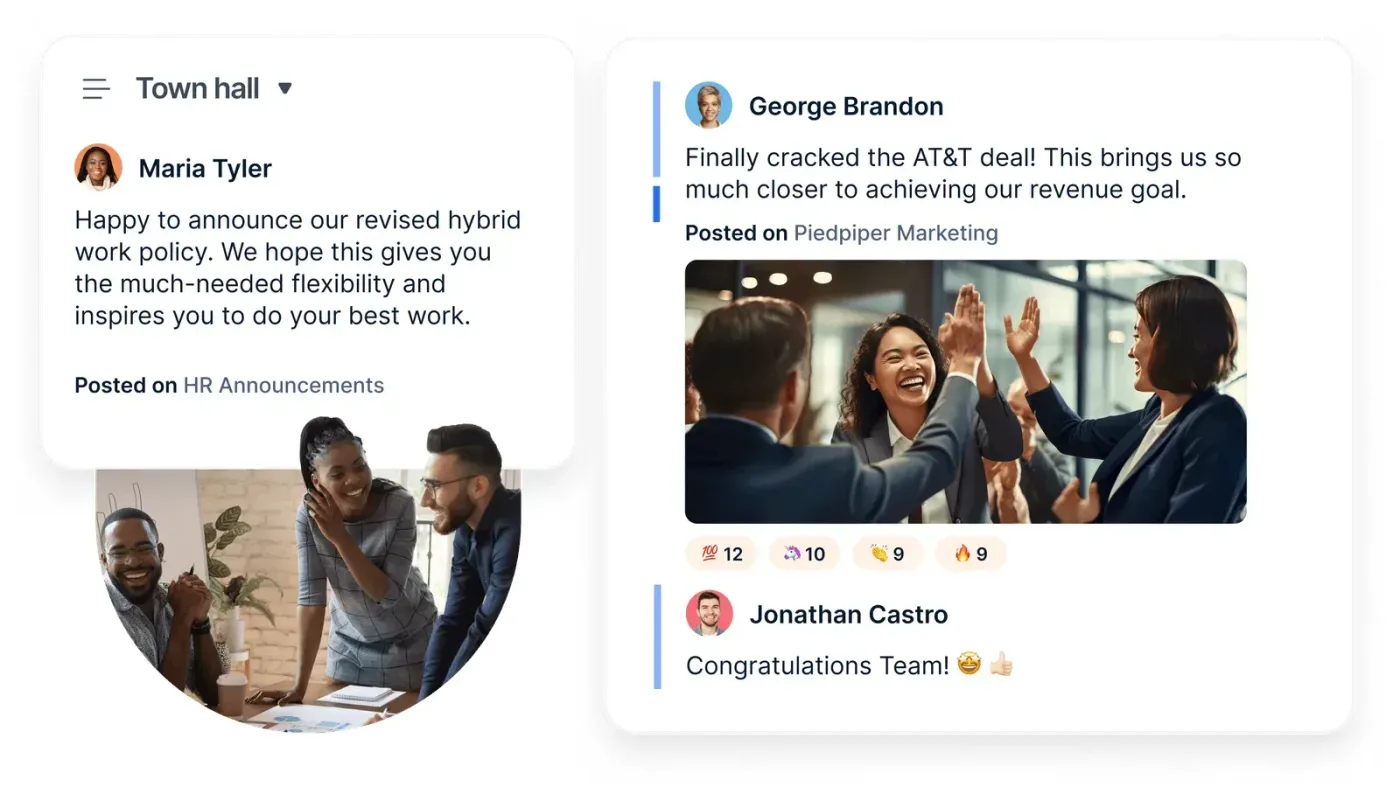
Build a virtual community with the social intranet
The Empuls social intranet is a central space where employees share updates, join interest-based groups, celebrate milestones and stay informed across time zones.
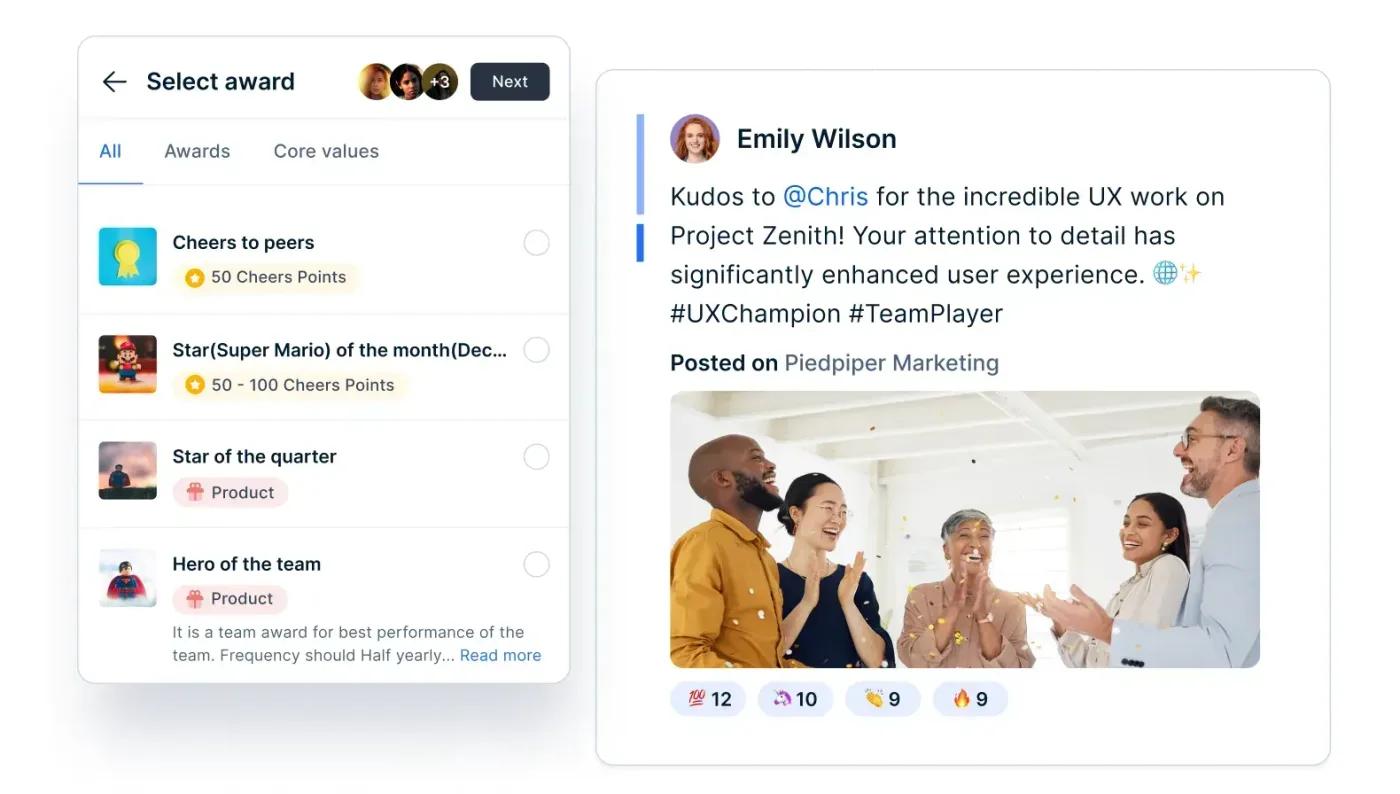
Encourage peer recognition and appreciation
With Empuls recognition, anyone can send instant kudos or an award linked to company values, so every contribution is seen, wherever it happens.
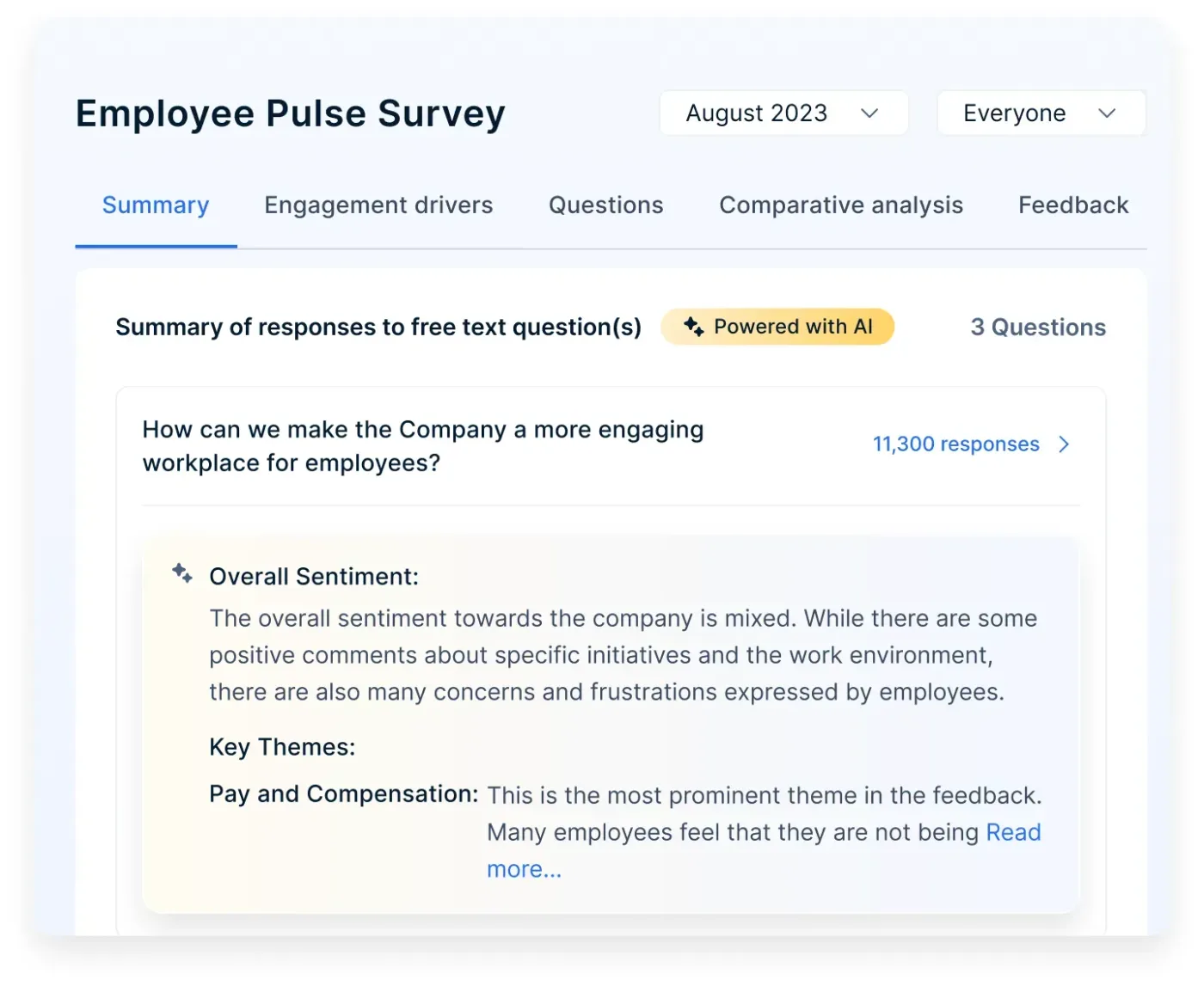
Use pulse surveys to understand remote employee needs
Empuls pulse surveys capture regular feedback on engagement, wellbeing and satisfaction, and AI summarizes open-text answers into sentiment and key themes.
Run virtual challenges, rewards and benefits
Run challenges and contests that bring distributed teams together, and reward people with locally redeemable rewards and flexible benefits that fit where they live.
Make remote engagement a habit, not an event
Engaging remote employees is not about flashy perks or one-off virtual events. It is about consistent, meaningful experiences that make people feel connected, valued and supported wherever they work. Focus on recognition, open communication, flexibility and real connection, and measure how people feel every month.
When you invest in remote employee engagement, you strengthen more than morale: you improve performance, retention and culture. Keep it personal, keep it intentional and keep your people at the center of it.
Book your Empuls demo
Frequently asked questions
Keep remote employees engaged by recognizing their work publicly and often, giving timely feedback, holding regular one-on-ones and communicating openly through more than one channel. Add social connection through interest groups and virtual events, offer benefits that fit their location and home setup, and run a short monthly pulse survey to see what needs attention.
Not on average. Gallup's August 2026 data shows 32% of exclusively remote US employees were engaged, slightly above the 29% for all US employees. The bigger risk for remote workers is loneliness and wellbeing: Gallup found 24% of exclusively remote employees felt lonely a lot of the previous day in 2025, versus 18% of on-site peers.
Good virtual team engagement activities include coffee roulette that pairs people across teams, online quizzes, show-and-tell sessions, photo challenges, team learning hours and wellness or step challenges. Keep them short, rotate who hosts, schedule them at times that work across time zones and make participation optional so they feel fun rather than forced.
Managers should hold a one-on-one with each remote employee every week, usually for 15 to 30 minutes, and keep lighter daily contact through asynchronous updates or a short stand-up. Weekly conversations catch blockers and wellbeing issues early. Add a monthly pulse survey so employees can raise concerns they may not mention directly.
Recognize remote employees in public channels where their teammates can see it, be specific about what they did and why it mattered, and do it soon after the work happens. Combine peer kudos with manager awards tied to company values, and offer rewards they can redeem locally, such as gift cards or experiences they choose themselves.
Measure remote employee engagement with a short monthly pulse survey on connection, recognition, clarity, feedback, tools, work-life balance and growth, scored from 1 to 5. Track the trend by team and location, and pair it with signals such as participation in recognition and events, eNPS and voluntary turnover among remote staff.
Reduce loneliness in remote teams by creating regular, low-pressure chances to connect: interest-based groups, virtual coffee pairings, team rituals at the start of meetings and occasional in-person meetups. Managers should also ask about wellbeing in one-on-ones, encourage people to switch off after work and make wellbeing support easy to find.





































































































































































































































































































































































































































































































































































