
Key Takeaways
Me time for employees is protected personal time people use to rest, reflect and recharge, free from work demands.
Many employees leave time off unused or keep working during it, so employers need to actively protect personal time.
The quality of me time matters more than the quantity: self-chosen, meaningful activities do the most for well-being and engagement.
Employers can gift time off through recharge days, birthday leave, protected focus blocks and time off as a reward.
Vouchers for books, cafes, adventure, wellness and travel let employees choose how to spend their me time.
Me time for employees is protected personal time, during or outside the workday, that people use to rest, reflect and do things that recharge them, free from work demands. Employers who make room for it, through time-off policies, protected focus blocks and gifts that create space for rest, get healthier, more creative and more engaged teams.
When was the last time you took some meaningful me time to gaze at the stars at night, or sat quietly beside a gentle brook, letting the calm settle over you? For many employees, the honest answer is "I can't remember." In the hurry of modern work, people forget that life comes to those who have time for it, and a prerequisite is hitting the pause button that brings you closer to yourself.
Not reserving time to do what makes you happy takes a toll on mental and physical health and leaves people feeling disoriented and alienated. This guide explains what me time is, why it matters for well-being and performance, how employers can give employees personal time off and the best me time gift ideas to make it happen.
What is me time?
Me time is the time you set aside to be present with yourself: mind, body and spirit. It is the hour where you break the monotony of your routine and do things that make you happy, relaxed, rejuvenated and thoughtful. It brings the mind and body back into sync, the state the Zen teacher Thich Nhat Hanh called mindfulness. In short, it is a joyful way of becoming the best version of yourself.
Me time at work looks a little different. It can be a protected hour with no meetings, a walk between tasks, a recharge day the whole company takes together or a gift that gives someone the means to switch off. What matters is that the person chooses how to use it.
Why employees need personal time for wellness now
Most employees have time off on paper, yet many don't use it or can't switch off when they do. These three findings show how wide the gap has become.
23%
of US workers took no vacation days in the past year
FlexJobs, 2025
44%
of UK workers felt pressured to keep working during time off
Employment Hero, 2025
$5.04M
yearly burnout cost for a 1,000-employee company
American Journal of Preventive Medicine, 2025
Unused time off, always-on pressure and the cost of burnout
FlexJobs' 2025 PTO survey of more than 3,000 US workers found that while 82% have paid time off, nearly one in four took none, with workload the most common reason. In the UK, Employment Hero's 2025 Employment Uncovered research found that a quarter of workers didn't use all their leave, 44% felt pressured to keep working on time off and 28% took a sick day when they weren't physically unwell. Nearly half of those said they did it because they felt mentally or emotionally exhausted.
Employees are, in other words, inventing their own me time because they don't feel allowed to take it. That is costly. A 2025 study in the American Journal of Preventive Medicine, summarized by the CUNY School of Public Health, estimated that burnout costs employers about $3,999 a year per hourly employee, $10,824 per manager and $5.04 million a year for a typical 1,000-employee company.
The neurological importance of me time
When you are burned out or have exhausted your stamina, the brain leans more heavily on the amygdala, the emotional center that triggers the fight-or-flight response when it senses danger. A well-rested mind doesn't need that response for everyday tasks, but constant pressure keeps it switched on, which shows up as anxiety, panic and restlessness.
Me time is the antidote. Stepping away from tasks gives the stress response a chance to settle so that thinking, planning and creativity can take over again. Research on recovery from work consistently links mentally detaching from work during time off with lower exhaustion and fatigue, which is exactly what employees need to come back focused.
Taking me time is not selfish
Many of us are taught that living for others is a virtue, so putting ourselves first can feel wrong. But me time is the opposite of selfish: it prepares us for better social interaction. If we don't look after ourselves first, we are not fit to help others, including our employers and colleagues. Psychologists Christopher R. Long and James R. Averill put it this way: "Solitude is inherently social" because it relies on our capacity to reflect on our own experiences.
Quality matters more than quantity
Research by organizational psychologist Almuth McDowell at Birkbeck, University of London, found that people who enjoyed high-quality me time had better work-life balance and well-being and were more engaged at work. Three lessons from that work still hold:
- Quality over quantity: Meaningful, self-chosen activities during personal time lead to better work-life balance and engagement, regardless of how much time is spent.
- It can be social: Personal time doesn't have to be solitary. Activities with others help too, as long as they are freely chosen and enjoyable.
- Employers benefit: Employees who take high-quality personal time tend to perform better at work, so encouraging it pays off for the organization.
Make every celebration a chance to recharge
Automate birthday, anniversary and milestone gifts that let employees choose their own me time.
Talk to our ExpertTrusted by 5,000+ companies
How me time for employees boosts wellness and productivity
Me time pays off at work in four main ways, and creativity leads the list because routine, deadline-driven work drains it fastest. The other three, problem solving, relationships and recovery, follow from the same root: a rested mind that has had space to think.
1. Fuels creativity
An employee's life in the office is often regular and repetitive. The mind gets attuned to the patterns an organization sets, and with constant deadlines there is little chance to think beyond them. You cannot pour from an empty cup, and routine can leave employees feeling just that. Me time gives them space to refill with fresh insight, and because outer work is an extension of inner life, that creative energy carries back into the workplace. The link between active solitude and creativity is an idea championed by thinkers from Albert Einstein to Henry David Thoreau.
2. Helps with problem solving
The longest distance is not between two countries on different continents. It is between who you are and who you could be, and me time can bridge it. With less stress and room for reflection, employees can look hard at past mistakes, see what actually triggered them and bring sharper thinking to stubborn business problems.
3. Strengthens relationships
With external noise cut off and no distractions breaking the flow of thought, me time gives employees a clear view of their personal and professional relationships. They can work out how they really feel and what needs more attention. That protects their emotional well-being, since relationships are the mainstay of personal happiness, and they arrive at work in better spirits.
4. Speeds recovery from stress
Regular personal time lets the body and mind recover before stress turns into burnout. Short, frequent recovery, such as a protected hour, an unplugged weekend or a mid-year recharge day, is often more effective than one long holiday a year that people spend catching up on email. For more on what employers are doing, see our roundup of employee wellness trends for 2026.
Ways to give employees personal time off and me time at work
Gifting time off to employees can be as simple as a policy change. The options below range from daily habits that cost nothing to company-wide breaks, and you can combine several.
| Idea | How it works | Best for |
|---|---|---|
| Protected me time blocks | A daily or weekly hour with no meetings or messages, for focus, rest or a walk | Teams drowning in meetings |
| Birthday or personal day off | An extra paid day to use on a birthday or any personal occasion | Making time off feel personal |
| Company-wide recharge days | The whole company takes the same days off, so nobody returns to a pile of email | Teams that never fully switch off |
| Mental health or wellness days | Paid days people can take without explaining why | Reducing "fake sick days" |
| Time off as a reward | Award extra paid leave for milestones, big launches or peak seasons | Recognizing effort without more cash |
| Minimum vacation policy | Ask people to take a set number of days, and have managers check | Unlimited PTO cultures where nobody takes it |
| Sabbaticals | Extended paid or partly paid leave after several years of service | Long-tenure retention |
Me time gift ideas for employees
Gift vouchers are a natural fit for me time because they leave the when and where to the employee. After looking at the many ways me time can be gifted, we have narrowed it down to five categories, starting with the simplest, books, and ending with the most transformative, travel.
1. Bookshops
Bookshops are the last relics of calm in a noisy world, and there is a reason books are called our most valuable friends. A lack of time and an environment that doesn't encourage getting lost in words may have put dust on your employees' reading habit, the very place they once found solace. For many people, healthy rest still means reading in a quiet corner with a favorite book, and a bookshop voucher is an invitation to get back to it.
2. Cafes
Finely brewed coffee and cozy decor aren't the only reasons cafes have become hubs in every city. They offer long, uninterrupted solitude where people can step back from the crowd and read, draw, write, listen to music or simply think about life. Author J.K. Rowling has described wandering off to a cafe with a notebook to write as "just bliss."
3. Adventure
Me time can be used to gather experiences as well as thoughts, and adventure sits near the top. The unfamiliar thrill of bungee jumping, zip-lining, kayaking or paragliding etches a lasting memory. Facing something unpredictable also builds resilience that carries into volatile business challenges. Our guide to experiential rewards has more ideas, and you can browse experience rewards by category.
4. Wellness centers
Modern life can feel like a long queue of screens, so good me time often involves a digital detox. The best way to log out of virtual life is to lose track of time in meditation, yoga or a massage with aromatic oils. Many traditions treat meditation as one of the best ways to find oneness with oneself, and your employees shouldn't miss out. Health and wellness rewards make this easy to gift.
5. Travel
They say that to know someone better, you should travel with them, and the same is true of knowing yourself. When employees leave their comfort zones for unfamiliar places, they find out how adaptable they are, how they handle canceled flights or bad weather and how they keep their poise when things don't go their way. That resilience is why solo travel has become a favorite form of me time. See our guide to travel vouchers for employees for how to set it up.
For more gift inspiration beyond me time, see our list of corporate gifting ideas.
How to build a me time culture at work
Policies and gifts only work when the culture lets people use them. These steps help make me time normal rather than something employees feel guilty about:
- Leaders go first: When managers visibly take time off and switch off, employees believe they can too.
- Track usage, not just entitlement: Report how much leave people actually take, by team, and follow up where it is low.
- Plan cover before people leave: Name a backup and adjust deadlines so time off doesn't mean double work on return.
- Ask what recharges people: A quick pulse survey shows whether employees want more flexibility, more days off or different rewards.
- Celebrate rest: Recognize people who plan ahead and hand over well, not just those who never step away.
How Empuls helps you gift me time to employees
Empuls, Xoxoday's employee engagement platform, makes gifting personal downtime seamless, personalized and meaningful. Two capabilities do most of the work: automation, so no occasion is missed, and choice, so every employee gets the kind of me time they actually want.
1. Automated personalization for every occasion
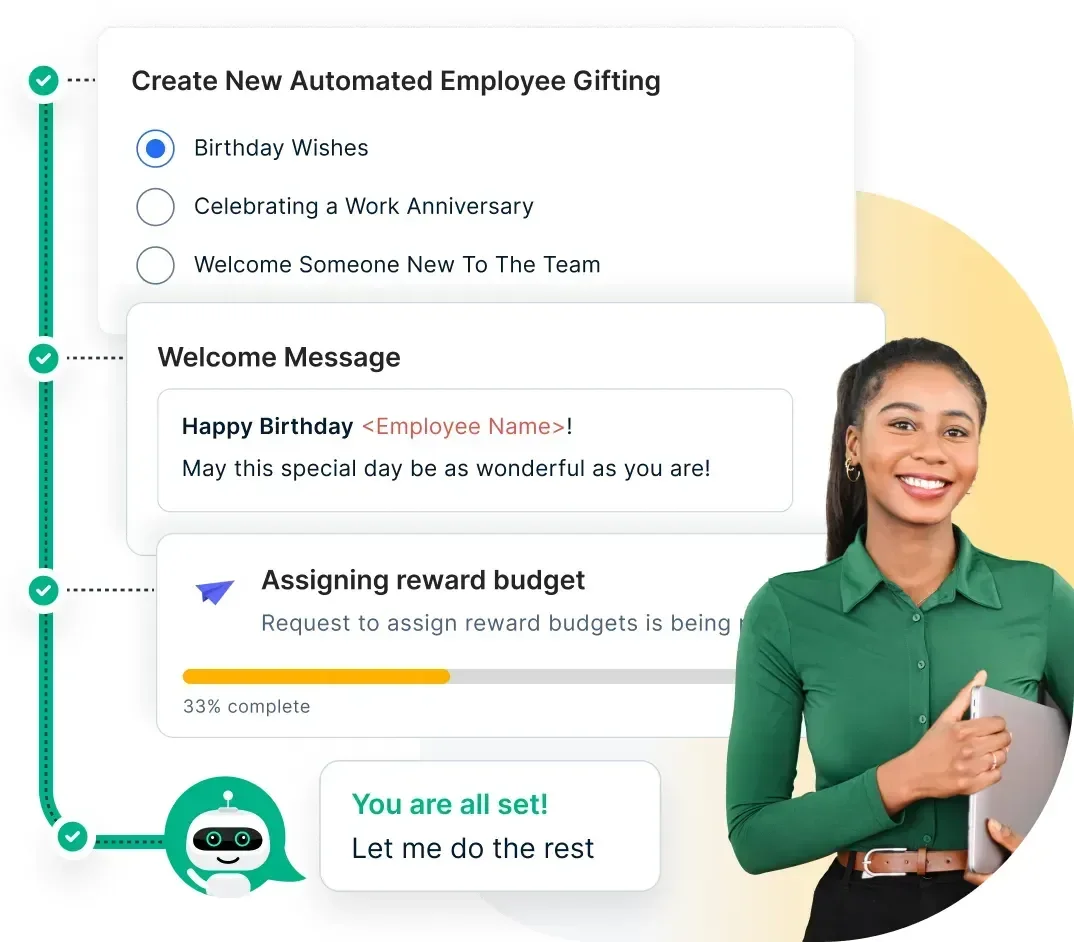
With Empuls celebrations and milestone rewards, you can acknowledge birthdays, work anniversaries, achievements and special occasions without manual effort:
- Upload events and recipient lists, or sync them from your HR system.
- Personalize gifts with heartfelt messages and custom e-cards.
- Allocate points so employees can redeem the gift they prefer.
- Set automated workflows, and Empuls handles every occasion after that.
2. Empowering employees through gift choice
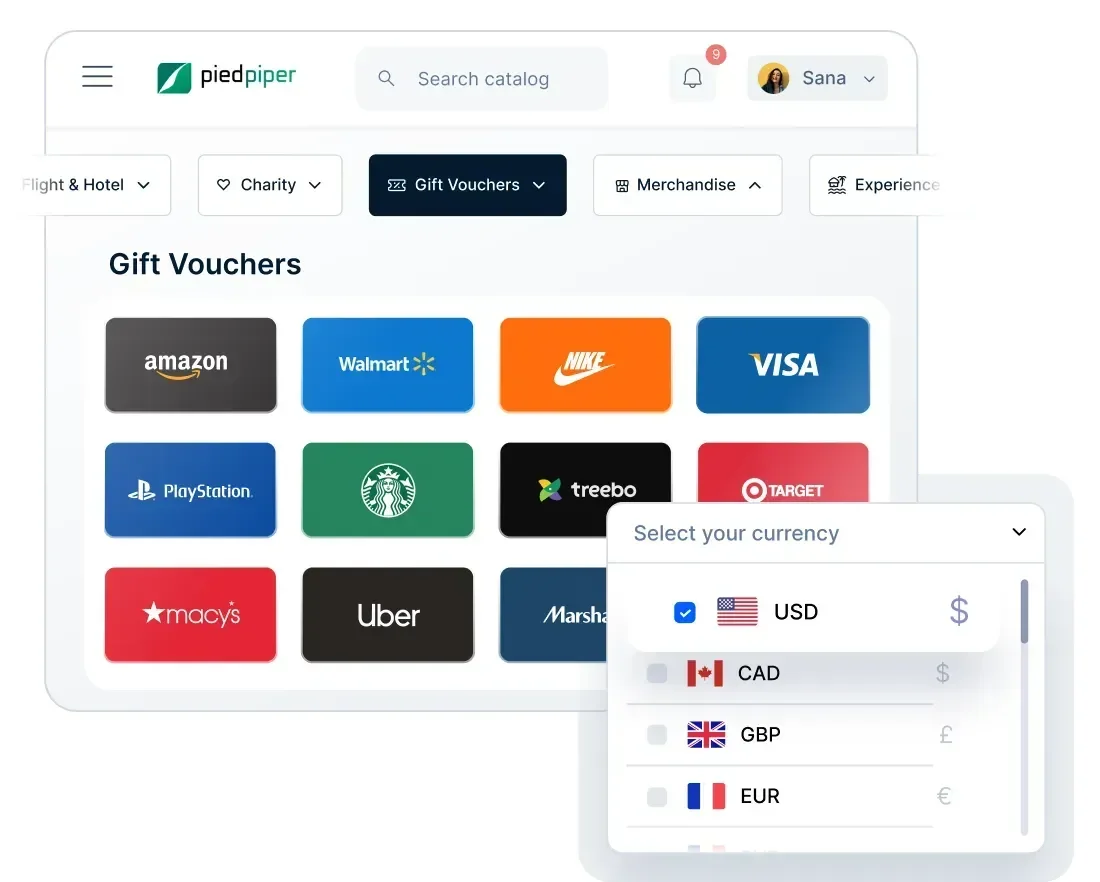
Employees have very different ideas of meaningful me time, and the Empuls rewards marketplace caters to that. Employees can choose from more than a million gift cards across global brands, merchandise, experiences, travel, prepaid cards and charity donations, plus custom swag and an in-house catalog that reflects your culture. Pair rewards with wellness programs and challenges to support well-being all year.
By automating personalized gifting and offering real reward choice, Empuls helps create a workplace culture where employees feel valued, appreciated and supported in their personal growth and wellness.
Give your people time for life
Me time for employees is not a luxury or a perk to hand out once a year. It is how people recover, think clearly and bring their best selves to work. Protect it with policy, model it from the top and make it easy to enjoy with gifts that create space for rest. Your teams, and your results, will be better for it.
Book your Empuls demo
Frequently asked questions
Me time for employees means protected personal time that people use to rest, reflect or do something they enjoy, without work demands. It can happen during the workday, such as a meeting-free hour or a walk, or outside it, such as a day off or an unplugged weekend. The key is that the employee chooses how to spend it.
Me time is important at work because constant pressure keeps the stress response switched on, which drains focus, creativity and patience. Regular personal time lets people recover before stress becomes burnout. Employees who take quality time for themselves tend to be more engaged, solve problems better and treat colleagues and customers well, which benefits the whole organization.
Taking me time is not selfish. Looking after your own well-being is what makes it possible to support others, at home and at work. People who never pause tend to become exhausted, irritable and less effective. Time to reflect and recharge helps employees return with more energy, better judgment and more patience for teammates and customers.
Employers can give employees more personal time by protecting meeting-free blocks, offering birthday or personal days, scheduling company-wide recharge days and awarding extra paid time off as a reward. Setting a minimum vacation expectation, planning cover before people leave and making sure managers take time off themselves turn these policies into real me time rather than days spent catching up.
A recharge day is a paid day off that the whole company takes at the same time, so employees can rest without worrying about missed messages or a backlog on return. Because nobody is working, people find it easier to fully switch off. Many companies schedule recharge days after busy periods or around public holidays to create longer breaks.
Good me time gifts for employees include bookshop vouchers, cafe gift cards, adventure experiences, spa and wellness center vouchers and travel vouchers. The best options leave the choice to the employee, so a rewards catalog or points they can redeem often works better than a fixed gift. Pairing a gift with an extra day off makes it even more meaningful.
Personal time off supports productivity by preventing the exhaustion that slows people down and causes mistakes. Research on recovery from work links mentally detaching during time off with lower fatigue, and burnout carries a measurable cost for employers. Rested employees usually come back with clearer thinking and more energy, especially when work doesn't follow them during their time away.





































































































































































































































































































































































































































































































































































