
Key Takeaways
To improve employee experience, map the employee journey, listen often, fix the biggest pain points first and support managers to lead well.
Listening pays off: Qualtrics found engagement was 87% where companies listened more often, compared with 44% where listening declined.
Recognition is one of the cheapest levers, since well-recognized employees were 45% less likely to leave within two years in Gallup and Workhuman research.
New hires need the most attention right now, because new-hire engagement fell 7 points in a year to its lowest level since 2021.
Track a few metrics such as eNPS, 90-day retention and regretted turnover before and after each change to prove what works.
To improve employee experience, map the moments that matter across the employee journey, listen to employees often, fix the biggest pain points first, and back it all with fair rewards, regular recognition, growth paths and managers who are equipped to support their teams. Small, steady improvements at each stage add up to a workplace people want to join and stay in.
Employee experience is everything an employee sees, feels and goes through at your company, from the first job ad they read to the day they leave. This guide shows you how to improve employee experience step by step: where to start, which employee experience strategies work, how rewards fit in, what to avoid and how to measure progress. If you are new to the concept, start with this guide on what employee experience is and its stages.
Why improving employee experience matters now
Companies must find creative ways to attract, motivate and retain talent to succeed in a competitive global market. Since the average employee spends roughly a third of their adult life at work, the quality of that time shapes their energy, loyalty and output.
The current numbers show plenty of room to improve. Gallup's State of the Global Workplace 2026 report found global employee engagement fell to 20% in 2025, its lowest level since 2020, and manager engagement dropped from 27% to 22% in a single year. Qualtrics' 2026 Employee Experience Trends study of 33,831 employees found that new hires reported their lowest engagement since 2021.
20%
of employees worldwide are engaged
2025 data (Gallup)
22%
of managers are engaged
down from 27% in 2024 (Gallup)
65%
new-hire engagement
down 7 points in a year (Qualtrics 2026)
87%
engagement where listening increased
vs 44% where it fell (Qualtrics 2026)
Employee experience in numbers: the gap HR teams need to close
Many business leaders recognize that employee experience is important but are unsure how to improve it. The good news is that the levers are well understood. The rest of this guide covers them in the order most teams should tackle them. For the business case in depth, see why employee experience is important.
Map the employee experience journey first
The employee experience journey starts with a candidate's first encounter with your company and continues through every stage of the employee lifecycle, from recruitment to separation. Before you change anything, map each stage, list the moments that matter in it and note where employees get stuck.
| Journey stage | Moments that matter | What to improve first |
|---|---|---|
| Attract | Job ad, career page, review sites, interviews | Transparent pay ranges, clear role expectations, a fast and respectful hiring process |
| Onboard | Offer, day one, first 90 days | Ready equipment and access, a buddy, a 30-60-90 day plan, early recognition |
| Develop | One-on-ones, reviews, training, stretch work | Regular coaching, visible career paths, learning budgets |
| Retain | Promotions, life events, workload peaks, milestones | Recognition, flexibility, wellbeing support, milestone celebrations |
| Exit | Resignation, handover, exit interview, alumni | Respectful offboarding, honest exit feedback, open door to return |
Prospective employees evaluate your company long before they apply. Review sites where employees share insights on culture, salaries, incentives and benefits heavily influence candidates' decisions, so transparency and a compelling rewards story improve the experience from the very first touchpoint.
Onboarding is the next critical touchpoint and, as many HR practitioners put it, a make-or-break period for a new hire. HR teams should walk new employees through how pay, benefits and total rewards work, introduce them to the people they will rely on and set clear early goals. A strong onboarding process improves employee experience and strengthens retention at the same time.
Tie total rewards to employee experience
A total rewards strategy rewards employees who achieve business goals with compensation, benefits and personal growth opportunities in a motivating work environment. Because it covers pay, benefits, recognition, development and wellbeing together, a well-designed total rewards package shapes the employee experience at almost every touchpoint.
An attractive total rewards package gives companies a competitive advantage and influences people's decisions to join and stay. Your rewards should match what employees actually value, which means mixing monetary and non-monetary rewards. To design the full framework, read this guide to total rewards strategy and this explainer on what total rewards are.
How to improve employee experience with monetary rewards
Monetary rewards are any form of financial compensation a company provides in exchange for an employee's contributions, expertise and time. The three below are listed in the order employees usually judge them: base pay first, then variable pay, then benefits.
- Base pay: This is an employee's basic compensation, usually a wage or salary. Base pay lets employees compare what they earn with what other employers offer for similar work. For a better employee experience, employees must understand how their pay is determined, so they can see that it reflects their expertise. Publishing pay bands and explaining how raises work removes much of the anxiety around pay.
- Variable pay: Employees receive performance-based compensation for individual, team or organizational contributions over a set period. Variable pay includes merit pay, bonuses, incentives, sales commissions, gain sharing and profit sharing. It is harder to compare across employers, but it motivates employees because it is tied to what they contribute.
- Benefits: Paid time off, health insurance, life and disability insurance, retirement plans, perks, employee assistance programs and wellness programs are all indirect monetary rewards. Benefits differ globally: some are required by law in the United States, while other countries split them into government-provided, government-mandated and voluntary benefits. If you operate in several countries, follow each country's rules and then add the benefits your people value most. This overview of employee benefits covers the options.
How to improve employee experience with non-monetary rewards
Non-monetary rewards are intangible because employees cannot easily calculate or compare their financial value, and their worth varies by person. One employee may value a flexible schedule to balance personal commitments, while another may care most about career development, so a good package offers choice. These three carry the most weight, with growth listed first because it is the most common reason people leave.
Opportunities for advancement
People crave growth, and employees feel motivated when they can see it at work. When they cannot, they leave for a company where they can. Deloitte's 2025 Gen Z and Millennial Survey found that learning and development is one of the top three reasons Gen Zs chose their current employer, and that about half of Gen Zs want their managers to teach and mentor them, while only 36% say this happens.
You can close that gap by investing in learning and development, offering stretch assignments, defining clear career maps and training managers to coach. Lateral moves count too: if a vertical step is not available, a new role that builds new skills keeps people growing.
Flexible work schedules
Flexibility gives employees more control over how they balance work and life, and it has become an expected part of the employee experience. Gallup's hybrid work indicator shows most remote-capable US employees now work hybrid, and most prefer to keep it that way.
Flexibility is not only about location. Frontline and shift-based teams value predictable schedules, shift swaps and compressed weeks. Set clear guardrails as well: when work can be done anywhere, it is easy for employers to expect longer hours, so protect focus time and offline time.
Recognition
Employee recognition goes beyond a simple thank-you. When employees feel valued for their contributions, they are more motivated, productive and committed. Gallup and Workhuman's 2024 recognition research found that well-recognized employees were 45% less likely to have left their organization two years later, yet only 22% of employees say they get the right amount of recognition.
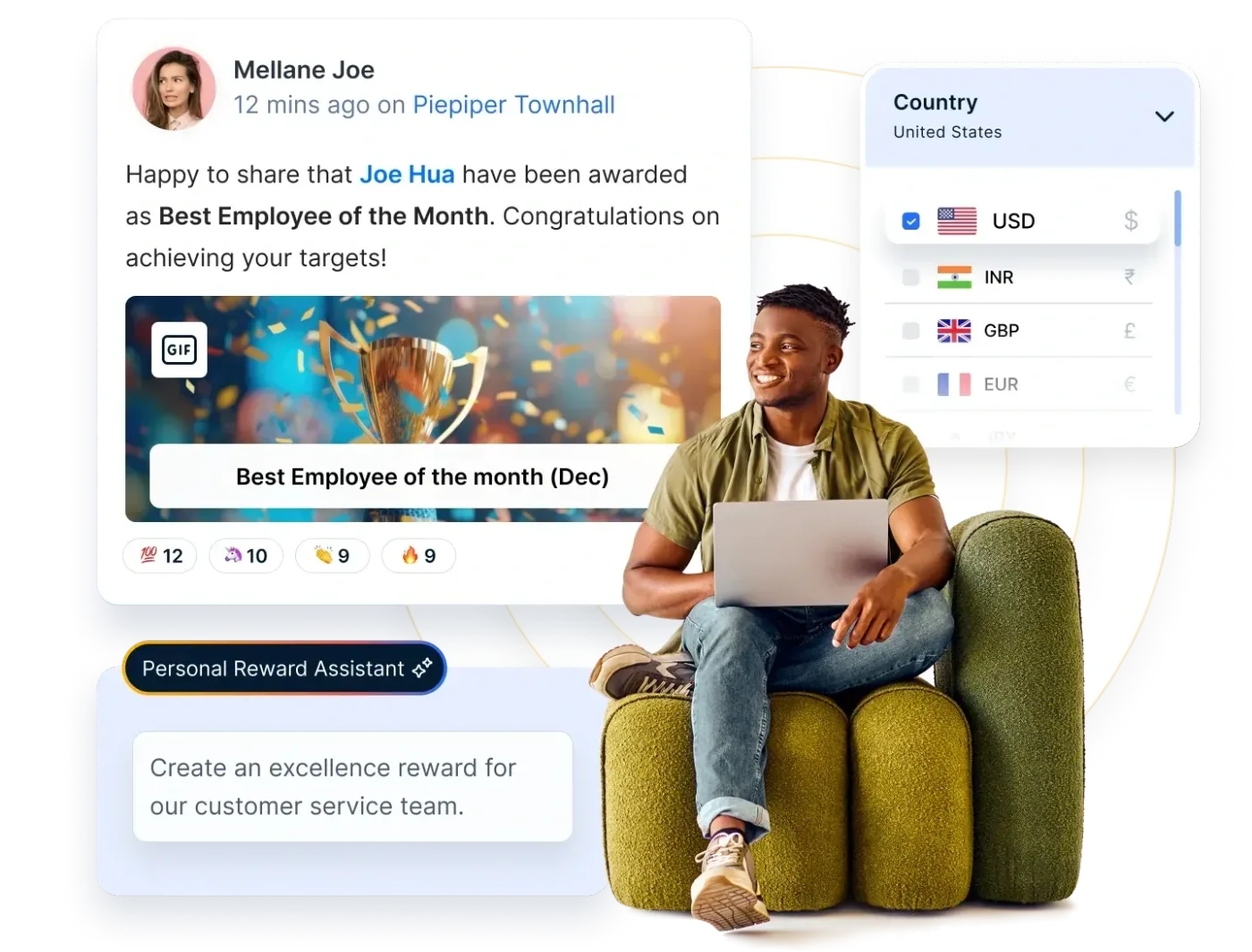
Recognition can take many forms: public appreciation in team meetings, peer-to-peer shout-outs, milestone celebrations and personalized rewards. Structured recognition programs that tie appreciation to company values make it consistent rather than dependent on individual managers. With Empuls recognition, for example, employees can redeem points from a global rewards catalog covering gift cards, experiences, merchandise and more across 150+ countries.
Luminous Power Technologies shows what this looks like at scale. After 25 years of manual rewards and recognition, it moved a 6,000-person workforce, including blue-collar manufacturing plant employees, onto one platform and anchored recognition in its five core values. Read the Luminous case study for the full story.
Improve employee experience at every stage
Recognition, surveys, benefits and a social intranet in one employee engagement platform.
Talk to our ExpertTrusted by 5,000+ companies
10 employee experience strategies that work
Rewards set the foundation, but day-to-day practices decide how work actually feels. Here are 10 employee experience strategies, ordered so the ones that build trust (listening and management) come before the ones that build on it (automation and policy).
1. Promote a supportive and collaborative workspace
A flexible, supportive environment lets employees work in the way that suits them best, which tends to improve health, job fulfillment and productivity while lowering stress and absenteeism. Foster inclusion by watching how people interact and collaborate, recognizing inclusive behavior and training managers on unconscious bias. Then build a culture of appreciation:
- Award employees for their achievements
- Invite them to write posts for the company blog or intranet
- Share their accomplishments on company social media
2. Respond to employee feedback
The most effective way to learn what employees need is to ask for honest feedback and act on it. Qualtrics' 2026 research found that engagement was 87% where companies increased how often they listened, compared with 44% where listening decreased. Respect has to come first: employees are less likely to open up if they feel ignored in everyday conversations. Always share what you heard and what you will change. Tools such as Empuls surveys make continuous feedback easy to run.
3. Enhance your management skills
Managers shape most of an employee's daily experience, and Gallup's employee engagement indicator notes that managers account for at least 70% of the variance in team engagement. Managers need to recognize different personalities and adapt their approach, which matters most in teams that span divisions, age groups, seniority levels and cultures. Help them develop empathy, one-on-one coaching and conflict resolution skills, and give them mentors and peer support groups of their own.
4. Define your parameters
Trying to evaluate every part of the employee experience at once takes too long and gets confusing. Define the goal first. Choose the part of the work cycle you want to improve, such as technology, workplace culture or onboarding touchpoints, then set your expectations and decide which outcomes you will track.
5. Deliver excellent communication
Better communication strengthens your relationship with employees, just as it does in any partnership. Many leaders spend more time talking to investors, media and customers than to their own people. Use a channel such as a social intranet to share good and bad news, celebrate personal and professional milestones and keep the company mission visible.
6. Establish policies and define guidelines
Remote and hybrid employees often sit in front of screens for long stretches, which can lead to burnout. Clear guidelines keep workloads sustainable and expectations fair. Useful policies include:
- Limiting calls and emails to agreed hours of the day
- Planning meetings that work for both on-site and remote employees
- Defining compensation and benefits for remote employees
- Setting response-time expectations so nobody feels they must be always on
7. Incorporate surveys and questionnaires
When anonymity matters, surveys offer a quick, discreet way to evaluate employee experience. Set your KPIs first, then write questions around them. For example:
- Satisfaction: Ask employees to rate how meaningful they find their work on a scale of 1 to 5.
- Productivity: Ask them to rate the tools and resources they have to complete daily tasks on a scale of 1 to 5.
- Engagement and retention: Ask whether they would stay if another company offered them an identical role.
8. Adopt automation
Improving the employee experience takes many moving parts, and the right tools make it manageable. Automate repetitive steps in onboarding, such as paperwork, access requests and introductions over video calls. A learning management system or an employee experience platform can streamline training assignments, buddy matching, recognition reminders and milestone celebrations.
9. Rebuild onboarding around the first 90 days
New hires are where employee experience is slipping fastest. Qualtrics found that the share of new hires who feel they can challenge the status quo fell from 64% to 50% in a year, and the share reporting open, honest communication fell from 71% to 63%. Give every new hire a buddy, a clear 30-60-90 day plan, regular check-ins and early recognition. Thoughtful onboarding gifts can make day one feel personal.
10. Make wellbeing part of how work is designed
Wellbeing programs work best when they are built into workloads, schedules and manager behavior, not bolted on as perks. Offer mental health support and an employee assistance program, and train managers to spot early signs of burnout. This guide to employee wellness trends covers what employees expect today.
Common mistakes that hold employee experience back
Most employee experience programs stall for the same few reasons. Avoid these:
- Surveying without acting: Asking for feedback and then going quiet damages trust more than not asking at all.
- Treating perks as the strategy: Free snacks and events cannot make up for unclear roles, poor managers or unfair pay.
- Designing for head office only: Frontline, part-time and remote employees often get the weakest experience. Qualtrics found frontline and part-time workers saw some of the largest engagement drops in 2026.
- Ignoring managers: If managers are overloaded and disengaged, their teams will be too.
- One-size-fits-all programs: Different generations, roles and life stages value different things, so offer choice in rewards and benefits.
- Measuring once a year: Annual surveys arrive too late to fix problems. Here is why annual employee surveys fail.
How to tell whether employee experience is improving
Track a small set of metrics before and after each change, so you can see what works. The table below covers the most useful ones. For a full framework and how to calculate ROI, see this guide to measuring employee experience.
| Metric | What it tells you | How often |
|---|---|---|
| Employee net promoter score (eNPS) | Whether employees would recommend you as a place to work | Quarterly |
| Engagement score | Energy, commitment and intent to stay | Quarterly or via pulse surveys |
| 90-day new-hire retention | Whether onboarding works | Monthly |
| Regretted voluntary turnover | Whether you keep the people you most want to keep | Monthly |
| Recognition frequency and reach | Whether appreciation is regular and spread fairly | Monthly |
| Survey participation rate | Whether employees trust that feedback leads to action | Every survey |
Good employee experience leads to better customer experience
Customer experience is now a main point of competition, and the people who deliver it are your employees. Gallup's Q12 meta-analysis (11th edition, 2024) found that business units in the top quartile of engagement achieve 10% higher customer loyalty and 23% higher profitability than those in the bottom quartile.
Some examples of how a poor employee experience damages customer experience:
- Poorly trained employees give customers incorrect or misleading information.
- Without focus and support, customer issues get handled carelessly.
- A bad working atmosphere drives high churn, so customers keep meeting new support representatives, which hurts credibility.
- Frustrated employees may vent to customers about their employer.
- Client-sensitive information is more likely to be mishandled.
For more on the customer side, read this guide to customer experience.
How Empuls helps improve employee experience
A great employee experience goes beyond daily tasks and paychecks. Empuls, Xoxoday's employee engagement platform, brings recognition, rewards, communication, benefits and feedback into one place, so you can improve every stage of the employee journey:
- Recognition that builds motivation: Celebrate wins big and small with peer-to-peer recognition, award campaigns and rewards employees actually want.
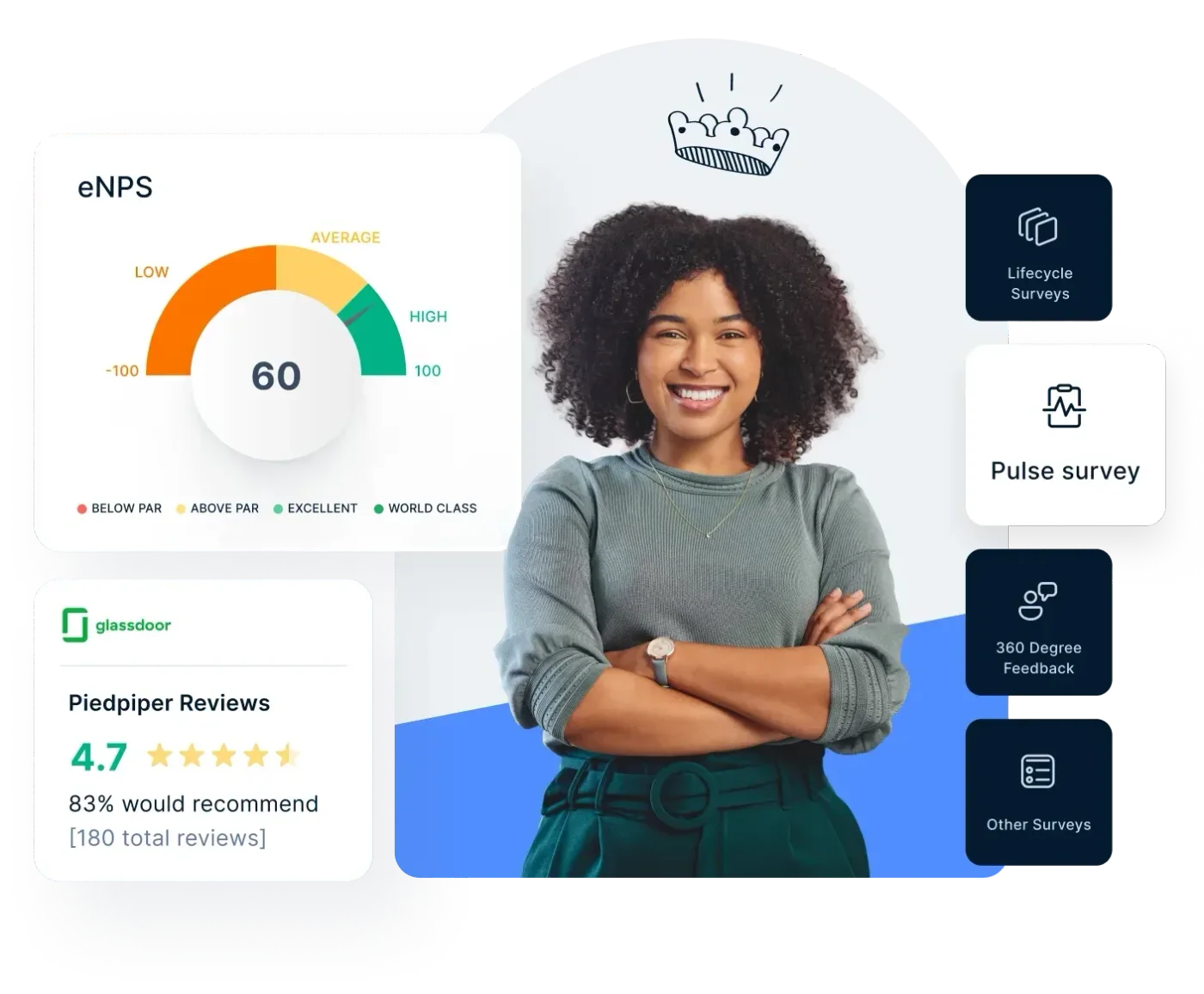
- Continuous employee feedback: Run pulse, lifecycle and eNPS surveys with AI-powered sentiment insights, then act on the results with Empuls surveys.
- Stronger workplace connections: Keep remote, hybrid and frontline teams connected through the Townhall social intranet.
- Personalized benefits: Offer flexible benefits, lifestyle accounts, tax-saving benefits and discounts through Empuls benefits.
- Automated moments that matter: Automate birthdays, work anniversaries and milestone rewards so no one is missed.
Gulf Taleed, a retail distributor in Saudi Arabia, used Empuls to build a people-first culture across its 250-person workforce. It moved its recognition program to peer-to-peer appreciation, growing from 3 awards per quarter to more than 300 appreciations in six months, reached 90% active adoption of the platform and saw a 70% completion rate on new-joiner surveys within seven days. Read the Gulf Taleed case study to see how.
Make employee experience a habit, not a project
Improving employee experience is not just about competitive salaries or perks. It is about building a workplace where employees feel valued, heard and supported to grow. Start by mapping the journey, listen often, fix the biggest pain points first and back your managers. Then keep measuring, because expectations keep changing. To see what that looks like in practice, explore these employee experience examples from companies that get it right.
Book your Empuls demo
Frequently asked questions
A company can improve employee experience by mapping the employee journey, asking employees where it breaks down and fixing the biggest pain points first. Fair pay, regular recognition, clear growth paths, flexible work, good onboarding and well-trained managers make the largest difference. Measure results with eNPS, engagement scores and turnover so you know which changes work.
Low-cost ideas to improve employee experience include peer-to-peer recognition, regular one-on-ones, flexible schedules, a structured buddy program for new hires, celebrating birthdays and work anniversaries, quick pulse surveys and sharing what changed because of feedback. Many of these cost more time than money, and they often have more impact than expensive perks.
An employee experience strategy is a plan for shaping how employees feel at every stage of their journey with a company, from hiring and onboarding to growth, retention and exit. It sets priorities, owners, budgets and metrics for the moments that matter most, so improvements are deliberate and measurable rather than a collection of one-off perks.
Employee experience best practices include listening continuously and closing the loop, equipping managers to coach, designing for frontline and remote staff as well as head office, personalizing rewards and benefits, investing in the first 90 days of onboarding and tracking a few clear metrics. The common thread is treating employee experience as ongoing work, not a one-time project.
HR designs the employee journey, chooses the listening tools, shapes rewards and benefits and trains managers to deliver a good experience day to day. HR also connects data from surveys, turnover and recognition to show leaders where to invest. Line managers deliver most of the experience, so HR's job is to equip and support them.
Employee experience is everything an employee encounters at work, including culture, tools, workspace, managers and processes. Employee engagement is the outcome: how committed and energized employees feel as a result. Improving the experience is how you raise engagement. Measuring both helps you see which parts of the experience drive commitment and which hold it back.
Quick wins such as better onboarding, more frequent recognition or fixing a broken tool can lift scores within one or two quarters. Deeper changes to culture, management quality and career paths usually take 12 to 24 months to show up in turnover and engagement data. Track a baseline first so you can see progress at each stage.
Onboarding sets a new hire's expectations about the company, their manager and their future there. A poor start makes early turnover far more likely, while a structured first 90 days with a buddy, clear goals and early recognition builds confidence and belonging. Recent Qualtrics research shows new-hire engagement is at its lowest since 2021, so onboarding deserves attention now.





































































































































































































































































































































































































































































































































































