
Key Takeaways
A sales reward is a prize, perk, experience or recognition given for an achievement on top of regular pay, and non-cash rewards are often the most memorable.
The Incentive Research Foundation's 2025 Top Performer Study found 94% of top-performing companies use gift cards and 93% use travel and points-based rewards.
Match the reward to the size of the win: recognition for everyday wins, small perks for monthly targets and experiences or premium prizes for quarterly and annual top performers.
Ask reps what they value with a short preference survey, and let them choose from a menu of rewards.
In the US, gift cards are taxable cash equivalents, so run them through payroll and plan for the tax.
The best sales reward ideas give reps something they value, soon after the win, in a form commission cannot: an experience, a prize they chose, time back, public credit or a chance to grow. Here are 17 sales reward ideas in four groups, a matrix that matches each reward to the size of the achievement, and the practices that keep a reward program fair and motivating all year.
A sales reward is a prize, perk or experience a company gives sales reps for reaching a specific target, winning a contest or showing a behavior it wants more of, on top of their regular pay. Rewards can be monetary, such as a cash bonus, or non-monetary, such as gift cards, trips, extra time off or recognition. Non-cash rewards are where most creativity lives, because they stay memorable long after a cash bonus has been spent.
Sales rewards vs sales incentives vs commissions
The three terms overlap, but they do different jobs in a compensation plan. Knowing the difference helps you decide what each reward is for before you choose it.
| Term | What it is | When reps get it | Main job |
|---|---|---|---|
| Commission | A set share of the revenue or margin a rep brings in, defined in the comp plan | Every eligible sale, on a regular payout cycle | Pays for results; becomes an expected part of pay |
| Sales incentive | A planned extra offered in advance for a specific goal, such as a SPIF, bonus or contest prize | When the stated goal is met | Steers effort toward a priority |
| Sales reward | A prize, perk, experience or recognition given for an achievement, often non-cash | After the win, ideally soon after | Recognizes effort and makes success memorable |
Because commission is part of an existing plan, reps come to expect it as routine. Rewards and incentives sit on top of guaranteed pay, so they carry a value beyond their price: they say the company noticed. For plan types and structures, see the guide to sales incentives.
Why sales rewards still matter
Sales rewards work in three ways. They motivate directly, by giving reps a goal worth chasing. They raise engagement, because breaking targets into rewarded milestones makes progress feel real. And they add meaning, because recognition from managers and leaders answers the question every rep asks on a hard week: is this worth it?
High-performing companies lean on non-cash rewards heavily. The Incentive Research Foundation's 2025 Top Performer Study reviewed 600 companies across technology, financial services and manufacturing and automotive, and found top performers use these reward types far more than their peers.
Budgets are stable to rising too. The IRF's Industry Outlook for 2025 found 59% of North American and 74% of European organizations expected higher reward and recognition budgets, and gift cards made up at least 43% of non-cash incentives in North America. A good reward program does not need a huge budget, though. It needs sales motivation rewards that fit the person, matched to the right win.
17 sales reward ideas to motivate your team
The 17 ideas below are grouped into experiences, prizes, time and workplace perks, and recognition and growth. Use them as a menu of sales team reward ideas and mix at least two groups, because reps who are not motivated by one kind of reward are often motivated by another.
Experience rewards for top performers
Experiences beat objects for memorability, and reps talk about them for months. These four range from a single evening to a weekend away, so you can scale them to the size of the win.
1. Lunch with the CEO
A lunch with the CEO or another senior leader costs little and means a lot. It gives top performers visibility, a direct line to leadership and a sense of belonging, and it gives leaders unfiltered insight from the field. Keep it informal and let the rep set part of the agenda.
2. Fine dining experience
A dinner at a restaurant that is hard to book is both a prize and a story. Let the winner bring a partner or friend, and choose a place that fits their tastes. For a team win, book a private table so the whole group celebrates together.
3. Entertainment tickets
Concerts, plays, musicals, theme parks and sports events make easy, exciting rewards. Ask about favorite teams or artists early in the year so you can book well before big events sell out.
4. Family staycation
A staycation is a short break at a hotel or resort close to home. It gives reps quality time with family after a demanding quarter, and it is often cheaper and easier to schedule than a long trip. For the biggest annual wins, many companies scale this up to incentive travel; see the sales incentive ideas guide for how President's Club trips work.
Reward every win the day it happens
See how Empuls ties contests, leaderboards and instant rewards to your real sales data.
Talk to our ExpertTrusted by 5,000+ companies
Prize rewards reps can keep
Tangible prizes work best when they match the person, not the price tag. These five ideas cover everyday rewards up to premium prizes, with gift cards first because they are the most flexible.
5. Gift cards and choice rewards
Gift cards are the most widely used non-cash reward because reps choose what they want. Personalize them to each rep's interests, from food delivery and fashion to wellness and sports brands, or offer a choose-your-own-reward catalog so reps pick from many brands. Digital cards arrive instantly by email or mobile wallet, which keeps the reward close to the win.
6. Latest tech gadgets
A new phone, smartwatch, laptop, headphones or speaker system is a classic top-performer prize. Gadgets are expensive, so save them for quarterly or annual winners, and let the winner pick the model.
7. Premium memberships and subscriptions
A year of premium music, streaming, learning, fitness, food or book subscriptions keeps paying off every month, and each use is a quiet reminder of the win. The more personal the choice, the better it lands.
8. Club memberships
Golf, gym, yoga, climbing or wine club memberships suit reps with a specific hobby. They also build habits that support wellbeing, which helps reps cope with the stress of the job.
9. Home office and workspace upgrades
The right equipment improves focus and productivity: an ergonomic chair, a standing desk, a second monitor, quality headphones or storage. Ask reps what they have been wanting, or check whether they keep a wish list.
Time and workplace perks
Time is one of the most valued rewards for people in demanding, target-driven roles. These four perks cost little in cash but signal respect for the effort behind the number.
10. Paid day off
A paid day off after an intense week or quarter is a simple win-win: reps recharge and come back sharper. Make it easy to take, with cover arranged and no guilt attached, or the reward becomes stress.
11. Flexible or remote work days
Some reps are more productive away from the office, and extra remote days save hours of commuting. Offer them as a reward where the role allows, with clear expectations for availability.
12. A preferred workspace
In an office, a quiet corner desk, a private room for calls or a better spot on the floor can matter more than a prize. Rotate it monthly so it stays a reward rather than a permanent privilege.
13. Reserved parking
In offices where parking is scarce, a reserved spot for the month saves time and stress every single day. It is also visible, which adds a light touch of recognition.
Recognition and growth rewards
These four rewards invest in the rep as well as the result. Recognition costs almost nothing, and development rewards build the skills that drive the next win, so they pay back twice.
14. Wall of fame recognition
A physical or digital wall of fame with winners' photos, names and roles motivates the whole team every day. On a social recognition feed, colleagues can add their own congratulations, which multiplies the impact. Public recognition also tells newer reps what great looks like.
15. Paid training and certifications
Paying for a course, certification or coaching program that the rep chooses is a reward and a career investment. Match it to their goals: negotiation, a technical certification or leadership training for future managers.
16. Paid conferences and summits
A pass to an industry conference, or the chance to represent the company at a summit, brings learning, a network and a sense of responsibility. Ask winners to share three takeaways with the team when they return.
17. Language or hobby classes
Language classes help reps sell in new markets and communicate more confidently, and hobby classes in music, cooking or sport support balance. Let the rep pick; the more personal the choice, the stronger the effect.
Sales reward matrix: match the reward to the win
The most common mistake in a sales reward program is a mismatch: a large prize for a small win, or a token for a record quarter. Use this matrix as a starting point and adjust the value guide to your average deal size and budget.
| Achievement | Example | Value guide | Reward ideas from this list |
|---|---|---|---|
| Everyday win | First meeting booked, great call, helping a teammate | Recognition plus a small token | Wall of fame shout-out (14), small gift card (5) |
| Weekly or monthly target | Hit monthly quota, top of a short contest | Low | Gift card (5), paid day off (10), remote days (11), preferred workspace (12), parking (13) |
| Quarterly top performer | Top attainment for the quarter, biggest new logo | Medium | Fine dining (2), tickets (3), subscriptions (7), club membership (8), workspace upgrade (9), training (15) |
| Annual top performer | Rep of the year, record deal, President's Club | High | Lunch with the CEO (1), staycation (4), tech gadget (6), conference pass (16) |
| Team milestone | Team hits the regional number together | Scaled per person | Team dinner (2), group tickets (3), team training or classes (17) |
Before you pick rewards, ask reps what they want. A short preference survey at the start of the year beats guessing:
- Reward type: Which would you value most: experiences, gift cards, gadgets, time off or learning?
- Interests: What hobbies, teams, artists or brands do you love?
- Recognition style: Do you prefer public recognition, a private thank-you or a note from leadership?
- Growth: Is there a course, certification or conference you would like to attend this year?
- Timing: Would you rather get smaller rewards often or save up for one bigger reward?
Sales reward best practices
A well-designed reward program builds loyalty and consistent performance, not just a short spike. These seven practices keep it fair and motivating, and the first three matter most because they decide whether reps trust the program.
- Align rewards with business goals: Reward the behaviors that grow the business, such as retention, deal quality or new logos, not only raw revenue.
- Mix financial and non-financial rewards: Cash and commission matter, but recognition, growth and experiences keep reps engaged beyond the paycheck.
- Keep rules transparent and fair: Every rep should know what earns a reward and see their progress in real time, which prevents disputes.
- Use gamification to keep it fun: Leaderboards, contests and milestones add friendly competition; see this guide to sales gamification.
- Personalize rewards: Let reps choose from a menu, so the reward fits what each person values.
- Reward consistency, not just big wins: Tiered rewards recognize steady contributors and mid performers, not only the top three.
- Deliver rewards fast and automate the admin: A reward that arrives weeks late loses most of its power, and manual tracking causes errors.
For incentive ideas organized by budget tier, see sales team incentives. For the wider picture of what drives reps, read the sales motivation guide.
How Empuls helps you reward sales teams
Empuls runs sales incentives, contests and rewards on one platform, so the reward a rep earns is tied to the same data their commission is calculated on. Reps see their earnings and rank in real time and can redeem instantly.
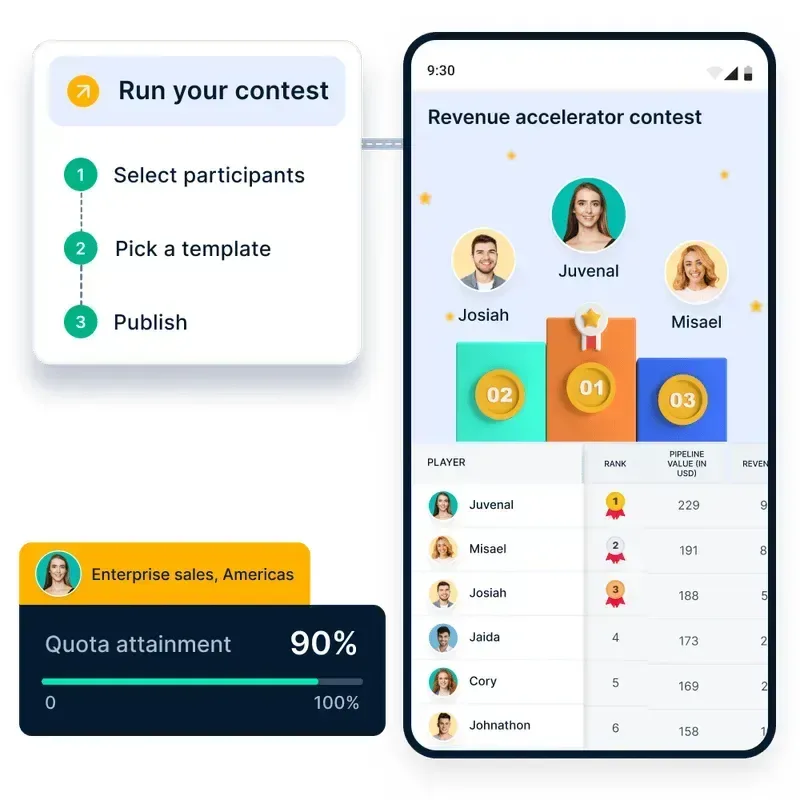
- Contests and leaderboards: Live leaderboards, SPIFs, contests, badges, streaks and points, with transparent rules for how points, ranks and prizes are calculated. See sales gamification.
- Instant payouts: Commissions post to the rep's wallet as deals close, and reps can redeem as vouchers, prepaid cards, experiences or bank transfer. See payouts.
- Recognition and rewards: Public recognition, spot awards and reward codes that employees redeem from a global catalog. See employee recognition.
To estimate the return on automating sales incentives and rewards, try the sales incentive ROI calculator.
Pick rewards your reps will remember
The best sales reward ideas are personal, timely and matched to the achievement. Start with the matrix, ask reps what they value, and mix experiences, prizes, time and growth so every kind of rep has something worth chasing.
Then deliver rewards fast and make the rules visible. A reward that arrives quickly and feels earned does more for morale than a bigger one that arrives late.
Book your Empuls demo
Frequently asked questions
Good rewards for a sales team match what each rep values and the size of the achievement. Popular choices include gift cards, experiences such as dinners or event tickets, tech gadgets, extra paid time off, public recognition and paid training or conference passes. Offering a menu and letting reps choose works better than one reward for everyone.
Non-cash incentives are rewards other than money, such as gift cards, merchandise, travel, experiences, points redeemable from a catalog, extra time off, recognition and development opportunities. They work because they are memorable and personal, and they separate the reward from regular pay, so reps link it to the achievement rather than treating it as part of their salary.
Scale spend to the achievement and the value it creates. Many companies use small tokens or recognition for everyday wins, modest rewards for monthly targets and larger experiences or prizes for quarterly and annual top performers. The IRF's 2025 Industry Outlook found 62% of North American programs spend $100 to $500 per person on non-cash rewards.
Both have a place. Cash is flexible and expected as part of commission and bonuses, but it quickly blends into regular pay. Non-cash rewards are more memorable, easier to personalize and better at signaling recognition. Most effective programs combine competitive cash pay with non-cash rewards for specific wins, contests and milestones.
Use tiered rewards so reps earn something for reaching personal milestones, not only for finishing in the top three. Reward improvement, activity goals and team targets, recognize good behaviors publicly and run contests in which each rep competes against their own baseline. This keeps mid performers engaged instead of giving up when the leaders pull ahead.
In the United States, yes. The IRS says cash and cash-equivalent items, including gift cards that can be spent like cash, are never excludable from income as de minimis fringe benefits, whatever the amount. Employers should report them as wages through payroll. Rules differ in other countries, so check local tax guidance before launching a reward program.
Reward often enough that the link between effort and reward stays clear. Recognize everyday wins as they happen, run short monthly or weekly contests and save bigger rewards for quarterly and annual achievements. Fast delivery matters as much as frequency, because a reward that arrives weeks after the win loses much of its motivating effect.





































































































































































































































































































































































































































































































































































