
Key Takeaways
Employee engagement in the retail industry depends on recognition, growth, fair schedules and genuine rest, not perks alone.
Retail workers quit faster than average: the BLS retail quits rate was 3.0% a month in August 2026, against 2.1% for all private industries.
Scheduling drives retail turnover: 31% of U.S. store associates in a 2025 Logile survey were considering quitting over poor scheduling or a lack of hours.
Quick-win retail staff motivation ideas include gamified incentives, peer recognition, cross-training and mystery shopper rewards.
Companies such as Wegmans, REI and Starbucks show that investing in store employees is a route to better customer experiences.
Employee engagement in the retail industry comes down to how store teams feel on the shop floor: recognized for good service, supported with fair schedules and given a reason to stay. The 10 strategies in this guide, from gamified incentives and peer recognition to cross-training and wellness, are the practical ways retailers lift morale and performance while reducing turnover.
Retail employees are the driving force behind any successful store. As the first point of contact for customers, their performance directly shapes customer satisfaction, sales and brand reputation. Motivated store employees are more likely to go the extra mile, provide exceptional service and stay committed to their roles, which is why engaging retail store employees should be a top priority for every store, district and head office leader.
Retail also has one of the highest turnover rates of any sector. In this guide, we cover why engagement matters, the challenges unique to retail, 10 retail employee engagement strategies with examples, and what five well-known companies teach us. Whether you are a store manager or an HR leader, you will find ideas you can put to work this quarter.
The importance of employee engagement in the retail industry
Employee engagement in the retail industry is critical for delivering great customer experiences and driving business results. Engaged employees are more motivated, productive and committed, which leads to higher sales, better customer interactions and stronger team morale. Prioritizing engagement reduces turnover, improves operational efficiency and builds a positive workplace culture.
Turnover is where the cost shows up first. Retail workers quit at a higher rate than the private-sector average, month after month, according to the U.S. Bureau of Labor Statistics Job Openings and Labor Turnover Survey:
A 3.0% monthly quits rate compounds quickly across a year of hiring and training. Investing in employee engagement in the retail sector protects that investment and builds a more satisfied workforce, stronger brand loyalty and long-term growth.
Common challenges in the retail industry
Four workforce challenges shape engagement in almost every retail business. They are ordered from the physical demands of the job to the customer pressure it ends with, and high turnover sits in the middle because it is both a result of the first two and a cause of the last.
1. Demanding and long hours
Retail employees work in fast-paced, high-pressure environments, often standing for long hours while handling customer questions, stocking shelves and managing transactions. The physical and mental strain leads to burnout and disengagement. Recognition programs, wellness initiatives and flexible scheduling help motivate employees and improve retention.
2. Communication challenges
With operations spread across many locations, consistent training, clear communication and smooth coordination are hard to achieve. Frontline employees can feel disconnected from leadership, which hurts productivity and morale. Mobile communication tools, regular check-ins and structured feedback loops keep staff informed, aligned and motivated.
3. High turnover rates
Retail is known for high turnover, driven by seasonal hiring, temporary contracts and a lack of career growth. Constantly replacing employees affects team stability, training costs and service quality. Scheduling is a growing factor: in Logile's 2025 survey of 500 U.S. store associates, 31% said they were actively considering quitting because of poor scheduling or a lack of hours.
4. Customer expectations and service pressure
Retail employees handle diverse customer needs, complaints and expectations every day, which takes patience, problem-solving and strong interpersonal skills. Short staffing makes it harder: 73% of associates in the same Logile survey had watched customers become frustrated or leave because there were not enough associates. Continuous training, performance-based rewards and a positive culture help employees feel valued and keep service standards high.
10 strategies for engaging and motivating retail employees
These 10 retail employee engagement strategies mix tangible incentives with the softer drivers of motivation, such as respect, growth and genuine rest. Gamified incentives and peer recognition come early because they are the quickest to launch, while the later ideas build longer-term loyalty.

1. Gamified incentives
Turn everyday tasks into a game or friendly competition. Gamification taps into the natural desire for achievement and recognition. Sales competitions, store leaderboards and points for performance engage retail employees in a fun, interactive way.
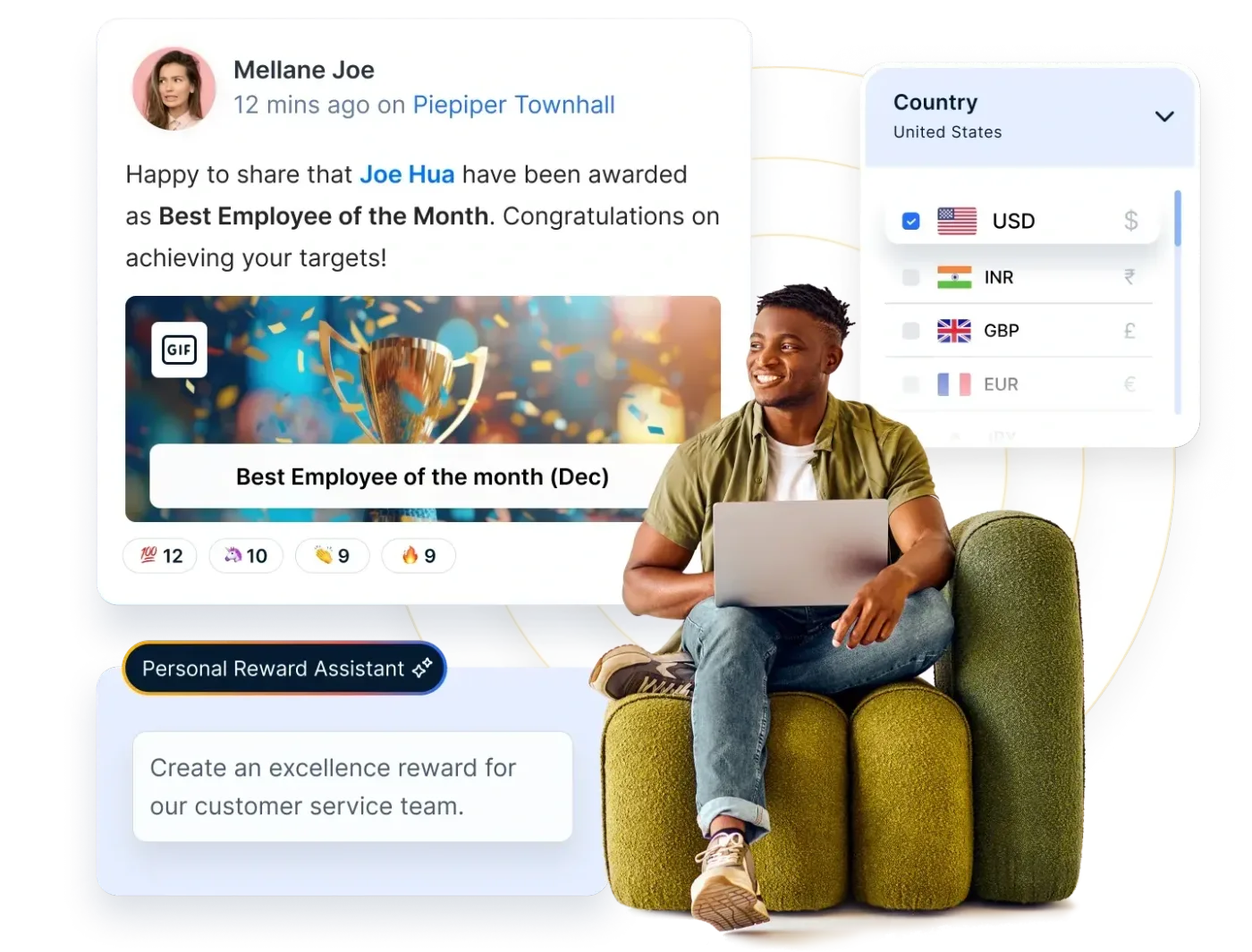
Reward more than sales. Points for completing training modules, earning customer compliments, hitting availability targets or helping a colleague keep the game fair for every role in the store, not only the strongest sellers. Our guide to sales incentive platforms for retail brands covers the tools retailers use to run these programs.
2. Continuous learning and development opportunities
Offer consistent opportunities for employees to learn, grow and advance through training sessions, workshops or courses that refine their skills or teach new ones. The company gets better-skilled workers, and employees feel valued and see a clear path for growth.
Apple is well known for its retail training. New store employees learn about the company, its products and the importance of customer service before they work the floor, and training goes beyond product and sales skills into communication and problem-solving, so employees can handle any customer scenario. This continuous learning approach helps employees feel prepared and builds loyalty to the brand.
3. Employee discount and benefits programs
Retailers can make employees feel valued with discounts on products or exclusive benefit programs. Discounts give employees a personal stake in the products they sell and deepen their connection to the brand.
Gap Inc., for example, offers employees discounts across its family of brands, including Old Navy and Banana Republic. Benefits like these make employees brand ambassadors, because they wear or use the products they sell and talk about them authentically with customers. See our roundup of employee discount programs for ways to extend this beyond your own store.
4. Open feedback and inclusive decision-making
Store employees have firsthand knowledge of ground realities and can offer valuable insights into operations, customer preferences and improvements. When employees see that their feedback is valued and can shape decisions, motivation and ownership rise.
Nordstrom is a long-standing example of a culture of open communication. Employees are encouraged to share feedback and ideas regardless of role, which has led to operational improvements and a culture where employees feel they have a real stake in the company's success.
5. Peer-to-peer recognition programs
Beyond top-down recognition, letting colleagues recognize and celebrate each other builds camaraderie and motivation. Employees can nominate peers for employee of the week or month, or use a points system to thank each other for teamwork, customer service or new ideas, and redeem those points for rewards later.
Peer recognition works best when it is visible and easy on mobile, because store teams rarely sit at a desk. A shared feed, badges and points that associates can give from their phone make appreciation a natural part of daily shifts. For tool options, read our guide to recognition software for remote and frontline teams.
6. Creative break spaces
Turning the traditional break room into a relaxing, engaging space is an underrated motivator. Comfortable seating, plants, board games or a small library give employees a genuine mental break and help them return to the floor refreshed.
A break room that reflects the brand's personality, with bright colors and somewhere to sit down properly, shows care for employees' well-being and boosts morale and productivity at very little cost.
7. Cross-training opportunities
Let employees learn roles beyond their job description. A cashier who spends time in the stockroom or a sales associate who tries visual merchandising expands their skills and breaks the monotony of their everyday role.
This variety renews interest in the job, gives employees a broader understanding of the business and opens potential paths for advancement. Retailers such as IKEA encourage co-workers to move between departments and roles, so staff understand the operation as a whole and their jobs stay dynamic and fulfilling.
8. Personal growth and wellness programs
An employee's well-being directly affects their performance and motivation. Offer programs focused on personal growth and wellness, from stress management workshops and fitness challenges to resources on financial planning.
Patagonia is known for benefits that reflect its commitment to employee well-being and its values, including paid time for employees to volunteer with environmental organizations. Its focus on well-being has created a motivated workforce that is deeply aligned with the company's mission. Our article on employee wellness trends covers what employees expect from wellness programs now.
9. Mystery shopper feedback rewards
Run a mystery shopper program in which employees do not know when they are serving an evaluator. When results come in, do not focus only on areas for improvement; reward the employees or teams that excel.
Pret A Manger has long used regular mystery shopper visits, with a bonus for every employee in a shop that earns an outstanding score. Because everyone benefits from the collective effort, the approach encourages consistently excellent service and strong team spirit.
10. Passion projects
Give employees a few hours each month to work on a retail-related passion project of their choice, such as designing a new window display, organizing a community event or creating an in-store campaign. These projects let employees channel their creativity, take ownership and contribute directly to the store's atmosphere or reputation in the community.
The idea is borrowed from technology: Google's well-known "20% time" let engineers spend part of their week on projects outside their main job. Retailers can adopt a smaller version, letting employees work on projects they care about that also benefit the store.
Together, these strategies focus on the often overlooked, softer aspects of motivation: respect among peers, real breaks and a sense of ownership. Investing in them gives retailers a more complete approach to motivation, with higher job satisfaction and better performance.
Recognize store teams from their phones
Send recognition, rewards and surveys to associates by app, WhatsApp or SMS, no corporate email needed.
Talk to our ExpertTrusted by 5,000+ companies
Reducing retail employee turnover starts with the schedule
Recognition and perks lose their power when the schedule works against employees. Scheduling now sits close to pay as a reason store associates leave, and it also affects sales.
77%
of store associates
say poor scheduling or staffing costs their store sales
51%
say their store
is understaffed during busy periods most of the time
36%
say schedules
consistently match actual store traffic
Logile 2025 Labor Planning & Optimization Report, survey of 500 U.S. store associates
To reduce retail employee turnover, pair the 10 strategies above with these scheduling basics:
- Publish schedules early: Give employees their schedule as far ahead as you can, so they can plan childcare, study and second jobs.
- Match staffing to traffic: Use sales and footfall data to staff peaks properly, which protects both service and employees' stress levels.
- Make shift swaps easy: Let employees trade shifts on their phone with manager approval instead of calling around.
- Offer enough hours: Associates who want more hours should get first access to open shifts before you hire more part-timers.
- Recognize flexibility: Thank and reward employees who cover a shift or stay late during a rush, every time.
For a wider view of keeping people, see our guide to employee retention strategies.
5 companies with strong retail employee engagement strategies
These five companies show different routes to the same outcome: store teams that care about customers because the company cares about them. The examples move from listening and trust to investment, time off and benefits, and each ends with a lesson any retailer can apply.
1. Arby's: caring about employee happiness
Arby's is a fast-food restaurant chain founded in 1964. In the early 2010s, the business was struggling: employees were quitting, customers were not returning and the numbers looked poor. Paul Brown became CEO in 2013 with no restaurant experience, and that turned out to be an advantage.
Because he did not have all the answers, he went to the people who might: the employees. He asked long-serving team members one question, "What would you do if you were me?" Their answers revealed two pressing issues:
- Employees were not trained properly, so they lacked the information they needed to serve customers well.
- The company did not communicate with them enough, which made them feel undervalued.
Arby's responded with a Brand Champ program that helped employees understand the company's goals and helped the company understand theirs. The training equipped team members with the skills and knowledge to deliver value to customers, and Arby's returned to growth in the years that followed.
The lesson for retailers is to treat employees as your most valuable asset: help them understand your goals, invest in their training, recognize their own goals and listen actively. Not every leader can visit dozens of stores as Brown did, but short, regular mobile surveys can collect feedback from every store in one place within days.
2. Nordstrom: the one-rule employee handbook
Customer service makes or breaks a retail business. Many retailers gather new hires and walk them through long lists of rules for interacting with customers. That approach has flaws:
- It makes training longer.
- Much of it is generic advice employees may never need.
- Interactions sound inauthentic because employees stick to a script.
Nordstrom, known for exceptional customer service, took a different route. New employees were famously handed a small card with a single rule: use good judgment in all situations. The short handbook cut training time, empowered employees to handle customers as they saw fit and removed a culture of micromanagement.
Not every retailer can reduce its handbook to one rule, but you can shorten it significantly by trusting employees to do their job. Simple, clear expectations make procedures consistent and improve engagement and motivation.
3. Wegmans: investing in employees
Wegmans, the American supermarket chain, is a long-running example of what happens when a retailer invests in its people. It has appeared on Fortune's 100 Best Companies to Work For list every year since the list began in 1998, and its leaders sum up the philosophy simply: to be a great place to shop, Wegmans must first be a great place to work.
Few retailers can invest at Wegmans' level, but any of them can adopt these practices:
- Build procedures employees are comfortable with: Ask small groups of employees to help create them.
- Apply procedures consistently: Treat everyone the same way while respecting their roles, which builds team spirit and collaboration.
- Share the wins: Whether it is higher sales, a new store or someone's work anniversary, use the moment to bring the team together.
- Listen to grievances and act: Complaints and suggestions take the guesswork out of where to invest and show that employees want to help improve the workplace.
4. REI: paid time off when it matters most
Retail work is demanding: many customers, long hours with short breaks and store policies to follow. One of the things retail employees value most is time off, especially around the busiest days of the year.
REI has closed its stores on Black Friday since 2015 under its Opt Outside campaign, and made the policy permanent in 2022. According to REI's newsroom, all 195 stores closed again in 2025, giving about 14,000 employees a paid day to spend outdoors.
Well-rested employees perform better than tired ones under the same conditions, and they stay more engaged and motivated to deliver great experiences. If closing on your busiest day is not realistic, you can still help employees rest by:
- Hiring enough people to reduce the workload on existing staff.
- Introducing half-days at certain times of the year.
- Lengthening breaks, especially during peak seasons.
5. Starbucks: paying with more than money
Employee expectations in retail have evolved just like customer expectations. A steady paycheck and paid time off are no longer enough on their own, and perks are often what tips the balance.
Starbucks built its employer brand on benefits that go well beyond pay for its partners, as it calls employees. Its benefits program includes:
- Food and beverage perks: A food and beverage benefit on shift, plus a weekly markout and an employee discount.
- Education: The Starbucks College Achievement Plan, which supports eligible partners in earning an online bachelor's degree through Arizona State University.
- Financial future: The Future Roast 401(k) retirement plan and Bean Stock equity awards.
- Family support: Paid parental leave.
When employees are appreciated through tangible means rather than a pat on the back, their commitment, engagement and motivation improve. Not every retailer can match Starbucks, but most can add employee discounts, small freebies, parental leave or retirement support.
How Empuls supports retail employee engagement
Retail and consumer goods employees thrive on motivation, connection and recognition, yet high turnover and disengagement remain common. Empuls, Xoxoday's employee engagement platform, is built for frontline teams like store associates, with a mobile app, WhatsApp and SMS delivery and login by mobile number instead of corporate email.
- Recognize and reward contributions: Celebrate milestones, achievements and everyday wins with recognition and points redeemable for gift cards, groceries, fuel and more.
- Turn feedback into action: Run pulse surveys with AI sentiment analysis and action plans, by store, region or role.
- Strengthen team connections: A social intranet with groups, leaderboards and a wall of fame connects stores across your network.
- Stretch every paycheck: Offer discounts and benefits and wellness programs that matter to hourly employees.
Keep your store teams motivated
Motivating retail employees is a continuous process that combines clear communication, recognition, training, fair schedules, a positive environment and competitive pay. Invest in your employees' well-being and growth, and you build an engaged retail team that drives your business forward.
Motivated employees provide better customer service and drive sales, which ultimately benefits your bottom line. For the principles behind any engagement program, start with our employee engagement guide.
Book your Empuls demo
Frequently asked questions
Employee engagement in the retail industry is the commitment and motivation store employees feel toward their work, team and employer. Engaged associates give better customer service, sell more and stay longer. It is shaped by recognition, fair and predictable schedules, training, career paths, benefits and how connected store teams feel to leadership.
Strong retail employee engagement strategies include gamified incentives, continuous training, employee discounts and benefits, open feedback, peer-to-peer recognition, better break spaces, cross-training, wellness programs, mystery shopper rewards and passion projects. Pair them with fair, predictable schedules, because scheduling problems undermine every other initiative.
Retailers reduce employee turnover by publishing schedules early, matching staffing to store traffic, making shift swaps easy and offering open hours to existing staff first. Add frequent recognition, visible career paths through cross-training, competitive pay and benefits and regular pulse surveys, then act on what store employees say.
Low-cost retail staff motivation ideas include peer recognition with points, a daily shout-out in the team huddle, store leaderboards for customer compliments, a refreshed break room, cross-training days, small rewards after mystery shopper visits and letting employees lead a window display or community project. Consistency matters more than budget.
Use mobile-first tools that reach store employees on their phones through an app, WhatsApp or SMS, with login by mobile number. Keep recognition, schedules, announcements and surveys in the same place, support local languages and let managers recognize good work in seconds during a shift.





































































































































































































































































































































































































































































































































































