
Key Takeaways
Sales motivation is the drive and determination that push reps toward their targets, shaped by inner drive and by outside levers such as pay, recognition and coaching.
Motivation is under strain: in SalesFuel's 2025 study, 31% of US B2B sellers said staying motivated is increasingly difficult.
Core performers, laggards and top performers respond to different levers, so one motivation plan for the whole team leaves results on the table.
Incentives, gamification, coaching, training and team building cover most of what a sales manager can control.
Demotivation shows up in activity and attitude weeks before revenue, so track activity trends, attainment spread and a short pulse survey.
Sales motivation is what keeps a rep picking up the phone after the tenth no. It comes from a mix of inner drive, such as ambition and pride in the craft, and outside levers, such as pay, recognition, coaching and a team worth winning with. This guide explains what drives sales motivation, why it is slipping, how to motivate each part of your team differently and how to spot and fix a demotivated team early.
Sales motivation is the drive, enthusiasm and determination that push sales representatives to pursue their targets and perform at their best. It is shaped by internal factors, such as personal ambition and job satisfaction, and external factors, such as financial incentives, recognition and career growth. A motivated sales team is more engaged, more resilient and more proactive in closing deals.
What sales motivation is and where it comes from
In sales, performance is measured constantly against targets. Reps approach new prospects, explain the product in detail and negotiate, all while knowing the person on the other side can say no at any point. Then they do it again with the next lead, with the same energy, a hundred times a quarter. That repetition can drain even your best performers, and a bad market or a personal crisis can turn a slow week into a slump.
Motivation has two sources, and good managers use both. Intrinsic motivation comes from inside: mastery, autonomy, purpose and the satisfaction of a hard-won deal. Extrinsic motivation comes from outside: commissions, bonuses, contests and public recognition. Extrinsic levers move behavior fast, while intrinsic drive keeps people going when the rewards are far away. For the research behind the two, see intrinsic vs extrinsic motivation.
The drivers that matter most to salespeople are:
- Personalized incentives: Rewards tailored to the person make reps feel valued.
- Autonomy: Control over how they work their territory builds ownership.
- Purpose: Seeing how their work helps customers and the company keeps reps engaged beyond commission.
- Feedback and coaching: Regular, specific guidance shows reps how to improve.
- Recognition: Publicly celebrating wins creates a sense of achievement.
- Fair play: Clear expectations, transparent pay and honest communication build trust.
- Team spirit: A motivated, energetic team lifts everyone in it.
Why sales motivation matters more than ever
Motivated reps sell more, serve customers better and stay longer, but the data shows motivation is under strain. In SalesFuel's 2025 Voice of the Sales Rep study of 830 US B2B sellers, 31% said staying motivated is increasingly difficult, 70% struggle with work-life balance and only 39% consistently hit quota.
31%
say staying motivated is increasingly difficult
SalesFuel, 2025
39%
of B2B sellers consistently hit quota
SalesFuel, 2025
22%
of managers globally are engaged at work
Gallup, 2026 report
40%
median SDR attrition
Bridge Group, 2025
Signs of a sales motivation gap
Managers, who set the tone for every team, are struggling too. Gallup's State of the Global Workplace 2026 report found global manager engagement fell from 27% in 2024 to 22% in 2025. And turnover is costly: the Bridge Group's 2025 SDR report put median SDR attrition at 40%.
Assessment data points the same way. Objective Management Group found that among current sales employees, average motivation scores fell from 65% in 2023 to 62% in 2025, while desire to succeed stayed high at 77%. In other words, the will to win is intact, but the daily push behind it is weakening.
That gap between desire and motivation is where managers can act. When reps are motivated, the business gains on several fronts:
- Productivity: Motivated reps put in more effort, which shows up in pipeline and revenue.
- Retention: Engaged sellers are more likely to stay, which saves months of ramp time for every replacement.
- Customer relationships: Motivated reps give better service and build stronger loyalty.
- Ideas: Encouraged people find new ways to close deals or improve the process.
- Morale: Energy is contagious, and a motivated team builds collaboration.
Keep every rep motivated between payouts
Live earnings, leaderboards and recognition, on one platform.
Talk to our ExpertTrusted by 5,000+ companies
How to motivate a sales team by performance level
What motivates sales reps differs by where they sit on the performance curve, so a one-size-fits-all plan leaves potential on the table. The table below covers the three groups most teams have and what tends to work for each; start with core performers, because they are the largest group and the most often overlooked.
| Group | What they need | What works | What to avoid |
|---|---|---|---|
| Core performers (the middle of the team) | Reachable next steps and a reason to stretch | Multi-tier targets, contests with prizes that suit different tastes, coaching on one skill at a time | Contests only the top 10% can win |
| Laggards | Structure, short-term goals and support | Quarterly or monthly bonuses, weekly goals, thoughtful public recognition of progress, a clear coaching plan | Public shaming or targets that feel impossible |
| Top performers | Uncapped upside and new challenges | Overachievement commissions and accelerators, multiple-winner contests, mentoring roles, stretch accounts | Commission caps that tell them to stop selling |
To shift the whole performance curve, use data rather than assumptions. Analyze where reps sit, test a change with a small group before rolling it out company-wide and keep what moves results. This helps the plan fit your sales culture and keeps every rep, from laggards to stars, engaged.
5 sales motivation strategies that work
These five levers cover most of what managers can control: pay, play, coaching, skills and team. Incentives come first because they set the frame, but the other four are what keep motivation up between payouts.
1. Incentives that reward the right results
Earning more for better results is why many people choose sales in the first place, so incentives remain the strongest lever. They can be monetary, such as commissions, bonuses and cash rewards, or non-monetary, such as trips, prizes and personalized gifts. The best mix depends on your industry, budget and, above all, your people.
Many organizations still see incentives only as a cost, not as a tool to steer behavior. A well-designed plan with the company's goals in focus stimulates the behaviors you want, and it works best when it is accurate, paid on time and easy for reps to follow. For ideas organized by the goal they drive, see these sales incentive ideas, and for the full picture, this guide to sales incentives.
2. Gamification that makes progress visible
Gamification applies game design to work: points, levels, leaderboards and challenges that tie daily activity to rewards. Most salespeople are competitive, whether they want to beat others or beat their own last month, and friendly competition is good for morale when it is designed fairly.
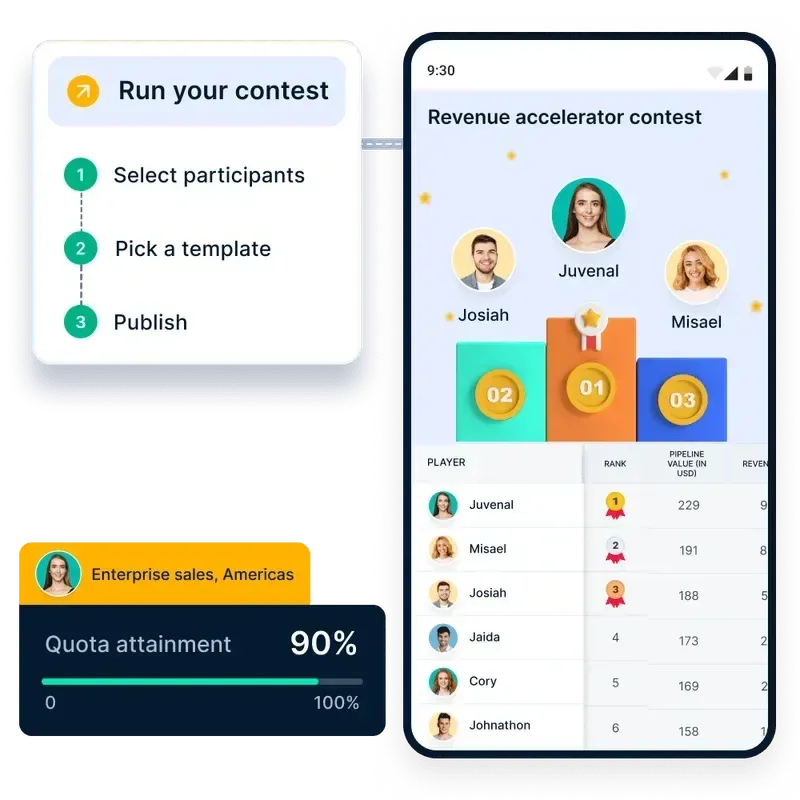
Visible leaderboards show where each rep stands, shareable wins celebrate small victories and challenges at individual, team or company level nudge the behaviors that support business goals. Scope leaderboards to similar peers so the middle of the team can win too. For formats and rules, read this guide to sales gamification.
3. Coaching and empowerment
When a rep struggles, the instinct is to criticize or jump in and fix it. Both reduce motivation. Instead, guide them to find the answer themselves while making it clear you are there if needed. That builds trust and shows you believe in their potential, which makes people strive harder.
Coaching is also where reps are underserved. Salesforce's 2026 State of Sales research found 46% of sellers rarely get feedback on their sales conversations. Other ways to empower reps include flexible work arrangements, checking in on their wellbeing, recognizing new ideas and talking regularly about career growth.
4. Training that builds confidence
Lasting motivation needs a feeling of competence and belief in what you sell. Assess the skills each rep needs, such as active listening, negotiation or building a product story, and give them time to learn. Onboarding training matters most, because it gives new hires the market, product and competitor knowledge to approach clients with confidence.
Reps feel valued when managers care about their growth, not just their numbers. Suggest a book or a podcast, share a market trend report, fund a certification or offer a stress management workshop. Group seminars and industry events add learning and camaraderie at the same time.
5. Team building that balances competition
Healthy competition drives sales, but without balance it can turn hostile. Send two messages: compete against competitors, not each other, and every rep is part of one machine that works only when the parts work together. Remote and field reps in particular need help to feel they belong to a larger team.
Reward knowledge sharing, mentoring and helping colleagues, run team activities online and in person, praise the team publicly when everyone is present and remove any ambiguity on territories and ways of working. For a full set of management-led approaches, see these 12 strategies to motivate a sales team.
Signs your sales team is losing motivation
Motivation rarely drops overnight; it shows up first in activity and attitude, weeks before it hits revenue. Use this diagnostic to match what you are seeing to its most likely cause and the first fix to try.
| What you see | Likely cause | First fix |
|---|---|---|
| Activity drops in the second half of the quarter | Quota feels out of reach | Add interim milestones and reset unrealistic targets with data |
| Reps keep their own commission spreadsheets | Pay is opaque or often wrong | Give live visibility of attainment and earnings |
| The same few names win every contest | Contests reward only the top | Scope leaderboards to peers and use multiple-winner formats |
| Top performers coast after hitting target | Capped or flat pay above quota | Add accelerators above 100% |
| Silence in team meetings, few deal reviews | Low trust or fear of criticism | Switch to coaching questions and recognize ideas |
| Rising sick days and late logins | Burnout and poor work-life balance | Review workload, territory size and admin time |
| Good reps leaving for small pay rises | Weak recognition and no growth path | Recognize specific wins and map a career path |
If several signs point to the incentive plan, read what makes a bad sales incentive plan. If they point to people leaving, these sales team retention strategies go deeper.
How to measure sales motivation
You cannot manage motivation you never measure. Combine hard activity data with what reps tell you, and review both monthly so you catch a dip before it shows in the forecast:
- Activity trends: Calls, meetings and pipeline created per rep, compared with their own past months.
- Attainment spread: How many reps are on track, not just the team total.
- Incentive engagement: How often reps check earnings and join contests.
- Retention: Voluntary exits, especially among top and core performers.
- Pulse scores: A short survey every month or quarter.
How Empuls helps keep sales teams motivated
Empuls brings incentives, gamification and recognition together, so the levers in this guide run on the same data. Admins build commission and incentive plans in a no-code builder, calculations run automatically from CRM, ERP and HRMS data, and sales professionals see a KPI scorecard, an earnings estimator, their leaderboard rank and nudges on how far the next slab is.
Live leaderboards, SPIFs, contests, badges and streaks keep teams competing between payouts, while peer-to-peer recognition celebrates the wins that are not on the leaderboard. CarDekho gave 200+ sales users real-time visibility of their commissions and saw an 18% increase in incentive qualifiers in under 100 days, as covered in the CarDekho case study.
Explore Empuls sales incentives, sales gamification and employee recognition.
Start small and keep going
Motivating a sales team takes steady effort, and you do not need every tactic at once. Pick one lever that matches the warning signs you see, apply it well and measure what changes. Your team will sense you are moving in the right direction and respond.
Then add the next lever. Over time, fair incentives, visible progress, real coaching and a team that wins together build the kind of motivation that survives a bad quarter.
Book your Empuls demo
Frequently asked questions
Stay goal oriented and break big targets into weekly activity goals you control. Celebrate small wins, keep learning so each call feels more confident, and track progress where you can see it. Surround yourself with supportive colleagues, treat rejection as information rather than a verdict, and use your incentive plan as a personal scoreboard.
There is no single best motivator, but clear and achievable incentives come closest, especially when paired with recognition and growth. Commissions and bonuses drive effort, while public praise, coaching and promotion paths keep people engaged between payouts. Transparent goals, accurate pay and supportive managers make every other motivator work harder.
Popular sales team motivation ideas include short contests with multiple winners, leaderboards scoped to similar peers, accelerators above quota, spot bonuses for specific behaviors, public shout-outs for deals, mentoring roles for top performers, experiences such as team trips, and training budgets. Rotate them so the same people do not always win.
Be specific and sincere. Name the deal, the behavior and why it mattered, for example the way a rep handled a tough objection. Acknowledge effort in hard periods, remind the team how their work helps customers and the business, and focus on the next controllable step rather than the size of the gap to target.
The most common reasons are quotas that feel out of reach, pay that is unclear or wrong, little feedback or coaching, recognition that only goes to the top few and heavy admin work that leaves less time to sell. Burnout, poor work-life balance and a lack of career growth also drain motivation over time.
Money is a major motivator in sales, and it is why many people choose the role. But it is not enough on its own. Once pay feels fair, recognition, mastery, autonomy and growth decide whether reps stay engaged. A 2025 Incentive Research Foundation study also found extra effort rises with reward value only up to a threshold.
Start with a private conversation to understand the cause, whether skills, territory, workload or something personal. Set short-term goals they can reach, coach one skill at a time and recognize progress, not only results. Give them visibility of where they stand. If coaching does not change results over a defined period, use a structured improvement plan.





































































































































































































































































































































































































































































































































































