
Key Takeaways
Employee experience is the sum of every interaction an employee has with an organization, before, during and after their tenure.
Employee engagement is an outcome, while employee experience is the set of conditions that produces it.
The five employee experience stages are hiring, onboarding, engagement, performance and development, and exit.
Employee experience has four main types: cultural, technological, physical and emotional, with culture shaping the other three.
A practical EX strategy listens first, maps the moments that matter, fixes a few at a time and measures one metric per moment.
What is employee experience? It is the sum of every interaction a person has with your organization, from the first job ad they see to the day they leave and beyond. The employee experience stages run from attraction and hiring through onboarding, engagement, performance and development, and exit, and each one shapes whether people stay, perform and recommend you.
In the last few years, a volatile economy, waves of resignations and the move to hybrid work have forced companies to rearrange their priorities around their people. That pushed engagement and satisfaction to the top of the agenda, but with a new emphasis on experience. From HR to IT and up to the CEO, leaders now treat employee experience as a business imperative rather than a perk program.
This guide is the starting point for our employee experience series. It covers the employee experience definition, how it differs from engagement, the main types, the lifecycle stages, practical examples and a checklist you can use to assess where you stand.
What is employee experience: the definition
Employee experience (EX) is the journey an employee takes with an organization, including every interaction before, during and after their tenure. That is how Gallup defines employee experience, and most HR frameworks use a version of it.
Starting from the time a potential candidate notices your company until the time they leave, the sum of all the interactions they have makes up the entirety of their experience. It includes the big moments, such as an offer, a promotion or a layoff, and the small daily ones, such as how easy it is to log in, get an answer from HR or be thanked for good work.
Let's break this down:
| Question | What it means for employee experience |
|---|---|
| What | Every interaction, perception and feeling an employee has about their work, team, manager, tools and the company |
| When | Across the whole employee lifecycle, from attraction and hiring to exit and alumni |
| How | Through culture, technology, the physical or remote workspace and the emotional quality of relationships |
| Why | Because experience drives engagement, retention, performance and how employees treat customers |
A good experience makes an employee feel good about working at their company, and it:
- Makes them feel valued: They see a clear purpose in their work and know their contribution matters.
- Engenders a sense of belonging: They feel accepted by their team and connected to the wider organization.
- Fosters commitment: They want to stay, grow and do their best work.
Employees who do not get good experiences don't think twice about quitting, and in a tight talent market they rarely have to.
Employee experience vs employee engagement
Not long ago, employee experience was a relatively new term, and companies were still focused on improving engagement to boost productivity. Engagement is still important, but it is an outcome. Employee experience is the set of conditions that produces it, which is why it has become a core KPI for HR and company leaders.
| Factor | Employee engagement | Employee experience |
|---|---|---|
| What it is | How emotionally invested and involved employees are in their work | Everything employees encounter across their journey with the company |
| Role | An outcome you measure | The cause you design and manage |
| Owner | Mostly HR and managers | HR, IT, facilities, leadership and managers together |
| Typical measures | Engagement surveys, eNPS, discretionary effort | Lifecycle surveys, journey metrics, retention by stage, tool and process friction |
| Time frame | A snapshot of how people feel now | The whole lifecycle, moment by moment |
Both employee engagement and experience affect productivity, turnover and profitability, and the gap between them matters. According to Gallup's State of the Global Workplace 2026, only 20% of employees worldwide were engaged in 2025, and low engagement cost the global economy about $10 trillion in lost productivity. Programs that chase the engagement score without fixing the underlying experience rarely move that number. For the research behind engagement itself, read our guide to employee engagement.
Some of the factors driving the shift from engagement to experience include:
- Changing expectations: The modern workforce expects to be treated the way the company treats its customers. Money and job satisfaction still matter, but people also want personalized, positive experiences during their journey with the company.
- Digitization and disruption: The pace of digitization, automation and now AI has forced companies to scale up, scale down and redesign roles quickly. Every one of those changes lands on employees as an experience, good or bad.
- A multi-generational workforce: Four generations now work side by side, so companies need a deeper understanding of the social, psychological and behavioral differences between baby boomers, Gen X, millennials and Gen Z to shape the right experiences.
- The war for talent: In critical roles there are still more openings than qualified candidates. Companies that provide the best employee experiences attract and retain the top talent in their industry.
- Social media and review sites: Employees can share their experience publicly in minutes. To protect their reputation, companies have to make sure what people say about them is good because it is true.
Types of employee experience
Employee experience has four main types: cultural, technological, physical and emotional. Culture comes first because it shapes how the other three are designed and felt, so a strong toolset or office cannot make up for a weak culture.
1. Cultural employee experience
Culture is the backbone of any workplace. It includes a company's values, leadership style, diversity, inclusion and overall work environment. Employees who align with the organization's culture feel a stronger sense of purpose and belonging.
A positive cultural experience fosters trust, encourages collaboration and enhances job satisfaction. A toxic culture leads to disengagement, higher turnover and poor performance. Companies that build a strong, people-centric culture create an environment where employees feel valued, respected and motivated. Our guide to what organizational culture is goes deeper.
2. Technological employee experience
Technology plays a crucial role in employee satisfaction and efficiency. From communication tools to project management software, the ease of accessing and using technology affects daily workflows. Outdated systems, slow platforms or a lack of integration create frustration and reduce productivity.
A seamless, well-integrated digital ecosystem enhances collaboration and minimizes workplace stress. Companies investing in modern workplace technology, such as AI-assisted HR systems, cloud collaboration tools and automated workflows, help employees do their jobs with minimal friction. See how AI is reshaping the employee experience for where this is heading.
3. Physical employee experience
The physical workspace has a direct impact on wellbeing, productivity and engagement. Whether people work in an office, remotely or in a hybrid setup, they need an environment that supports their work. Office layout, ergonomic furniture, natural light, noise levels and wellness spaces all influence comfort and job satisfaction.
Companies that offer flexible work arrangements, home office support, quiet zones and wellness rooms show a real commitment to their employees' health. For frontline and field teams, the physical experience is the shop floor, the vehicle or the store, and it deserves the same attention.
4. Emotional employee experience
How employees feel about their work, leadership and daily interactions determines their level of engagement and commitment. A strong emotional experience is built on trust, recognition, psychological safety and meaningful relationships.
Employees who feel appreciated and heard are more likely to stay motivated and invested in their roles. Companies that prioritize open communication, regular feedback and employee recognition foster belonging and loyalty. A lack of emotional support or constant stress leads to burnout, disengagement and higher turnover. For the twelve building blocks behind these types, see the pillars of employee experience.
Design a better experience at every stage
Empuls brings recognition, lifecycle surveys, benefits and communication into one platform.
Talk to our ExpertTrusted by 5,000+ companies
The 5 employee experience stages across the lifecycle
The employee experience lifecycle has five stages: hiring, onboarding, engagement, performance and development, and exit. Onboarding carries the most weight because it sets expectations for everything after it, and the stages are listed in the order employees live them so you can map ownership and metrics stage by stage.
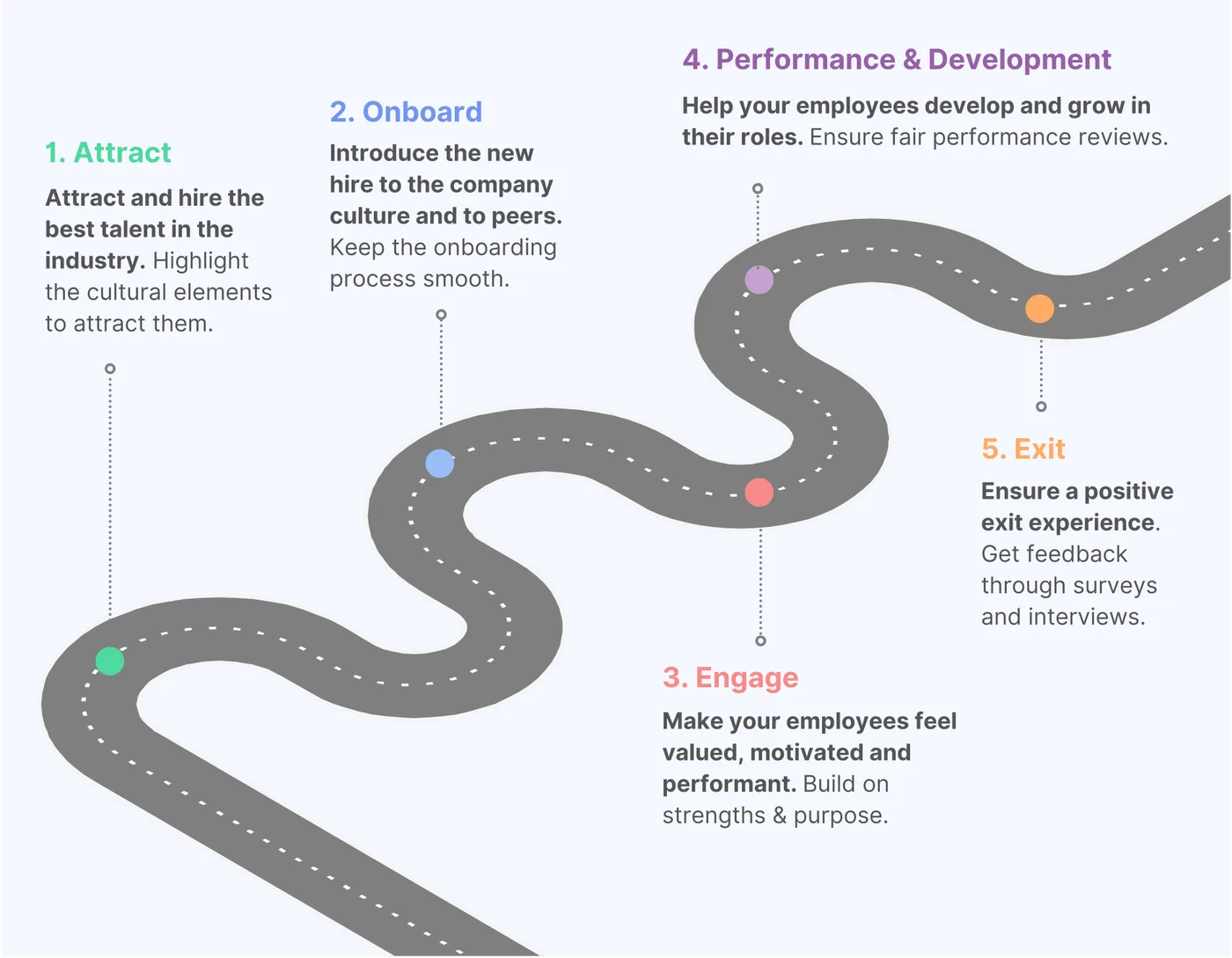
Some models split these into more steps. Gallup's lifecycle, for example, separates attract from hire and perform from develop, giving seven stages, and many companies add an alumni stage after exit. The labels matter less than covering every moment.
1. Hiring
The experience starts with a candidate being attracted to your job ad and covers the entire recruitment process right up until the offer letter is accepted. Since most job seekers look up company information and culture on review sites before they apply, it is vital to give your existing employees an experience that leads to great reviews and referrals.
Negative experiences equal negative reviews, which can turn off potential new talent. Some key considerations during this stage are:
- Are your job ads clear and compelling enough to attract the top talent in the market?
- How long is the hiring process, and how quickly do candidates hear back?
- Is your interview process engaging, fair and efficient?
- What is your offer acceptance rate?
- How did candidates, including the ones you rejected, rate the recruitment experience?
2. Onboarding
Acceptance of the offer signals the start of the employee's lifecycle. New hires are introduced to the company culture and get up to speed with the work, processes and technologies. At this stage, it is vital to establish trust and help them fully transition into the expectations of the new role.
This is also where many companies are slipping. The Qualtrics 2026 Employee Experience Trends research found that new hires report their lowest engagement since 2021, and the share who believe they can challenge the status quo fell from 64% to 50% in a year. A great onboarding experience helps new employees ramp up quickly and build lasting relationships with the company. Consider:
- Does your purpose align with that of your new employees?
- What is the ramp-up time, and is it getting shorter?
- What are you doing to integrate them into the company culture, from day one to day 90?
- Are they able to build trust, collaborate and work innovatively within their teams?
Small gestures help here. These onboarding gifts for new hires show how to make the first week feel personal.
3. Engagement
New employees are settled in and ramped up, but what next? This is when the company has to keep the experience strong, because engagement keeps employees motivated, performing and hungry for more. Provide the best working conditions and experiences you can, and measure engagement continually:
- Is the work interesting and purpose-driven?
- Do you treat their contributions as valuable and recognize them often?
- Do they have the right resources and technologies to work efficiently?
- Is the workplace safe, supportive and comfortable?
- Are they able to work flexibly?
- What is the engagement score, and how is it trending by team?
4. Performance and development
This is an ongoing part of the lifecycle that runs through the employee's entire tenure. Every employee develops at a different pace and across different skills. The company must help every employee grow, support their career aspirations, upskill them and enable them to be their productive best.
A strong retention strategy keeps development on track and aligns people with the company's vision. This is the time to ask:
- Are you providing the right incentives and opportunities for learning, upskilling and development?
- Have you set clear goals and KPIs to measure performance fairly?
- Is productivity rising or falling, and why?
- Do you have a personalized rewards and recognition program?
- Do your employees feel valued and have a sense of belonging?
- What is your retention strategy, and does it reduce recruitment costs?
If retention is your main concern at this stage, our employee retention strategies guide covers it in detail.
5. Exit
Despite the right engagement and experiences, some employees will leave for personal circumstances, family, relocation, retirement or a career change. Just because an employee has decided to depart doesn't mean the company can slack off on its experience. Former employees who leave on good terms become strong brand advocates, rehire candidates and sources of referrals.
A good exit survey helps you identify gaps and areas of improvement for current and future employees, which reduces attrition. Some points to keep in mind:
- Do you have a good exit survey or interview in place?
- What is the departing employee's impression of the company and its culture?
- Were you able to get candid feedback about their reasons for leaving?
- Do you stay in touch through an alumni network?
To turn these stages into a working plan, map the moments that matter and pick one metric for each:
| Stage | Moments that matter | Metric to watch |
|---|---|---|
| Hiring | Job ad, interviews, offer | Time to hire, offer acceptance rate, candidate experience score |
| Onboarding | Day one, first week, first manager check-in, day 90 | Time to productivity, new hire survey score, 90-day turnover |
| Engagement | Recognition, team rituals, flexibility, everyday tools | Engagement score, eNPS, recognition frequency |
| Performance and development | Reviews, promotions, learning, internal moves | Internal mobility rate, training participation, regretted turnover |
| Exit | Resignation conversation, exit survey, last day, alumni | Exit survey themes, regretted turnover, boomerang hires |
Employee experience examples
Employee experience examples are easiest to understand as specific moments, not slogans. Here are examples of good employee experience at each stage:
- Hiring: Every candidate gets a decision within a set number of days, with feedback after a final round.
- Onboarding: A laptop that works on day one, a buddy, a welcome post from the team and a 30-60-90 day plan.
- Engagement: Peer recognition that happens weekly, not only at the annual awards.
- Development: A visible internal job board and managers who are expected to discuss careers every quarter.
- Life moments: Real support when an employee faces a crisis, such as flexible leave, emergency financial help or colleagues stepping in.
- Exit: A respectful offboarding, a candid exit conversation and an open door to return.
Some companies are known for this. When a CHG Healthcare employee lost his home to a wildfire, colleagues and the CEO reached out within minutes with support and a place to stay. At SAP, an employee led a company-backed program that connected families who relied on school meals with free food providers when schools closed during the pandemic. For more company stories, read our roundup of employee experience examples.
Employee experience as a KPI
The kind of experience a company creates for its employees, positive or negative, shows up quickly in business performance. Engagement is the most widely measured result of a good experience, and Gallup's research shows how large the gap between the best and worst teams is.
23%
Higher profitability
Top vs bottom quartile engagement
78%
Less absenteeism
Top vs bottom quartile engagement
18%
Higher sales productivity
Top vs bottom quartile engagement
10%
Higher customer loyalty
Top vs bottom quartile engagement
Source: Gallup Q12 meta-analysis, 11th edition, 2024
These figures come from the 2024 edition of the Gallup Q12 meta-analysis, which compares business units in the top and bottom quartiles of engagement. But what makes a great experience in the first place? It differs from company to company, but the most common indicators include:
- Clear goals and values that employees understand and believe in
- A strong rewards and recognition program with personalized rewards
- An inclusive, transparent and supportive workplace
- Leadership based on empathy and trust
- Work-life balance and flexible working arrangements
- Career development with upskilling and training
- A focus on community, social impact and the environment
- Capable HR teams and easy-to-use technology
For the full business case, see why employee experience is important, and to track it with numbers, read our guide to measuring employee experience.
The employee experience checklist
Given the many levels of interaction between employer and employee, it is no wonder some companies struggle to build a complete employee experience strategy. A simple way to start is to group the experience into social, work and organizational elements and ask nine questions:
| Experience | Questions to ask |
|---|---|
| Social experience | Are you treating employees as valuable members of the organization? Do team members trust each other enough to collaborate openly? Do employees feel welcome in their work community and have a sense of belonging? |
| Work experience | Do employees have clear responsibilities, interesting work and the resources they need? Can they complete their work efficiently, with flexibility? Do they get the opportunities and incentives to learn, grow and be financially secure? |
| Organizational experience | Do your purpose and values guide real decisions? Do you provide the right technology for efficient, smart working? Are the surroundings safe, comfortable and people-centric, in the office and beyond it? |
How to build an employee experience strategy
A good strategy turns the definition into a plan you can run every quarter. These five steps work for most organizations, whatever their size:
- Listen first: Run lifecycle and pulse surveys and read exit and review site feedback. Qualtrics found engagement was twice as high at employers that increased listening over the past year.
- Map the journey: Walk through each stage from the employee's point of view and list the moments that matter.
- Prioritize a few moments: Pick the two or three moments with the biggest gap between expectation and reality, often onboarding, recognition and career growth.
- Fix and assign owners: Give each moment an owner across HR, IT, facilities or the business, with a deadline and a budget.
- Measure and repeat: Track one metric per moment, share results with employees and start the next cycle.
For tactics at each step, read how to improve employee experience.
Common employee experience mistakes
Most employee experience programs fail for the same handful of reasons:
- Treating EX as perks: Free snacks and events cannot offset a poor manager, broken tools or unfair pay.
- Surveying without acting: Asking for feedback and then going quiet makes the experience worse, not better.
- Ignoring managers: Gallup reports that manager engagement fell to 22% in 2025, and disengaged managers rarely create good experiences for their teams.
- Designing for headquarters only: Remote, hybrid, frontline and field employees have different moments that matter.
- Forgetting the exit: A careless offboarding undoes years of goodwill and shows up on review sites.
Transforming employee experience with Empuls
A positive employee experience leads to higher retention, motivation and workplace satisfaction. When employees feel appreciated and connected, they are more engaged and productive. Empuls, Xoxoday's employee engagement platform, brings the tools that shape everyday experience into one place:
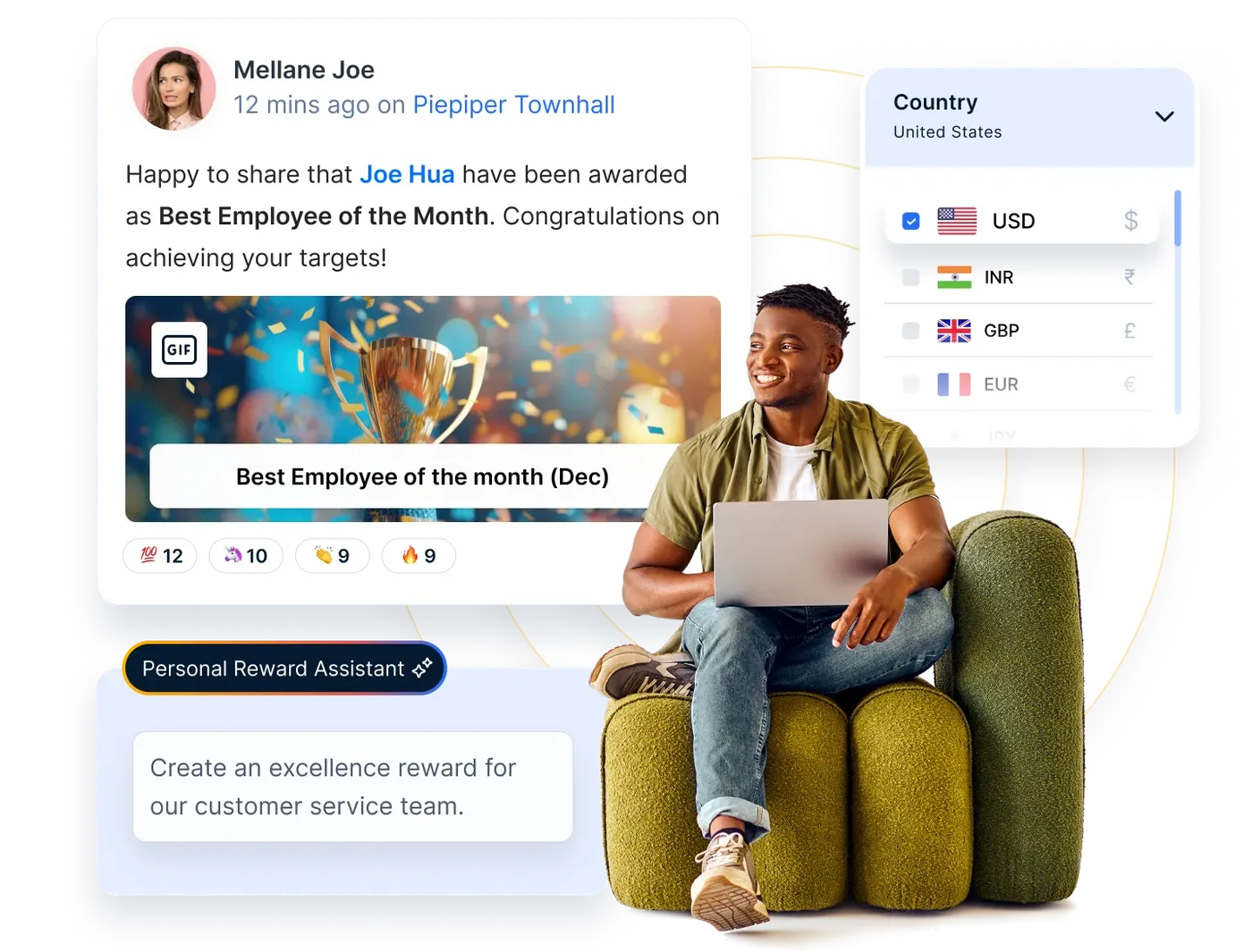
- Recognition that matters: Celebrate achievements, milestones and life events with recognition and meaningful rewards.
- Feedback at every stage: Use pulse and lifecycle surveys to hear employees from onboarding to exit.
- Stronger connection: Keep teams informed and connected through a social intranet.
- Benefits people use: Offer tax-saving benefits, discounts and wellness support through Empuls benefits.
To see how this maps to every stage, explore Empuls for employee lifecycle management.
Towards an employee-centric future
Employee experience is not a single program. It is the sum of hundreds of moments that your people go through, and each stage of the lifecycle gives you a chance to get those moments right. Companies that listen, design deliberately and measure what changes will attract, engage, develop and retain the best talent in their market.
If your current approach still treats engagement as an annual survey and a perks list, now is the time to turn it into an inclusive, people-centric experience strategy.
Book your Empuls demo
Frequently asked questions
Employee experience is everything an employee sees, does and feels while working for an organization. It covers the hiring process, onboarding, daily work, tools, managers, recognition, growth and the way they leave. In simple words, it is the employee's side of the relationship with the company, added up across their whole journey rather than judged at one point in time.
The five common employee experience stages are hiring, onboarding, engagement, performance and development, and exit. Some models use seven stages by separating attraction from hiring and performance from development, and many companies add an alumni stage after exit. Whatever model you use, the goal is to map the moments that matter at each stage and assign clear owners.
Employee experience is the full set of interactions employees have with the company, from culture and tools to managers and workspace. Employee engagement is how emotionally invested and involved employees are in their work. Experience is the cause and engagement is one of its main outcomes, so improving the experience is usually the most reliable way to raise engagement over time.
The four types of employee experience are cultural, technological, physical and emotional. Cultural experience covers values, leadership and inclusion. Technological experience covers the tools people use every day. Physical experience covers the office, home or frontline workspace. Emotional experience covers trust, recognition and psychological safety. Culture tends to shape the other three, so it is usually the place to start.
HR usually leads employee experience, but it cannot own it alone. IT shapes the technology experience, facilities shapes the physical workspace, leaders set the culture and managers shape most daily moments. The most effective companies give one leader, often a chief people officer or head of employee experience, accountability for the whole journey while each function owns its stage.
A good employee experience example is an onboarding where the laptop works on day one, a buddy is assigned, the team posts a welcome and the manager sets a clear 90-day plan. Other examples include weekly peer recognition, a visible internal job board, real support during a personal crisis and a respectful exit with an open door to return.
Measure employee experience with a mix of survey and operational data. Common metrics include engagement score, eNPS, new hire survey results, time to productivity, internal mobility, absenteeism and regretted turnover. Track one metric per lifecycle stage, compare results by team and tenure, and share what you will change, so employees see that their feedback leads to action.
Employee experience matters because it drives engagement, retention, productivity and customer outcomes. Gallup's 2024 meta-analysis found that top-quartile engagement teams have 23% higher profitability and 78% less absenteeism than bottom-quartile teams. A poor experience shows up as turnover, hiring costs, weak reviews and inconsistent service, which makes it a business issue rather than an HR one.





































































































































































































































































































































































































































































































































































