
Key Takeaways
A culture of recognition is a workplace where appreciation is frequent, specific and shared by peers as well as managers, and built into everyday routines.
Gallup and Workhuman found only 22% of employees get the right amount of recognition, while well-recognized employees were 45% less likely to leave within two years.
Leaders set the tone, but peer-to-peer appreciation spreads recognition to the everyday work managers do not see.
Recognition sticks when it is personal, tied to company values and includes effort and progress, not only outcomes.
Measure frequency, reach, peer participation and specificity every quarter to see whether recognition is truly embedded.
To create a culture of recognition, make appreciation frequent, specific and shared by everyone, then build it into the routines your teams already have: meetings, milestones, project wraps and everyday tools. Leaders model it, peers practice it and you measure it, so it does not fade after launch. This guide covers why it matters, 10 practical ways to build it and a scorecard to check how embedded it is.
A culture of recognition is a workplace where employees regularly notice and appreciate each other's contributions, from peers as well as managers, and where that appreciation is built into everyday work rather than saved for annual awards. Gratitude is the attitude underneath it, and recognition is how that attitude shows up in action.
Imagine walking into work every day knowing your contributions matter, and that your effort is not just noticed but genuinely appreciated. That is the power of a culture of recognition and appreciation, and it could not be more relevant. In May 2024, Gallup found that 51% of US employees were watching for or actively seeking a new job. Employees are not just chasing paychecks. They want purpose, belonging and to feel valued in their work.
This is where building a culture of gratitude becomes your secret weapon. It is not about one-off perks or token gestures. It is about making gratitude and recognition a daily ritual, woven into the way teams collaborate, celebrate and grow together.
What recognition means at work
Recognition, in general, is acknowledging the positive things in life, such as the goodness in other people, events and experiences. Employee recognition acknowledges employees' inherent value, not just their work performance.
Building a culture of recognition involves acknowledging employees' contributions to the bigger picture. Whether it is thanking someone for a job well done or recognizing their effort to help another department or a colleague in need, employee recognition covers it all. To decide what to recognize, use this list of employee behaviors to recognize.
What gratitude means at work
Gratitude, a close sibling of recognition, goes a step further and acknowledges the influence of others on our own success. The word comes from the Latin for thankfulness, so it can be thought of as thankful recognition.
Gratitude in the workplace is the foundation of trust, empathy and communication, which are among the most sought-after attributes of a strong organizational culture. A culture of gratitude at work means people say thank you sideways and upward, not only downward from managers.
Why a culture of recognition and gratitude matters
Human beings are social, and relationships are fundamental to any group, whether a family, a group of friends or colleagues. In the middle of hectic work cycles, though, employees get little time to bond with their team and organization in meaningful ways.
A culture of recognition and gratitude fills that gap with everyday thank-you moments that build trust and make people feel valued. At an organizational level, it is closely tied to productivity, engagement and retention, and the research is clear on how much is at stake:
- Recognition is rarely right: In 2024 Gallup and Workhuman research, only 22% of employees said they get the right amount of recognition, and 55% received no recognition or recognition that met none of Gallup's five pillars of strategic recognition.
- Good recognition keeps people: Well-recognized employees were 45% less likely to have left their organization two years later.
- Quality drives engagement: Employees whose recognition met at least four of the five pillars were nine times as likely to be engaged as those whose recognition met none.
- Frequency counts: A Gallup study of more than 20,000 workers found 61% of employees who get feedback and recognition from their manager at least weekly are engaged, compared with 38% of those who get weekly feedback but less frequent recognition.
Set against global engagement of just 20% in Gallup's 2026 State of the Global Workplace report, an employee recognition culture is one of the most practical engagement levers you control.
Benefits of building a recognition culture
Building a culture of recognition goes beyond handing out praise. It creates a workplace where people feel seen, valued and motivated to do their best, and it pays off in five ways:
- Higher morale and job satisfaction: When employees appreciate one another, morale lifts. People are more motivated to work as a team, and job satisfaction improves overall.
- Less stress and absenteeism: A culture of gratitude makes employees feel valued, which reduces job insecurity and the stress that comes with it. A calmer work environment also means fewer sick days and more people showing up ready to work.
- Better productivity: Employees who are regularly appreciated by managers and peers are more confident and engaged. They are eager to perform well and keep their place as valued team members.
- Stronger retention: Engaged employees in a culture of gratitude are more satisfied with their jobs, and that stability significantly reduces turnover. It complements your wider employee retention strategies.
- Easier hiring: A strong culture turns employees into ambassadors who help recruitment. Word of mouth from happy employees strengthens your employer brand and attracts top talent.
Make recognition a daily habit, not an annual event
Give every employee an easy way to recognize peers, celebrate milestones and reward wins in one place.
Talk to our ExpertTrusted by 5,000+ companies
10 ways to create a culture of recognition and gratitude
The key to higher engagement, happiness and productivity lies in making appreciation part of how work gets done. Here are 10 ways to build a culture of recognition at work, starting with the quick habits anyone can adopt and moving to the structures that make recognition last.
1. Send thank-you notes and messages promptly
Whether for closing a deal, winning new business, achieving a goal or generating a new idea, make it a habit to send thank-you notes and messages. Being prompt shows employees you are grateful for their effort and value their presence. To make it more effective, send the message right after the moment, or write a handwritten note to make it extra memorable.
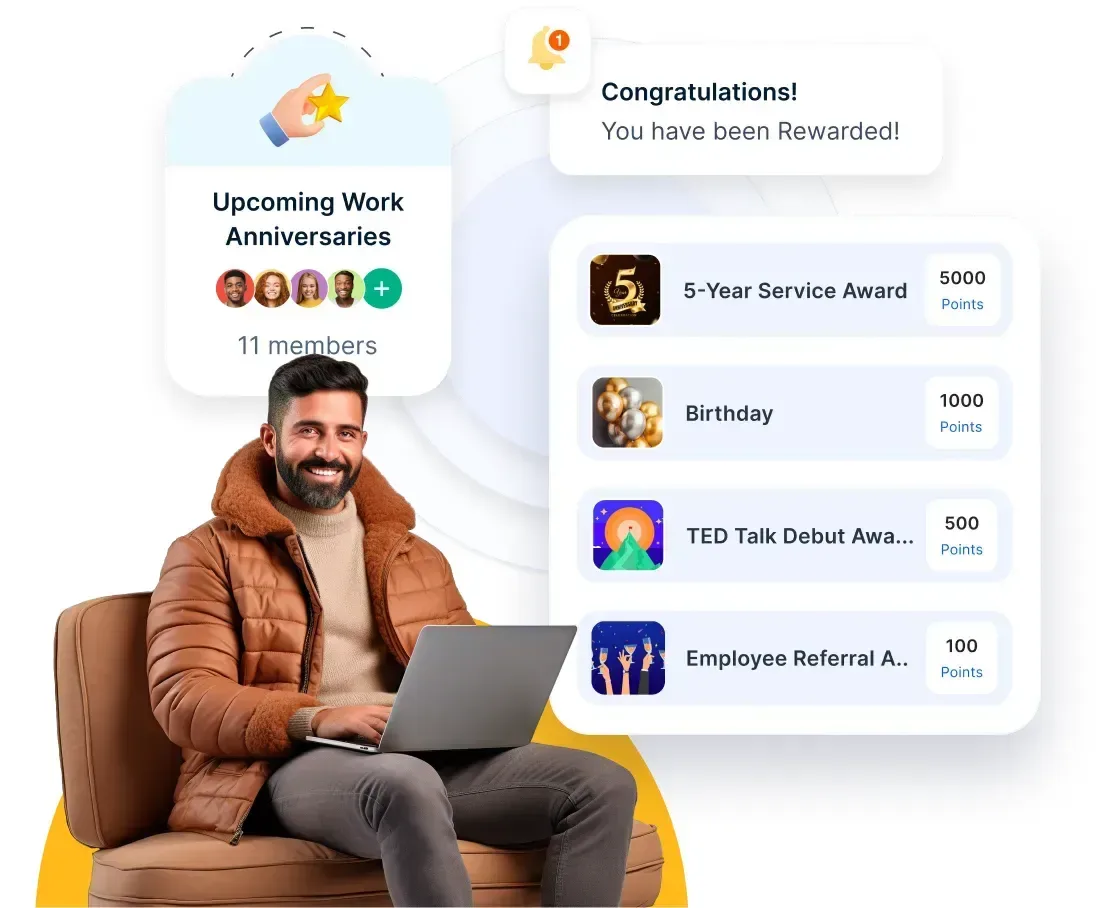
Do not let predictable moments slip either. Birthdays, work anniversaries and project completions are easy to miss in a busy month, so automate the reminders and keep the message personal.
2. Personalize your approach to appreciation
Appreciation works best when it is personal. Appreciating employees in the way they like to be appreciated can make all the difference.
Some people are delighted by a simple thank-you note, while others value a tangible gift or public recognition. One way to learn someone's preference is to watch how they appreciate others, or simply ask. Managers and team leads have the best insight into each team member and can choose the right way to appreciate each person.
3. Celebrate both big and small wins
Celebrating big wins breaks up the monotony of long projects and returns employees to work with renewed passion, drive and focus. Big celebrations are also a time to get creative with rewards. Small wins deserve celebration too, because they build the path to big ones.
The secret to maintaining morale is to break work into smaller milestones and appreciate each one. Small, frequent pats on the back keep people motivated and productive between the big moments.
4. Build gratitude into leadership
Leaders guide individuals and teams toward organizational goals. Under the pressure of a fast-moving business, though, they seldom make time to appreciate their teams, and a lack of trust in management makes this worse.
Leaders can strengthen morale and trust by holding gratitude debriefs after a project ends, thanking people by name in town halls and recognizing contributions on a regular rhythm. When senior leaders recognize visibly and often, managers follow, and the habit spreads.
5. Make gratitude part of your storytelling
Your social media posts, blog content, podcasts, videos and newsletters form the narrative about your organization. Weaving gratitude into those stories is part of building a culture of employee appreciation.
Share stories about how employees contributed to your success, told in an appreciative tone, and talk about gratitude as part of the culture from the top down and across teams. Internal channels count too: a short weekly roundup of recognition moments shows everyone what good looks like.
6. Create regular opportunities to express gratitude
To build a culture of gratitude, everyone needs a chance to take part. That can be a short slot in a weekly or monthly meeting where people take turns thanking a colleague or the whole team.
Other ideas include a shared gratitude board, anonymous thank-you notes or a gratitude box for good things that happened at home or work. A structured employee recognition program reinforces these rituals and gives them a home, and these employee appreciation ideas offer more formats to try.
7. Highlight the best qualities of individuals
A culture of employee appreciation is incomplete unless individuals are highlighted. Appreciating each person's best qualities is one of the most powerful ways to bring out the best in them.
Appreciate qualities that are seldom recognized, such as honesty, admitting mistakes and a willingness to learn and change. One team exercise is the appreciation hot seat: each person takes a turn while teammates share what they value most about them.
8. Thank those who are seldom appreciated
Every organization has people whose work keeps things running but rarely gets noticed. These include support roles in IT, HR, finance, facilities, maintenance and cleaning, as well as frontline and shift workers who are not at a desk.
Thanking them regularly is central to a culture of appreciation because it highlights how much every team depends on the others. Be authentic when you appreciate these unsung heroes, and you lift morale across the whole organization. Checking who is being missed is also how you keep recognition equitable.
9. Promote peer-to-peer appreciation
Appreciation from managers and leaders matters, but peer-to-peer appreciation often has a deeper impact. Teammates share a sense of camaraderie, and being thanked by them as an important member of the team is a real honor.
Peers also see the everyday effort that managers miss. Setting up peer-to-peer recognition solidifies your efforts to build a culture of appreciation and gratitude, and this roundup of peer-to-peer employee recognition software compares the tools.
10. Recognize effort and progress, not only outcomes
Employee recognition is central to a culture of appreciation, and it should cover effort and progress as well as outcomes. Public recognition, such as company-wide shout-outs, boosts morale and self-esteem.
Recognition can mean congratulating someone on finishing a project, reaching a milestone or simply saying thank you. Tie it to your company values where you can, as a values-based recognition program does, so every moment of appreciation also teaches what the organization stands for.
Recognition culture scorecard to measure how embedded it is
Building a recognition culture is easier when you can see where you stand. Score each of the eight signals below 0 (not true), 1 (partly true) or 2 (consistently true), then use the total to decide what to work on next.
| Signal | What an embedded culture looks like | Warning sign | How to check |
|---|---|---|---|
| Frequency | Most employees are recognized at least monthly, many weekly | Recognition clusters around annual awards | Recognitions per employee per month |
| Reach | Recognition reaches every team, location and shift | The same few names appear again and again | Share of employees recognized in the last 90 days |
| Peer participation | Most recognition comes from peers, not only managers | Only managers give recognition | Share of recognitions sent by non-managers |
| Specificity | Messages name the action and its impact | Generic messages such as "great job" | Sample 20 messages each quarter |
| Values link | Recognition is tagged to company values | Values exist only on the website | Share of recognitions tied to a value |
| Leadership modeling | Senior leaders recognize visibly and often | Leaders are absent from recognition | Recognitions sent by leadership each month |
| Personalization | Rewards and formats match individual preferences | One gift or format for everyone | Reward choice and redemption data |
| Feedback loop | You survey employees on recognition and act on results | No one asks if recognition feels meaningful | Recognition items in your pulse surveys |
Pick the two lowest-scoring signals and fix those first. For most teams, peer participation and reach move fastest once recognition is easy to give in the tools people already use.
Common mistakes that stall a recognition culture
Even well-meant recognition can fall flat. These five mistakes are the most common reasons a recognition culture never takes hold, and the first one, launching without a plan to sustain it, is the most frequent.
- Launch and forget: A big launch with no follow-up rituals fades within months. Plan how you will communicate the launch of your recognition program and what keeps it going afterward.
- Generic praise: Vague thank-yous do not tell anyone what to repeat. Name the action and its impact.
- Top-down only: If only managers recognize, most good work goes unseen.
- Uneven distribution: When the same visible roles get all the credit, others disengage. Use this guide to prevent bias in recognition programs.
- Making it only about money: Rewards help, but a culture of gratitude runs on sincere words and attention. See the common employee recognition myths for more.
How Empuls fuels a culture of recognition and gratitude
Want to make recognition second nature in your workplace? Empuls brings recognition, celebrations and rewards into one platform, so appreciation becomes a daily rhythm rather than a ritual someone has to remember. Here is how it helps gratitude flow and recognition shine:
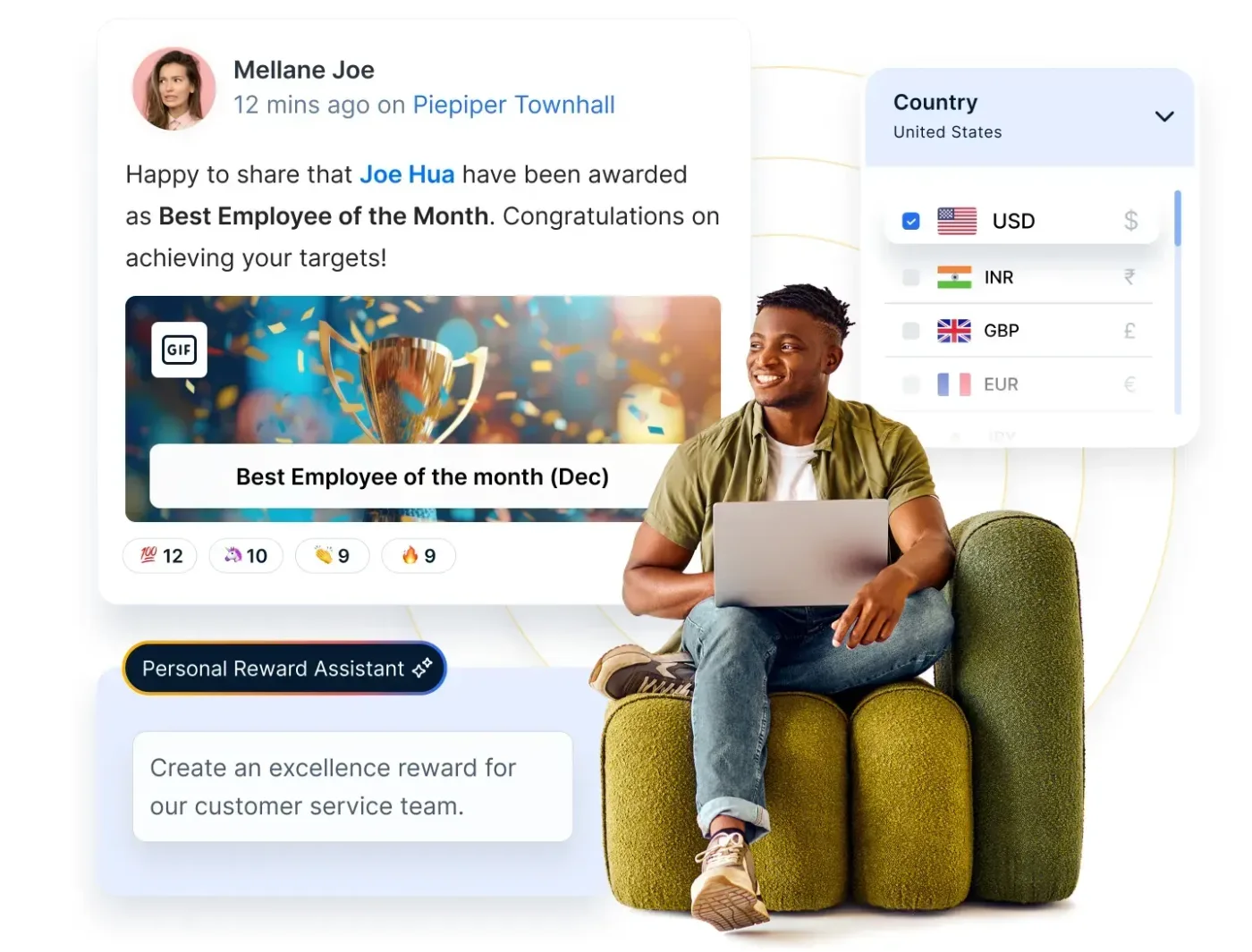
- Recognize in real time: Empuls recognition, including spot awards for instant wins, lets peers, managers and cross-functional teammates appreciate each other in the moment, with an AI recognition coach that suggests who to appreciate next and AI-assisted messages that make praise specific.
- Make every milestone count: Celebrations auto-surface birthdays, work anniversaries and life events, with AI-drafted personal wishes, so no moment slips through the cracks.
- Peer-powered positivity: Everyone gets a voice with peer-to-peer awards, points and core value tags, turning teammates into cheerleaders.
- Recognition that is actually rewarding: Points convert into gift cards, experiences, merchandise and charity donations, so recognition becomes personal and memorable.
- Put recognition in the spotlight: The social intranet and Wall of Fame turn individual recognition into shared celebrations that colleagues react to and comment on.
- See where recognition is missing: Reports and AI insights show adoption, participation and who has not been recognized recently, so no one feels left out.
Recognition becomes culture through repetition
As social beings, we are wired for acceptance, recognition and gratitude from our peers. To establish a culture of gratitude, start with senior leadership and let it flow down to teams and individuals, and across between peers.
A culture of recognition takes time to establish, but once embedded, it builds trust, strengthens teams and sustains engagement. Over time, people begin to believe in it, and that is when it becomes a true culture rather than a practice. For the wider picture of appreciation at work, read this guide to employee appreciation.
Book your Empuls demo
Frequently asked questions
A culture of recognition is a workplace where employees regularly acknowledge each other's contributions, from peers as well as managers, as part of everyday work. Recognition is frequent, specific and tied to company values instead of being saved for annual awards. Over time, appreciation becomes a shared habit that shapes how people treat each other and how they work.
Recognition is the act of acknowledging someone's contribution, such as a shout-out, an award or a thank-you note. Gratitude is the underlying attitude of thankfulness for what others contribute to your own and the team's success. A culture of gratitude makes recognition feel sincere, and regular recognition is how that gratitude becomes visible to everyone.
Most organizations see habits forming within three to six months and a culture that feels embedded within about a year. The speed depends on leadership modeling, how easy recognition is to give in daily tools and whether you keep rituals going after the launch. Measuring frequency and reach each quarter shows whether the habit is spreading.
Everyone shares it, but leaders and HR start it. HR designs the program, criteria and tools, senior leaders model recognition visibly and managers make it part of team routines. Peers then sustain it through everyday appreciation. When recognition depends on HR alone, it stays a program instead of becoming a culture.
Track how often people are recognized, the share of employees recognized in the last 90 days, the share of recognition sent by peers and the share tied to company values. Add recognition questions to pulse surveys to check whether it feels meaningful, and compare engagement and turnover for teams with high and low recognition activity.
Managers can show gratitude by thanking people promptly and specifically, naming the action and its impact. They can also write handwritten notes, credit team members in front of senior leaders, hold gratitude debriefs after projects, ask how each person prefers to be appreciated and make sure quieter or less visible team members are recognized too.
Recognition programs usually fail because they launch with energy and then fade, rely only on managers, use generic praise or reward the same visible people repeatedly. Some also lean too heavily on money and too little on sincere appreciation. Building rituals, opening recognition to peers and reviewing who is being missed keeps a program alive.





































































































































































































































































































































































































































































































































































