
Key Takeaways
An employee listening program is a structured system of channels, owners and routines for collecting, analyzing and acting on employee feedback all year.
Qualtrics found engagement was 87% at organizations that listened more often in the past year, versus 44% at those that listened less.
Combine surveys with focus groups, one-on-ones, anonymous channels, intranet polls and conversational check-ins, because each captures a different signal.
A one-page charter covering purpose, channels, confidentiality, owners and success metrics keeps the program focused.
Follow-through is the biggest challenge: track how many raised issues lead to a communicated action, and share progress openly.
Employee listening programs give every company a structured way to hear what employees think, understand why and act on it, all year rather than once a year. They combine surveys, conversations and everyday feedback channels into one system with clear owners. Companies that listen more often see much higher engagement, which is why every organization needs one.
Effective communication is not just about sharing company updates; it is about truly listening to your employees. The Qualtrics 2026 Employee Experience Trends research, based on 33,831 employees in 24 countries, found that engagement was 87% at organizations that listened more frequently over the past year, compared with 44% at those that listened less. This guide explains what an employee listening program is, why it matters, which channels to use and how to build one step by step.
What an employee listening program is
An employee listening program is a structured approach that combines methods and tools to systematically collect, analyze and act on employee feedback. It creates open channels for communication, allowing employees to share their experiences, ideas and concerns, which helps organizations make informed decisions and build a supportive work environment.
The difference between a listening program and a survey is scope. A survey is one event; a program is the system around it: a set of channels, a calendar, owners for each signal, rules for anonymity and a routine for turning findings into action. A good employee listening strategy decides what the company needs to hear, from whom and how often, before choosing any tool.
The benefits of listening to employees
When organizations prioritize clear communication and make employees feel heard, retention, job satisfaction and loyalty rise. The need is real: Gallup's State of the Global Workplace 2026 report found that only 20% of employees worldwide were engaged in 2025. Yet most employees do not see their company listening more:
A strong employee listening strategy is not just beneficial; it is essential for growth and sustainability. Here is why:
- Listening boosts retention: Employees are more likely to stay where they feel valued and heard. Effective listening programs find and address dissatisfaction early, reducing the likelihood that people look elsewhere.
- Listening lifts engagement: Acting on feedback shows employees that their opinions matter, which strengthens their commitment to the company's mission and goals.
- Listening improves decision-making: Diverse perspectives give leaders the insight they need for strategic planning, so policies and initiatives match employee needs and market demands.
- Listening detects problems early: Regular feedback channels let you spot and fix issues before minor concerns grow into major challenges, such as a policy change that is confusing teams or a manager whose team is burning out.
Employee listening channels to include in your program
Effective employee listening strategies use several methods, because each channel captures a different kind of signal. The eight channels below range from structured to informal; most companies start with surveys and one-on-ones, then add the others as the program matures.
| Channel | What it captures | Best for | Typical cadence |
|---|---|---|---|
| Annual survey | Broad quantitative baseline | Long-term trends across all drivers | Once a year |
| Pulse surveys | Real-time sentiment on a few topics | Tracking priorities and initiatives | Monthly or quarterly |
| Lifecycle surveys | Feedback at journey moments | Onboarding, promotions, exits | Event-triggered |
| Focus groups | Rich qualitative detail | Exploring why a score is low | As needed after surveys |
| One-on-one meetings | Personal context and trust | Career goals, workload, early warnings | Weekly to monthly |
| Anonymous suggestion channel | Candid ideas and concerns | Issues people will not raise openly | Always on |
| Social intranet polls and AMAs | Quick opinions, open questions to leaders | Two-way dialogue with distributed teams | Ongoing |
| Conversational AI check-ins | Adaptive, open-ended sentiment | Always-on signal between survey cycles | Ongoing or event-triggered |
Surveys remain the backbone. Short, frequent employee pulse surveys capture real-time feedback on specific topics, while comprehensive annual surveys assess overall satisfaction, engagement and culture. Our analysis of why annual employee surveys fail shows how to layer annual, pulse, lifecycle and eNPS surveys, so this guide focuses on the program around them.
The other channels fill the gaps surveys leave:
- Focus groups: Facilitated discussions with small groups dig deeper into specific topics. Unlike surveys, they give qualitative insight through open conversation, which uncovers nuance.
- One-on-one meetings: Regular check-ins where employees discuss performance, career goals and challenges with their manager. They build trust and show a manager's commitment to the team. Strong active listening skills make them far more useful.
- Suggestion boxes: Physical or digital channels where employees share ideas without fear of judgment or retaliation, which surfaces candid feedback and ideas that might not appear elsewhere.
Hear your people all year, not once a year
Combine pulse, lifecycle and conversational check-ins in one listening program with AI analysis.
Talk to our ExpertTrusted by 5,000+ companies
How to build an employee listening program in 6 steps
Building a successful employee listening program takes a systematic approach. Work through these six steps in order; step 5 matters most, because a program that collects feedback without visible action loses employees' trust quickly.
- Define objectives: Clear goals are the foundation. Objectives could include improving morale, gathering feedback on new policies, identifying training needs or reducing early attrition. Limit yourself to three objectives in the first year and tie each to a business metric.
- Map your channels and calendar: Choose the channels that fit your size, culture and objectives, then plan when each runs so surveys do not collide. Decide which signals are always on, which are scheduled and which are triggered by events.
- Choose the right tools: Pick tools that collect feedback in the flow of work, analyze open comments automatically and connect to your HRIS. Digital platforms make the program efficient and scalable.
- Encourage participation: Explain the purpose and benefits of the program to everyone, have leaders promote and take part in it, and recognize teams that engage. Small rewards for participation can help, as long as answers stay anonymous.
- Analyze the data and act: Look for recurring themes, segment results by department, role and tenure, and benchmark against past results. Then prioritize a few changes, assign owners, update employees on progress and follow up to check the impact.
- Review the program itself: Every six months, check which channels produce useful insight, which go unused and whether employees believe their feedback leads to change. Retire channels that add noise without action.
An employee listening program charter template
A one-page charter keeps the program focused and makes ownership clear before the first survey goes out. Fill in each row with your leadership team and revisit it every six months.
| Element | What to decide | Example |
|---|---|---|
| Purpose | Why the program exists and which business goals it supports | Reduce first-year attrition and improve manager effectiveness |
| Objectives | Two or three measurable outcomes | First-year attrition down 20%; manager score up 5 points |
| Channels | Which channels run, and when | Annual survey, quarterly pulse, lifecycle surveys, monthly AMAs |
| Audience | Who is included, including frontline and remote staff | All employees, surveys on mobile, Teams and WhatsApp |
| Confidentiality | Anonymity rules and minimum reporting group size | Anonymous surveys; no results shown for groups under five |
| Owners | Who reviews results and who acts | HR runs the program; each manager owns one team action |
| Action routine | How fast results are shared and actions agreed | Results shared in two weeks; actions agreed in four |
| Success metrics | How you will judge the program | Participation, say-do ratio, eNPS, regretted attrition |
Common challenges in employee listening programs
Listening programs bring many benefits, but most run into the same five challenges. Knowing them in advance, and planning the fix, makes your strategy far more effective.
- Low participation rates: Getting employees to engage is the biggest obstacle. Use short, mobile-friendly formats delivered in the tools people already use, with automated nudges and reminders, so responding never disrupts their routine.
- Fear of retaliation: Employees hold back if they worry about consequences. Guarantee anonymity, report only above a minimum group size and be transparent about how feedback is handled, which builds psychological safety.
- Information overload: Large volumes of feedback overwhelm HR teams. Use analytics and dashboards that summarize open comments into themes and highlight the biggest changes, so feedback leads to decisions rather than sitting in reports.
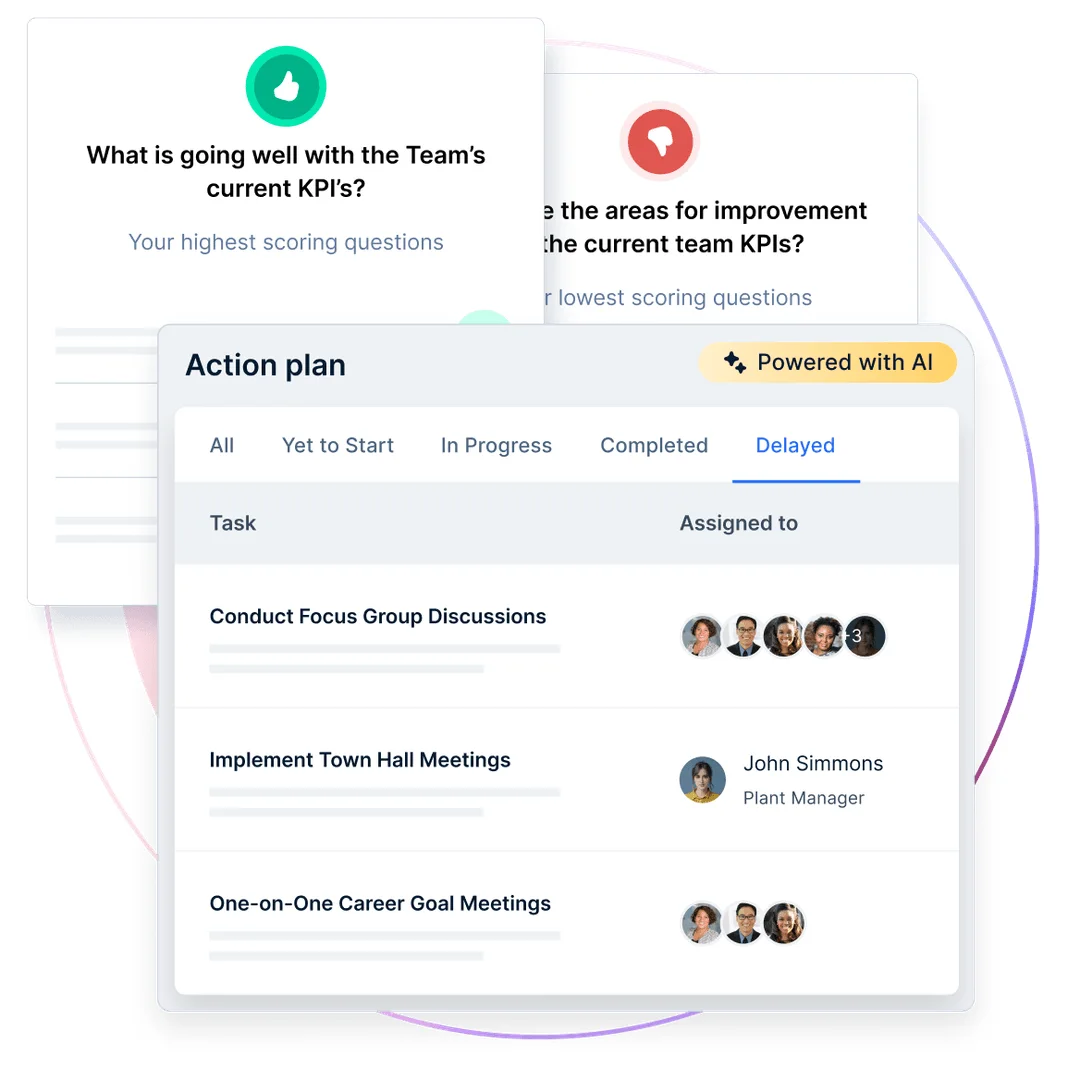
- Lack of follow-through: Gathering feedback but failing to act on it is the most common pitfall, and it breeds skepticism. Turn insights into action plans with owners and deadlines, and communicate progress openly.
- Disconnection from strategy: Feedback that is never linked to wider planning feels pointless. Present employee sentiment alongside business metrics such as attrition, productivity and customer scores, so leaders use it in strategic decisions.
What to look for in employee listening tools
The right employee listening tools make every step above easier, from collection to action. Look for these capabilities when you compare platforms:
- Multi-channel delivery: Surveys and check-ins in Slack, Microsoft Teams, WhatsApp, email and mobile, so frontline and remote employees are included.
- HRIS integration: Automatic audience lists and event triggers for start dates, promotions and exits.
- Flexible survey types: Annual, pulse, eNPS and lifecycle surveys from one place, with validated question banks.
- AI text analysis: Sentiment scoring and theme clustering for open comments in multiple languages.
- Anonymity controls: Minimum group sizes and role-based views so managers see team trends, never individual answers.
- Action planning: Owners, deadlines and status tracking linked to the scores they are meant to move.
Our comparison of the best employee engagement survey tools reviews leading platforms against these criteria.
How Empuls supports your employee listening program
Empuls brings surveys, conversational listening, a social intranet and action planning into one platform. Empuls continuous listening adds a conversational AI agent on top of Empuls employee surveys, so you can run pulse, eNPS and lifecycle surveys alongside always-on check-ins. The three scenarios below show how the pieces work together.
Turning everyday conversations into continuous feedback
A company that wants to move away from a static annual survey can run short pulse surveys and conversational check-ins inside Microsoft Teams or Slack, sent after onboarding, project wrap-ups or town halls. AI sentiment and emotion analysis clusters every response into themes, and dashboards slice the results by team, location and tenure as conversations happen. Listening happens in the flow of work, and sentiment becomes a leading metric rather than a lagging one.
Using the social intranet to listen and act in real time
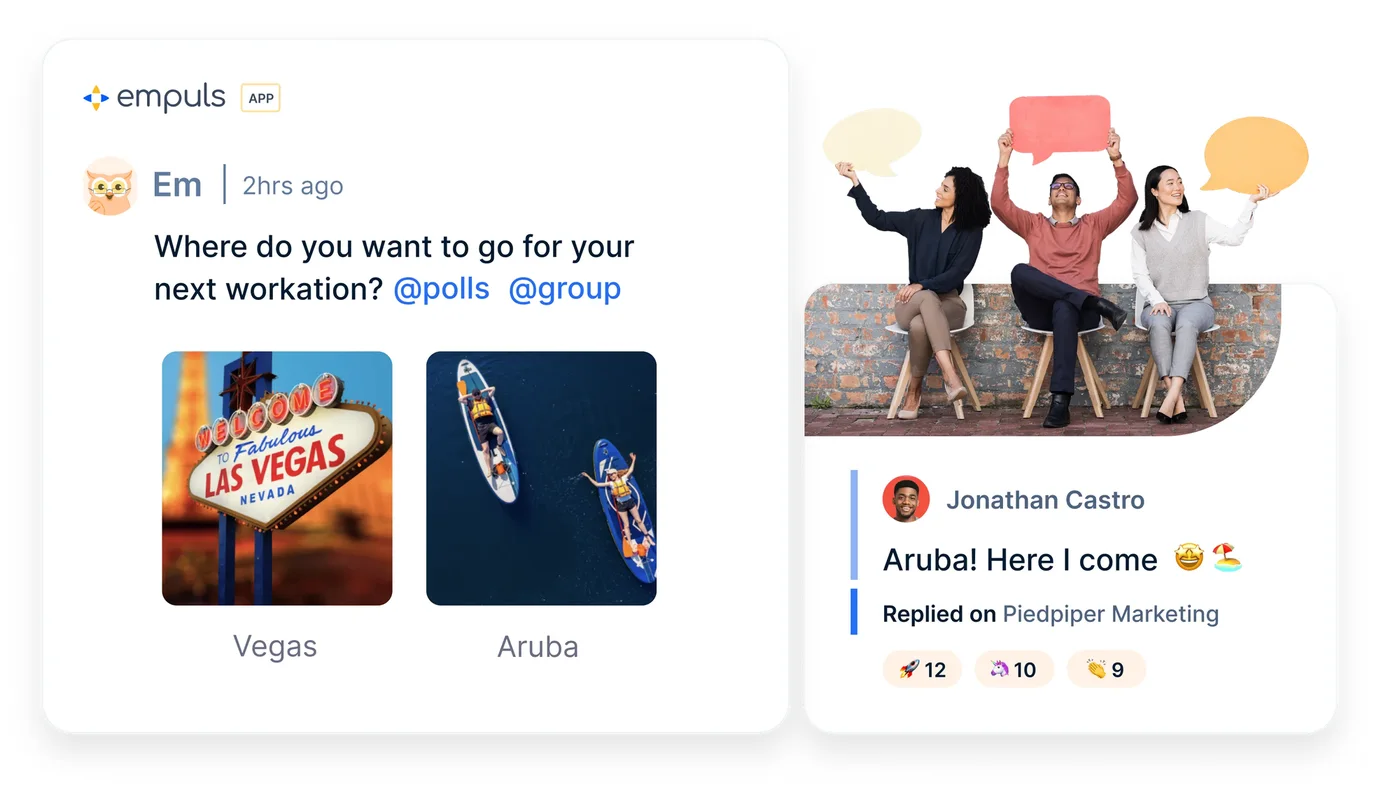
When traditional channels feel one-way, the Empuls social intranet gives distributed teams quick polls, groups and leadership broadcasts in one feed. Leaders can host open questions, see which topics draw the most comments and respond transparently on the same platform, without waiting for a formal survey.
Listening during times of transition
During a restructuring, event-based check-ins after team changes or policy updates keep HR close to sentiment instead of waiting for the next quarterly survey. Empuls tracks sentiment trajectory and response patterns, and flags disengagement, burnout and attrition risk early to designated HR users, so the team can offer support or clarification before issues snowball. Findings then become action plans with owners, deadlines and a follow-up pulse to confirm the change worked.
A well-structured employee listening program is vital for any organization that wants an engaged, productive workforce. By seeking and acting on feedback through surveys, focus groups, one-on-ones and everyday channels, you can lift satisfaction, improve communication and drive better business outcomes. To go deeper on the survey layer, see our guides to employee lifecycle surveys and the employee sentiment survey.
Book your Empuls demo
Frequently asked questions
An employee survey is a single event that collects feedback at one point in time. An employee listening program is the system around many such events: a mix of channels such as surveys, focus groups and one-on-ones, a calendar, confidentiality rules, owners for each signal and a routine for turning findings into action throughout the year.
Continuous employee listening means collecting feedback throughout the year instead of relying on one annual survey. It combines frequent pulse surveys, event-triggered lifecycle surveys, always-on channels and conversational check-ins, so leaders see changes in sentiment as they happen and can act before small issues become resignations.
HR or a people analytics team usually owns the program design, calendar and reporting, with an executive sponsor who makes sure results reach strategic decisions. Managers own action at team level. Clear ownership matters more than where the program sits, because unowned feedback rarely leads to visible change.
Most companies combine an annual survey with quarterly or monthly pulse surveys, event-triggered lifecycle surveys and always-on channels. Qualtrics found that 42% of employees want their leaders to listen more often, but frequency only helps when each round leads to shared results and action. Start with a pace you can act on.
Track participation rates by group, the share of raised issues that lead to a communicated action, and changes in engagement or eNPS over time. Link these to business outcomes such as regretted attrition, absenteeism and customer scores. Also ask employees directly whether they believe their feedback leads to change.
Explain why the program exists and how feedback will be used, guarantee anonymity, keep surveys short and deliver them in tools employees already use. Ask leaders to take part visibly, and above all share results and actions after every cycle, because people participate when they can see that speaking up changes things.
Yes. A small company can start with a short quarterly pulse survey, regular one-on-ones and an anonymous suggestion channel. The principles are the same as in a large organization: clear goals, confidentiality, quick sharing of results and visible action. Add channels such as lifecycle surveys or focus groups as the team grows.





































































































































































































































































































































































































































































































































































