
Key Takeaways
Micro-cultures at work are the local norms, rituals and behaviors that develop inside teams, functions and offices under one company culture.
Deloitte's 2024 research found organizations that embrace microcultures are 1.8 times as likely to achieve positive human outcomes and 1.6 times as likely to reach business goals.
Company culture should fix a few shared values, while teams decide their own rituals, working rhythms and ways of celebrating.
Micro-cultures cause silos only when nothing connects them, so keep company-wide channels, cross-team recognition and clear handoffs in place.
A team micro-culture canvas makes unwritten norms visible and checks them against company values in under an hour.
Micro-cultures at work are the local norms, rituals and behaviors that grow inside teams, functions, offices and worker groups under one company culture. They matter because employees experience culture through their team far more than through a values deck, so the best approach is to set a few shared values centrally and let each team shape how it lives them.
Workplace culture used to be described in broad strokes: mission statements, open-office layouts, company swag and a one-size-fits-all values deck. But as organizations grow and diversify, so do the people within them. A single, top-down culture no longer reflects how employees work, communicate and connect across departments, geographies and roles.
Culture is no longer what leadership says it is. Culture is what employees experience. It is what happens between peers in chat threads, how recognition is given or withheld, and how included someone feels in team rituals. In this context, micro-cultures have become the real currency of the employee experience.
What are micro-cultures at work
Micro-cultures are the localized norms, values and behaviors that develop within teams, functions, offices or even demographic groups within a company. Deloitte's 2024 Global Human Capital Trends describes them as local versions of the lived culture: stated values tend to stay consistent company-wide, while norms, language and symbols vary by team, function, location or worker type.
Workplace microcultures can come from a department's leadership style, the nature of the work, generational preferences or regional influences. The design team in a startup might value creative expression and feedback loops, while the sales team thrives on daily recognition, gamification and performance dashboards. Both can coexist under the same brand, but forcing one cultural model across both may dilute engagement for everyone.
Subcultures in organizations are not fringe movements; they are the heartbeat of modern companies. The research backs this up:
71%
of leaders say focusing on teams is critical to cultivating culture
Deloitte, 2024
1 in 3
workers say their workgroup's culture is the most important part of their work experience
Deloitte, 2024
1.8x
as likely to achieve positive human outcomes when microcultures are embraced
Deloitte, 2024
1.6x
as likely to reach business goals
Deloitte, 2024
Why micro-cultures deserve leadership attention
Company culture vs team culture
Company culture and team culture are not rivals; they work at different altitudes. This comparison shows what each one covers, who shapes it and where it shows up day to day.
| Dimension | Company culture (macro) | Team culture (micro) |
|---|---|---|
| Scope | The whole organization | One team, function, office or worker group |
| Shaped by | Founders, executives and HR | Managers, peers and the nature of the work |
| What it sets | Purpose, mission, core values, ethics | Rituals, working rhythms, language, how wins are celebrated |
| How it changes | Slowly, through strategy and leadership | Quickly, with a new manager, project or hire |
| Where employees feel it | Town halls, policies, brand | Daily stand-ups, chat threads, one-on-ones, recognition |
| Risk when ignored | Drift from strategy and values | Disengagement, silos or a toxic pocket |
For the broader definition of culture and its layers, see what organizational culture is and the iceberg model of culture.
Why one company culture doesn't fit all
Leaders often try to enforce a universal culture in the belief that consistency drives alignment. What this approach misses is that uniformity can create friction where diversity in work styles is a strength. Employees interact with company culture through their teams, not town halls or brand values posters, and if that experience lacks relevance, the result is disengagement.
Deloitte's research supports a middle path: 50% of executives say culture is most successful with a moderate level of variation between teams, and employees who identify with and care about their culture perform up to 37% better and are 36% more likely to stay. Culture cannot be experienced from a distance. It must feel relatable and alive at the team level.
Micro-cultures help employees belong
Micro-cultures are powerful because they help people find their place. In large or distributed organizations, employees can easily feel invisible. A tight-knit team that celebrates wins, swaps jokes and checks in daily creates the psychological safety that fuels motivation.
When individuals identify with their team's way of working, they feel seen, and that sense of belonging improves both morale and performance. Gallup's State of the Global Workplace 2026 shows why the team level matters so much: manager engagement fell from 27% to 22% in a year, and because managers set the tone of each team, a disengaged manager can quietly reshape a micro-culture for the worse.
The role of leadership: enablers, not enforcers
Instead of standardizing culture, progressive leaders set the values and empower teams to adapt them in ways that make sense locally. That includes giving teams the tools, systems and support to build rituals and rewards that reflect their identity.
This approach doesn't dilute culture; it strengthens it. A healthy macro-culture defines the common vision, and micro-cultures are how that vision is realized day to day. Think of the culture model as a pyramid with three levels:
01 · Top
Organizational values
Mission, vision and a short set of core values that hold everywhere and are not up for local debate.
02 · Middle
Function-specific norms
Rituals, working rhythms and recognition criteria that translate the values into how a function actually works.
03 · Base
Team and individual preferences
How each team communicates, celebrates and rewards, and how individuals like to be recognized.
For a step-by-step method to keep the levels pointing the same way, read the cultural alignment guide.
Give every team room to shape its culture
Community groups, values-based recognition and team-level pulse surveys on one platform.
Talk to our ExpertTrusted by 5,000+ companies
Managing multiple cultures in a company: a 6-step approach
Managing multiple cultures in a company comes down to being strict about a few things and flexible about the rest. These six steps follow Deloitte's recommendations, in the order most organizations can put them into practice:
- Start with the work: Break outcomes into tasks and look at how and where they get done. This often reveals natural micro-cultures that cut across the org chart.
- Align on values, not uniform practices: Agree on a few company-wide principles, then let teams set their own norms and rituals within them.
- Build micro-cultures into talent processes: Describe the team's real working style in job ads and interviews, and assess candidates against both company values and team needs. See our guide to culture fit for a fair way to do this.
- Align rewards and reviews: Make sure incentives and performance criteria reinforce each team's way of working, not just a generic template.
- Use managers and boundary spanners: Equip managers to translate values locally, and identify the people who naturally connect teams so information and trust flow across them.
- Sense culture continuously: Run anonymized, team-level pulse surveys to spot problems early and share good practices between teams.
Culture through the employee lifecycle
Micro-cultures matter from day one. Onboarding is where employees first meet the company's expectations and social norms, and unless that experience is localized, it risks becoming a generic walkthrough. Personalized welcome messages from the team, invitations to the right community groups and a first-week recognition moment bring new hires into the micro-culture faster and make expectations clear.
Long-tenured employees meet culture through anniversary celebrations, performance reviews and team offsites. Making these moments feel specific to their team deepens emotional investment. For milestone ideas, see long service awards.
How technology can amplify micro-cultures
Culture used to be hard to measure or scale. Modern engagement platforms make it possible to amplify local traditions without giving up structure or governance. Five capabilities matter most, starting with the one that gives teams a home:
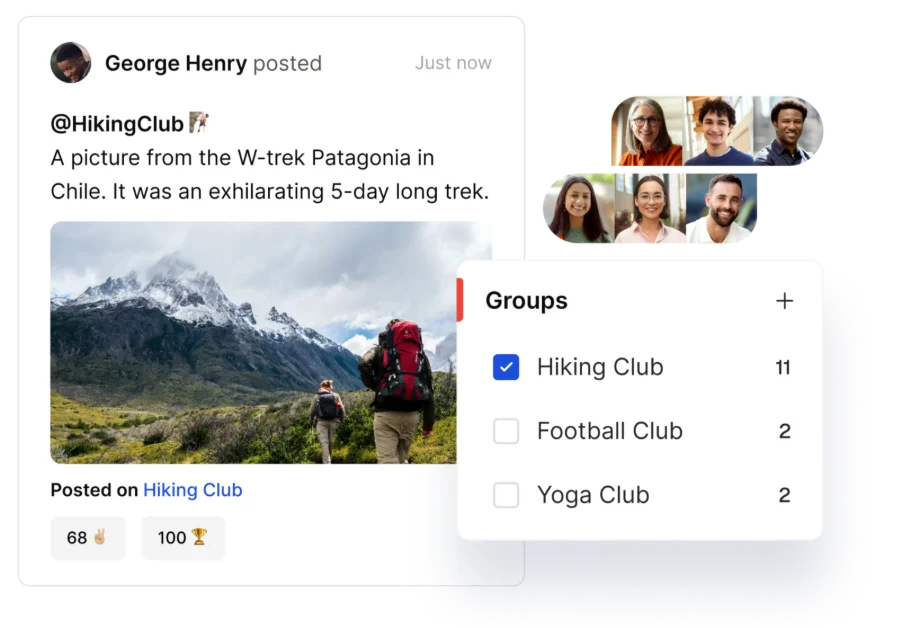
- Community groups by interest or function: Groups based on location, department, project or shared hobbies give people space to engage their own way while staying connected to the wider company. Developers can swap knowledge in coding groups while sales teams rally around challenges.
- Recognition that reflects team values: Peer recognition and spot awards tied to both company and team values. A design team can recognize innovation while customer service celebrates empathy.
- Team-chosen rewards and celebrations: Generic hoodies won't excite everyone. Letting teams pick swag and rewards that fit their style, for onboarding, project completions or work anniversaries, builds a deeper connection.
- Team-level surveys and action plans: Feedback must be specific to be useful. Lifecycle and pulse surveys reported at team level show what is working or missing in each micro-culture and feed targeted action plans.
- Tailored social feeds: Instead of a single news feed, team posts, wish boards and celebrations spotlight local moments, from birthdays to product launches, with GIFs, emojis and videos.
Benefits of embracing micro-cultures
Supporting micro-cultures isn't just nice to have. When teams have the freedom to shape how they engage, align and recognize each other, culture stops being performative and becomes real. Here are six direct benefits:
- Lower attrition: Employees are more likely to stay when their team understands how they work best; Deloitte links strong culture identification to a 36% higher likelihood of staying.
- Stronger emotional connection: When people relate to their immediate team culture, they don't have to keep fitting into a generic model, which builds loyalty that outlasts perks or slogans.
- Higher program participation: Wellness challenges, learning initiatives and referral programs get better adoption when they match how a team already communicates and celebrates.
- Better idea flow: When teams trust their own rhythm, people speak up more because they are not translating ideas into an unfamiliar format.
- Clearer identity: The company provides shared purpose, while the team supplies the rhythm, language and rituals that make work meaningful every day.
- More effective recognition: Appreciation grounded in local team values and role-specific achievements carries more weight than generic praise.
Organizations that embrace micro-cultures shift from broadcasting culture to co-creating it. The result is a workplace where people feel seen, not sorted.
Common myths about micro-cultures
Despite the benefits, micro-cultures are often misunderstood, and most concerns come from outdated ideas of control and consistency. Three myths come up most often, and the first is the most common:
"They cause silos": Silos form when teams are isolated and cross-team communication breaks down, not because teams have their own style. Micro-cultures thrive in a collaborative environment as long as there are shared channels, company-wide announcements, events and recognition that cross functions.
"They dilute the brand": Brand dilution happens when core values are unclear or inconsistently applied. Micro-cultures reinforce values when they translate them into relevant, everyday practice, and a brand becomes more relatable when employees see its values come alive across different teams.
"They make culture hard to manage": Central control may feel easier, but it often costs relevance. HR can set broad parameters while departments and managers adapt tools and rituals to how their people prefer to work. Managing culture no longer requires uniformity; it requires clarity and the right systems to support autonomy.
Recognition is also culture
Culture is shaped by what gets acknowledged and repeated. Recognition isn't just a reward; it is a signal of what the organization values, and it sets the tone for how people behave, lead and collaborate. Some teams value spontaneous appreciation, while others prefer structured, milestone-based awards, so recognition systems need to support both without losing consistency.
Gallup and Workhuman's 2024 recognition study found that 55% of U.S. employees receive either no recognition or recognition that misses every quality marker, so most teams have room to improve. Here is how recognition works as a core part of culture:
- Defines what behaviors matter: When people are consistently appreciated for empathy, agility or collaboration, those traits become part of the team's identity.
- Reinforces values through repetition: Recognition tied to values such as customer-first thinking embeds them in daily behavior.
- Bridges cross-team gaps: Recognizing someone outside your team breaks silos and builds respect across functions.
- Signals inclusion: Recognition open to everyone, not just top performers or extroverts, creates fairness.
- Shapes team rituals: Weekly roundups, monthly badges or appreciation walls become part of a shared culture.
- Builds manager trust: Frequent, relevant and timely recognition strengthens the bond between managers and their teams.
For a full playbook, see creating a culture of recognition.
Team micro-culture canvas: a template
Use this canvas in a 45-minute team session to make your micro-culture visible and check it against company values. Fill in the right-hand column together, then share the result with the wider organization so other teams can learn from it.
| Question | Why it matters | Example answer (sales team) |
|---|---|---|
| Which company value do we live most strongly? | Shows how the team translates macro values | Customer obsession |
| How do we celebrate wins? | Names the team's core ritual | Daily shout-outs in the deal channel, monthly leaderboard |
| How do we prefer to communicate? | Sets working norms for new joiners | Quick chat updates, one weekly pipeline call |
| What behavior do we recognize most? | Reveals what the team truly rewards | Helping a peer close a deal |
| What do new joiners find confusing? | Exposes unwritten rules | Which deals count toward team targets |
| Where do we clash with other teams? | Spots silo risks early | Handoffs to customer success after signing |
| What would we change about our culture? | Opens the door to improvement | Recognize long sales cycles, not just quick wins |
How Empuls supports micro-cultures at work
Empuls lets HR set the company-wide frame while each team shapes its own way of engaging, recognizing and celebrating:
- Community groups: Employee community groups for departments, interests, projects and causes, with membership synced from your HRMS.
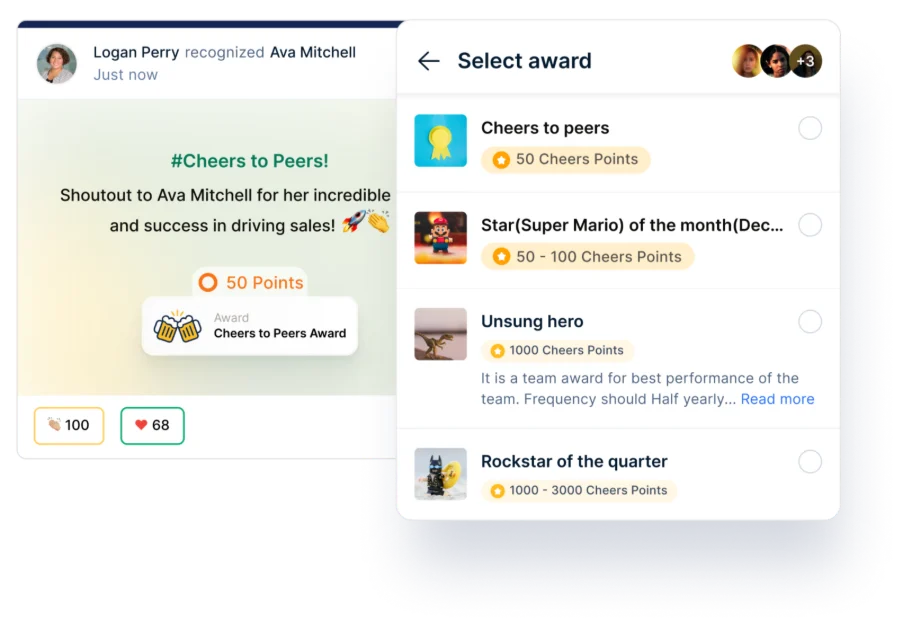
- Values-based recognition: Peer and manager recognition and spot awards tied to company and team values, with a Recognition Coach that helps managers write specific, fair praise.
- Team-level listening: Pulse surveys and lifecycle surveys with action plans so each team can see and fix what is missing.
- AI insights: Empuls AI features such as skill mapping show which skills and behaviors each team recognizes most, which can guide coaching, promotions and hiring.
Micro-cultures are an asset, not a problem
Culture is not what is written on the walls or printed in HR manuals. It is what people live every day, in the smallest interactions and local behaviors. As the workforce becomes more hybrid, global and multigenerational, culture must adapt with it.
Micro-cultures are not a challenge to be fixed; they are an asset to be embraced. Set the shared values, equip managers, listen at team level and let recognition reflect what each team does best, because when culture is personal, engagement becomes powerful. To see how team cultures roll up into the bigger picture, read how to build a strong organizational culture.
Book your Empuls demo
Frequently asked questions
A sales team that celebrates every closed deal in a shared channel, runs a monthly leaderboard and prefers quick chat updates has a micro-culture. The design team in the same company might value long feedback sessions and quiet focus time. Both follow the same company values but live them through different rituals, rhythms and ways of recognizing good work.
The terms are often used interchangeably. Subculture usually describes any group within an organization with its own shared norms, such as a department, location or profession. Microculture is the term Deloitte and others now use for team-level culture specifically, stressing that these local cultures are normal and useful, as long as they stay aligned with company-wide values.
Micro-cultures are good when they translate shared values into practices that fit each team's work, which raises belonging, engagement and performance. They become harmful when they drift from core values, breed us-versus-them rivalry or hide a toxic manager. Clear shared values, cross-team connections and team-level surveys keep them healthy.
Look at how work actually gets done rather than at the org chart. Compare team-level survey results, watch how different teams run meetings and celebrate wins, and ask new joiners which unwritten rules surprised them. Organizational network analysis and recognition data also show which groups collaborate closely and which behaviors each team rewards most.
Most employees experience culture through their immediate team, so the team's micro-culture shapes daily engagement more than company-wide programs do. Deloitte found one in three workers rate their workgroup's culture as the most important part of their work experience. A supportive team culture builds belonging and psychological safety, while a poor one can disengage people even in a great company.
Managers are the main architects of micro-cultures. They decide how the team communicates, what gets recognized and how mistakes are handled, which sets the local norms people follow. That is why manager engagement and coaching matter so much: equipping managers to translate company values into team rituals is the fastest way to strengthen healthy micro-cultures.
HR can keep micro-cultures aligned by agreeing a short list of non-negotiable values, building them into hiring, recognition and reviews, and giving teams freedom on everything else. Regular team-level pulse surveys, cross-team recognition and shared channels then show where a team is drifting, so leaders can step in early with coaching rather than control.





































































































































































































































































































































































































































































































































































