
Key Takeaways
Employee benefits are non-wage compensation, such as health cover, retirement contributions, paid leave and wellbeing support, provided on top of salary.
Benefits made up 30% of US private-sector compensation costs in June 2026, so they deserve the same planning as pay.
The main types of employee benefits are legally required, health, retirement, paid time off, family, learning, transport, legal and financial, and flexibility benefits.
Financial stress affects 59% of employees, which makes income protection and financial wellness benefits essential rather than optional.
The best benefits programs combine a protected core with flexible choice, clear year-round communication and annual measurement of cost and utilization.
Employee benefits are the non-wage compensation an employer provides on top of salary, such as health insurance, retirement contributions, paid time off and wellbeing support. They make up about 30% of what US private employers spend on their people, so the way you choose, fund and explain them shapes hiring, retention and how secure your team feels about money.
Every business, no matter how big or small, relies on its employees to succeed. They translate ideas into action and keep the wheels turning. This guide explains what employee benefits are, the main types of employee benefits, the importance of employee benefits for both sides of the paycheck and the employee benefits best practices that turn a list of perks into a program people actually use.
What are employee benefits
Employee benefits are a set of incentives, protections and privileges an employer provides to employees in addition to their regular salaries and wages. They are designed to enhance the overall compensation package, which helps attract and retain top talent, improve morale and increase productivity.
Benefits are a large share of the real cost of employment. According to the US Bureau of Labor Statistics Employer Costs for Employee Compensation release for June 2026, private employers spent an average of $46.89 per hour worked on compensation, of which $14.07, or 30.0%, went to benefits. For state and local government workers, benefits were $25.78 of $66.45 per hour.
Benefits are not the same as perks. Benefits are usually structured, often regulated and tied to security (health, income protection, retirement, leave), while perks are lighter extras that improve daily life, such as discounts or free meals. For the full breakdown, see the difference between benefits, perks, gifts, awards, incentives and rewards and this guide to employee perks.
Why employees are the backbone of your business
Even the most innovative product or service needs a team behind it to develop, market and deliver it. Without a dedicated workforce, your best ideas stay ideas. Your employees are the ones who bring them to life and move the business forward.
- They get things done: Employees handle day-to-day operations, manage projects and make sure products and services are delivered efficiently.
- They are the bridge to your customers: Many employees interact with customers directly and shape how people see your brand. Engaged employees provide better service, which builds loyalty and drives sales.
- They are a source of innovation: People with diverse backgrounds and experiences bring fresh perspectives. When they feel valued, they contribute ideas and solutions you would not find otherwise.
- They are your brand ambassadors: Employees represent your culture inside and outside the workplace, which influences both customers and future hires.
As an employer, you are responsible for keeping your employees motivated, engaged and secure. A well-designed employee benefits program is one of the most direct ways to do that, because it addresses needs a salary alone cannot cover.
Financial stress is changing what employees need from benefits
Money comes and goes, and for many employees it goes faster than it comes. Groceries, rent or mortgage, utilities, health costs and loan payments all compete for the same paycheck, and that pressure follows people to work.
The numbers are stark. PwC's 2026 Employee Financial Wellness Survey found that 59% of employees are stressed about their finances and 49% say their pay is not keeping up with the cost of living. In MetLife's 2026 Employee Benefit Trends Study, 83% of employees named rising living expenses and medical costs as top stressors.
Psychologists also describe decision fatigue: making choices all day takes a toll, and by the afternoon even rational people make impulsive financial decisions they regret later. Financial stress then shows up at work in three predictable ways:
- Concentration and problem-solving: When you are worried about bills, it is hard to focus on complex tasks or think creatively.
- Sleep and energy: Money worries keep people awake, and poor sleep impairs focus and productivity the next day.
- Mood and relationships: Financial stress can lead to frustration and irritability, which strains relationships with colleagues and customers.
This is why benefits that protect income, smooth cash flow and lower everyday costs have moved from nice to have to essential.
Importance of employee benefits
A competitive salary is essential to attract and retain talent, but employees now judge an offer by the whole package. HR leaders know it: in SHRM's 2026 Employee Benefits Survey of 5,472 HR professionals, 88% rated health benefits very or extremely important, and 82% said the same of retirement and of leave benefits.
30%
of private-sector compensation cost
goes to benefits (BLS, June 2026)
59%
of employees
stressed about finances (PwC, 2026)
88%
of HR leaders
rate health benefits very or extremely important (SHRM, 2026)
$28,303
average family health premium
employer plus worker share (KFF, 2026)
Why employee benefits carry so much weight in 2026
Benefits matter because they change how secure, balanced and valued people feel at work:
- Reduced financial stress: Health insurance, retirement plans and paid time off provide a financial safety net, which eases anxiety about unexpected medical bills, future security and taking a break.
- Better work-life balance: Paid leave, flexible work arrangements and childcare support help employees manage personal responsibilities without sacrificing performance, which lowers burnout.
- Feeling valued: A strong benefits package shows that an employer cares about people beyond their output. That builds loyalty, engagement and a sense of belonging.
- Healthier, more productive teams: MetLife's 2026 study reports that holistically healthy employees are 25% more productive and loyal and take 10% fewer sick days, and that employers expect $2.30 back for every $1 invested in employee health.
- Retention and hiring: Benefits are hard for a competitor to match quickly, which makes them one of the steadier employee retention strategies.
Benefits are also expensive, which is why the business case matters. The KFF 2026 Employer Health Benefits Survey put the average family health premium at $28,303 a year, up 5% from 2025, with workers paying $7,471 of it. To work out what your own package costs per person, use this guide on how to calculate employee benefits.
Run every employee benefit from one platform
Offer tax-saving cards, lifestyle accounts and discounts in one app employees actually use.
Talk to our ExpertTrusted by 5,000+ companies
Types of employee benefits
There are nine main types of employee benefits, starting with the ones the law requires and moving to the voluntary benefits that set employers apart. Health and retirement benefits carry the most weight with employees, so they come first after the legal baseline, followed by the benefits that support family, growth and daily life.
1. Legally required benefits
Legally required, or statutory, benefits are the contributions and protections an employer must provide by law. They differ by country, so a global workforce needs a country-by-country view. In the BLS data, legally required benefits cost private employers $3.40 per hour worked, or 7.2% of total compensation.
| Country | Common legally required benefits | Common voluntary benefits |
|---|---|---|
| United States | Social Security and Medicare (FICA), federal and state unemployment insurance, workers' compensation, unpaid FMLA leave for eligible employees, ACA employer mandate for employers with 50+ full-time equivalents, state paid sick and family leave where mandated | 401(k) match, dental and vision, life and disability insurance, extra PTO, wellness stipends, tuition support |
| India | Employees' Provident Fund, Employees' State Insurance for eligible wages, gratuity, statutory bonus, maternity leave | Group health insurance top-ups, meal and fuel allowances under flexible benefit plans, learning budgets |
| United Kingdom | Workplace pension auto-enrolment, statutory sick pay, statutory maternity and paternity pay, paid annual leave | Private medical insurance, cycle-to-work schemes, enhanced parental leave, employee assistance programs |
2. Medical and health benefits
Health-related benefits are the ones prospective employees care about most. Medical benefits such as health insurance, dental and vision cover, life insurance, disability income protection and long-term care show employees that you value their wellbeing as well as their contribution.
Health and dental insurance cover hospital stays, prescription drugs and a range of treatments. Disability income protection replaces part of an employee's pay if they cannot work because of illness or injury, while long-term care cover helps with the cost of extended care. Many employers now add mental health support, such as therapy sessions and an employee assistance program, and supplemental cover such as critical illness insurance.
3. Pension and retirement benefits
Some benefits take care of your workforce after they stop working. A pension pays a fixed amount at regular intervals after retirement, while defined contribution plans such as a 401(k) build a balance from employee deferrals and employer matching. The US Department of Labor explains the main plan types.
For 2026, the IRS raised the employee deferral limit for 401(k) plans to $24,500. Retirement benefits can also include extras beyond the pension itself, such as retiree health cover or financial planning sessions.
4. Paid time off
Paid time off covers vacation, sick days, public holidays and personal days. It is one of the most valued benefits and one of the most expensive: BLS data shows paid leave costs private employers $3.54 per hour worked, or 7.5% of total compensation. Mental health days, volunteer days and sabbaticals are growing variations.
5. Family-supporting benefits
Many employees have partners and children, and some care for elderly relatives. A benefits package that helps people balance family and work is the right decision for any business, regardless of size.
Parental leave includes paid maternity, paternity and adoption leave, and often support to find good childcare. Dependent care benefits help employees who look after sick or disabled children or elderly relatives. Employers are moving in this direction: SHRM's 2026 survey found 46% of employers now offer paid parental leave, up 7 points, and 36% offer paid family leave, up 5 points.
6. Education and training benefits
Supporting employees' wish to learn and grow pays off in both hiring and retention. Employees value employers that provide mentorship programs, seminars, conferences, certifications, online learning subscriptions and tuition reimbursement.
Over time, these investments bring in and keep capable, educated and satisfied people who are happy to work for a company that cares about their growth. SHRM's 2026 survey shows the same shift: leadership and managerial coaching rose 8 points to 55% of employers, and employer-sponsored AI tool subscriptions doubled to 33%.
7. Transportation and relocation benefits
Transportation benefits help employees manage commuting and work travel costs. They can include reimbursements for public transport, parking support, cycle schemes or company vehicles. In the US, qualified transit and parking benefits can be offered pre-tax up to a monthly limit, which rose to $340 for 2026.
Relocation assistance helps new or transferring employees make an efficient and painless move to a new location, covering costs such as moving services, temporary housing and travel.
8. Legal and financial assistance benefits
Employees sometimes need professional advice on family law, estate planning, property transactions or debt. Access to legal counsel through a prepaid legal plan scores well with candidates and current employees alike.
Financial wellness benefits sit alongside legal help: financial counseling, budgeting tools, emergency savings support, earned wage access and short-term emergency loan programs. Given how many employees report money stress, this category has grown faster than most.
9. Working conditions and flexibility
The traditional idea of the workplace is changing quickly, and a mix of generations and demographics expects employers to keep up. Flexible work, a positive culture, a reasonable workload, low occupational stress and job security all count as benefits in the eyes of candidates.
Flexibility is a big part of this. Gallup's hybrid work indicator shows that in August 2026, 54% of remote-capable US employees worked hybrid and 25% worked fully remotely. For more lightweight, low-cost options, see these non-monetary compensation examples, and for tax treatment by category, read this guide to the types of fringe benefits.
Where the benefits budget goes
Insurance, paid leave and legally required benefits each take a similar slice of compensation, and together they account for most of the benefits bill. The chart shows each category as a share of total compensation for US private industry workers.
Because the big three categories are largely fixed by law or by insurance markets, the voluntary layer (wellbeing, flexibility, learning and everyday savings) is where most employers have room to personalize and stand out.
How to design an employee benefits program in 8 steps
Designing an employee benefits program takes eight steps, from choosing what to offer to adjusting it every year. The first three steps, choosing benefits, checking legal requirements and setting a budget, carry the most weight because every later decision depends on them.
1. Determine the benefits you want to offer
Before you offer anything, decide what you want to offer based on the needs and preferences of your workforce and your budget. Survey employees first, and look at age, family status, location and work patterns. Common benefits include:
- Health insurance
- Retirement plans
- Paid time off
- Life insurance
- Disability insurance
- Wellness programs
- Flexible work arrangements
You may also consider perks such as employee discounts, tuition reimbursement or childcare assistance.
2. Understand legal requirements
Every benefit comes with rules. In the US, that includes federal laws such as the Affordable Care Act, the Employee Retirement Income Security Act (ERISA) and the Health Insurance Portability and Accountability Act (HIPAA), plus state and local laws such as paid sick leave mandates. Other countries have their own statutory schemes. Consult legal and HR professionals to make sure you comply with all of them.
3. Develop a budget
Benefits can be expensive, and costs keep rising: Mercer's 2026 National Survey of Employer-Sponsored Health Plans found US employers expect health benefit cost per employee to rise 8.2% in 2027, even after planned cost cuts. To build a budget, add up the cost of each benefit plus administrative costs, such as platform fees and broker or provider charges.
You may also use cost-sharing, where employees pay a portion of the premium or choose from tiered plans. This lowers your overall costs while keeping core protection in place.
4. Select a benefits provider
Many employers work with a benefits provider or platform to administer the program. When you compare providers, weigh cost, expertise, local coverage and customer service. A broker can help you compare plans and negotiate better rates, especially for insurance.
5. Communicate the benefits to employees
Once the program is ready, explain it clearly. Employees can only value what they understand, and many underuse benefits simply because they do not know they exist.
Host a benefits fair, publish a short benefits guide or offer one-to-one sessions where employees can ask questions and choose the right options for their needs. Repeat the message at life moments such as onboarding, a new child or a move, not only during open enrollment.
6. Administer the benefits program
Administration can be complex and time-consuming. If you work with a provider, it will typically handle enrollment and claims, but you still need to monitor the program: run regular audits, track usage and costs and resolve issues quickly.
7. Evaluate program effectiveness
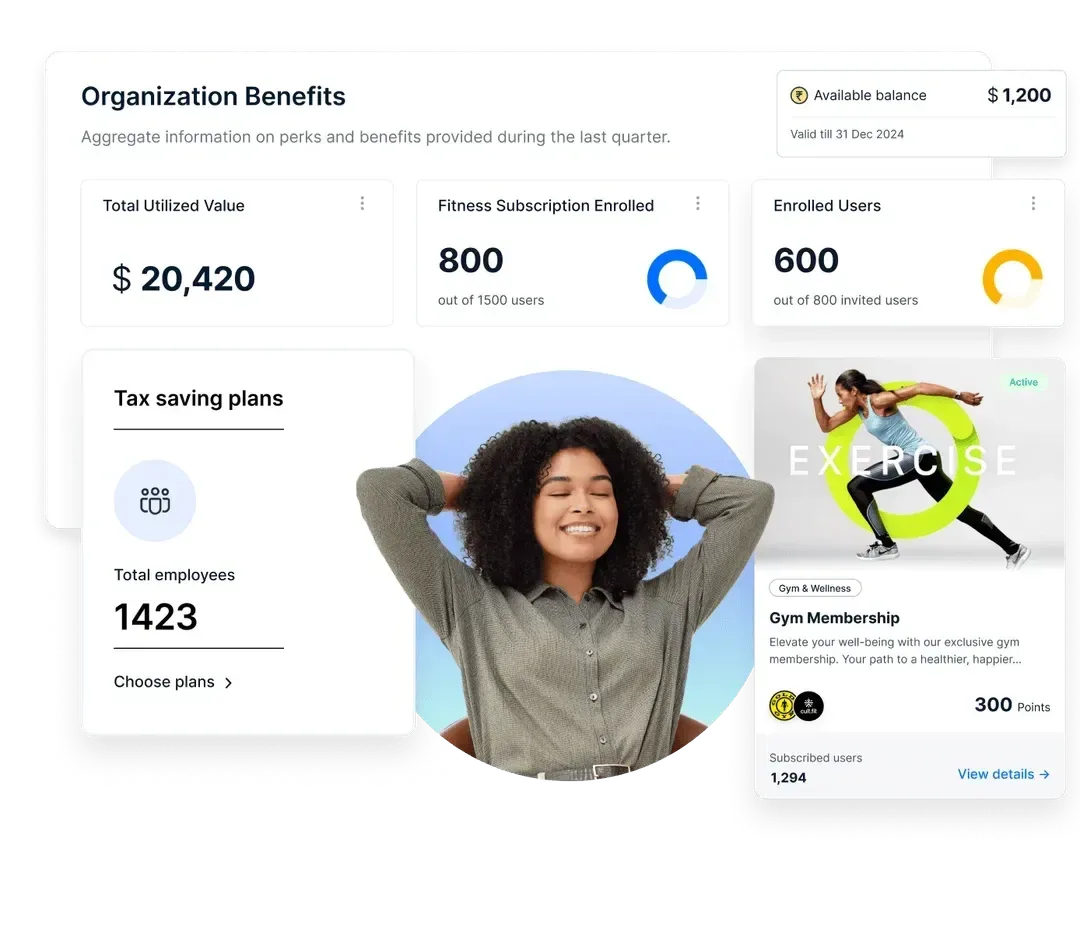
To make sure the program meets the needs of your employees and your business, review its effectiveness regularly. Look at usage data, gather employee feedback and track indicators such as retention rates and healthcare costs.
8. Make adjustments as needed
Employee needs and business priorities change over time, so review and adjust the program at least once a year. Survey employees on the benefits they value most, retire the ones nobody uses and work with your provider to find new benefits or cost savings.
Employee benefits best practices
The employee benefits best practices below come from what high-performing programs do differently, not just what they offer. They are ordered from the foundation (knowing your people) to the habits that keep a program relevant year after year.
- Start with employee data: Use surveys, demographics and claims trends to decide what to offer instead of copying a competitor's list.
- Personalize with choice: Combine a solid core of health, retirement and leave with flexible budgets, such as lifestyle spending accounts, that employees spend on what matters to them.
- Put non-medical benefits to work: MetLife's 2026 study found 73% of employers see non-medical benefits, such as dental, disability, financial wellness and leave support, as the most cost-effective way to support wellbeing.
- Make benefits easy to find and use: One portal or app for every benefit beats a list of vendor logins. Self-service enrollment and simple claims lift utilization.
- Communicate all year: Short, timely reminders tied to life events work better than one long enrollment email.
- Treat financial wellness as core: Offer tools that help with emergencies and everyday costs, not just retirement.
- Keep it fair across locations and work types: Make sure hybrid, remote, frontline and part-time employees get comparable value, adjusted for local rules.
- Measure and adjust every year: Track cost, utilization and satisfaction, and change what is not working.
Common employee benefits mistakes to avoid
Most benefits programs fail quietly, through low usage rather than open complaints. These are the mistakes that most often waste budget:
- Offering one-size-fits-all packages: A 25-year-old renter and a 45-year-old parent need different things.
- Counting only health insurance as the cost: Payroll taxes, paid leave and admin fees are part of the real cost, which distorts budgeting if you leave them out.
- Announcing benefits once: Without reminders, employees forget what they have and do not use it.
- Ignoring frontline and remote employees: Perks tied to an office or a desk computer leave large groups out.
- Never retiring a benefit: Programs pile up over the years, and low-value items crowd out what people want now.
Metrics to measure your employee benefits program
You cannot improve what you do not measure. These metrics show whether your benefits spend is reaching people and making a difference:
| Metric | How to calculate it | What it tells you |
|---|---|---|
| Benefits cost per employee | Total annual benefits cost ÷ number of employees (or FTEs) | Whether spend is in line with budget and benchmarks |
| Benefits as a share of compensation | Total benefits cost ÷ total compensation × 100 | How your mix compares with the 30% BLS private-sector average |
| Utilization rate | Employees using a benefit ÷ eligible employees × 100 | Which benefits people value and which are invisible |
| Benefits satisfaction | Share of survey respondents satisfied with benefits | Whether the package meets expectations |
| Retention and regretted attrition | Leavers in a period ÷ average headcount × 100, split by benefit users and non-users | Whether benefits help you keep people |
A sample modern employee benefits plan
A modern employee benefits plan usually has three layers: a tax-advantaged core, flexible lifestyle accounts and wellbeing support. The objective is a flexible, cost-effective program that attracts, engages and retains talent while improving financial, physical and mental wellbeing.
| Layer | What it includes | How employees use it |
|---|---|---|
| Core and tax-advantaged benefits | Health, dental and vision cover, retirement match, paid leave, pre-tax accounts such as an HSA (2026 limits: $4,400 self-only, $8,750 family, per the IRS), commuter benefits and, in markets such as India, tax-saving meal, fuel and telecom allowances | Enroll once, then track balances and spending in real time |
| Lifestyle spending accounts | Fitness and wellness, learning and upskilling, remote work setup, travel and commuting, family care | Choose categories in an app and pay directly or claim reimbursement within a set budget |
| Wellbeing support | Earned wage access, everyday discounts on brands employees already use, mental health support and counseling | Use on demand, without HR approval for every request |
Adapt the layers to local law and your budget. For tax-efficient design in more depth, read about tax saving benefits for employees, and to connect benefits with pay and recognition, see this guide to a total rewards strategy.
How Empuls helps you run an employee benefits program
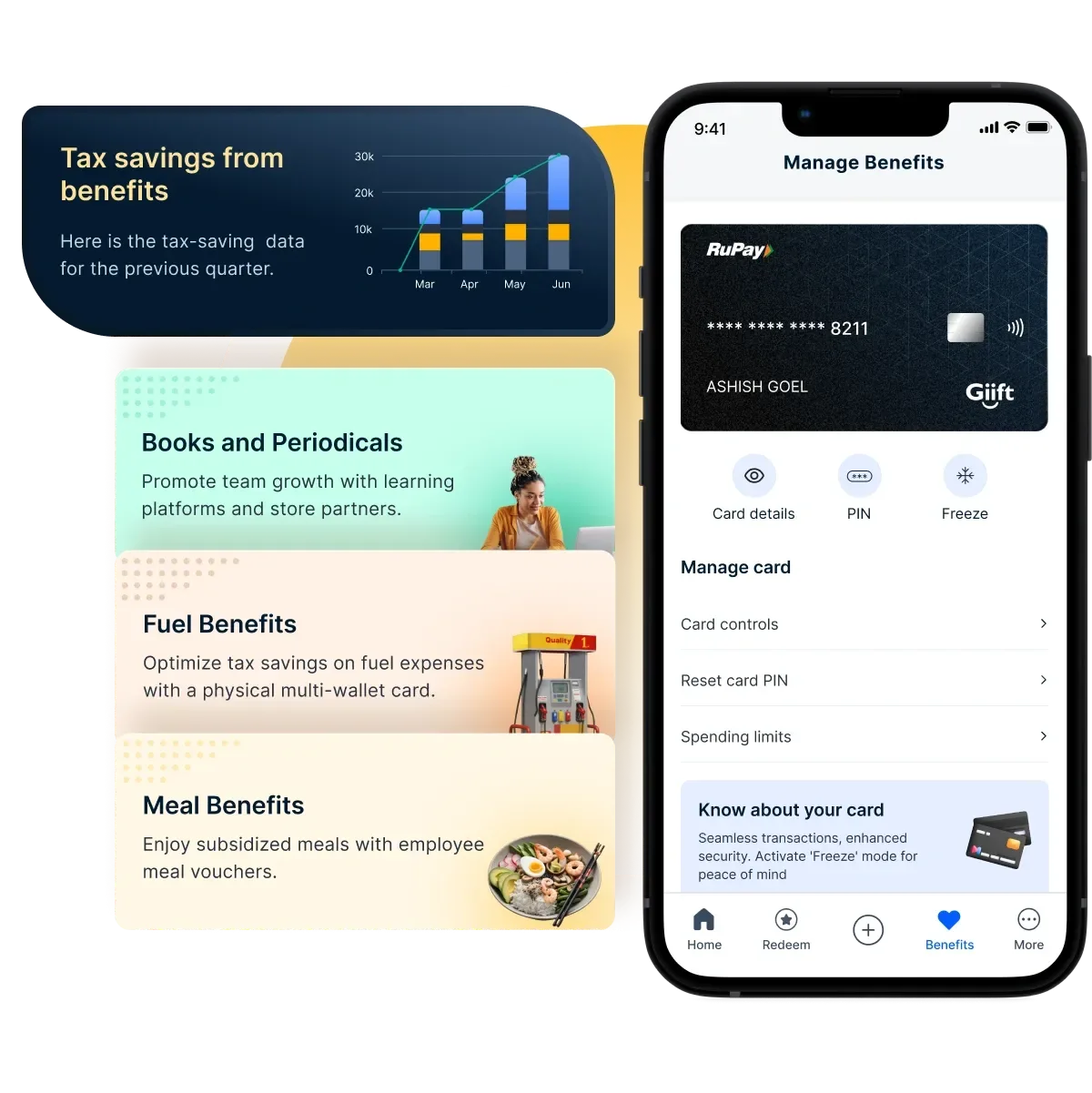
Empuls, Xoxoday's employee engagement platform, brings benefits, recognition and rewards into one place, so HR runs one program instead of a dozen vendors. Here is how it supports each layer of a modern plan:
01 · Tax
Tax-saving benefits card
Deliver tax-efficient allowances such as meals, fuel, books and telecom on one multi-wallet card, with category limits you set.
02 · Choice
Lifestyle spending accounts
Give employees personalized budgets for fitness, learning, family care or remote work setup that they spend their own way.
03 · Savings
Employee discounts
Exclusive savings on brands and services employees already use, across regions.
04 · Security
Financial wellness and protection
Support for money stress and insurance protection alongside everyday benefits.
05 · Insight
Reports and analytics
See adoption and utilization by benefit, team and location to adjust your plan with data.
06 · Recognition
Rewards on the same platform
Recognize milestones and achievements with points employees redeem alongside their benefits.
Explore each piece in detail: tax-saving benefits, lifestyle spending accounts, employee discounts, financial wellness, insurance protection, reports and analytics and recognition. If you are comparing discount providers specifically, start with this guide to employee discount platforms.
Employee benefits are an investment you can measure
Employee benefits are not about ticking boxes during enrollment. They are a large, measurable investment in your people's financial security and wellbeing, and they work best when they match real needs, are easy to use and are reviewed every year.
Start with the legal baseline, protect health and income, then add flexible choices that fit each employee's life. To see what is changing next, read about the employee benefits trends shaping 2026.
Book your Empuls demo
Frequently asked questions
The four major types of employee benefits are usually grouped as health insurance, retirement plans, paid time off and income protection such as life and disability insurance. Most employers build on these with family support, learning budgets, wellness programs, financial wellness tools and flexible work, which are increasingly what set one package apart from another.
It depends on the country. In the US, employers must pay Social Security and Medicare taxes, unemployment insurance and workers' compensation, and employers with 50 or more full-time equivalents face ACA penalties if they do not offer affordable health coverage. India requires Provident Fund, ESI for eligible wages and gratuity, while the UK requires pension auto-enrolment, statutory sick pay and paid holiday.
In the US, benefits averaged $14.07 per hour worked for private industry in June 2026, or 30% of total compensation, according to the Bureau of Labor Statistics. That is about 43% on top of wages. The exact figure depends on your health plan, retirement match, leave policy, location and the mix of full-time and part-time staff.
Employee benefits are structured forms of compensation, often regulated, that protect health, income and the future, such as insurance, retirement plans and paid leave. Perks are lighter, discretionary extras that improve everyday work life, such as discounts, meals or gym passes. Benefits build security, while perks add convenience and enjoyment.
Health insurance consistently ranks first, followed by retirement savings and paid leave, which SHRM's 2026 survey shows HR leaders also rate as most important. Interest in flexible work, financial wellness, mental health support and family benefits such as paid parental leave keeps growing, especially among younger employees and working parents.
Small businesses can join group or pooled health plans, use cost-sharing, and offer low-cost benefits such as flexible schedules, extra time off, learning budgets and employee discounts. A lifestyle spending account lets a modest budget feel personal, and a single benefits platform keeps administration manageable without a large HR team.
Review your employee benefits package at least once a year, ideally a few months before renewal or open enrollment. Use utilization data, employee surveys and cost trends to decide what to keep, change or drop. Also review after major changes such as rapid growth, expansion into a new country or a shift to hybrid work.





































































































































































































































































































































































































































































































































































