
Key Takeaways
Employee engagement in the financial services industry drives productivity, client trust and retention across banks, insurers, wealth managers and fintech firms.
Engagement pressures differ by segment: branch workload in banking, revenue targets in advisory, long cycles in insurance and pace in fintech.
Financial services has the second-longest workday of any industry, at 9 hours 7 minutes, according to ActivTrak's 2025 analysis.
Development, wellbeing, recognition of the right behaviors and continuous feedback are the foundations of financial sector employee retention.
Clear communication and reskilling turn employee anxiety about AI and automation into a reason to stay.
Employee engagement in the financial services industry is the commitment and energy that people across banks, wealth and asset managers, advisory firms, insurers, lenders and fintech companies bring to their work. It drives performance, keeps top talent and strengthens client relationships, which is why it has become a board-level concern in a sector built on trust, accuracy and long-term relationships.
With constant pressure around compliance, client trust and operational efficiency, organizations in this sector need more than skilled employees. They need motivated ones. Financial services engagement requires a clear approach that connects employees to company goals, rewards effort meaningfully and fosters a strong sense of belonging. It is not about one-time initiatives but about building long-term commitment, from frontline staff to leadership.
Whether you run a bank, an insurance firm, a wealth manager or a fintech company, investing in employee engagement helps build a resilient, high-performing workforce. This guide looks across the whole sector: the state of engagement today, how the challenge differs by segment, the hurdles common to all of them and 12 financial services employee engagement strategies that work. For a deeper look at branch and frontline bank teams, see our guide to employee engagement in the banking sector.
The state of employee engagement in the financial services industry
The financial services industry runs long hours, faces fast technological change and depends heavily on motivated, committed staff, so dips in engagement show up quickly in turnover, errors and client experience. Recent research points to three pressures.
9h 7m
average financial services workday
23 minutes above the cross-industry average
32%
of finance employees fear job elimination
by technology within five years
60%
of finance professionals were job hunting
outside the sector in 2024
Workload, AI and retention signals across financial services
ActivTrak's 2025 State of the Workplace analysis of 13,806 employees at 95 financial services companies found the second-longest workday of any industry at 9 hours 7 minutes, and that 9% of financial services employees work weekends, nearly double the 5% cross-industry average. On the positive side, 74% still showed healthy work patterns, four points better than other industries, which suggests the sector can manage workload when it measures it.
Gallup's State of the Global Workplace 2026 research found that 32% of employees in finance believe it is somewhat or very likely their job will be eliminated by new technology within five years, while global engagement fell for a second year. And a 2024 Medius survey of finance professionals found that 60% were looking for a job outside the sector, with burnout and poor work-life balance among the main reasons.
Recognizing these challenges, financial organizations are investing in engagement initiatives that improve job satisfaction, productivity, motivation and retention. Engaged employees tend to stay longer, which reduces costly turnover. Gallup's 2024 Q12 meta-analysis found that teams in the top quartile of engagement show 18% higher sales productivity and 23% higher profitability than bottom-quartile teams, a tangible return in a competitive sector.
How engagement differs across financial services segments
Financial services is not one workforce. A branch teller, a wealth advisor and a fintech engineer face very different pressures, so engaging employees in finance starts with knowing which segment you are designing for.
| Segment | Typical roles | Biggest engagement pressure | What tends to work |
|---|---|---|---|
| Retail and commercial banking | Tellers, relationship managers, operations | Branch workload, scheduling, sales targets | Recognition for service quality, fair scheduling, branch-level listening |
| Wealth management and advisory | Advisors, planners, client service associates | Revenue targets, client churn, licensing load | Recognition for client outcomes, certification rewards, mentorship |
| Insurance | Agents, underwriters, claims teams | Long cycles, delayed wins, distributed teams | Frequent recognition, milestone celebrations, agent engagement |
| Fintech | Engineers, product, risk, growth teams | Pace, uncertainty, funding cycles, poaching | Ownership, career growth, transparent communication |
| Capital markets and asset management | Analysts, traders, portfolio teams | Long hours, market volatility, competitive culture | Workload management, wellbeing support, team recognition |
| Lending and NBFCs | Field sales, collections, credit teams | Field isolation, aggressive targets | Mobile recognition, incentive transparency, peer connection |
Challenges for employee engagement in the financial services industry
Despite being one of the most structured sectors, financial services face six distinct hurdles that weaken engagement if they are not addressed proactively. Regulatory stress comes first because it touches every segment and every role, and the list ends with the newest pressure, AI-driven change.
1. Regulatory stress and compliance fatigue
Employees in banking, insurance and investment firms deal with complex regulatory frameworks. With constant audits, documentation and policy updates, teams can quickly become drained. The feeling of being constantly monitored and the fear of non-compliance reduce autonomy and lead to burnout.
2. Repetitive tasks and process-heavy roles
Many back-office and support roles involve rule-based tasks that leave little room for creativity or autonomy. Over time, this lack of variety causes disengagement, and employees start to feel like cogs in the system rather than valued contributors.
3. Pressure to meet aggressive targets
Frontline teams, especially in sales and advisory roles, are constantly pushed to meet monthly or quarterly targets. The pressure to upsell or cross-sell often overrides meaningful client interaction, leading to stress and emotional fatigue. Over time, a purely performance-driven culture creates disengagement.
4. Limited opportunities for internal growth
Large financial institutions often follow rigid promotion structures. High-potential employees may feel their career paths are unclear or too slow, which hurts retention. When internal mobility is limited or opaque, even top performers start exploring external opportunities, a core issue for financial sector employee retention.
5. Disconnect between corporate and frontline staff
In large banks and financial services firms, there is often a gap between senior leadership and branch or field employees. Communication tends to be one-way, and decisions are made without frontline feedback. This creates a sense of disconnect that lowers engagement and weakens a shared sense of purpose.
6. Uncertainty about AI and automation
Financial services firms are among the most active adopters of AI, from document processing to advice and fraud detection. Employees who do not know how these tools will change their roles are more likely to disengage or leave. Clear communication about how roles will evolve, paired with real reskilling, turns that uncertainty into a reason to stay.
Engage teams across every financial services segment
Recognition, pulse surveys and benefits for branch, advisory, insurance and fintech teams in one platform.
Talk to our ExpertTrusted by 5,000+ companies
12 financial services employee engagement strategies
The 12 strategies below start with development and wellbeing because they address the two biggest drivers of exits in finance: stalled careers and burnout. The later strategies focus on recognition, communication and connection, which sustain engagement once those foundations are in place.
1. Employee development and training programs
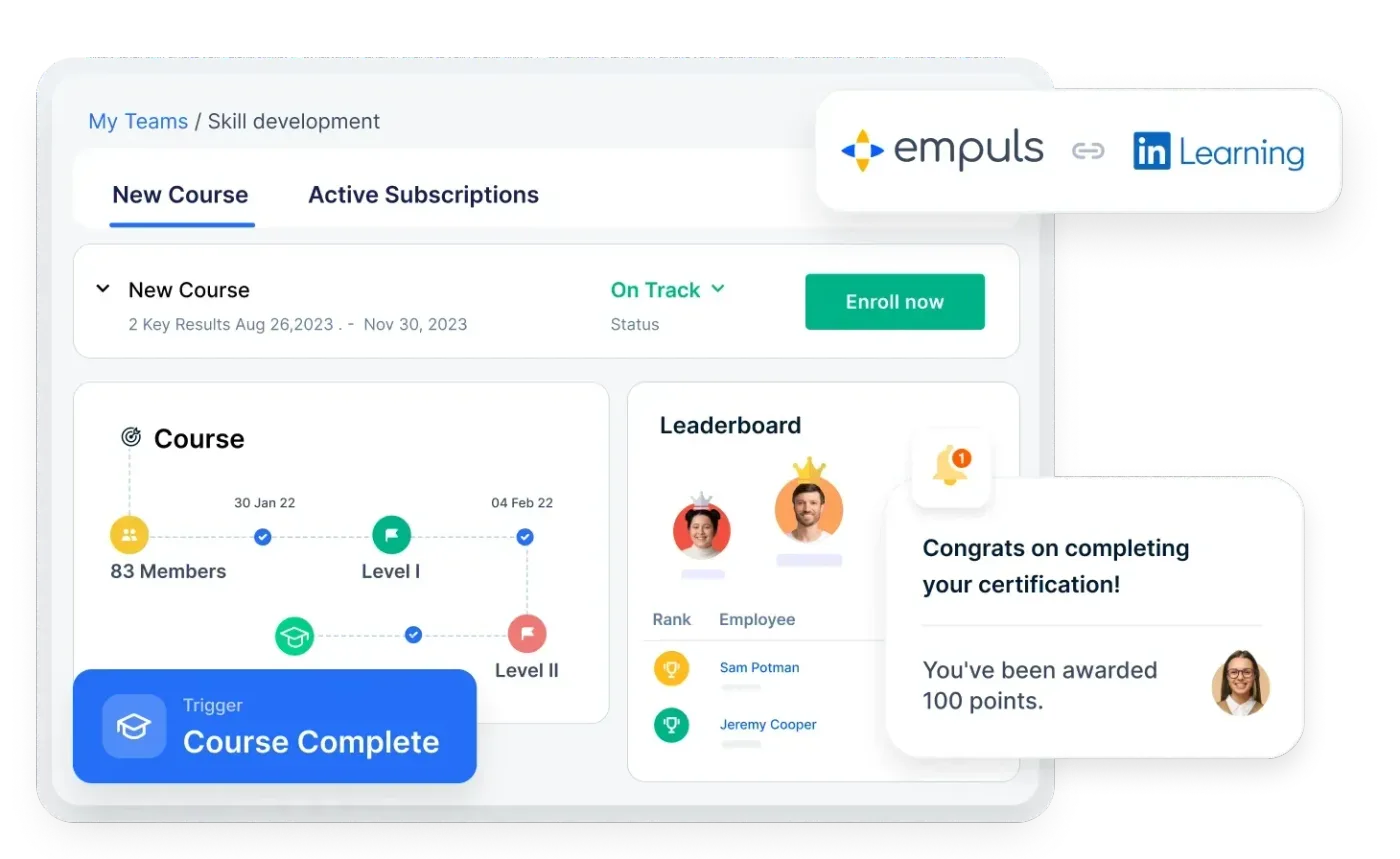
Comprehensive development and training programs significantly boost engagement in financial services. They should cover technical skills, soft skills, leadership development and career advancement, and today they must include data and AI skills. Access to ongoing training helps staff stay current with industry trends, increases job satisfaction and shows employees that their long-term growth is valued.
2. Employee wellbeing initiatives
Financial services companies improve engagement by prioritizing wellbeing: physical health, mental health, work-life balance and a supportive work environment. In a sector known for long days and weekend work, this directly reduces burnout and turnover. Companies that invest in mental health support, stress reduction programs and wellness challenges show employees they care about their overall welfare.
3. Publicly celebrate employee achievements
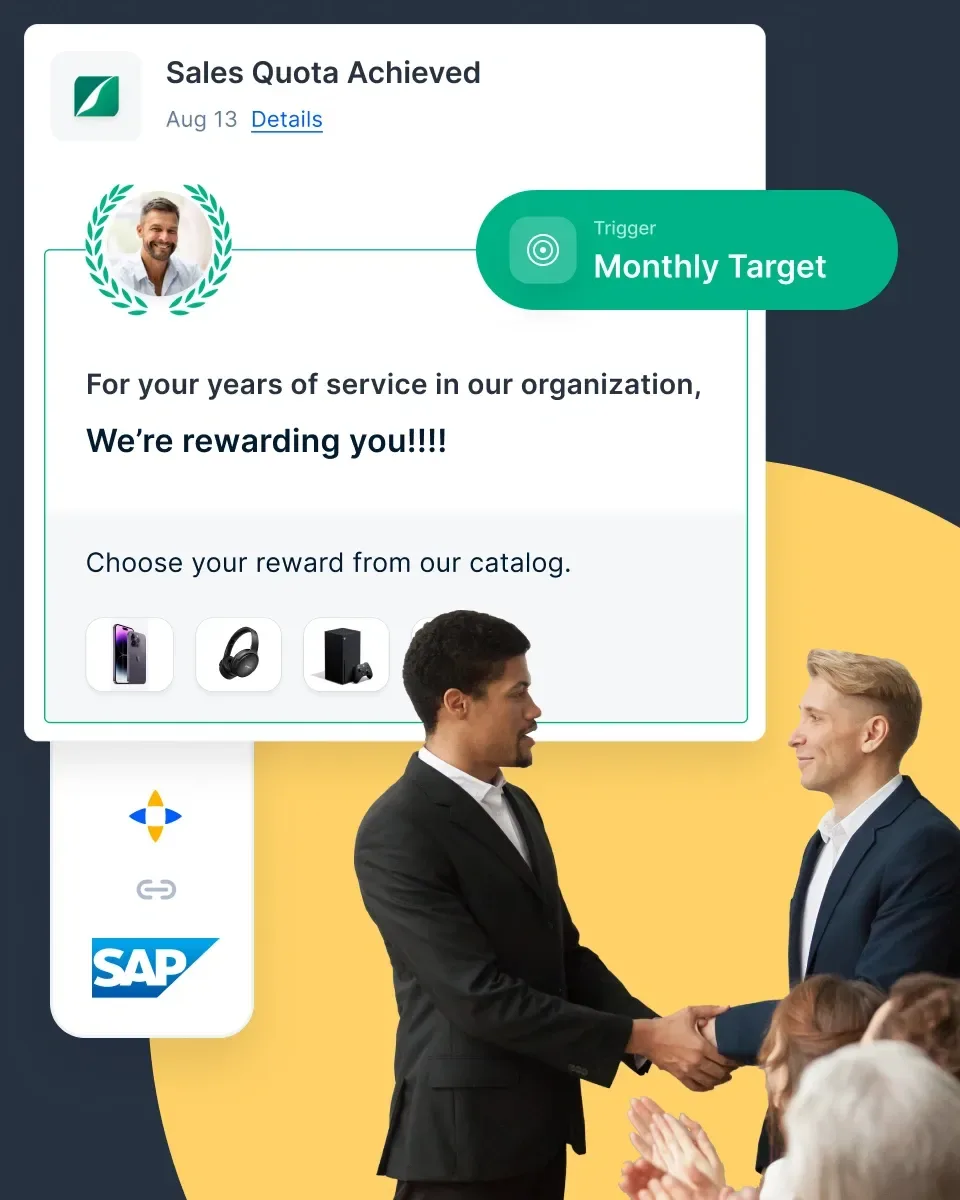
Publicly celebrating achievements means recognizing employees' successes visibly, through company-wide announcements, awards ceremonies or internal channels. It reinforces a culture of appreciation, and when employees see colleagues recognized for hard work, they are motivated to excel too. It also fosters pride and camaraderie across teams that rarely work side by side.
4. Give employee perks and benefits
Perks and benefits beyond regular pay are a powerful way to enhance engagement. They can include health and wellness benefits, flexible work, tuition reimbursement and lifestyle discounts. When employees receive benefits they actually value, they are more likely to stay engaged and loyal. A unified platform for employee benefits makes these perks easier to find and use, and a total rewards strategy ties them together with pay and recognition.
5. Diversity, equity and inclusion initiatives
Prioritizing diversity, equity and inclusion significantly affects engagement in financial services. A culture where all employees feel valued and included leads to higher morale, collaboration and engagement. When employees see equal opportunities in practice, they are more likely to be satisfied with their work, and employee resource groups build community and support among people from different backgrounds.
6. Employee recognition and rewards programs
Recognition and rewards programs boost engagement by acknowledging hard work and contributions. They can include performance bonuses, peer recognition and awards for outstanding achievements. In finance, recognize more than revenue: reward the analyst who flags a compliance risk, the operations team that clears a backlog accurately and the service rep who saves a client relationship. A rewards and recognition platform makes this consistent across locations.
7. Flexible work arrangements and remote work options
Financial services have traditionally involved long hours and a rigid office-based culture. Giving employees more control over schedules and locations increases job satisfaction and work-life balance, and it shows trust. Flexibility also helps attract and retain top talent, as many employees now prioritize it, especially in fintech and operations roles that do not require a fixed desk.
8. Employee feedback and engagement surveys
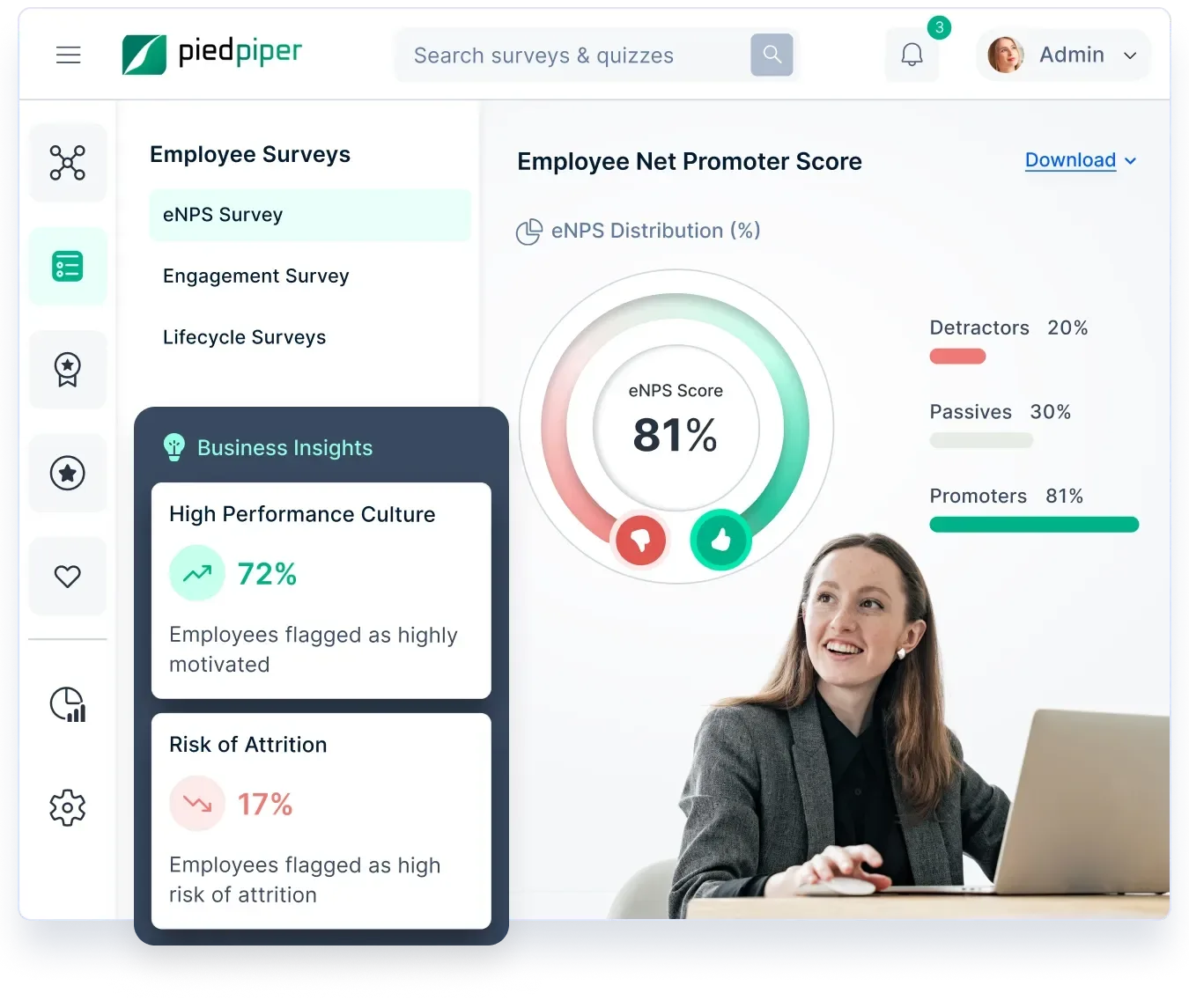
Regularly collecting feedback through engagement surveys, and acting on it, significantly improves engagement. Surveys give employees a voice on concerns, suggestions and job satisfaction, and when people see feedback lead to real change, they feel engaged and motivated. HR teams can run pulse surveys to spot issues before they turn into disengagement and turnover.
9. Mentorship and career development programs
Mentorship and career development programs pair experienced employees with less experienced ones to foster learning and skill development. Having a mentor builds confidence, provides guidance and opens doors to new opportunities. Employees in these programs see a clearer path for progression, which matters in an industry where slow promotions push talent out.
10. Transparent communication and goal alignment
Transparent communication that aligns individual and team goals with the company's mission significantly improves engagement. When employees understand the strategic direction and how their work fits into it, they are more motivated to work toward common goals. In fintech, where strategy can shift with each funding round, open communication about direction and runway is especially important for trust.
11. Employee empowerment and decision-making involvement
Involving employees in decision-making boosts engagement. When people have a say in the organization's direction and feel their opinions are valued, they take ownership of their roles and contribute more effectively. Empowerment also strengthens trust and communication, and it often surfaces practical process improvements from the people closest to clients.
12. Regular team building and social events
Regular team-building and social events foster camaraderie among team members. They can include team lunches, outings or virtual gatherings for remote teams. Employees who feel strongly connected to colleagues are more likely to be engaged and enjoy their work environment, which improves collaboration across functions.
Employee engagement in fintech: what is different
Employee engagement in fintech blends the pressures of financial services with the pace of a technology company. Fintech teams carry regulatory responsibility but often operate like startups, with fast product cycles, changing priorities and fierce competition for engineering and risk talent. A few practices matter more here than in traditional institutions:
- Ownership and impact: Show each team how its work moves customer and business metrics, and celebrate launches and fixes publicly.
- Career growth without big hierarchies: Use skills-based progression, stretch projects and internal moves instead of waiting for promotion cycles.
- Honest communication: Share company direction, funding and product priorities regularly so uncertainty does not fill the gap.
- Recognition across functions: Engineering, compliance and customer support all contribute to a release, so recognize the whole team.
Many of these practices overlap with technology teams more broadly, which we cover in our guide to employee engagement in the IT industry.
Transform employee engagement in financial services with Empuls
In a sector where performance, compliance and client trust are paramount, engaging employees is a business priority, not only HR's job. Banks, insurers, NBFCs and fintech companies use Empuls, Xoxoday's employee engagement platform, to build a culture of recognition, feedback and connection. Here is how it supports employee engagement in the financial services industry:

- Recognize sales targets, compliance wins and client satisfaction milestones: Set up tailored programs that celebrate advisors hitting goals, analysts flagging compliance risks or service teams receiving client praise, with milestone rewards that trigger automatically.
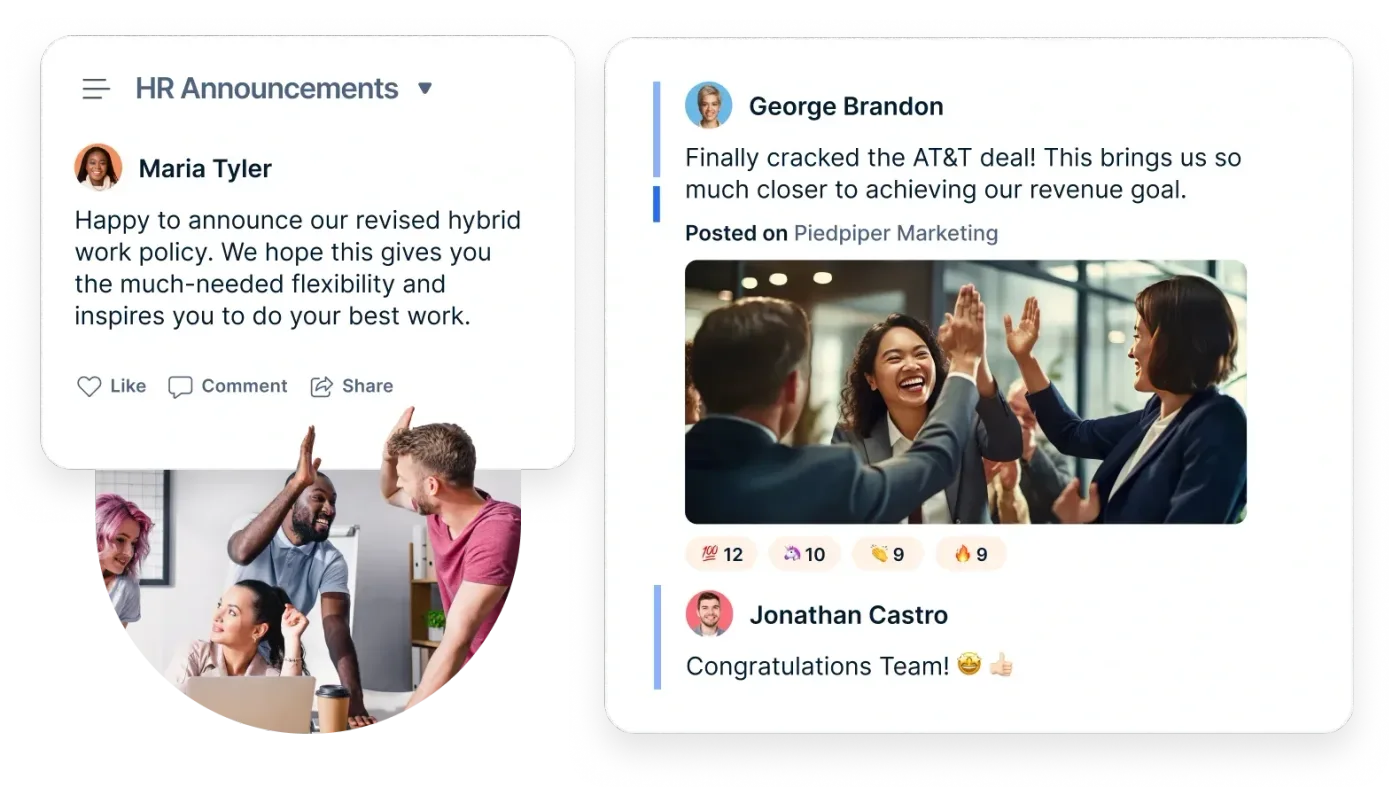
- Streamline communication across branch networks and head offices: The social intranet gives frontline bankers, underwriters and operations staff one hub for announcements, groups and town halls.
- Capture real-time feedback on leadership, tools and policies: Run anonymous pulse surveys and eNPS tailored to financial roles, such as how relationship managers rate their CRM or how loan processing teams feel about workload, then turn the results into action plans.
- Automate celebrations for career milestones and certifications: Financial services employees earn certifications and licenses regularly. Automate rewards for moments like completing a CFA level, passing a licensing exam or an internal promotion with career milestone celebrations.
- Integrate with core HR systems: Empuls connects with HRMS platforms such as SAP SuccessFactors, Darwinbox and Oracle HCM so employee data flows without manual work. See the full list of integrations.
Explore how Empuls fits banks, lenders and fintech teams on the banking and fintech solutions page.
Conclusion
In the financial services industry, where trust, accuracy and client relationships are paramount, employee engagement is pivotal to success. The pressures vary by segment, from branch workloads to advisor targets to fintech pace, but the fundamentals are shared: grow people, protect their wellbeing, recognize the right behaviors and listen continuously.
By implementing these strategies and fostering a culture of engagement, financial institutions can retain top talent and improve client satisfaction, productivity and compliance, which contributes to long-term growth and competitiveness. Prioritizing engagement is not just a choice but a strategic necessity for the financial services industry.
Book your Empuls demo
Frequently asked questions
Financial services depend on accuracy, compliance and client trust, and all three rely on committed employees. Engaged teams make fewer errors, serve clients better and stay longer, which lowers the high cost of replacing licensed and experienced staff. Gallup's research links top-quartile engagement to higher productivity and profitability, so engagement has a direct effect on business results.
The most common challenges are compliance fatigue, repetitive process-heavy work, aggressive sales targets, slow or unclear career paths, a gap between head office and frontline staff, and uncertainty about AI. Long working hours add to the strain. Each segment feels these differently, so engagement programs work best when they are tailored to the specific roles involved.
Financial firms improve retention by fixing the reasons people leave: stalled careers, burnout, feeling undervalued and poor communication. Practical steps include clear progression paths and mentorship, workload and wellbeing support, recognition for quality and compliance as well as revenue, regular pulse surveys with visible action, and benefits employees actually use. Track exits by role to focus effort.
Fintech teams combine regulatory responsibility with startup pace. They face fast product cycles, shifting priorities, funding uncertainty and intense competition for engineering and risk talent. Engagement in fintech depends more on ownership, visible impact, skills-based growth and honest communication about direction, while traditional banks focus more on branch workload, scheduling and structured career paths.
Track eNPS and pulse scores by segment and role, voluntary attrition and regretted exits, internal mobility rates, recognition participation, and absenteeism or overtime. Then connect them to business measures such as client satisfaction, error and audit findings, and advisor or sales productivity. Reviewing these together shows where engagement is improving outcomes and where it needs attention.





































































































































































































































































































































































































































































































































































