
Key Takeaways
To improve employee engagement, combine a clear purpose, coaching managers, regular recognition, growth opportunities and a real employee voice, then measure and act.
Managers account for about 70% of the variance in team engagement, so training managers to coach is the highest-leverage engagement strategy.
Well-recognized employees were 45% less likely to leave after two years in a Gallup and Workhuman study, yet only 22% get the right amount of recognition.
Engagement programs work best with two or three owned priorities, a survey baseline and a quarterly review, not a long list of activities.
Track engagement scores, pulse results, eNPS, recognition activity and voluntary turnover together to see whether engagement is really improving.
To improve employee engagement, give people a clear purpose, managers who coach them, regular recognition, room to grow and a real voice, then measure what changes and act on it. Engagement rises when these basics show up in everyday work, not when a company runs a single campaign or survey.
This guide shows how to improve employee engagement with 10 proven employee engagement strategies, 16 employee engagement ideas you can use this quarter, the best practices that keep them working and the metrics that tell you whether they are. If you want the theory first, start with our research guide to employee engagement.
What it takes to improve employee engagement
Improving employee engagement means raising the share of employees who are emotionally committed to their work and their organization, so they put in discretionary effort, stay longer and do better work. It is different from making people happy or satisfied: an engaged employee knows what is expected, has what they need to do it and feels their contribution matters.
Employers who invest in engagement often skip the strategy and go straight to activities. That is expensive, because the gap between engaged and disengaged teams is wide. According to Gallup's research on engagement and productivity, only 20% of employees worldwide were engaged in 2025, and low engagement cost the global economy about $10 trillion in lost productivity, or 9% of global GDP.
20%
of employees worldwide were engaged in 2025
Gallup
31%
of US employees are engaged
Gallup
70%
of the variance in team engagement comes from the manager
Gallup
$10T
in lost productivity from low engagement in 2025
Gallup
Where employee engagement stands today
The upside is just as clear. Gallup's 2024 Q12 meta-analysis, which covered 183,806 business units, found that teams in the top quartile of engagement had 23% higher profitability, 18% higher sales productivity and 78% lower absenteeism than bottom-quartile teams. For the full business case, read our guide to why employee engagement is important.
Human interaction sits at the heart of all of this. Researchers at the HR consultancy Penna described a hierarchy of engagement with pay and benefits at the lowest level and a true sense of connection, common purpose and shared meaning at the top. In other words, value and meaning at work line up with stronger engagement, and both are built through relationships, not memos.
10 employee engagement strategies that work
The 10 strategies below are ordered from the foundations that shape every working day to the systems that keep engagement on track. Purpose and managers come first because they carry the most weight: Gallup estimates that managers alone account for 70% of the variance in team engagement, so every other strategy works better when they are in place.
1. Communicate a clear vision and keep goals current
Employees need to understand the vision and mission of the organization and how their own work connects to it. Yet Gallup reports that only about half of US employees strongly agree they know what is expected of them at work. It is up to leaders to communicate the vision clearly, so people want to contribute rather than simply comply.
Employees are also your brand ambassadors, so keep them updated as company goals change. Regular internal communication, such as a monthly business update, a quarterly town hall and a short note when priorities shift, keeps every team member connected to the mission. Tie the vision back to your core values in the workplace so people know not just what the company wants but how it wants to get there.
2. Make managers coaches, not bosses
Good leaders help employees find meaning in their work. Leaders and team members should interact on both a formal and informal basis, because it is within these relationships that people become emotionally, not just physically, engaged. Google's Project Oxygen research reached a similar conclusion: regular one-on-one conversations between managers and team members were a hallmark of its best teams.
Adapting communication styles is part of the job. Some people prefer verbal instructions, some want written detail; some want a team leader available for every problem, while others prefer to work things out for themselves. When employees see that their manager has listened and adjusted, engagement rises. Gallup also found that teams led by managers who completed strengths-based development had up to 18% higher engagement, so train managers to coach rather than order.
3. Give timely feedback, recognition and rewards
Reinforcing positive behavior with prompt feedback and rewards strengthens motivation. Honest, constructive feedback should come close to the moment, so employees know what to repeat and what to change. Acknowledging people and treating them with respect is one of the best ways to boost engagement; it does not mean praising everything, but it does mean nobody should feel invisible.
The evidence for recognition is strong. A Gallup and Workhuman study that tracked nearly 3,500 employees from 2022 to 2024 found that well-recognized employees were 45% less likely to have left after two years, yet only 22% of employees say they get the right amount of recognition. For a structured approach, see our guide to a values-based recognition program.
4. Encourage peer interactions and collaboration
Employees are more loyal to colleagues they value and have built relationships with, because they don't want to let them down. Recognition from fellow team members also matters: it boosts a person's sense of self-worth and achievement, and a culture of peer recognition encourages genuine collaboration and companionship.
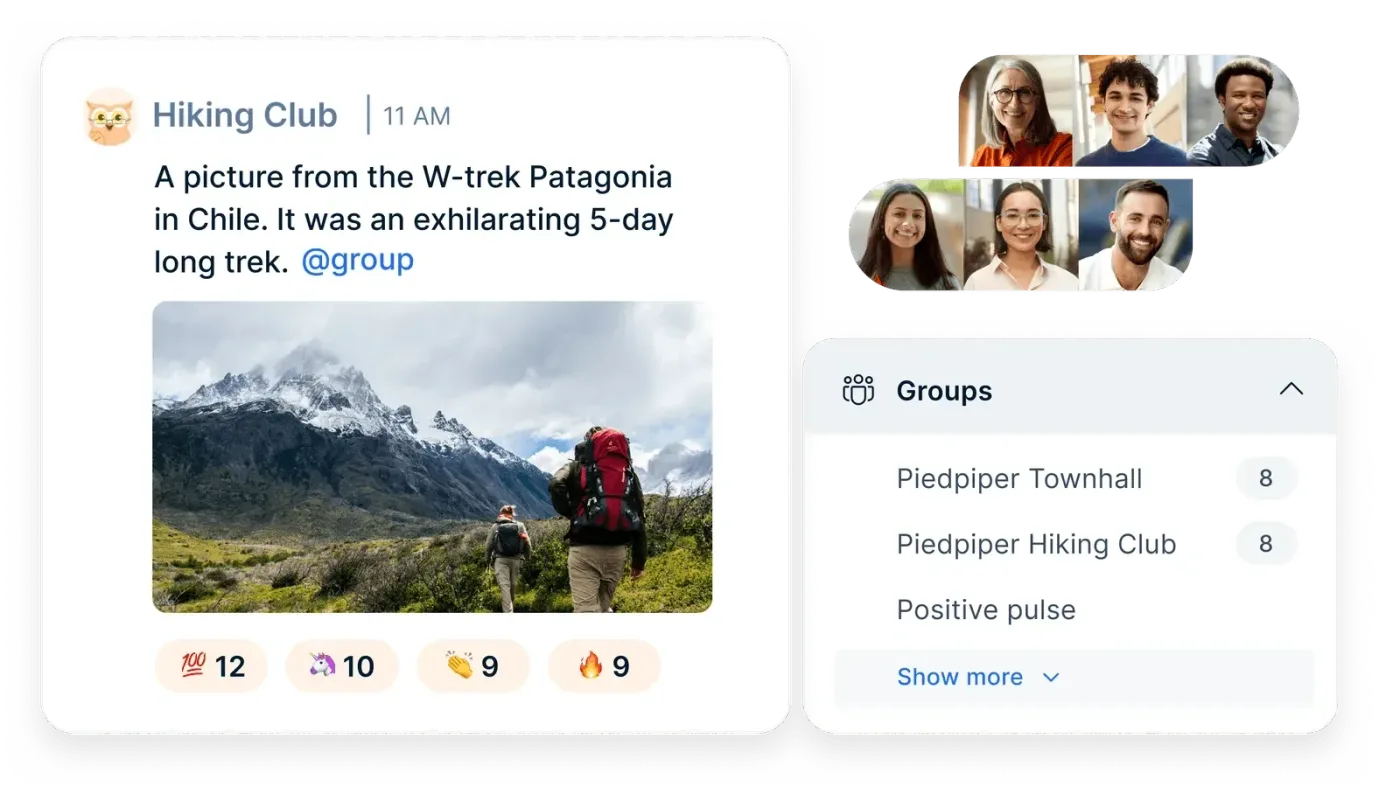
Management can encourage practices that get people working with each other: daily routines, messaging channels that open up cross-team communication, mentoring pairs and company events like offsites and team days. Interest groups do the job of the old water cooler for hybrid and remote teams, giving people a place to share information, celebrate milestones and build a sense of belonging.
5. Offer choice in how and where people work
When employees feel empowered to work in a way that fits their personal needs and lifestyle, engagement rises. Shifting responsibility to employees over when and how they work requires trust, and that trust comes from relationships built through human interaction.
Flexibility is now an expectation, not a perk. Gallup's hybrid work indicator shows that 61% of US employees with remote-capable jobs prefer hybrid work, and in its latest data, hybrid and fully remote employees were slightly more engaged than on-site colleagues in remote-capable roles. Where roles cannot be flexible on location, offer choice on shifts, schedules or how work gets done.
6. Shape roles together and invest in growth
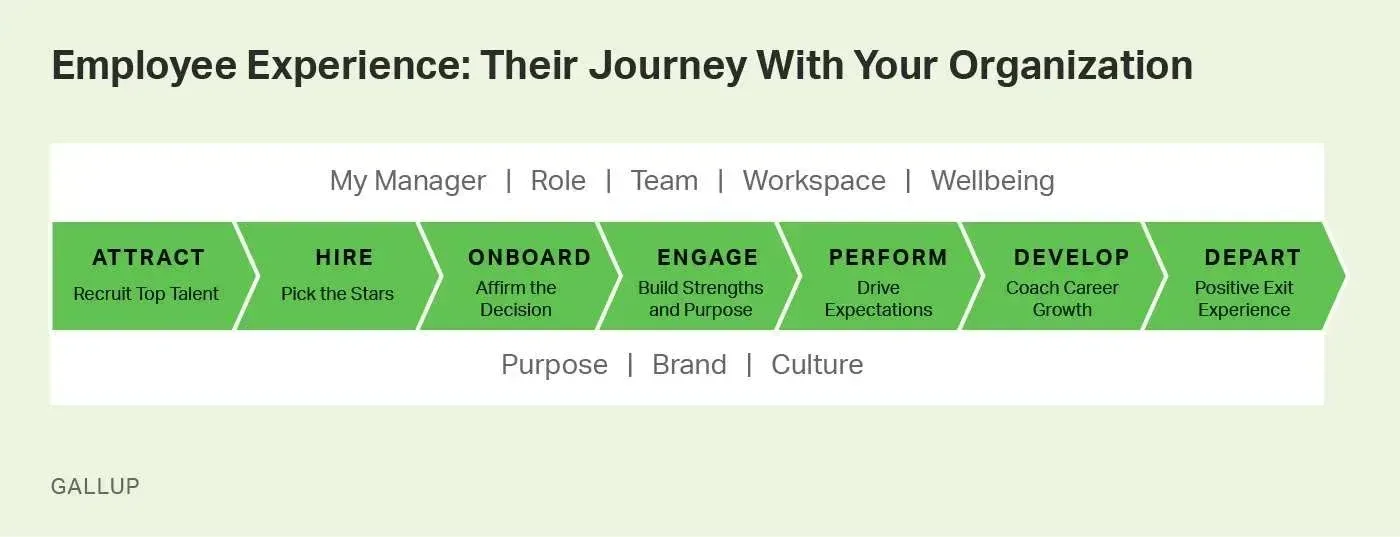
Engagement is a two-way street. Employers need to work proactively with employees to keep their roles engaging over the long term, and leaders should free up time to discuss new opportunities and recommend tools and resources. Understanding each person's career goals, then supporting them, builds commitment across the whole employee journey.
Growth is one of the clearest levers you have. LinkedIn's Workplace Learning Report 2024 found that 90% of organizations are concerned about employee retention and that providing learning opportunities is their number one retention strategy. Some companies go further with time for self-directed projects, the model behind programs like Apple's Blue Sky, which lets selected employees spend time on ideas of their own.
7. Personalize engagement plans
Every employee has different motivations. Some are driven mostly by intrinsic factors such as mastery and purpose, others more by extrinsic ones such as pay, bonuses and status. Finding out which applies lets you tailor the response, for example flexible work for one person, a stretch project for another and a performance bonus for a third.
Personalization also applies to recognition and rewards. A reward someone chooses for themselves lands better than a one-size-fits-all gift, and a public shoutout suits some people more than others. Use one-on-ones to ask, then record preferences so they survive manager changes.
8. Support wellbeing and a healthy lifestyle
Work-life balance and physical and mental wellbeing are essential for long-term engagement. Gym memberships, wellness sessions, mental health support and realistic workloads help prevent burnout and protect morale, especially when engagement is already under pressure.
Treat wellbeing as part of how work is designed, not an add-on. Watch for signs such as rising overtime, skipped leave and falling survey scores on workload, and act before they turn into exits. Our roundup of employee wellness trends covers what employers are adding now.
9. Ask for feedback, act on it and learn from exits
Interaction is a two-way process, and employee feedback is crucial to continued engagement. When feedback is received, it must be acted on: leaders who collect feedback and do nothing cause real damage, because the next survey is answered with less honesty. Follow through on what you promise, and say what you changed.
Use several listening channels. Pulse surveys, an annual or semiannual engagement survey, stay interviews and exit interviews each show something different. Exit interviews in particular reveal company strengths and weaknesses that current employees may not raise, and fixing the common concerns builds trust with the people who stay. Our article on why annual employee surveys fail explains how to avoid survey fatigue.
10. Give engagement an owner and the right tools
Engagement improves faster when someone is accountable for it. A dedicated engagement lead, or a clear owner inside HR, can assess motivation levels, suggest new initiatives and track whether efforts are working, while managers own the action plans for their own teams. Our guide to the role of HR in employee engagement breaks down who does what.
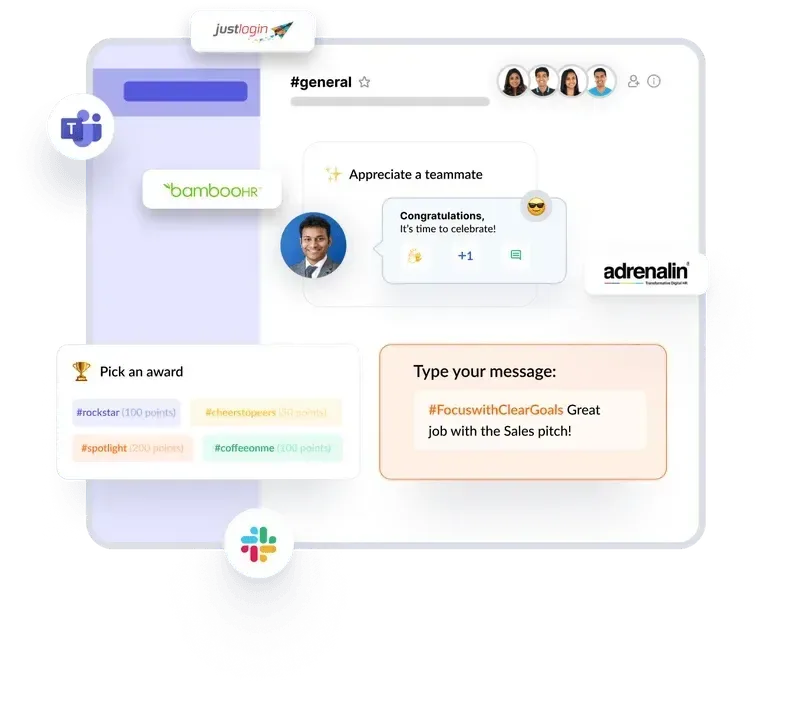
A dedicated communication platform helps that owner. It improves transparency and collaboration, makes real-time recognition visible and bridges the gap between remote, hybrid and frontline workers. Choose tools that sit inside the apps people already use, so taking part takes seconds, not a new login.
Put these engagement strategies to work
Recognize, listen, connect and celebrate in one platform with Empuls.
Talk to our ExpertTrusted by 5,000+ companies
16 employee engagement ideas to try this quarter
The 16 employee engagement ideas below are practical ways to increase employee engagement once the strategies above are in place, and each one centers on making employees feel valued and respected. Recognition, learning and two-way communication ideas come first because they move engagement fastest, while the later ideas build culture over time.
- Share your business goals: Involve employees when you plan around recent issues and how to overcome them. Give them a platform to propose their own solutions, share the commitments the company has made and let teams decide how to reach them. Every six months, hold a success meeting to review goals and recognize the people who moved them.
- Build a knowledge-sharing system: One of the biggest costs of high turnover is lost knowledge. A mentorship program that pairs new hires with experienced employees, shared channels and searchable groups help people find information and commit to their work. Templates such as a skill assessment checklist with a timeframe and goals make each program easier to run.
- Communicate creatively: Teams often work in isolation with little idea of what the rest of the company is doing. Every couple of months, give each team a slot to share project updates and key lessons. Add a theme or a fun format to make it memorable, because creativity is a great driver of energy.
- Reward contributions: When work is rewarded, the benefit is not only the employee's but the company's too, because people set bigger goals for themselves. Use a mix of spot awards, peer awards and incentive-based recognition so good work is reinforced in real time, and let employees choose rewards from a catalog.
- Encourage learning and new challenges: Lack of learning is one of the major reasons people quit. Run a company academy or regular sessions on new skills and tools, let employees choose how they attend and celebrate completions with a graduation moment or a team outing.
- Create a fun and sporty environment: Having fun at work supports productivity and energy. Plan team sports and events outside the working space so people feel they have a life beyond the job, and balance work hours with time to recharge.
- Host a hack night or hack day: Change up the regular routine with a hackathon focused on internal problems or new ideas. It works as an icebreaker, puts everyone's creativity in the open and often produces useful work fast. Add food, music and a small prize.
- Build anticipation about what is next: Keep employees updated on the company's future plans and the new opportunities they will create. When people can see that the next challenge is available where they already are, they feel less need to look elsewhere for it.
- Create a memorable onboarding experience: Onboarding is how new hires gain the knowledge, behaviors and skills to become effective members of the team. Set clear objectives and a timeframe, then let people work through them at their own pace. A thoughtful welcome, such as onboarding gifts for new hires, makes the first week memorable.
- Publish an internal newsletter or magazine: Feature articles, opinions, news and fun columns, and ask employees to pitch and write the stories. It brings out people's creative side, gives them visible credit and works just as well online as in print.
- Create a platform for sharing ideas: Keep communication transparent so every employee, not just a few, can share ideas openly. Combine scheduled idea reviews, an open-door policy and a searchable knowledge base, and share success stories that came from employee ideas so people keep contributing. Treat every idea equally, whatever the sender's level.
- Give employees ownership: Many employees want regular validation and room to grow. Listen to them, encourage them and guide them, then trust them with real responsibility framed as challenges and milestones. Use pulse surveys, engagement surveys and reviews to find out what they need to take on more.
- Share the gains: Bonuses and profit sharing work as investments in loyalty and performance. Make givebacks part of a structured rewards program with performance incentives, approval-based awards and branded certificates, rather than one-off payments, and track participation so every team is included.
- Celebrate people, not just accomplishments: Go beyond saying "great work" by marking birthdays, work anniversaries and personal milestones, and add a token of appreciation when it is earned. Celebrating the person, not only the output, creates enthusiasm to keep doing quality work. See our employee milestone gift ideas for inspiration.
- Invest in the workspace: Employees like working in an inviting space with good light, comfortable desks, a coffee corner and room for activities. If office space is limited, support remote and home working setups instead, so everyone has a place they can do their best work.
- Be a coach, not a boss: A coach trains players to bring out their best, while a boss orders them to perform. Employees need someone who encourages them, helps them build a career and keeps them motivated throughout the work process, and ongoing training is one of the best ways to do it.
Looking for more activities? Our guide to employee engagement strategies covers additional techniques, and the employee engagement action plan shows how to turn ideas into owned actions.
Employee engagement best practices
Strategies and ideas only work when they are applied with discipline. These employee engagement best practices come from what consistently separates programs that move survey scores from programs that fade after launch:
- Measure before you act: Run a baseline engagement survey so you know which drivers are weakest, instead of guessing.
- Pick two or three priorities: Fewer, owned actions beat a long list nobody delivers. Each needs an owner, a deadline and a metric.
- Equip managers first: Give managers their team's results, a simple action planning template and time in their week to use them.
- Close the loop: Tell employees what you heard, what you will change and what you will not, and why.
- Make it part of the routine: Build recognition, check-ins and celebrations into existing meetings and tools rather than adding new ones.
- Review every quarter: Compare pulse results and retention data against your baseline, keep what works and drop what does not.
How to measure whether engagement is improving
Retention figures give a good indication of how effective engagement efforts are: if voluntary turnover in a team or role is well above your company average, or above about 10% in roles that are normally stable, find out why. Pair turnover with the leading indicators below so you can see change within weeks, not a year later.
| Metric | What it tells you | How often to check |
|---|---|---|
| Engagement survey score | Overall engagement and the drivers behind it, by team | Once or twice a year |
| Pulse survey results | Whether recent actions are working on specific drivers | Monthly or quarterly |
| Employee net promoter score (eNPS) | How likely employees are to recommend the company as a place to work | Quarterly |
| Recognition activity | How many employees give and receive recognition, and how evenly it is spread | Monthly |
| Voluntary turnover and regretted exits | Whether engaged, high-performing people are staying | Monthly, reviewed quarterly |
| Absenteeism | Early signs of burnout or disengagement in a team | Monthly |
| Exit interview themes | The most common reasons people leave | Quarterly |
Low performers deserve attention here too. Employees face challenges that affect performance, from unclear goals to personal pressures. Leaders should identify people who are struggling early, offer guidance and support, including counseling where it helps, and treat a drop in output as a signal to talk, not just to manage. Our guide to employee disengagement covers the warning signs.
Common mistakes that stall engagement efforts
Most engagement programs fail for predictable reasons rather than a lack of effort. Avoid these:
- Treating engagement as an event: A yearly party or survey cannot make up for a poor experience the rest of the year.
- Surveying without acting: Asking for feedback and then going quiet lowers trust and future response rates.
- Leaving managers out: Company-wide initiatives rarely work when managers lack the skills or time to support them.
- Recognizing only top performers: Recognition that reaches the same few people leaves everyone else feeling invisible.
- Copying another company's perks: What engages one workforce may not matter to yours, so let your own data decide.
For a set of principles that guard against these mistakes, read the rules of employee engagement, and for the foundations every program rests on, see the pillars of employee engagement.
How Empuls helps you improve employee engagement
Empuls, Xoxoday's employee engagement platform, keeps everyone on the same page by sharing company news, enabling two-way conversations and helping employees see how they contribute to the company's culture and vision. It brings the strategies in this guide into one place:
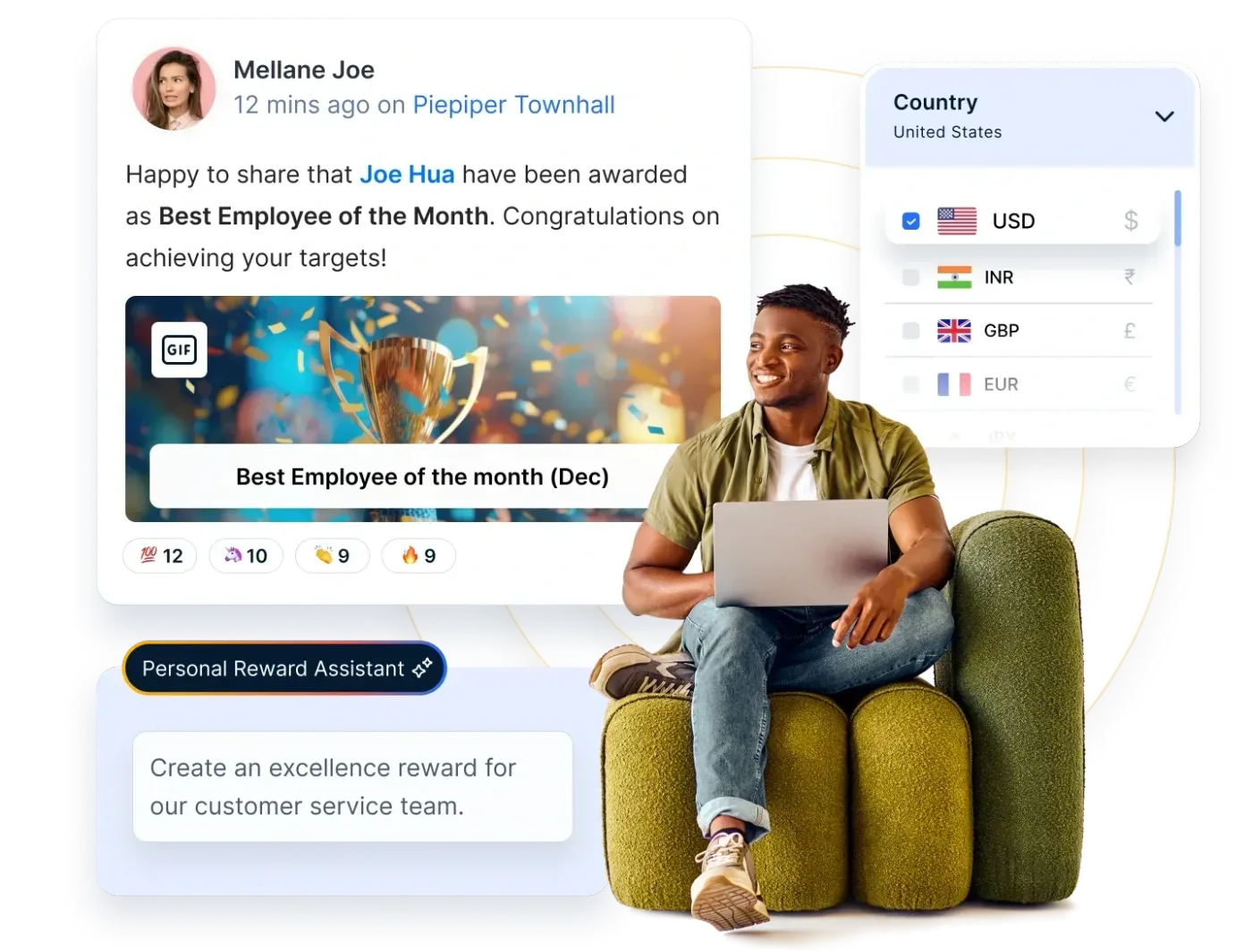
- Recognition and rewards: Spot awards, peer recognition and nominations inside Slack and Microsoft Teams, with a global rewards catalog employees choose from.
- Listening: Pulse surveys, eNPS and lifecycle surveys with AI sentiment analysis and action plans that help managers act on results.
- Connection: A social intranet with community groups, polls, GIFs, videos and leaderboards that nudge participation.
- Celebrations and wellbeing: Automated celebrations for birthdays and work anniversaries, plus wellness and benefits programs.
The aim of every engagement effort is employees who feel satisfied, energized and proud of their work. When people feel connected and see that the organization values their contribution, they stay longer and do their best work, which makes it easier to retain good people and lift the quality of everything you deliver.
Book your Empuls demo
Frequently asked questions
The fastest way to improve employee engagement is to start recognizing good work regularly and to have managers hold short one-on-one conversations about what helps and hinders each person. Both cost little, can start this week and address two of the strongest engagement drivers. Pair them with a quick pulse survey so you can see whether scores move within a few weeks.
The 5 C's of employee engagement are care, connect, coach, contribute and congratulate. Care means showing genuine concern for wellbeing. Connect means building strong relationships and teamwork. Coach means giving guidance, feedback and support. Contribute means linking work to purpose and company goals. Congratulate means recognizing and rewarding achievements. Together they give managers a simple checklist for everyday engagement.
The 4 P's of employee engagement are people, purpose, performance and progress. People means prioritizing employees' needs and growth. Purpose means connecting work to meaningful outcomes. Performance means encouraging productivity and excellence with clear goals and feedback. Progress means providing development opportunities and visible career paths. Organizations use the 4 P's to check that engagement efforts cover both the person and the work.
The 4 E's of employee engagement are enable, empower, energize and engage. Enable means equipping employees with the right tools and resources. Empower means giving them autonomy and trust. Energize means motivating them through recognition and incentives. Engage means fostering collaboration, communication and a positive culture. The model is a reminder that engagement depends on removing obstacles as much as adding motivation.
Managers improve employee engagement by setting clear expectations, holding regular one-on-ones, giving timely feedback and recognition, and supporting each person's growth. They also adapt their communication style to each team member and act on survey results for their own team. Because managers account for most of the variance in team engagement, training them to coach is one of the best investments a company can make.
Most organizations see early movement in pulse survey results within three to six months of acting on clear priorities, and measurable change in annual engagement scores and turnover within 12 to 18 months. Progress is faster when teams pick two or three focused actions, communicate what they changed and review results every quarter instead of waiting for the next annual survey.
In hybrid and remote teams, improve employee engagement by making connection deliberate. Hold regular video one-on-ones, recognize work publicly in the chat tools people already use, create interest groups that replace the water cooler and agree team norms for meetings and response times. Share company updates in one place everyone can reach, and use pulse surveys to check that remote employees feel as included as on-site colleagues.
You know employee engagement is improving when survey scores and eNPS rise against your baseline, pulse results improve on the drivers you targeted, more employees give and receive recognition, absenteeism falls and voluntary turnover drops, especially among high performers. Track these metrics by team and review them every quarter, so you can see which actions are working and where to adjust.





































































































































































































































































































































































































































































































































































