Key Takeaways
Dealer sales staff disengage when payouts are opaque and slow, turnover is high and they have no direct link to the brand.
Layer contests, SPIFFs, EV and model-mix schemes, F&I schemes and rating-based schemes on a stable base commission plan.
Live scorecards, fair leaderboards, milestones, earnings calculators and timely AI nudges turn the plan into daily behavior.
Automate the flow from OEM CRM and dealer data to calculation, confirmation, invoicing and redemption to cut disputes and payout delays.
Track adoption, qualifiers, model mix, F&I penetration, time to payout, disputes and turnover by dealer and region.
A dealership sales incentive program is how an automotive OEM rewards the people who actually sell its vehicles: the sales consultants, team leaders, finance and insurance (F&I) managers and showroom managers who work for independent dealers, not for the brand. The best programs combine clear commission plans with contests, SPIFFs and product schemes, show every rep their earnings in real time, and pay out fast across the whole dealer network.
That last part is where most OEMs struggle. Dealer sales staff sit one step removed from the brand, their pay is set by the dealer, and the OEM's incentive money often reaches them weeks late through spreadsheets and email. This guide covers why dealer sales teams are hard to motivate, the incentive schemes that work, how to gamify the sales floor, where AI nudges help, how to automate commission and payouts across dealers, a 180-day rollout plan and the metrics that prove it is working.
Why dealer sales staff are hard to motivate
Dealer sales staff are hard to motivate because they cannot see how they are paid, they wait too long to be paid, they leave often and they feel little connection to the brand whose cars they sell. Each of these problems weakens the link between effort and reward, which is the whole point of an incentive.
Opaque payouts: A typical automotive commission depends on many variables at once: the model and trim, front-end gross, the finance product attached, regional schemes, volume slabs and dealer-level targets. When reps cannot see how those variables combine, they stop trusting the number. Every surprise at month end turns into a dispute, and every dispute takes a sales manager off the floor.
Slow gratification: OEM schemes are often calculated manually after the month closes, validated with each dealer and then paid out through dealer payroll. By the time the money lands, the sale that earned it is a distant memory. An incentive that arrives six weeks late rewards the past instead of shaping what the rep does tomorrow.
High turnover: Dealership sales roles churn faster than almost any other job in the store. In its 2025 analysis of dealership staffing, CDK Global found that dealerships lost an average of 3.3 salespeople in a year against an average sales head count of 8.2, a 40% rate of turnover. The same research found about a third of dealership employees were considering leaving within six months, and 40% of sales managers said they lacked time to coach their teams. Hireology's 2025 automotive employer study reported that 56% of dealerships struggle with sales associate turnover.
Weak connection to the brand: Dealer staff are employed by the dealer, and many dealer groups sell several brands from neighboring showrooms. Without a direct channel, the OEM has little influence over which model a consultant recommends when a walk-in customer is undecided. A well-run incentive program becomes that channel: it tells reps what the brand wants them to sell this month and rewards them for doing it.
Dealership sales incentive program schemes that work
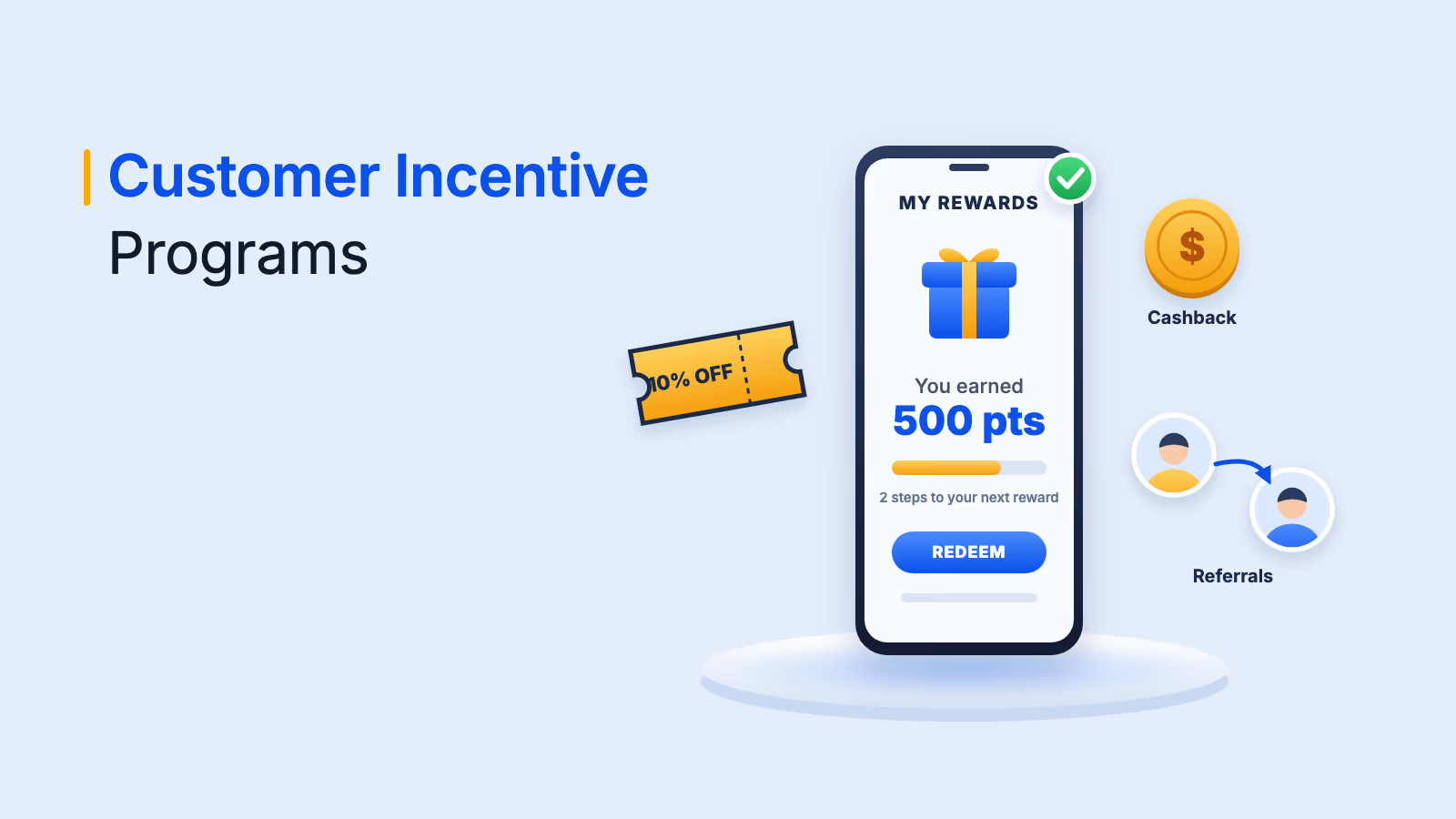
The most effective dealership sales incentive programs layer several scheme types on top of a stable base commission, each designed to drive one specific behavior. The base plan pays for volume and margin, while time-bound schemes steer effort toward launches, aged stock, finance products or skills the brand wants to build.
Most OEMs run several at once, scoped by dealer, region or role, and keep each one simple enough to explain in one sentence.
Sales contests
Contests rank reps or dealerships against each other on a clear metric, such as retail deliveries, test drives converted or accessories revenue, over a fixed window. They work best when the field is fair: compare consultants with others at similar dealer sizes or in the same region, and reward the top band as well as the single winner. Our guide to gamified sales contests covers formats that keep the middle of the team engaged, not just the top performers.
Commission plans
The commission plan is the foundation every other scheme sits on. Automotive plans usually mix a per-unit amount with a percentage of gross, then add slabs or accelerators once a rep passes a volume target. Many OEMs fund a brand-level layer on top of the dealer's own plan, paid for retail deliveries of specific models. Keep the formula consistent across dealers so reps who move between stores understand it immediately, and see our breakdown of sales commission structures for the trade-offs between flat, tiered and gross-based plans.
SPIFFs
A SPIFF (sales performance incentive fund) is a short, time-bound bonus for one action, for example a fixed amount for every demo vehicle sold before quarter end or every extended warranty attached this week. Good car sales SPIFF ideas target something the brand needs right now: clearing last year's model, pushing a slow-moving color or trim, or lifting test drives on a new launch. Pay SPIFFs instantly, ideally as rewards the rep can redeem the same day, and retire them before they become an expected part of pay. The sales SPIFF ideas guide has more formats to borrow.
Product-specific schemes for EV launches and model mix
Product schemes pay extra for selling the models the OEM most wants on the road. They matter more than ever as brands manage EV launches alongside combustion and hybrid ranges. Demand for EVs can shift sharply with policy: Cox Automotive's Q4 2025 EV sales report shows US EV share peaked at 10.5% in Q3 2025, then fell to 5.8% in Q4 after government-backed sales incentives were revoked at the start of October. Earlier that year, Cox's Q2 2025 EV sales report found average EV incentives reached an all-time high of 14.8% of average transaction price, nearly $8,500, in June.
When customer incentives swing that much, the dealer's sales team is the brand's most flexible lever. A model-mix scheme can pay a higher per-unit amount on EVs and hybrids, add a bonus for completing EV product certification, or reward test drives on a new launch in its first 90 days.
Finance and insurance product schemes
F&I schemes reward attaching finance, insurance, extended warranties, service contracts and protection products to a vehicle sale. F&I has become one of the most important profit lines in the store: StoneEagle's Q4 2025 F&I benchmark report recorded the highest quarterly average F&I profit per vehicle retailed of 2025 at $1,995, with average F&I income per dealer up more than 8% on 2024, while front-end margins fell to $279 per deal to close out 2025. The same report put vehicle service contract penetration at 45% and GAP at 39% in Q4.
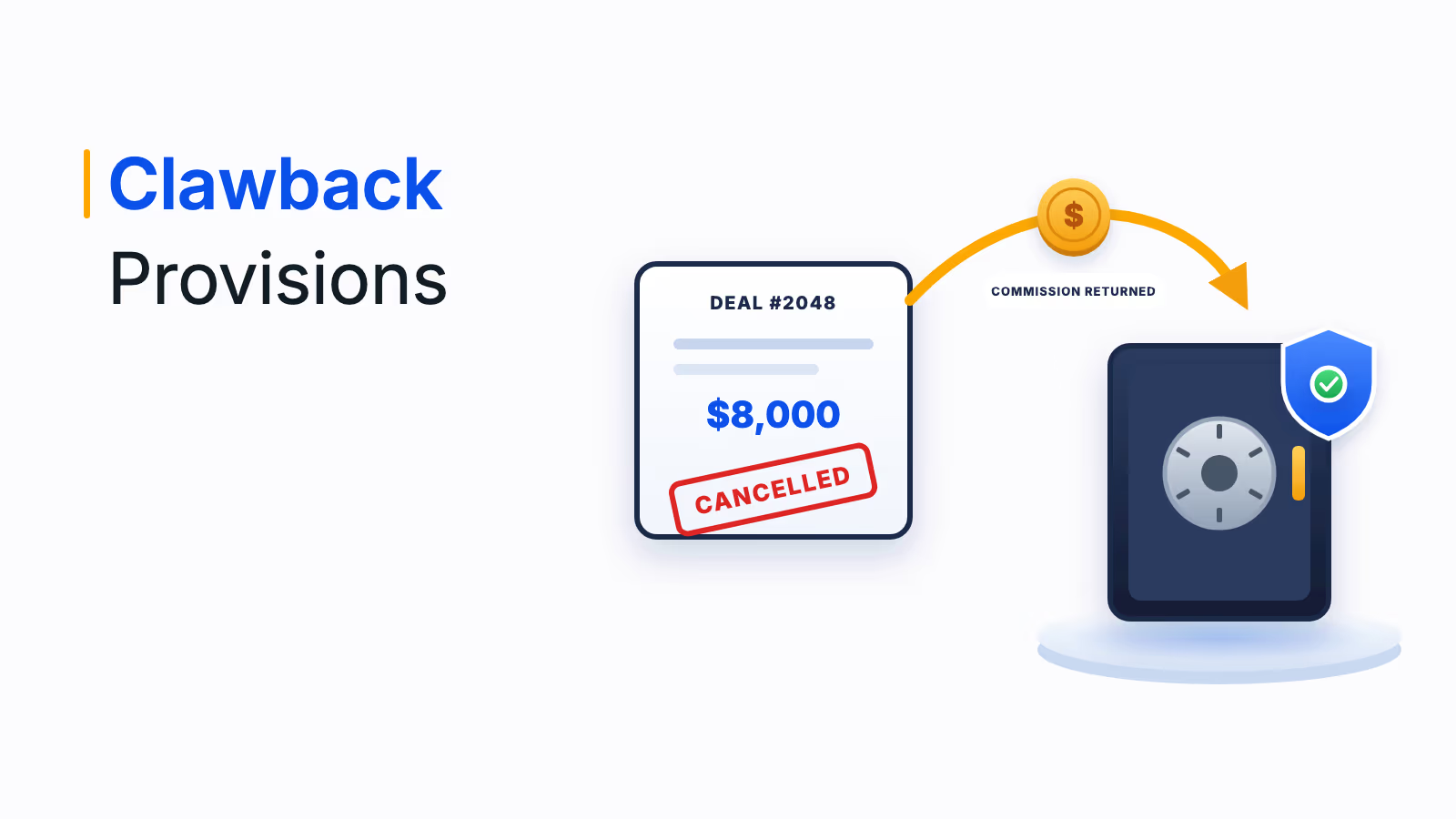
For an OEM with a captive finance or insurance arm, that makes F&I schemes a natural fit. Pay on penetration rate rather than raw count, so a consultant who attaches products to six of ten deals earns more than one who sells more cars with fewer attachments. Keep these schemes compliant: reward the rep for offering and explaining the product clearly, and track cancellations so commissions on reversed products can be clawed back.
Rating-based schemes
Rating-based schemes tie part of the payout to quality measures, such as customer satisfaction scores, mystery shopper results, product certification levels or manager ratings. They balance pure volume schemes by rewarding the behaviors that protect the brand over time. A simple approach is a multiplier: reps with a satisfaction score above the regional benchmark earn their full scheme payout, while those below it earn a reduced share until their score recovers.
Performance improvement plans
A performance improvement plan (PIP) scheme gives struggling reps a structured, rewarded path back to target instead of a warning letter. Set smaller weekly milestones, such as a set number of follow-up calls or test drives booked, pair them with coaching from the sales manager and pay a modest reward for each milestone hit.
| Scheme | What it rewards | Best used for |
|---|---|---|
| Sales contests | Rank on a single metric over a fixed window | Monthly or quarterly volume pushes |
| Commission plans | Units and gross, with slabs and accelerators | The stable base of every rep's pay |
| SPIFFs | One action in a short window | Aged stock, demo cars, quarter-end pushes |
| Product-specific schemes | Sales of priority models or trims | EV launches and model mix |
| F&I product schemes | Finance, insurance and protection attachment | Captive finance and insurance growth |
| Rating-based schemes | Satisfaction, certification and quality scores | Protecting the customer experience |
| Performance improvement plans | Weekly milestones toward target | Reps who are new or behind plan |
Run every dealer scheme from one platform
Design contests, SPIFFs and product schemes, show reps live earnings and pay them fast with Empuls Sales Incentives.
Talk to our ExpertTrusted by 5,000+ companies
Gamifying the dealer sales floor
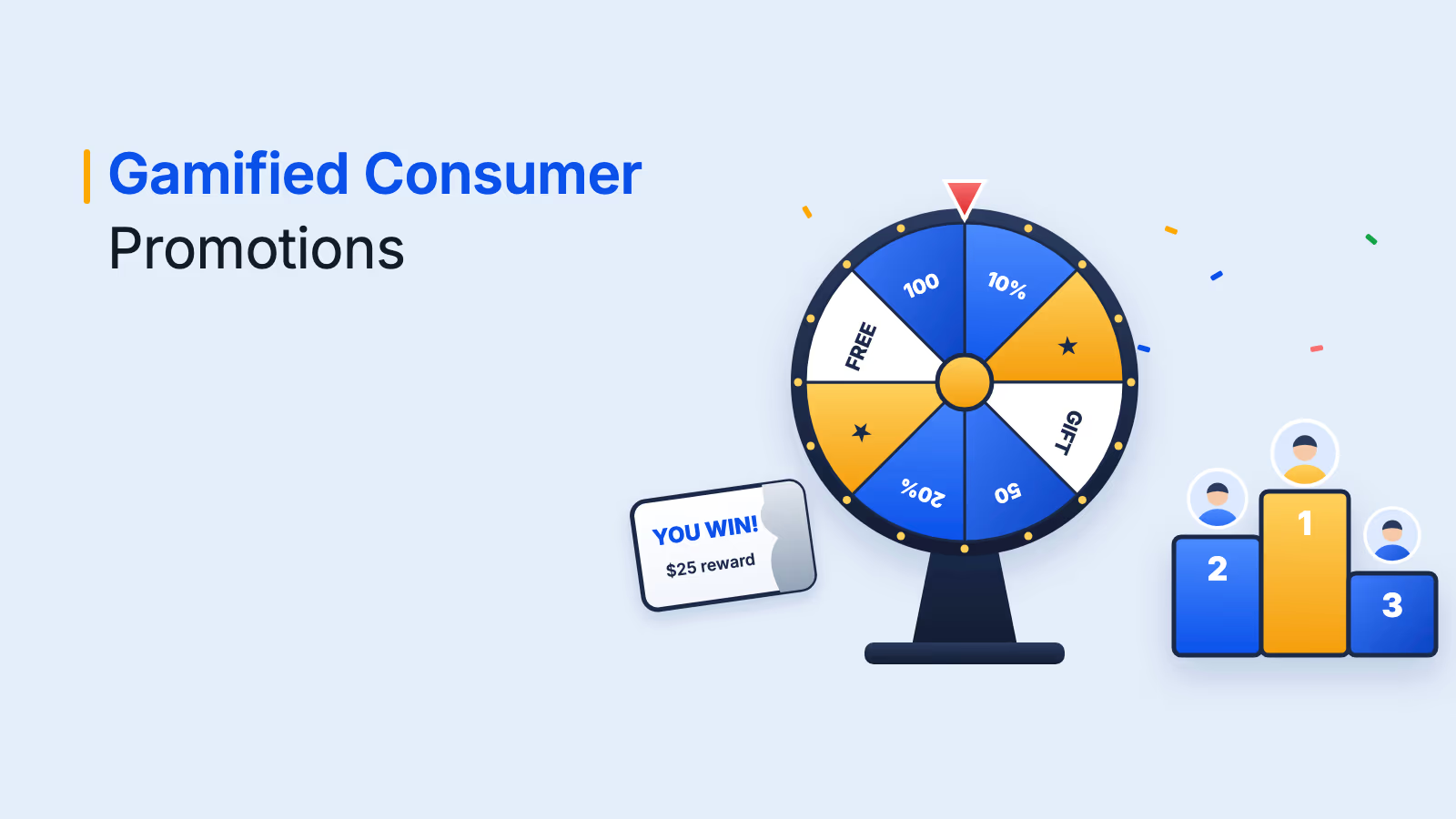
Dealer sales team gamification turns the incentive plan into something reps can see and chase every day, using live scorecards, milestones, leaderboards and earnings calculators. Gamification does not replace commission, it makes the commission plan visible while there is still time to change the outcome.
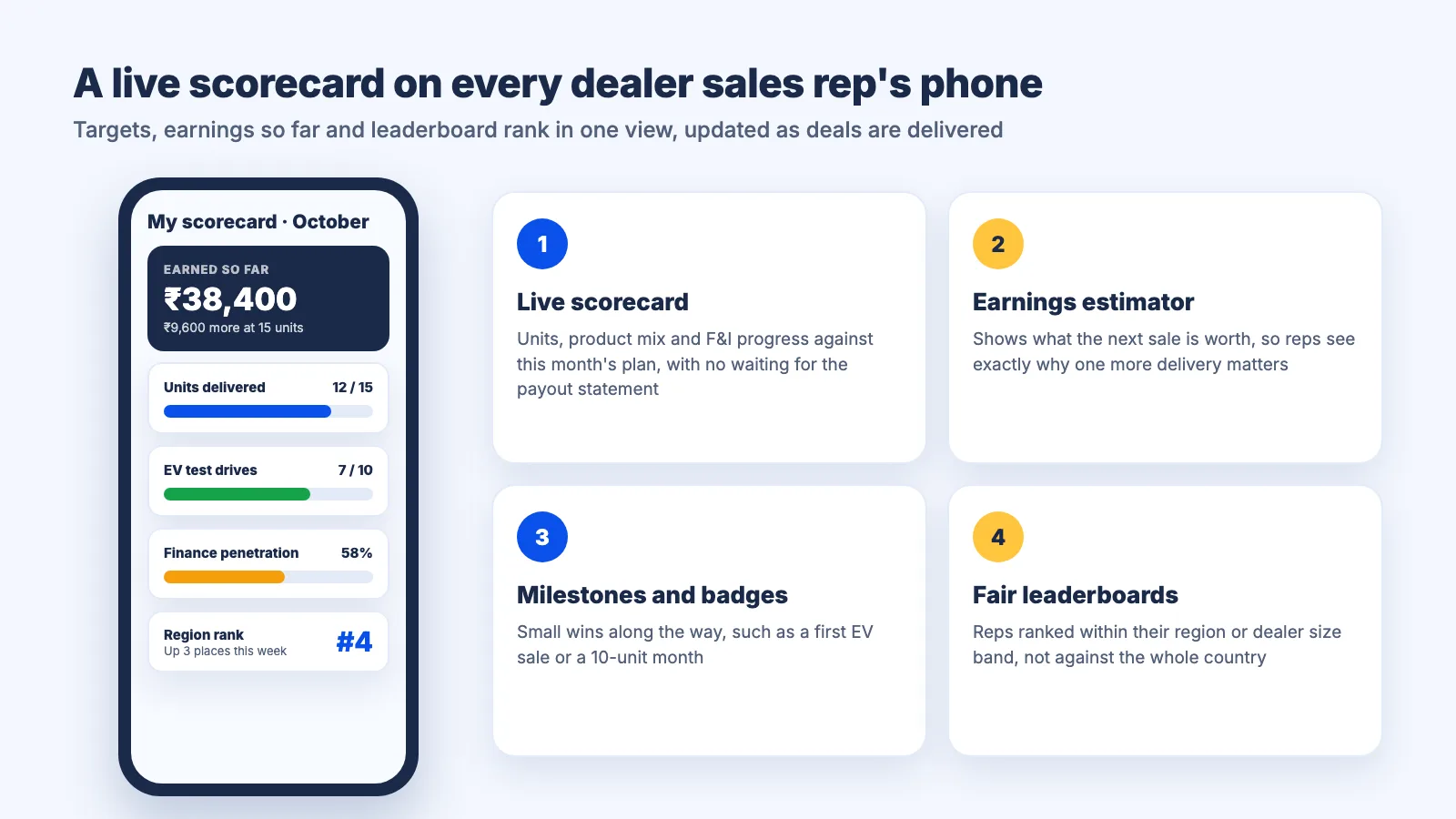
Live scorecards: Every consultant should see their units, gross, F&I attachment and scheme progress against target, updated as deals close, on their phone. A scorecard answers the question reps ask most: how am I doing right now?
Milestones: Break a monthly target into steps, such as the first five deliveries, the first EV sold or the first F&I penetration slab reached, and celebrate each one. Milestones give a new hire an early win and give the middle of the team something realistic to aim for.
Leaderboards: Rank reps fairly, within the same dealer, region or dealer size band, so a consultant at a small rural showroom is not measured against a flagship city store. Show the top three, but also show each rep the person just above them; the next rank up is more motivating than the overall leader.
Earnings calculators: Let reps model what one more sale, one more F&I product or one more EV would add to this month's payout. When a consultant can see that two more deliveries will move them into a higher slab, the incentive starts shaping behavior on the floor.
The sales gamification guide explains the psychology behind these mechanics and how to avoid leaderboards that demotivate the people at the bottom.
AI nudges at the right moment
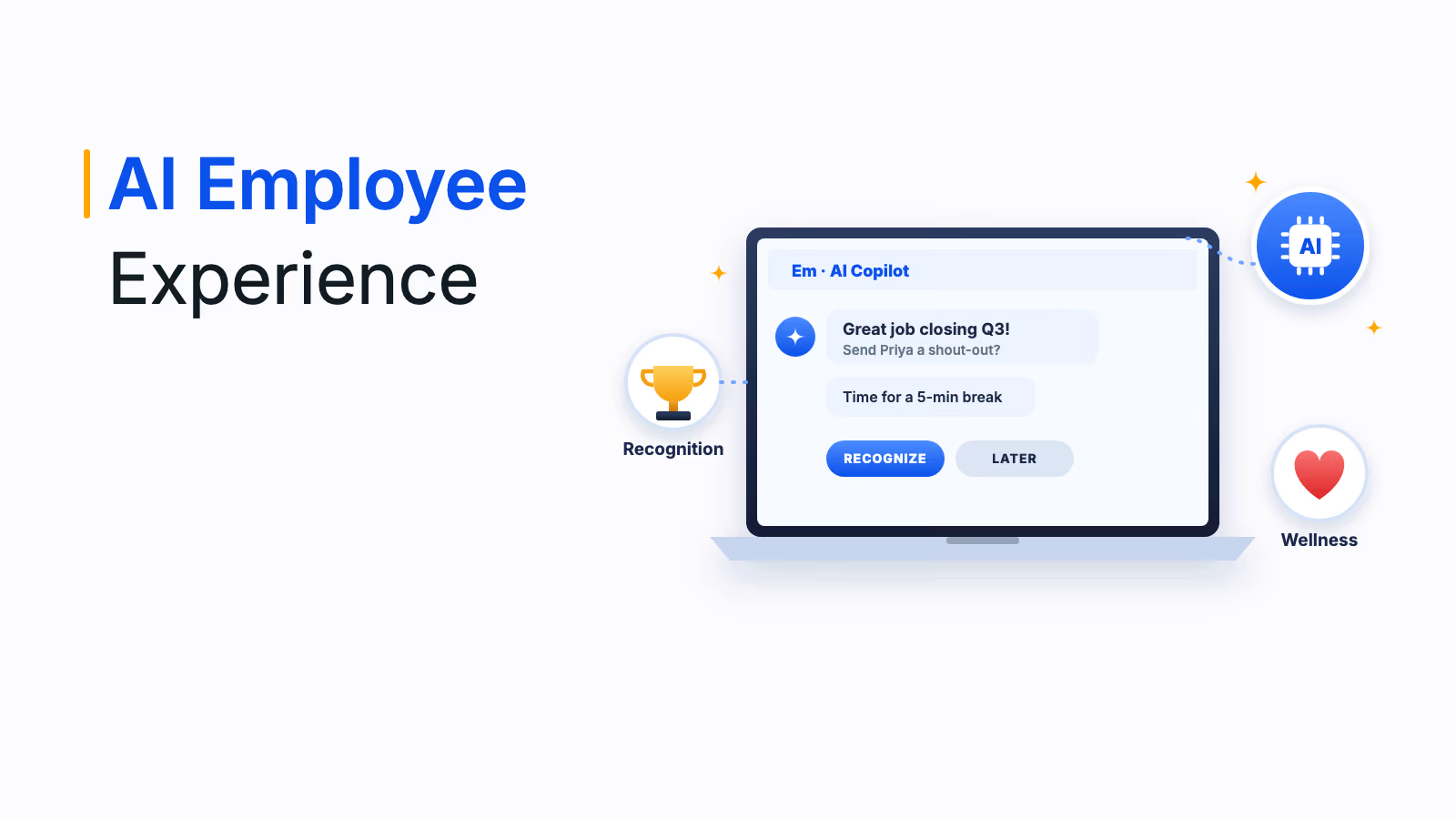
AI nudges are short, personalized prompts that tell a rep what to do next, based on their performance, the time left in a cycle or their recent activity. They close the gap between the incentive plan and daily behavior by reaching the rep when a small action will make a difference.
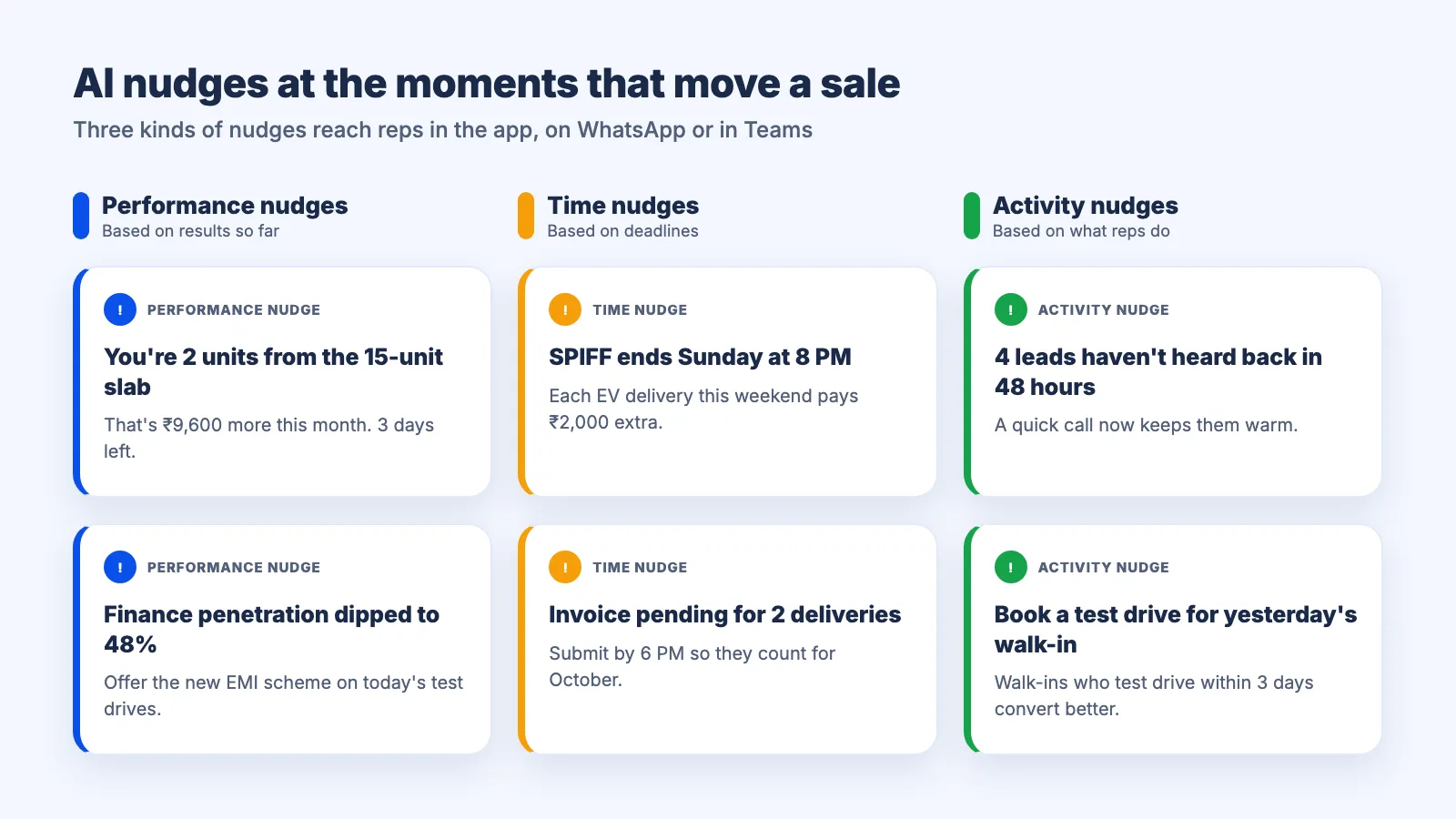
Performance-based nudges: These react to KPIs, for example telling a consultant they are two deliveries away from the next slab or that their F&I attachment rate has dropped below the regional average this week.
Time-based nudges: These remind reps of deadlines that affect their pay, such as a SPIFF closing on Friday, a contest entering its final week or a delivery that must be registered before month end to count.
Activity-based nudges: These encourage the actions that lead to sales, such as following up on yesterday's test drives, calling a lead that has gone quiet or booking a delivery appointment.
The best nudges are specific and few: one useful message about money the rep can still earn beats a stream of generic reminders.
Automating commission and payouts across dealers
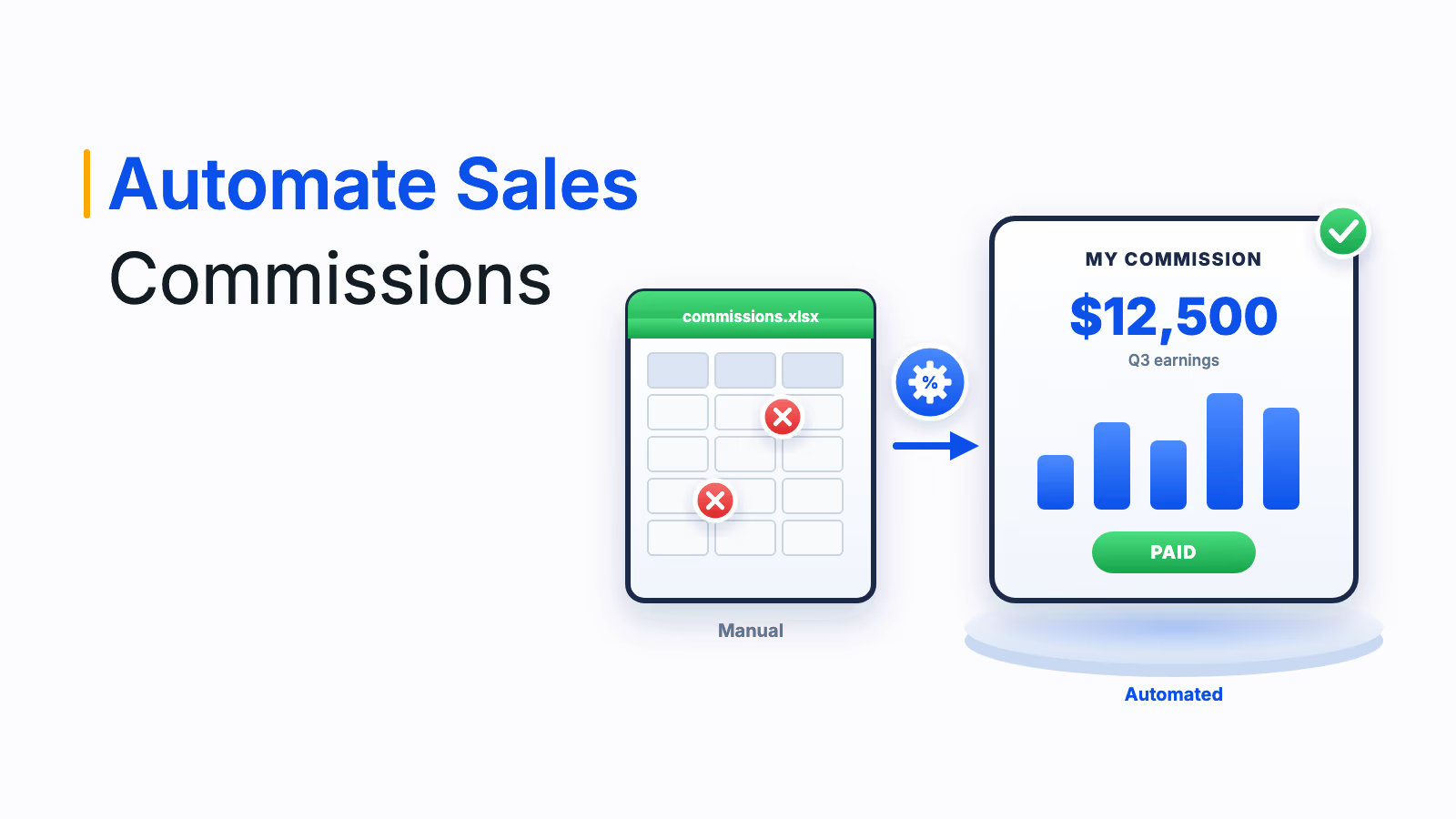
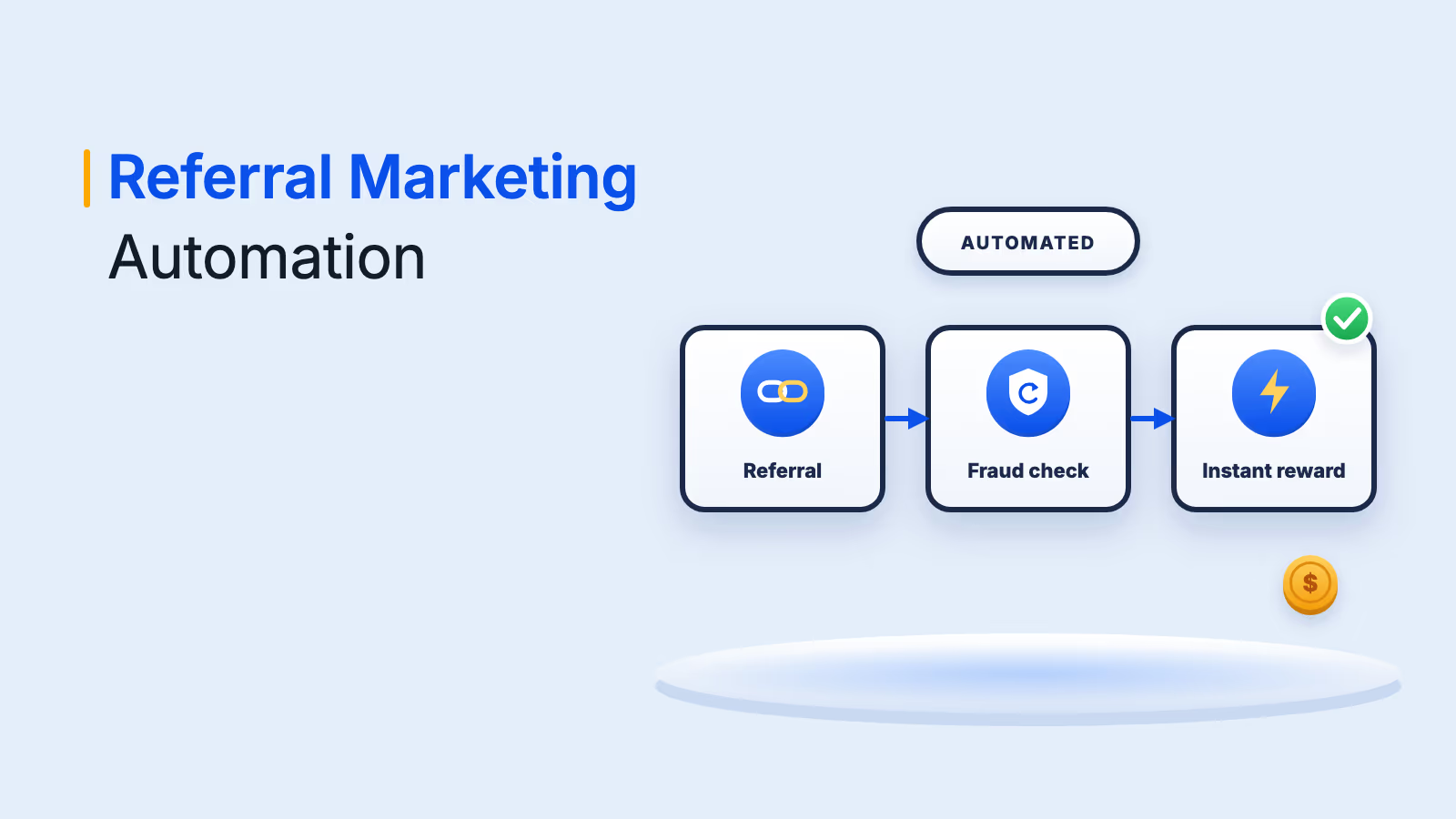
Automating OEM dealer incentive programs means connecting the brand's CRM and dealer sales data to one calculation engine, then running confirmation, invoicing and redemption through the same platform. Automation removes the spreadsheets and email chains that make payouts slow, opaque and error-prone, and gives every party one version of the numbers.
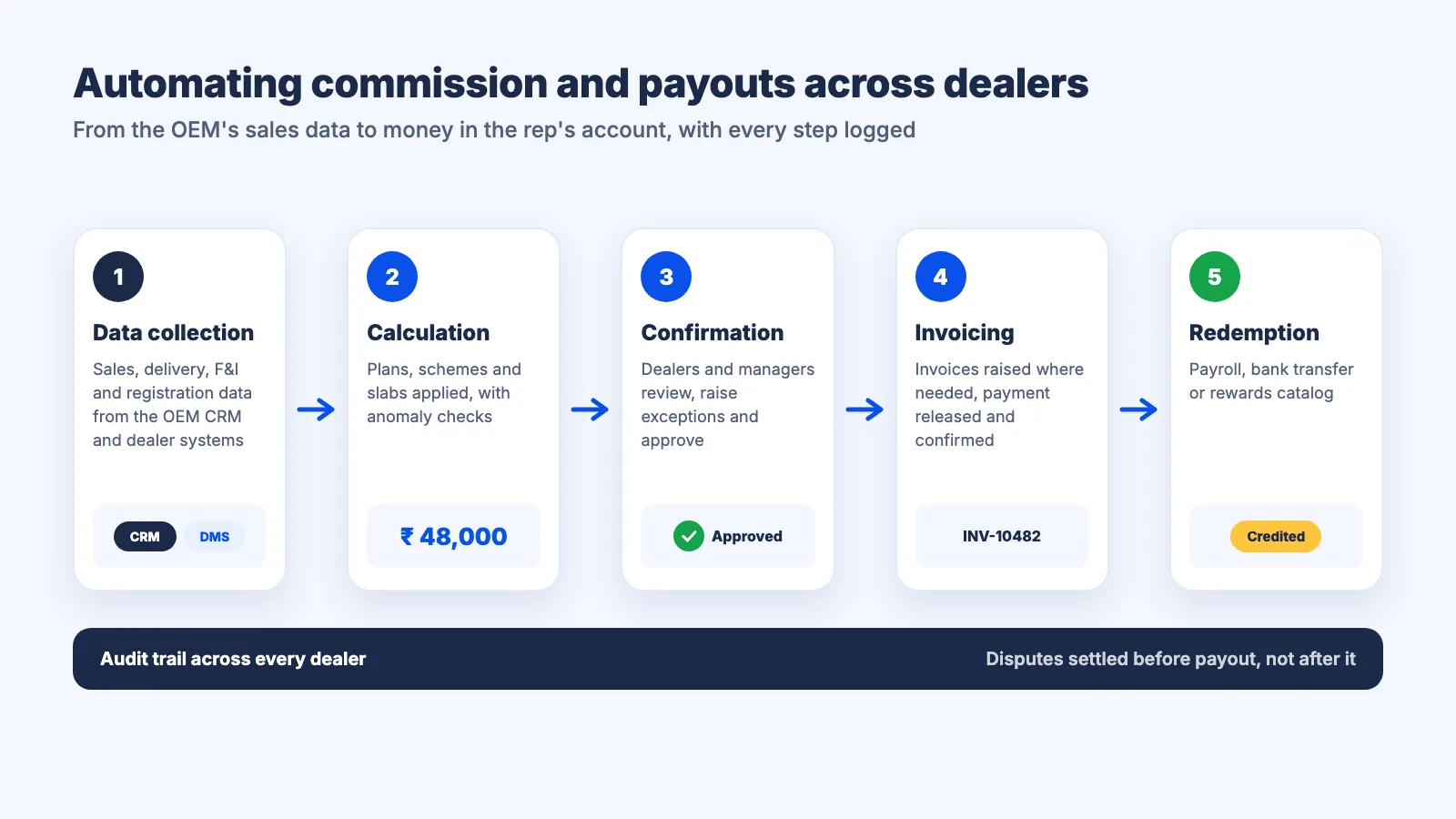
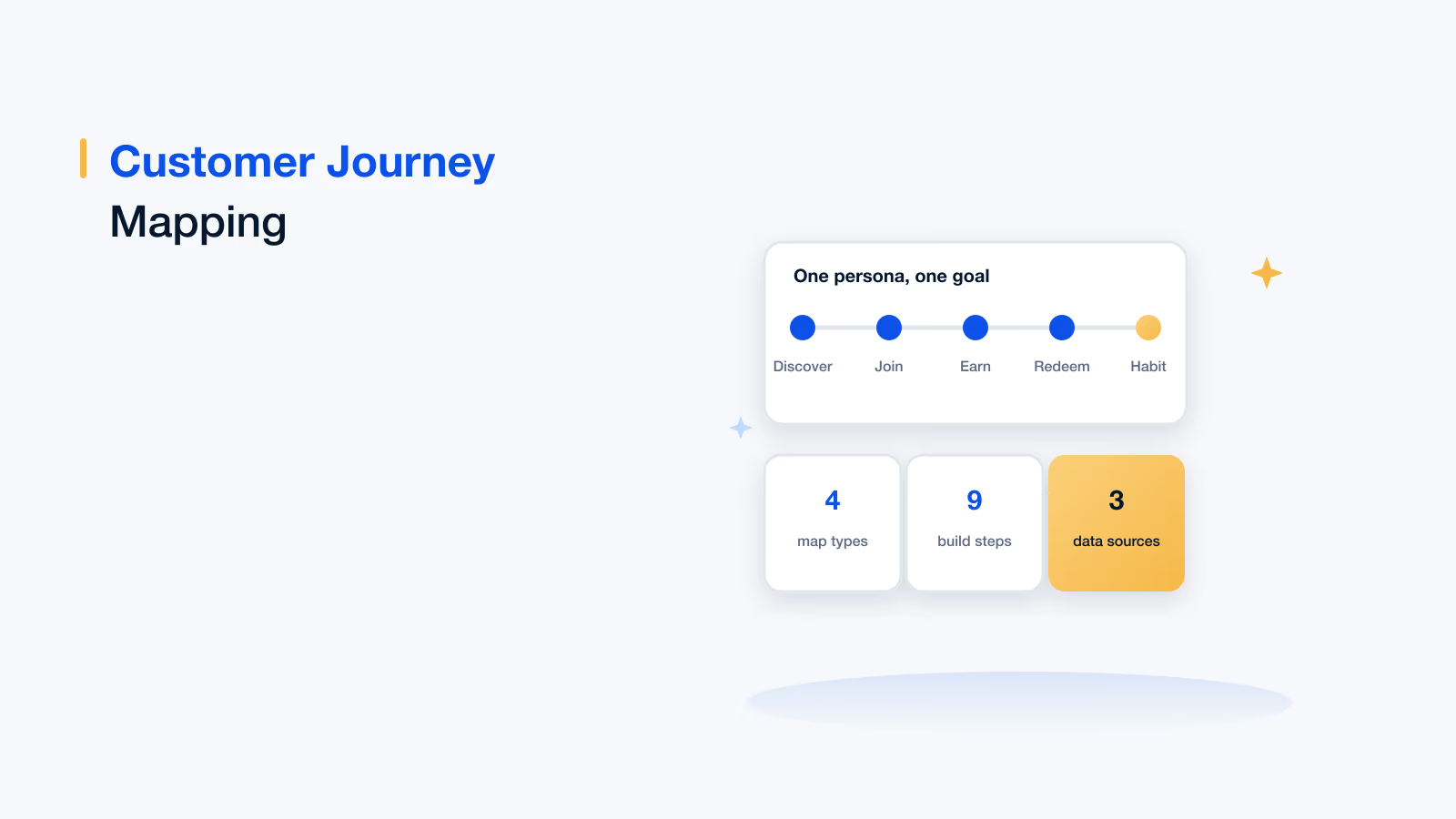
A typical automated flow across a dealer network looks like this:
- Data collection: Sales, retail delivery, F&I and registration data flows in from the OEM's CRM and dealer management systems for every dealer in the network.
- Calculation: The engine applies each plan, scheme and slab to that data and computes the value earned by every rep and dealer, with anomaly checks before anything is approved.
- Calculation confirmation: Dealers and managers review the computed values, raise exceptions and approve them, so disputes are settled before payout rather than after it.
- Invoicing and payment confirmation: Approved amounts generate invoices where needed, payment is released and confirmed, and every step is logged for audit.
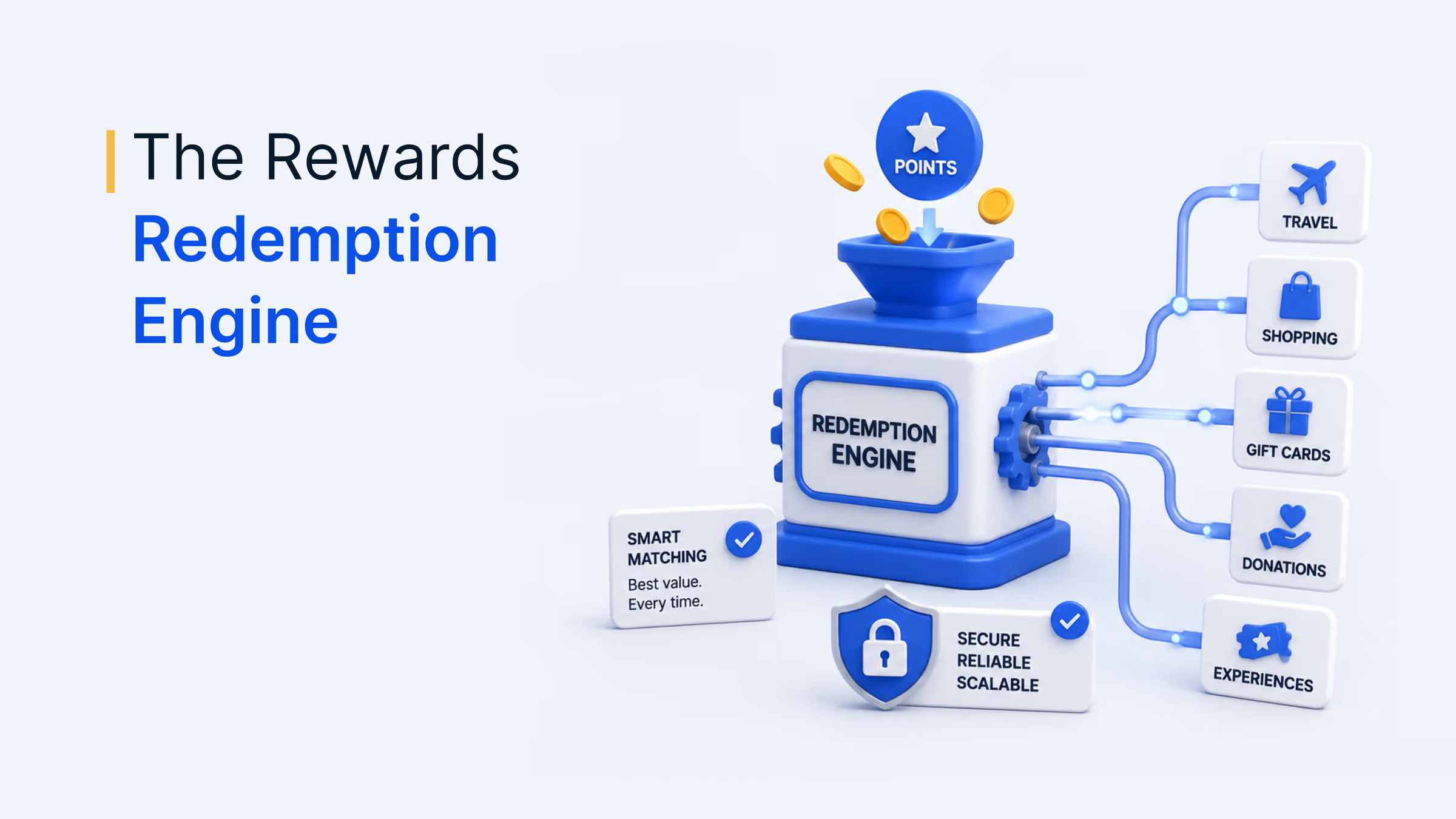
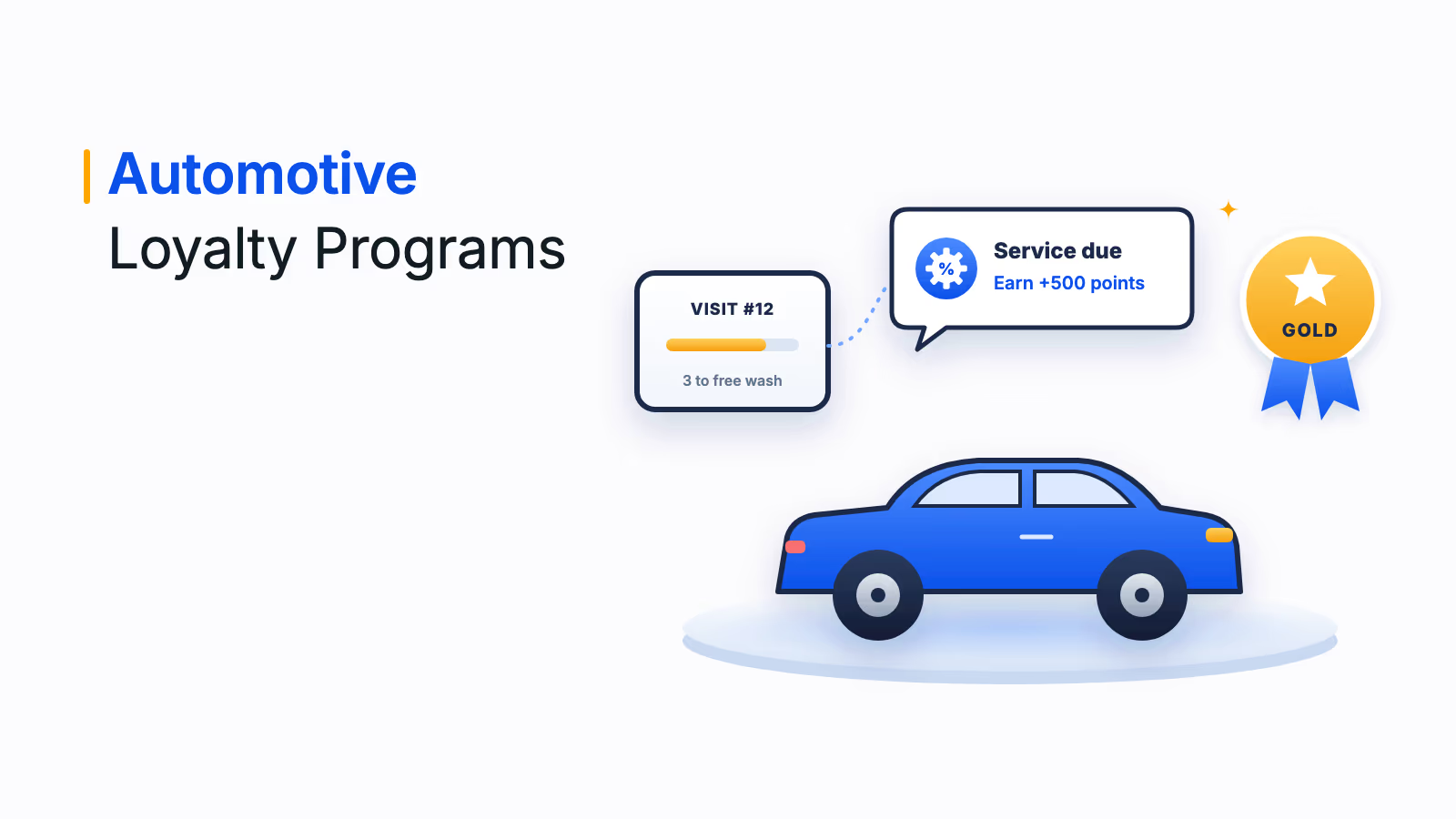
- Redemption: Reps see the credited value and receive it by payroll or bank transfer, or redeem it from a rewards catalog of gift cards, merchandise and experiences.
The payoff is speed and trust. When a rep can trace every rupee or dollar back to the deals that earned it, disputes fall and finance teams stop reconciling dealer spreadsheets by hand. Rewards also work well for one-off schemes and contest prizes; our Plum guide to digital rewards for automobile sales explains how brands use them across the sales channel.
A 180-day rollout plan for an OEM dealer incentive program
A dealer incentive program can go from launch to measurable results in about six months if you roll it out in stages: launch with ready materials, configure schemes, drive adoption, add nudges and feedback, then optimize with data. The plan below assumes a pilot region first, then the full network.
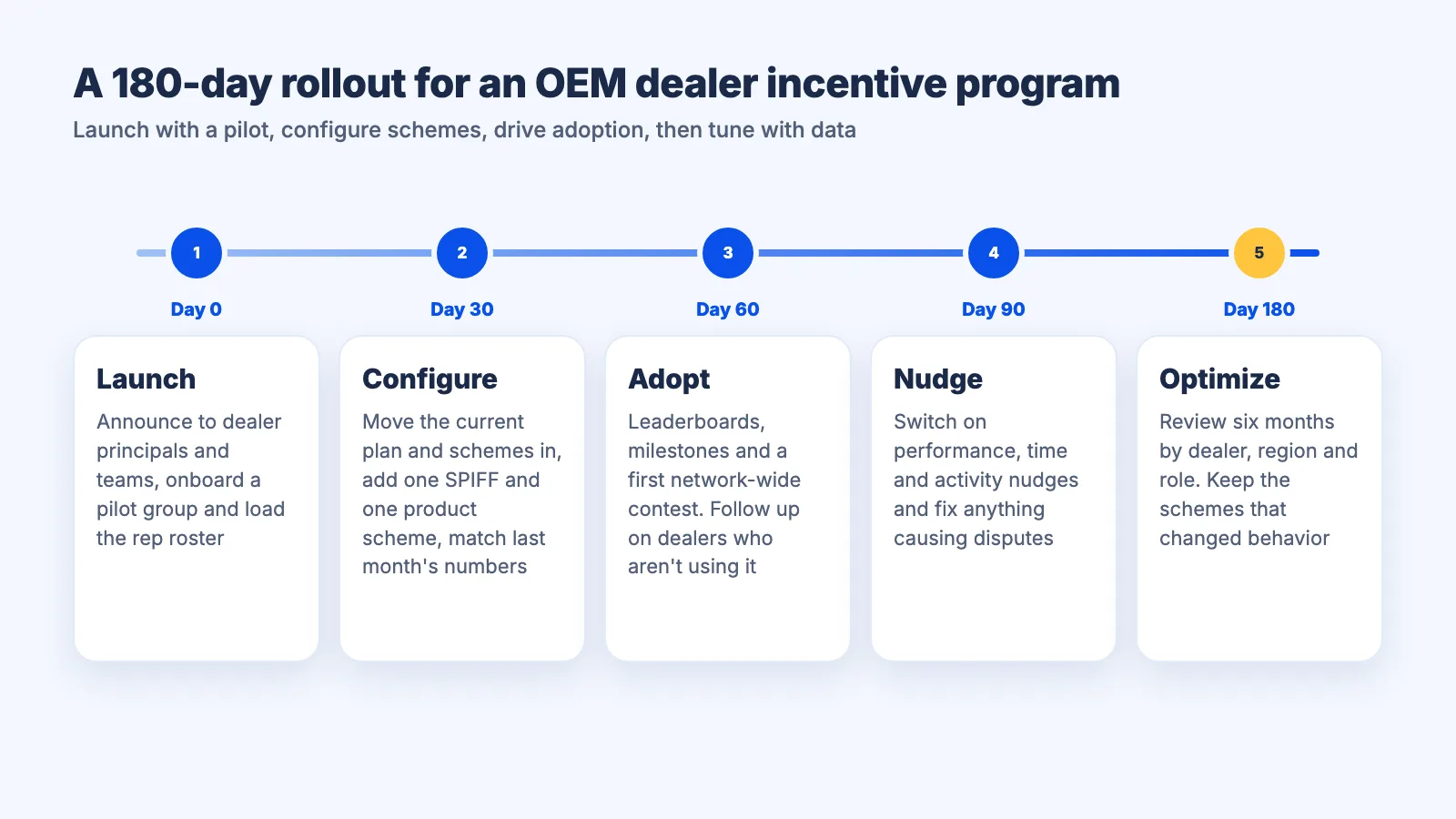
- Day 0, launch: Announce the program to dealer principals and sales teams with ready-to-use collateral, digitized scheme documents and in-app promotions. Onboard a pilot group of dealers, load the rep roster and show every consultant their first live scorecard.
- Day 30, scheme configuration: Move the existing commission plan and current schemes into the platform, add one SPIFF and one product scheme tied to this quarter's priorities, and confirm calculations match last month's manual numbers before going live.
- Day 60, adoption: Drive daily use with leaderboards, milestones and a first network-wide contest. Track how many reps log in each week, follow up with dealers whose teams are not using the app and ask sales managers to review scorecards in morning huddles.
- Day 90, nudges and feedback: Switch on performance, time and activity nudges, collect feedback from reps and managers on which schemes feel fair and clear, and fix anything that is causing disputes. Extend the program to the next set of dealers.
- Day 180, insights and optimization: Review six months of data by dealer, region and role. Retire schemes that did not change behavior, increase budget on the ones that did, and give reps a full history of their performance so they can track progress on the go.
What to measure in a dealership sales incentive program
Measure a dealership sales incentive program on three things: whether reps use it, whether it changes what they sell and whether payouts are fast and accurate. Track the metrics below by dealer, region and role, and compare pilot dealers against the rest of the network where you can.
| Metric | What it tells you | How to read it |
|---|---|---|
| Program adoption | Share of eligible reps who log in each week | Low adoption means reps do not see the program as worth checking |
| Incentive qualifiers | Share of reps who hit at least one scheme target | A rising share shows targets are reachable for the middle of the team |
| Retail deliveries per rep | Volume impact of the base plan and contests | Compare against the same period last year and against non-pilot dealers |
| Model mix and EV share | Whether product schemes shift what reps sell | Track priority models as a share of each dealer's deliveries |
| F&I penetration | Attachment of finance, insurance and protection products | Watch cancellations as well as sales to keep schemes compliant |
| Time to payout | Days from deal close to money in the rep's hands | Shorter cycles strengthen the link between effort and reward |
| Calculation disputes | Number of payout queries raised per cycle | Falling disputes signal trust in the numbers |
| Sales staff turnover | Share of reps leaving within 12 months | Compare with your own baseline, since benchmarks vary by market |
40%
rate of sales staff turnover at dealerships
CDK Global, 2025
56%
of dealerships struggle with sales associate turnover
Hireology, 2025
$1,995
average F&I profit per vehicle retailed, Q4 2025
StoneEagle, 2026
Dealer sales workforce benchmarks
How Empuls Sales Incentives supports OEM dealer programs
Empuls Sales Incentives gives OEMs one platform to design dealer schemes, calculate them from real sales data, show reps their earnings live and pay them across every country they operate in. It is built for distributed sales networks, including channel partners, dealers, distributors and agents as well as employees.
- Plans and calculations: Build commission plans, SPIFFs, contests and product schemes in a no-code builder, calculate them from CRM, ERP and HRMS data, and trace every result back to the data and rules behind it. Native connectors cover Salesforce, HubSpot, Zoho CRM, Microsoft Dynamics, SAP Sales Cloud and more, with CSV uploads for dealer systems.
- Gamification: Live leaderboards scoped by team, region or plan, badges, streaks, milestone journeys and time-boxed SPIFFs and contests with their own rules and winners. Contest prizes pass through approvals, anomaly checks and the audit trail like any other payout.
- Rep app and AI nudges: Sales professionals get a KPI scorecard, earnings estimator, leaderboard and goal-aware nudges on how far the next slab is, in the app and on WhatsApp, Slack or Teams.
- Approvals and controls: Multi-level approvals, pre-payout anomaly checks, clawbacks for overpayments and a full audit trail of every plan change, calculation run and payout.
- Payouts: Disbursal through payroll, direct bank transfer, UPI or the Xoxoday rewards marketplace, in 50+ currencies across 150+ countries, with GST-compliant partner disbursal in India.
Two published results show what this looks like in dealer and automotive sales networks. Wonder Cement had region-specific schemes processed offline across 5,000+ dealers, with no live view of targets or earnings. Xoxoday was embedded into its existing dealer portal in about five weeks and now processes ₹400Mn in incentives every month, with 99% faster processing, 98% fewer calculation errors and 25% more incentive qualifiers. In automotive retail, CarDekho replaced 15 years of manual commission calculations and email reporting for 200+ sales users, and saw a 20% increase in incentive program adoption, an 18% increase in qualifiers and a 25% increase in incentive payouts in under 100 days.
Building a dealer sales team that sells for the brand
Automotive dealer sales incentives work when reps understand them, see progress daily and get paid quickly. Start with a clear base plan, add a small number of focused schemes for launches, model mix and F&I, make the whole program visible through scorecards and leaderboards, and automate the calculation and payout so trust builds month after month.
Book your Empuls demo
Frequently asked questions
A dealership sales incentive program rewards the people who sell vehicles at dealerships, such as sales consultants, F&I managers and showroom managers, for hitting targets the dealer or the OEM sets. It usually combines a base commission plan with contests, SPIFFs and product schemes, and pays out through payroll, bank transfer or rewards.
OEMs fund brand-level schemes on top of the dealer's own pay plan. Common options are per-unit bonuses for priority models, contests between dealerships, short SPIFFs for aged stock or launches, finance and insurance attachment schemes and rating-based rewards for customer satisfaction. Paying these quickly and visibly is what makes them change behavior on the showroom floor.
Effective car sales SPIFFs target one action in a short window. Examples include a fixed bonus for each demo or aged vehicle sold before quarter end, extra pay for every extended warranty or service contract attached this week, a reward for each test drive on a new launch and a bonus for the first EV a new consultant delivers.
Gamification makes the incentive plan visible every day. Live scorecards show progress against target, milestones give new hires early wins, fair leaderboards compare reps with peers at similar dealers and earnings calculators show what one more sale is worth. Reps can act on that information while there is still time left in the cycle.
Dealership sales roles combine long hours, weekend work, variable pay and high pressure. CDK Global's 2025 research found dealerships lost an average of 3.3 salespeople a year against a sales head count of 8.2, and about a third of staff were considering leaving within six months. Unclear or delayed incentive payouts add to that frustration.
A staged rollout takes about six months to show clear results. Launch to a pilot group with ready materials, configure plans and schemes in the first month, drive adoption with contests by month two, add AI nudges and feedback by month three, then extend to the full dealer network and optimize schemes using six months of data.