Key Takeaways
Workplace fitness challenges are short, goal-based activities like step, distance, streak and hydration challenges that reward employees for building healthy habits together.
Most challenges fizzle because goals suit only the already-fit, logging is manual or momentum is never renewed, so design for every fitness level from the start.
A simple points system that rewards joining, daily goals, streaks and completion keeps far more people engaged than a single grand prize.
Automatic wearable and phone sync, fair group leaderboards and fast, choice-based rewards are what keep participation high past week one.
Keep challenges voluntary, inclusive and privacy-safe, and measure participation, completion and repeat participation before anything else.
Workplace fitness challenges are time-bound, goal-based activities, such as a step challenge, a distance month or a hydration streak, that get employees moving together and reward them for showing up. The ones that work share a simple recipe: goals every fitness level can reach, a clear points system, fair leaderboards, automatic tracking from the phone or wearable people already own, and rewards that land the moment a goal is hit.
This guide covers why fitness challenges work and why most of them fizzle, more than a dozen challenge ideas, a ready-to-use points table, how to keep leaderboards fair, wearable sync, rewards, inclusion and privacy, a 30-day plan and the metrics that tell you whether it worked. It is part of a broader approach to employee wellbeing programs, and it is the part employees tend to remember.
Why workplace fitness challenges work, and why most fizzle
Workplace fitness challenges work because they turn a vague intention, "I should move more", into a specific goal with a deadline, a team and a reward. They fizzle when the goal suits only the already-fit, logging takes effort, or the energy of launch week is never renewed.
The need is real. The World Health Organization reports that 31% of adults worldwide, about 1.8 billion people, did not meet its recommended minimum of 150 minutes of moderate-intensity activity a week in 2022. Most of those people spend a large part of their week at work, often sitting.
Employers already offer wellness support, but uptake is the weak link. A May 2024 analysis by the Integrated Benefits Institute found that 86.2% of employers say they offer health and wellness programs, yet only 49.8% of employees are aware of them. Among employees who do not take part, the top reasons were lack of time (60.9%), limited interest in the offerings (36.9%) and lack of awareness or access (34.2%).
31%
of adults worldwide do not meet WHO physical activity guidelines
WHO, 2022 data
86.2%
of employers say they offer health and wellness programs
Integrated Benefits Institute, 2024
49.8%
of employees are aware of their employer's programs
Integrated Benefits Institute, 2024
29%
of employees satisfied with corporate wellness programs in 2025, down from 41% in 2024
Wellhub, 2026 report
Physical activity and wellness program benchmarks
Satisfaction is slipping too. Wellhub's State of Work-Life Wellness 2026 found that satisfaction with corporate wellness programs fell from 41% in 2024 to 29% in 2025, and 51% of employees said lack of time stops them from exercising. A well-designed corporate wellness challenge answers each of those barriers: it fits into the day (a walk, a stretch, a glass of water), it is visible on the channels people already use, and it is short enough to feel doable.
Incentives help, with a caveat. A 2024 systematic review in the Journal of Occupational Health found that financial incentives increased employee physical activity in four of the six studies it included, particularly in the short term, while long-term results were mixed. The lesson for HR teams is to treat rewards as the spark, then use streaks, social recognition and repeat challenges to turn the spark into a habit.
Workplace fitness challenge ideas employees actually join
The best challenge ideas are simple to explain in one sentence, easy to track automatically and open to every fitness level. Mix one movement challenge with one habit or mindfulness challenge, and rotate formats every month so the program stays fresh. Here are proven employee step challenge ideas and more.
Step challenge
The classic stepathon asks everyone to hit a daily step goal over three to four weeks. Instead of a single 10,000-step target, offer tiers (for example 4,000, 7,000 and 10,000 steps a day) so a new parent, a frontline worker on their feet all day and a marathon runner can all win something. Steps sync from any phone, so nobody needs a new device.
Distance month
Set a monthly distance goal, such as 50 km in a month, and let people walk, run, cycle or swim their way there. Converting activities to a common distance keeps it open to people who cannot run. A team version, where each squad tries to cover the distance between two office cities, adds a nice story to the leaderboard.
Streak challenge
A streak challenge rewards consistency rather than intensity: 20 minutes of activity a day, five days a week, for four weeks. Streaks are among the most effective mechanics because missing a day feels like losing something, and the goal is the same for everyone regardless of fitness level.
Team relay
Teams of three to ten pass a virtual baton, each member contributing a leg of activity toward a shared total. Relays build cross-functional connection and give quieter employees a reason to take part, because the team is counting on them. Score teams on the average per member, not the total, so team size does not decide the winner.
Mindfulness minutes
Not every wellness challenge has to be about sweat. Ask employees to log 10 minutes a day of meditation, breathing or a short walk without their phone. Mindfulness challenges reach people who would never sign up for a step challenge and support mental wellbeing, which ranks high in the employee wellness trends for 2026.
Hydration challenge
Drink eight glasses of water a day, logged with a quick tap after timed reminders. It is low effort, works for remote and on-site teams alike, and is an easy first challenge for a team that has never done one.
More ideas for office, remote and hybrid teams
- Take the stairs: Track flights climbed instead of taking the lift, a simple on-site challenge that pairs well with a step goal.
- Deskercise: Five to ten minutes of chair squats, seated leg lifts and stretches before the first meeting of the day.
- Walking meetings: Encourage one-to-ones and small catch-ups on foot, outdoors or around the office.
- Plank, squat or push-up ladder: Start small and add a few seconds or reps each day over a month.
- Sleep streak: Reward consistent sleep hours, with short tips on healthy sleep habits shared through the challenge.
- Fitness bingo: A card of mixed activities (a yoga class, a 5 km walk, a healthy lunch, a stretch break) that teams complete together.
- Sports day and Yoga Day: One-off events such as a relay race day or an office-wide yoga session on International Yoga Day (21 June) to kick off or close a challenge.
- Photo challenge: Share pictures of a weekend hike, a home workout or a healthy meal in a team group to keep conversation going.
Run fitness challenges people finish
Sync every wearable, run fair leaderboards and pay out rewards automatically with Empuls.
Talk to our ExpertTrusted by 5,000+ companies
Building a wellness challenge points system
A wellness challenge points system turns different activities into one currency, so a walker, a yogi and a cyclist can compete fairly and redeem the same rewards. The key is to reward consistency and completion more than raw performance, and to keep the table short enough to fit on one screen.
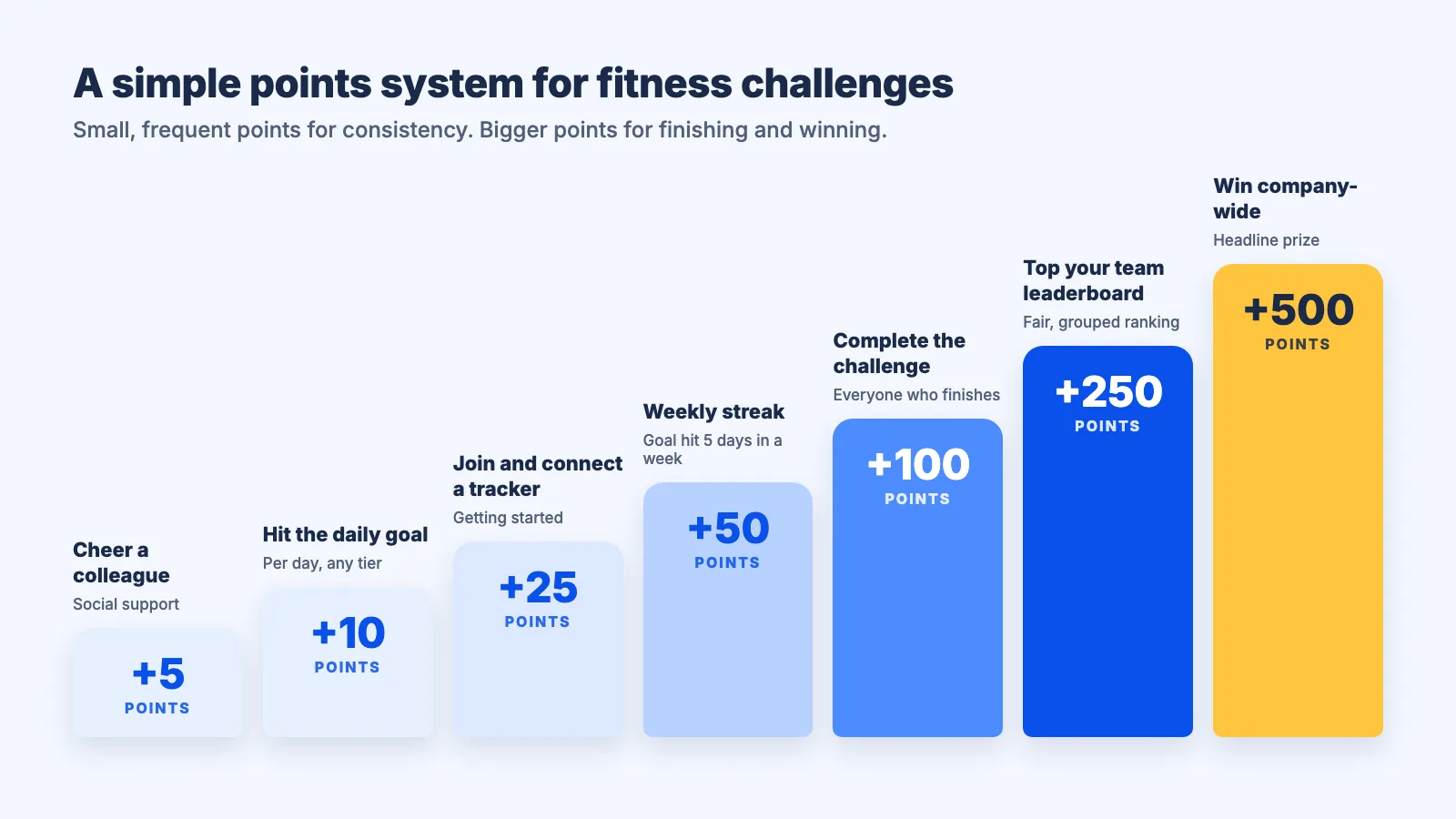
Use this table as a starting point and adjust the values to your budget. The bigger awards for winning stay meaningful, but most points come from showing up regularly, which is the behavior you actually want.
| Action | Points | Why it matters |
|---|---|---|
| Join a challenge and connect a tracker | 25 | Removes the first barrier and rewards getting started |
| Hit the daily goal (any tier) | 10 per day | Rewards every fitness level, not just the fastest |
| Weekly streak (goal hit five days in a week) | 50 | Builds the habit through consistency |
| Complete a challenge | 100 | Gives everyone who finishes a clear win |
| Top the team or department leaderboard | 250 | Keeps friendly competition alive within fair groups |
| Win a company-wide challenge | 500 | A headline prize for the top individual or team |
| Cheer or encourage a colleague | 5 | Rewards the social support that keeps teams going |
Two design rules keep the system healthy. First, cap daily points so nobody is pushed to overdo it, for example by counting steps only up to the top tier. Second, publish the table before the challenge starts and do not change it midway, because fairness is what keeps people trusting the leaderboard. If you want to go deeper on badges, levels and point mechanics, our guide to employee gamification covers the wider playbook.
Leaderboards and tiers that stay fair for every fitness level
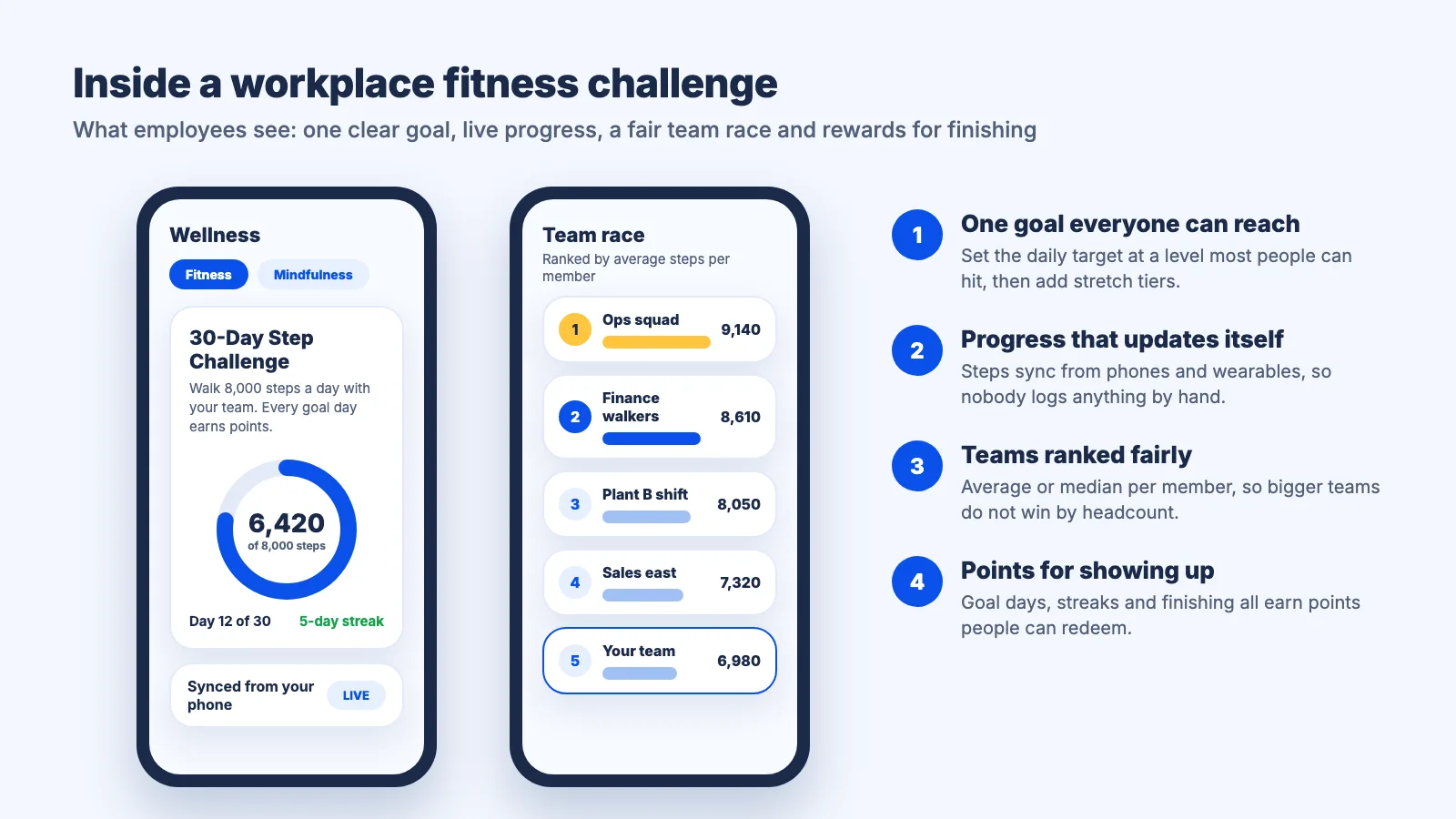
Fair leaderboards compare people with peers on a level playing field and celebrate progress as well as rank. A single company-wide ranking of total steps tends to crown the same few athletes every month, which quietly tells everyone else not to bother.
- Scope boards to groups: Run leaderboards per team, department, location or time zone so people compete with colleagues they know, then add one company-wide board for the headline prize.
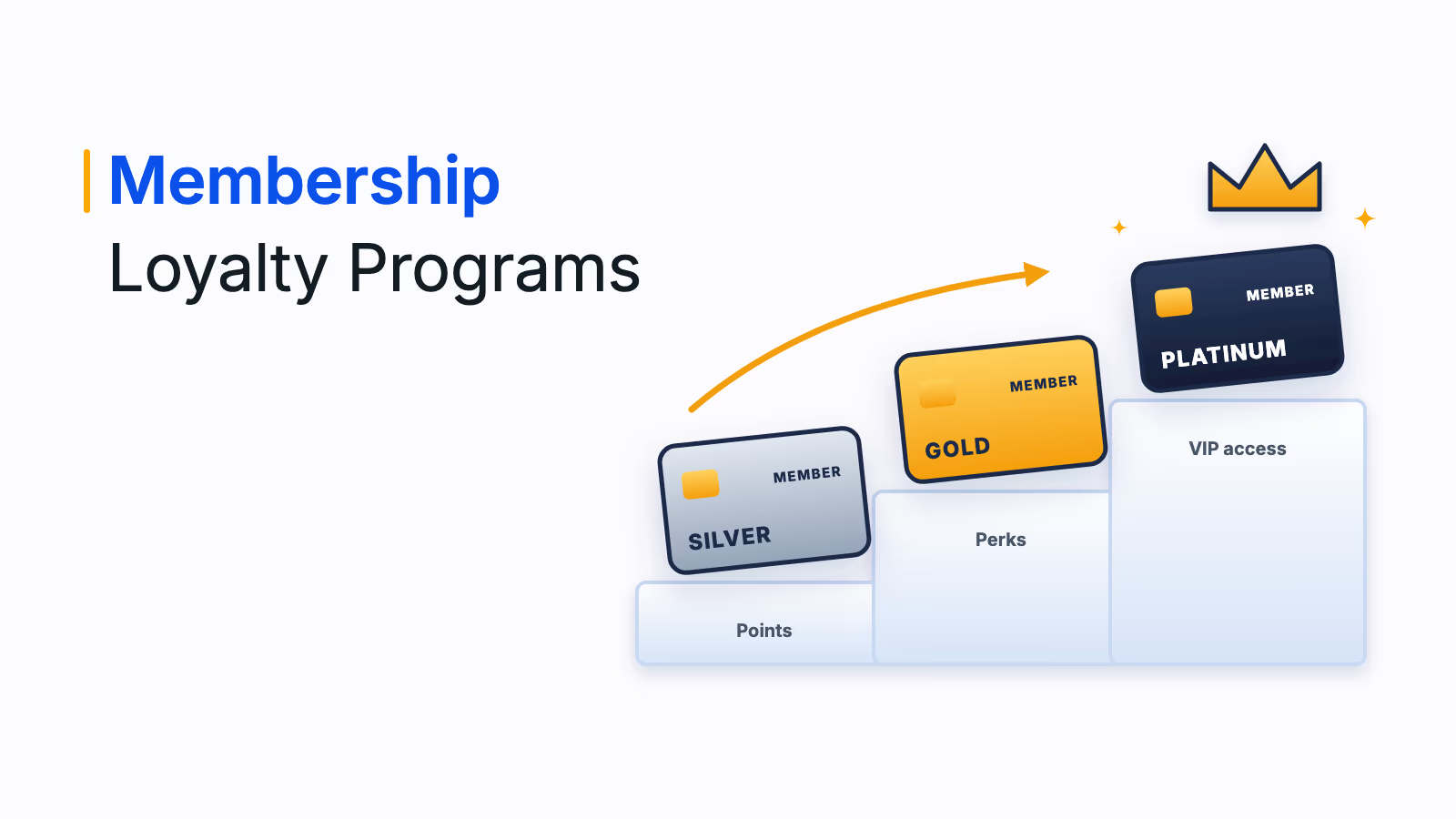
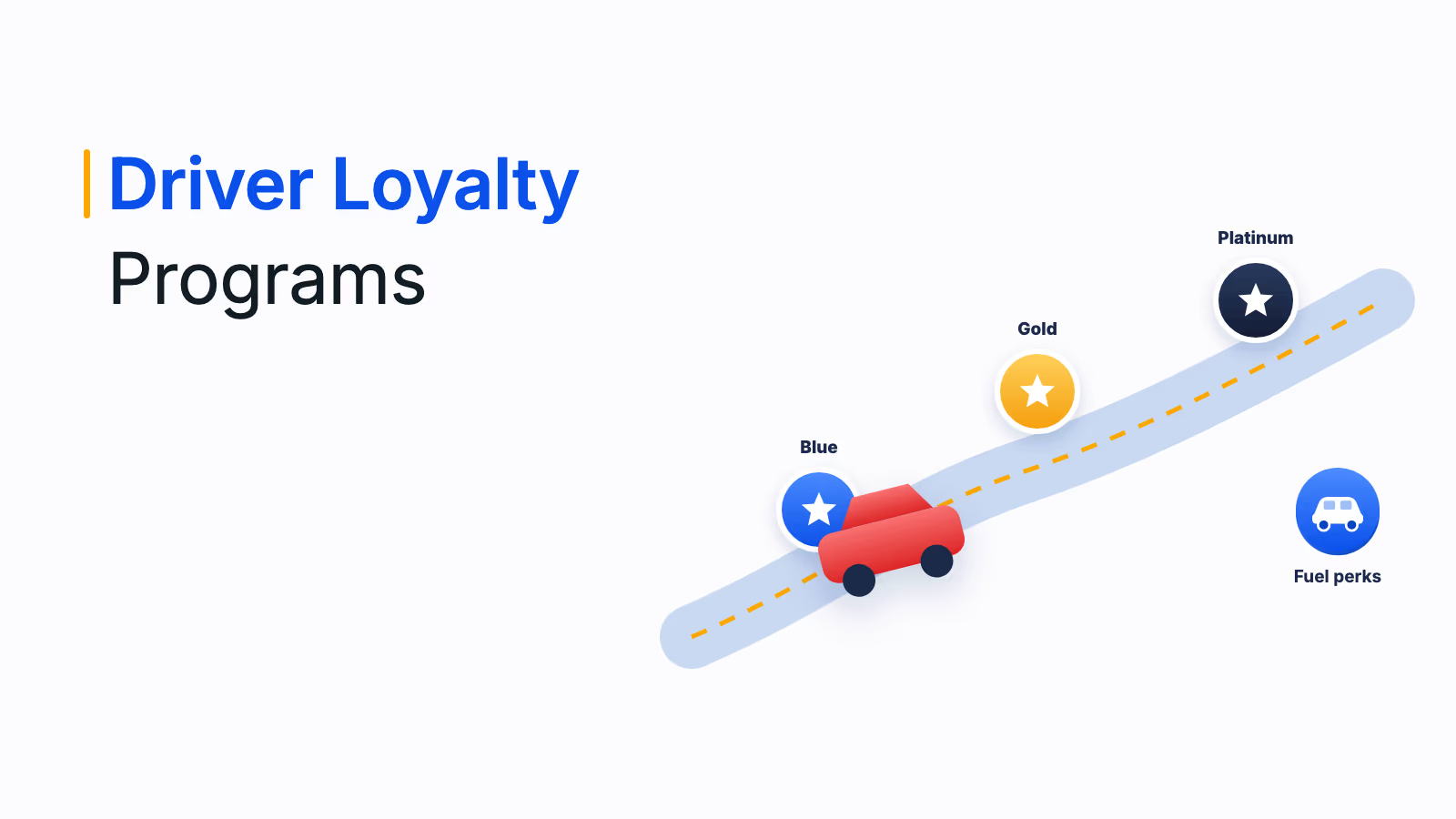
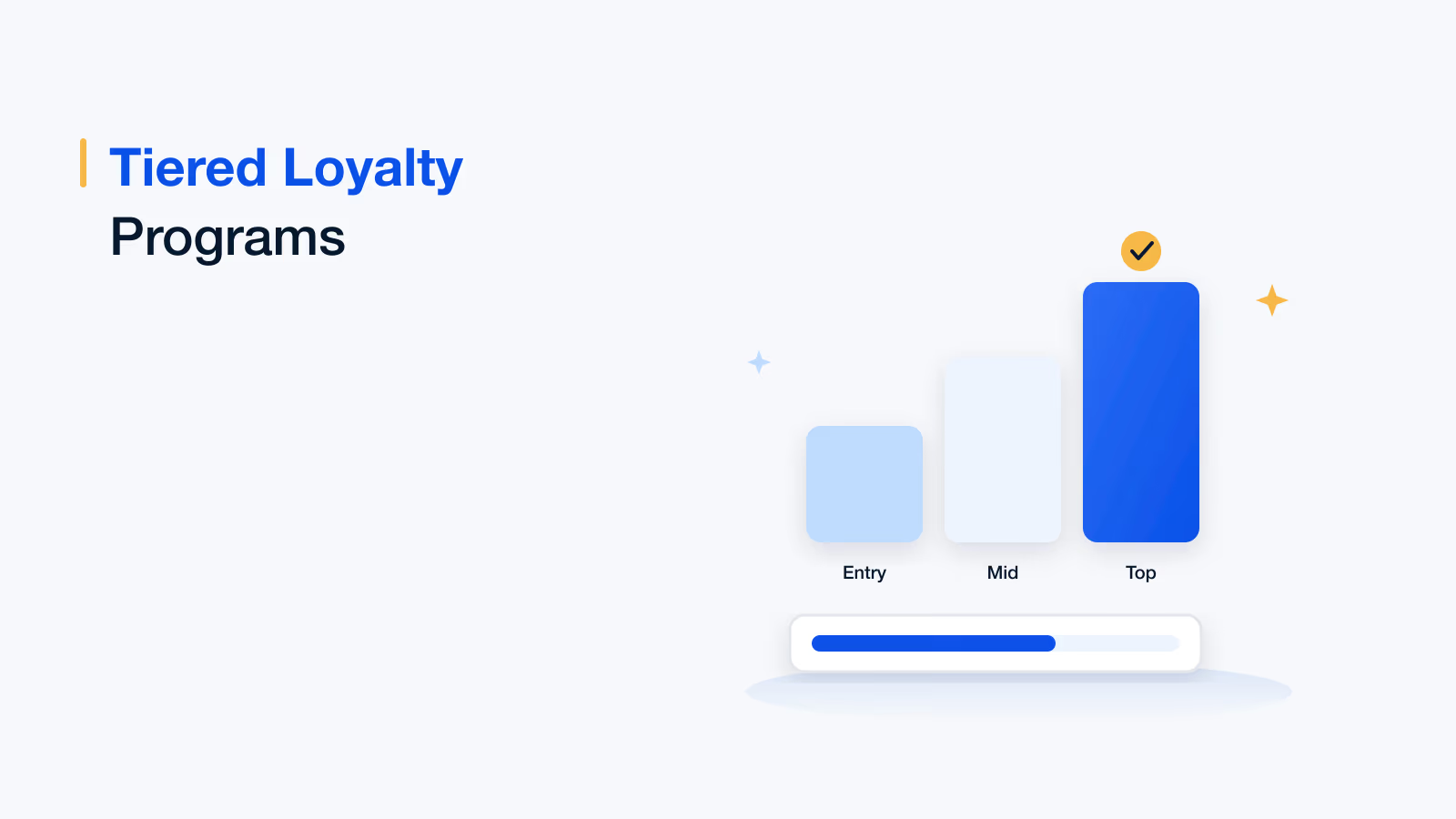
- Use tiers, not one cut-off: Bronze, Silver, Gold and Platinum thresholds give every participant a next goal to reach, and crossing a tier can trigger a reward on its own.
- Score teams fairly: Use the average or median of members rather than the sum, so a team of four can beat a team of ten.
- Make individual ranks optional: Let people see their own position privately and choose whether to show it publicly. Some employees love the spotlight, others just want to beat last week.
- Reward improvement: Add a "most improved" award based on progress against each person's own baseline.
Syncing wearables and health apps
Automatic sync from wearables and phone health apps is what keeps a challenge alive past week one. Manual logging in spreadsheets creates friction, invites disputes and quietly kills participation once the novelty wears off.
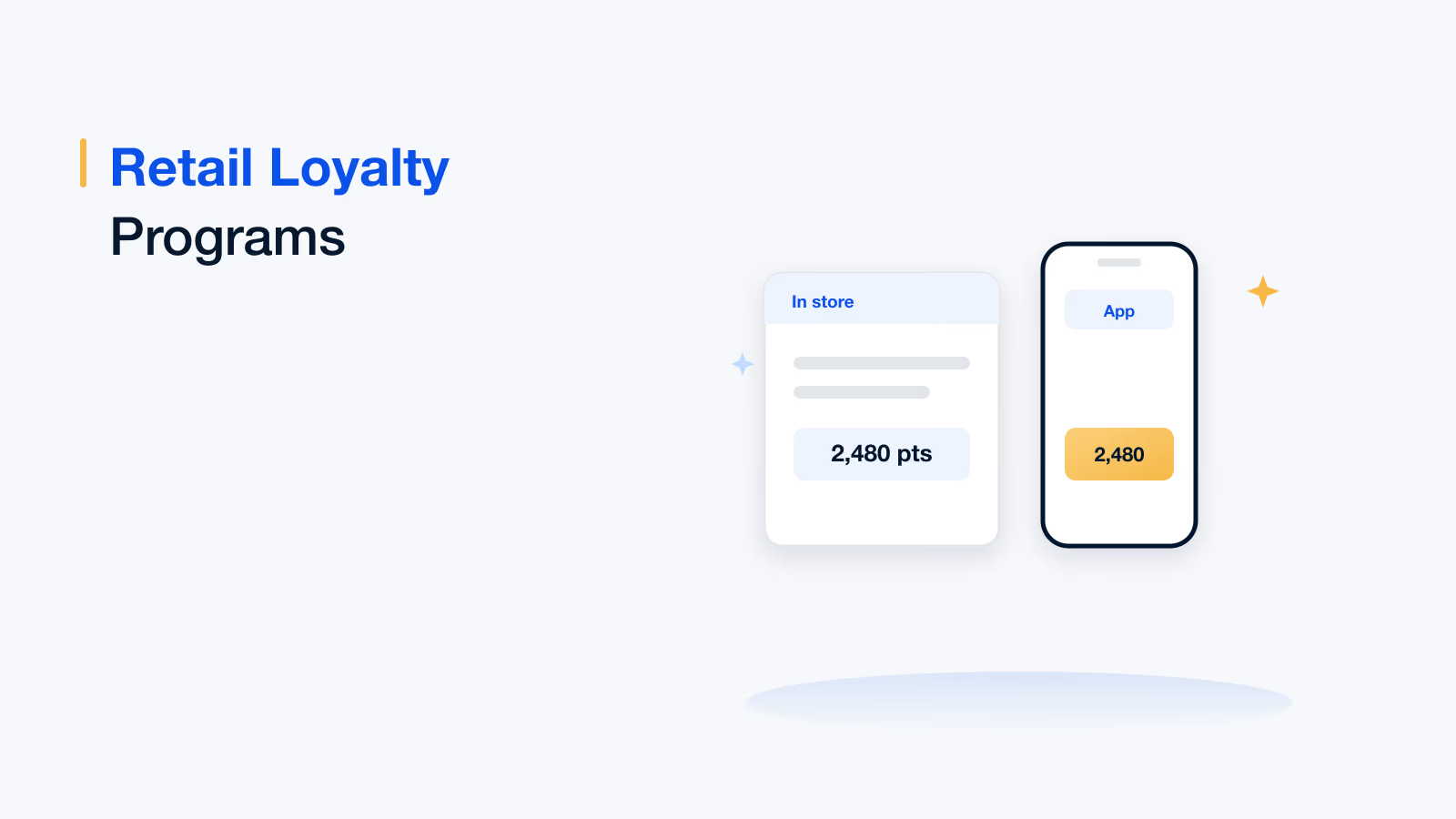
Most employees already carry a tracker: every modern smartphone counts steps through Apple Health on iOS or Google Fit and Health Connect on Android, and many people wear an Apple Watch, Fitbit, Garmin, Samsung Galaxy Watch, Oura ring or Whoop band, or log workouts in apps like Strava. A good challenge platform pulls data from all of these, so nobody has to buy anything to take part.
Three practical tips make sync smoother. Give employees a two-minute connection guide on launch day. Offer a phone-only or manual option for activities trackers miss, such as swimming or yoga, with a sensible daily cap. And decide up front which data you need: for most challenges that is steps, active minutes or distance, not heart rate or body weight.
Fitness challenge rewards and surprise moments
Fitness challenge rewards work best when they are frequent, fast and chosen by the employee: small rewards for milestones along the way, a bigger one for completion, and occasional surprises that keep people talking. A single grand prize at the end motivates the top five people and nobody else.
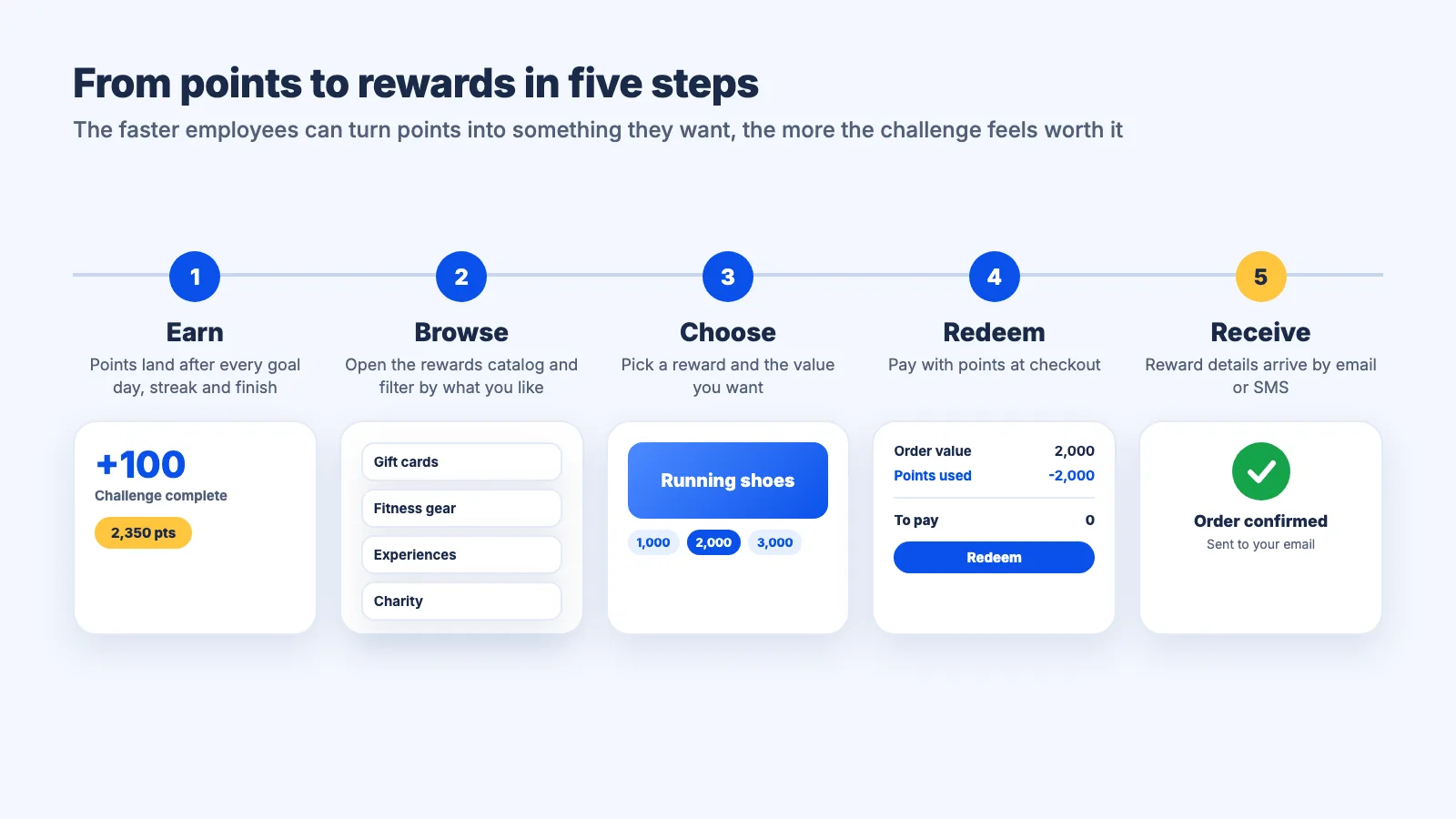
- Milestone rewards: Points or small gift cards when people cross a tier, finish their first week or complete the challenge.
- Choice-based redemption: Let people turn points into what they value, such as running shoes, a fitness tracker, a gym or class pass, healthy meal vouchers or a charity donation.
- Surprise and delight: Spot rewards for a personal best, a long streak or the colleague who cheered everyone on. Unexpected rewards create stories people share.
- Team rewards: A team lunch, a group experience or bonus points split across the winning squad.
- Public recognition: A shout-out on the company feed or in Slack or Teams when someone finishes, which often matters as much as the reward itself.
Rewards can also connect to benefits you already fund. A health and wellness stipend gives employees a budget for gym memberships or equipment, and challenges give them a reason to use it. Linking challenge milestones to employee recognition keeps the celebration going after the reward is redeemed.
Inclusion, safety and health-data privacy
An inclusive challenge gives every employee, whatever their age, ability, fitness level, role or location, a realistic way to take part and win, and it protects their health data. Getting this right is what separates a corporate wellness challenge people trust from one they quietly avoid.
- Offer non-step options: Count wheelchair pushes, swimming, yoga, cycling and mindfulness minutes, and convert them to points so people with different abilities compete on equal terms.
- Include frontline and shift workers: Make the challenge mobile-first, schedule reminders for local working hours and avoid prizes that only desk workers can use.
- Keep it voluntary: Participation should be opt-in, with no penalty or pressure for sitting it out, and managers should avoid asking about individual results.
- Promote safety: Cap daily points, remind people to rest and recover, and encourage anyone with a health condition to choose goals that suit them.
- Collect the minimum data: Track only what the challenge needs, let employees switch data categories off, and share only aggregated results with HR.
- Be clear about privacy: Explain in plain language what is collected, who can see it and how long it is kept, in line with local data protection law.
Avoid weight-loss contests. They can single people out, encourage unhealthy behavior and require sensitive data most employers should not hold. Activity, consistency and habit goals are safer and work just as well.
A 30-day workplace fitness challenge plan
A 30-day challenge is long enough to start a habit and short enough to keep energy high. Here is a week-by-week plan you can run with a small HR team.
- Set the goal and get leaders on board (week before launch): Decide what you want, such as more daily movement or better team connection. Ask a few senior leaders to take part visibly and post their own progress.
- Ask employees what they want: Run a short pulse survey on preferred activities, from walking and yoga to hydration and mindfulness, and pick the format with the broadest appeal.
- Write the rules and points table: Choose tiers, team size, scoring method and rewards, and publish everything before day one.
- Launch on day 1: Hold a short kickoff, share the connection guide and give joining points so people sign up early. Promote it on the intranet, email, Slack or Teams and team meetings.
- Build momentum in week 1: Send a daily nudge, celebrate the first milestones publicly and highlight early team leaders.
- Add a twist in week 2: Introduce a mini-challenge, such as a weekend double-points day or a stairs challenge, to beat the mid-challenge dip.
- Recognize consistency in week 3: Shout out streaks and most-improved participants, not just top scorers, and send surprise rewards to a few people who kept going.
- Close strong in week 4: Count down the final days, then hold a closing celebration and pay out rewards within 48 hours of the finish.
- Gather feedback after day 30: Survey participants and those who dropped out, then use what you learn to plan the next challenge.
What to measure after a fitness challenge
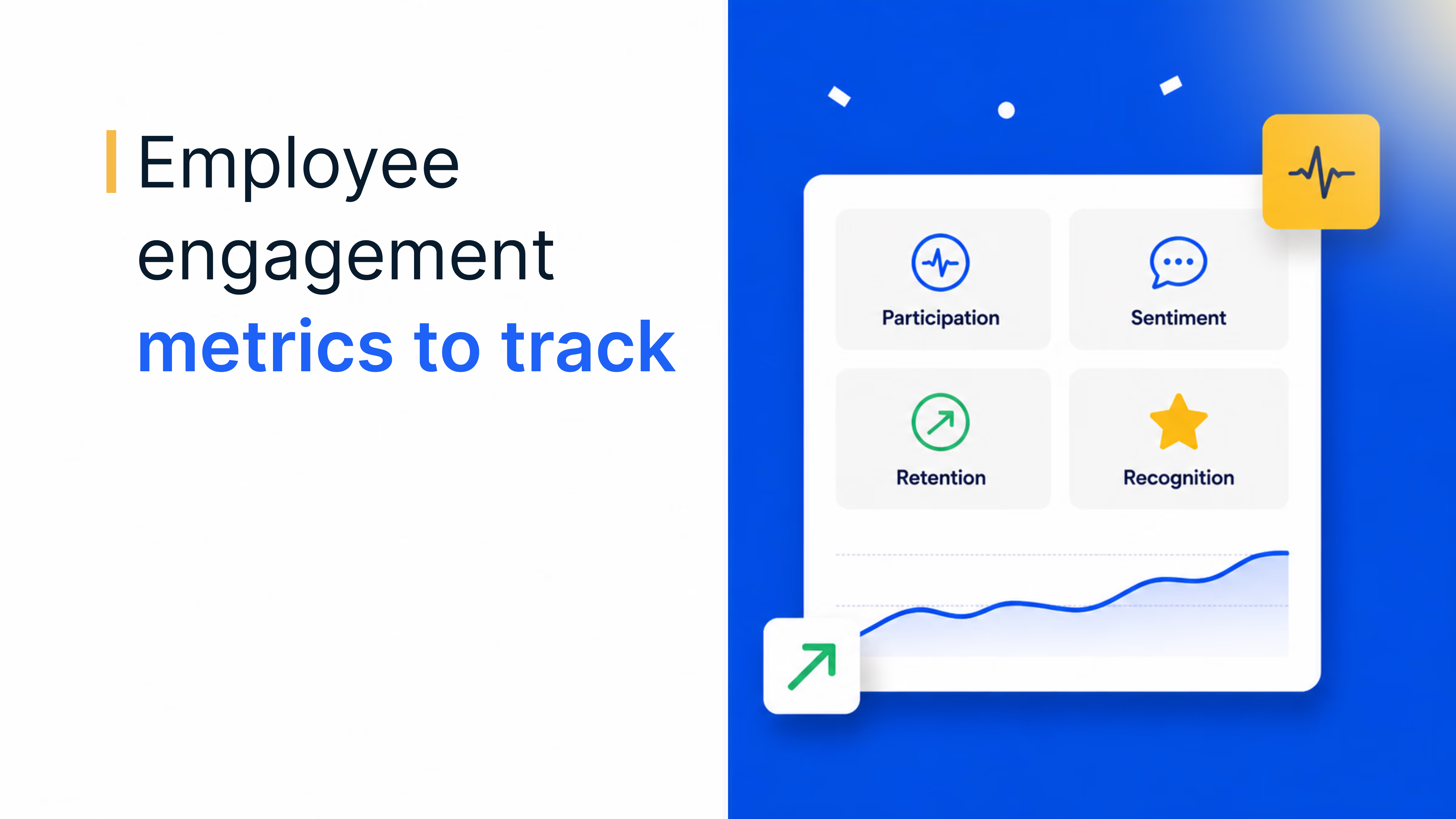
Measure participation, completion and repeat participation first, because a challenge cannot improve health or engagement if people do not join and finish it. Then look at engagement signals over the following months.
| Metric | What it tells you | How to calculate |
|---|---|---|
| Participation rate | How widely the challenge reached employees | Employees who joined ÷ eligible employees |
| Completion rate | Whether goals were realistic | Employees who finished ÷ employees who joined |
| Week 4 vs week 1 activity | Whether momentum held | Active participants in the final week ÷ active participants in the first week |
| Repeat participation | Whether it is becoming a habit | Employees who joined two or more challenges ÷ all participants |
| Reach by group | Whether it is inclusive | Participation by location, role type, shift and age band |
| Engagement and wellbeing scores | The wider impact | Survey scores of participants vs non-participants, before and after |
Report results in aggregate, never by named individual, and pair the numbers with a few stories from participants. Gallup's State of the Global Workplace 2024 found that only 34% of employees worldwide are thriving and 20% felt a lot of loneliness the previous day, so it is worth tracking connection as well as activity: team challenges are as much about belonging as fitness.
How Empuls runs workplace fitness challenges
Empuls, Xoxoday's employee engagement platform, runs workplace fitness challenges end to end, from tracker sync to leaderboards to automatic rewards, inside the same platform you use for recognition, surveys and benefits.
- Native wearable and phone sync: Employees connect Apple Health, Google Fit or Health Connect, Fitbit, Garmin, Oura, Whoop, Samsung and other devices and apps such as Strava, so phone-only users take part as fully as watch owners.
- Ready-made and custom challenges: Start from templates such as Stepathon, Workout Warrior, Weekend Run, Sleep Streak or Hydration, or build your own, then scope the cohort, attach a reward budget and publish.
- Team challenges: Employees join captain-led or auto-formed squads, and team scores use the average or median of members so teams of different sizes compete fairly.
- Fair leaderboards: Leaderboards filter by team, business unit, region or time zone, and individual ranks stay private unless the employee opts in. Configurable leaderboards with tiers also work across recognition and other programs.
- Automatic rewards: Tiered milestone rewards, completion badges and top-rank rewards pay out automatically as points, gift cards, wellness store credit or charity donations, from a catalog that spans 150+ countries.
- Celebrations and nudges: Milestones are celebrated in Slack and Teams, and habit reminders for water, stretching, breathing, walking, mood and sleep are timed to local working hours and can be muted.
- Privacy by design: Participation is opt-in, each data category can be switched off, and only cohort-level metrics are shared, never individual records.
- Feedback loop: Pulse surveys let you ask what employees enjoyed and what to run next.
More than 5,000 companies use Empuls to make recognition, rewards and wellbeing part of everyday work, and Empuls also connects with the HRMS and collaboration tools your teams already use through its integrations.
Make movement a team habit
Workplace fitness challenges succeed when they are easy to join, fair to every fitness level and rewarding from the first week. Start with one simple format, such as a tiered step challenge, publish a clear points table, sync trackers automatically, celebrate consistency as loudly as winning and protect people's data. Then measure, listen and run the next one. Over a year, a steady rhythm of short challenges does more for health and connection than any single big campaign.
Book your Empuls demo
Frequently asked questions
A workplace fitness challenge is a time-bound activity, usually two to six weeks, in which employees work toward a shared health goal such as daily steps, active minutes, distance or hydration. Progress is tracked through phones or wearables, shown on leaderboards and rewarded with points, prizes or recognition, which turns wellness intentions into everyday habits.
Most corporate wellness challenges run for 30 days or four to six weeks. That is long enough to start a habit and short enough to keep energy high. Shorter one-week sprints work well as kickoffs or mid-year boosts. Running a new challenge every month or quarter keeps momentum better than one long annual campaign.
Popular step challenge ideas include a tiered daily step goal, a team relay toward a shared total, a virtual race between office cities, a stairs challenge and walking meetings. Offering tiers such as 4,000, 7,000 and 10,000 steps a day lets every fitness level win, and adding weekend double points or streak bonuses keeps the middle weeks lively.
List the behaviors you want, such as joining, hitting a daily goal, keeping a weekly streak, completing the challenge and topping a leaderboard, and assign points to each. Give most points for consistency and completion rather than raw performance, cap daily points for safety and publish the table before launch so the scoring feels fair to everyone.
The best fitness challenge rewards are frequent and chosen by the employee. Combine small milestone rewards, a completion reward for everyone who finishes and a few bigger prizes for winners. Points that convert into fitness gear, gym or class passes, healthy meal vouchers, gift cards or charity donations work well, alongside public recognition from leaders and peers.
Offer several ways to earn points, including walking, wheelchair pushes, swimming, yoga and mindfulness, and use tiered goals so beginners can succeed. Score teams by average rather than total, keep individual ranks private by default, make the challenge mobile-first for frontline staff, keep participation voluntary and avoid weight-loss contests or collecting sensitive health data.