Your loyalty dashboard says membership is up 12%. The CFO asks how much of the revenue would have happened anyway, and nobody in the room can answer. That gap is where most loyalty budgets get cut.
Counting members is easy. Proving that a program changed behavior, and that its points liability is under control, takes tools built for measurement. Some come inside a loyalty platform, and others sit on top of one.
We compared 10 tools on how well each one measures a loyalty program, ranked from platforms that report program economics natively to tools that measure behavior or experience and leave the rewards to someone else.
Disclosure: Xoxoday publishes this guide and Loyalife is one of the 10. All are judged on the same criteria.
The Best Loyalty Analytics and Program Measurement Tools
- Xoxoday Loyalife for enterprise brands that want measurement and rewards in one platform
- Open Loyalty for enterprises that want finance-grade program economics (G2 4.7/5)
- Smile.io for Shopify Plus brands that want benchmarks and incrementality (G2 4.6/5)
- LoyaltyLion for Shopify brands tying loyalty to attributed revenue (G2 4.6/5)
- Voucherify for developer-led teams measuring promotion return and feeding BI tools (G2 4.6/5)
- Zeta Global for large multi-brand enterprises running loyalty beside marketing (G2 4.0/5)
- Optimove for CRM teams that want predictive churn across channels (G2 4.6/5)
- Braze for brands that activate partner loyalty data across channels (G2 4.5/5)
- Amplitude for digital teams studying retention in apps and web journeys (G2 4.5/5)
- Qualtrics for CX teams linking feedback and sentiment to retention (G2 4.3/5)
What Makes Loyalty Analytics Worth Paying For?
Retention drives profit and acquisition is expensive. A program that cannot show its effect is hard to defend, and harder to improve.
5-25x
Cost of acquiring versus retaining a customer
Harvard Business Review, 2014
25-95%
Profit lift from a 5% retention gain
Frederick Reichheld, Bain & Company, as cited by HBR, 2014
72%
Loyalty members more likely to spend with a preferred brand
Deloitte 2025 Consumer Loyalty Survey, US members
Source: Harvard Business Review, "The Value of Keeping the Right Customers" (Amy Gallo, October 2014), citing Frederick Reichheld of Bain & Company; Deloitte, 2025 Consumer Loyalty Survey.
We judged every tool on five tests:
- Program economics. Does it report points liability, redemption rate, expiry and cost per incentive, or only engagement?
- Incrementality. Can it separate lift caused by the program from sales that would have happened anyway, for example with control groups?
- Attribution. Does it connect loyalty activity to revenue by channel, segment or campaign?
- Prediction. Does it score churn risk or forecast revenue, and does it check those predictions against what happened?
- Data access. Can teams export or stream data to their own BI tools, and how fresh is it?
We weighted program economics and incrementality most, because those answer the CFO's question. Feature claims come from each vendor's public pages and documentation, written in our own words, and we label figures the vendor publishes itself. Ratings come from G2 and Capterra as of November 2026 and change over time. Where a score rests on fewer than 20 reviews, we show the count.
The Best Loyalty Analytics and Program Measurement Tools at a Glance
- Xoxoday Loyalife
- Best for
- Enterprise brands that want measurement and rewards in one platform
- Standout feature
- Plain-English analytics with drill-downs
- Rating
- G2 Leader 2026 (Xoxoday)
- Open Loyalty
- Best for
- Enterprises that want finance-grade program economics
- Standout feature
- Points liability and margin reporting
- Rating
- G2 4.7 (15 reviews) · Capterra 4.8 (15 reviews)
- Smile.io
- Best for
- Shopify Plus brands that want benchmarks and incrementality
- Standout feature
- Control groups and peer benchmarks
- Rating
- G2 4.6 · Capterra 4.8
- LoyaltyLion
- Best for
- Shopify brands tying loyalty to attributed revenue
- Standout feature
- Revenue share and a revenue predictor
- Rating
- G2 4.6 · Capterra 4.4 (19 reviews)
- Voucherify
- Best for
- Developer-led teams measuring promotion return and feeding BI tools
- Standout feature
- Cost and return tracking per incentive
- Rating
- G2 4.6 · Capterra 4.8
- Zeta Global
- Best for
- Large multi-brand enterprises running loyalty beside marketing
- Standout feature
- Loyalty data inside a marketing and identity stack
- Rating
- G2 4.0
- Optimove
- Best for
- CRM teams that want predictive churn across channels
- Standout feature
- Daily churn risk scores and RFM segments
- Rating
- G2 4.6
- Braze
- Best for
- Brands that activate partner loyalty data across channels
- Standout feature
- Canvas step-level metrics and warehouse streaming
- Rating
- G2 4.5 · Capterra 4.7
- Amplitude
- Best for
- Digital teams studying retention in apps and web journeys
- Standout feature
- Cohort and path analysis without SQL
- Rating
- G2 4.5 · Capterra 4.6
- Qualtrics
- Best for
- CX teams linking feedback and sentiment to retention
- Standout feature
- Revenue at risk from feedback signals
- Rating
- G2 4.3 · Capterra 4.6
Measure the program where you run it
Loyalife reports liability, redemption and member behavior on the same data as the program, with AI analytics that answer questions in plain English.
Book a free 30-min demoTrusted by 5,000+ companies
1. Xoxoday Loyalife
Loyalty platform with built-in analytics. Loyalife measures the program in the same place it runs it. A real-time dashboard sits on top of a report library covering transactions, members, communications, expiry and liability, and teams can build custom reports for what the library misses.
AI-powered analytics turn a plain-English question into a KPI snapshot or trend chart, with drill-downs to the cause of a movement. Churn prediction scores lapse risk, segments and tiers show who is drifting, and an MCP connection lets an AI assistant analyze the program. Anomaly detection queues unusual earning and redemption for approval, and audit trails record who changed what.
Loyalife is a full loyalty suite. A team that only needs to analyze a program it already runs elsewhere will find it broader than the job.
- Dashboards, reports and AI analytics on the same data as the program
- Liability and expiry reporting alongside member and transaction reports
- Anomaly detection and audit trails support clean program data
- Broader than needed for teams that only want an analytics layer on a third-party program
2. Open Loyalty
API-first loyalty engine. Open Loyalty has a dedicated loyalty analytics product. Its program health view shows whether the member base is growing, stalling or shrinking, and Tier Analytics tracks upgrades, downgrades, time in tier and migration between tiers.
The finance side is its distinctive part: points issued, spent, expired and active, a liability forecast, and loyalty cost and margin by product. Campaign dashboards compare results with a baseline, and dashboards export as images or CSV, with daily delta exports for teams that pipe data into their own BI tools.
Setup is developer work. Teams assemble the engine through an API, so expect more implementation effort than a packaged app.
- Points liability forecast and product-level loyalty margin
- Tier migration and campaign ROI views
- Dashboard and daily CSV exports for BI tools
- Developer-led, composable setup, and a small public review base
3. Smile.io
Ecommerce loyalty and referrals. Smile.io builds its reporting inside the Shopify admin. Overview, loyalty revenue and program health dashboards show loyalty-driven revenue and ROI over time, lifetime value and average order value for members versus non-members, and rates such as redemption and reward usage.
Two features stand out. Each promotion can run against a control group, which shows the incremental effect instead of the raw lift, and a benchmark view compares a program with similar merchants. Reports refresh every 24 hours.
Plan tier matters here. The depth of reports, benchmarks and data warehouse sync depends on it, and the product is built around Shopify.
- Control-group measurement for each promotion
- Benchmarks against similar merchants
- Prebuilt segments such as top referrers and members who can redeem now
- Report depth varies by plan, and the product centers on Shopify
4. LoyaltyLion
Shopify loyalty platform. LoyaltyLion's analytics dashboard puts revenue from loyalty and its share of total revenue up front. It splits revenue by channel, such as email, SMS, referrals and the loyalty page, and compares lifetime value for members and non-members using a predictive model.
A customer value snapshot shows behavior and conversion by segment, and a revenue predictor forecasts program revenue. Insights tabs produce customer lists that refresh weekly and export as CSV, and an AI assistant connection can query program configuration and performance.
Insights refresh weekly, not in real time, and the product is centered on Shopify.
- Revenue share and channel attribution on the main dashboard
- Forecast of program revenue
- Large public review base
- Shopify-centric, and Insights lists refresh weekly
5. Voucherify
API-first promotions and loyalty engine. Voucherify runs coupons, loyalty, referrals and gift cards from one API-first platform. Its dashboard totals successful redemptions and discount value over a chosen window, charts successful versus failed redemptions, and ranks top campaigns by success rate against the prior period.
It tracks cost and return for each promotion, coupon and reward, and margin guardrails can shut off incentives that underperform. Data leaves the platform through an Exports API, webhooks and event streaming, so teams can analyze redemptions in their own BI stack.
The built-in dashboard is summary-level. Deeper analysis happens in exports or in the customer's own BI tools.
- Cost and return per incentive with margin guardrails
- Exports API, webhooks and event streaming for BI work
- Covers coupons and loyalty in one engine
- Summary-level built-in dashboard, with deeper analysis done in external tools
6. Zeta Global
Enterprise marketing cloud with loyalty. Zeta pairs a marketing cloud, a data cloud and identity with a loyalty product, which it gained in its 2025 purchase of Marigold's enterprise business. Loyalty reporting includes People Explorer and dashboards for member segments, participation rates and value, plus engagement data across offer, reward and redemption.
Campaign optimization uses redemption results, and its Athena layer adds identity-based measurement of incremental impact. The company says Athena measurement is rolling out through 2026, so confirm in a demo how far it covers loyalty.
Setup is heavier. It is a broad suite and the loyalty line is newly integrated, so expect a longer rollout than a point tool.
- Loyalty, identity and activation in one stack
- Member segment and participation dashboards
- Built for large, multi-market programs
- Broad suite with a newly integrated loyalty line, and Athena measurement still rolling out
7. Optimove
CRM and lifecycle marketing. Optimove is a marketing platform with a loyalty and gamification layer, so its measurement strength is customer prediction rather than loyalty reporting. Risk of Churn is a machine learning score updated daily across five levels, and Churn Factor offers a rule-based alternative based on time since last activity.
RFM segmentation groups customers by recency, frequency and spend, and a Predictive Models Performance report compares predicted churn with actual churn. Gamify adds badges, missions and leaderboards.
We found no loyalty-specific dashboards or program ROI reports in its public documentation. Ask for a live demo of the loyalty add-on.
- Churn scores refreshed daily
- Report that checks predictions against actual churn
- Journeys and gamification in the same platform
- Loyalty-specific reporting is not documented publicly, and the focus leans iGaming and retail
8. Braze
Cross-channel engagement. Braze does not run a points and tiers engine. It connects to loyalty partners that do, and those platforms sync points balances, tier changes and expiry warnings into Braze as events that can trigger journeys.
Measurement happens at the journey level. Canvas analytics show variant and step performance, Report Builder compares campaigns, Query Builder runs SQL on a Snowflake-backed dataset, and Currents streams events to a warehouse or BI tool.
Braze measures journeys, not points. Loyalty reporting depends on the partner platform, and Braze's own guidance notes that dashboard numbers can differ slightly from streamed data.
- Step-level journey metrics and campaign comparison
- Event streaming to warehouse and BI tools
- Loyalty events can trigger messages in any channel
- No native points or tier engine, so loyalty reporting comes from a partner
9. Amplitude
Digital and product analytics. Amplitude measures how people behave in a product, which makes it useful for the digital half of a loyalty program. Funnel and retention analysis show where members drop away, cohorts and segments compare groups, and user paths trace what people do before they lapse.
Predictive models estimate who is likely to convert or churn, root-cause analysis flags metric deviations, and an AI assistant builds charts from plain-English questions. Saved metrics and dashboards keep a team on one definition of retention.
It measures behavior only. There is no points, tier or rewards engine, so program mechanics and liability sit in another system, and reviewers mention a learning curve for non-technical users.
- Deep retention, cohort and path analysis
- Predictive churn and conversion models
- No-code chart building for non-SQL teams
- Measures behavior only, with no rewards or points mechanics
10. Qualtrics
Experience management. Qualtrics measures the reasons behind loyalty movement. It collects feedback across surveys, calls, chat, social and digital sessions, then scores churn risk and shows revenue at risk through Revenue Signals.
Automated triggers act on signals, for example routing a low satisfaction score to a retention team, and location-level dashboards compare sites against each other.
It explains why members leave. It has no rewards or points mechanics, so the response sits in another tool. It is an enterprise-scale suite, and reviewers mention pricing and a learning curve.
- Feedback, sentiment and churn risk in one suite
- Triggers that route low scores to action
- Location-level comparison dashboards
- No rewards mechanics, and enterprise-scale for smaller programs
What to Ask Before You Pick a Measurement Tool
Every demo shows a polished dashboard. These four questions show whether the numbers will survive a finance review.
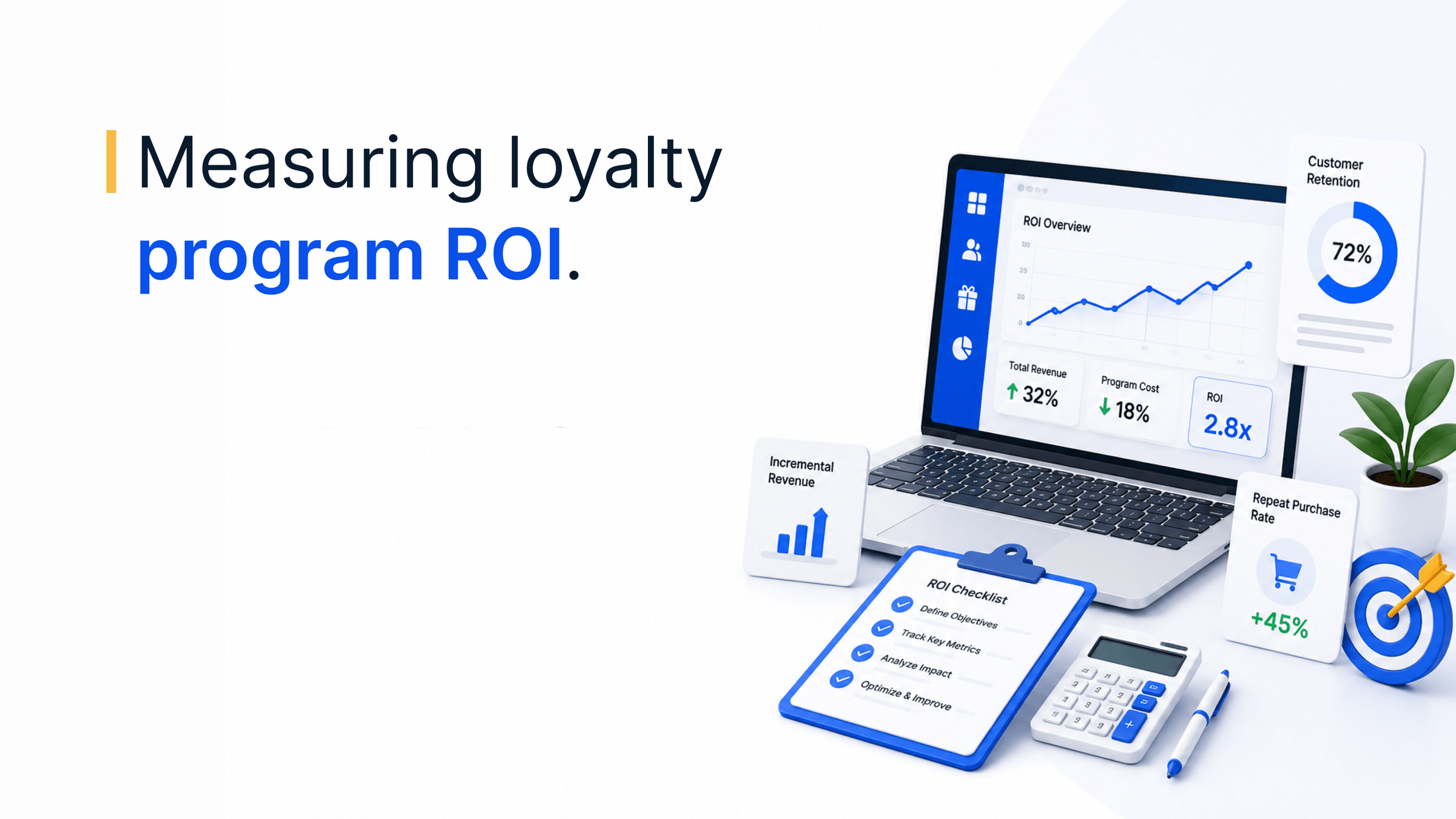
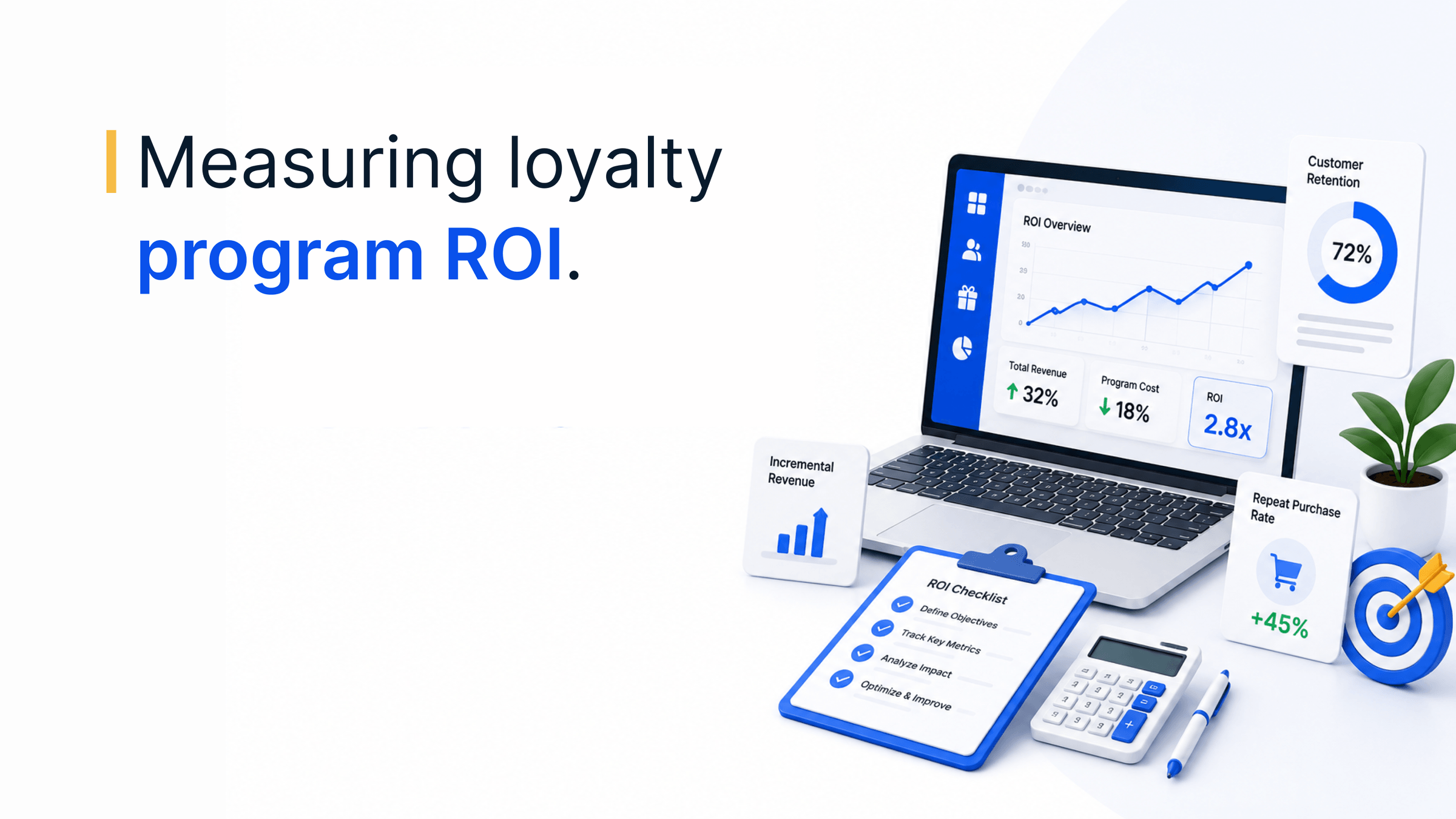
- How do you prove incrementality? Look for control groups or holdouts, not before-and-after comparisons. Our guide to measuring loyalty program ROI shows the method.
- Where does points liability show up? Ask to see issued, redeemed, expired and outstanding points in one report. See loyalty program ROI metrics for what to include.
- Who owns the data definitions? Confirm that repeat rate, redemption rate and active member mean the same thing in every report. Align them with your first-party data model before you build dashboards.
- How does data leave the platform? Ask about export formats, refresh frequency and warehouse connections before you commit. Loyalife's APIs and SDKs are one example of an export route.
Which Loyalty Analytics Tool Should You Choose?
If you want measurement and rewards in one platform, start with Loyalife. Teams that need finance-grade liability reporting and have developers should look at Open Loyalty or Voucherify, and Shopify brands should compare Smile.io and LoyaltyLion.
Enterprises that run loyalty beside a large marketing stack can evaluate Zeta Global. CRM and product teams that already own a loyalty engine can add Optimove, Braze or Amplitude for prediction and behavior analysis, and Qualtrics suits teams that start from feedback.
Whichever you pick, set a control group before launch. To compare loyalty platforms more broadly, read our guide to the best customer loyalty platforms, then explore loyalty management software.
Book your Loyalife demo
Frequently asked questions
It is software that measures how a loyalty program performs, covering member behavior, redemption, points liability and revenue impact. Some tools come inside a loyalty platform, and others analyze behavior or feedback from outside it.
Start with repeat purchase rate, member versus non-member spend, redemption rate, points liability and churn. Add incremental revenue measured against a control group, so the program gets credit only for lift it caused.
Compare members with a control group that did not receive the program or promotion. Without a holdout, gains may come from customers who would have bought anyway.
Many loyalty platforms report program economics and redemption natively. A separate tool helps when you need deeper behavior, prediction or feedback analysis, or when analytics must combine data from several systems.
Yes. Xoxoday Loyalife combines a real-time dashboard, custom reports, AI analytics and churn prediction with points, tiers and a rewards marketplace on one platform, so measurement uses the same data as the program.