The promotions engine that powered a flash sale cleanly starts to strain once marketing asks for tiers, points and a rewards catalog. Each new program needs developer time, finance wants offer costs tied to member balances, and the coupon service and the loyalty tool no longer share a customer record.
Talon.One is an incentives platform that unifies promotions, loyalty and gamification for enterprise omnichannel use. Its site leans on developer documentation and a free developer testing environment, which suits engineering-led teams. Other teams weigh different priorities, such as broader loyalty program types, rewards fulfillment, or tools that business users can run without a ticket.
Switching is not a small decision, because shoppers are already stretched. According to Deloitte, the average consumer enrolls in eight loyalty programs and actively uses five. A migration that breaks offers or resets balances hands the member a reason to drop to four.
We compared 10 platforms that teams shortlist when they need promotions and loyalty together, ranked by how much of that job each one covers natively.
Disclosure: Xoxoday publishes this guide and Loyalife is one of the 10. All are judged on the same criteria.
The Best Talon.One Alternatives for Promotions and Loyalty
- Xoxoday Loyalife for enterprises that want promotions, loyalty and rewards in one platform
- Voucherify for engineering-led teams that want coupons, promotions and loyalty from one API (G2 4.6/5)
- Open Loyalty for teams that already own the storefront and want loyalty logic by API (G2 4.7/5)
- Zeta Global (Marigold Loyalty) for large brands already running a marketing cloud that want offers tied to loyalty (G2 4.6/5)
- Kobie for enterprises that want a loyalty partner to run strategy and the program (G2 4.8/5)
- Voyado for retailers that want loyalty, messaging and product discovery in one suite (G2 4.5/5)
- LoyaltyLion for Shopify-based brands that want loyalty tied to email, SMS and reviews (G2 4.6/5)
- Smile.io for Shopify Plus brands that want to test promotions against control groups (G2 4.6/5)
- Yotpo for ecommerce brands that want loyalty tied to reviews and referrals (G2 4.3/5)
- Fidel API for payments and fintech teams that want card-linked offers without issuing a card (G2 4.6/5)
What Makes a Promotions and Loyalty Platform Worth Switching To?
Offers only pay off if members keep using the program. The platform has to make earning and redeeming simple enough that it stays one of the five a shopper actually uses.
8 vs 5
Loyalty programs joined versus actively used
average US consumer, Deloitte 2025
56%
Members who spend more because of the program
US loyalty members, Deloitte 2025
40%
Members who sometimes forget to redeem
US loyalty members, Deloitte 2025
Source: Deloitte, 2025 Consumer Loyalty Program Survey of 5,564 US loyalty program members, published January 2026.
We judged every platform on five tests:
- Promotion rules. Does it run coupons, discounts and offers with conditions, stacking and budget limits, or does it leave offers to another tool?
- Loyalty engine depth. Does it run points, tiers, referrals and redemption natively, or does it need a partner platform for them?
- API and developer fit. Look for REST APIs, SDKs, webhooks and a test environment, and check how much works through a headless connection.
- Control for business users. Can marketing and finance change rules, approve changes and read reports without a developer?
- Rewards and reach. Check what members can redeem, in which countries and currencies, and whether the vendor fulfills rewards or leaves that to you.
We weighted promotion rules and loyalty engine depth most, because those decide whether a team can replace a promotions engine or only add to it. Feature claims come from each vendor's public pages, written in our own words, and we label figures the vendor publishes itself. Ratings come from G2, Capterra and Forrester as of November 2026 and change over time. Where a score rests on fewer than 20 reviews, we show the count.
Promotions and Loyalty Platforms at a Glance
- Xoxoday Loyalife
- Best for
- Enterprises that want promotions, loyalty and rewards in one platform
- Standout feature
- Rule-based promotions beside a global rewards marketplace
- Rating
- G2 Leader 2026 (Xoxoday)
- Voucherify
- Best for
- Engineering-led teams that want coupons, promotions and loyalty from one API
- Standout feature
- Rule Builder with stacking rules and built-in experimentation
- Rating
- G2 4.6 · Capterra 4.8
- Open Loyalty
- Best for
- Teams that already own the storefront and want loyalty logic by API
- Standout feature
- Multi-wallet loyalty with a deep gamification catalogue
- Rating
- G2 4.7 (15 reviews) · Capterra 4.8 (15 reviews)
- Zeta Global (Marigold Loyalty)
- Best for
- Large brands already running a marketing cloud that want offers tied to loyalty
- Standout feature
- AI-powered offers with point-of-sale APIs
- Rating
- G2 4.6 (12 reviews)
- Kobie
- Best for
- Enterprises that want a loyalty partner to run strategy and the program
- Standout feature
- Alchemy Loyalty Cloud with zero-party data tools
- Rating
- G2 4.8 (10 reviews) · Forrester Wave Leader, Loyalty Platforms Q4 2025
- Voyado
- Best for
- Retailers that want loyalty, messaging and product discovery in one suite
- Standout feature
- Native loyalty with wallet passes beside retail CRM
- Rating
- G2 4.5 · Capterra 4.5 (4 reviews)
- LoyaltyLion
- Best for
- Shopify-based brands that want loyalty tied to email, SMS and reviews
- Standout feature
- Headless API beside a deep Shopify integration set
- Rating
- G2 4.6 · Capterra 4.4 (19 reviews)
- Smile.io
- Best for
- Shopify Plus brands that want to test promotions against control groups
- Standout feature
- Loyalty Studio with control-group measurement
- Rating
- G2 4.6 · Capterra 4.8
- Yotpo
- Best for
- Ecommerce brands that want loyalty tied to reviews and referrals
- Standout feature
- Loyalty and referrals beside reviews and messaging
- Rating
- G2 4.3 · Capterra 4.4 (Yotpo suite)
- Fidel API
- Best for
- Payments and fintech teams that want card-linked offers without issuing a card
- Standout feature
- Offers as a Service on card transaction data
- Rating
- G2 4.6 (15 reviews)
Run promotions and loyalty on one member profile
Loyalife pairs an API-first promotions engine with tiers, referrals and a marketplace of 10M+ reward options across 150+ countries.
Book a free 30-min demoTrusted by 5,000+ companies
1. Xoxoday Loyalife
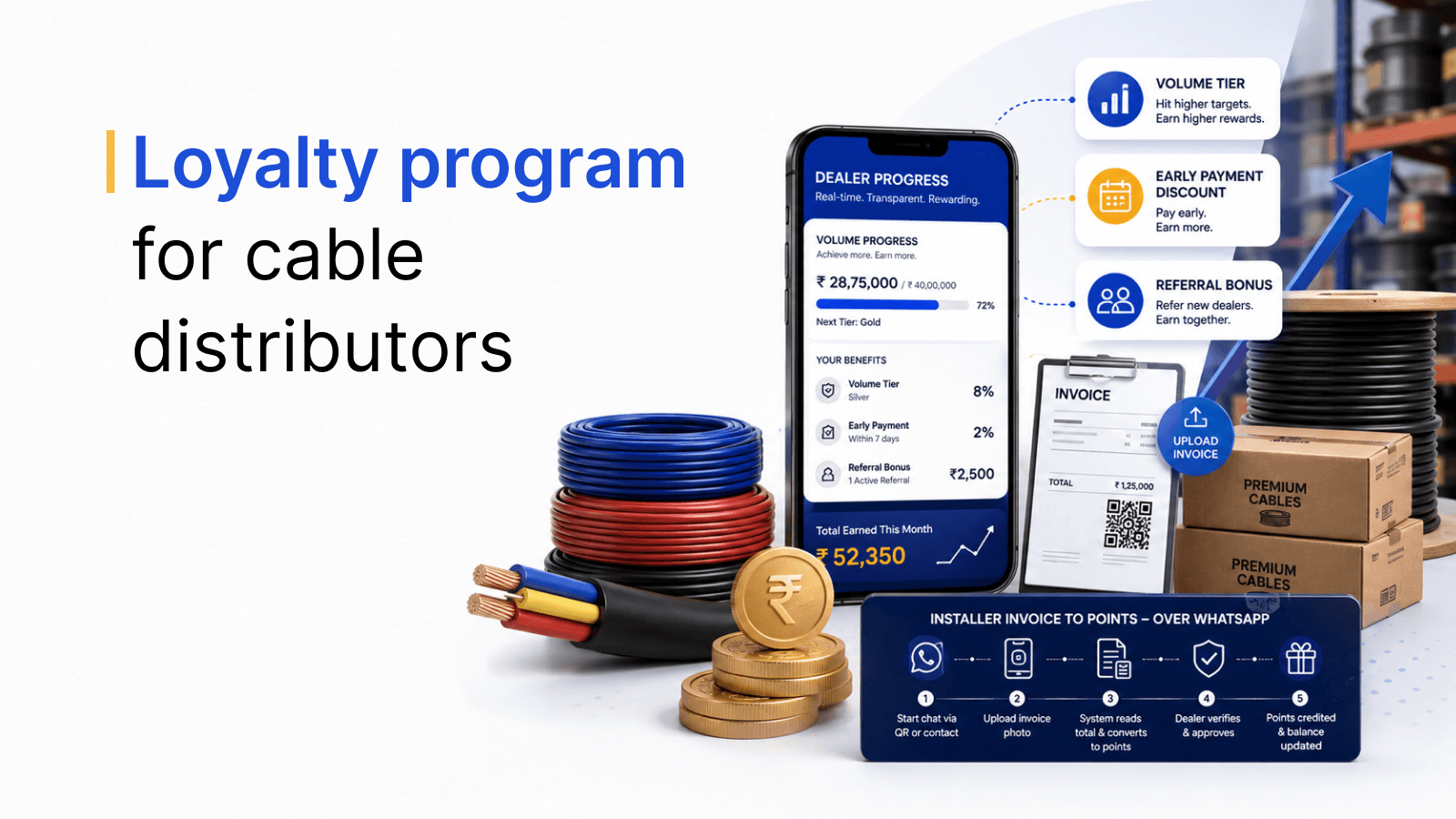
Enterprise loyalty platform with an API-first promotions engine. Loyalife runs promotions as one module of a full loyalty platform. The promotions engine handles rule-based coupons, discounts and offers through an API-first design, and it sits beside the rule engine, segments and tiers, campaign builder, referral engine and member profiles that decide who gets which offer.
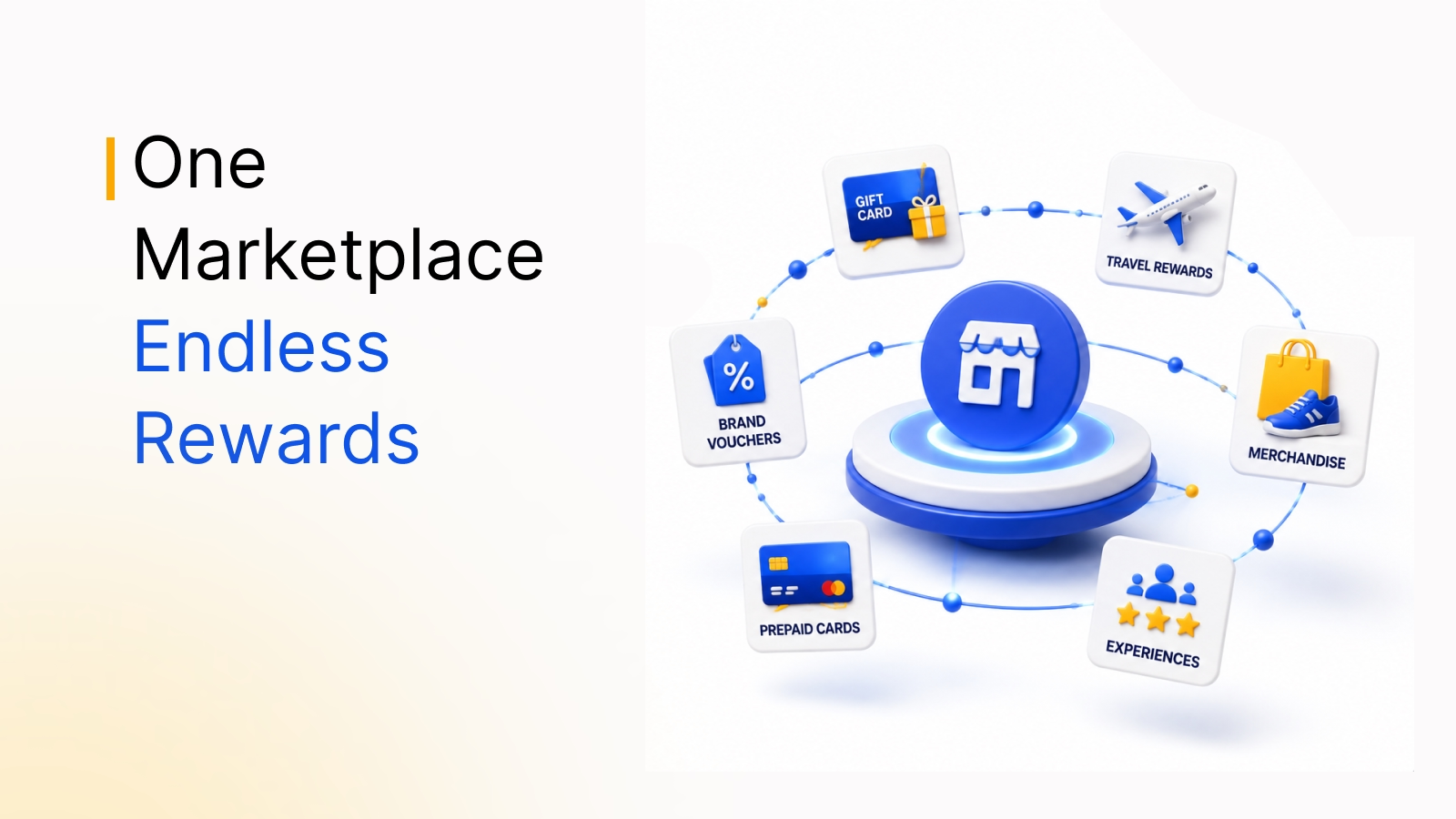
Rewards do not stop at the offer. Members redeem from a marketplace of 10M+ options across 150+ countries, in 50+ currencies and languages, and earning goes beyond the cart: QR scans, receipt uploads read by OCR and geofenced check-ins all post points. APIs and SDKs connect the platform to commerce, CRM and point-of-sale systems, and an MCP connection lets AI assistants analyze programs and trigger campaigns.
Loyalife is a full suite. Implementation runs as a project of roughly 10 weeks, so a team that only needs a headless coupon service will find it broader than the job.
- Promotions, tiers, referrals and rewards on one member profile
- Rewards marketplace with 10M+ options across 150+ countries
- Maker-checker approvals, anomaly detection and audit trails
- A full loyalty suite with a roughly 10-week implementation, so broader than a coupon-only use case needs
2. Voucherify
Promotions and incentive engine. Voucherify describes itself as an incentive optimization engine. Promotions, loyalty, referrals, gift cards and digital wallets run from one platform, and the Rule Builder sets conditions while stacking rules control which offers can combine on one order.
Controls and testing are the distinctive part. Fraud prevention sets per-customer limits and velocity caps, and its Optimization, Experimentation and Analytics modules let a team test incentives and watch margin. Webhooks, event streaming through Kafka connectors and SDKs for six languages cover the developer side, and the company says its API responds in under 50 ms.
Voucherify's public pages list no native email or SMS channel, so customer messaging comes from connected tools such as Braze.
- Coupons, loyalty, referrals and gift cards in one engine
- Experimentation and margin analytics are built in
- SDKs for JavaScript, Python, PHP, Java, Ruby and .NET
- No native customer messaging channel listed, so campaigns run through connected tools
3. Open Loyalty
Composable loyalty engine. Open Loyalty sells a composable loyalty engine that acts as the logic layer behind a brand's own commerce, CRM, point-of-sale and data stack. Everything is reachable through a REST Loyalty API, so the brand keeps the interface and the platform keeps the rules.
Its range of mechanics is wide. Tiers, points across multiple wallets, challenges, badges, leaderboards, gamified referrals and instant-win formats such as Spin the Wheel and Scratch & Win all ship as named features, and AI Labs adds image verification and a Loyalty MCP server. The company says it has launched 400+ loyalty programs.
The focus is loyalty, not general promotions. Its public pages list no coupon-stacking or pricing engine, and no native campaign messaging.
- Composable design that fits an existing commerce stack
- Multi-wallet points and a wide set of gamified mechanics
- Loyalty MCP server for AI assistants
- Loyalty-only focus, with no general promotions engine or native messaging listed
4. Zeta Global (Marigold Loyalty)
Enterprise loyalty inside a marketing cloud. Marigold Loyalty, earlier known as Cheetah Loyalty, is now part of Zeta Global. Zeta bought Marigold's enterprise software business, and the deal closed in November 2025, so the loyalty platform now sits inside Zeta's marketing cloud alongside its data and personalization tools.
Offers are the strongest link to a promotions use case. Release notes describe AI-Powered Offers with point-of-sale API support, Offer Response APIs, a CSR console that can issue an offer to a member, and order import definitions that accept transactions carrying redeemed loyalty offers.
Branding is still in transition. Zeta's notes describe the rebrand as naming only, and review sites still list the product as Marigold Loyalty, so expect both names in documentation.
- Documented offer and redemption APIs with point-of-sale support
- Loyalty beside Zeta's data and marketing tools
- Customer service console for issuing offers to members
- Product naming is mid-transition, and it fits best for buyers already on Zeta's marketing cloud
5. Kobie
Loyalty platform with managed services. Kobie combines loyalty technology with services, and positions loyalty as a customer operating system. Kobie Alchemy Loyalty Cloud holds the platform, with a Loyalty Data Engine that builds panoramic customer profiles from transaction, behavior and zero-party data.
Hubs divide the work. Loyalty Management covers program setup, forecasting and ROI tracking, the Personalization Hub handles AI-driven offers and optimization, the Rewards Hub runs a rewards marketplace, and the Zero-Party Data Hub collects preferences. The company says it has been in loyalty for more than 35 years.
Kobie suits teams that want an operator beside the software. Its homepage lists no coupon engine and no headless API, so developer-led teams should ask for integration detail early.
- Platform and strategy services from one vendor
- Zero-party data collection through preference centers and gamification
- Leader in the Forrester Wave for Loyalty Platforms, Q4 2025
- Services-led model, with no coupon engine or headless API listed on its homepage
6. Voyado
Retail CRM and loyalty platform. Voyado builds for retail only. Voyado Engage holds the customer data and marketing automation, and the loyalty module adds points, vouchers, promotions, challenges and member levels on the same data, with Apple Wallet and Google Wallet passes through its Loyyo digital wallet integration.
The rest of the suite sits beside it. Email, SMS and onsite messaging run natively, advertising audiences sync to Meta, Google and TikTok, and a second product line covers search, merchandising, recommendations and retail media. Open APIs and an MCP connection support custom builds.
The positioning is retail-specific. Its loyalty module lives inside a retail CRM suite, and its homepage lists no standalone promotion-rule engine.
- Loyalty, CRM and messaging on one data model
- Wallet passes for in-store recognition
- Product discovery and retail media in the same suite
- Retail-specific suite, with no standalone promotion-rule engine listed
7. LoyaltyLion
Ecommerce loyalty platform. LoyaltyLion is built around ecommerce, and especially Shopify and Shopify Plus. Points can be earned on purchases, subscriptions, referrals and reviews, and VIP tiers, challenges and rules and automation shape how members progress.
The integration list is long. Klaviyo, Attentive, Gorgias, Recharge, Judge.me and HubSpot are among the named connections, and a Headless API with a developer portal lets brands build custom surfaces. The company says it runs 140 million transactions a year.
Its homepage does not list a coupon or promotion-rule engine, so merchandising offers usually stay in the storefront.
- Deep Shopify, Klaviyo and subscription app integrations
- Headless API with a developer portal
- Loyalty Agent that advises on program performance
- Ecommerce focus, with no standalone coupon or promotion-rule engine listed
8. Smile.io
Loyalty platform for Shopify brands. Smile.io is built for Shopify brands. Loyalty Studio is a modular builder for points, VIP tiers, referrals, cashback, memberships, badges and challenges, with perks such as early access and free shipping.
Measurement is its distinctive angle. Promotions can be run against control groups to show incremental lift, and gradual rollouts launch a program to a share of shoppers or a single market first. The program runs in Shopify checkout, customer accounts and point of sale, and the company offers migration support from several other loyalty tools.
The fit narrows outside Shopify. Its homepage describes no public API or headless option and no coupon-rule engine.
- Native Shopify checkout, customer account and POS surfaces
- Control groups show whether a promotion drove incremental lift
- Gradual rollouts by shopper share or market
- Shopify-centric, with no public API or coupon-rule engine described
9. Yotpo
Ecommerce marketing platform with loyalty. Yotpo's loyalty and referral programs sit inside a wider ecommerce marketing platform. Reviewers can be rewarded, five-star reviewers can be prompted to refer friends, and messages go out through its SMS and email tools.
The strength is the connected suite. Reviews, loyalty and referrals share one customer record, and the company lists 180+ integrations, including Shopify, BigCommerce, Klaviyo and Salesforce. It says 35K+ brands use Yotpo overall.
The loyalty product page names few mechanics and no promotion-rule engine, so Yotpo suits brands whose priority is reviews-led growth.
- Reviews, loyalty and referrals on one customer record
- 180+ ecommerce integrations, per the company
- SMS and email tools in the same platform
- Ecommerce-centered, with no promotion-rule engine and few loyalty mechanics named on its product page
10. Fidel API
Card-linking API. Fidel API is a card-linking and payments-data platform, not a loyalty engine. Its Select Transactions API streams real-time payment events from partner brands, and a Cards API plus enrollment SDKs link a customer's existing card to those events.
Offers as a Service is the managed layer. Fidel launches and runs card-linked offers with automation and real-time reporting, and a management dashboard, webhooks and a test environment cover the developer side. The company says its SLA is 99.99% uptime.
Builders assemble the rewards logic on top. Fidel supplies no points, tiers or campaign rules, so most teams pair it with a loyalty platform.
- Card-linked offers with no card to issue
- Real-time transaction events with webhooks and a sandbox
- Managed offer launches through Offers as a Service
- No points, tier or campaign-rule engine, so loyalty logic comes from another platform
What to Ask Before You Switch Platforms
Every demo shows a clean offer. These four questions show what happens to the program you already run.
- How do live promotions and member balances migrate? Ask for the cutover plan, the freeze window and what a member sees on day one.
- Who can change a rule? Get a named answer on whether marketing can edit offers and stacking, or whether each change needs a developer.
- Is loyalty native or a partner integration? If points and tiers live in another product, ask who supports the join when it breaks.
- What does fulfillment look like? Separate who issues the reward, in which countries, from who only records the entitlement.
For the wider framework, see our guide to composable and API-first loyalty platforms and our customer loyalty program software buyer's guide.
Which Promotions and Loyalty Platform Should You Choose?
The right pick depends on how much of the job you want in one place. If you want promotions, loyalty and a global rewards catalog in one platform, start with Loyalife. Engineering-led teams that mainly need a coupon and incentive API should compare Voucherify, and teams that own their storefront and want loyalty logic by API should look at Open Loyalty.
Large brands on a marketing cloud can evaluate Marigold Loyalty inside Zeta Global, and enterprises that want an operating partner should compare Kobie. Retailers fit Voyado, and Shopify brands fit LoyaltyLion or Smile.io. Yotpo suits reviews-led ecommerce growth, and Fidel API suits payments teams that want card-linked offers.
Whichever you shortlist, ask to see the migration plan before the feature tour. To see how Loyalife compares in detail, read our Loyalife vs Talon.One comparison, then explore loyalty program software, including the Loyalife rule engine and APIs and SDKs.
Book your Loyalife demo
Frequently asked questions
It is software that runs offers such as coupons and discounts alongside the program that rewards repeat customers. The promotions side sets conditions and limits for each offer, and the loyalty side runs points, tiers and redemption.
Teams usually outgrow a coupon-first tool when they need points, tiers, referrals and rewards on the same customer record. Others want business users to change rules without a developer, or need rewards fulfilled in more countries.
Check five things: promotion rules, loyalty engine depth, API and developer fit, control for business users, and rewards reach. Ask each vendor to show a live offer and a member balance change in the same demo.
Yes. Xoxoday Loyalife runs rule-based coupons, discounts and offers through an API-first promotions engine, beside tiers, referrals and member profiles. Members redeem from a marketplace of 10M+ options across 150+ countries.
Migrate balances and tiers exactly, keep the freeze window short and tell members what changes before it happens. Test live offers and redemption end to end before cutover, because a failed redemption is the fastest way to lose an active member.