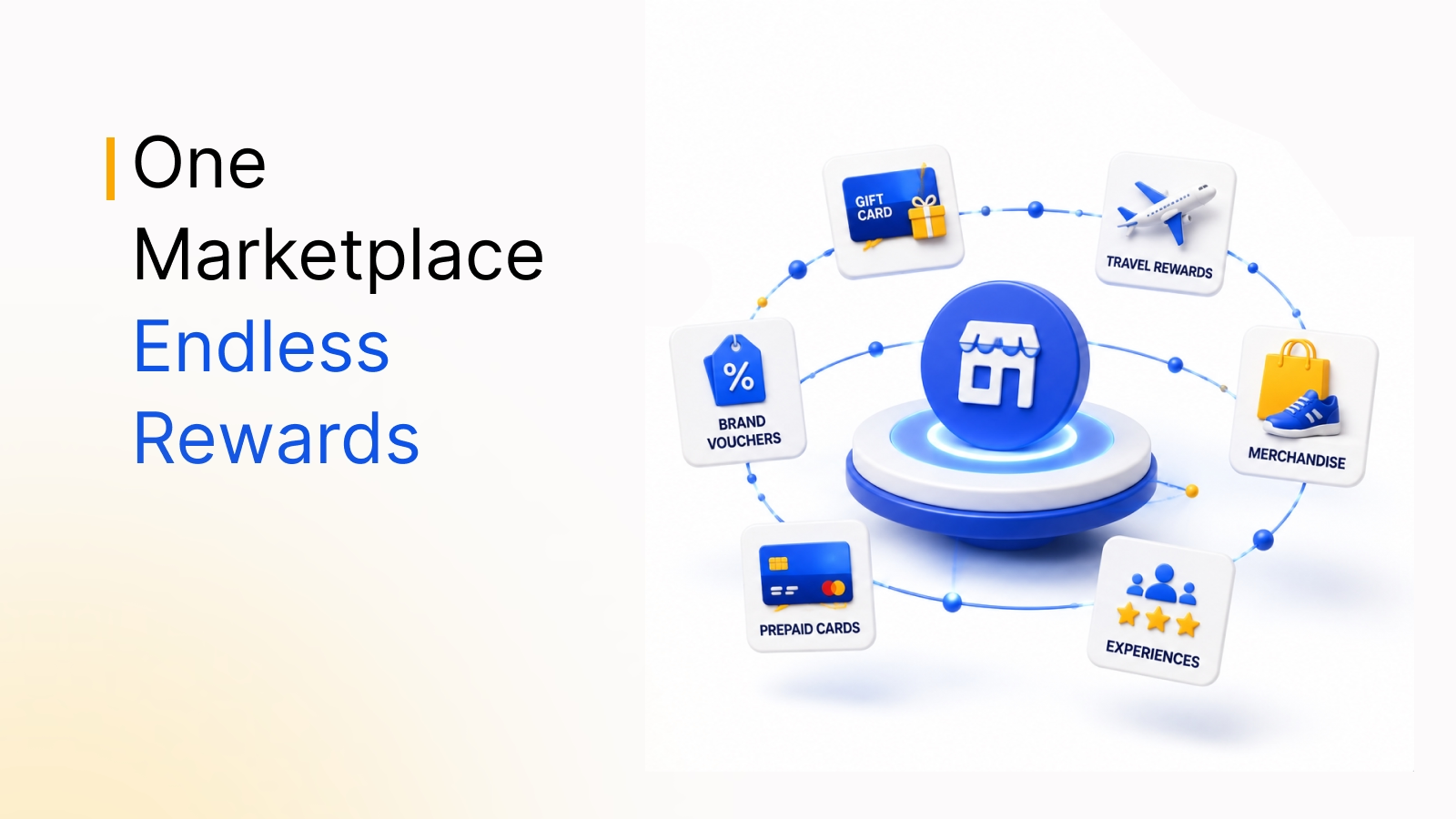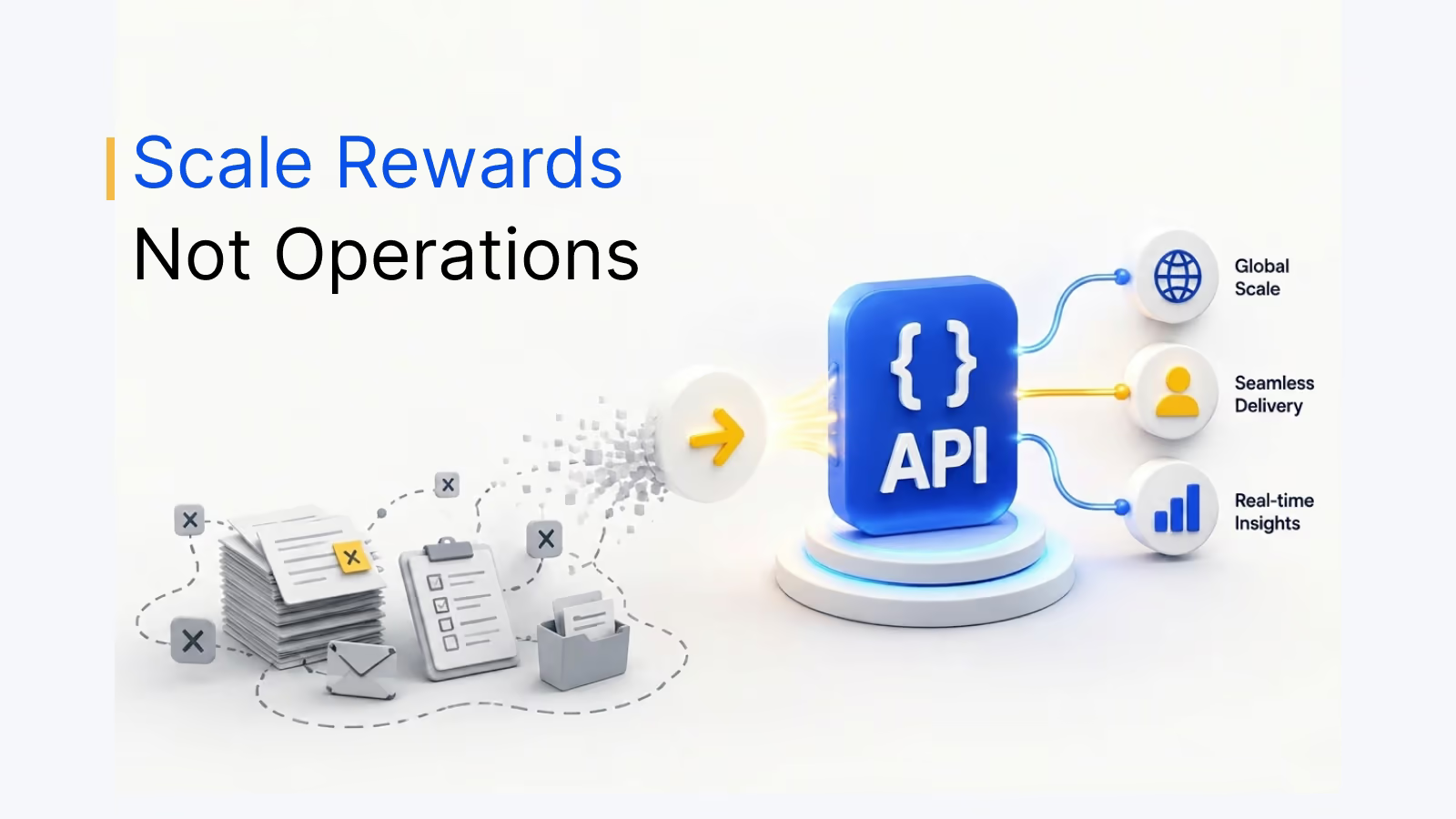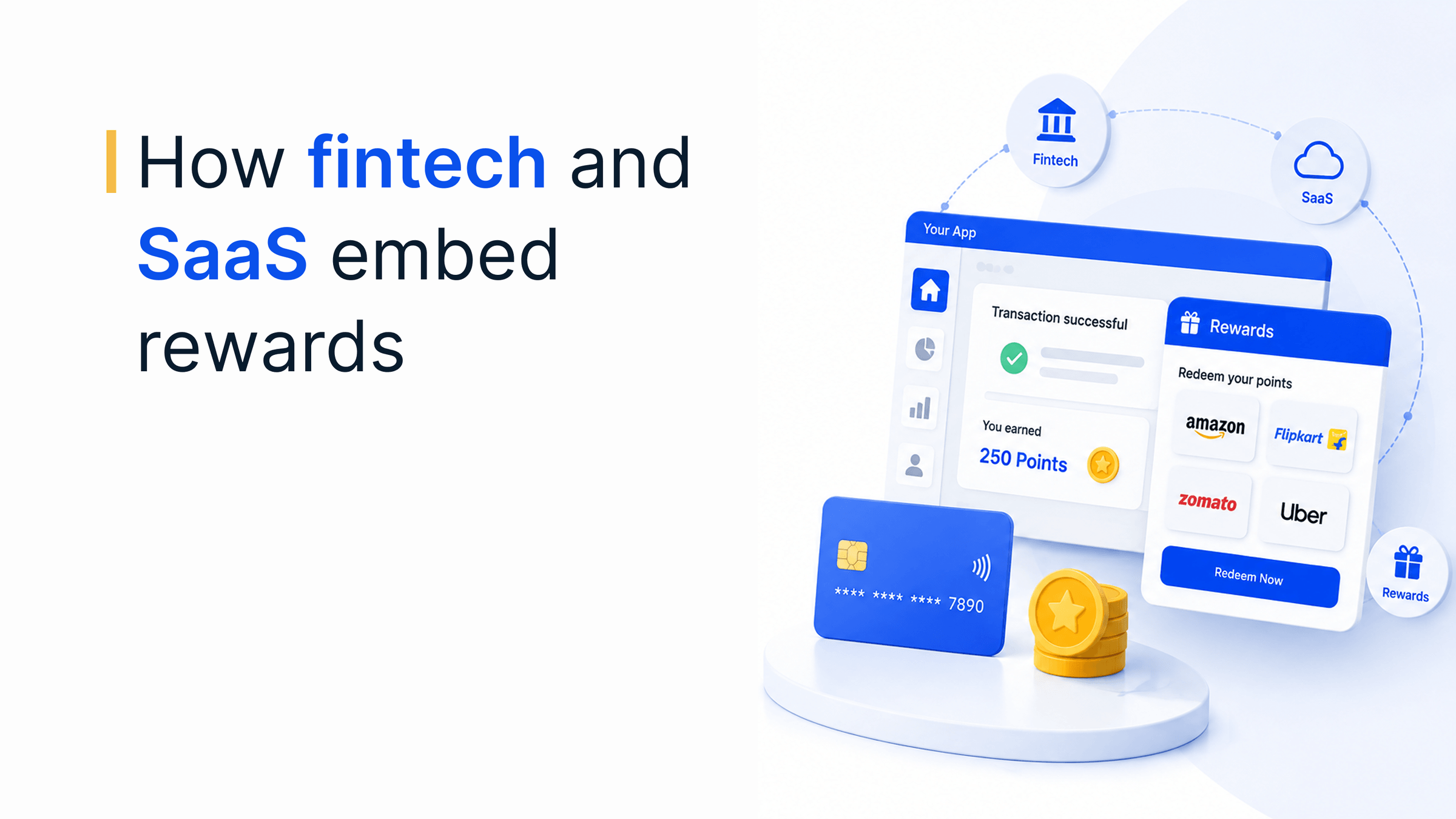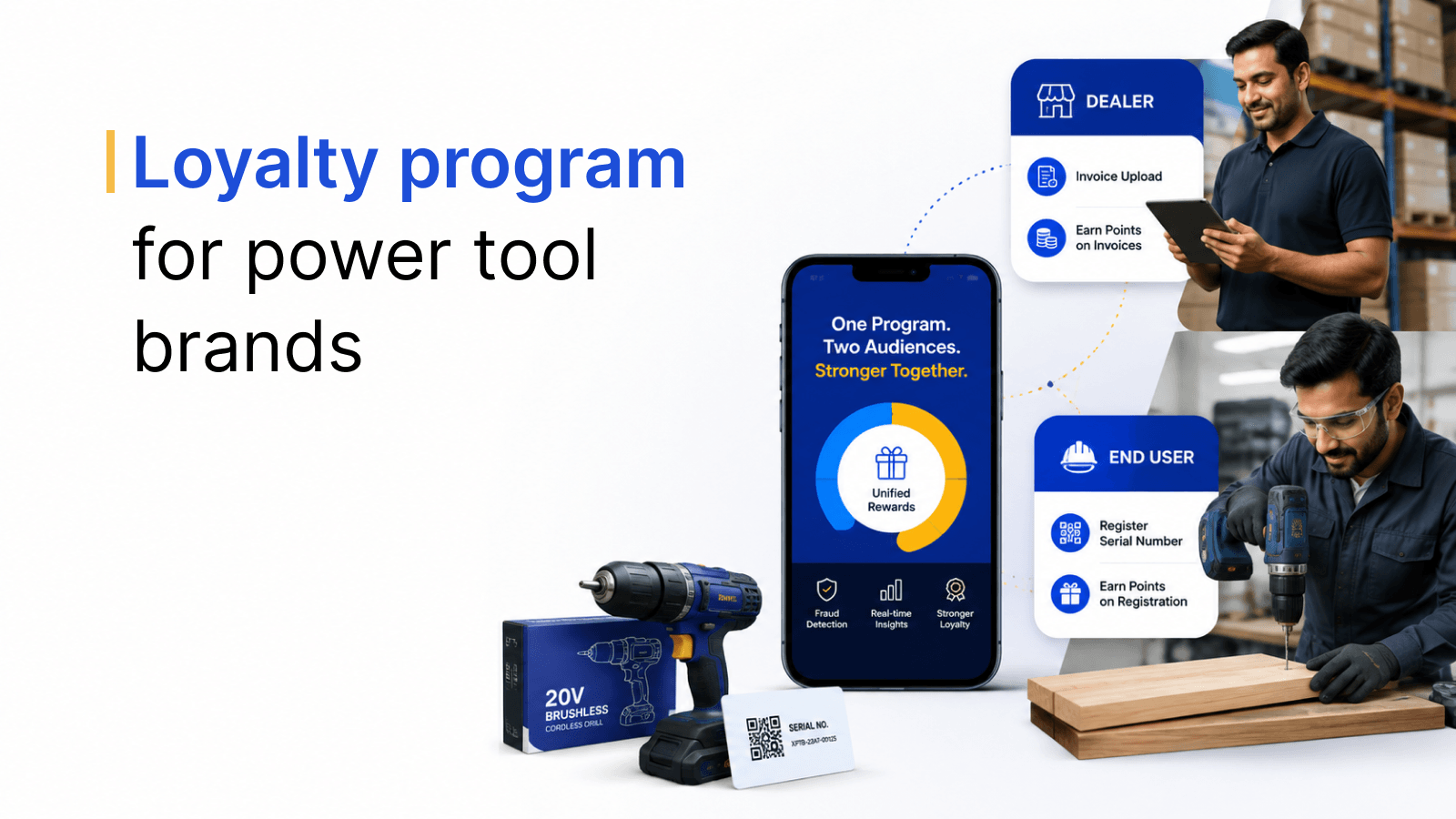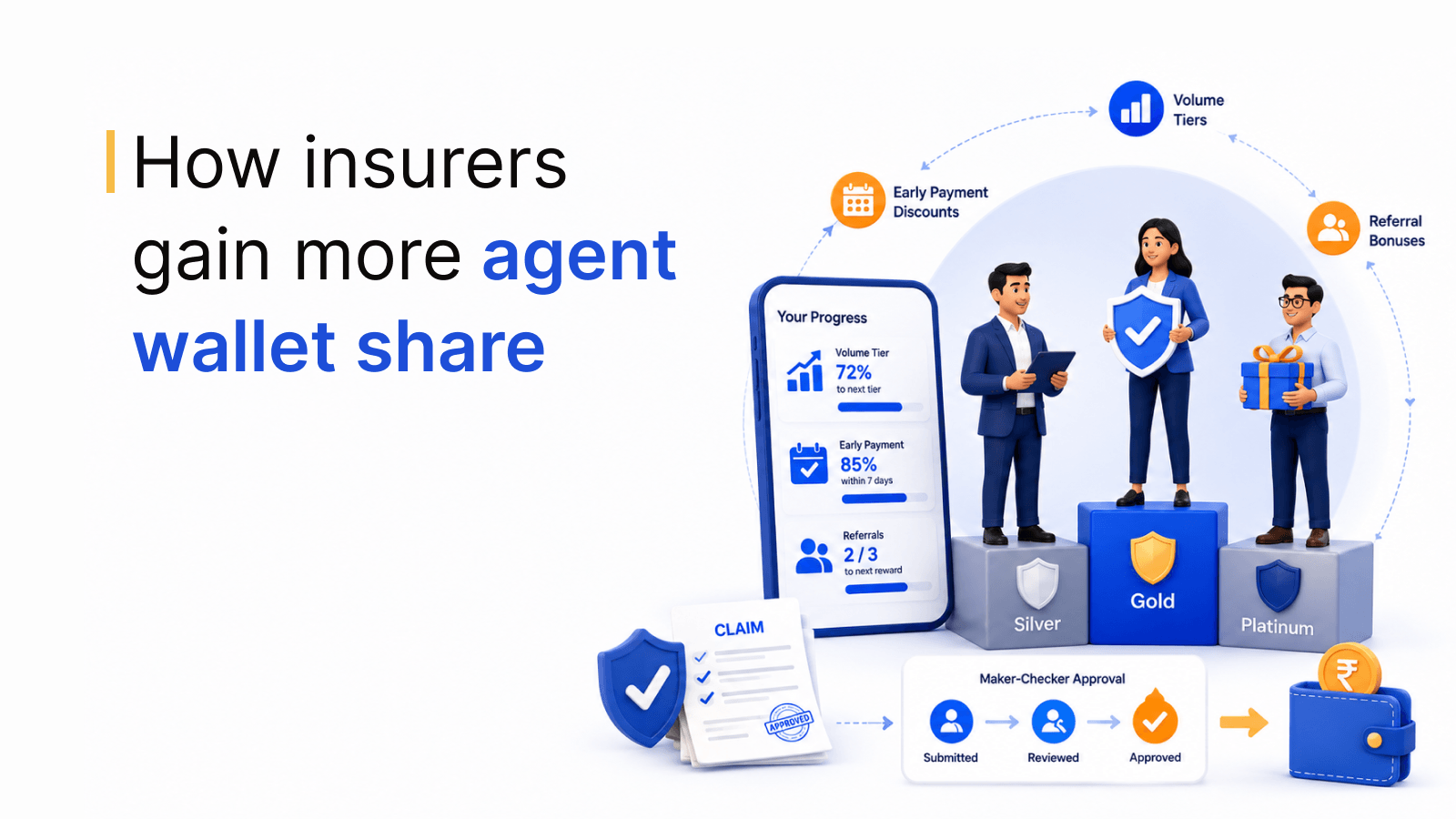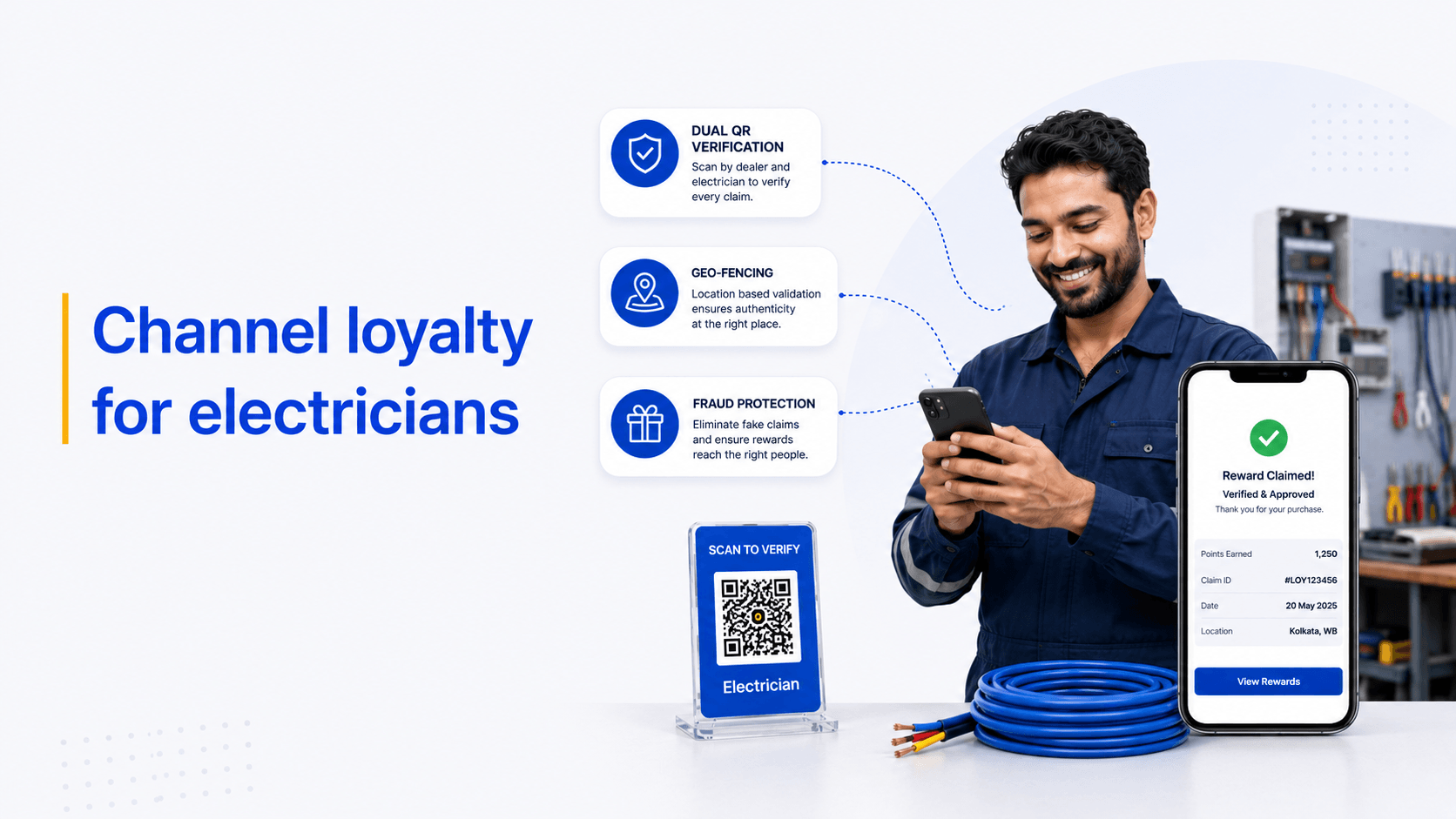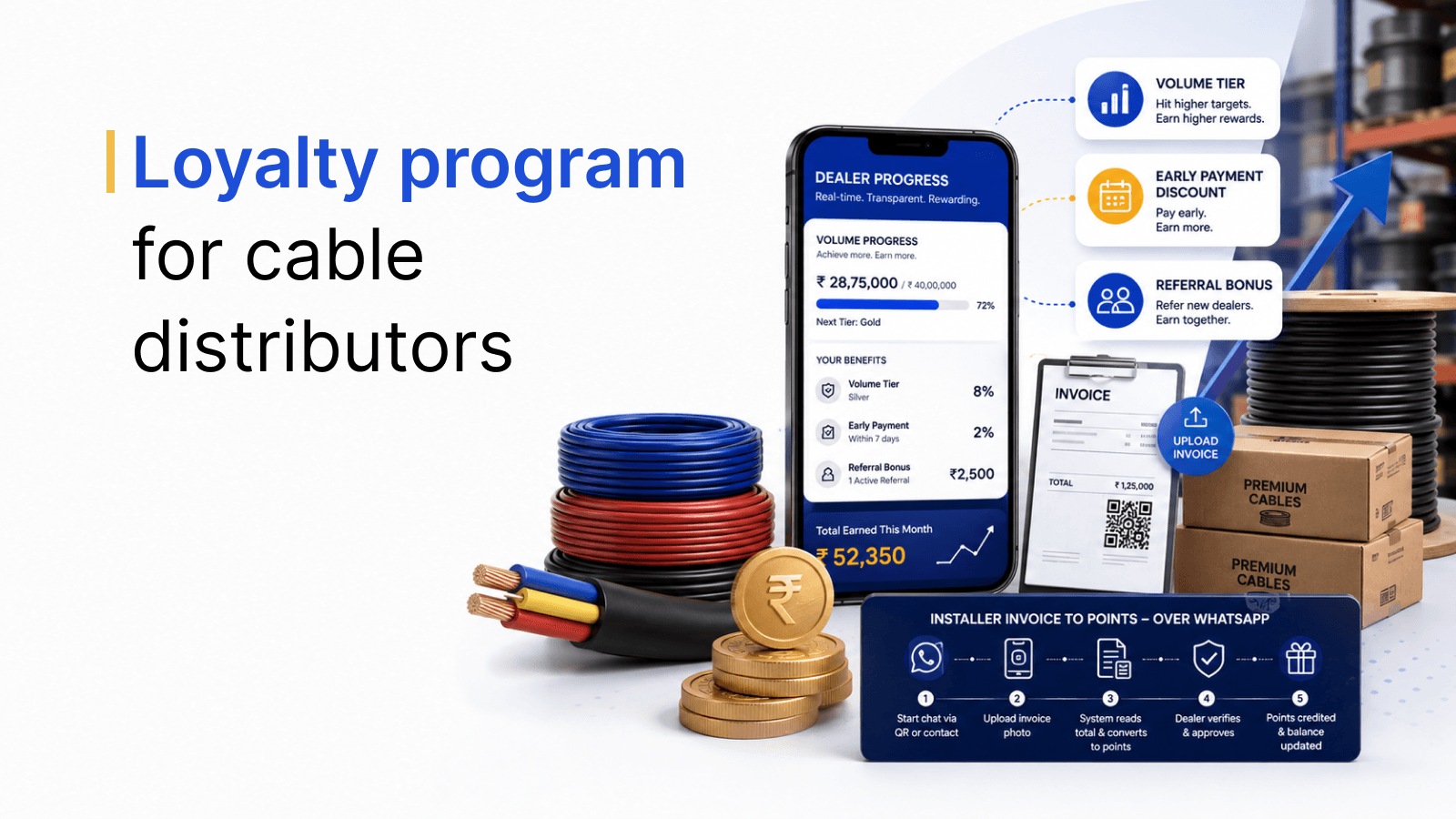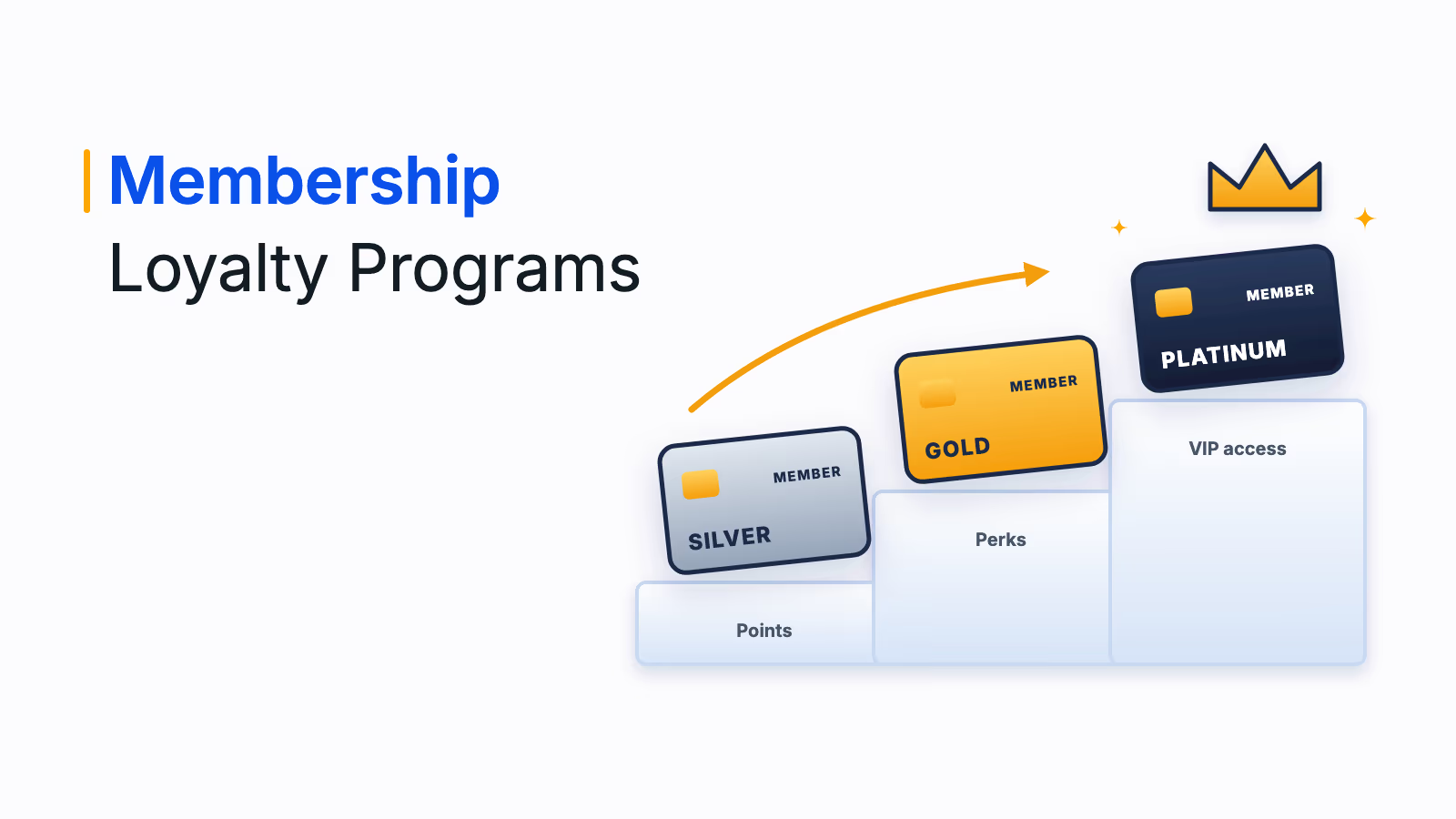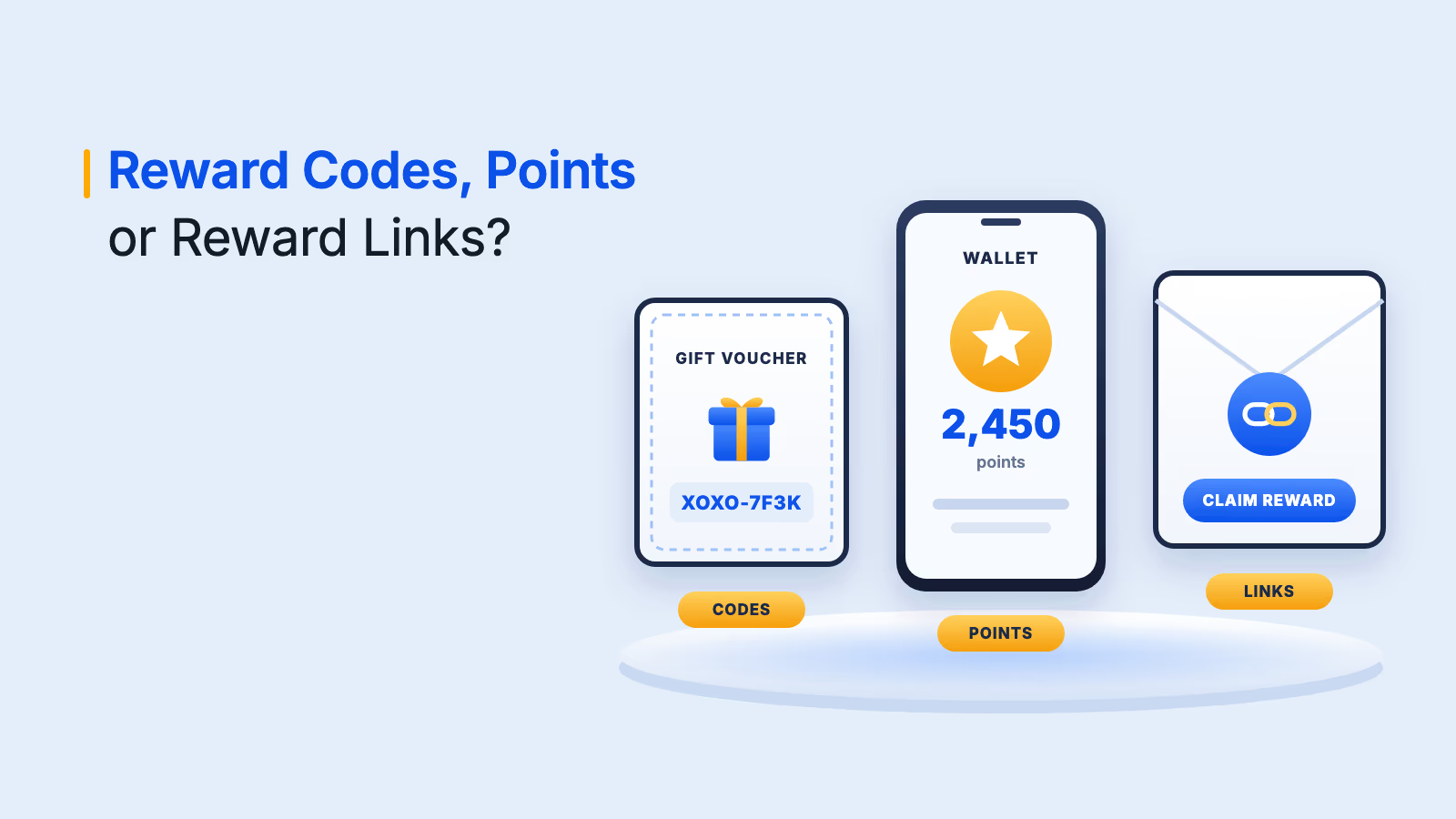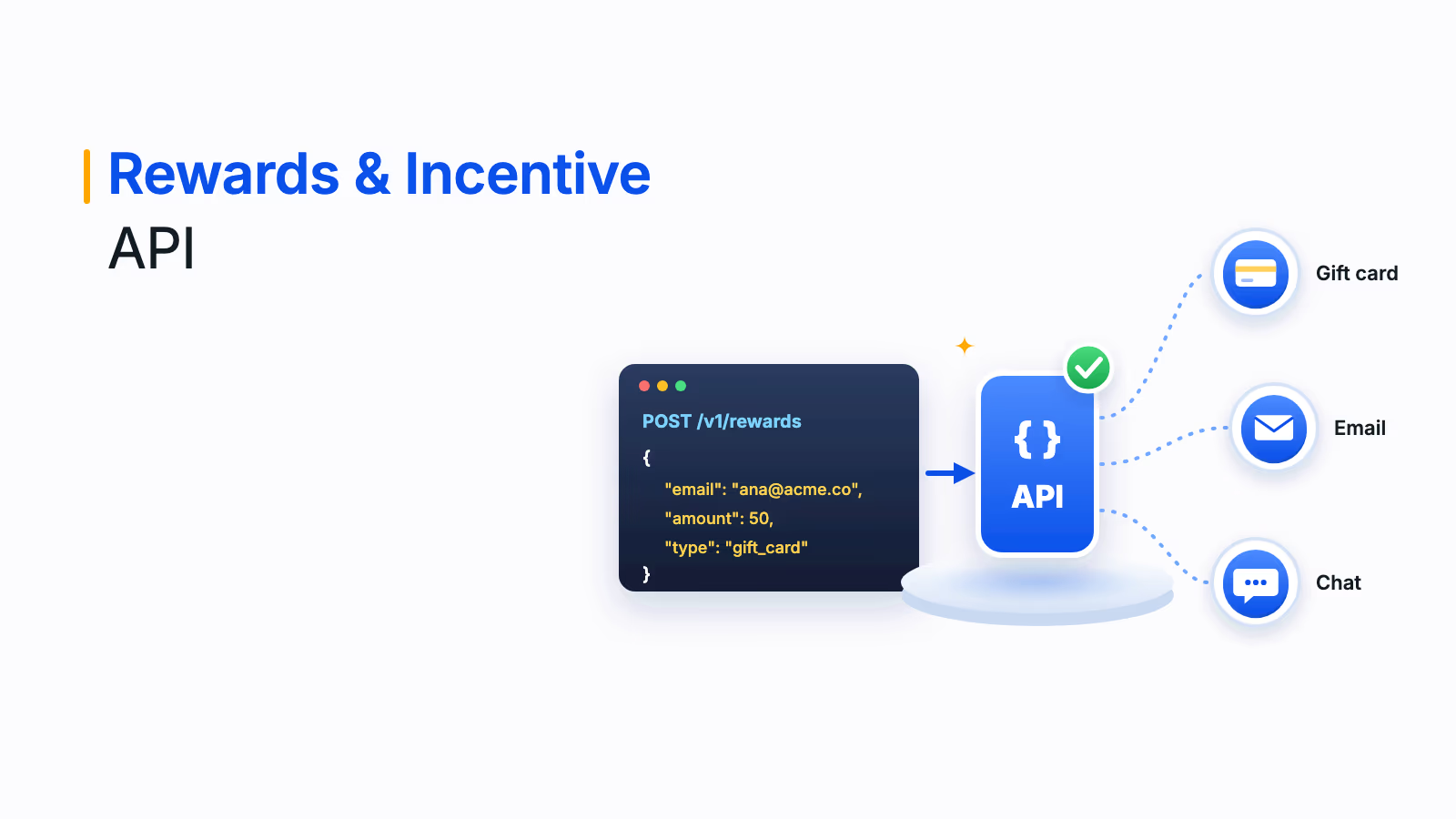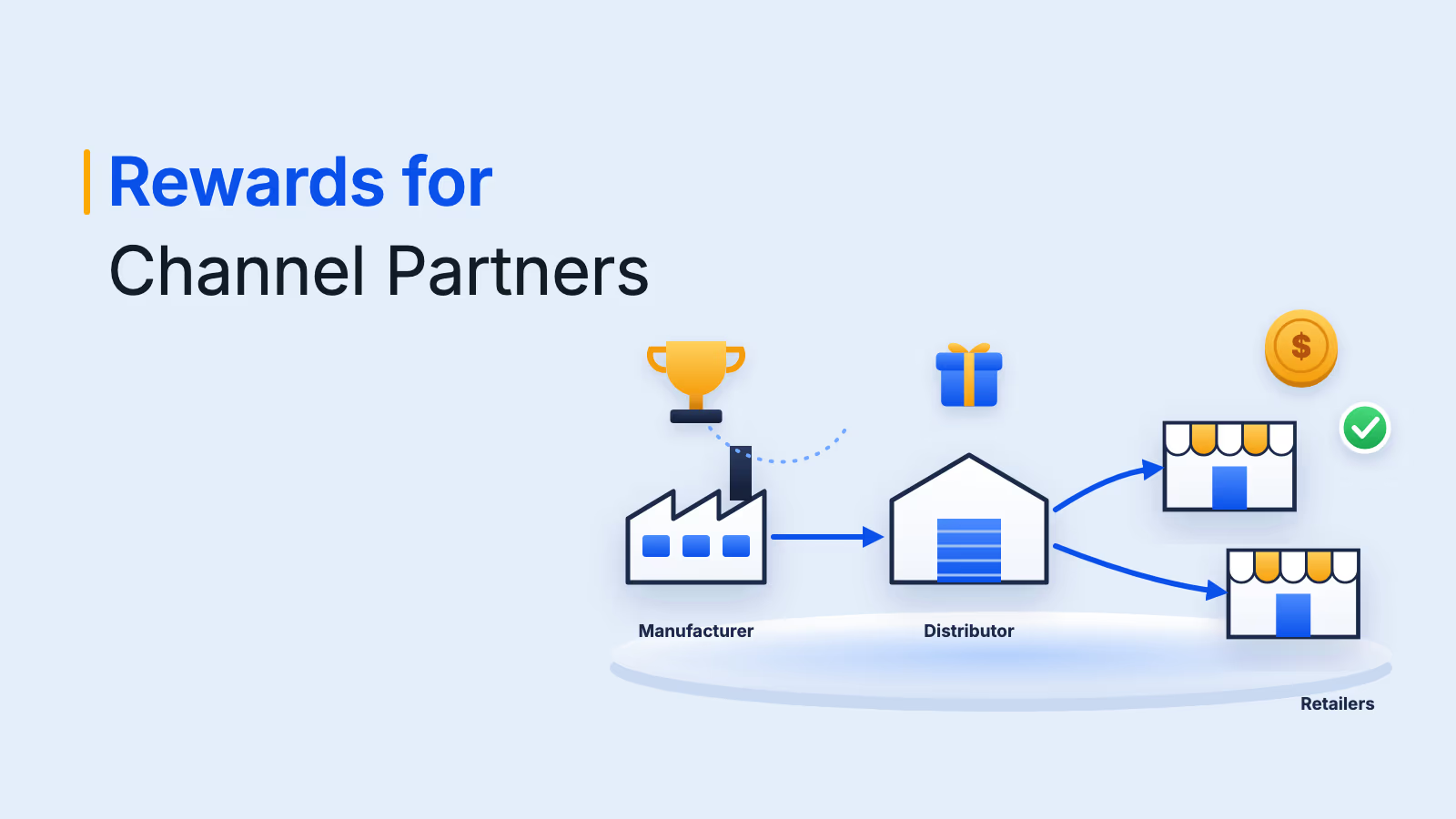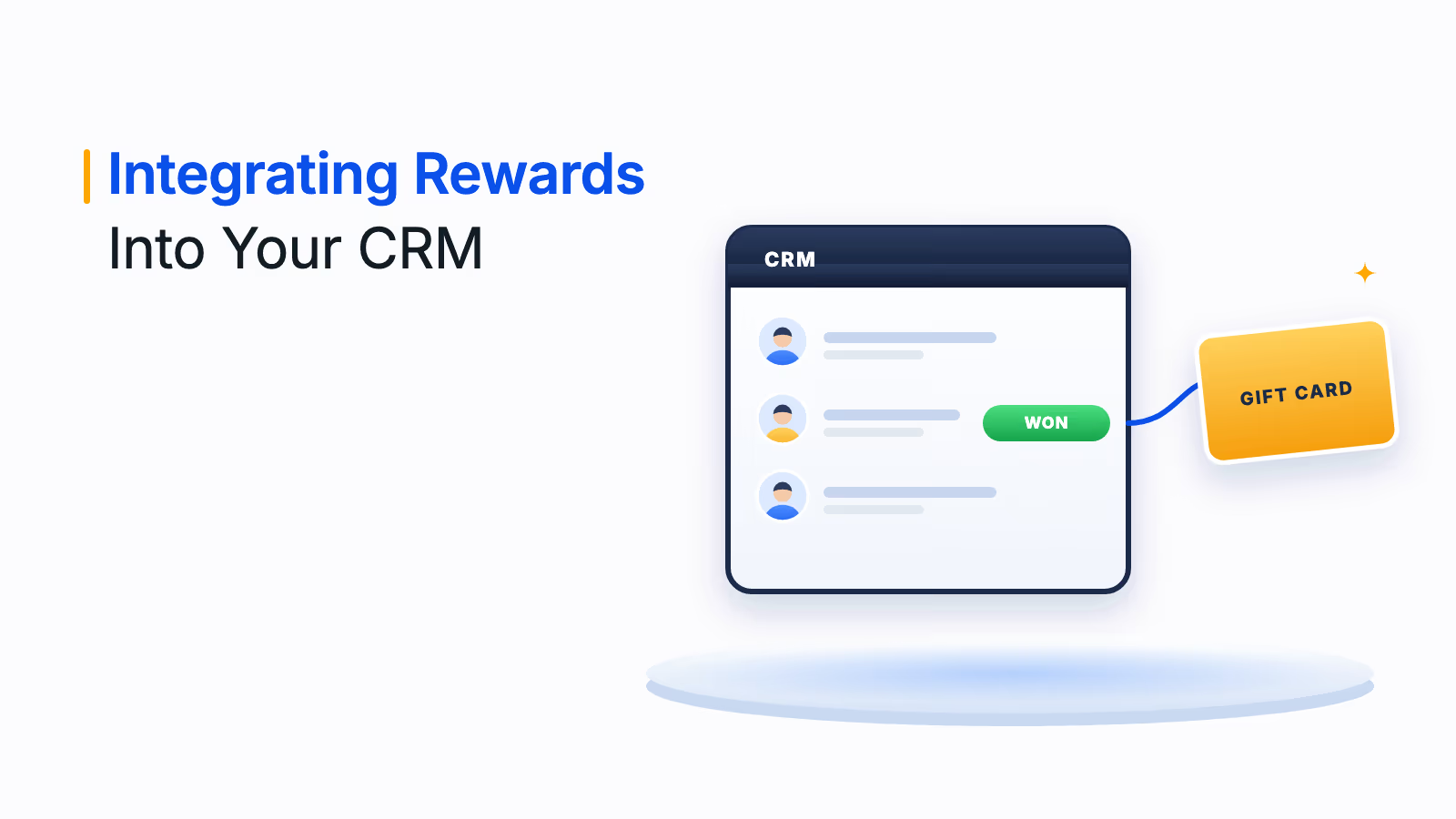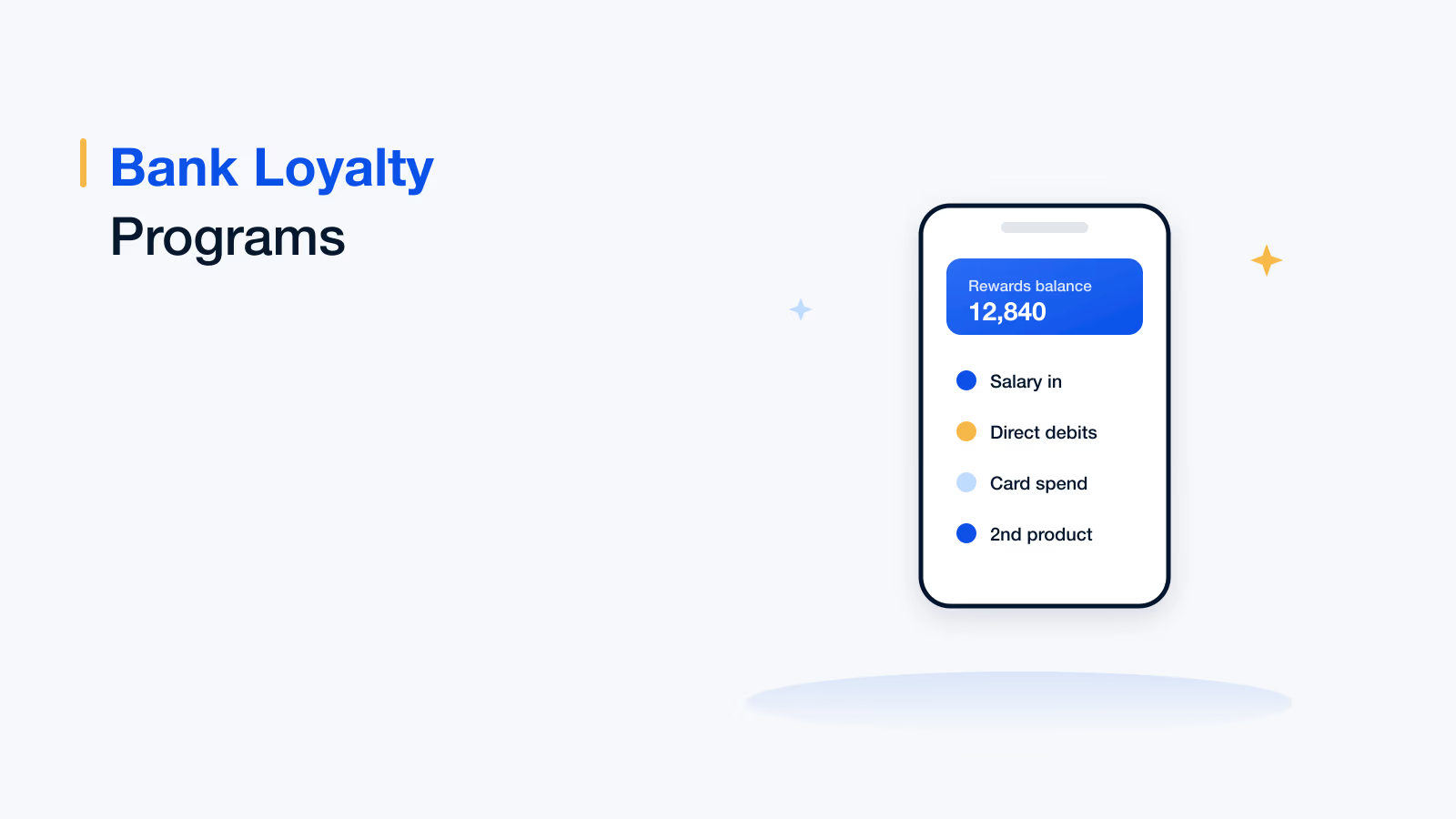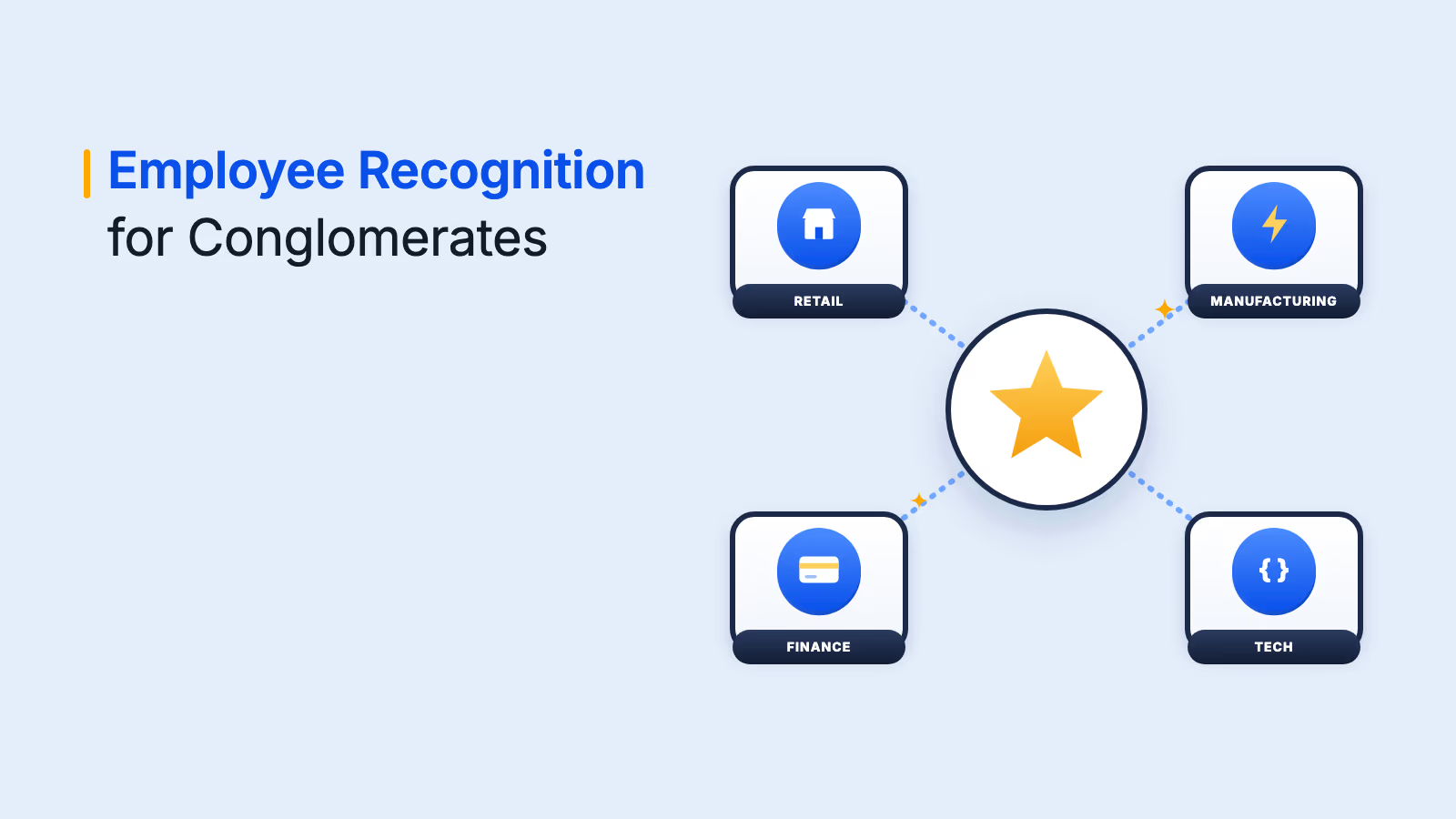
A product team at a bank gets the brief: add rewards to the app by next quarter. Then the questions pile up fast. Who holds the catalog, who funds the offers, who pays out, and which of those do you build yourself?
Embedded rewards platforms answer different parts of that question. Some supply a catalog and payout rails, some run loyalty rules, some link offers to card transactions, and some are full enterprise suites.
Loyalty is crowded, and the Bond Loyalty Report 2025 finds consumers belong to 17.4 programs each on average. Standing out inside someone's wallet or banking app takes a real reason to come back.
We compared 10 platforms for banks and fintechs on integration model, reward fulfillment, funding, compliance and fit. They are grouped by the job each does best, not scored.
Disclosure: Xoxoday publishes this guide and Plum is one of the 10. All are judged on the same criteria.
The best embedded rewards platforms for banks and fintechs
- Xoxoday Plum for a rewards catalog and payout layer behind your own app (G2 4.6/5)
- Onbe for paying rewards and rebates as money through cards and wallets
- Open Loyalty for teams that want to own the loyalty experience inside their own app
- Voucherify for rule-driven coupons, gift cards and loyalty logic through one API
- Fidel API for building your own card-linked rewards on live transaction data
- Kard for merchant-funded cash back inside a US neobank or card app
- RewardOps for large bank programs that need a redemption marketplace
- Prizeout for credit unions and community banks adding cash back to online banking
- Loyalty Juggernaut for multi-partner programs run by large issuers and coalitions
- Capillary Technologies for broad enterprise loyalty programs across many industries
What makes a good embedded rewards platform?
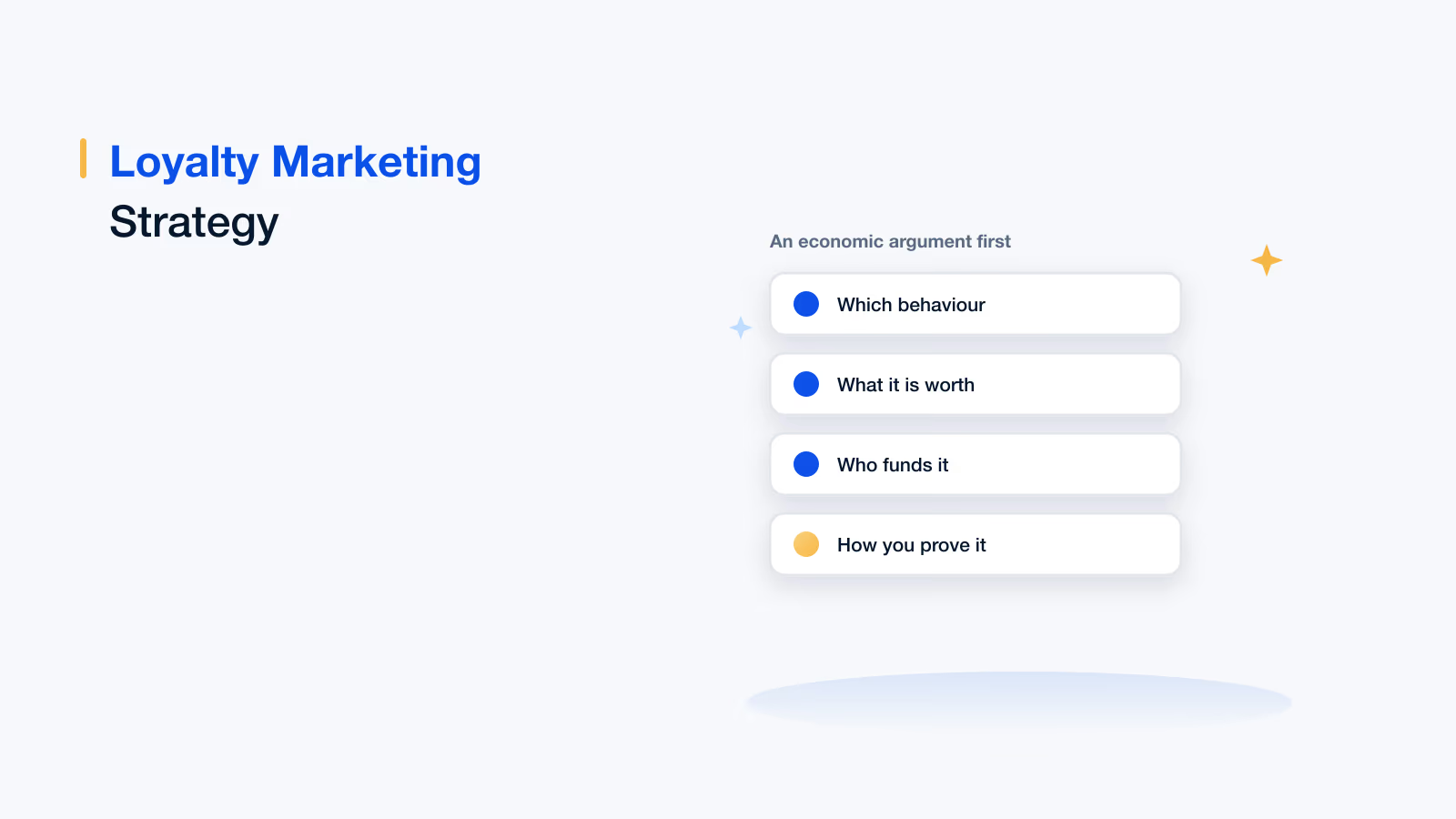
Banks and fintechs buy differently. The reward has to live inside a regulated product, and someone has to fund it.
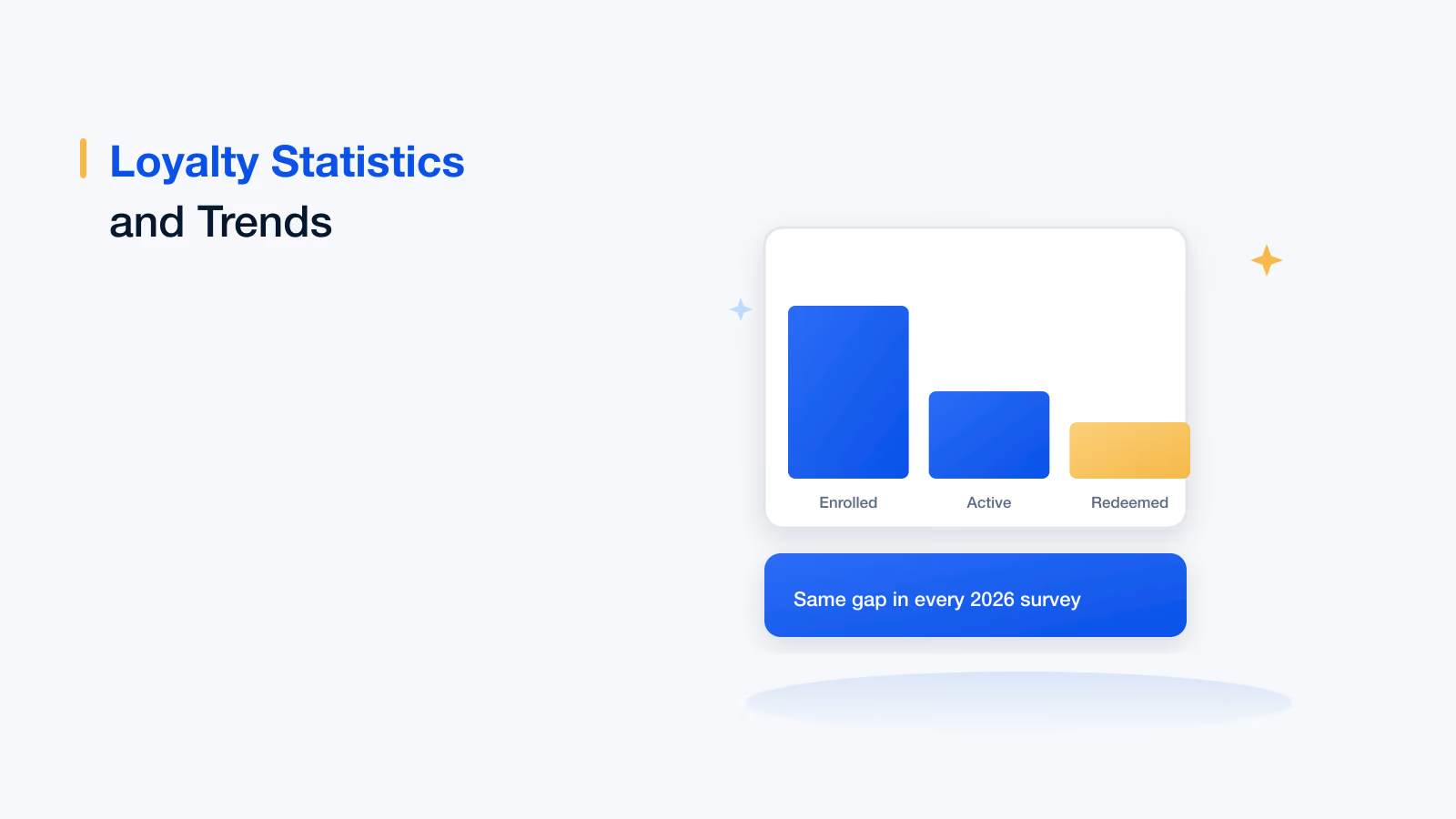
17.4
Programs per consumer
average loyalty memberships, 2025
48%
Very satisfied (US)
of Americans with their loyalty program
32%
Very satisfied (Canada)
of Canadians with their loyalty program
Source: Bond Loyalty Report 2025, in collaboration with Visa (22,000+ consumers, 400+ programs).
We judged every platform on five tests:
- Integration model. API, SDK, hosted storefront or no-code, and how much your engineers must build.
- Reward fulfillment. Whether the platform delivers the reward itself, through a catalog, a card or a payout rail.
- Funding model. Who pays for the reward: your balance sheet, the merchant or a brand.
- Compliance and security. Certifications, white-label control and fit for a regulated product.
- Fit for purpose. Some vendors are engines, some are rails. A fair comparison says which is which.
Integration model and funding carried the most weight, since they decide build time and program cost. Feature claims come from each vendor's public pages, in our own words, with figures labeled as the company's own. Ratings come from G2, Capterra and Forrester as of October 2026, with review counts shown where a score rests on fewer than 20.
Embed rewards in your banking or fintech app
Rewards, points and reward links through one API, with white-label options and 10M+ options across 150+ countries.
See Plum in actionTrusted by 5,000+ companies
The best embedded rewards platforms at a glance
- Xoxoday Plum
- Best for
- A rewards catalog and payout layer behind your own app
- Standout feature
- Rewards, points and links APIs under one account
- Rating
- G2 4.6 (Xoxoday)
- Onbe
- Best for
- Paying rewards and rebates as money through cards and wallets
- Standout feature
- Cards, push-to-card, ACH and wallet payouts from one provider
- Rating
- No public G2 or Capterra rating
- Open Loyalty
- Best for
- Teams that want to own the loyalty experience inside their own app
- Standout feature
- Headless design leaves the app experience entirely yours
- Rating
- No public G2 or Capterra rating
- Voucherify
- Best for
- Rule-driven coupons, gift cards and loyalty logic through one API
- Standout feature
- Coupons, points, gift cards and referrals share one rules engine
- Rating
- G2 4.6 (22 reviews)
- Fidel API
- Best for
- Building your own card-linked rewards on live transaction data
- Standout feature
- Real-time transaction events from the three main card networks
- Rating
- G2 4.6 (15 reviews)
- Kard
- Best for
- Merchant-funded cash back inside a US neobank or card app
- Standout feature
- Merchant-funded offers instead of reward cost on your balance sheet
- Rating
- No public G2 or Capterra rating
- RewardOps
- Best for
- Large bank programs that need a redemption marketplace
- Standout feature
- A redemption marketplace built for bank and card programs
- Rating
- No public G2 or Capterra rating
- Prizeout
- Best for
- Credit unions and community banks adding cash back to online banking
- Standout feature
- Brand-funded cash back and gift card cash-out in a bank's own channel
- Rating
- No public G2 or Capterra rating
- Loyalty Juggernaut
- Best for
- Multi-partner programs run by large issuers and coalitions
- Standout feature
- Handles multi-partner ecosystems and coalition-style programs
- Rating
- Forrester Wave Loyalty Platforms Strong Performer, Q4 2025
- Capillary Technologies
- Best for
- Broad enterprise loyalty programs across many industries
- Standout feature
- Broad enterprise loyalty suite with a large installed base
- Rating
- Capterra 4.4 (20 reviews) · Forrester Wave Loyalty Platforms Leader, Q4 2025
1. Xoxoday Plum
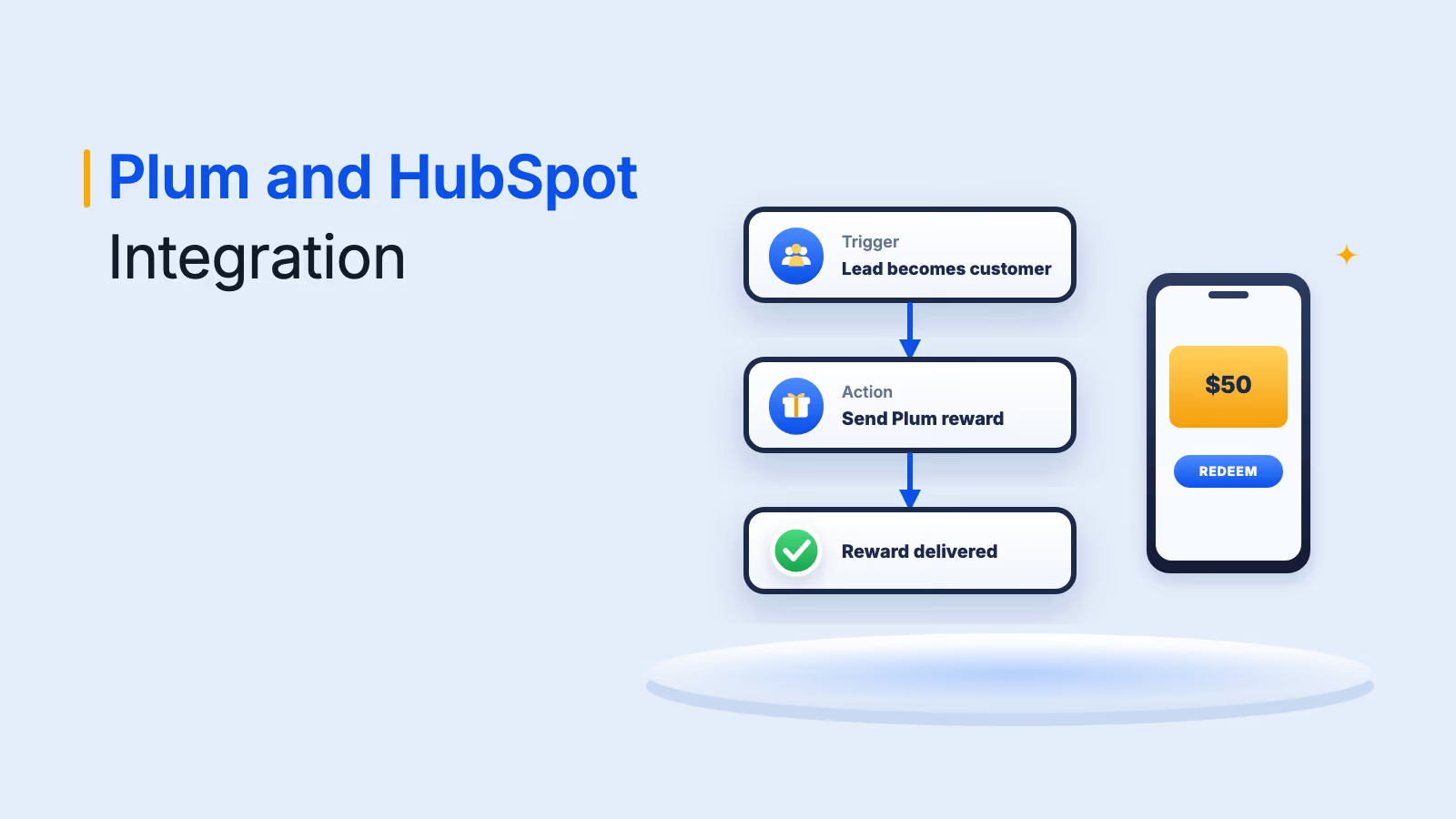
Plum is a rewards distribution layer that a bank or fintech calls from its own product. Its Rewards API sends gift cards, merchandise, mobile top-ups, charity donations and more from a catalog of 10M+ options across 150+ countries, so the app never has to negotiate with individual brands.
Separate Reward Points and Reward Links APIs cover points-based and link-based programs, and white-label options keep the experience in your own brand. A regulated Indian brokerage used Reward Links to rebuild its referral rewards after new regulatory guidelines, with each qualifying referral triggering its own trackable reward. The app stays yours.
- Rewards, points and links APIs under one account
- 10M+ reward options across 150+ countries, in multiple currencies
- White-label options and instant digital delivery
- A rewards and payout layer, not a regulated card issuer or a core loyalty ledger
- More than you need if you only want a single cashback offer
2. Onbe
Onbe, formed from the North Lane and daVinci Payments merger and renamed in 2021, delivers incentives and payouts as funds. Its Compensate, Disburse and Incentivize solutions cover virtual and physical prepaid cards, push-to-card, ACH and wallet options.
Send to Wallet provisions a card straight into Apple, Google or Samsung wallets, and the platform can be integrated by API, low-code or no-code. White-label programs are aimed at banks and financial institutions. The company says it has paid 290M+ consumers. Think money, not points.
- Cards, push-to-card, ACH and wallet payouts from one provider
- Send to Wallet provisioning into major mobile wallets
- White-label programs for financial institutions
- A payouts layer, so points logic and a brand catalog come from elsewhere
3. Open Loyalty
Open Loyalty is a headless loyalty engine with a REST API, so a bank's product team designs the front end and the platform runs the rules. It covers points, tiers, campaigns, referrals and gamification mechanics such as badges and leaderboards.
Webhooks and batch exports connect it to core systems, and the company lists multi-tenant support and ISO 27001 certification. It names Asia Commercial Bank and Warba Bank among its banking customers and says it handles 1B loyalty events a month. The engine stays invisible.
- Headless design leaves the app experience entirely yours
- Campaign builder for points, tiers, referrals and challenges
- Webhooks and batch exports for core-system integration
- An engine only, so redemption catalogs, payouts and fulfillment need other partners
4. Voucherify
Voucherify, based in Poland, is an API-first promotion engine that puts coupons, loyalty points, gift cards, referrals and bundles under one rules layer. Product teams set redemption limits, stacking rules and velocity checks without rebuilding logic for each campaign.
It supports A/B testing of incentive logic, webhooks and connectors for tools such as Shopify, Braze and Segment. The company states a sub-50 ms API response and 99.99% uptime. One rules layer, many incentives.
- Coupons, points, gift cards and referrals share one rules engine
- Stacking, limits and velocity controls guard against abuse
- A/B testing of incentive logic
- Built for e-commerce and marketing promotions, so card-linked offers and payouts sit outside it
5. Fidel API
Fidel API is card-linking infrastructure. It connects to Visa, Mastercard and American Express transaction feeds, so a fintech can see a qualifying purchase in real time and trigger a reward against it.
Its Select Transactions API, Offers as a Service and webhooks sit on top of endpoints for programs, cards, brands and locations, with an SDK and test environment. It is an infrastructure layer, so the reward design and the user experience are yours to build. Plan for that.
- Real-time transaction events from the three main card networks
- Offers as a Service for merchant-funded offers
- SDK and test environment for developers
- Data and offers infrastructure, so reward fulfillment and catalog are not included
6. Kard
Kard builds embedded card-linked offers for issuers and fintechs. Its API surfaces merchant-funded cash back that is matched to a cardholder's purchases, delivered in-app or by push and email.
It also offers rewards as a service and a commerce media network, and is PCI compliant and SOC 2 certified. The company says it reaches 47M+ cardholders and lists Varo, Robinhood and Branch among its partners. Citi's US consumer cards business announced in August 2026 that it will acquire Kard, and the deal had not closed at the time of writing. Check its status.
- Merchant-funded offers instead of reward cost on your balance sheet
- Offers delivered in-app, by push or by email
- PCI compliance and SOC 2 certification
- Merchant network is US-focused
- The pending acquisition by Citi means roadmap and availability to other banks are worth confirming
7. RewardOps
RewardOps, part of Jonas Software, runs the redemption side of bank and card rewards. Its API-based platform has powered hosted earn-and-burn experiences and a marketplace of brands and retailers since 2013.
A Member Experience layer gives cardholders a branded storefront, while an engagement engine and modular add-ons extend it. Its client list includes large banks and airline programs such as TD, RBC and CIBC. Redemption is the focus.
- A redemption marketplace built for bank and card programs
- Hosted, branded member experience
- Modular, so teams can add components over time
- Positioned for enterprise programs, and public API detail is limited for self-serve evaluation
8. Prizeout
Prizeout lets members of credit unions and community banks turn rewards into brand-funded cash back or discounted gift cards inside online banking. Its CashBack+ Offers, Actions and Pay products sit alongside a Credit Card Rewards option that combines balances into one.
A Payouts product and the Prizeout Partners CUSO support credit-union adoption. The company says it works with 30+ financial institutions and cites a 2025 Callahan Innovation Series award for member engagement. Cash back is the draw.
- Brand-funded cash back and gift card cash-out in a bank's own channel
- Built around credit-union and community-bank operating models
- Single combined balance for credit card rewards
- US credit-union focus, and a narrower cash back model than a full loyalty engine
9. Loyalty Juggernaut
Loyalty Juggernaut's GRAVTY is an enterprise loyalty orchestration platform with modules for offers and promotions, partner ecosystems, customer data and loyalty economics through FIDIVIO. Banking is one vertical alongside airlines and hospitality.
Its AI-Scan feature handles receipt scanning, and the company describes six agentic AI systems. It says it has 60+ enterprise clients and has migrated 300M+ members. It suits large partner networks.
- Handles multi-partner ecosystems and coalition-style programs
- Loyalty economics tooling through FIDIVIO
- Recognized in Forrester's loyalty platform evaluation
- Heavier than needed for a single embedded rewards feature
10. Capillary Technologies
Capillary is a publicly listed enterprise loyalty and customer engagement provider, with its Loyalty+ product used for points, tiers and campaigns across retail and consumer brands.
Forrester named it a Leader in its Q4 2025 loyalty platform evaluation. Its retail heritage means banks should check bank-specific API depth and core-banking integration directly during evaluation. Ask for bank references.
- Broad enterprise loyalty suite with a large installed base
- Strong analyst recognition in loyalty platforms
- Fits multi-brand, multi-region program needs
- Retail-centric heritage, so confirm fit for bank-specific integrations
What to ask before you pick a platform
Most comparisons skip the questions that decide whether an embedded program survives compliance review. Ask these four first.
- Who funds the reward? Your balance sheet, a merchant or a brand each give a different cost curve as the program grows.
- Does the vendor deliver the reward or only decide it? A rules engine still needs a catalog, card or payout rail behind it.
- What does white-label really cover? Ask whether the end user ever sees the vendor's name, domain or checkout.
- What happens if the vendor's ownership changes? Ask for continuity commitments in writing before you build on any platform.
Which embedded rewards platform should you choose?
If you need a catalog and payout layer behind your own app, start with Plum, and compare Onbe for rewards paid as money. For a headless engine you design around, look at Open Loyalty and Voucherify. For card-linked offers, compare Fidel API and Kard. Bank and credit-union cash back points to RewardOps and Prizeout. Large issuers running multi-partner programs should look at Loyalty Juggernaut and Capillary. For background, see our guides to how fintech and SaaS companies embed rewards in their products, what a rewards API is and how banks use a rewards marketplace.
Book your Plum demo
Frequently asked questions
An embedded rewards platform lets a bank or fintech offer rewards inside its own app or product without building the catalog, rules or payouts itself. The platform is called by API and returns the reward, offer or payout.
Banks fund rewards from their own balance sheet, from merchant-funded offers matched to card transactions, or from brand-funded cash back. The funding model shapes program cost as usage grows, so confirm it before you choose a vendor.
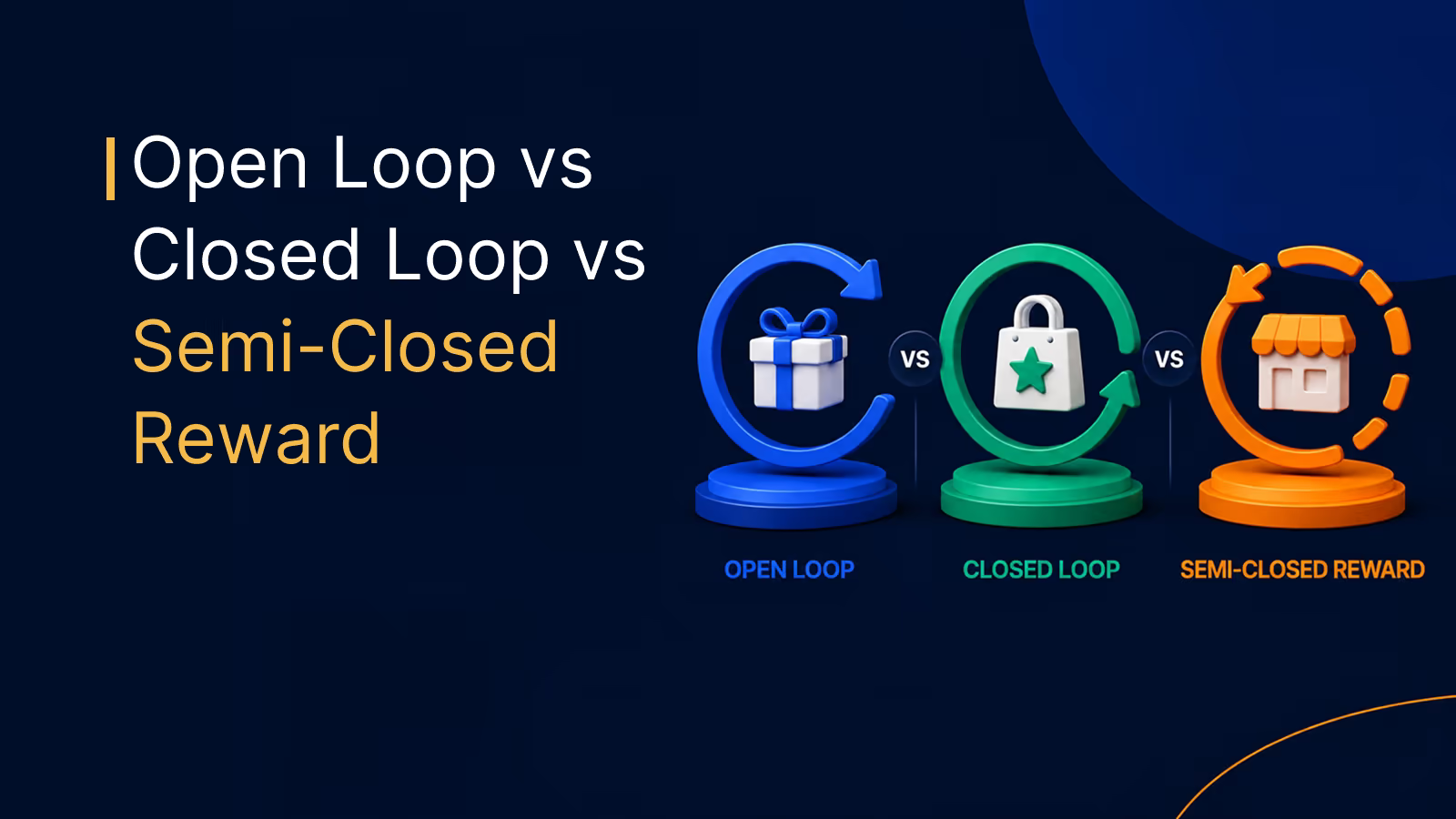
A loyalty engine manages earning rules, tiers and campaigns. A rewards catalog is what members actually redeem for. Some vendors provide both, while others need a separate fulfillment partner behind the engine.
Card-linked offers connect to card transaction data so a qualifying purchase automatically earns a reward or cash back. They usually involve merchant funding and a card network feed rather than a points ledger.
Yes, several platforms in this guide offer white-label options. Ask exactly what is covered, including domains, checkout and delivery messages, so the experience stays in your brand.