Key Takeaways
A loyalty program is a structured exchange: customers give repeat business and data, and you give rewards worth coming back for.
US consumers hold about 19 loyalty memberships but actively use only about 9, so a program has to earn its use after sign-up.
Start with one behavior, pick the simplest reward model that rewards it, and measure active members instead of sign-ups.
Open your wallet and count the loyalty cards. Now count the ones you used this month.
Most people carry more programs than they use, and most brands run programs that look healthy on a sign-up dashboard while customers quietly drift. If you are about to build one, or fix one, that gap is the problem to solve first.
What a loyalty program is
A loyalty program is a structured exchange. Customers give you repeat purchases, referrals, and information about themselves. You give them rewards, status, or access that make coming back worth it.
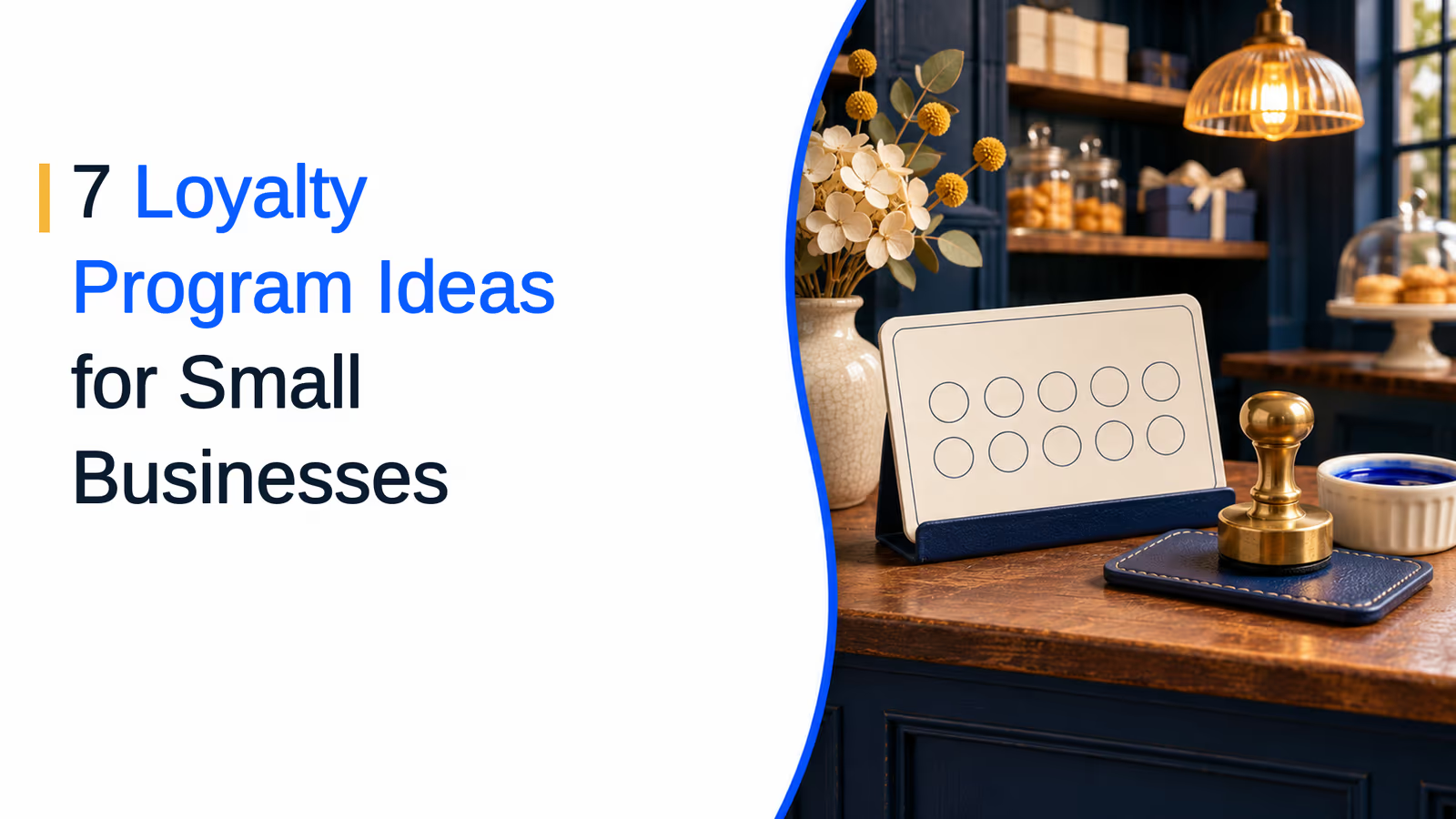
The definition is short because the idea is old, and it has barely changed. A coffee shop punch card is a loyalty program. So is a bank card that turns spend into points, or a distributor scheme that pays dealers more as their volume grows.
What separates a real program from a discount code is memory. The program remembers what each customer did and responds to it, which is why it can change behavior instead of lowering a price once.
Retention is the economic case. Bain & Company's Frederick Reichheld, writing in Harvard Business Review, found that retaining just 5% more customers can lift profits by 25% to 95% in e-commerce. The range is wide because it depends on the business, but the direction rarely changes.
How a loyalty program works
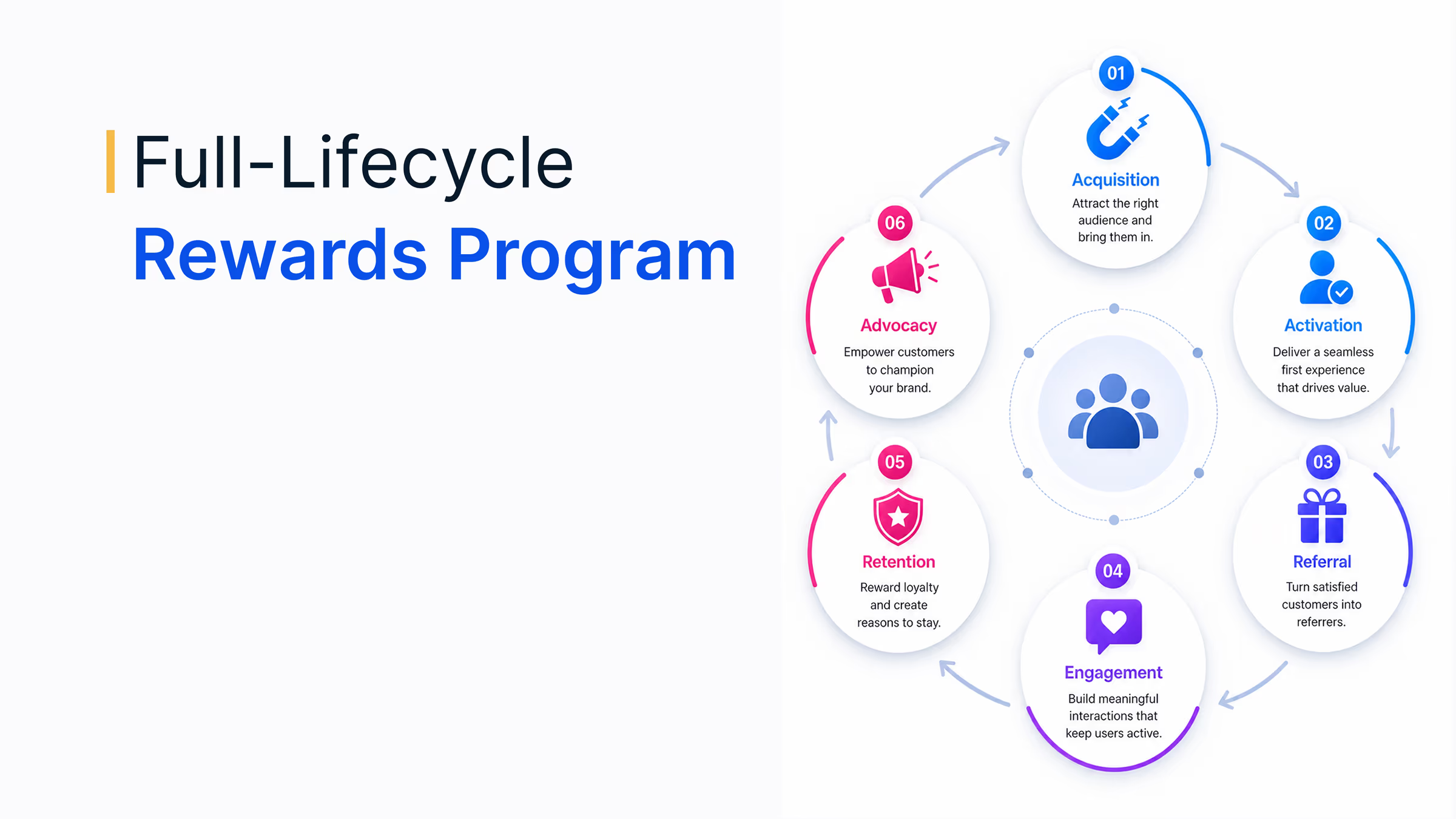
Every program, from a paper card to an enterprise platform, runs the same loop.
- Join. The customer enrolls, usually with a phone number or email.
- Earn. Purchases and other actions, such as referrals or reviews, add points, stamps, or progress.
- Progress. The customer sees a balance, a tier, or a goal and knows what is left to reach it.
- Redeem. They exchange that balance for a reward they actually want.
- Return. The reward, or the progress toward one, brings them back to earn again.
Programs fail at step 3 and step 4 far more than at step 1. A customer who cannot see where they stand, or who finds the reward catalog uninteresting, stops at step 2 and never comes back.
The back end matters too. A rule engine decides how many points each action earns, caps limit abuse, and a ledger records every credit and debit so balances stay trustworthy.
Run points, tiers, and campaigns in one platform
See how Loyalife handles earning rules, tiers, segments, and a 10M+ option reward catalog.
Book a free 30-min demoTrusted by 5,000+ companies
Types of loyalty programs
Most programs fall into five models. Each rewards a different kind of behavior, so the right choice depends on what you want customers to do more of.
- Points
- How customers earn
- Points per dollar or per action, redeemed for rewards
- Best for
- Frequent, repeat purchases
- Watch out for
- Points that feel too slow to be worth chasing
- Tiered
- How customers earn
- Status levels unlocked by spend or activity
- Best for
- Brands with a clear high-value segment
- Watch out for
- Tiers customers cannot realistically reach
- Paid membership
- How customers earn
- A fee in exchange for ongoing benefits
- Best for
- Brands with strong, repeat-use perks
- Watch out for
- Perks that do not outweigh the fee
- Coalition
- How customers earn
- One currency earned and spent across partner brands
- Best for
- Partners with complementary customers
- Watch out for
- Governance and settlement between partners
- Cashback
- How customers earn
- A percentage of spend returned as money or credit
- Best for
- Price-sensitive, simple-value categories
- Watch out for
- Little emotional attachment to the brand
Points programs
Points are the default because they are flexible. You can award them for spend, referrals, or anything else you want to encourage. Our guide to designing and running a loyalty points program covers value-per-point math in detail.
Tiered and membership programs
Tiers add status on top of rewards, which gives your best customers something money alone cannot buy. If you are weighing a fee-based option, see how membership loyalty programs work.
Coalition and cashback programs
Coalitions let partners share a currency. Cashback strips the program down to a single, easy-to-grasp benefit. For a side-by-side of every model, our breakdown of the types of loyalty programs goes deeper on each.
The benefits of a loyalty program
The benefits are real, but they show up in specific places.
- Higher spend from engaged members. McKinsey reports that a typical active member spends about 10% more than someone who is enrolled but inactive, and members who redeem spend about 25% more.
- Lower reliance on acquisition. Retention gains compound. Each customer who stays carries forward without new acquisition spend.
- First-party data. Every earn and redeem event tells you what a customer buys, when, and what motivates them, without third-party cookies.
- A reason to talk to customers. A balance about to expire gives you a message worth sending.
Look at what the data rewards: activity and redemption, not enrollment. A program with a million members and a low active rate is a mailing list with a loyalty logo.
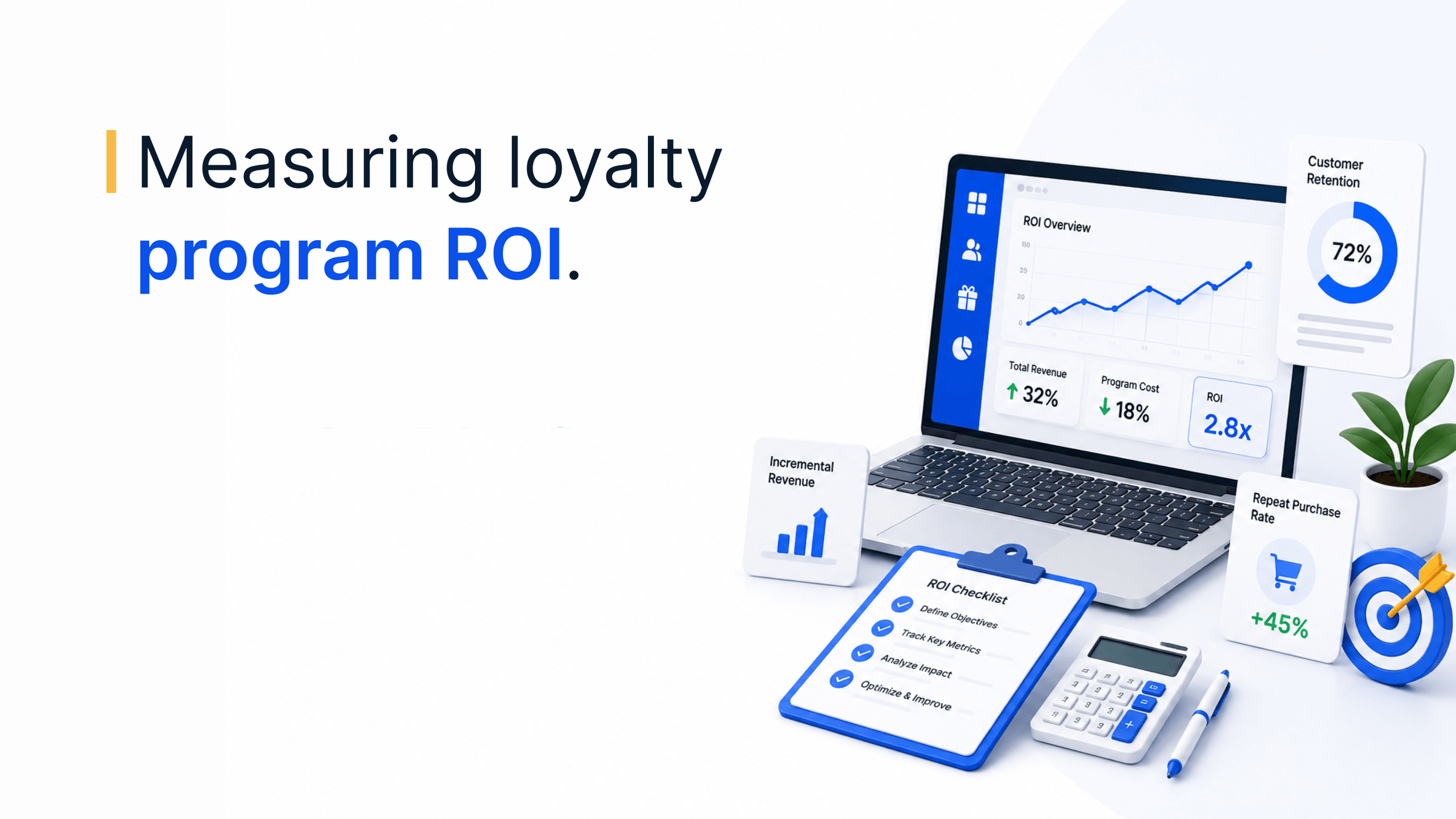
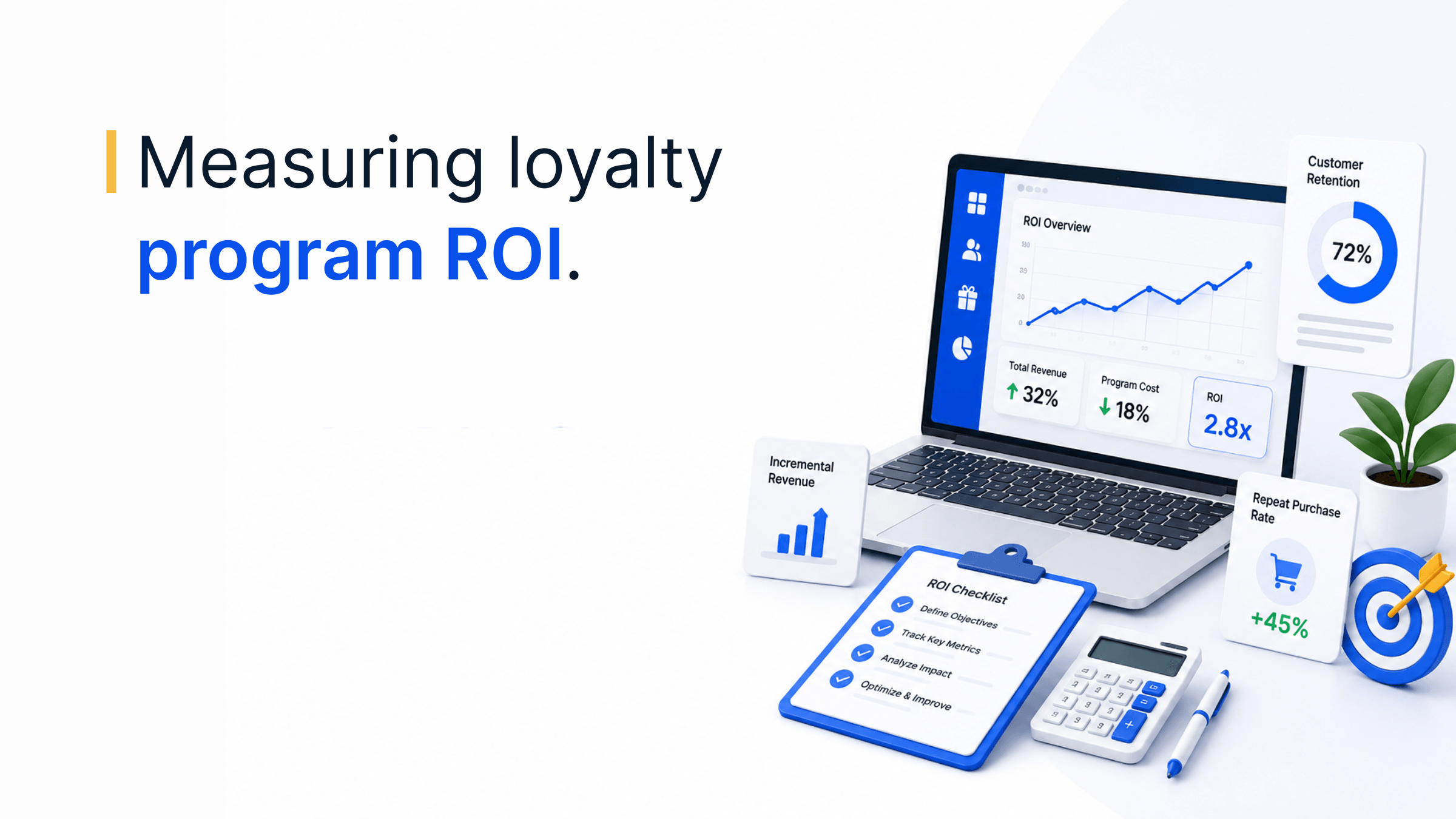
To turn this into numbers your CFO cares about, start with how to measure loyalty program ROI and the loyalty program KPIs worth tracking every week.
Why most programs get joined and then ignored
The Bond Loyalty Report found US consumers held about 19 loyalty memberships per person in 2024, the highest in a decade. Only about 9.3 of them were active, according to eMarketer's summary of the report.
19
Loyalty memberships held per US consumer
2024
9.3
Of those memberships that are active
2024
Source: Bond Loyalty Report 2024, via eMarketer
Take that gap into any planning meeting. Customers are not short on programs. They are short on reasons to use yours.
Three causes show up again and again:
- Rewards that feel out of reach. A customer who needs 18 months to earn a $5 voucher stops counting.
- Generic treatment. The same email goes to a weekly buyer and a customer who last purchased a year ago.
- Friction at redemption. A thin catalog or a clunky claim flow turns a reward into a chore.
A bigger discount rarely fixes it. A faster first reward does, along with offers matched to segment and a redemption flow people finish. Game mechanics such as challenges and milestones can help too, and our look at gamification in loyalty programs shows where they work.
How to set up a loyalty program
A working program starts with a decision, not a platform.
- Name the behavior. Pick one outcome: more repeat purchases, higher basket size, referrals, or reactivation of lapsed customers.
- Know your customers. Look at purchase frequency, margin by segment, and what your best customers do differently.
- Choose the simplest model that rewards that behavior. Frequent buyers suit points. A high-value segment suits tiers. Our guide to building a customer rewards program in seven steps walks through the rewards design.
- Set the economics. Decide reward value, expiry rules, and a budget kept separate from acquisition spend.
- Design the first reward to arrive quickly. A first redemption inside the first few purchases is what builds the habit.
- Pick the technology and launch. Rules, tiers, segments, campaigns, and reporting should live in a single loyalty platform. Our loyalty program software buyer's guide lists what to ask vendors.
- Measure active members, not sign-ups. Review active rate, repeat rate, and redemption rate monthly, and adjust.
Already have a program that is stalling? Rebuild from the behavior you want, using the customer loyalty plan framework.
How Xoxoday Loyalife approaches this
Many of the failure points above come down to configuration. A rule engine that cannot express a bonus for the second purchase in a month forces marketers into blunt, one-size campaigns.
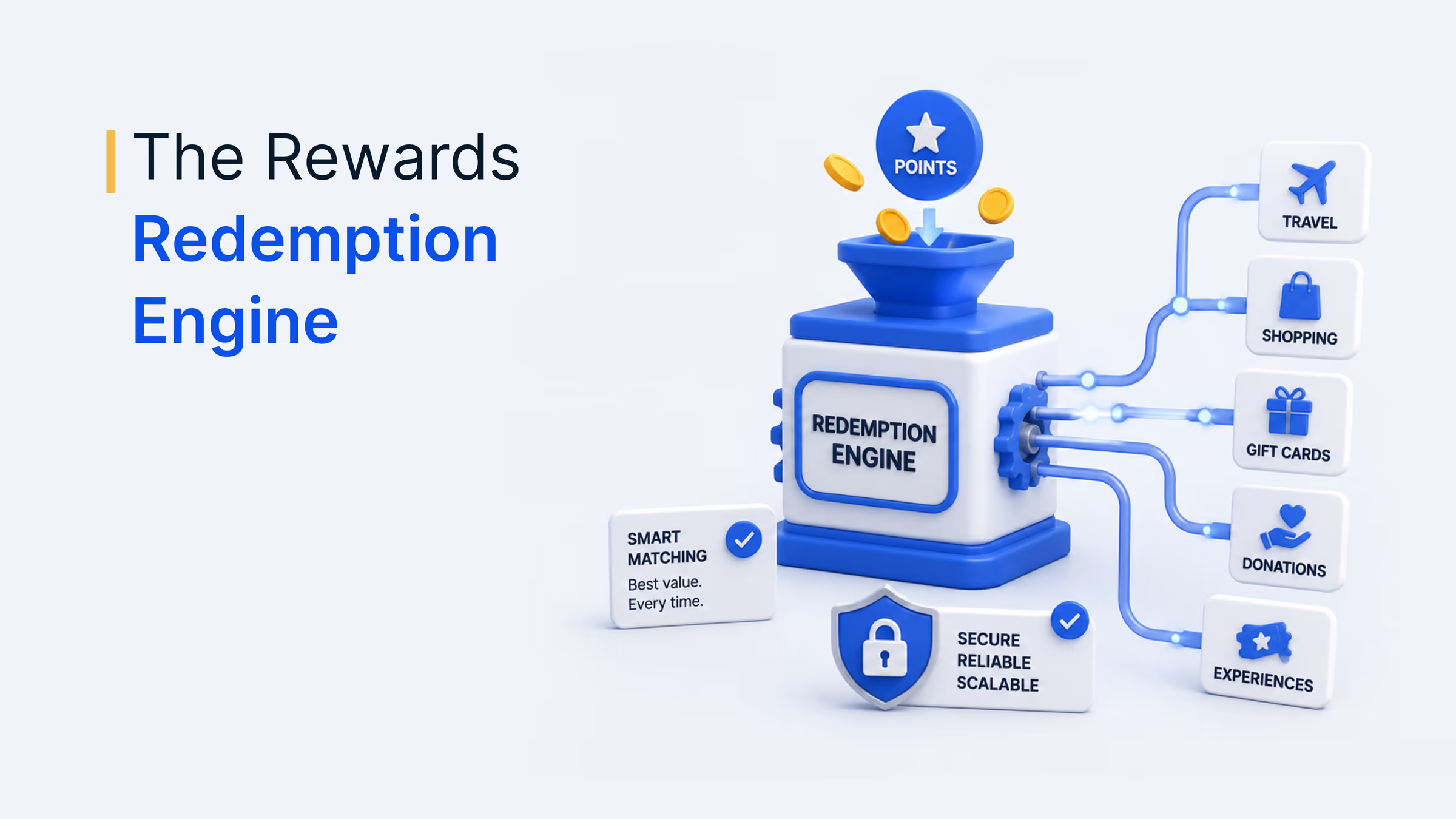
Xoxoday Loyalife lets teams build earning rules with conditions, caps, and multipliers, set up tiers that qualify on points, spend, or both, and trigger campaigns when a member goes inactive or reaches a new tier. Redemption connects to a global rewards catalog of 10M+ options, so the reward is something members want. Reports show liability and projected expiry by month, so finance and marketing read the same numbers.
You can explore the full set of loyalty program capabilities.
Your next step: pick one behavior
You do not need a perfect program on day one. You need one behavior, one reward model, and one metric that tells you whether customers are showing up.
Start there, launch small, and let the active-member number tell you what to fix next.
Book your Loyalife demo
Frequently asked questions
A loyalty program rewards customers for repeat business. They earn points, status, or perks each time they buy or engage, then redeem them for rewards. It turns one-time buyers into returning customers.
Customers join, earn through purchases or actions, track their progress, and redeem. The brand records every transaction so rewards and offers reflect real behavior. The loop repeats each time they return.
The five common models are points, tiered, paid membership, coalition, and cashback. Points suit frequent purchases, tiers suit a high-value segment, and coalitions suit partner ecosystems. Many brands combine two models.
Often yes, if repeat purchase is part of your model. A simple points or stamp program is cheap to run and gives you purchase data you would not otherwise have. Start with one behavior and measure active members before adding complexity.
A simple program can launch in weeks. An enterprise program with integrations, tiers, and a rewards catalog usually runs longer, and Loyalife implementations typically take around 10 weeks. Most of that time goes to rules and integrations, not to the program idea.